What's the most effective exercise for weight loss? Five thousand people's weight loss experiences tell you! | Weekly News

You won't get fat overnight, but inhaling a mouthful of "toxic" air can! What's the most effective way to lose weight? Aerobic exercise is essential, but shedding fat requires comprehensive training!

1

Aerobic exercise is the best choice for weight loss, and comprehensive training is the most effective way to shed fat!
DOI:10.1111/obr.13218.
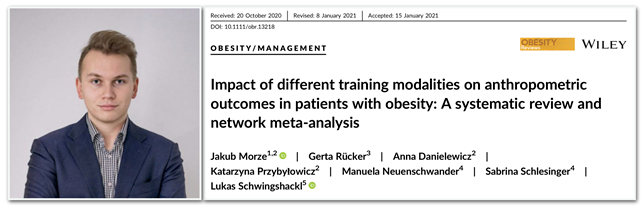
Exercise and diet are the two most important methods for weight loss. If you can't control your eating, you have to move more. So, what kind of exercise is most effective for weight loss? It's not easy for overweight people to move, so we need to move in the most efficient way! A recent systematic review published in *Obesity Reviews* analyzed the weight loss effects of various exercises and found that aerobic exercise may be the first choice for weight loss!

Figure 1.1 The study was published in Obesity Reviews

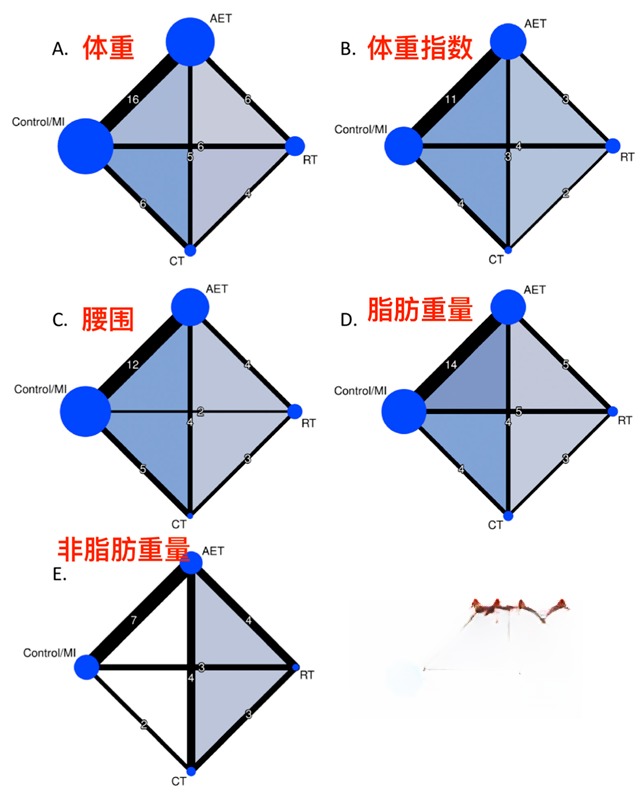
This study from Poland included 32 randomized controlled trials involving 4,774 participants with a body mass index (BMI) ≥30 kg/m² , comparing the weight loss effects of aerobic exercise, resistance training, combined training (aerobic exercise combined with resistance training) , and high-intensity interval training. The studies lasted at least 6 months and analyzed the effects of different exercise methods on weight, BMI, waist circumference, and fat or non-fat body mass.

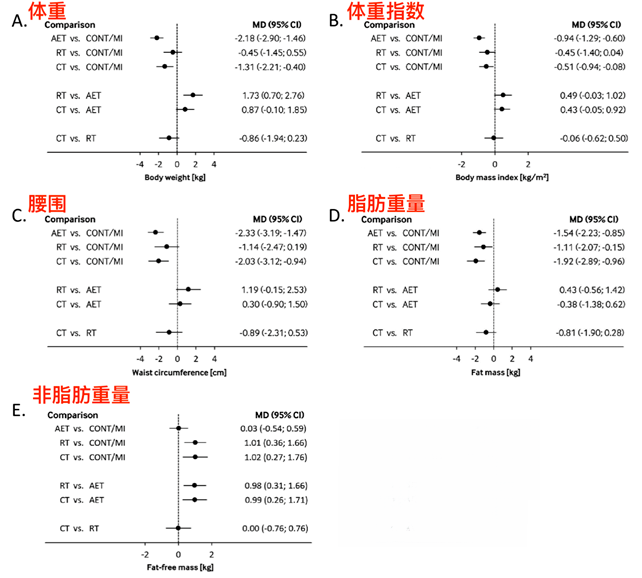
Figure 1.2 Aerobic exercise can effectively reduce weight.

The results showed that for weight loss, aerobic exercise resulted in 2.18 kg more weight loss than the control group, while multi-training resulted in 1.31 kg more weight loss. Aerobic exercise and multi-training were also more effective in reducing BMI and waist circumference. For shedding excess fat, more multi-training was needed, resulting in 1.92 kg more fat loss compared to the control group, while aerobic exercise was also effective, losing 1.54 kg of fat. In terms of increasing muscle mass, aerobic exercise was less effective; multi-training and resistance training were more necessary, resulting in 1.02 kg and 1.01 kg of non-fat body mass, respectively.

Figure 1.3 shows that the overall training effect is also quite good.

The findings may offer some guidance for clinical practice. While no effect of dietary intervention on the effectiveness of aerobic exercise was found, increasing exercise and controlling diet simultaneously can further improve weight loss. Combined training and resistance exercise can effectively increase muscle mass in obese patients, improve blood pressure, blood sugar, and blood lipids, and enhance cardiorespiratory fitness—an effect particularly important for older adults. However, most studies are based on supervised exercise programs requiring specific facilities; it remains uncertain whether people can maintain these programs at home, or whether recreational exercise will achieve the same results.

The study indicates that obesity management guidelines consistently recommend aerobic exercise for weight loss, while offering limited recommendations for other training methods. The findings of this study provide further support for using aerobic exercise for weight loss and offer more targeted advice for those looking to reduce fat or increase non-fat weight. Aerobic exercise is most effective for weight loss, lowering BMI, and reducing waist circumference; combined aerobic and mixed aerobic/resistance training is most effective for reducing fat; and resistance training is most effective for increasing non-fat weight. Therefore, a combination of aerobic and mixed or resistance training may be more beneficial for weight loss.

REF:Morze J,Rücker G,Danielewicz A,et al.Impact of different training modalities on anthropometric outcomes in patients with obesity:A systematic review and network meta-analysis.Obes Rev.2021 Feb 23:e13218.doi:10.1111/obr.13218.
2

The incidence of diabetes is declining; is it really because people's "money power" that they don't get sick?
DOI:10.1016/S2213-8587(20)30402-2.
The prevalence of diabetes is rising in most parts of the world, and risk factors and survival outcomes for people with diabetes can both influence its prevalence. Does this increasing prevalence mean more people have diabetes, or that those with diabetes are living longer? A recent study published in *Lancet Diabetes Endocrinol* analyzed diabetes incidence and found that the clinically diagnosed prevalence of diabetes has indeed decreased in some high-income countries and regions!

Figure 2.1 The study was published in Lancet Diabetes Endocrinol

This study from the Baker Heart and Diabetes Institute in Australia included population-based pooled>
Figure 2.2: The incidence of diabetes has declined in most countries or regions.

The results showed that, since 2010, 19 out of 23>
Figure 2.3 Simultaneously published commentary articles

However, a commentary published concurrently reminds us that this study primarily included>
3

You can't get fat overnight, but you can get fat by inhaling a mouthful of "poisonous" air!
DOI:10.1038/s41366-021-00783-9.
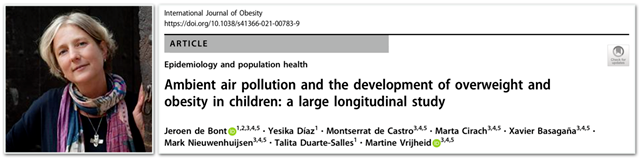
The Global Burden of Disease (GBD) study found that air pollution is the most serious cause of disease and death among all environmental risk factors. For adults, it can lead to respiratory and cardiovascular diseases, decreased lung function, premature death, cancer, diabetes, and obesity. While air pollution may also contribute to obesity in children, the evidence is insufficient. Is childhood obesity really caused by "toxic" air? A recent study published in the *International Journal of Obesity* analyzed this question.

Figure 3.1 The study was published in the International Journal of Obesity

This cohort study included over 416,000 children aged 2–5 years with normal weight in Catalonia, Spain, between 2006 and 2016, and followed them until they reached age 15, died, or the end of the study, observing whether they became overweight or obese. Overweight and obesity were defined based on measurements of height and weight. Exposure to nitrogen dioxide (NO2 ) , <10 μm particulate matter (PM10 ) , <2.5 μm particulate matter (PM2.5 ) , and 2.5–10 μm particulate matter ( PMcoarse ) was estimated based on annual census>
Figure 3.2 NO2 , PM10 , and PMcoarse increase the risk of overweight or obesity.

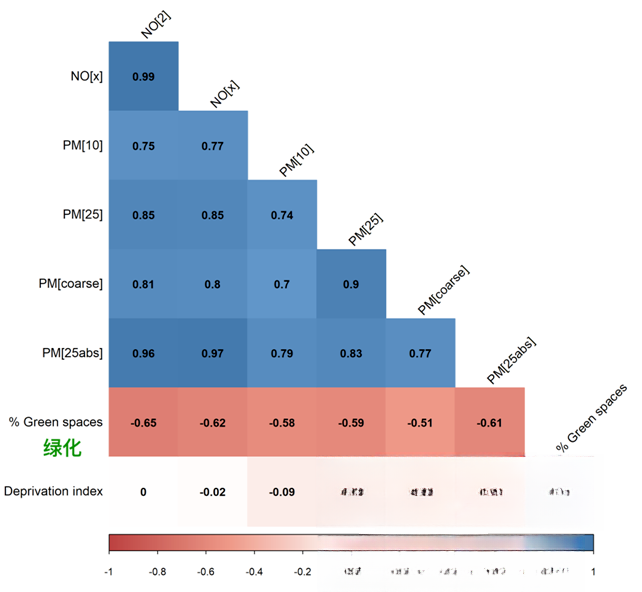
The results showed that 34.2% of the children were overweight or obese, totaling over 142,000 children. NO₂ , PM₁₀ , and PMcoarse all contributed to the risk of overweight or obesity. For every 21.8 μg/m³ increase in NO₂ levels , the risk of overweight or obesity increased by 3% (HR 1.03, 95% CI 1.02-1.04) ; for every 6.4 μg/m³ increase in PM₁₀ levels , the risk increased by 2% (HR 1.02, 95% CI 1.02-1.03) ; and for every 4.6 μg/ increase in PMcoarse levels , the risk increased by 2% (HR 1.02, 95% CI 1.01-1.02) . This relationship was stronger in impoverished areas, which may also be related to the level of greening.

Figure 3.3 shows the correlation between greening and reduced air pollution levels.

Air pollution can alter children's basal metabolic rate, cause inflammation and oxidative stress, lead to abnormal hormone levels, and even affect the brain, increasing brain inflammation and resulting in increased calorie intake. At the same time, air pollution can restrict children's physical activity; how can children not gain weight if they spend so much time sitting at home? Furthermore, air pollution may affect eating habits, increasing the intake of trans fats and fast food, further increasing the risk of obesity.

Researchers have pointed out that childhood exposure to air pollution is associated with a slightly increased risk of overweight and obesity later in life. While the increase in risk is small, the scope of air pollution exposure is wide, so the impact may be global. The long-term health effects of childhood obesity are significant, therefore the relationship between air pollution and childhood obesity deserves attention, especially for children from socioeconomically disadvantaged backgrounds.

REF:de Bont J,Díaz Y,de Castro M,et al.Ambient air pollution and the development of overweight and obesity in children:a large longitudinal study.Int J Obes(Lond).2021 Feb 24.doi:10.1038/s41366-021-00783-9.

-End-

Health Lose weight