What are the common pests and diseases of peanuts? What are the control methods for common pests and diseases of peanuts?
Peanuts, known as the "longevity fruit," are an important economic crop and a major source of high-quality edible oil. During peanut cultivation, they are frequently affected by pests and diseases, severely impacting both quality and yield. So, what are the common pests and diseases affecting peanuts? And how can we control them? Let's take a look together.
Peanut virus disease
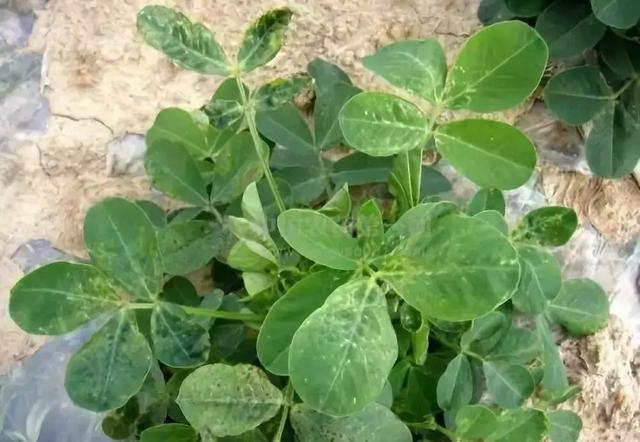
Peanut viral diseases, except for bud blight which is mainly transmitted by thrips, include mild mottle, yellow mosaic, and common mosaic, which are transmitted through seeds and aphids. Seed-borne diseases are the main primary sources of initial infection for these diseases. The seed-borne transmission rate is mainly affected by the timing of disease onset; earlier onset leads to a higher transmission rate. Seed-borne virus carrying rate is negatively correlated with seed size; larger seeds have a lower carrying rate, while smaller seeds have a higher carrying rate. Given the presence of a virus source and susceptible varieties, the timing and number of aphids are the main factors influencing the spread of viral diseases. The aphids that transmit viruses are mainly winged aphids active in the field. Generally, early and large aphid infestations during the peanut seedling stage easily lead to severe disease outbreaks, while later occurrences result in milder outbreaks. Low rainfall, mild and dry climates during the peanut seedling stage easily lead to large aphid outbreaks and disease epidemics, while the opposite is true for milder outbreaks.
Prevention and control methods:
Use non-toxic or low-toxic seeds to eliminate or reduce the initial source of infection. Non-toxic seeds can be obtained through isolated propagation.
Varieties with low susceptibility to disease and low seed transmission rate, such as Yuhua No. 1, Haihua No. 1, and Yuhua No. 7, were selected, and large kernels were chosen for the seeds.
Promoting the use of plastic film mulching technology is beneficial, as plastic film has a certain aphid-repelling effect and can reduce the damage caused by viral diseases.
Remove weeds from the field and surrounding area in a timely manner to reduce the source of aphids.
Strengthen disease quarantine and prohibit the transfer of seedlings from diseased areas.
For aphid control, use 3% Furadan granules as a seed coat at sowing, with a dosage of 2.5-3 kg per mu. Alternatively, use 25% Phosphate (812) as a seed coat, with a dosage of 0.5 kg per mu. After peanut seedlings emerge, check them promptly. If aphids are found, spray with 800 times diluted 40% Dimethoate EC plus 800 times diluted New High-Fat Film to enhance the efficacy and prevent aphids from transmitting the virus.
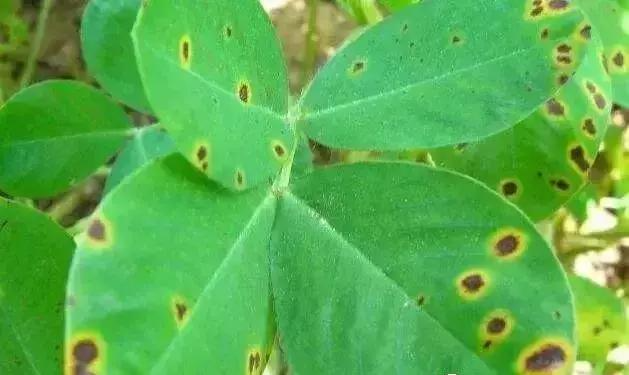
peanut brown spot disease
Crop rotation: Peanut leaf spot disease has a relatively singular host, infecting only peanuts. Rotating with other crops prevents the pathogen from finding a suitable host, reducing damage and effectively controlling the occurrence of the disease. The rotation cycle should be 2 years or more.
Prevention and control methods:
After peanut harvest, diseased leaves in the field should be removed promptly. When using manure made from diseased plants, it should be fully decomposed before use to reduce the source of disease.
Although there are no varieties with high resistance to leaf spot disease in production, there are large differences in disease resistance among varieties. Generally, varieties with thick leaves and dark leaf color are more resistant to the disease. In severely diseased areas of Henan, varieties with strong disease resistance such as Yuhua No. 1, Haihua No. 1, Yuhua No. 4 and Yuhua No. 7 should be selected.
Strengthen management to enhance plant disease resistance: Reasonable planting density, scientific fertilization, and effective measures should be taken to ensure robust plant growth and enhance disease resistance.
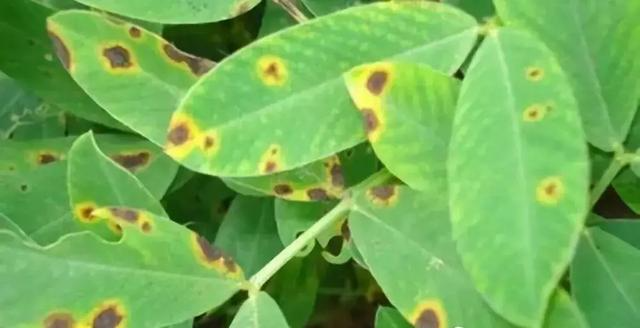
At the initial stage of disease, the first spray should be applied. Suitable pesticides include: 50% carbendazim wettable powder at a dilution of 1500 times; 50% thiophanate-methyl wettable powder at a dilution of 2000 times; 80% zineb wettable powder at a dilution of 400 times; 80% mancozeb at a dilution of 400 times; 75% chlorothalonil wettable powder at a dilution of 600-800 times; or anthelmintic at a dilution of 700 times; or lime sulfur solution at 0.3-0.5 Baume. Repeat the spraying every 10-15 days, for 2-3 applications, using 50-75 kg of pesticide solution per acre each time. Because peanut leaves are smooth, adding an adhesive during spraying can improve the control effect. anthelmintic is effective against brown spot disease, and mancozeb is also effective against net blotch. Carbendazim should not be used in areas where leaf spot and rust diseases are mixed.
The above is an introduction to peanut diseases and pests. Peanut viral diseases and peanut brown spot are common diseases encountered by peanut growers during the planting process. Doing a good job in the prevention and control of peanut diseases is one of the key steps to achieving stable and high yields. Growers should pay attention to these diseases and pests to prevent damage to peanut yield and quality.