Weight Loss Part 1: Understanding Weight Loss | [Health Notes 18]
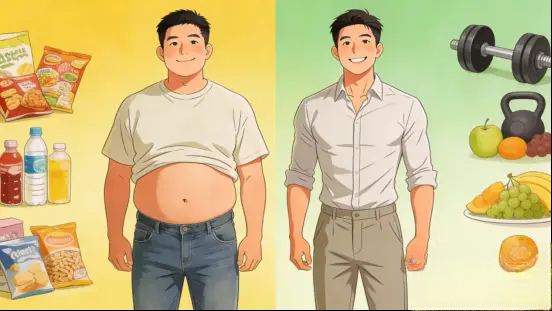
1. In 2013, the World Health Organization defined obesity as a disease because every minute that you are obese will damage your cardiovascular system, liver, kidneys, gastrointestinal tract, and immune system. For the sake of health, you must lose weight.
2. The sign of successful weight loss is adopting a healthier lifestyle, not just losing weight. Weight loss occurs because of a healthier lifestyle.
3. The goal of weight loss is not only to reduce weight, but also to reduce body fat and improve body shape; all three are essential. Body Mass Index (BMI, calculated as weight divided by height, then divided by height) should be between 18.5 and 24 for men and between 18.5 and 23 for women. Body fat percentage should be between 15% and 18% for men and between 20% and 25% for women. Waist circumference should be less than 85cm (2.6 feet) for men, with a waist-to-hip ratio of less than 0.9; waist circumference should be less than 80cm (2.4 feet) for women, with a waist-to-hip ratio of less than 0.8. (Based on these standards, 90% of people need to lose weight.)
4. The cause of obesity is simple: energy intake exceeds energy expenditure. Therefore, there are only two ways to lose weight: increase energy expenditure or reduce energy intake.
5. The human body also consumes energy for digesting and absorbing food and maintaining body temperature. Energy expenditure related to weight loss mainly comes from two aspects: first, basal metabolism, which is the energy the body consumes to maintain survival even when sitting still; generally, you'll lose about one kilogram after a night's sleep. Second, physical activity, including exercise.
6. Energy input primarily comes from food. Fat has an extremely high absorption rate, reaching up to 96%, but it's difficult to burn, making it a major enemy of weight loss. Excess carbohydrates will be converted into fat and stored. The body generally doesn't store protein as energy, so even during weight loss, it's important to supplement with protein appropriately.
7. There are countless weight loss methods: exercise, traditional Chinese medicine, fasting, medication, surgery… but the only universally recognized safe and cost-effective path to weight loss is lifestyle intervention. It's not only effective but also safe and economical! Any other weight loss method must be combined with lifestyle management to be effective; otherwise, the weight loss will be regained. Repeated weight loss cycles are even more harmful to the body. It's better to stay healthy than to lose weight only to gain it back.
8. Lifestyle interventions include three aspects: diet, exercise, and mental health. All three are indispensable; the absence of any one of them will render all efforts futile.
9. A quote from Walden: "When you achieve your dreams, the point is not what you get, but what you become in the process of pursuing them."