Three chefs: Why are people all over the world so keen on vying for the origin of delicious food?
【Article by Wei Yiyi】
A few years ago, when The Huffington Post was still thriving, bloggers would often make shocking statements.
At the time, a blogger wrote a piece of "news" that only received three hits on the Huffington Post website, but went viral on the Chinese Internet:
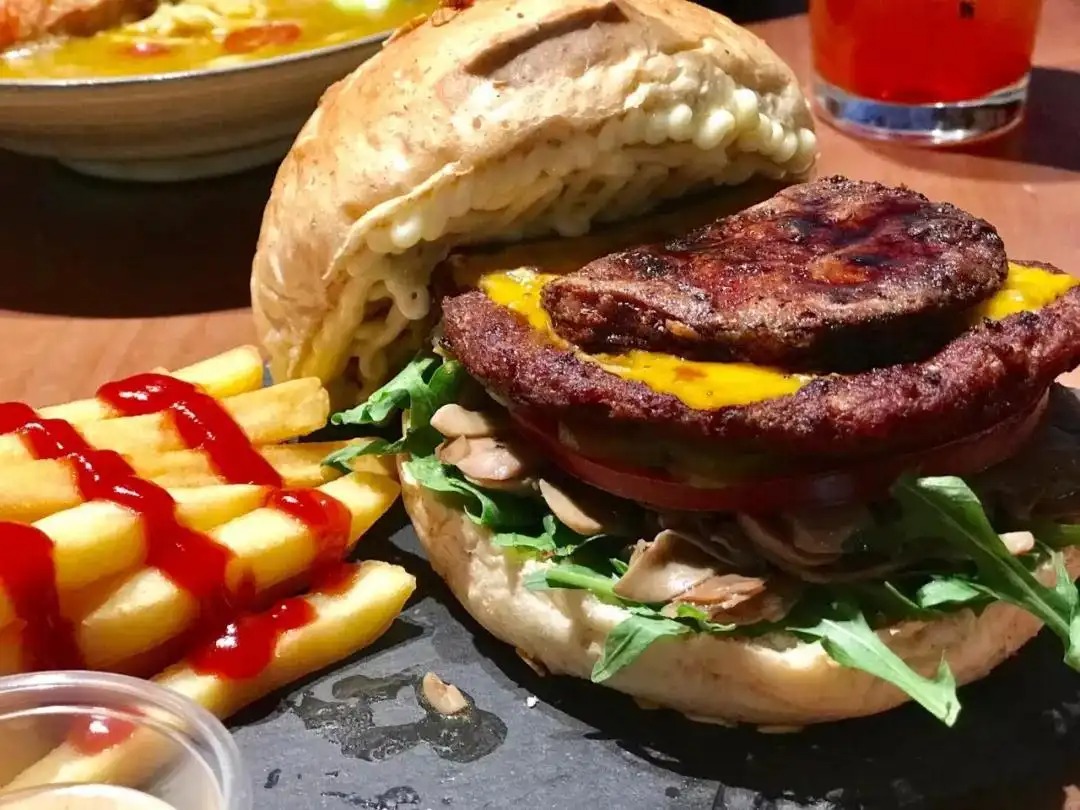
"The first hamburger in the world definitely didn't come from where you think it did. The hamburger wasn't invented in the United States, nor did it originate in Germany. The first hamburger in the world actually came from... and its name is rou~jia~mo~"
The battle for the provenance of delicious food is a popular topic for people around the world and a major traffic generator on social networks, so it's no surprise that there are often fierce battles over the origin of delicious food. But why are humans so keen on fighting over the provenance of delicious food?
Photo/duitang
When was Roujiamo invented?
Ever since Roujiamo became popular all over the world, many people have wondered, "Why is it called Roujiamo when it's clearly a bun with meat between it?" It wasn't until later that experts explained that this is an abbreviation in ancient Chinese, meaning "meat sandwiched between buns," and it's not a fallacy.
In China, Roujiamo has always been considered a Shaanxi snack, and there are many kinds of Roujiamo in various parts of Shaanxi, including Lazhi Roujiamo, Baoji Xifu Rousaozi Roujiamo, and Tongguan Roujiamo, among which the most famous is Lazhi Roujiamo.
The bazhirou in the bazhirou jiamo is a type of meat cooked in a large pot. During cooking, a thick layer of fat is formed on the broth to retain heat and flavor. Because of the high fat content, the fat becomes white like wax after cooling, and the lean meat also looks like wax, hence the name bazhirou.
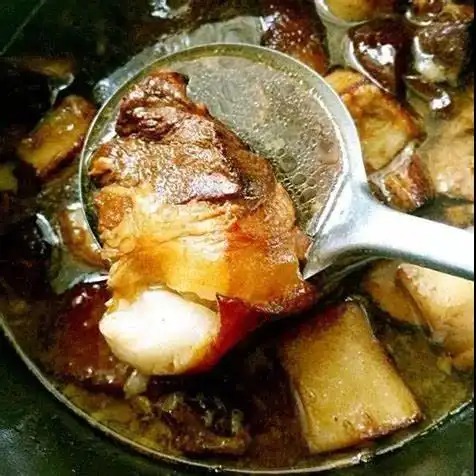
The history of cured meat can be traced back to the "Zhi" mentioned in the "Eight Delicacies of the Zhou Dynasty" in the book "Zhou Li". "Zhi" refers to cured meat. During the Warring States Period, it was called "Hanrou". The Han Kingdom, located in the Qin, Jin, and Henan triangle, was already producing it. After the Qin Dynasty conquered Han, the production technique spread to present-day Xi'an, where it has been passed down through the generations.
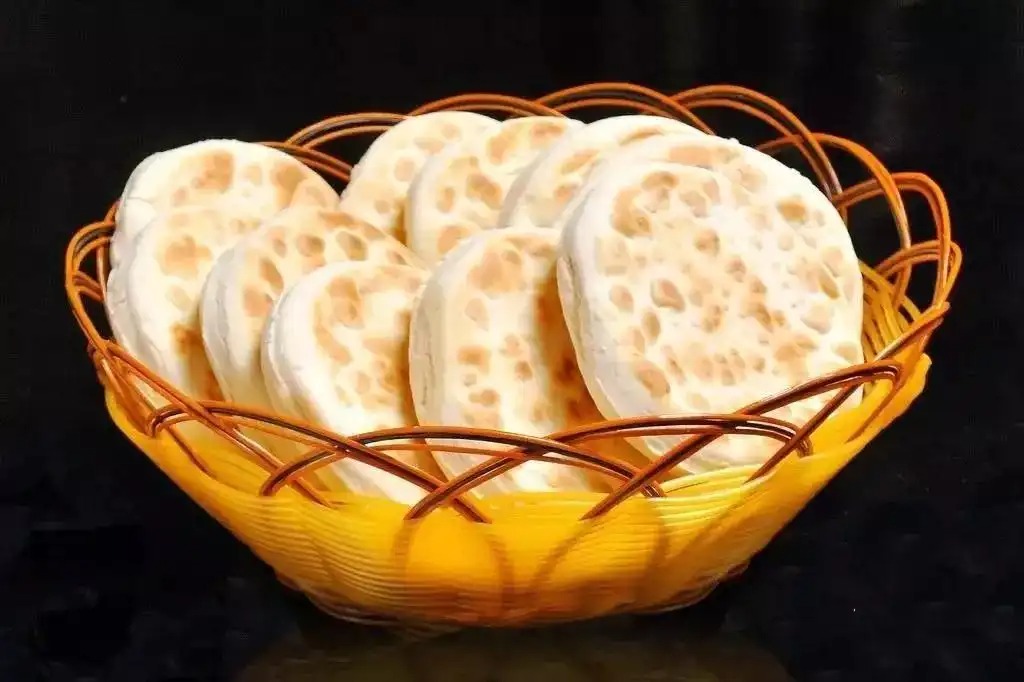
Now that we've discussed meat, let's talk about steamed buns. The steamed bun used in the "Lazhi Roujiamo" (presumably a steamed bun with preserved pork) is called "Baiji Mo," and features a "steel ring bottom, tiger skin back, and chrysanthemum heart." Since ancient times, there have been post stations along the main thoroughfares connecting Shaanxi and Gansu. Because the post horses were all white, the post station was named Baiji Post Station, and later, Baiji Town was established in the area.
Photo/nipic
During the Ming and Qing dynasties, "Baiji" gradually changed to "Baiji". Before the middle of the Qing Dynasty, this place was originally inhabited by Hui and Han people, and the place was called "Baijili". Local people could make Baiji steamed buns and use them as their daily staple food.
Of course, before Baiji steamed bun, the history of steamed bun can be traced back to the end of Qin Dynasty and the beginning of Han Dynasty, so the most primitive roujiamo was probably born during the Qin Dynasty.
Photo/catabigrecipes.blogspot.rs
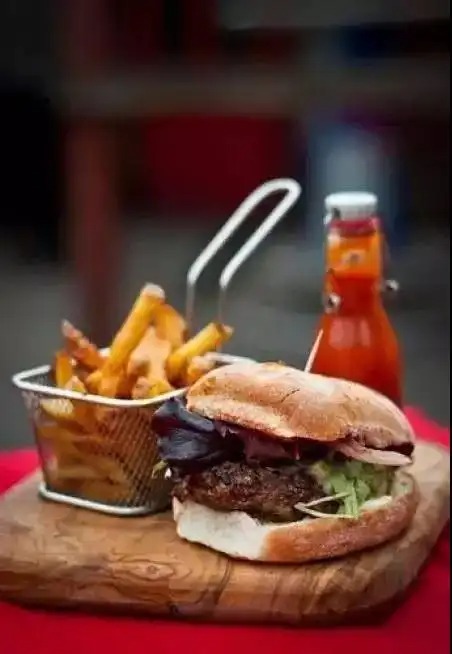
The invention of the hamburger is an unsolved mystery, but it has little to do with Roujiamo.
Hamburgers have only been invented for more than a hundred years. Although their history is far shorter than that of roujiamo, they are extremely complex.
In his book, Spanish scholar Crasio Celdran explored the origins of hamburgers and pointed out that among the burial objects of a mummy discovered in Egypt in the early 21st century were two bread rolls filled with meat, which were baked about 4,000 years ago.
Anyone who has learned English knows that the word for hamburger in English is "Hamburger", and the word for the German city of Hamburg is "Hamburg". By adding "er" after the name of a city, "Hamburger" can be understood as "of Hamburg, Hamburger people, or Hamburger people" in both English and German.

The most original "hamburger" probably looks like this
The hamburger, as we know it today, was born in Germany in the 14th century. Germans created this poor man's food from low-quality meat. The hamburger's name comes from the German city of Hamburg, where it was known as the "hamburger patty."
In the 19th century, a large number of German immigrants brought the hamburger to the United States. However, Americans still do not recognize that the hamburger originated in Germany because the "hamburger" brought by the Germans was just a fried beef patty, not a bun.
Who was the first person to put a beef patty in a bun? Americans have been arguing about this for a hundred years without a conclusion. In 2007, two states even had a fight over it.
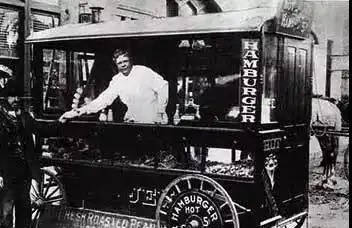
In early 2007, a Republican congressman in Texas introduced a bill claiming that there was "conclusive evidence" that hamburgers were invented in Athens, Texas, and sold in front of the Athens courthouse square. A few days later, a Democratic congressman in Wisconsin issued a counter-proposal, claiming that Seymour, Wisconsin was the true "Hamburger Capital."
In addition, there are more than a dozen people who claim to have invented the hamburger. But regardless of who invented it, the 1904 St. Louis World's Fair quickly made the hamburger a popular food across the United States. The New York Tribune called it "the masterpiece of the roadside vendor" in a report at the time.
In 2007, ABC produced a program exploring who invented the hamburger, concluding, "The problem is that the hamburger lacks a written history... It was likely the product of the combined efforts of many people from different parts of the country."

The existence of standardized fast food such as McDonald's and KFC is one of the important reasons why hamburgers are popular all over the world.
But what can be generally agreed upon is that the invention of the hamburger was definitely inspired by the sandwich, a food consisting of two pieces of bread with meat between them, which is generally believed in the West to have originated from Jewish food before the Common Era.
The competition for the origin of delicious food is welcomed by people all over the world
Throughout human history, especially in recent years with the increasing development of information, competing for the "origin of food" has always been an activity that the people love.
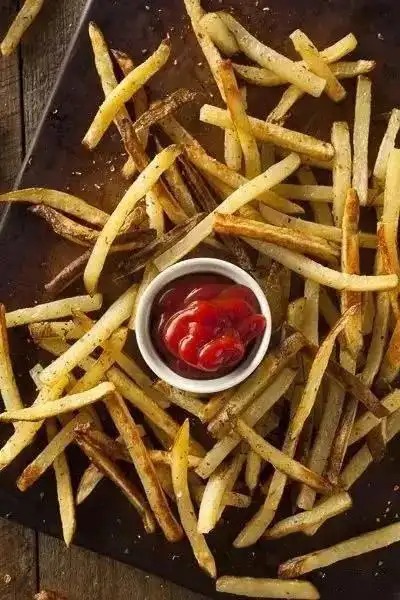
French fries are called "French Fries" in American English, which means "French fries".
However, the Belgians insist that they invented French fries, and Belgium and France even held a debate on this issue.
Take Roujiamo for example. Almost everyone living today thinks that it is a Shaanxi snack, but some media claim that Roujiamo actually originated in Henan. The reason is that Korea, which was able to produce "cold meat" during the Warring States Period, was located in the triangle area of Qin, Jin and Henan, so Henan is also considered one of the origins of Roujiamo.
It sounds a bit shocking, but Henan is somewhat related. The next one sounds crazy, that is, for many years, Koreans have insisted that "sushi originated in Korea."
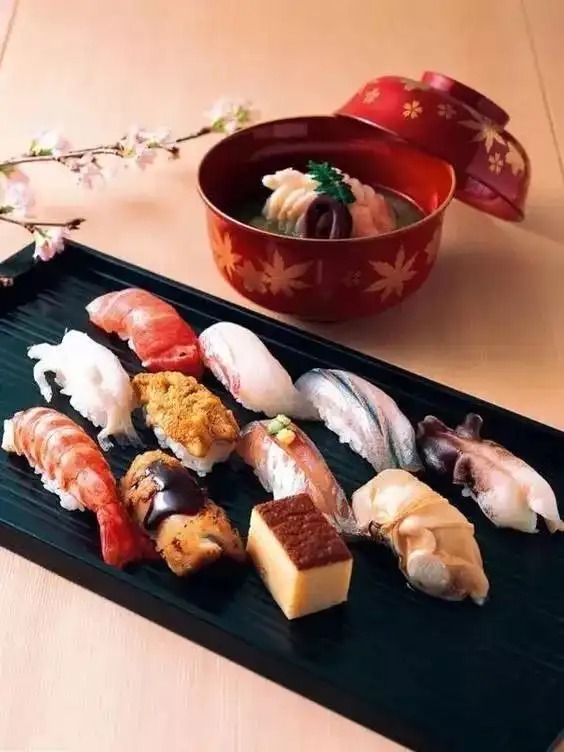
Photo/m.trip.kyoto.jp
The Japanese were not happy with this, so Japanese scholars began to investigate and found that the earliest recorded sushi in Japan dates back to 718 AD, while modern sushi originated in the Edo period (17th to 19th centuries). Despite this, Koreans still occasionally bring up the "Korean origins of sushi" theory, even though the food isn't particularly popular in North and South Korea.
This kind of competition is common around the world. Sometimes it's okay to bully regions with developed cuisines, but some people even try to snatch British cuisine. That's the Italians.
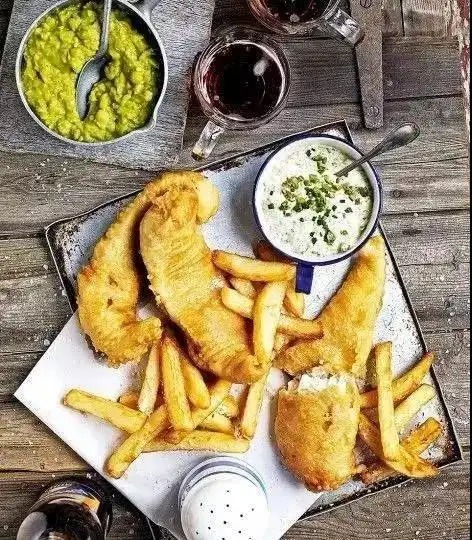
image/delicious. magazine
In February 2015, an Italian media outlet stated that fish and chips were actually invented by Italians. The article also conducted research and stated that Italians invented this method around 1860, and that Venetian immigrants brought it to the UK and made it popular.
It's just talk, but the Italians have already included this "origin theory" in elementary school textbooks as one of Italy's representative foods, and will also serve French fries and fried fish to 140,000 students in primary and secondary schools in Rome.
Why are humans so keen on competing for the origin of delicious food?
Why are people all over the world willing to fight over this? It has to do with the significance of eating and food in human society.
Attaching oneself to celebrities is also an important means of competing for the origin of food. Some netizens have compiled a list of foods from various places that claim to be "selected" by Emperor Qianlong. Photo/kanjingjiang.com
As we all know, one of the symbols of human civilization is the use of fire. Although in modern society, there are still things like Japanese people eating sashimi and Westerners eating steak tartare, it is undeniable that cooking with fire has greatly improved the level of human civilization.
The most obvious benefit of cooking over a fire is that it allows edible ingredients to be more readily absorbed by the human body and also disinfects and sterilizes them. Furthermore, cooking over a fire requires not only fire but also containers and pots. Human civilization has become increasingly advanced thanks to fire.
Gradually, the purpose of cooking became more than just filling the stomach. Throughout history, both in China and abroad, and regardless of time and place, food has always been an act of cultural transformation, and cooking has become one of the cultural rituals.
Food is closely related to cultural rituals such as customs, festivals, priests, and beliefs. Gradually, representative food will become "a social constraint, a common language, and a bond."
Therefore, food is an important ethnic characteristic, and it has important connections with the cultural traditions, ethics, values, beliefs, and aesthetics of a nation or country.
Therefore, people all over the world will strive to protect their traditional food, and at the same time, they will compete for the origin of food to demonstrate the long history of their civilization and cultural superiority.
Even the British who had their chips and fish taken away by the Italians would shout: "This is not a question of food, you know, this is a question of national dignity, a question of dignity, okay!"
(This article was originally published on the WeChat public account "Three Cooks" and is reprinted with permission from Guancha.com.)