These exercises are effective for building muscle, but few people are willing to do them.
[Upper limbs]
1. Face-Pull
Upper body training without a face-pull is incomplete. It effectively trains the middle and posterior deltoids, middle and lower trapezius, rotator cuff, and other muscles, while also engaging the arms slightly, thus balancing the muscles involved in the upper body push and ensuring shoulder joint health. Quite a few people do this exercise at our school gym, but they don't perform it correctly. It should be done like in the picture, with a "pronounced biceps extension" motion. This allows for active external rotation of the shoulder, training the rotator cuff and better squeezing the scapula to create a pump.
2. Weighted Supinated/Neutral Grip Chin-up
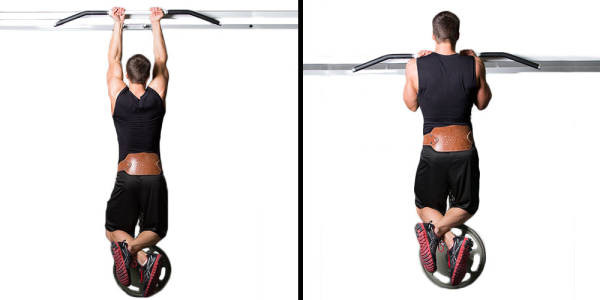
Almost everyone can do pull-ups, but perhaps influenced by physical fitness tests in school, most people only do overhand pull-ups, and very few consciously add weight. Actually, underhand/neutral grip pull-ups are also a great option, better training the external rotators, balancing the upper body pushing muscles, and are excellent for developing the back, core, upper arms, and forearms (Dan John: With pull-ups, you don't need any other core training). These two types of pull-ups are mechanically simpler than overhand pull-ups, so you can lift much heavier weights; @Frost can do sets with 50kg. In fact, when you can do more than 8-12 sets of pull-ups, you should consider adding weight. Pull-ups, like the three major lifts, can be trained with very heavy weights. Mike Boyle mentioned that the maximum weight for weighted underhand pull-ups should be roughly equivalent to the maximum weight for bench presses to achieve a balance of pushing and pulling muscles. You can assess whether you have reached this standard.
3. Push-press
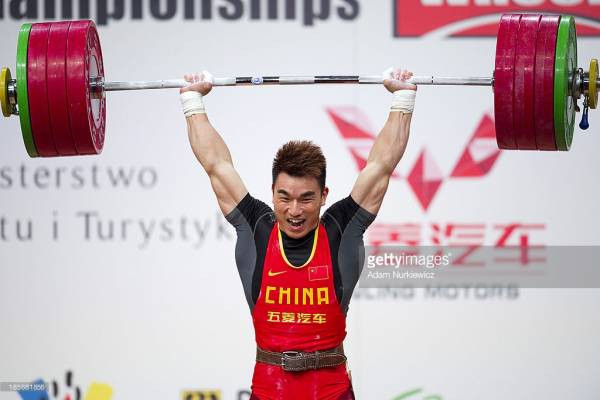
I've written about the benefits of this exercise before and how to incorporate it into your training plan; it's an exercise I personally really like.
4. Parallel Bar Dips
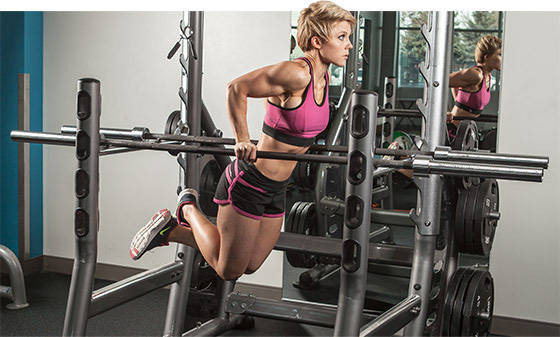
One of the best upper body exercises. It's arguably better than various bench press variations for chest building. It also develops triceps locking strength, which can be transferred to other pressing movements. Due to the short range of motion, you can lift very heavy weights, even exceeding the bench press's pr (body weight plus added weight). Of course, the accompanying image shows an incorrect form; the thighs should ideally be straight and hanging down towards the ground. Don't argue with me about shoulder injuries; people with pre-existing shoulder injuries shouldn't do this, and shouldn't go too deep (upper arms should be parallel). Proper form is also crucial; avoid shrugging your shoulders and consciously retract your shoulder blades during the descent.
5. Bar Hanging, Inverted Hanging
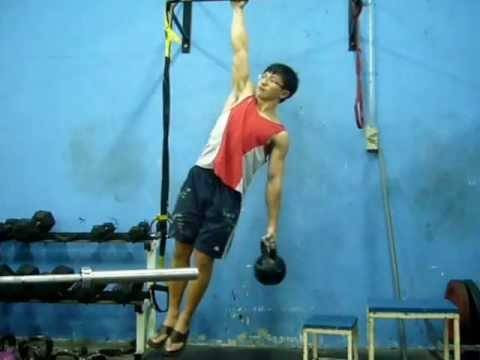
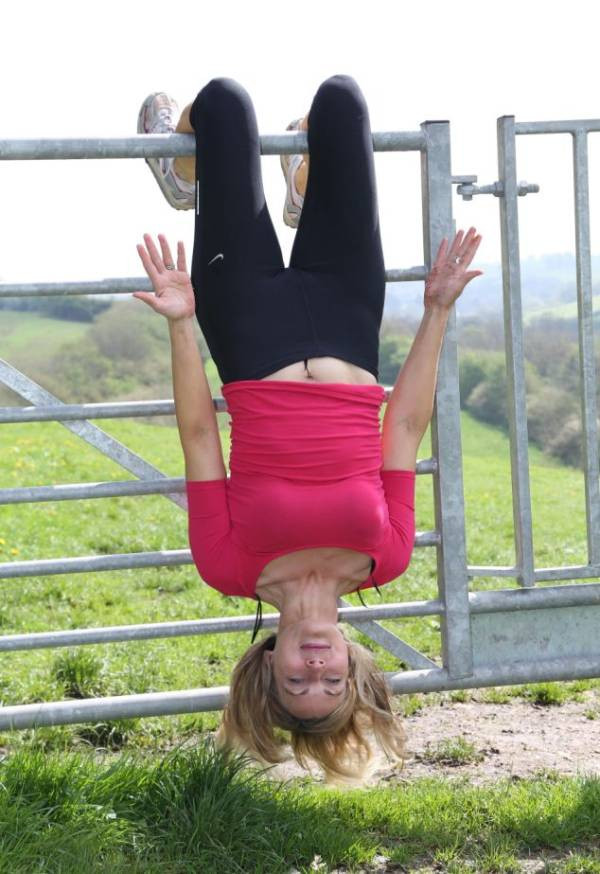
I use these two as relaxation exercises; I usually do the upside-down hanging on SMS.
6. Handstand Push-up
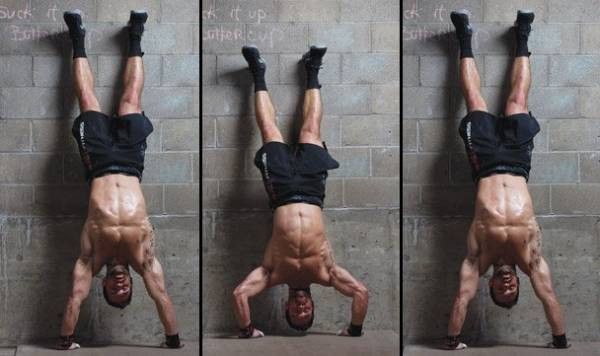
Josh Byrant highly praised this exercise in his magnum opus, *Built to the Hilt*, considering it one of the top ten best shoulder exercises, also effective for the arms, core, and upper back. Weightlifters reportedly also use this exercise, a balanced press (similar to bench press-push-ups, maintaining closed-chain-open-chain balance). In high school, I could do over ten handstand push-ups in a set, which may have laid the foundation for my current pressing strength being stronger than my bench press (of course, I can't do that many now, I'm too fat, lol). Those interested can try to unlock this exercise; tutorials are readily available online. I personally prefer the method in Josh Byrant's other book, *Jailhouse Strong*.
[Lower limbs]
7. Pull-through
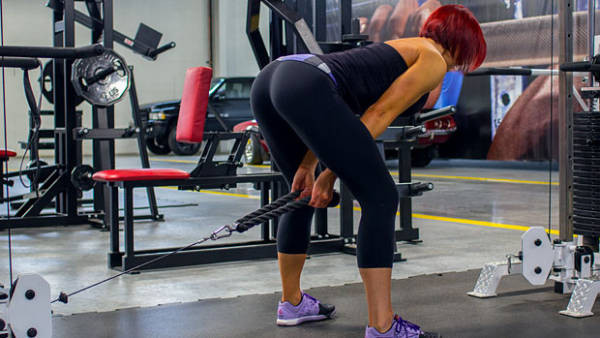
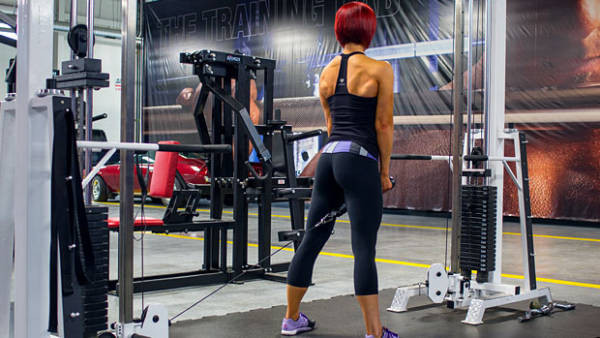
Compared to barbell and dumbbell deadlift variations, the resistance direction changes from downward to backward, making it easier to learn hip extension while also providing excellent stimulation to the glutes and hamstrings. Remember to keep your back flat, shins perpendicular to the ground, and glutes squeezed back, avoiding inward rotation.
8. Zecher Squat
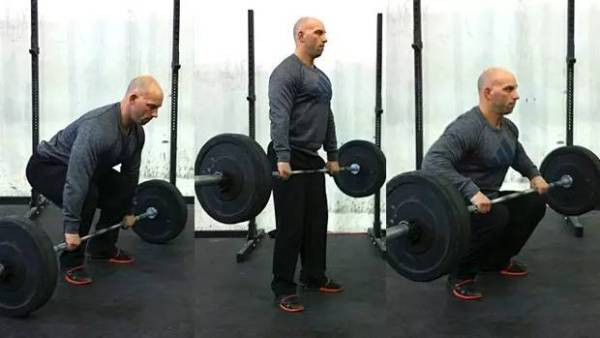
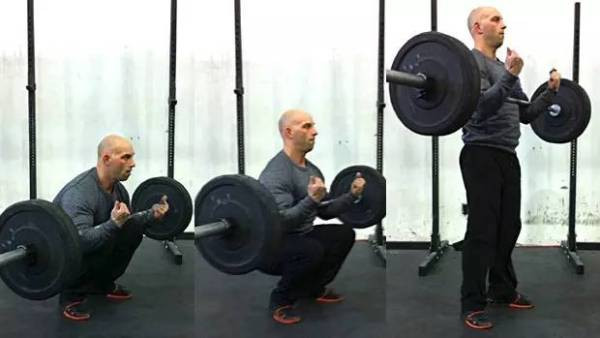
A good alternative when the gym doesn't have a squat rack.
9. Paused Squat, Bottom Paused Romanian Deadlift (RDL)
You can pause for 3-7 seconds at the bottom or any weaker part of the squat, 3-6 repetitions per set. This teaches you how to maintain tension throughout the squat, which also contributes to muscle growth. The bottom-pause RDL is my own invention; I don't know if there are any similar ones. It taught a friend who is passionate about lower back pulls to keep his whole body tight during deadlifts. Similar to a regular RDL, but after reaching the bottom of the eccentric phase, you pause for 3-5 seconds before pulling up. This requires the trainee to actively engage their posterior chain and core. Your glutes and hamstrings will feel very sore; you'll know once you try it.
[whole body]
10. Tall Kneeling
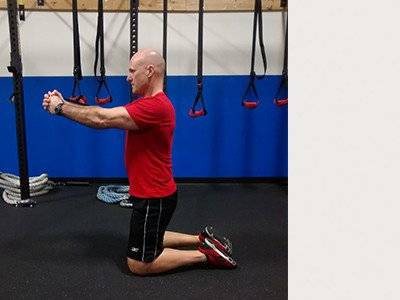
Before each training session, I kneel down like this to adjust my breathing rhythm and activate my core and glutes.
11. Crawling
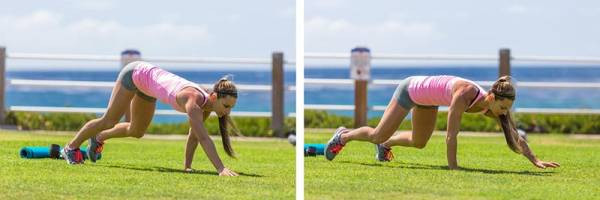
It's a great type of physical training that can enhance proprioception, improve the flexibility and stability of joints, and is also very demanding on cardiopulmonary function and muscle endurance.
[other]
12. Neck training
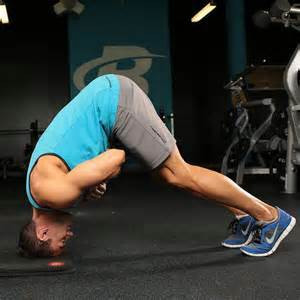
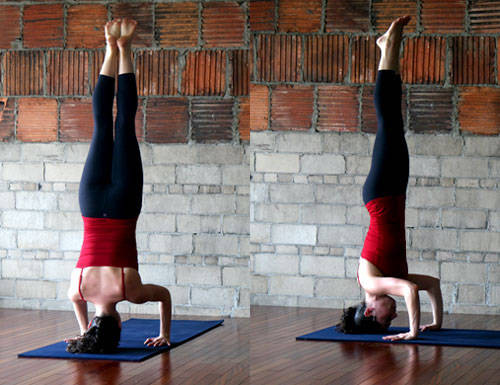
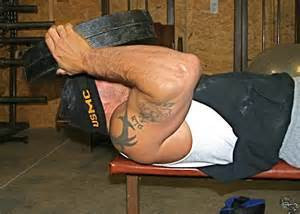
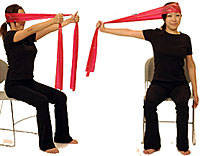
Modern people's necks are too weak, making them prone to cervical spine problems. Besides maintaining good posture, it's also important to exercise your neck regularly. For combat sports like martial arts, neck exercises are essential. Neck bridges, headstands, head nodding, and resistance band exercises are all excellent; choose one and practice it frequently. "Jailhouse Strong" has also written extensively on this topic. Use light weights and focus on high repetitions/long duration.