The Ultimate Muscle Building Guide (Part 2): Complete Diet Guide & Detailed Training Plan
The most scientific method for building muscle.
Muscle-building experiences, and humorous anecdotes about muscle building.
A large number of fit men and beautiful women
gather in the muscle-building forum.
To better assist everyone in implementing these measures, we have invited weight loss expert Mr.burning (FitTime App ID: Mr Burning洹洹) to provide a more comprehensive diet guide . We have also designed an intermediate training plan with the help of powerlifting monster Trap Lord (FitTime App ID: Trap Lord) .
During a muscle-building phase, fat accumulation is inevitable; the question is how much. Several key factors for minimizing fat gain during this phase include: total daily calorie intake, calorie distribution across meals, meal intervals, and food choices.

1. Calculate basal metabolic rate (BMR):
Female = 655 (9.6 x weight in kg) (1.8 x height in cm) - (4.7 x age)
Male = 66 (13.7 x weight in kg) (5 x height in cm) - (6.8 x age)
(Unit: kcal)
2. Multiply BMR by the activity factor to get daily calorie expenditure:
Light exercise (1-3 times per week), calorie intake = BMR x 1.375;
Moderate-intensity exercise (3-5 times per week), calories = BMR x 1.55;
High-intensity exercise (6-7 times per week), calories = BMR x 1.725
For example
Male, 180cm tall, 80kg, 26 years old, exercises 4 times a week.
BMR=66 (13.7x80) (5x180)-(6.8x26)
BMR = 1885 kcal
Calories = 1885 x 1.55 = 2921 kcal
The generally accepted view is a 10% surplus, which is around 300-500 calories. Using the male example above, the daily calorie intake should start at 3300 calories.

Simply put, if you want to minimize your fat intake, you should eat more frequently throughout the day. Even if the total calories from all the food you eat are the same, eating smaller portions at once puts less strain on your digestive system, making it easier to absorb nutrients and preventing the accumulation of too much fat at once.
Food is basically composed of three major nutrients: 1 gram of protein = 4 calories, 1 gram of carbohydrate = 4 calories, and 1 gram of fat = 9 calories. It is recommended that 20% of calorie intake come from protein, 20% from fat, and 60% from carbohydrates, evenly distributed across 3-7 meals per day. Therefore, out of 3300 calories, protein should account for 660 calories (3300 * 20%), fat 660 calories (3300 * 20%), and carbohydrates 1980 calories (3300 * 60%). This equates to approximately 165 grams of protein (660 calories ÷ 4), about 2 grams of protein per kilogram of body weight, 73 grams of fat (660 ÷ 9), and 495 grams of carbohydrates (1980 ÷ 4).
Taking 5 meals a day as an example, each meal should contain 33 grams of protein, 14.6 grams of fat, and 99 grams of carbohydrates. Eat more vegetables at each meal to ensure vitamins and fiber. Calories are usually negligible. Eat every 2-3 hours after waking up.
Example of meal schedule: First meal at 8-9 am, second meal at 11-12 pm, third meal at 2-3 pm, fourth meal at 5-6 pm, and fifth meal at 8-9 pm.
Not everyone has ideal dietary preparation conditions and meal times, but that's okay. As long as you ensure adequate daily calorie intake, the timing and number of meals you eat won't fundamentally affect your muscle-building results. The more precise your diet, the less fat you'll gain, and vice versa. However, don't forget that the most important goal during the muscle-building phase is to build muscle, not to minimize fat gain. Mr. Burning's (FitTime App ID: Mr. Burning洹洹) helpful guide, "The Simplest Women's Fat Loss Diet Plan and Cooking Process for Two 'Fists'," can be very helpful in preparing your diet during the muscle-building phase, and it's recommended to use it as a reference.
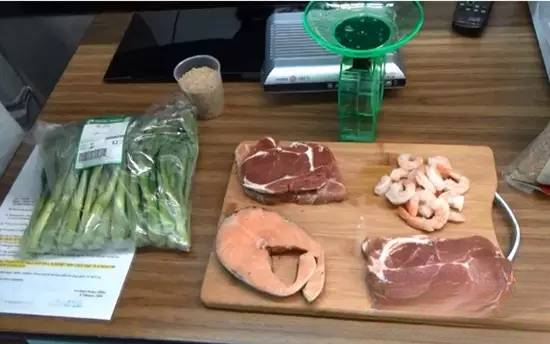
In theory, as long as you have enough protein and calories, you can build muscle even if you eat KFC or McDonald's every day. However, if you get enough protein, your fat intake will be severely excessive, which may lead to an excessive calorie surplus and increase excess fat. Therefore, the choice of specific foods is also very important.
Protein sources include skinless chicken, lean pork, lean beef, fish, milk, eggs, seafood, and legumes. Fat is already present in meat; other good sources include fish, seafood, nuts, and olive oil. Avoid margarine, lard, and cheese. Choose carbohydrates with a low glycemic index (GI), such as brown rice or red rice instead of refined rice and flour. Oatmeal, sweet potatoes, and whole-wheat bread are also good choices. Avoid highly processed snacks. You can find the nutritional information for 100g of each food item online. If you cook for yourself, it's best to buy a scale and weigh your food for a week or two to get a general idea of your intake.
Since carbohydrates are the primary energy source, it's worth briefly mentioning the glycemic index (GI) . The GI is related to insulin's regulation of blood sugar.
Simply put, the more high-GI foods you eat, the faster your blood sugar spikes, which can easily disrupt insulin metabolism, leading to the storage of blood sugar as fat and causing obesity. Studies have shown that regularly eating low-GI foods can help maintain muscle mass and reduce fat accumulation.
For office workers who really don't want to cook, here's a food calorie chart for reference.
Curry beef brisket rice 640, mixed fried rice/noodles 781-800
Pizza Hut pizza 100g 210-300g, pasta 1 serving 500-700g
Hot dog 263, pickled mustard greens and shredded pork noodles 1 bowl 400, fried sauce noodles 1 bowl 385
Spare rib noodles 1 bowl 480; Wonton noodles 560; Shredded pork noodles 1 bowl 440
100g instant noodles 470g, 1 small steamed bun 120g, char siu rice 750g
One meat-filled rice dumpling costs 350 yuan, one custard bun costs 170 yuan , and medium-sized French fries cost 380 yuan.
Big Mac burger 550, bowl of white rice 210, steamed bun 280
One Jianbing (Chinese crepe) costs 333 yuan ; one Huajuan (steamed bun ) costs 217 yuan ; one Roubao (meat bun) costs 250 yuan.
10 dumplings cost 420 each ; 1 vegetable bun costs 200 each; 1 pork dumpling costs 40 each.
Red bean bun: 215 each ; Pork bun: 225-280 each; Fried dough stick : 230 each .
Spring rolls: 300 each ; sesame seed cakes: 326 each ; chive boxes: 260 each.
[Snacks (unit: kcal)]
Chocolate donuts 281, popcorn 100g 459
100g potato chips, 1 serving of 555 cream ice cream (240-400g)
30g chocolate (150g) , 1 dorayaki (140g) , 1 mochi (120g)
Milk toffee 100g, 366 sesame peanut brittle 3 pieces 160g
Red bean paste mooncake 405
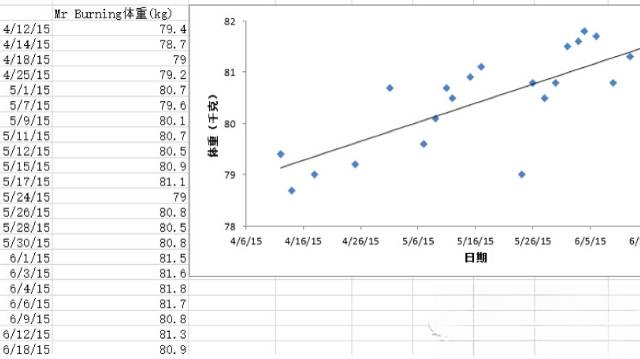
Accurate weight measurement is extremely important! Daily weight fluctuations are mainly due to changes in water content, and can vary significantly from morning to evening, sometimes by several kilograms. Different scales also have varying degrees of accuracy. The most accurate method is to measure your weight three times on an empty stomach each morning after using the toilet, and record the average as your daily weight. Continue this for a month, generating a graph in Excel to track the trend. Don't worry too much about whether your weight is lighter or heavier on any particular day.
Attached is my weight information for the past month, so my weight has been on an upward trend. If you find that your weight hasn't increased and the weight and repetitions you're using in your training haven't improved, then you should consider whether you've strictly adhered to your previous diet or whether your exercise intensity is insufficient, and make adjustments accordingly.
I know some beginners will still see this plan and want to use it. First, let me emphasize again: I don't recommend this plan for those who haven't passed the beginner stage and haven't truly mastered the training movements. This is not only because it's easy to get injured, but also because it's unsuitable and won't bring optimal growth. Different stages require different methods, which is a point often overlooked in fitness. More difficult or advanced training plans don't necessarily bring more growth, nor does more or longer training necessarily mean better results. Too much of anything is bad; what's appropriate is best.
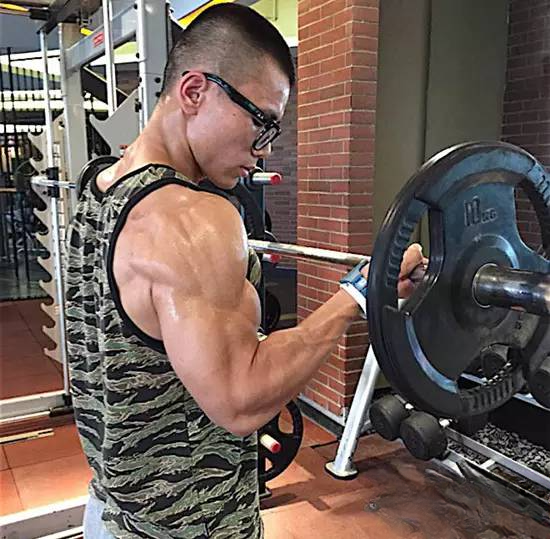
The plan is to train four times a week, based on a split between upper and lower body workouts. The sequence is as follows: heavy lower body day, heavy upper body day, rest day, lower body day for muscle growth, upper body day for muscle growth, rest day, and rest day again, forming a cycle. The overall plan prioritizes strength gain, with size gain as a secondary goal. However, this doesn't mean that significant muscle growth is impossible. For most average trainees, strength and muscle size growth are complementary, and prioritizing strength allows for better tracking. I believe everyone trains not just for pumps and enjoyment, but also to achieve growth. While you may not be able to directly see whether or how much muscle size has increased after each week's workout, you can clearly know whether you used heavier weights or did more repetitions. This is crucial for slow but consistent progress.
The plan centers on the three major exercises: squat, deadlift, and bench press, supplemented by auxiliary movements to form the overall training framework, with some non-mandatory optional exercises added for detail. Although this plan is more geared towards intermediate trainees, my current training content is only a slight adjustment to this plan. Therefore, if you want to use this plan, you must read it carefully from beginning to end; it's not as simple as you might think.
Weekly schedule
- Barbell Squats 3 sets of 5 reps -
Barbell Leg Raises
2 sets of 6 reps - Optional Exercise 1 3 sets of 8-12 reps -
Optional Exercise 2 3 sets of 8-12 reps
Tuesday: Heavy Weight Upper Body Day -
Barbell Flat Bench Press 3 sets of 5 reps
- Back Assist 1 3 sets of 6
reps - Shoulder Assist 2 sets of 6 reps
- Back Assist 2 2 sets of 6 reps
- Optional Exercise 1 3 sets of 8-12 reps
- Optional Exercise 2 3 sets of 8-12 reps
Thursday: Muscle Growth Lower Body Day
- Barbell Front Squat/Squat 5 sets of 8 reps
- Some form of deadlift - 3 sets of 8 reps
- Barbell/Dumbbell Alternating Lunges 3 sets of 12 reps, 6 reps each leg
- Prone Machine Leg Curls 3 sets of 12 reps -
Some form of calf raise 4 sets of 15 reps
- Optional Exercise 1 3 sets of 8-12 reps -
Optional Exercise 2 3 sets of 8-12 reps
Friday: Muscle Growth Upper Body Day
- Dumbbell Flat/Decline Bench Press - 4 sets of 8 reps
- Incline Dumbbell/Barbell/Machine Bench Press - 4 sets of 8 reps
- Back Assist 1 - 4 sets of 8 reps
with back assist exercise 2 - 4 sets of 8 reps
with shoulder assist exercise - 3 sets of 10 reps
with bicep exercises - 3 sets of 10 reps
with any exercise 1 - 3 sets of 8-12
reps with any exercise 2 - 3 sets of 8-12 reps
Assistive Action List
1. Barbell bent-over row
2. Dumbbell row
3. Seated horizontal row
4. Any horizontal back exercise
Shoulder assisted exercises
1. Seated/standing dumbbell shoulder press
2. Standing/seated barbell shoulder press
3. Any machine shoulder press
Back assisted exercises 2
1. Pull-ups (choose your preferred grip width)
2. Lat pulldowns
3. Any vertical back training exercise
List of optional actions
Upper body exercises (choose from
) : 1. Dumbbell lateral raise
2. Dumbbell bent-over lateral raise
3. Face pulls
4. Triceps pulldown
5. Reverse grip dumbbell bench press
6. Hammer curl
7. Dumbbell/EZ bar curl
8. Incline cable fly,
etc.
Lower body exercises (choose from)
: 1. Any form of leg press
2. Glute bridge
3. Hip thrust
4. Leg curls using various machines
5. Various forms of rear hip raises
6. Lunges
7. Various forms of calf raises using machines
, etc.
It's recommended to rest completely for 2-3 days before starting the plan, then choose a weight at around 80% of your maximum capacity for your heavy weight days. This means if your maximum squat is 150kg, your first day's squat plan would be 120kg for 3 sets of 5 reps. Completing the plan shouldn't be too difficult, but you don't need to do 6, 7, or more reps in the third set; just reach your target number of reps. Our goal is steady and continuous progress, so in the first few weeks, choose conservative weights to avoid exhaustion on heavy weight training days. Then, increase the weight by 0-5kg each week. That is, in the second week, it would be 125kg for 3 sets of 5 reps, and in the third week, 130kg for 3 sets of 5 reps. The training will gradually become more difficult, and in this process, your maximum capacity will gradually increase.
For other training exercises, it's recommended to start with conservative weights and gradually increase them later. The training plan itself is not easy; if you push yourself to the limit every time, not only will your physique suffer, but your willpower will also struggle. Take a long-term view; only in the long run will you achieve the best results. The reason for including 0kg is that as training progresses, you may not be able to make progress every week, especially for experienced trainees. Therefore, setting a goal of increasing weight every two weeks is more reasonable. However, for most people without sufficient systematic training experience, or those who haven't previously focused on strength training, if you follow the plan step by step and meet your nutritional and rest requirements, this period of stagnation usually won't occur for a long time, so there's no need to worry.
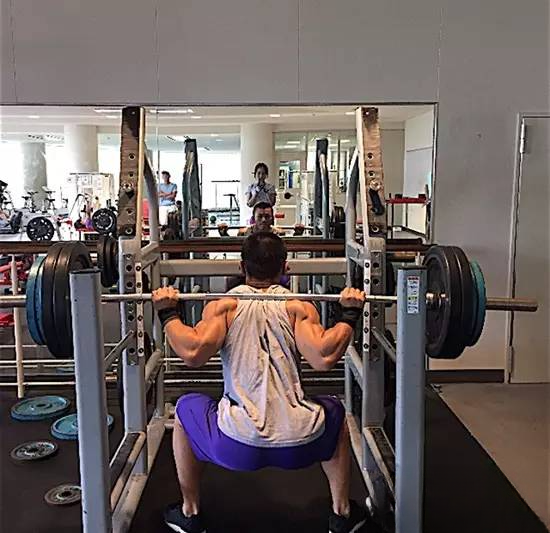
Ideally, on the three main weight gain days, you should aim to consistently add 0-5kg each week. However, as training progresses, each day becomes increasingly difficult due to the added weight, leading to accumulated fatigue and challenging recovery. Therefore, it's okay if you can't gain weight; focus on continued progress on heavy weight days. I suggest that if you feel tired later in your training plan, prioritize muscle pump and reduce the weight use on weight gain days, thus saving more energy for the heavy weight days the following week.
For auxiliary exercises, it is sufficient to maintain a progress rate of about 5kg per 1-3 weeks. However, in my personal experience, the increase in weight and speed of horizontal back auxiliary exercises is slightly faster than that of shoulder auxiliary exercises and vertical back auxiliary exercises.
If you don't know your true limit, you can Google or Yahoo search for "1rep max calculator," enter a weight and the maximum number of repetitions you can complete with that weight, and you'll get an estimate of your maximum repetition. Female trainees tend to increase the weight more gradually with each workout, and since most gyms in China often have weight plates as small as 2.5kg or 5 pounds, it's recommended to buy 0.5kg-1.25kg weight plates online if necessary.
It's important to emphasize the importance of being honest with yourself and taking responsibility for your training. Don't overestimate your true abilities, and don't assume that the weights you can lift with assistance are the weights you can handle. Most of the time, you won't need a spotter to complete your workout. Even if a spotter is needed, remember not to let them do extra repetitions after they've reached exhaustion; simply lift them back to the starting position. Furthermore, regardless of whether they've helped or you feel they've helped, if they make any contact with the barbell or your body during the movement, it doesn't count as you completing the exercise yourself. Be true to yourself.
The plan outlines the working group only and doesn't include a warm-up set. Personally, I usually start with dynamic stretching from an empty bar, doing two sets of 8-10 repetitions. Then I increase the weight to 40% of my limit and do one set of about 8 repetitions. Next, I increase the weight by 10-15% of my limit and do 3-5 repetitions, continuing until I approach my set weight. I always allow 1-2 minutes of rest between warm-up sets. The specific warm-up method can vary depending on personal preference, and the time required will differ from person to person. However, the principle is to slowly increase the weight until you reach the required weight for your set. Remember not to expend too much energy on the warm-up set.
The goal of the three main exercises on a heavy weight training day is to complete the plan. However, your training performance may fluctuate every day. Therefore, you can extend the rest time between sets to the length you feel you need. I personally recommend 3-5 minutes. If necessary, you can extend the rest time for squats and deadlifts.
As for auxiliary exercises, it is recommended to rest for 2-3 minutes per set, and choose any exercise for 1 to 1.5 minutes. On muscle growth days, since the goal is more on muscle pump, it is recommended to do squats, deadlifts, and bench presses for 2 to 2.5 minutes, other exercises for 1.5 minutes, and any exercises for about 1 minute. If you don't want to make your training time too long, you can choose not to do any of the optional exercises or to do exercises other than squats, deadlifts, and bench presses in supersets.
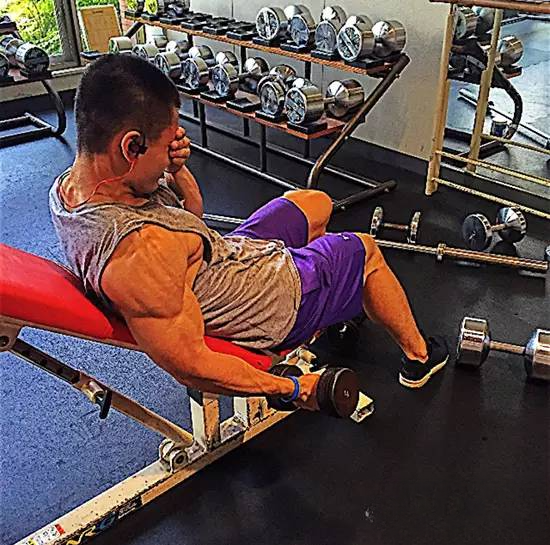
Prioritize your training. The most important exercises are squats, deadlifts, and bench presses. Next are designated auxiliary exercises, followed by optional exercises. Prioritize different exercises according to their importance and adjust them based on your available time. This approach will maximize efficiency and growth in the long run.
The aerobic portion was introduced in the first part of the Ultimate Muscle Building Guide. Following the points mentioned before, you can arrange it according to your needs and preferences without affecting the completion of your strength training plan.
As for abdominal muscle training, since the training plan includes many movements that require core strength to support, such as squats, deadlifts, rows, and shoulder presses, the abdominal muscles have already been trained to some extent. Since training should prioritize certain tasks, abdominal muscle training is not mandatory. If you want to train them, it is recommended to schedule it after each lower body day training session.
In comparison, lower body day training takes less time. Also, since the abdominal muscles are the antagonistic muscles to the lower back, excessive fatigue of the abdominal muscles on lower body day will cause the lower back to bear more pressure, thus affecting squat and deadlift training. Therefore, it is more reasonable to schedule training on lower body day. As for the training content, you can refer to FitTime's relevant courses.

As the program progresses, trainees at all levels will inevitably encounter periods where they cannot increase weight for several weeks in a row, which is the infamous plateau. To ensure that everyone can smoothly overcome this disheartening low point, we invited Trap Lord (FitTime App ID: Trap Lord) to help edit effective methods for getting through the plateau, including deload, improving movement technique, and adding variations.
Why do we encounter a plateau period?
First, we need to understand why we encounter plateaus. This stems from daily training. Training, simply put, aims to provide the body with a new stimulus. To adapt to this stimulus, the body must respond accordingly, primarily in two ways: increasing muscle size and improving the efficiency of the nervous system. According to prevailing theory, muscle growth comes from the accumulation of fatigue caused by appropriately intense stimulation and the subsequent supercompensation. However, this supercompensation limit is finite, like a credit card with a fixed monthly limit. Once exceeded, the body can no longer afford to pay. Therefore, training more doesn't necessarily lead to greater growth. If you schedule three to four training sessions a week according to a reasonable plan, you've reached your supercompensation limit. Training more than that is not only a waste of time and energy but may also have negative effects.
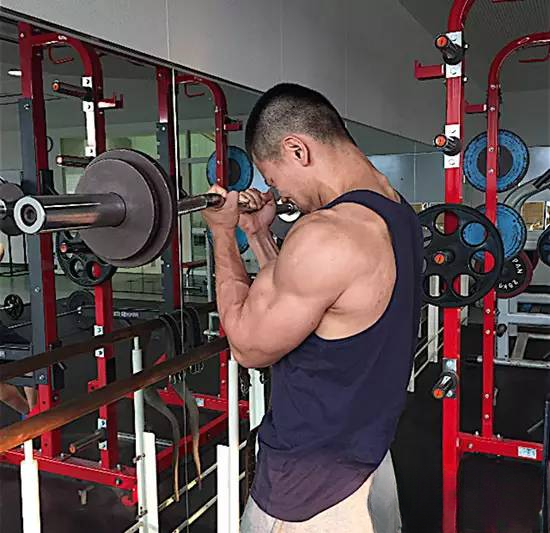
As per the plan, the training weight should be steadily increased each week. According to the formula training load volume = training weight x number of repetitions, it is not difficult to see that the total training load is increasing every week. At the same time, continuous training will also lead to the accumulation of fatigue in your nervous system and affect hormone levels. Under such circumstances, the weight that you could previously complete may become very difficult for you, and steady increase will be even more unrealistic.
For non-advanced trainees, plateaus are often not related to training methods or techniques. They are usually caused by not choosing the right training intensity or by using advanced training techniques in a way that prematurely depletes the body. This is why proper deload is the best way to overcome plateaus.
Deload
What is deload? As the name suggests, it's giving yourself a chance to relax your mind and body after a long period of high-intensity, high-load training. Deload should ideally be included in a comprehensive plan.
The human body cannot operate at high intensity and efficiency indefinitely. Therefore, after a period of high-intensity training, you always need some means to help your body recover. It's not just about the absence of muscle soreness indicating full recovery; there are also neurological and psychological considerations. Everyone's training stage is different; generally, the higher the training level, the more frequently deload is needed within the same timeframe. The specific frequency of deload varies from person to person, but for most readers of this guide, it's advisable to start deloading when you cannot complete your planned exercises in squats, deadlifts, or bench presses, and you fail to do so for three consecutive weeks using the same weight. It's also recommended that after 6-8 weeks of continuous training, regardless of the training situation, schedule a deload week, or take 3-7 days of complete rest without any strength training. Give yourself a chance to relax and unwind; going on a trip is also a good option, as regular training inevitably impacts your daily life to some extent.

Heavy lower limb day
For barbell squats, perform 4 sets of 5 reps, using 60%-70% of your set weight beforehand, or 50%-60% of your 1-rep max.
Perform 5 sets of 3 reps with a barbell bent-leg deadlift. Before using this set, use 60%-70% of your usual weight or 50%-60% of your 1-rep max.
Heavy upper body day
For the barbell flat bench press, perform 3 sets of 5 reps, starting with 60%-70% of your set weight or 50%-60% of your 1-rep max.
Assisted back exercise 1: 2 sets of 6 repetitions using 60%-80% of your previous training weight.
Shoulder assisted exercises, 2 sets of 6 repetitions, same as above.
Back Assist Exercise 2, 2 sets of 6 repetitions, same as above.
Thursday is the lower limb muscle growth day.
Perform 5 sets of 8 reps with a barbell front squat/deep squat, using 60%-80% of your previous training weight.
Some form of deadlift - 3 sets of 8 reps as above
Barbell/dumbbell alternating lunges - 3 sets of 12 reps (6 reps per leg) Same as above
Prone leg curls with machine, 3 sets of 12 reps, same as above.
Some form of calf raises, 4 sets of 15 repetitions, same as above.
Friday is Muscle Growth Upper Body Day.
Dumbbell flat/decline bench press - 4 sets of 8 reps using 60%-80% of your previous training weight.
Incline dumbbell/barbell/machine bench press - 4 sets of 8 reps as above
Back Assisted Exercises 1-4, 8 repetitions each, same as above.
Back-assisted exercises 2-4 sets of 8 repetitions (same as above)
Shoulder assisted exercise - 3 sets of 10 repetitions as above
Bicep exercises - 3 sets of 10 reps as above
Deload schedule
If you are training regularly and diligently, it is strongly recommended to train for 6-8 weeks, then follow a deload week for one week, and then restart the plan using the same weight from the previous week to better prepare for a new round of growth. If you feel you are making steady progress and don't want to deload, then you can continue training according to the plan. If you are only unable to complete the plan with the same weight in one of the three major lifts for three consecutive weeks, then simply change the plan for that lift to the heavy weight training day of the deload week, and keep the rest as usual. For example, if you can't complete the squat, then do squats with reduced weight for one week, and use the same weight for the deadlift.
As we can see, the main focus of deload week is adjusting the weights. Firstly, this reduces the training load to aid recovery. Secondly, it provides an opportunity to practice your form with lighter weights. Don't underestimate the training just because the weight is light; strive to perform the movements as perfectly as possible. Improved technique greatly benefits both training completion and safety. Also, as previously suggested, you can change auxiliary exercises every 3-4 weeks. Deload week is a great opportunity to practice these changes, because even if you know how to do an auxiliary exercise, you'll need to relearn it if you haven't used it much recently. Furthermore, all optional exercises have been removed. The reason is simple: avoid sacrificing long-term benefits for short-term gains. Deload week is about giving yourself a chance to recover; there's no need to add exercises that increase fatigue.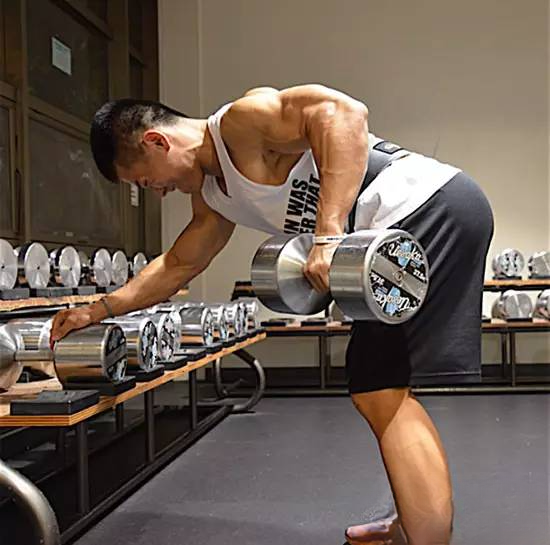
Aerobic activities during Deload
Regarding aerobic exercise during this period, in line with the deload principle, it is recommended that those who previously focused on HIIT switch to slow-paced aerobic exercise, those who primarily focused on slow-paced aerobic exercise reduce it to walking, and those who did not include any aerobic exercise at all are advised to include 2-3 sessions of 15-minute jogging. After all, the plan should be as comprehensive as possible. With the load of strength training significantly reduced, incorporating a small amount of aerobic exercise at this time is a good way to promote physical health and dynamic recovery.
During deload, experienced trainees are also advised to incorporate some explosive training into their routines, such as 30-50 meter sprints, high jump, long jump, or box jumps. These exercises are not as intense as weightlifting, but they greatly improve overall physical function.
What should you do if you encounter a plateau during this period?
In fact, for most trainees using this program, if you really follow it strictly and take good care of your diet and rest, it is almost impossible to encounter a real plateau before the sum of the three maximum weights reaches 4.5 times your body weight.
What would an expert do if they encountered such a problem? There are two main approaches to overcome it.
First, it's related to recovery. Advanced athletes require longer recovery times after each training session, and may not achieve consistent growth due to improper training intensity over a period of time. In this case, you can appropriately reduce the number of sets and repetitions per training session, since the weights you're lifting are heavier, and the total training load on your body is greater than for other trainees. Alternatively, you can appropriately extend the interval between training sessions to give your body more time for sufficient recovery, thereby ensuring the quality of the next training session.
Second: Identify the sticking points in your movements. You've probably experienced this: you always fail the bench press at about 5 centimeters above your chest, or you can't go higher in the squat, just past the horizontal plane. These specific points become your sticking points in strength training. You can target and effectively overcome them through special training methods and techniques. Due to space limitations and the focus on intermediate trainees, I won't go into detail here. If you encounter difficulties in this area and need help, Trap Lord and I will release more advanced tips on how to overcome sticking points later, so feel free to follow us.
Whether you scrolled to the bottom or read every word, thank you for your support. Regarding fitness, most trainees don't need to approach it like a scientific study, but the benefits of patiently learning and observing will far exceed your expectations. Although no one has taught me, I am serious about helping more people become better.