The most comprehensive guide to custom furniture hardware! Everything you need to know about hardware in this one article.
Let's first understand one thing: whole-house customization uses basic hinges, and you have to pay extra if you need to upgrade.
Basic hardware often serves to connect various parts of a cabinet, including common hardware such as drawer slides, hinges, handles, and screws, which are indispensable parts of furniture.
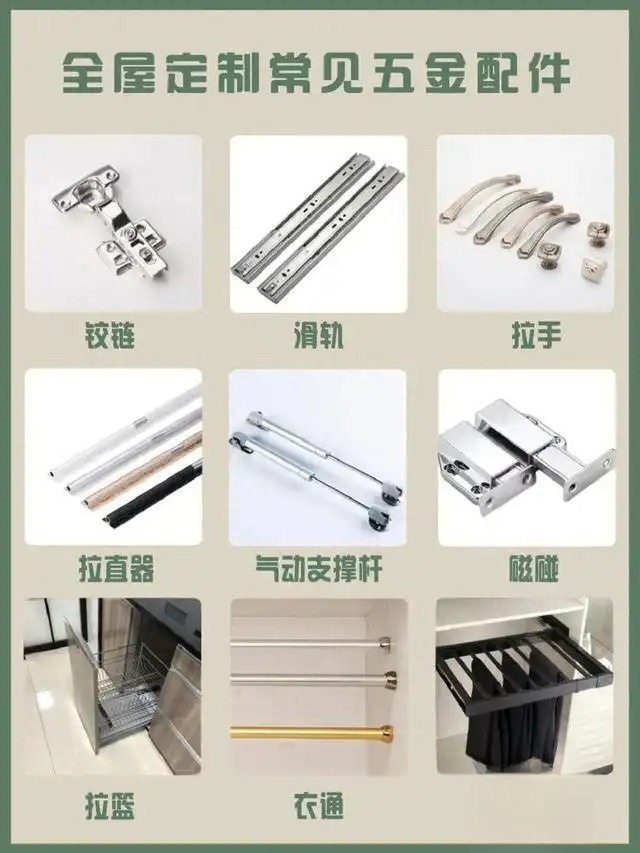
Hettich, Blum, and Hagor are all well-known domestic and international brands.
Dongtai DTC, Hango, Dinggu, and Nuomi are domestic hardware brands. When getting whole-house customization, be sure to ask about the hardware brand.
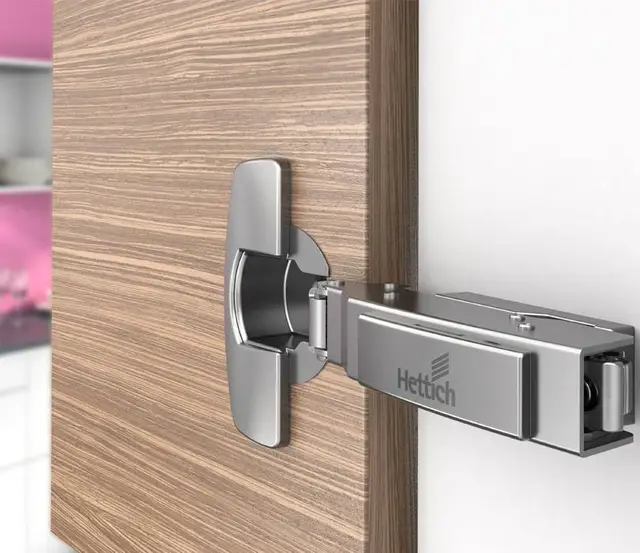
Today I'll share some important considerations when choosing hinges, clothes rails, drawer slides, and handles:
The first step in whole-house customization is to choose the right hinges.
It is a core component of basic hardware . Hinges bear the brunt of multiple opening and closing operations every day, as well as the weight of the door panel. If the wrong hinge is chosen, it will not only affect the user experience but may also create safety hazards.
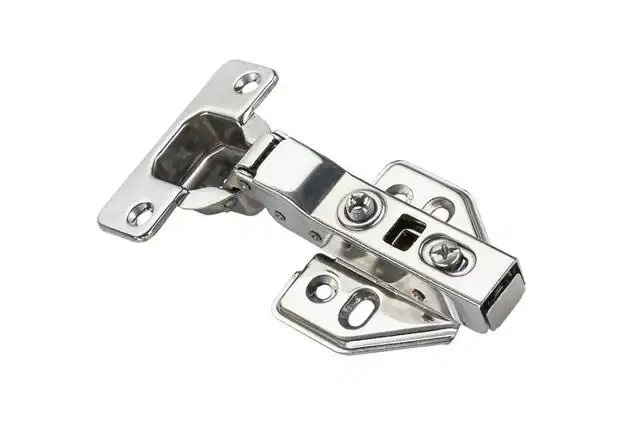
Selection criteria
1. Material considerations: Choose stainless steel hinges (stainless steel is relatively stable and recommended for use in humid environments such as kitchens and bathrooms, as it is less prone to rust and corrosion). Avoid iron and zinc alloy hinges.
2. Performance considerations: For a better user experience, hydraulic hinges (also known as Yangni hinges) have emerged. Their feature is a buffer function when the cabinet door closes, minimizing noise and impact from the door colliding with the cabinet body.
3. Robustness considerations: Open the hinge to 95 degrees and press firmly on both sides. Observe whether the supporting spring plates deform or break; a robust hinge indicates a qualified product.
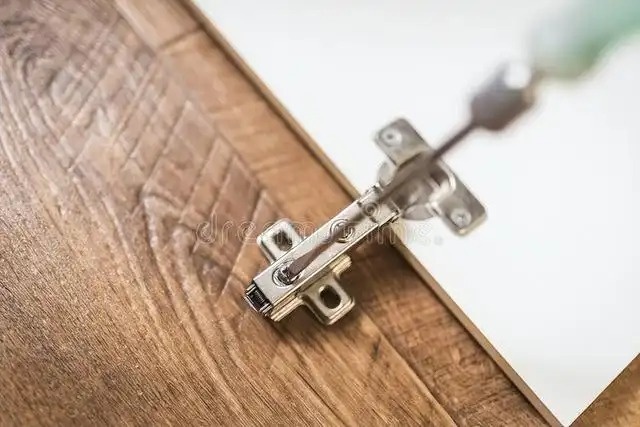
Slide rail type classification
Drawer slides, also known as guide rails or slide tracks, are hardware connecting parts fixed to the cabinet body of furniture to allow drawers or cabinet panels to move in and out.
Side-mounted slide rail:
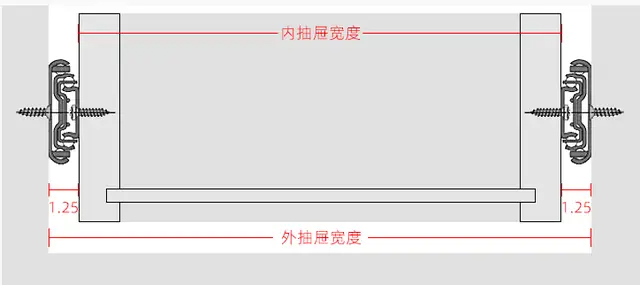
Side-mounted drawers are the most common type in households, installed on the left and right sides of the drawer, and the most commonly used drawer slides are about 12.5mm thick.
Bottom support slide rail:
The drawer slides are installed at the bottom of the drawer, which makes it look cleaner. Since there are no tracks on the sides, the width of the cabinet can be increased, but the depth needs to be reduced. It is often used in dead space in stairwells.

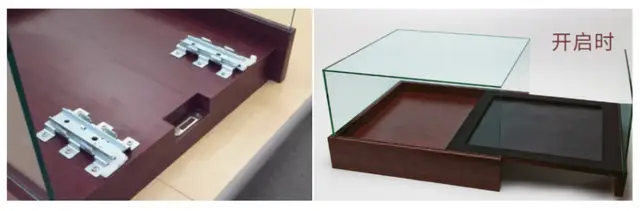
Undermount concealed sliding rail:
The drawer slides are installed at the bottom, so they are not visible when the drawer is pulled out. Compared to other drawer slides, the concealed slides have a lower load-bearing capacity but a more aesthetically pleasing appearance.
Selection criteria
1. Check the material: Common drawer slides are made of cold-rolled steel, stainless steel, or powder-coated steel. If the surface is uneven, it indicates that the material is of very poor quality, and it is not recommended to buy it.
2. Check the load-bearing capacity: The load-bearing capacity of a drawer is often determined by the quality of the drawer slides. When purchasing a bathroom vanity, you can first pull the drawer out completely, then press the front of the drawer with your finger, and constantly observe the forward tilt of the drawer. The smaller the forward tilt, the stronger the drawer's load-bearing capacity, and vice versa.
3. Examine the internal structure: The internal structure of the drawer slides is essentially a lever structure. The precision of the slides' fit directly affects their load-bearing capacity.
4. Check the smoothness: Feel its tension and strength.
Some sliding rails have a high force requirement, making it very difficult to open and close doors, so they are not recommended for purchase.

Clothing
A clothes rail, also known as a clothes hanging rod, consists of a base and a rod. Because clothes rails are used to hang clothes for all four seasons, their rigidity and load-bearing capacity are crucial. A high-quality clothes rail is not only slip-resistant but also durable and won't deform over time. It is typically made of aluminum alloy.


Selection criteria
A door hinge support refers to the support rod in furniture, also called a gas spring. It generally consists of a pressure tube, piston, piston rod, and several connecting parts, and is filled with high-pressure nitrogen. The one-button opening effect of kitchen cabinets and wall-mounted cabinets is achieved through a gas spring. Gas springs are divided into ordinary gas springs and freely adjustable gas springs. The freely adjustable gas spring offers a better user experience, allowing you to easily stop the door at a suitable height/angle, preventing head bumps and ensuring the door doesn't open to an unreachable height.
Handle
Handles are the most common hardware items we see with the naked eye, mainly divided into external, recessed, and concealed types. Nowadays, due to concerns about family members bumping into them, or for aesthetic reasons and a pursuit of a minimalist home décor, recessed and concealed handles are more common. For handle-free systems, the use of push-back mechanisms is not recommended.

Selection criteria
1. Choose the right material: Handles are made of a variety of materials, the most common of which are metal materials such as copper, zinc alloy, aluminum alloy and stainless steel, and non-metal materials such as leather, plastic and wood.
2. Pay attention to the appearance: In addition to the material, the appearance of the handle is also one of the factors to be considered. Generally speaking, common home decoration styles have corresponding handle materials that can be matched.
Notice:
1. Although handles are small, they deserve attention. Many cabinets have different types of handles, so it's important to communicate in advance. Choosing a designer who shares your vision can help avoid many problems beforehand.
2. If you need custom handles, you need to patiently confirm the key dimensions and specifications with the seller.
3. During installation, be sure to check everything on-site. If any mistakes are made, it will be very troublesome to repair the cabinet.