Talking about "bed culture": Humans have always made beds for more than just sleeping! | Interesting history
This was not said by Liao Ye, but a famous saying of Maupassant.
The bed is not just for sleeping, it can also reflect the human nature. The bed is a symbol of life, or even the person himself!
In this issue, I will talk to you about "beds" and see what social and cultural significance a bed carries in the history of the East and the West.
The bed: both for practicality and for show.
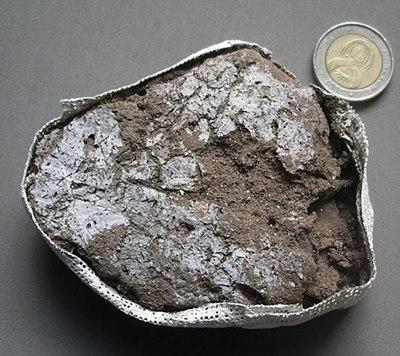
Oldest bed insect repellent found in South Africa
The oldest bed found in the world dates back 77,000 years to South Africa. It was spacious and covered with a grass mat to repel mosquitoes.
If beds were originally designed to provide a comfortable place for people to sleep, then with the differentiation of social classes, beds have become a display of wealth and status. This is just like our bags. When people have bags to carry things, more luxurious bags become symbols.
The bed first showed its "ostentatious" and "luxurious" attributes in the East.
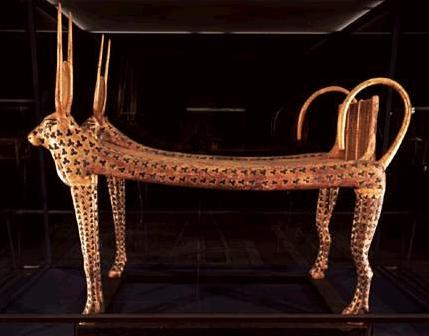
Ancient Egyptian golden bed
For the daily life of the ancient Egyptians, sleeping or lying down was an extremely important thing. The pharaoh was the most supreme, so his bed was naturally luxurious. The most precious gold and silver materials were used, and the decorations were also unique. For example, the golden bed used by the 18th Dynasty Pharaoh Tutankhamun was made of wood covered with gold, and the legs were carved into the shape of bull legs or lion legs. As the largest piece of furniture, the dignitaries naturally attached great importance to the bed.
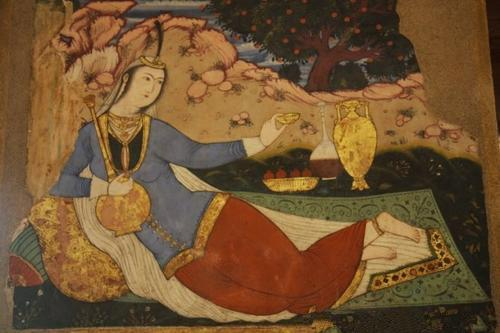
Ancient Persian miniature painting, a luxurious bed with many gold and silver items beside the bed.
In addition to ancient Egypt, the flaunting of beds also existed in ancient Persia, ancient Assyria and ancient Medes . If it was just a place to sleep, there was no need to decorate it extensively and inlay it with patterns made of precious metals, pearls, ivory, etc. In particular, the beds of the ancient Persians were extremely magnificent. There are such descriptions in ancient books: Sitting on a golden sheep bed, wearing a golden flower crown, wearing a brocade robe and a woven cape, all decorated with pearls and treasures.
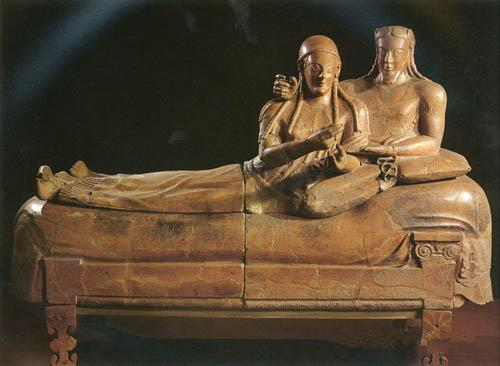
"Couple on a Coffin", Ancient Roman Bed
The luxury of beds in the East also spread to the West. Roman historian Livy wrote in the 1st century BC that the luxury items included "expensive bedspreads" that were originally brought to Rome by Asian troops. The luxurious ancient Roman nobles would naturally not miss such an opportunity to show off their status.
However, do you think that this trend of "showing off wealth with beds" only existed in ancient times? It has existed since ancient times and continues today .
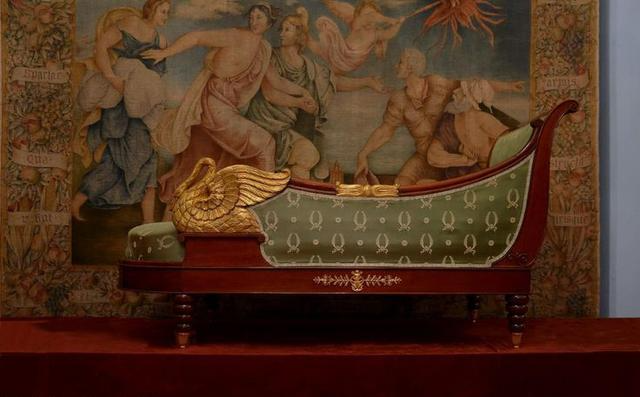
18th century French chaise longue
The French duchess is called Duchesse, which became popular in the 18th century around the 1750s. This aristocratic lazy feeling of half sitting and half lying comes entirely from the court of Versailles. If it is not for showing nobility, why is this half bed and half chair not called a "commoner's couch"?
As Braudel said: Until the 18th century in European civilization, many of the furniture that seems to be the most basic today still did not belong to the poor . The most authentic document is the property list drawn up after the death of people at that time. In Burgundy from the 16th to the 18th century, records often mentioned that people "slept on straw mats without beds and furniture."
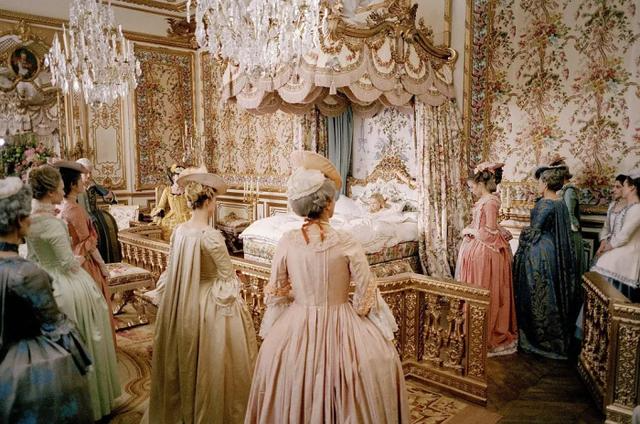
Still from "Marie Antoinette", Queen Mary's bed in the 18th century.
It can be said that for a long period of history, beds remained a luxury for ordinary people.
Beds: From public to private
If today you saw your husband in bed with another person of the opposite sex, you would know what was happening without any explanation.
However, the conventional wisdom that a bed is a private object did not exist before the 19th century.
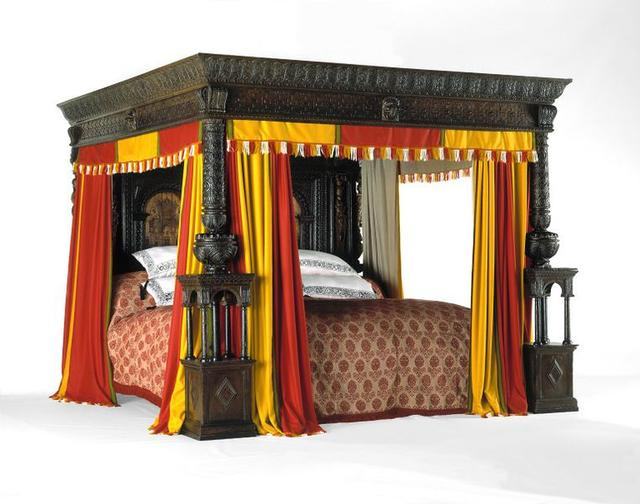
Wells Bed, 16th century England
In Shakespeare's Twelfth Night, first performed in 1601, there is a reference to a bed: big enough for the Bed of Ware!
This Willetown bed was made in 1590. There is a reason why it is famous. It has four oak bedposts and is more than 3 meters wide. It can accommodate almost 15 people at the same time. The exaggerated size and complicated decoration are astonishing.
The bed was likely created to attract customers to an inn in Wear, Hertfordshire, and it is said that in 1689, 26 butchers and their wives - a total of 52 people - spent the night in it.
This tradition of travelers sharing a bed with strangers was not unique to Britain. In Mongolia and Mongolia, kangs – heated stone beds – were first used in inns as early as 5000 BC . Guests brought their own bedding and shared a bed with fellow travelers.
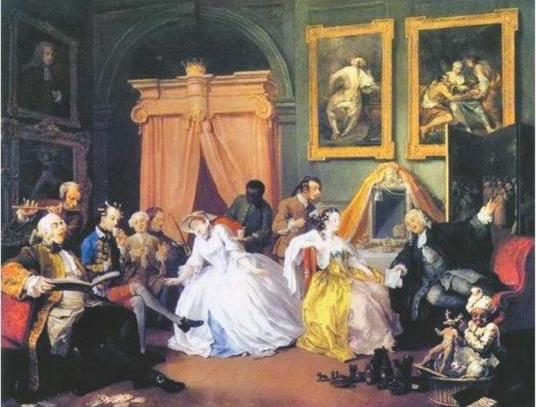
In the 18th century British painting by Hogarth, the bed appears in a prominent place
Even in the 18th century, the British would put their most precious big bed in the most conspicuous place in the house so that guests who came to the house would see it. Of course, such a bed was not for sleeping on themselves, but was provided to them when important guests came.
Even in the French upper class, which valued individuality and elegance, the master's bed was still often placed in the living room in the 17th century, and the privacy of the bedroom was still not a concept among people.
The importance of privacy did not begin to be attached until the 19th century . This was not unrelated to religion. Sharing a bed with strangers or friends was no longer in line with the Puritan rules and regulations. After all, Puritanism highly emphasized marriage, chastity, family, and the bond between parents and children. As a result, people began to attach importance to privacy, and beds and bedrooms began to develop into private areas and private items.

A ward in a Venezuelan hospital in the 1950s
Nowadays, the boundaries of a bed can be expanded to a lot. People read books, play with mobile phones, use computers, work, and eat on it. If they don’t get out of bed for a day, they can probably complete a good day.
One bed, one world!
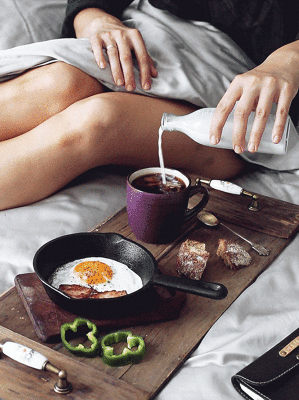
Bed: A projection of etiquette
Finally, let’s take a look at the profound bed culture .
In ancient times, people's attitude towards beds had already gone beyond the basic usage attitude and rose to the realm of culture and aesthetics. As a country of etiquette, "Confucianism" endowed beds with specific etiquette concepts.
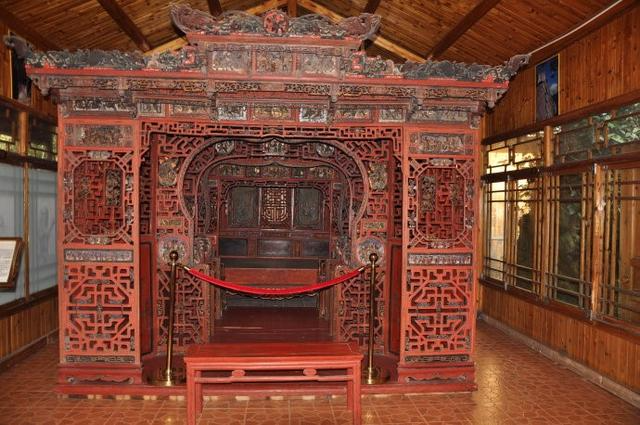
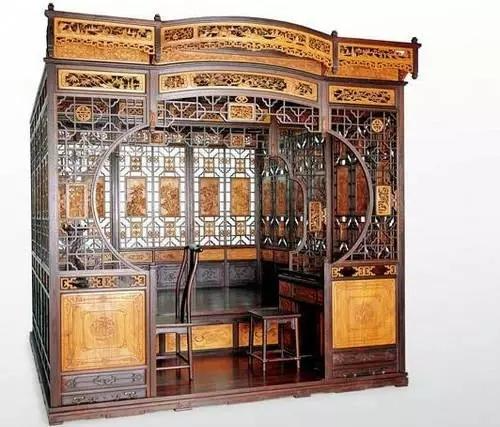
Step-out bed
Let's talk about the wedding bed first . The ancients attached great importance to the wedding bed, one of the most important items in a red event. Some families used a canopy bed as the wedding bed, but more often, wealthy families were willing to spend a lot of money to build a step-out bed . This kind of bed is particularly exquisite in art, and is covered with different carvings and paintings, most of which are auspicious patterns and some drama stories, folk legends, etc.
For example, Baoyu in A Dream of Red Mansions, as a minor, although he is precious, he cannot violate the etiquette. Baoyu's bed is a relatively simple bunk bed.
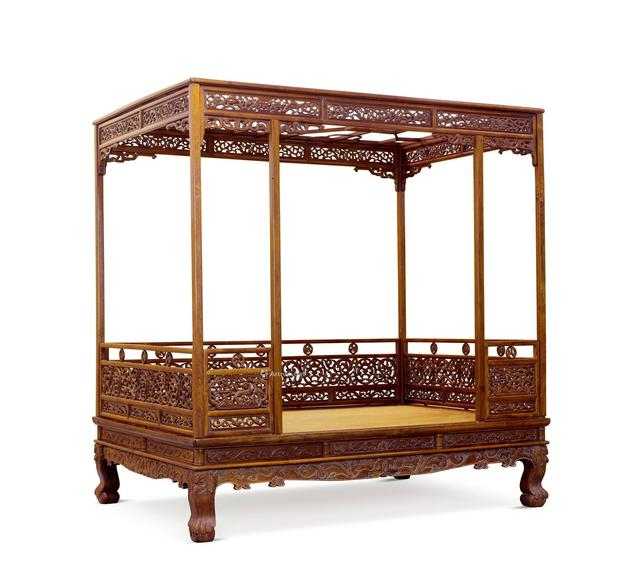
Bunk bed
The bunk bed is considered to be the most suitable bed for underage children and grandchildren to sleep on .
The bed body is relatively hard, which is suitable for the development of the spine of teenagers and children, which is conducive to their being more upright. It also implies that the descendants should stand up straight in life, which is conveyed in an implicit and silent way. Moreover, its workmanship is relatively simple. It does not have the complicated shape and carvings of the step-out bed, and the patterns are mostly elegant literati patterns such as plum, orchid, bamboo and chrysanthemum, which are used to cultivate children's sentiments and remind children not to indulge in luxury and pleasure and waste too much useless energy in bed.
These designs are the ancients' earnest expectations for their descendants, and they embody our educational philosophy.
Longevity Bed
As a matter of seniority, the elderly should be given a longevity bed to sleep on .
This kind of bed is passed down from generation to generation, which means the continuation of the family line. The bed for the head of the family is naturally very particular about the materials and patterns, and the patterns are mostly themed with auspicious stars, pine trees and cranes for longevity, reflecting the ritual sense of respecting and loving the elderly in traditional filial piety.
Each type of bed is a manifestation of ancient cultural order.
————————
The bed is a place for human beings to rest. It gives people a sense of informality and friendliness. When human beings get rid of the panic pressure of survival, the bed, a luxury product, comes into being. It means that human beings do not have to lie on the floor, but have the conditions and the energy to make themselves sleep more comfortably.
From that moment on, human evolution also promoted the evolution of beds, and human social culture was projected onto bed culture. Beds are the physical image of life. A person may sleep in many beds in his lifetime. A bed is a life lens, and countless life lenses make up the entire life scene.