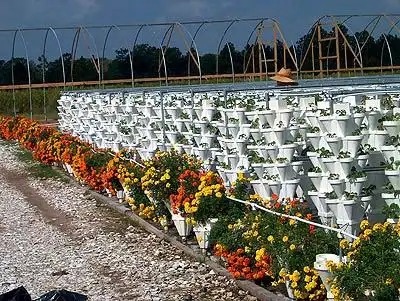
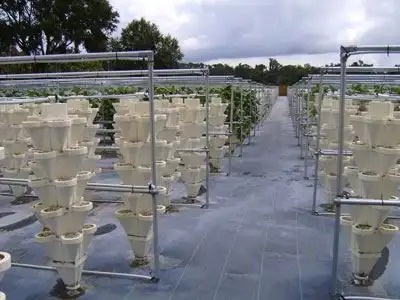
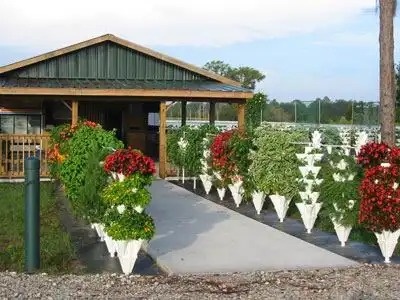
Stack gardening will be a relatively easy technology to promote in the development of vertical agriculture.
| Stack gardening will be a relatively easy technology to promote in the development of vertical agriculture. |
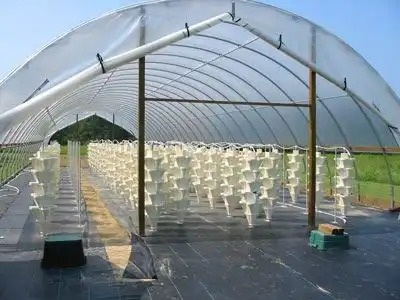
Horticulture encompasses vegetables, flowers, and herbs; broader horticulture even includes edible fungi. Stacked horticulture, as referred to here, is a technical system that utilizes a three-dimensional stacking method for planting flowers, vegetables, and herbs. By stacking, spatial development plans are achieved, increasing the utilization rate of unit area several times over, maximizing photosynthetic efficiency, and transforming field operations into vertical, mobile management—a superior model of labor-saving agriculture. This spatial development and forest-like layout significantly increases greenhouse utilization and improves ventilation, particularly optimizing the ventilation of the lower leaves compared to flat planting, thus reducing the incidence of pests and diseases.
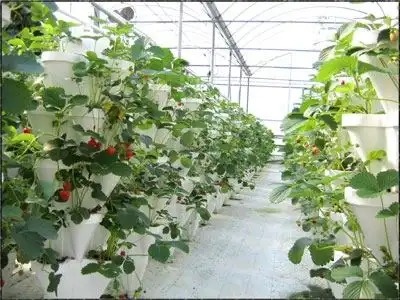
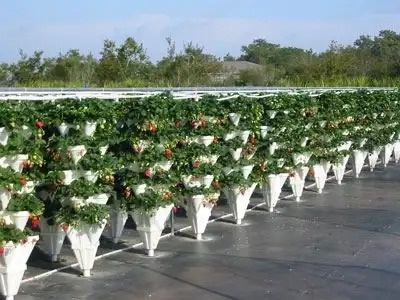
Stacked horticulture is a soilless cultivation technique using substrate. It employs inert materials such as perlite and vermiculite as fillers, combined with elevated drip irrigation for fertilization and water supply. Growth is controlled by adjusting the nutrient solution and irrigation frequency, creating a highly manageable, automated soilless cultivation model. It is poised for widespread application in future facility cultivation, particularly for strawberries requiring clean cultivation. Stacked cultivation offers several advantages: firstly, it allows the fruit to remain suspended and uncontaminated by soil; secondly, improved light and ventilation enhance coloring and sugar content; thirdly, it enables upright harvesting, facilitating the development of tourist-oriented self-picking gardens; and fourthly, it allows for the cultivation of dwarf vegetables or herbs into tree-like and forest-like arrangements, creating a highly attractive sightseeing environment and representing a major model for urban agricultural development. The following section introduces its planting characteristics, management aspects, and key production measures for reference by horticultural producers in various regions.
1. Construction technology: The construction of a stacking system includes three aspects: first, the selection of stacking containers; second, the application of irrigation systems; and third, the realization of nutrient solution circulation control.
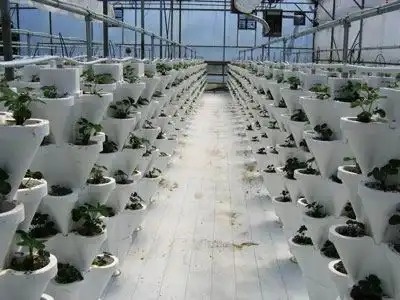
Stacking containers typically use common flowerpots or specially made four-lobed conical-bottomed pots. The former are easier to obtain; generally, square or polygonal pots with slightly smaller bottoms are suitable. The smaller bottom allows for sufficient planting space after stacking, while the square or polygonal shape helps to isolate the plants, allowing cultivation at each staggered corner. Currently, the most aesthetically pleasing professional stacking plastic containers are primarily four-lobed conical pots. Stacking them provides more planting space and better substrate aeration and drainage, facilitating nutrient solution irrigation and root oxygenation, resulting in better plant growth and a relatively larger growing space – a most scientifically sound design. When constructing the stack, the flowerpots are connected in series at the center, gradually stacking them. PVC plastic pipes can be used for connecting, supporting, and reinforcing the structure, and can even serve as irrigation outlets. Simply fill the pots with substrate while gradually connecting them; the operation is simple and easy to learn.
B. After stacking, arrange the plants according to row spacing, generally in a neat arrangement, but sometimes a clump-like, bush-like arrangement is used, similar to planting trees to create a neat row and plant spacing layout. However, if the nutrient solution irrigation uses a recirculation system, it is best to place the bottom stacking basins on the return ditch or seal the bottom to the return pipe. If a recirculation irrigation system is not used, simply bury and fix the stacking units in series to the ground. After all the layout is complete, the next step is to install the irrigation pipes. It is generally best to install the pipes at the top of the connecting rods of each unit, neatly installing and fixing each row at the top, and leading 1-4 drip irrigation micro-soft tubes from the top basin. The nutrient solution from the gravity drip irrigation can slowly seep down to the lower stacking basins, achieving the effect of substrate irrigation. For large areas, a water pump can be used for electric irrigation to deliver water over long distances. Irrigation systems are generally easier to construct and lay out using black irrigation hoses, which are also easier to move and adjust in the field, and facilitate drilling holes in the pipe walls for drip irrigation.
C. Power and Control: After all construction is complete, connecting the power pump and controller for the nutrient solution circulation is crucial for achieving automated irrigation management and is essential for scientific fertilizer and water management. Control methods for irrigation in stacked systems include intermittent timed control using timers, and intelligent precision irrigation based on substrate moisture indicators. The former requires less investment, simply connecting the supply pump to a timer for timed supply and circulation irrigation. The latter utilizes computer-controlled technology combined with precise substrate moisture sensors for highly accurate digital management, allowing for manual substrate settings or flexible adjustments based on climate and growth stages. Of course, highly intelligent systems can also incorporate external humidity and temperature for more specialized expert management. For example, when temperatures are high and plant water requirements are greater, the frequency and amount of irrigation can be increased appropriately, making the most scientific adjustments and controls to create optimal fertilizer and water conditions. This is the advantage of intelligent systems—their ease of use and accuracy—a key element in achieving factory-scale automation in stacked horticulture.
2. Cultivation characteristics:
A. Essentially, composting is a soilless cultivation technique using substrates, which also involves the preparation and control of nutrient solutions. Currently, nutrient solutions used in substrate cultivation are divided into organic and inorganic nutrient solutions. The former is generally based on compost liquid, while the latter is a mixture of thirteen complete inorganic elements in a specific formula. Of course, if organic substrates are used as fillers, organic substrate cultivation can usually be done by watering with plain water, without the need for specially prepared nutrient solutions; only periodic irrigation with chemical fertilizer solutions is required. Generally, for inert perlite and vermiculite cultivation, the pH of the nutrient solution should be adjusted to 5.2-6.2 , which is suitable for the growth of plants such as strawberries and leafy vegetables. The concentration of the nutrient solution, i.e., the EC value, can be implemented according to the nutrient solution management plan for hydroponics or a phased development adjustment plan, with little difference from hydroponics. The key is to control the frequency and humidity of irrigation, ideally using optimal humidity. Optimal humidity refers to the different humidity and fertilizer requirements at different developmental stages, forming an irrigation system. With the adoption of intelligent control, this has become quite simple; only phased parameter settings are needed.
B. The plants cultivated are typically vegetables and fruits with relatively weak root systems to prevent nutrient competition between potted and unpotted plants, which can lead to uneven growth. Shallow-rooted plants such as strawberries, lettuce, leafy greens, carrots, and flowering plants are generally preferred. The height and spacing of the planting units also need to be considered, generally ensuring that the lower plants receive at least 5 hours of sunlight daily. Overly dense planting will affect the uniformity of growth and quality. Daily management mainly involves checking the growth of the units and the penetration of fertilizer and water. Units with poor penetration should be checked and adjusted promptly, and clogged drip irrigation heads should be cleared immediately. In short, its management is as easy as soilless cultivation, requiring minimal manual labor to achieve excellent yields and results. It is a new technology ideal for urban residents, and even people with disabilities can manage it with ease and convenience.
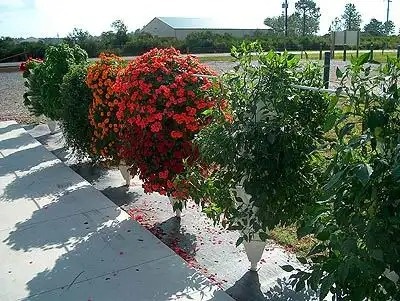
C. Stacked horticulture is a widely applicable new technology that can be used for landscaping and cultivation of flowering plants, construction of tourist strawberry picking farms, production of high-quality leafy vegetables, and industrialized farming management. It is a fundamental technology representing the future trend of vertical agriculture and is also the most practical and easily promoted new technology.
In conclusion, stacked gardening, whether for production, garden, or commercial purposes, has immense potential for widespread application. While production-oriented applications require a large initial investment, the system can significantly reduce management costs and increase land utilization. Garden-style gardening allows for the production of more fruits and vegetables on a small plot of land, while also achieving the effects of landscaping and beautification, making it a three-dimensional technology for cultivating in the limited spaces of family balconies and rooftops. The development of system materials and components for commercial applications is also a highly promising investment project. Its simplicity, adaptability, and aesthetic appeal will undoubtedly be accepted by producers and citizens alike. The professional operation of accessories and components will also be a major trend and direction for future gardening product operators. Investing in stacked gardening will surely bring you a vast market.
|
|
|
|
|
|
|  |