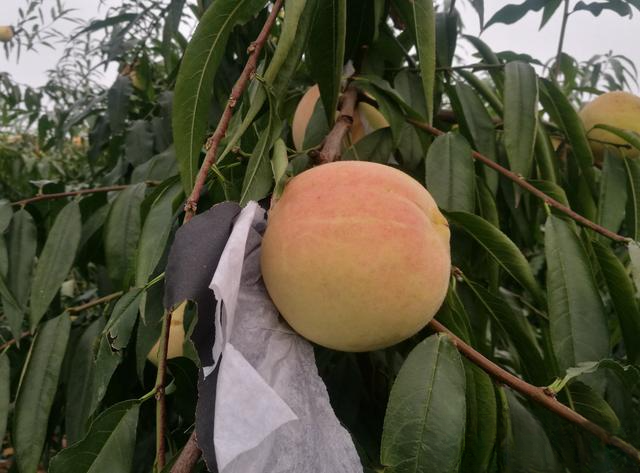
Six main types of pests appear and cause damage to peach trees after flowering. What integrated pest management measures are most effective in controlling them?
Foreword
Six types of pests that will appear after peach blossoms: aphids, scale insects, spider mites, green mirid bugs, pear fruit moths, and apple leafrollers. Some fruit growers have asked how to control these pests. When it comes to control, many people first think of pesticides. However, we now advocate ecological control, so here we will focus on discussing key integrated pest management measures centered on ecological control.
I. Scientifically manage orchard hygiene and tree health
Many pests reside in orchards year-round, and timely removal of pest sources is crucial for pest control during the growing season. Dead branches and rotten leaves, pruned branches, thinned flower and fruit branches and leaves, and weeds in the orchard are all places where pests overwinter or are active during the growing season. It is essential to keep the orchard clean and hygienic.
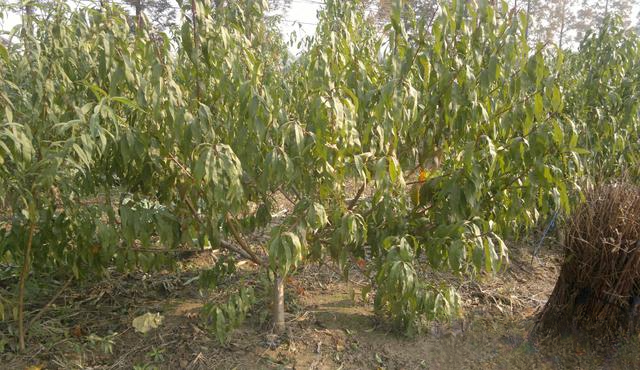
Untidy orchard management leads to more severe pest infestations.
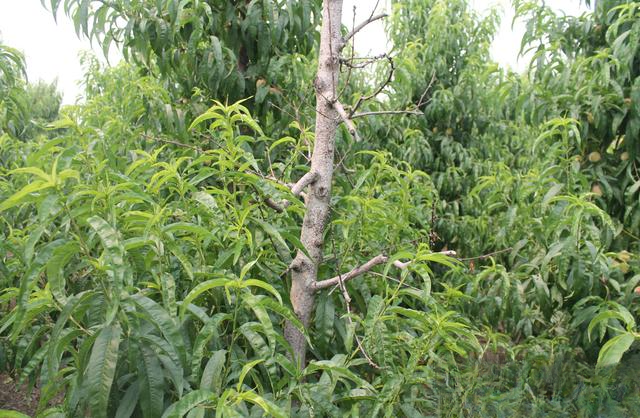
The orchard is severely infested with scale insects, and some trees have even died.
Maintaining healthy fruit trees is fundamental to preventing and controlling pests and diseases. Many pest and disease problems are related to the unhealthy state of the fruit trees; excessive nitrogen fertilizer can promote spider mite outbreaks. Therefore, regular orchard nutrient analysis and diagnosis should be conducted to maintain a balanced nutrient supply to the trees. Hygiene and health maintenance are essential for resisting pests and diseases.
II. Orchard ground cover helps reduce pest damage.
Intercropping green manure with sod in orchards is an important measure for pest control. Green manure not only increases soil organic matter but also improves the orchard's micro-ecological environment. It significantly enhances orchard biodiversity. When suitable green manure is planted, the insects parasitizing it can serve as food for natural enemies of fruit tree pests. During aphid and spider mite outbreaks, the green manure can be cut down to drive these natural enemies onto the trees, thus controlling the damage. Comparative experiments have shown that the dominant natural enemy of hairy vetch is the small flower bug, while ladybugs are the dominant natural enemy during the flowering period of clover. Leguminous plants are the ideal choice for orchard sod. When the orchard is too dense or unsuitable for green manure, natural sod cultivation can be chosen. During agricultural operations, noxious weeds should be removed, while low-growing, broad-leaved weeds suitable for local conditions should be retained. This also helps protect orchard biodiversity, and the current practice of clean cultivation should be changed. Practice has proven that orchard ground cover can indeed reduce the occurrence of pests.
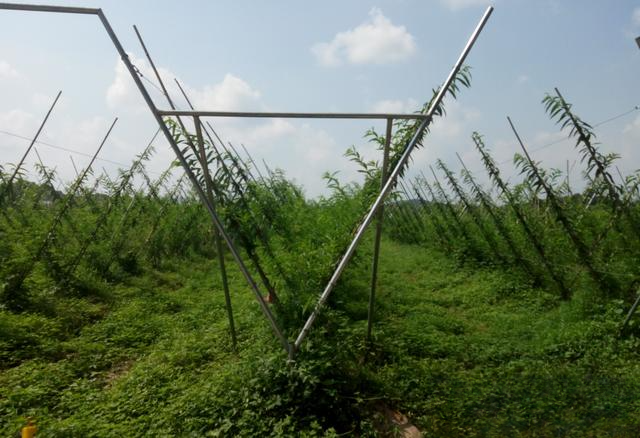
By planting grass in peach orchards, biodiversity can be increased, creating conditions for the reproduction of natural enemies.
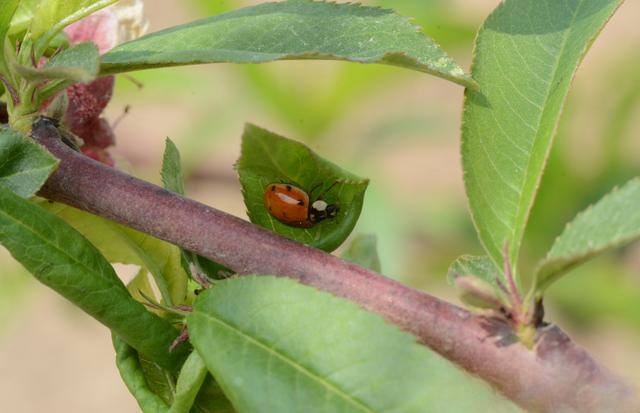
An increase in ladybugs can effectively control aphid outbreaks.
III. Controlling pests and diseases by artificially releasing natural enemies or protecting natural enemies.
Intercropping green manure in orchards provides intermediate hosts for natural enemies, promoting their reproduction and improving their living environment, offering them overwintering and shelter from adverse conditions. Understanding the dynamics of natural enemy activity around the orchard and fully utilizing the energy transfer between different ecological zones within the ecosystem can be highly effective. For example, protecting ladybugs, grasshoppers, hoverflies, and small flower bugs that have migrated to the orchard during the wheat ripening period can have a better and longer-lasting effect on aphids and spider mites than spraying pesticides. Simultaneously, natural enemies can be introduced or released. For instance, releasing Trichogramma wasps during the pear fruit borer and leafroller egg-laying period, releasing large quantities of thrips and predatory mites in the early stages of mite infestation to control spider mites, and raising grasshoppers and ladybugs to control aphids.
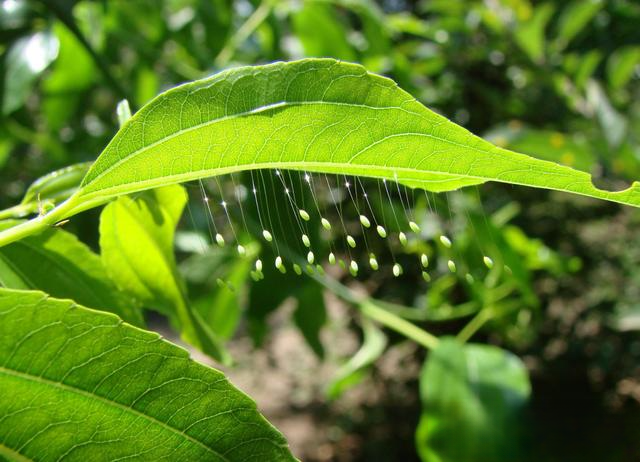
Lacewing eggs laid on the back of peach leaves
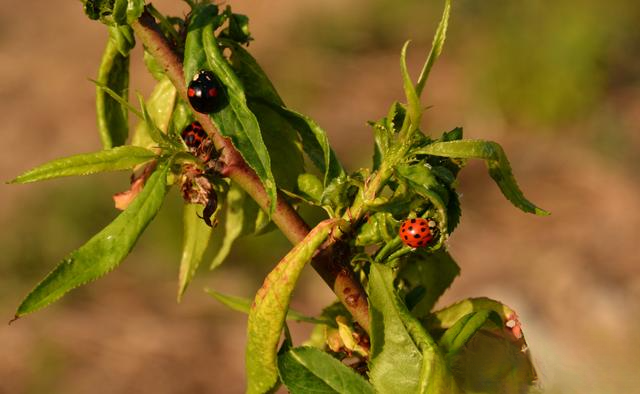
Using ladybugs to control aphid infestations
IV. Controlling pest outbreaks using pheromone-based sugar-vinegar solutions, etc.
Currently, the use of insect sex pheromones, such as mating silk, to control the pear fruit moth on peach trees has achieved good results, and this technology is being promoted in various regions. It has also been successfully used to trap and kill other pests such as the apple leafroller and the golden leafminer.
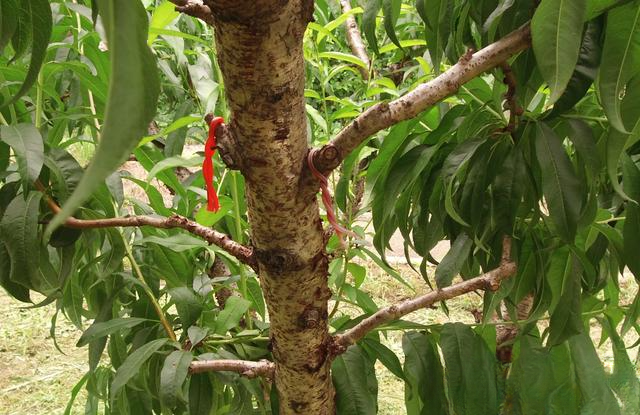
Hanging maze silk in the peach orchard has a significant effect on controlling the occurrence of pear rot.
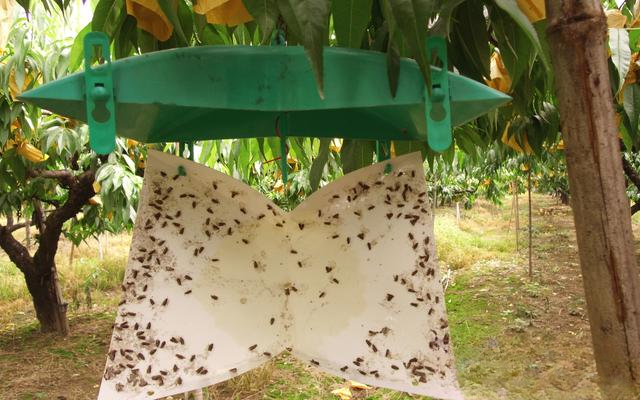
The effect of pear sex pheromone on peach orchards
Hanging a sugar-vinegar solution in the orchard during the spring can control a variety of pests, especially the pear fruit moth and leafroller. The combination of the sugar-vinegar solution and pheromone can significantly improve the trapping and killing effect.
V. Controlling pests by using physical attraction-based trapping techniques
Taking advantage of the phototaxis of most pests, frequency-vibrating black light lamps can be hung in the orchard. These black light lamps can be combined with water basins or high-voltage electric grids to create traps. Aphids' attraction to yellow can be utilized by hanging yellow sticky traps coated with latex in the orchard for pest control. However, it is important to hang these traps during the winged stage of the pests. Once the winged stage is over, the yellow sticky traps should be removed promptly to prevent attracting parasitic wasps that could kill natural enemies.
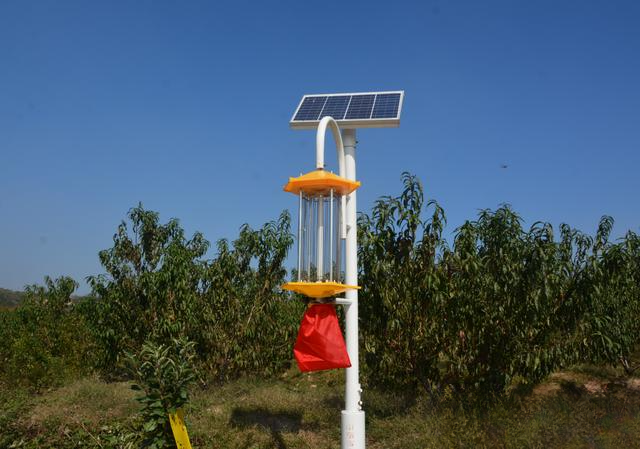
The application of insecticidal lamps and yellow sticky insect traps in peach orchards in Feixian County
VI. Properly manage the relationship between ecological control and chemical pesticide use.
When spraying is necessary, biological pesticides and selective pesticides should be used. For example, matrine can be used to control aphids and leafrollers. Abamectin can be used to control various mites. When chemical pesticides must be used, highly effective, low-toxicity, and selective pesticides should be used. In the integrated pest management system of orchards, the goal should not be to completely eliminate pests, but rather to establish a sustainable pest control system. In practice, the guiding principle should be to minimize the use of chemical pesticides. When selecting pesticides, biological pesticides should be given priority for control. In addition, attention should be paid to the alternation of pesticides to delay the development of pesticide resistance. Pesticides with longer residual periods can be used in the early stages, while pesticides with shorter residual periods must be used in the later stages.
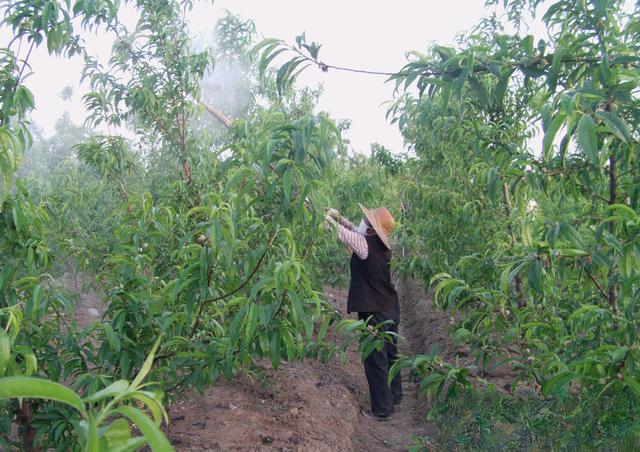
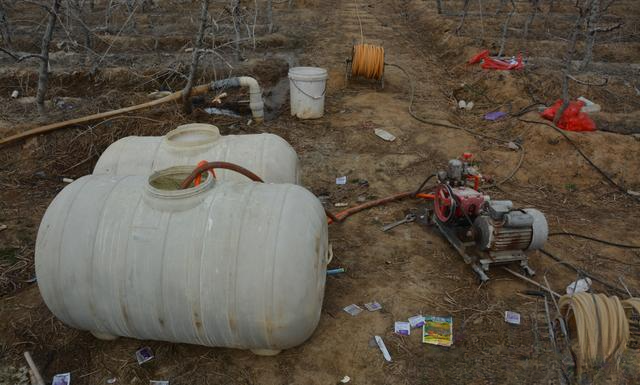
In addition, everyone must pay attention to orchard hygiene when using pesticides.
VII. Fruit bagging to prevent diseases and pests
Currently, peach fruit bagging cultivation is widely promoted in various fruit-growing areas. Fruit bagging not only improves the appearance and quality of the fruit, but its most important function is to prevent fruit diseases and pests, control fruit borers, and effectively control peach twig borers. The type of bagging can be selected based on the desired fruit quality.