Seven interesting littleknown facts that have required multiple confirmations from many people due to their obscurity.
The internet is incredibly convenient these days; we can explore the entire world with just a small mobile phone. We read various articles and watch all sorts of videos. It seems we have all the wonders and interesting things in the world at our fingertips. But even so, the world still holds many surprising facts. They are surprising because they are often obscure or less common, leading many to disbelieve the new knowledge and thus requiring multiple verifications, even consulting various scientific websites for complete confirmation. In this process, we can learn a lot of interesting facts and appear more knowledgeable in front of others. In this article, we'll introduce seven interesting little-known facts that, because they are obscure, require multiple verifications from many people.
1. Without saliva, you cannot taste normal flavors.
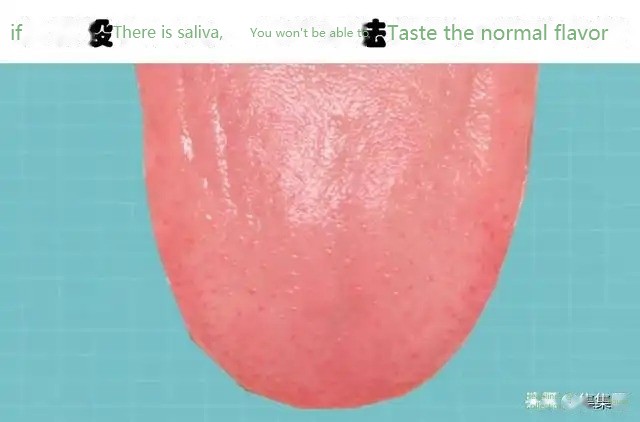
When you wake up in the middle of the night or just after getting out of bed in the morning, you're eager to eat something, but find that the delicious food you were tasting doesn't seem so good anymore? Don't be surprised; this is a perfectly normal phenomenon. This is because when you fall asleep, your mouth is less full of saliva, and the lack of saliva affects how you taste food.
The reason for all this is that the chemicals in food must first dissolve in your saliva before they can be detected by your taste buds. If there is less saliva, this process won't work properly.
If you don't believe me, try absorbing the saliva on your tongue with a wet wipe, and then quickly taste the food!
2. The Great Red Spot on Jupiter was once large enough to hold three Earths.
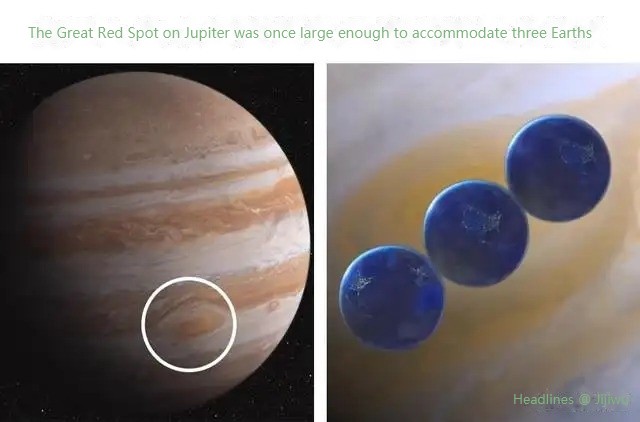
Thanks to the efforts of scientists, they discovered the Great Red Spot on Jupiter. After research, they concluded that it was a massive storm region, and the largest storm in our solar system. So, just how big is it? If we use Earth as a reference point, this place is quite enormous; in its early days, it was large enough to hold three Earths. However, as the storm region has shrunk, it is now believed to be able to hold one or two Earths.
3. The Pacific octopus has 9 brains and 3 hearts.
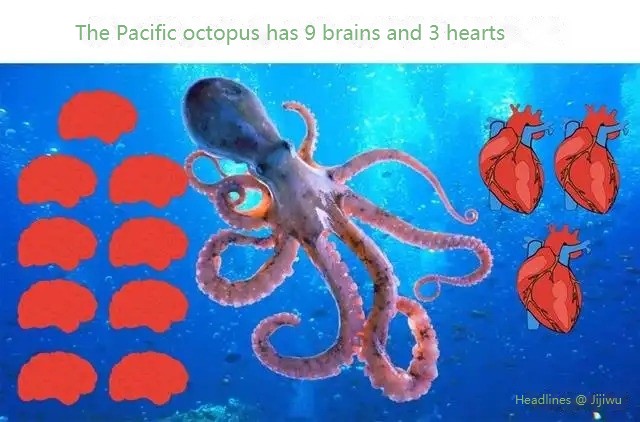
The Pacific octopus is quite large, growing up to 3 meters long and weighing 60 kilograms. But that's not its most amazing feature. It has nine brains and three hearts, and it also has blue blood. In addition, it is a powerful camouflage creature in the ocean.
4. The sun could hold 1,300,000 Earths.
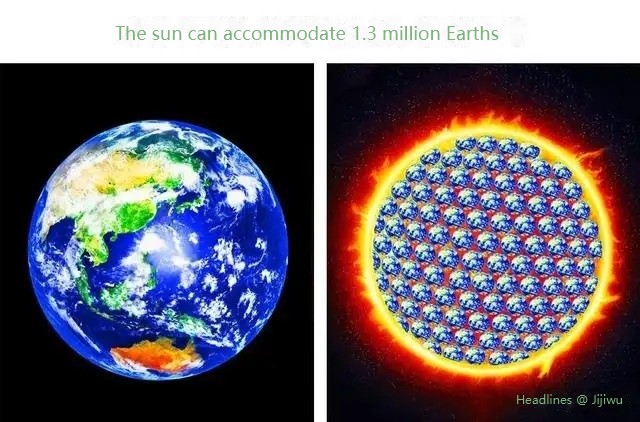
The Sun is a medium-sized star. The word "medium" might conjure up images of something like "not bad." However, compared to Earth, the Sun is an absolute behemoth. It could hold 1,300,000 Earths, and its mass is 333,000 times that of Earth, accounting for 99.86% of the entire solar system's mass.
5. NASA has captured sounds from different planets.
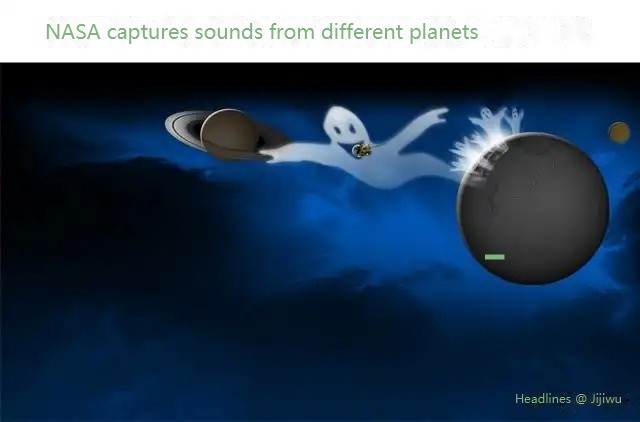
When people talk about the darkness and vacuum of the universe, many immediately think of deathly silence. But just as sound exists on Earth, sound also exists on different planets. For example, astronomers have discovered that sounds on Neptune sound like the roar of waves, sounds on Jupiter sound like underwater sounds, sounds on Saturn sound somewhat like background music in a horror movie, and the sun emits a buzzing sound.
6. A polar bear's tongue is not black, but pink.
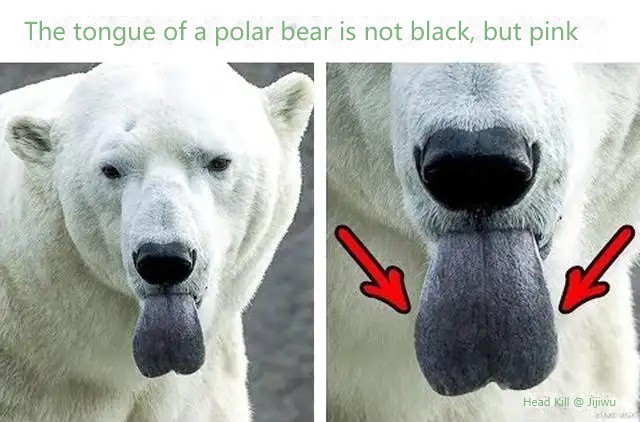
Do you know what color a polar bear's tongue is? Many people might say black, but that's not accurate. A polar bear's tongue is actually pink with black spots, which is why it sometimes appears black or even blue. Like a dog's tongue, a polar bear's tongue is smooth.
7. Polar bears have black skin and most of their internal organs.
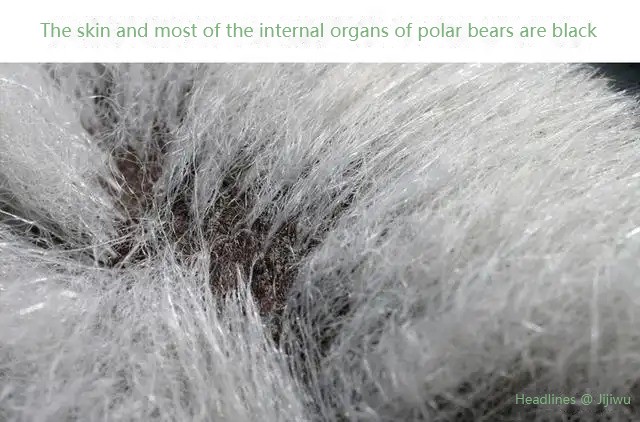
Although polar bears appear to have white fur, this is not true; their fur is actually colorless and hollow. The skin behind the fur is black. Furthermore, the inside of a polar bear's lips is completely black, and most of its internal organs are also black.
Have these interesting trivia facts changed your previous understanding? Let us know in the comments!