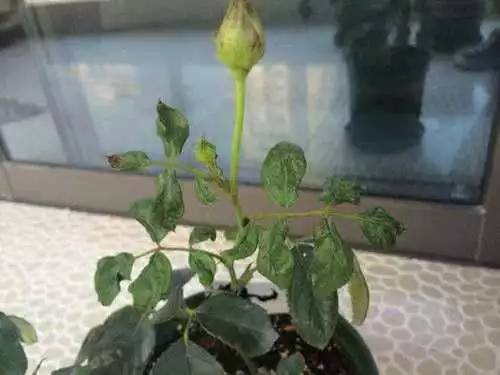
Rose pest and disease control: Thrips
The rose thrips, scientifically known as *Frankliniella formosae* Moulton, primarily infests roses, chrysanthemums, dahlias, carnations, gladioli, jasmine, impatiens, gerberas, night-blooming jasmine, petunias, Murraya paniculata, hibiscus, orchids, peonies, calendula, canna lilies, and okra. 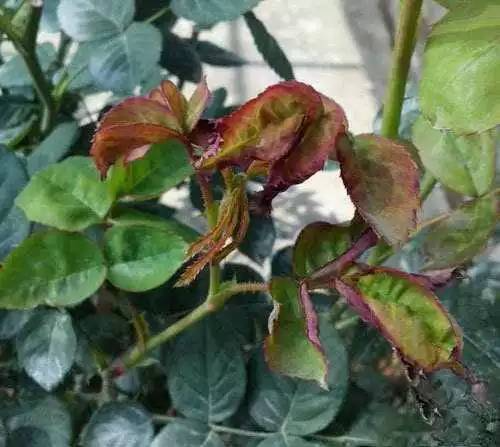
Damage is characterized by adults and nymphs sucking sap from the flowers, leaving grayish-white dotted feeding marks and oviposition marks on the petals. In severe cases, petals curl and silvery-white spots appear on the leaves. Adults and nymphs prefer to hide in leaf axils during the day.
Morphological characteristics:
Adults are 1.3 mm long. Females are light brown to brown, while males are milky white to white. Antennae have 8 segments; the seventh and eighth segments are short, the fifth segment is yellow at the base, and the remaining segments are gray. The pronotum...
Four long bristles along the margin and six long bristles along the posterior margin. 19-22 bristles along the upper vein and 14-16 bristles along the lower vein of the forewing, evenly arranged. 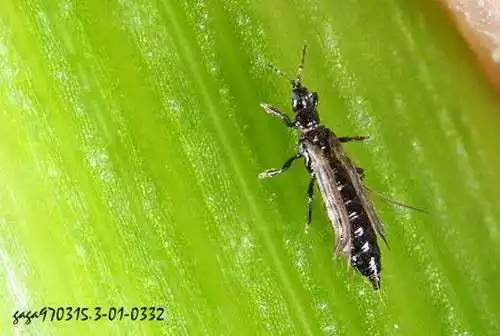
Eggs are about 0.29 mm long, kidney-shaped laterally, square at one end, and have an egg cap.
Mature nymphs are 1.2-1.6 mm long and orange-yellow. Antennae have 7 segments, with the fourth segment swollen.
Occurrence pattern: This insect reproduces once every 14-30 days. Generations overlap. The optimal temperature for adult growth is 20 degrees Celsius, during which time it is more active, and occurs more frequently in May and June. It feeds most heavily in the early morning and evening. During the day, it mostly rests on the underside of leaves or inside the corolla. It generally lays eggs under the epidermis of petals and stamens or inside the tissue on the underside of leaves. Nymphs are less active; the third instar is called "prepupa" and the fourth instar is called "pseudopupa". High temperature and high humidity are conducive to the occurrence of this insect, and flower thrips prefer to damage inside flowers. 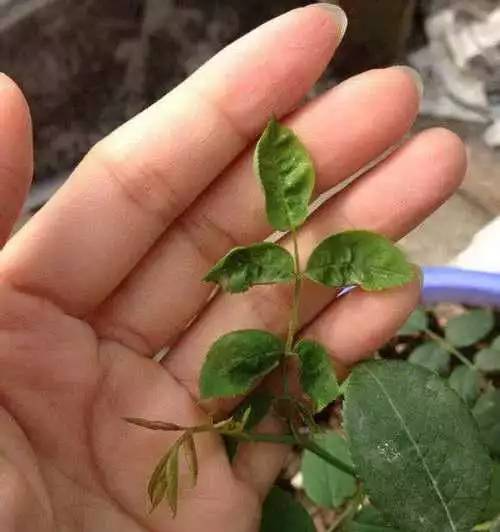
Control methods
: (1) Fumigation to kill insects. (1) Concentrate the potted plants with insects in a small, enclosed room, and spray 80% dichlorvos or 2.5% deltamethrin onto waste paper to allow it to evaporate or burn it over a low flame to fumigate and kill the insects.
(2) Spray control. Choose to spray 50% fenitrothion at 1000 times dilution or 2.5% deltamethrin EC at 3000 times dilution.
(3) Artificial trapping can also be carried out. Taking advantage of thrips' attraction to blue, insert plates coated with blue sticky liquid around them to kill the thrips.
(4) For home prevention and control, use a mixture of insecticides such as imidacloprid and water for spraying, making sure to spray both the front and back of the leaves.