Rose black spot disease is difficult to control. Forget about carbendazim; this is the only effective way to prevent it.
A few days ago, I talked about "rose brown spot disease," also known as "black spot disease." This disease is quite common and is a global disease. It usually occurs on young leaves, petioles, and flower buds. In the early stages of the disease, brown spots appear, which become larger as the disease progresses. In severe cases, the leaves will fall off, and blackish-brown spots will also appear on the flower buds. This disease is related to rose management, as well as air humidity and excessive application of nitrogen fertilizer.
Prevention and Control of Important Rose Diseases
Rose black spot disease is generally spread through dead branches and leaves, as well as through rainwater and air currents. Many flower enthusiasts do not pay enough attention to prevention, and improper use of pesticides after the disease occurs may lead to the disease becoming uncontrollable. Since protective agents such as carbendazim have high resistance, it is not recommended to use these fungicides.
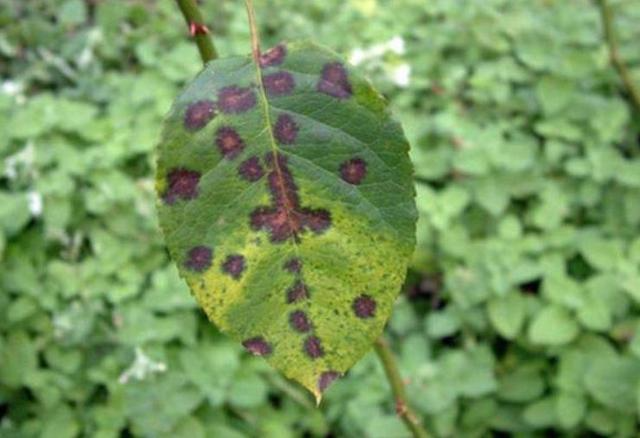
Black spot disease of roses
Besides black spot disease, powdery mildew is also an important disease for rose varieties. The symptoms of powdery mildew are quite obvious, with white powdery substances appearing on infected plants. This disease eventually leads to the withering of tender shoots and flower buds. It is generally more severe in southern regions where humidity is too high and watering is excessive.
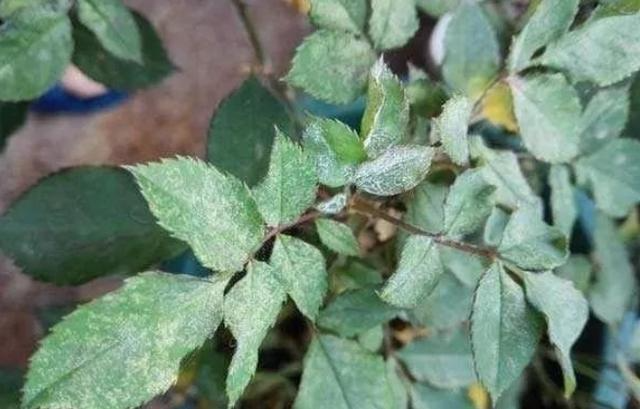
Rose powdery mildew
Besides black spot and powdery mildew, roses may also be susceptible to downy mildew, rust, blight, and gray mold. These diseases can be controlled with malathion. Other diseases that are more difficult to deal with include viral diseases and root rot. Once a virus disease occurs, the plant must be removed. For root rot, apply hymexazol or thiamethoxam.
Maweishi is suitable for controlling diseases such as black spot, powdery mildew, downy mildew, rust, blight, and gray mold in roses and other flowers. Its toxicity is "slightly toxic," comparable to that of floral water. If you want to order it on Taobao, you can click to enter at the end of the article.
Key points for rose disease and pest control
Roses should not be overwatered. If water droplets on the leaves cannot evaporate in time, it is not conducive to disease prevention. When watering, it is advisable to water around the edges. For roses that have been over-fertilized with nitrogen fertilizer, the leaves may become lush and green. You can spray or drench them with 800-1000 times diluted phosphorus and potassium fertilizer (99.7% pure food-grade potassium dihydrogen phosphate, spoon included). This will help promote the maturation of new shoots, reduce the occurrence of diseases, and also promote flower bud differentiation.
Some people ask if it's okay to use Huotujun compound microbial inoculant? Yes, it is. Under natural conditions, soil microorganisms have good growth conditions. However, the soil used for growing flowers at home may not have high microbial activity. You can add a few spoonfuls of Huotujun inoculant when changing the soil.
Recommended prevention and treatment agents
Some flower enthusiasts asked how to control aphids. Once aphids show signs of being coated in saliva, they become quite difficult to control. It is recommended to use Hualishen tobacco stem extract for control. This is suitable for households with children, as it is non-toxic and effective against aphids, thrips, scale insects, and whiteflies, but less effective against spider mites.
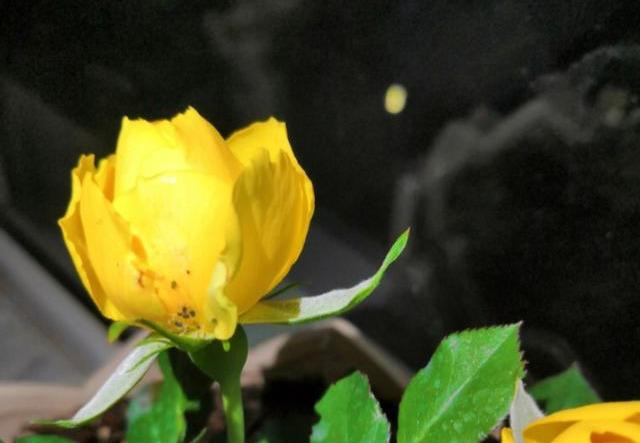
aphid
For disease prevention, we recommend Maweisi, a product of Syngenta, Switzerland. It has protective, curative, and eradicative effects. It is recommended to use it before or in the early stages of disease. This agent is "slightly toxic," with a toxicity similar to that of floral water.