Prevention and control of common diseases and pests in 12 types of indoor foliage plants: Even the easiest to care for have exceptions.
As the saying goes, a touch of greenery in the home makes life more pleasant. A home without a few potted foliage plants always feels a bit lacking. While most common foliage plants are easy to care for, there are bound to be exceptions. Today, let's work together to help you manage these exceptions.
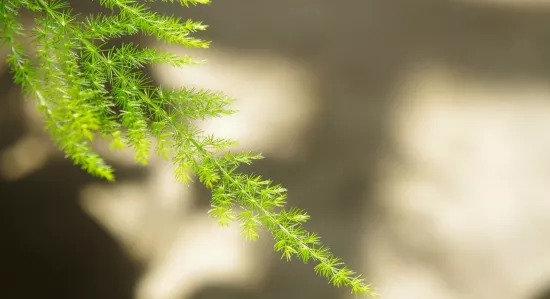
1. Asparagus fern
Asparagus fern is a highly ornamental plant that can be placed in the living room or study, purifying the air while adding a touch of scholarly elegance. Its roots are used medicinally to treat acute bronchitis and have lung-moistening and cough-relieving properties.
Common diseases and pests of asparagus fern
●Leaf blight
Leaf blight is prone to occur when humidity is too high and ventilation is poor. Air humidity should be appropriately reduced and attention should be paid to ventilation and light penetration. After the onset of the disease, spray with 200 times Bordeaux mixture, or 50% carbendazim wettable powder at 500-600 times dilution, or 50% thiophanate-methyl wettable powder at 1000 times dilution for prevention and control.
● In summer, scale insects, aphids and other pests are prone to occur. They can be killed by spraying with a 1000-fold dilution of 40% dimethoate.
2. Monstera deliciosa
Monstera deliciosa has uniquely shaped leaves with perforated, split patterns resembling a turtle's shell. It remains green year-round, is extremely shade-tolerant, and is a well-known large indoor potted foliage plant. One Monstera deliciosa plant can absorb formaldehyde equivalently to 10g of activated carbon, thus helping to purify indoor air.
Common diseases and pests control of Monstera deliciosa
● Leaf spot disease
This is a common disease of Monstera deliciosa. It mainly affects the leaves, causing them to easily turn brown and fall off.
Prevention and control methods: Place in a well-ventilated and bright location to promote air circulation and light exposure, reducing the incidence of disease. If an outbreak occurs, spray promptly with a 600-fold dilution of 65% mancozeb wettable powder.
● Gray spot pain
Control measures: Same as for leaf spot disease.
● Scale insects
This is a common pest of Monstera deliciosa. It mainly damages the petioles and leaves.
Prevention and control measures:
1) When maintaining at home, you can gently brush it off with a toothbrush.
2) When the infestation is large, spray with a 1,000-fold dilution of 40% dimethoate emulsifiable concentrate during the nymph stage.
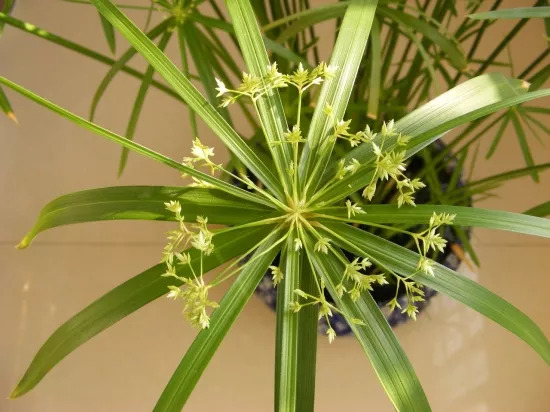
3. Water bamboo
Water bamboo is easy to care for and can be grown hydroponically or in pots. It is clean, elegant, and graceful, possessing the charm of a bonsai. It is suitable for desks and tabletops, and when paired with artificial rocks and stones to create small bonsai, it has a natural and charming aesthetic.
Common diseases and pests control of water bamboo
Leaf blight and spider mite infestation are common. Leaf blight can be treated with a 1000-fold dilution of 50% carbendazim, and spider mite can be treated with a 1500-fold dilution of 40% dimethoate emulsifiable concentrate.
4. Aspidistra
Aspidistra has upright and neat leaves with a dark green and glossy color. It grows vigorously, is highly adaptable, and is extremely shade-tolerant, making it an excellent shade-loving foliage plant for indoor landscaping.
Common diseases and pests control of Aspidistra
Anthrax
Symptoms: Lesions on Aspidistra leaves mostly occur on the leaf margins or upper surface. The lesions are nearly circular, grayish-white to grayish-brown, with a yellowish-brown or reddish-brown outer edge, and later develop into concentric black dots. In addition to the leaves, the petioles and stems are also infected, producing elongated lesions.
Prevention and control measures:
1) Remove and burn diseased leaves promptly to reduce the source of infection.
2) Before the rainy season, spray with 50% cypermethrin or cypermethrin wettable powder at a dilution of 1000 times, or 25% cypermethrin wettable powder at a dilution of 500 times. Apply once every 10 days, for 3-4 treatments.
3) If necessary, spraying with 0.5% potassium dihydrogen phosphate or a 300-fold dilution of dual-effect micro-fertilizer can help enhance disease resistance.
● Gray mold
Symptoms: Commonly occurs at leaf margins. Water-soaked lesions appear starting at the leaf margins. Under high humidity, the lesions expand rapidly, causing the leaf margins to wither irregularly. Generally, no gray mold layer is visible. However, after continuous rainy weather with high humidity for an extended period, sparse gray mold may grow.
Prevention and control measures:
1) Careful maintenance. Choose a moist, well-drained, semi-shaded environment for planting. Aspidistra is a shade-tolerant plant; strong light will cause yellowing of the leaves or disease. Overwatering, especially in winter, can lead to root rot and also cause yellowing of the leaves.
2) If a few diseased plants are found, spray with 1000 times dilution of 65% carbendazim wettable powder, or 1500 times dilution of 50% iprodione wettable powder, 50% thiamethoxam wettable powder, or 1000 times dilution of 50% cymoxanil wettable powder.
3) For Aspidistra elatior grown indoors, the following measures can be taken to control the disease: increase the nighttime temperature of the greenhouse, increase the ventilation time during the day, and reduce the humidity and the duration of fogging inside the greenhouse.
● Leaf spot disease
Leaf spot disease of Aspidistra elatior, also known as black spot or brown spot, first appears as black spots in the center of the leaves, then the leaves turn yellow and fall off. It is mostly caused by hot, poorly ventilated, and humid environments.
Prevention and control measures:
Pay attention to improving environmental conditions. When the disease first appears, remove the affected leaves and burn them. You can spray with 1% Bordeaux mixture every 7 days for a total of 4-5 times during the growing season, or spray with 50% carbendazim at a dilution of 1000 times.
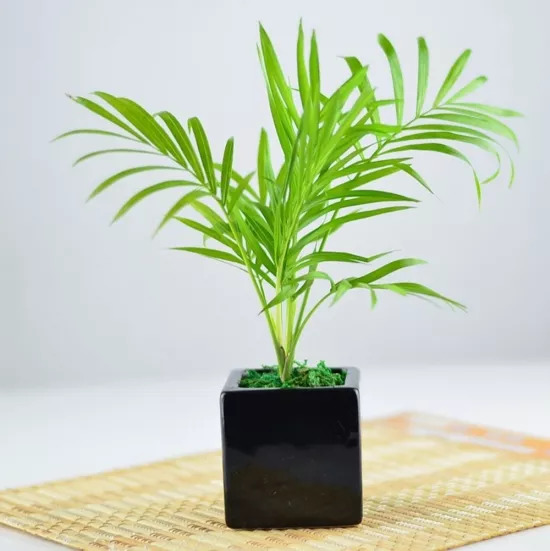
5. Miniature coconut
Miniature coconut palms are shade-tolerant, making them ideal for indoor small to medium-sized potted plants. They can be placed on desks or tabletops as decorative items, or hung indoors to add a tropical atmosphere and charm to the space.
Common diseases and pests control of miniature coconut palms
●Yellow leaves
Reasons for yellowing leaves of miniature coconut palms:
1) Excessive sunlight
Miniature coconut palms prefer partial shade. When exposed to too much sunlight, their leaves will turn pale or yellow and lose their ornamental value.
Solution: Place the dwarf coconut palm in a location with ample indirect light. This will provide sufficient light for growth without causing the leaves to turn yellow due to excessive sunlight.
2) Insufficient watering
Miniature coconut palms prefer a humid environment and need plenty of water. If they are not watered enough, their leaves will turn yellow and gradually wither and fall off.
Solution: Water frequently to keep the potting soil moist. In summer and autumn when the air is dry, spray water on the plant frequently to increase the humidity of the environment.
3) Overly concentrated fertilizer
Miniature coconut palms do not require much fertilizer. However, excessive fertilization can cause fertilizer burn, leading to yellowing of the leaves.
Solution: Apply liquid fertilizer 1-2 times per month during the growing season of miniature coconut palms, and apply little fertilizer or no fertilizer in late autumn and winter.
4) Disease infection
During hot seasons, dwarf coconut palms are susceptible to diseases such as root rot. These diseases can cause the leaves of dwarf coconut palms to turn yellow and wither, and in severe cases, can lead to the death of the plant.
Solution: Pay attention to ventilation and soil aeration in the growing environment of dwarf coconut palms. When disease occurs, spray with thiophanate-methyl and chlorothalonil. [8]
●Black spots
High temperatures, high humidity, and poor ventilation can easily lead to black spot disease, especially during the vigorous growth period from April to November. Prevention is crucial during this time. If leaf tips are found to be scorched, spray with a 50% carbendazim or 50% chlorothalonil solution diluted 800-1000 times. Simultaneously, ensure good indoor ventilation and cool, well-aerated air. Appropriately increase the application of phosphorus and potassium fertilizers, such as wood ash, to promote robust plant growth. The soil should be well-drained, neither too dry nor too wet. During the growing season, keep the potting soil moist to promote plant growth and enhance disease resistance.
● Scale insects
Dry air and poor ventilation can easily lead to scale insect infestations, which can be controlled by spraying pesticides such as phosmet, dimethoate, and trichlorfon.
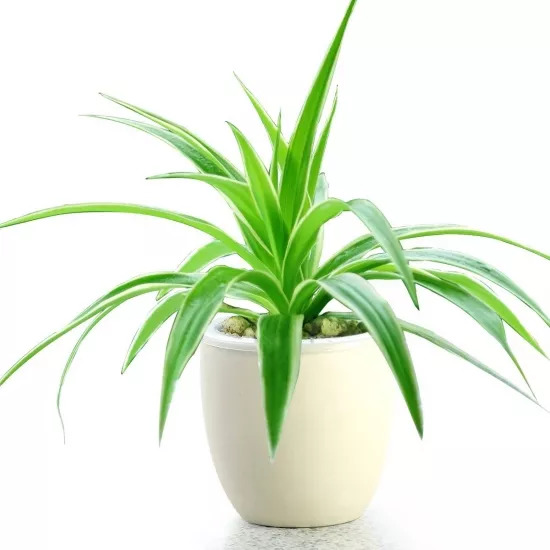
6. Spider plant
Spider plants are perennial herbaceous plants with slender, drooping stems. They bloom with small white flowers in summer or other seasons when temperatures are high. The flowers are concentrated at the ends of the drooping stems, with yellow stamens and sometimes purple young leaves inside. They can be grown in pots for ornamental purposes.
Common diseases and prevention of spider plants
● Scale insects
Depending on the scale insect occurrence, spray during the peak nymphal stage. At this time, most nymphs have recently hatched, their bodies have not yet secreted wax, and their scales have not yet formed, making them easily killed by pesticides. Spray once every 7-10 days, for 2-3 consecutive times. Suitable pesticides include 40% dimethoate at a 1000-fold dilution, 50% malathion at a 1500-fold dilution, 25% phosmet at a 1000-fold dilution, 50% dichlorvos at a 1000-fold dilution, or 2.5% deltamethrin at a 3000-fold dilution.
●Whiteflies
Water the roots with a 500-800 times dilution of carbendazim wettable powder once a week for 2-3 consecutive weeks.
● Aphids
Spray with 1500 times diluted dimethoate to kill it.
● Mites
Mites are less prevalent in summer and autumn and require a 1000-fold dilution of trichlorfon to kill. Good ventilation and increased foliar humidity can reduce mite infestations.
Root rot
For prevention, wettable powder can be applied to the roots at a rate of 2-4 grams per square meter. Alternatively, a 1500-3000 times dilution can be applied to the roots before or at the early stage of disease, using 200 ml of solution per plant. In severe cases, diseased plants should be removed, and a root-strengthening agent should be applied to the roots.
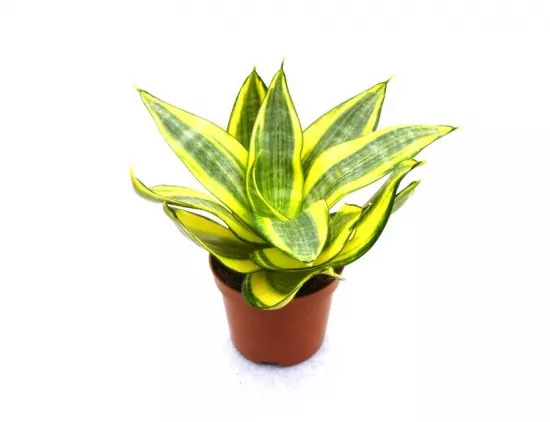
7. Snake plant (Sansevieria trifasciata)
Snake plant has sturdy, upright leaves with tiger-tail-like horizontal stripes of gray-white and dark green. There are many varieties with significant variations in plant shape and leaf color. It is highly adaptable to different environments and is suitable for decorating studies, living rooms, and offices, providing enjoyment for a considerable period of time.
Common Diseases and Prevention of Snake Plant
● Bacterial soft rot
After infection, the leaves turn from green to light yellow to grayish-yellow. Water-soaked soft rot appears at the base of the stem near the ground, and in later stages, affected leaves easily break off. Infection of the root and stem results in a straw-yellow soft rot, and the roots rot and die. Waterlogged roots also rot and die. The disease is particularly severe during hot, rainy spring and summer, and during typhoons and heavy rains. The pathogen is caused by bacteria.
Prevention and control measures:
During winter and spring, maintain a temperature above 10℃ and control watering. Provide some shade during the hot summer months. During the vigorous growth periods in spring and autumn, increase the application of phosphorus and potassium fertilizers to enhance disease resistance. It is best to use disease-free soil, burnt soil, or soil that has been sterilized by heat before planting. Remove and burn any diseased leaves promptly.
In the early stage of the disease, 2000 times dilution of medical streptomycin sulfate, 700 times dilution of 47% chlorobenzene wettable powder, or 500 times dilution of 30% chlorobenzene suspension can be used. Spray once every 5-7 days, and repeat 2-3 times for prevention and control. [4]
● Fusarium spot disease
Fusarium spot, also known as leaf spot disease, first appears as circular lesions on the leaves, which can grow up to 12 mm in diameter. These lesions are slightly sunken, light reddish-brown, and have pale yellow edges. The lesions are scattered, covering the entire leaf; the center of the lesion dries up and falls off, forming a perforation. Several lesions may merge, and if the leaf is girdled, the area above the lesion will die. The pathogen is a fungus belonging to the order Sphericales of the subphylum Deuteromycetes. The disease is prone to occur during hot and rainy seasons.
Prevention and control measures:
Reduce soil moisture. In the early stage of the disease, Bordeaux mixture, 53.8% copper oxychloride 2000 dry suspension at 1000 times dilution, or 47% copper oxychloride wettable powder at 700 times dilution can be used. Spray 2-3 times consecutively, once every 5-7 days.
Anthrax
The lesions begin at the leaf tips or margins, are brown, and show obvious or indistinct concentric rings. Scattered or regularly arranged small black dots form on the diseased leaves. The pathogen is a fungus belonging to the Deuteromycetes, specifically *Colletotrichum candida*. The disease develops in warm, humid conditions in southern regions, particularly from April to June, when it is most severe.
Prevention and control measures:
In winter and spring, prune diseased and withered leaves, apply more phosphorus and potassium fertilizer, and spray with 800 times dilution of 50% carbendazim wettable powder or 1000 times dilution of 75% chlorothalonil and 70% thiophanate-methyl wettable powder (1:1) in the early stage of disease.
● Arrowhead Scale
Adults and nymphs congregate on tender branches and leaves, sucking sap, causing the leaves to turn grayish-green or yellow, eventually leading to the withering of the entire plant.
Prevention and control measures:
The best time to apply pesticides is during the nymphal dispersal and migration stage, when the insects have no wax powder or scale and are least resistant to pesticides. Suitable pesticides include 40% dimethoate EC at 500-1000 times dilution, 50% malathion EC at 600-800 times dilution, 80% dichlorvos EC at 800 times dilution, 25% phosmet or chlorpyrifos or 30% fenpropathrin EC at 400-600 times dilution, and 50% isoprothiolane EC at 1500-2000 times dilution.
8. Jade
The leaves of the jade plant are lush and lovely, slightly curled back, and broadly oval or nearly round. It can be grown as a potted ornamental plant, and also has medicinal value and can protect against radiation.
Common Diseases and Prevention of Jade
This species is relatively resistant to disease, with ringspot virus being the main culprit. Affected plants become stunted and leaves become twisted. It can be treated with an equal amount of Bordeaux mixture. Other diseases include root collar rot and cork scab, which can be treated with a 1000-fold dilution of 50% carbendazim wettable powder.
Occasionally, scale insects and slugs may cause damage; timely prevention and control measures are necessary.
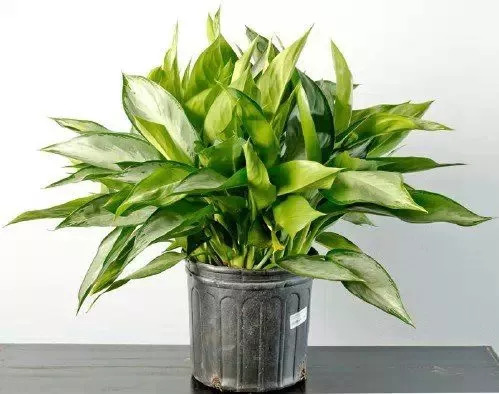
9. Silver Queen
Silver Queen has beautiful leaves, is particularly shade-tolerant, and has a unique air-purifying ability. Placing a potted plant in a living room will make the room feel bright and comfortable.
Common diseases and prevention of Silver Queen
Silver Queen plants are densely packed with poor ventilation, making them susceptible to scale insect infestation. Prevention is key. If scale insects do occur, spray with a 1000-1500 times dilution of 50% malathion emulsion every 7 days, for 2-3 consecutive applications.
10. Guangdong Evergreen
Besides being used as a potted plant to decorate indoor and outdoor spaces, the leaves of the Chinese evergreen can also be cut for flower arrangements or to decorate outdoor environments. Creating foliage bonsai with the Chinese evergreen is simple and easy, highlighting the beauty of nature; due to its extreme shade tolerance, it can be displayed indoors for long-lasting, evergreen beauty.
Common diseases and pests control of Aglaonema in Guangdong
● Leaf spot disease
The lesions initially appear as small brown spots with a water-soaked, pale green periphery, expanding in concentric rings. They are round to oval in shape, with brown edges and grayish-white interiors. Later, dark brown mold spots appear in the center of the lesions, turning into a dark brown mold layer under humid conditions.
Prevention and control measures:
Remove diseased and damaged leaves promptly; spray with 0.5-1% Bordeaux mixture (or 1000 times dilution of 50% carbendazim) in the early or late stages of the disease.
Anthrax
This disease also occurs on the leaves of the evergreen plant, and in severe cases, it can spread to the petioles. In the early stages, the lesions appear as small, water-soaked yellow spots. As they expand, they become oval to irregular brown or yellowish-brown spots with slight concentric rings. In the later stages, the lesions merge into one patch, appearing dry, and small black dots arranged in concentric rings are produced.
Prevention and control measures:
Strengthen maintenance and increase the application of phosphorus and potassium fertilizers; in the early stage of disease, spray with 0.3-0.5% Bordeaux mixture (or 800-900 times dilution of 60% zineb, or 1500 times dilution of 70% thiophanate-methyl).
● Brown soft scale
This insect has a complex diet and can damage many plants, including the evergreen plant. When brown soft scale insects infest plants, they typically cluster on the leaves or young leaves, sucking sap and excreting a sticky substance. This excrement easily leads to the proliferation of sooty mold bacteria, causing the stems and leaves to turn black, affecting photosynthesis, resulting in weak growth, yellowing leaves, and diminished ornamental value. In severe infestations, the stems and branches are covered with insects, causing the plant to wither and yellow, hindering growth.
Prevention and control measures:
1) If there are few affected plants or a small number of insects, the insects can usually be scraped off with bamboo strips or similar objects.
2) During the nymph hatching period, spray with 1000 times dilution of 40% dimethoate EC (or 1000 times dilution of 40% dimethoate EC), or spray with 1000 times dilution of 5% phosmet EC to kill them.
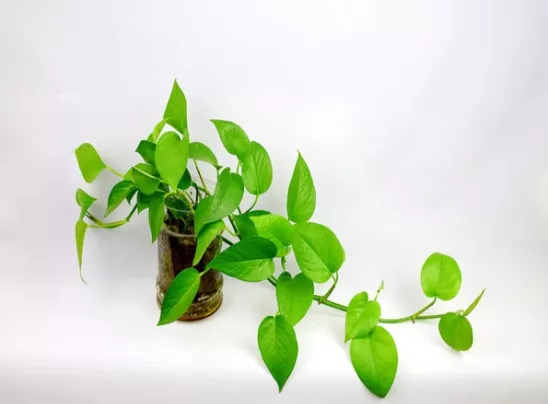
11. Green Ivy
Pothos thrives in water and is known as the "flower of life" due to its tenacious vitality. The flower language of pothos is "guarding happiness." Placing one or two pots of pothos in the home adds bright color and vitality, decorating the room while purifying the air.
Common diseases and prevention of pothos
Anthrax
This pathogen primarily affects the middle section of leaves, but can also damage flowers. Initially, small, moist, reddish-brown or dark brown pustular spots appear on the affected areas, surrounded by a pale green halo. As the spots enlarge, they develop into elongated oval or striped patches with dark brown edges and yellowish-brown interiors, often featuring ring-shaped markings formed by converging dark spots. Due to its dark brown spots, it is also known as black spot or black-brown disease. Repeat infections can occur throughout the plant's growing season.
Prevention and control measures:
1) Many pesticides can control anthracnose, such as mancozeb, carbendazim, thiophanate-methyl, and carbendazim, all of which have certain control effects.
2) The German-made "Specogen" 1500 times diluted solution is a highly effective drug for treating anthrax.
Root rot
During the disease outbreak period, spray with a 500-fold dilution of 50% carbendazim wettable powder or 5% furadan granules, and also drench the roots.
● Leaf spot disease
Remove diseased leaves and ensure good ventilation. Control measures can be taken by spraying with a 500-fold dilution of 95% ammonium thiocyanate or a 1000-fold dilution of 80% carbendazim wettable powder.
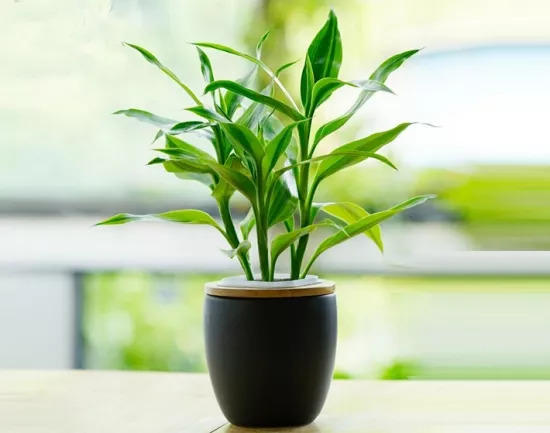
12. Lucky Bamboo
Lucky bamboo symbolizes prosperity, peace, good fortune, and a life of wealth, hence its name; moreover, lucky bamboo has slender stems and leaves, graceful and elegant, and is full of bamboo charm.
Common diseases and pests control of lucky bamboo
Anthrax
Anthracnose is a serious disease affecting lucky bamboo in southern regions. The disease is exacerbated by overly sticky, poorly aerated, and poorly drained soil, dense planting, and high temperature and humidity. In the early stages, grayish-brown lesions appear at the leaf tips or margins; these lesions are irregular or semi-circular, with a grayish-white center, dark brown edges, and a yellow halo; the concentric rings on the lesions may be distinct or indistinct, and small black dots are scattered on them.
Prevention and control
1) In winter and spring, diseased and damaged materials should be removed and burned, and quicklime should be applied once to sterilize and disinfect the soil.
2) Improve the permeability of the garden. For open-field cultivation, pay attention to clearing ditches and draining water after rain to reduce field humidity. Avoid excessive application of nitrogen fertilizer.
3) Spray pesticides in a timely manner to control the disease. You can alternately spray with 25% carbendazim wettable powder at 500 times dilution, or 60% cymoxanil wettable powder at 600 times dilution, or 50% cymoxanil wettable powder at 1000 times dilution, or 69% mancozeb and 75% chlorothalonil (1:1) at 1500 times dilution, spraying 3-4 times consecutively, with an interval of 10 days between sprays.
Stem rot
Stem rot can cause the death of lucky bamboo, reducing its ornamental value. It occurs most frequently during the hot and humid months of May to September, primarily affecting the leaves and stems. Symptoms include yellowing of leaves at the base of the stem; rotting, yellowing, and softening of the stem base; reddening of the stem interior; and the pathogen gradually ascending from the lower cut.
Prevention and control measures:
1) Cultivate robust and well-developed seedlings; remove diseased plants and burn them; dig deep drainage ditches and plant on raised beds 25 cm high.
2) Soak the lower cut of the seedlings in a 3000-fold dilution of 42% cymoxanil powder or a 1000-fold dilution of 88% cymoxanil hydrate for 24 hours.
●Leaf spots
Leaf spot pathogens are mainly transmitted through wounds, and the disease is more severe under humid conditions. The disease is highly contagious and can cause leaf and stem rot. Initially, lesions appear as brown spots with yellow edges; as they expand, the lesions become nearly circular, with a gray center, dark brown edges, and a yellow periphery; under humid conditions, black granular substances appear on the lesions.
Prevention and control measures:
1) Prevent plants from being too dense and maintain ventilation and light penetration.
2) In the early stage of the disease, use 3000 times dilution of 42% chlorhexidine powder, or 1000 times dilution of 88% oxytetracycline, or 800 times dilution of 25% copper oxychloride. Spray once every 5 to 7 days, for 2 to 3 consecutive times.
● Root rot
Root rot occurs from December to March. The pathogen mainly enters through the cut, and secondly through the vascular bundles of the seedlings. After bamboo is harvested, the top becomes soft and rotten, and it fails to produce basal buds or produces buds unevenly, resulting in a low germination rate. Root rot may also occur at the base of the plant stem.
Prevention and control measures:
1) Select seedlings free of pathogens. Do not harvest bamboo in the rain or before the rain has dried. Apply fertilizer rationally by combining organic and inorganic fertilizers.
2) Spray pesticides promptly after cutting bamboo. First, use 1000 times dilution of 70% methyl thiophanate. After 5-7 days, use 1000 times dilution of 58% metalaxyl-mancozeb. After another 5-7 days, use 1000 times dilution of 75% chlorothalonil. You can add 3000 times dilution of 1.8% abamectin to the pesticide solution, which is beneficial for wound healing and promotes the growth of basal buds.