Prevention and control methods for common diseases and pests of succulent plants
Prevention and control methods for common diseases and pests of succulent plants
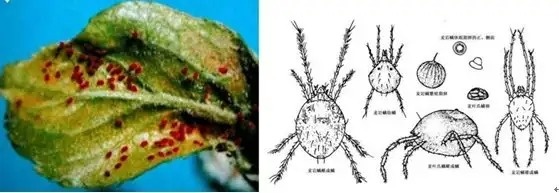
1. Spider mites (commonly known as red spider mites) Spider mites are a common pest that primarily feeds on plant sap. They thrive in dry, hot environments, making them prevalent in summer. Controlling their population involves minimizing their density, with the best time to apply pesticides being during the 2nd-3rd instar larvae, ideally in early to mid-July. The most commonly used pesticides are neonicotinoids, such as imidacloprid, picric acid, and carbofuran. Pyrethroid insecticides are largely ineffective, meaning that household insecticides like Raid are practically useless. While imidacloprid and carbofuran are readily available, carbofuran is highly toxic and should be used with caution.
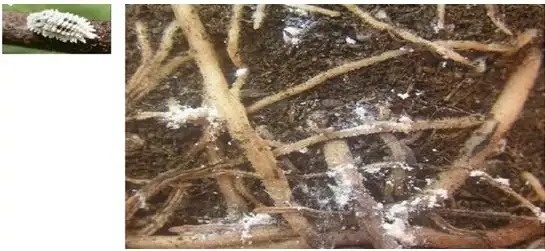
2. Whiteflies and scale insects Scale insects and spider mites are both piercing-sucking pests, primarily sucking sap. However, it's worth noting that they are also major culprits in spreading fungal diseases. Different types of mealybugs damage different parts of plants. Root mealybugs mainly infest the roots, causing them to wither and rot. Symptoms on the upper leaves typically include sunken areas. Root mealybug infestations are not directly related to humidity levels, unlike the springtail mentioned later, which is closely related to humidity. Leaf mealybugs, as shown in the picture, have poor mobility and often attach themselves to leaves. When a leaf is removed, some mealybugs will come off with it, leaving a pit. Squeezing some of the mealybug will usually produce a brownish-red liquid. Controlling scale insects is best done in mid-spring, when their waxy layer hasn't formed, making them more susceptible to pesticide absorption. Commercially available pesticides include imidacloprid and chlorpyrifos.
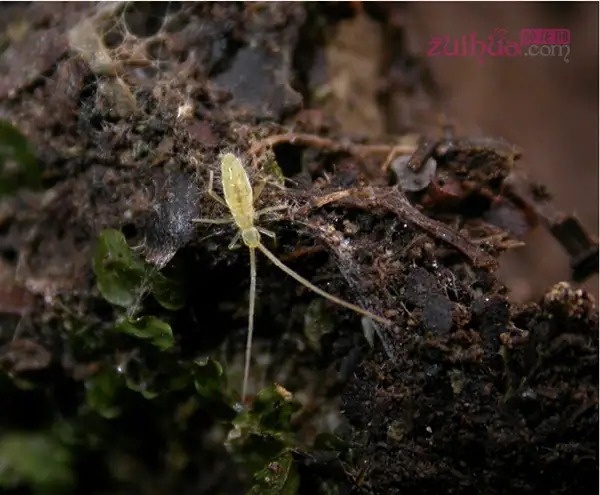
3. Springtail The main harm of springtails is not their feeding behavior but their strong ability to spread diseases. Common diseases like rot in lilies and stem rot in Aizoaceae and Sedum species are often caused by them. They thrive in warm, humid environments. Controlling their numbers primarily involves controlling humidity, ensuring good ventilation, and using larger particle sizes. Chemical control is also an option in humid environments. Responsive pesticides like imidacloprid and mancozeb are relatively effective. Controlling springtails is more difficult than controlling scale insects because they can have several generations per year, unlike spider mites and scale insects which have clear generations. They are also very small and difficult to spot, and their eggs are highly resistant, leading to a high recurrence rate. My experience suggests reducing the egg population by changing the soil, watering to release eggs (avoid soaking the pot), and physically disinfecting the soil through methods like sun exposure or microwave exposure. For chemical control, use mancozeb once in the first half of the year and once in the second half, or use a mixture of imidacloprid and mancozeb every quarter. Controlling the insect population density is also crucial.
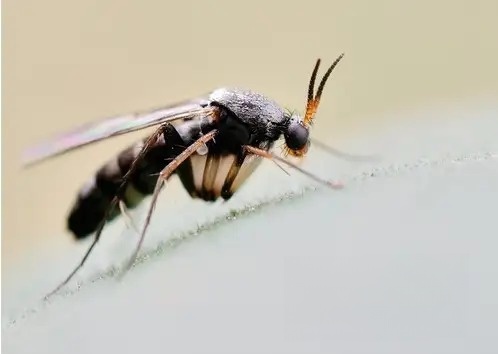
4. Aphids Aphids are primarily piercing-sucking insects. While a small number of aphids won't significantly impact plants, large infestations can cause slow growth, wilting, and even death. They can also transmit viruses (as all piercing-sucking insects can). It's worth noting that aphid excrement leaves a black, sooty layer that is difficult to remove and severely affects the plant's appearance. Controlling aphids is best done within two weeks to a month after spring rains, generally in early to mid-April, and after autumn rains in mid-September. At their second or third instar, they are flightless, larger, and easier to eliminate. Suitable pesticides include neonicotinoids, imidacloprid, Bt (Bacillus subtilis), and abamectin. 5. Sharp-eyed fungus gnat (commonly known as the small flying black mosquito)
These small black flying insects, also known as mushroom flies or ground flies, easily lay their eggs in peat moss. It's recommended to sterilize the soil by heating it; traditional households can use a microwave, or thoroughly expose it to sunlight. Personally, I suggest placing the soil in a transparent container and exposing it to direct sunlight. Additionally, pyrethroid insecticides can kill adult insects, but are less effective against larvae. Adding mosquito coil ash to the potting mix might also be effective, as mosquito coil ash contains pyrethroids. Other less significant threats include weevils, lepidopteran larvae, and rats. In summary, succulents are relatively susceptible to pests, and different varieties at different times can easily have overlapping generations, which can make prevention and control more difficult. Generally speaking, proper soil preparation and timely pest control can effectively control pests and diseases. In addition, it is necessary to do a good job of isolation to prevent mass deaths and injuries, to observe frequently, and to be lenient with diseases and pests. If there are diseases or pests, they should be isolated in time. In terms of maintenance and management, timely ventilation to maintain the permeability of the potting soil and avoiding waterlogging are sometimes better than chemical control agents. In addition, I suggest that if possible, use a spray watering method, which helps to remove insect eggs and other harmful pathogens. Soaking can lead to cross-infection. For older soil, I recommend using it annually, which is similar to crop rotation in agriculture. The same pathogens can be reduced through environmental measures. That's all I can think of regarding pests for now. If you have any questions later, please feel free to contact me. I also hope to learn something from everyone. Thank you. |