Preflowering disease and pest control for grapes should be done as early as possible.
The scions of Crimson and Ruby have already begun to sprout in the open field. After cleaning up the orchard, it's time to carry out normal pest and disease management. Most farmers rely on past experience for pesticide management, but there are several misconceptions:
1. No pests or diseases, no need for pesticides: This is a common mistake made by many grape growers. They walk around the field, see no diseased leaves or insects, and conclude, "Why spray pesticides? Don't listen to the pesticide sellers' nonsense."
2. My neighbor sprayed pesticides, so I sprayed pesticides too: This is a common situation. When you see your neighbor spraying pesticides, you get anxious and rush to the pharmacy to buy some pesticides to spray. You feel reassured, but do you know what pesticides your neighbor used and what diseases (pests) they were trying to prevent? They weren't guided by the same technician, and they didn't buy pesticides from the same pharmacy. Each pharmacy has its own approach. Even if they are both using pesticides, the effectiveness can be different.
3. No downy mildew should occur before June; therefore, no downy mildew treatment is needed.
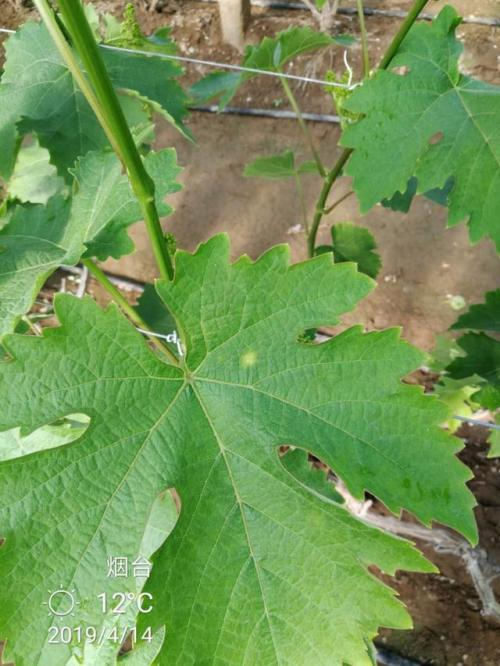
Downy mildew during the incubation period in April
This is the sentence I've heard most often in recent years, and it's always said by "experienced" old fruit farmers. I just want to ask which expert dares to say that downy mildew won't occur before June? How many grapes were dug up and how many orchards were destroyed when downy mildew broke out at the end of May 2018!
4. Apply a few good pesticides before bagging. If there are no diseases before flowering, there is no need to apply good pesticides: You should know that the flowering period is affected by temperature and can vary from 7 days to 15 days or even more than 20 days. If you don't apply pesticides during such a long period, many latent pathogens will break out and infect the ears of fruit. If you wait until before bagging to apply good pesticides, the fruit will rot!
5. "Whatever medicine is good, I'll just keep injecting it": In 2017, a friend from Haiyang told me, "My master said that if you inject Baitai three times in a row, you won't get sick!" In June, I visited his 20-odd acres of vineyard.
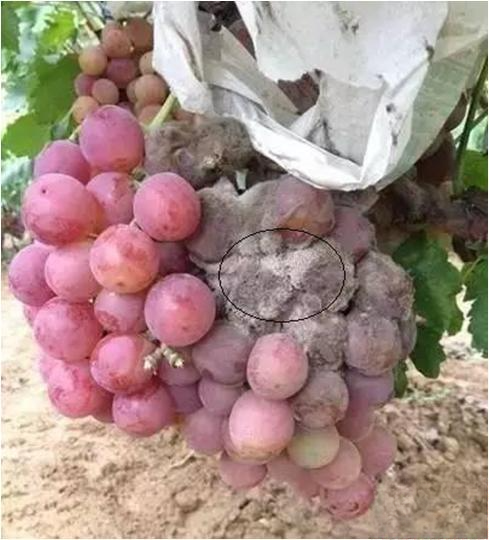
My goodness, his vineyard has every disease you can see on grapes, without exception. In the fall, he calls me asking what to do when all the leaves have fallen off. What do you think I should do? Ask Guanyin of the South Sea for her divine water to make leaves grow back! You know, all pesticides develop resistance. If you use the same ingredient every time, the effectiveness decreases, so what's the difference between not using it at all?
The above are some common misconceptions about pre-flowering management. Next, let's look at the four major diseases and three minor insects that occur before flowering. Why are they called the four major diseases before flowering? Because if proper prevention and control are implemented before flowering, except for downy mildew, these other diseases are rarely seen later in the season.
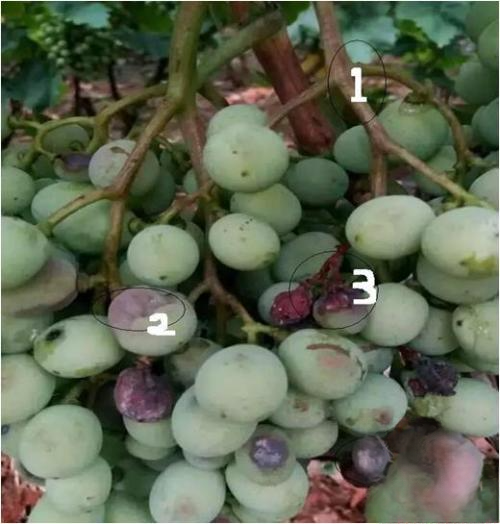
1. Gray mold: Gray mold is the first sign of all diseases. Infection with gray mold creates wounds, making the rachis highly susceptible to brown blight, canker, and white rot. Gray mold thrives in low temperatures and high humidity; controlling humidity significantly reduces its severity. Our goal is to eliminate gray mold during its incubation period. See the image below.
The symptoms marked in the picture are those of latent gray mold. The tips are darker in color, while the middle is particularly noticeable, indicating that gray mold symptoms have already appeared. At this stage, we need to use treatment agents to control the pathogen and remove it from the orchard by topping the fruit to prevent further spread, rather than waiting until the fruit develops mold before realizing it has gray mold.
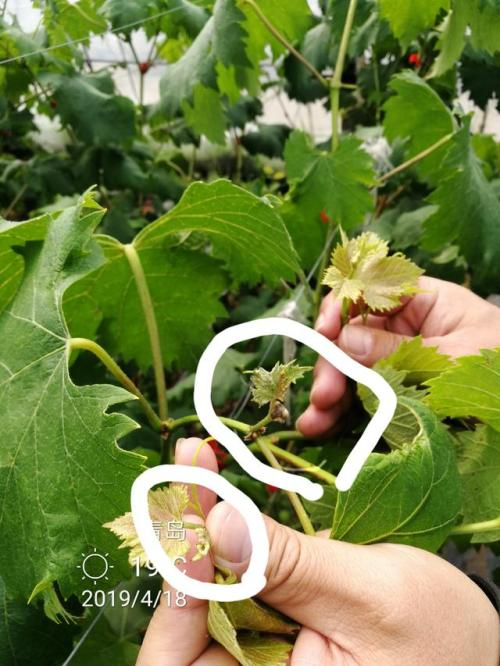
2. Brown blight of the rachis: As the name suggests, the rachis is infected by pathogens and becomes diseased. When the rachis is tender, it is easily infected, but as the rachis ages, it becomes less susceptible to infection. Initially, there are brown water-soaked spots, which gradually spread and form rotten rachis.
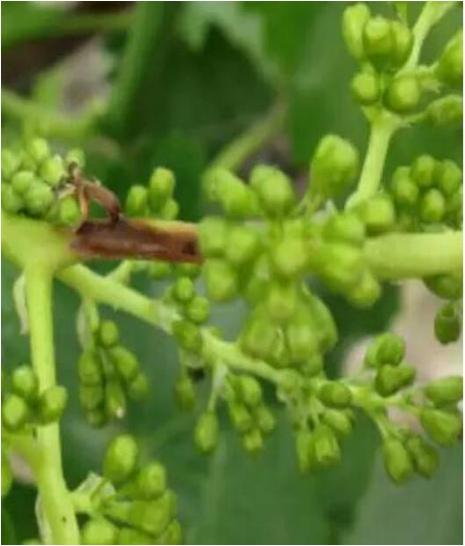
Generally speaking, if gray mold is controlled, there is no chance of brown blight in the rachis. Therefore, controlling gray mold effectively controls brown blight on the rachis.
3. Black spot disease, also known as "bird's eye disease", is characterized by round spots that resemble bird's eyes, with a grayish-white center and a depression.
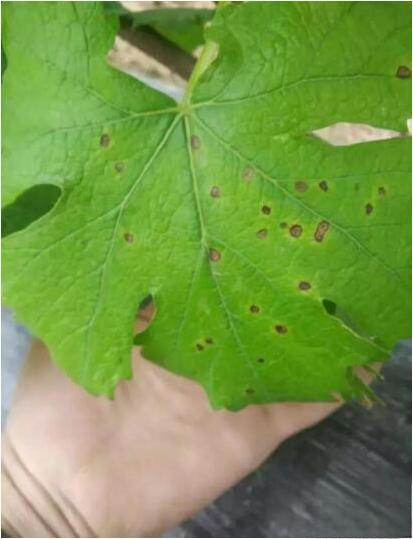
It mainly infects young and tender parts, including leaves, petioles, tendrils, and young fruits. Prevention and treatment are also very simple. Safe azoles plus some antibacterial drugs will do. In recent years, with the emergence of many new drugs, they can also treat black rot. Black rot does not have the conditions to break out.
4. Downy mildew: This is a key disease to control before flowering, following gray mold. Just as gray mold requires repeated treatments as soon as it emerges, downy mildew also shows latent lesions—small yellow spots—as soon as the leaves unfold.
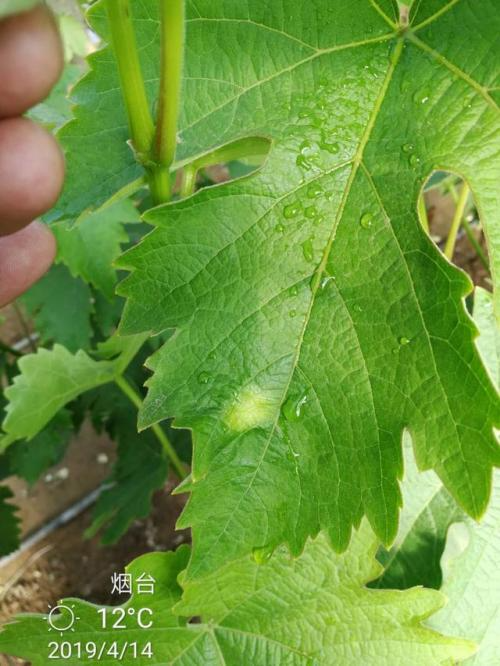
Most people overlook downy mildew at this time, thinking that if there's no white fuzz, it's not downy mildew. However, the pathogen lies dormant under high temperature and humidity conditions, then suddenly erupts, covering the entire orchard overnight. In 2018, when it broke out in late May and early June, it directly affected the ears of grain.
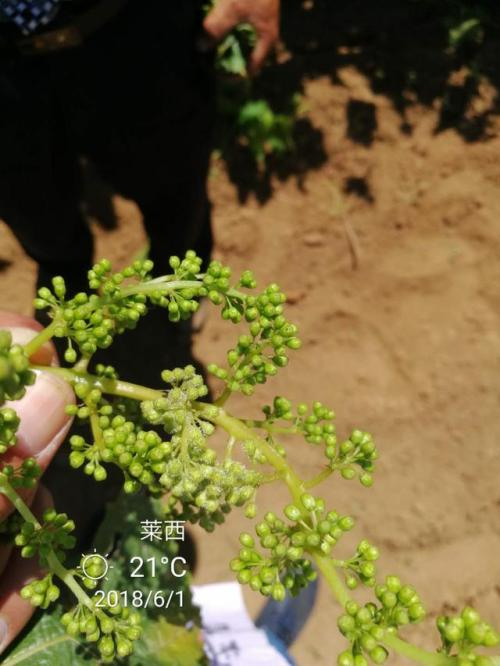
Previously, we would swat the white fuzz on the leaves to prevent it from infecting the fruit clusters, but this time we didn't give them a chance at all, and the clusters rotted directly, causing significant losses! In addition, downy mildew was rarely seen in greenhouses in the past, but this year it is not only common in greenhouses, but it also came earlier than in previous years, so the task of controlling downy mildew this year is still very arduous.
5. Pests: Pest control is needed as soon as grape buds sprout. The earliest pest to appear is the gold beetle.
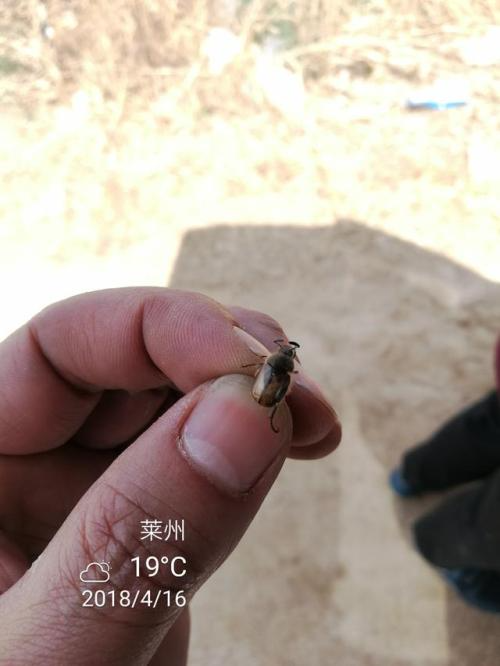
Especially in sandy soil, it comes out even earlier, biting at the buds before they are fully emerged, and the leaves are all broken after they unfold. Pyrethroids can be used for control, which also prevents thrips and green mirid bugs. For severe cases, it can be combined with fipronil, or chlorpyrifos can be mixed with vegetable leaves and sprinkled on the ground for baiting and killing.
Next are thrips and green mirid bugs.
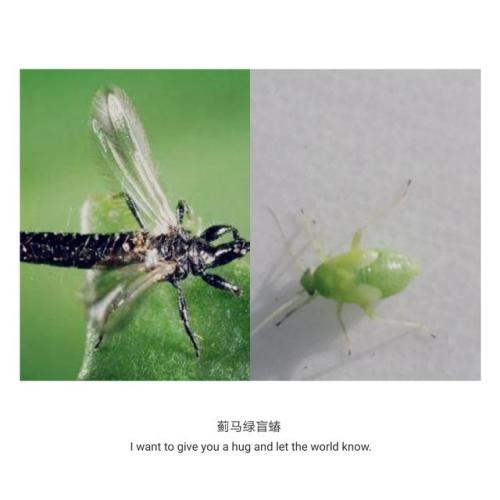
There's no need to distinguish between these two small insects too closely, as they both have multiple generations per year and are controlled with the same type of pesticide. Basically, when applying pesticides, including insecticides, is generally a good approach. In spring, try to choose pesticides with a longer-lasting effect.
The effective period can last for 20 to 30 days. If you choose an insecticide with a shorter effective period, you should apply an insecticide between two applications to prevent insect damage from causing more leaf breakage and affecting normal growth.
Having learned about the four major diseases and three minor insects before flowering, how do we control them? We call it one principle and two basic points: The principle is "Prevent disease before it appears, kill insect eggs at their peak." The basic points are: first, disease prevention must be early; second, the pesticide must be effective. We shouldn't wait until we see any pests or diseases to apply pesticides. Good pesticides aren't for treating diseases, but for preventing them. The same pesticide, costing 1 yuan for prevention, might not cure the disease even if doubled to treat it. Furthermore, not all diseases can be cured with a single application. Here are some recommended pre-flowering pesticide combinations for grapes for your reference:
1. Budding stage: Gray mold, pests, wound repair: Pyrimethanil + Trifluralin + Cyprodinil + Calcium
2. Leaf expansion period: Late April to early May: Junsiqi + Baitai + Diphenoxylate + Thiamethoxam + Lizuo + Sugar Alcohol Zinc
3. Before pollen separation: Around May 10-15: Apply a mixture of cypermethrin, tebuconazole, cymoxanil, biphenyl, thiamethoxam, and super energy (high-quality foliar fertilizer).
4. Before flowering: May 20-30: Kinder + Shuangmeiqing + Tetramycin + Acetaminophen + Super Energy (high-quality foliar fertilizer)