Practical Techniques || Several Methods for Controlling Diseases and Pests in Garden Trees
Spraying is often used to control forest pests. While this method has some effect, the large amount of pesticide solution dispersed in the air pollutes the environment and can easily cause poisoning to humans and animals. Moreover, spraying is generally ineffective against trunk-boring pests such as poplar clearwing moth, mulberry longhorn beetle, glossy-shouldered longhorn beetle, and Mongolian bark beetle. Below are some commonly used and environmentally friendly pest control methods.
I. Tree Trunk Whitewashing Method
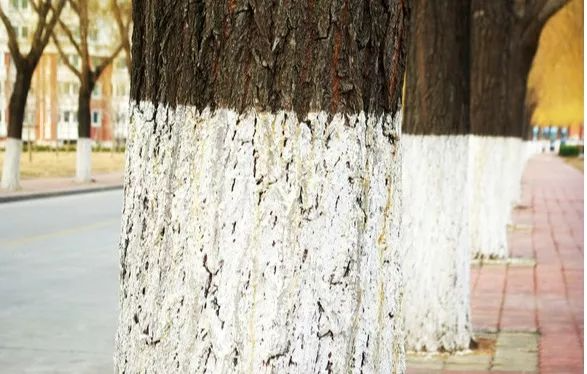
Whitewashing willow trees immediately after planting not only prevents trunk-boring pests such as longhorn beetles and jewel beetles from laying eggs on the trunk, but also helps prevent rot and canker diseases, delays bud sprouting, and avoids frost damage to branches and buds. Additionally, it can prevent sunscald.
You can use Bai Daifu (a traditional Chinese medicine) for whitewashing or use a tree trunk whitewashing agent. A common formula is: 10 parts water, 3 parts quicklime, 0.5 parts lime-sulfur mixture stock solution, 0.5 parts salt, and a small amount of oil (animal or vegetable oil). The whitewashing height should be 1-1.5 meters above the ground diameter.

II. Pesticide Burial Application Method
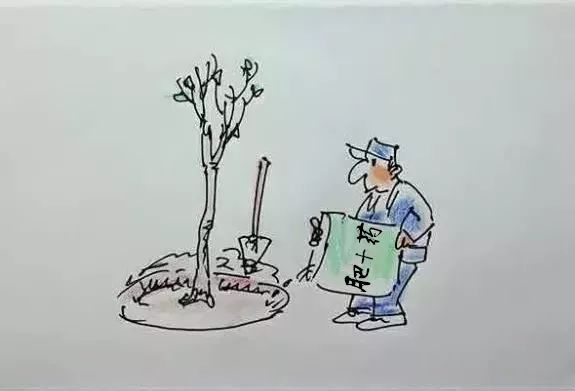
Dig pits or holes in the soil around the tree roots and apply a highly systemic granular pesticide. The roots absorb the pesticide, which is then transported to the trunk, branches, and leaves above ground. Pests that feed on it are poisoned and die. This method is unaffected by temperature, rainfall, or tree height, and its effects are long-lasting. It can control scale insects, aphids, and borers. For example, Furadan's effects can last up to 3 months, requiring only two applications per year.
The method is as follows: In the dense root zone, more than 60 cm away from the trunk, dig 3-4 pits (holes) around the tree, each 0.5 meters deep. Place pesticide granules in each pit (hole), then fill the pit (hole) and water it. The pesticide will dissolve and accelerate root absorption. Applications can be combined with fertilization during spring and summer. Using it with compound fertilizer or urea will enhance its effectiveness and speed, achieving both pest control and fertilization in one step.
III. Trunk Injection Method
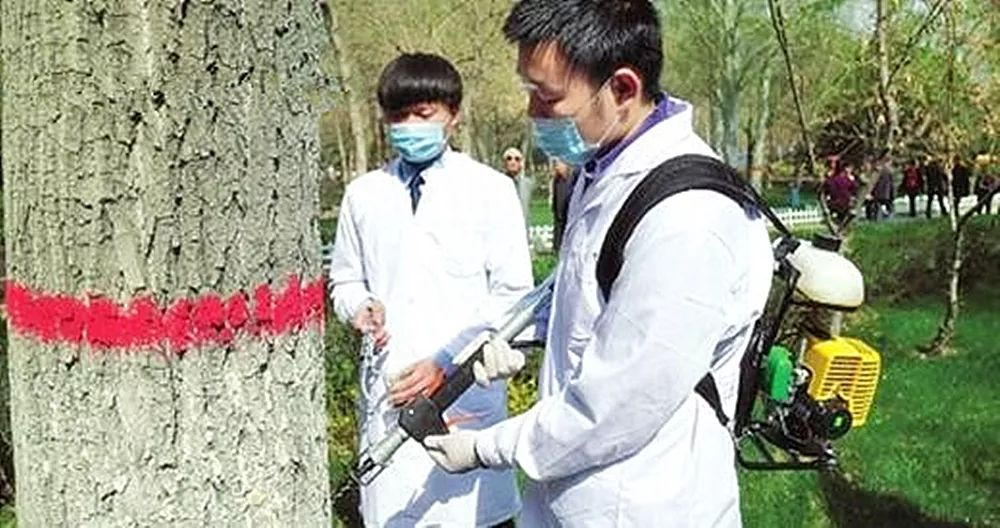
The injection method involves drilling holes around the tree trunk and injecting the pesticide, ensuring the entire tree is inoculated with the active ingredients. Regardless of where pests feed, they will be poisoned and die. This method is simple, labor-saving, pesticide-saving, does not pollute the air, does not harm natural enemies, and has good control effects. It can control difficult-to-eradicate trunk-boring pests such as longhorn beetles, wood borers, and jewel beetles, as well as piercing-sucking pests such as aphids, scale insects, and mites, various leaf-eating pests, and diseases such as tree felt disease and sooty mold. Injection can be carried out during the growing season from bud break to leaf fall, but the best results are achieved from April to August. Pesticides should not be applied during the dormant period from leaf fall to bud break. Pesticides with strong systemic properties and no adverse effects on tree growth should be selected, such as 50% methamidophos EC or 50% phorate EC. The specific pesticide selection varies depending on the pest and tree species. For controlling longhorn beetle larvae, the specific insecticide "Lianping Anruiqiao" is effective.
Injection Method: Drill holes first, then inject the medicine. Use a wood drill or cordless drill with a diameter of 0.8-1 cm to drill injection holes 8-10 cm deep at a 45-degree angle on the trunk, 15-50 cm from the ground, reaching the pith. Drill holes spirally upwards around the trunk. Large trees can have 3-5 holes, medium trees 2-3 holes, and small trees only 1 hole. Remove sawdust from the holes and inject the medicine. After injection, seal the holes with wax, mud, or adhesive tape. The injection holes will heal in about two months.
The dosage should be determined based on the size of the tree. Calculated from the undiluted solution, generally 6-10 ml per tree for large trees with a diameter at breast height (DBH) of 15 cm or more; 4-6 ml per tree for medium-sized trees with a DBH of 10-14 cm; and 2-4 ml per tree for small trees with a DBH of less than 10 cm. The dilution concentration should be determined based on temperature changes. When the temperature is low, the solution can be diluted 1-2 times; when the temperature is high, the undiluted solution should be diluted 3-6 times before injection to avoid excessive concentration and potential phytotoxicity at high temperatures.
IV. Trunk Glue Application Method
For some pests that migrate between trees, such as the spring inchworm and poplar tussock moth that infest poplar, willow, elm, locust, birch and maple, the pine caterpillar that infests pine, and the carmine spider mite that infests locust, paper mulberry and jujube, sticky insect glue can be used to trap and kill them.
Instructions for use: 1. Apply the sticky insect glue directly to the tree trunk; 2. First, wrap a 1.5-2 cm wide strip of tape around a smooth part of the main trunk, then apply the sticky insect glue evenly over it. Avoid getting weeds on the glue during application to prevent them from forming a bridge and causing the insects to detach and escape.
V. Tree Trunk Healing Method
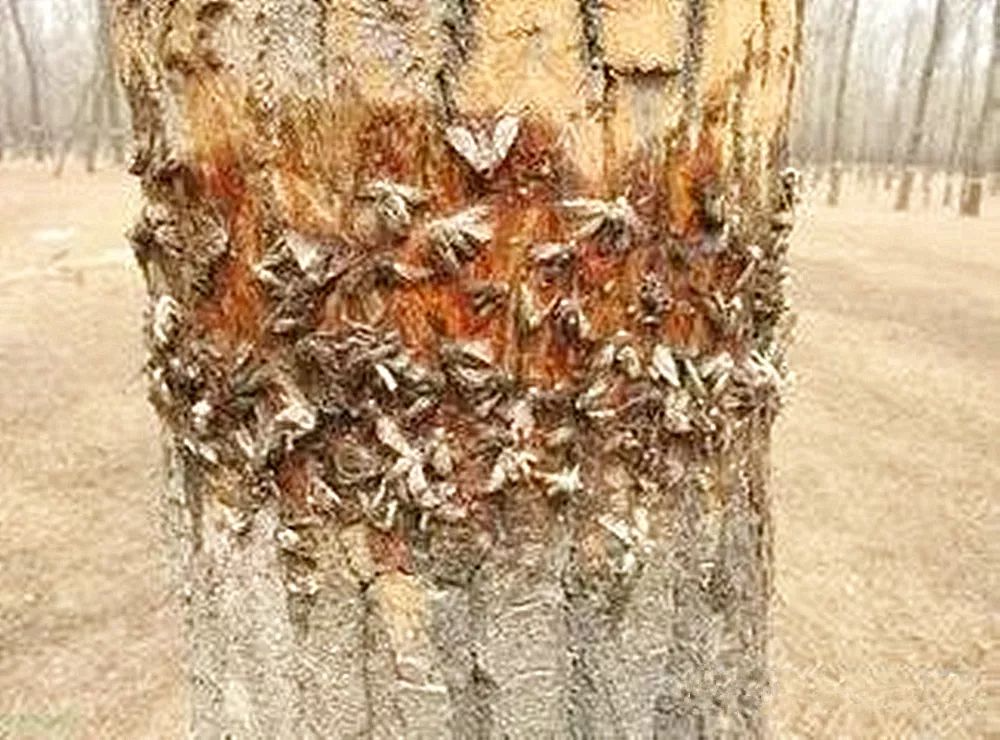
Wounds on the trunks and branches of garden trees and seedlings caused by tree diseases, insects, frost, sunscald, pruning, wind and hail damage, etc., often become entry points for pests and diseases. Timely treatment of wounds to promote healing and restore tree vigor as quickly as possible is an effective way to prevent pest and disease invasion.
Remove dead branches. For dead trunks and branches, saw or prune them away near the point of injury. For lightly damaged branches or branches that have sprouted new shoots, cut them at a clear boundary between living and dead parts, ensuring the cut is smooth and coated with a protective agent or wax to promote healing.
Remove rotten bark. Use a sharp knife to scrape off the diseased bark promptly, then apply 75% alcohol or 1%-3% potassium permanganate solution for disinfection, followed by wax or a protective agent to promote wound healing.
For branches that have been cracked or broken by strong winds, the wounds of minor split branches can be disinfected and then hung or supported. They should be tightly bound with rope or wire to ensure the wounds close completely. The binding can be removed after six months of healing and recovery.
In daily maintenance and management, combining conventional methods such as dusting, spraying pesticides, and baiting with the methods introduced above can greatly improve the control effect of pests and diseases.