Practical Technical Manual for the Prevention and Control of Major Diseases and Pests of Common Crops
The comprehensive promotion of green pest control technologies is undoubtedly of great significance for reducing the use of chemical pesticides, ensuring the quality and safety of agricultural products and the safety of the agricultural ecological environment, and realizing a green development path for urban modern agriculture that is highly efficient, safe in products, resource-saving, and environmentally friendly.
Practical Techniques for Disease Prevention and Control
strawberry powdery mildew
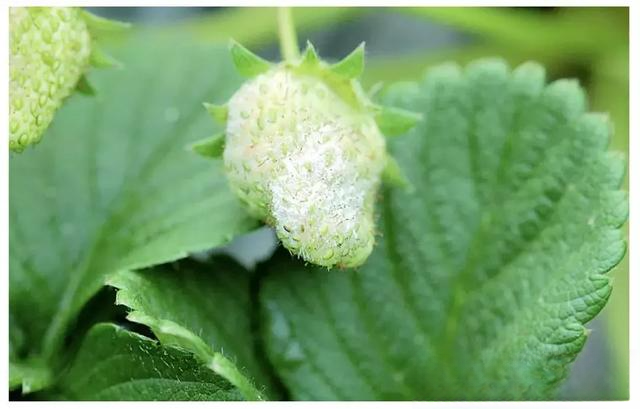
strawberry fruit infected with powdery mildew
(Image source: Beijing Plant Protection Station)
Symptom identification
This disease primarily affects strawberry leaves and fruits, with a greater impact on the fruit, causing a white powdery substance to appear on the fruit surface. Early infection of the fruit hinders development and can lead to stunted fruit; mid-to-late-stage infection results in uneven coloring and softening of the fruit. Affected leaves develop white filamentous or powdery substances on the underside of the leaves; new leaves are more susceptible than older leaves. As the disease progresses, leaf margins curl upwards, and the leaves later turn yellowish-brown. Infected petals turn red, affecting opening. Severe powdery mildew can also damage petioles, calyxes, and fruit stalks, causing a white powdery substance to appear on the affected areas.
Disease pattern
Strawberry powdery mildew is caused by a fungus. It can occur throughout the entire growth period in greenhouse production, with peak incidence in November of the previous year and mid-to-late March of the following year. The disease is more likely to occur and spread when the temperature is 15-25°C and the relative humidity is 40%-80%. Temperatures above 35°C or below 5°C have an inhibitory effect on the disease. In production, the disease is more likely to occur when the planting density is too high, the light is insufficient, the ventilation is poor, the air humidity is high, or the nitrogen fertilizer is applied excessively.
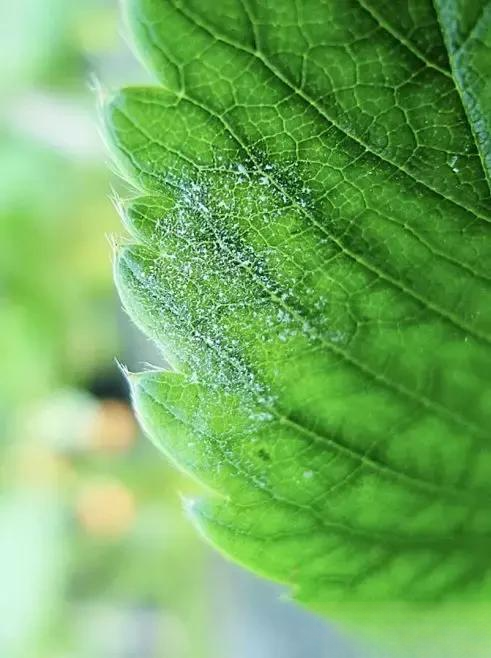
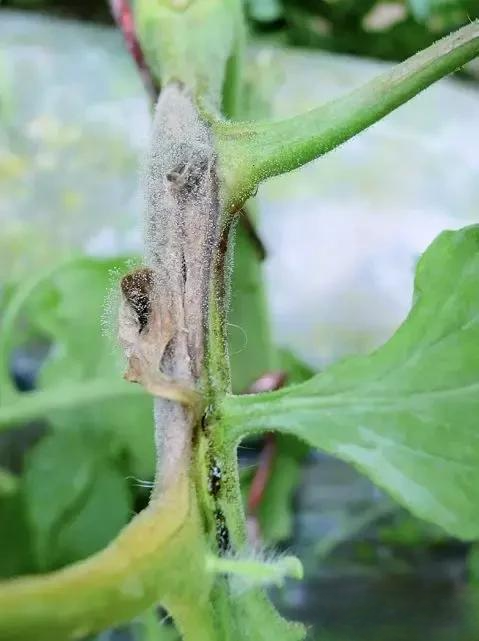
Strawberry leaves infected with powdery mildew (top); Strawberry stems infected with powdery mildew (bottom) (Image source: Beijing Plant Protection Station)
Prevention and control measures
Agricultural control: Prioritize the selection of disease-resistant varieties. European and American varieties such as Tongzi No. 1, Sweet Charlie, and Albi generally have better resistance to powdery mildew; appropriately reduce planting density and plant densely; adopt double-row planting on wide ridges; and promptly remove old and withered leaves.
Physical control: High-temperature fumigation.
Biological control: When using sulfur fumigation, it is better to use biological fungicides such as 2% Wuyi mycin at 200 times dilution, Bacillus subtilis (100 billion spores/gram) at 48-72 grams/acre (1 acre ≈ 667 square meters, the same applies throughout the book), and Pythium oligandrum at 8000 times dilution for spraying.
Chemical control: Disinfect the greenhouse before planting and fumigate with sulfur or chlorothalonil fumigant. When using sulfur fumigation, place an electric automatic temperature-controlled sulfur fumigation tank every 10 meters in the center of the greenhouse. In the Beijing area, fumigation should be carried out in the evening after the film is covered in early November, for no more than 4 hours a day. Continuous fumigation for 3 days will have a significant effect.
White spot disease of Chinese cabbage
Symptom identification
White spot disease of Chinese cabbage is an occasional disease that mainly affects older and mature leaves. It begins with small, grayish-brown, circular spots on the leaves, which then expand into nearly circular, grayish-white or grayish-brown lesions with a pale yellow halo around the edge. In later stages, if the weather is dry, the lesions often crack or perforate. In severe cases, the lesions merge, causing the leaves to wither and die.
Disease pattern
White spot disease in Chinese cabbage is caused by a fungus and is mainly spread by air currents. The pathogen is not demanding in terms of temperature; it can cause disease in temperatures ranging from 5 to 28°C. However, it is most effective when the average daily temperature is around 23°C, the relative humidity is above 62%, and rainfall exceeds 16 mm, with the disease typically appearing 12-16 days after rain. The severity of white spot disease is directly related to the variety, sowing time, terrain, and whether the crop has been continuously cropped. Generally, low-lying areas with waterlogged soil, sowing during the rainy season, or continuous cropping result in more severe disease.
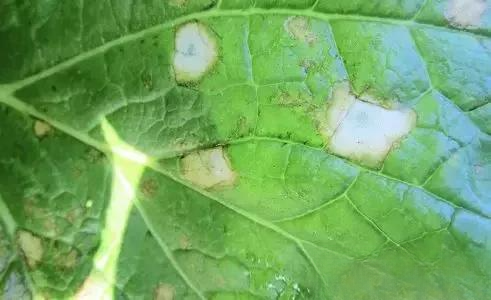
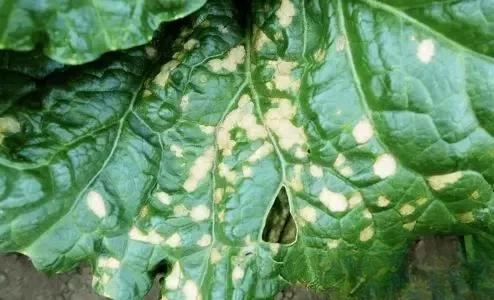
White spot diseased leaves of Chinese cabbage (Image source: Yanqing District Plant Protection Station, Beijing)
Prevention and control measures
Agricultural control: Strengthen cultivation management; rotate crops with non-cruciferous vegetables every other year.
Chemical control: 50% iprodione (Iprodione) wettable powder at 1000-1500 times dilution, 10% difenoconazole (Siga) water dispersible granules at 67-100 g/mu, or 70% mancozeb at 800 times dilution can be used once every 7 days for 3 consecutive times. Rotate the use of pesticides to avoid the development of resistance.
Practical Techniques for Pest Control
Leafminer
Pest identification and damage characteristics
The adult leafminer is 1.3–2.3 mm long and pale grayish-black. Eggs are laid inside plant leaves. The larvae are milky white to golden yellow, maggot-like, and can reach up to 3 mm in length. The larvae mainly damage crops by boring into leaves, forming winding tunnel-like tunnels. The tunnels are mostly white, turning rust-colored later. In severe cases, the leaves will wither and dry out in a short period of time.
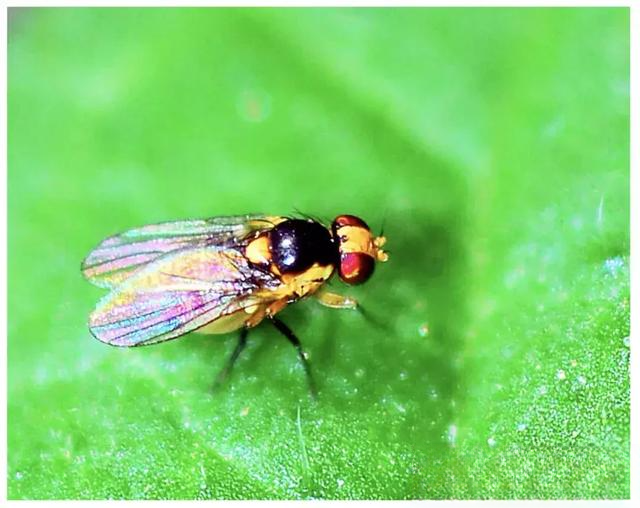
adult leafminer
(Image source: Shi Baocai)
Occurrence pattern
Leafminer flies are common pests on vegetables, with 8-9 generations per year in the Beijing area. They cannot overwinter outdoors. Adults feed and lay eggs mainly on the upper and middle leaves, while larvae are mainly distributed on the middle leaves, and pupae are also found in the soil.
Prevention and control measures
Agricultural measures: Deeply cultivate the soil before planting, increase cultivation and irrigation during the pest outbreak period; after harvest, promptly remove plants and weeds from the field, and use high-temperature fumigation in the greenhouse.
Physical control: Hang yellow sticky traps to attract and kill adult insects.
Biological control: Protect natural enemies, such as the Siberian mammillary wasp and the pea leafminer wasp. Spray with 20 ml/acre of 6% spinosad ethyl or 2500-3000 times dilution of 1.8% abamectin EC, alternating applications 2-3 times, with an interval of 7-10 days between each application.
Chemical control: Spray with 75% cyprodinil wettable powder at a dilution of 3500-5000 times.
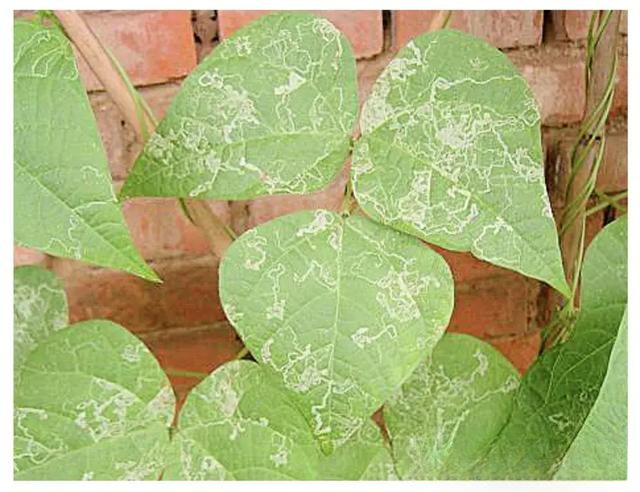
Leafminer damage