Pest control for roses
Roses are prized for their beautiful blooms, diverse shapes, and rich fragrance. They bloom year-round, and with numerous varieties, they are easy to propagate and cultivate, earning them the title of "Queen of Flowers" and making them one of my country's ten most famous flowers. However, pests and diseases often cause poor growth and even death, severely impacting their ornamental value. This article, compiled from the planting experiences of many users, summarizes the main pests and diseases affecting roses and their control methods for your reference.
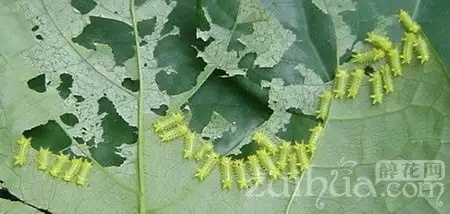
Stinging moth
The main larvae are the yellow-spotted tussock moth, brown-edged green tussock moth, beautiful brown tussock moth, mulberry brown tussock moth, and flat tussock moth, which feed heavily on leaves during the hot season. Control methods: Once discovered, spray immediately with an 800-fold dilution of 90% trichlorfon crystals, or a 1500-fold dilution of 2.5% cypermethrin EC.
Scale insects
The main types of scale insects include the white-ringed scale, Japanese tortoise-shell scale, red wax scale, brown soft wax scale, cottony cushion scale, chaff shield scale, and snake-eye scale. Their characteristic damage is that they pierce and suck the sap from the tender stems and young leaves of roses, leading to poor plant growth. This is mainly caused by high temperature and humidity, poor ventilation, and insufficient light. Control methods: During the peak hatching period of their nymphs, spray with a 2000-fold dilution of 25% imidacloprid wettable powder.
aphid
The main pests are rose aphids and peach aphids, which suck sap from the tender organs of plants, damaging young stems, leaves, and buds, severely affecting plant growth and flowering. Control methods: Spray promptly with a 2000-fold dilution of 10% imidacloprid wettable powder.
Rose three-segmented leaf bee
Mostly during the larval stage, dozens or even hundreds of larvae congregate to cause damage, quickly devouring all the tender leaves of a plant, leaving only a few main veins, severely hindering the plant's normal growth. Control methods: For a small number of potted plants, when they first appear, pick the leaves with a large number of larvae and crush them. For large infestations, spray with a 4000-fold dilution of 75% phoxim emulsifiable concentrate.
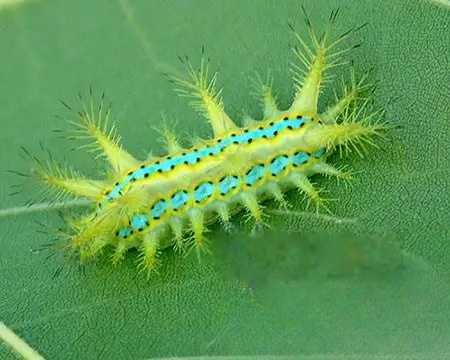
Cinnabar Tetranychus
This species can have 10-16 generations per year. Adult mites, larvae, and nymphs congregate on the undersides of leaves, sucking and damaging them. Eggs are mostly laid on the sides of the veins on the underside of leaves or under the fine webs. Each female mite can lay 50-150 eggs, with a maximum of 500. A generation takes only 10-13 days at temperatures of 23-25℃, and about 7-8 days at 28℃. Outbreaks are rampant during hot, dry seasons, often causing numerous dense white spots on the upper surface of leaves, while the undersides turn yellow and occasionally develop necrotic spots. Control methods: Once discovered, spray immediately with a 2000-fold dilution of 25% wettable powder of a fungicide like Beleba.
Golden Beetle
The main species are the green scarab beetle, black velvet scarab beetle, white-spotted scarab beetle, and small blue-flowered scarab beetle, etc. Adults typically feed on new leaves, tender shoots, and flower buds, severely affecting plant growth and flowering. Control methods: Take advantage of the adults' feigning death behavior by shaking them off and killing them in the evening. Utilize the adults' phototaxis by using black light traps. When adults are feeding and causing damage, spray with a 1000-fold dilution of 50% malathion emulsifiable concentrate.
Heartworm
The rose stem borer is the larva of the rose stem wasp. It bores holes in the stem, burrows inside, and feeds, causing branches to break and the upper part to die. The larvae are white with pale yellow heads, and are about 15-17 mm long. The adults are winged, black with yellow sides on the abdomen. The pupae are vermilion. It typically has one generation per year, causing damage from May to June. It pupates inside the stem to overwinter and is a relatively harmful pest.