Pest control for common flowers, dahlia cultivation techniques
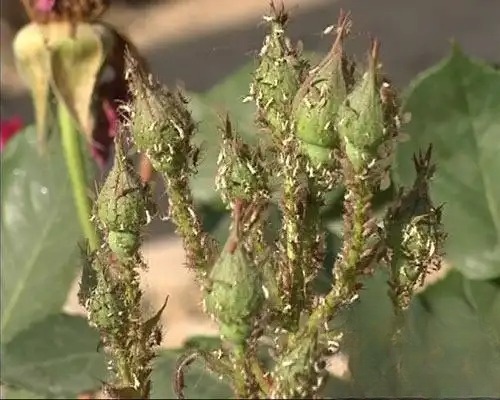 |
Flower diseases and pests mainly occur in the production, propagation, sales and transportation stages. They not only affect the normal growth of flowers, but also reduce their ornamental value. The first half of the program introduces common flower diseases and pests and their control methods.
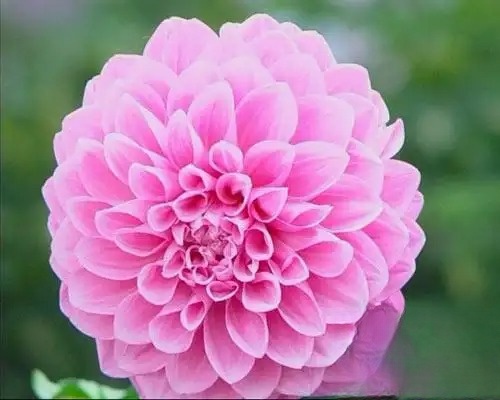 |
Dahlias are highly adaptable, have a long flowering period, are easy to cultivate, and offer significant economic benefits, making them one of the most widely cultivated ornamental flowers. The latter half of the program introduces dahlia cultivation techniques.
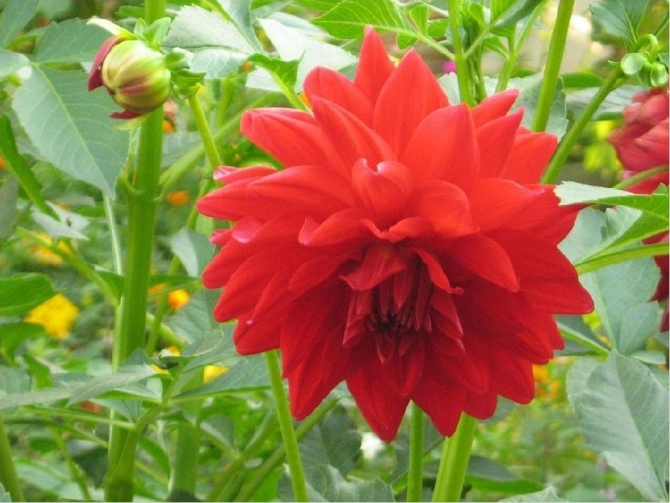
Since its domestication by Mexicans in 1519, the dahlia has developed rapidly. By the early 19th century, Germany had cultivated over 100 single-petaled dahlia varieties, followed by the development of double-petaled varieties. Cultivation of dahlias began in England in 1789, and after the 1870s, double-petaled varieties such as cactus-type, dwarf-type, and peony-type were developed, providing conditions for potted dahlias. Since the 1930s, Japan, the United States, and the United Kingdom have made significant achievements in dahlia breeding. Among them, Pan American Seed Company in the United States and Thompson Morgan Company in the United Kingdom are particularly prominent in dahlia breeding and production. In recent years, Fides Company in the Netherlands has led the world in the breeding and production of potted dahlias.
Dahlia cultivation in my country began in the late 19th century, initially in Shanghai, and later flourished in Northeast and North China. Today, single-stem dahlias cultivated in Liaoning, Jilin, Hebei, Tianjin, Beijing, Shandong, and Gansu exhibit a more magnificent and elegant appearance, imbued with a strong traditional character. Meanwhile, dwarf potted dahlias have entered large-scale production in major cities.
I. Morphological characteristics and varieties
Dahlias are perennial herbs. They have fleshy, spindle-shaped, clustered tubers underground. The stems are erect, smooth, branched, and hollow. Leaves are opposite, pinnately deeply lobed, with ovate lobes. The flower heads are terminal; the ray florets are varied and vibrant in color, while the disc florets are often yellow. Common varieties include the single-petaled Dandy, which grows to 60 cm tall, with single flowers 9 cm in diameter, and is famous for its bicolor varieties, especially the purple ray florets and white disc florets. Harlequin, which grows to 31 cm tall, with single flowers 6 cm in diameter, is particularly prized for its deep red ray florets and white disc florets, and its yellow ray florets and white disc florets. Mignonsilver, which grows to 30-35 cm tall, has single, wide, white flowers with only eight ray florets. The Piccolor series grows to 20-25 cm tall, with single flowers 6-7 cm in diameter, and colors including white, yellow, deep red, pink, orange-red, and bicolor. The semi-double and double-flowered Bambino varieties grow to 30-35 cm tall, with small, sub-double flowers, belonging to the miniature type. The Figaro series grows to 20 cm tall, with semi-double and double flowers 6-8 cm in diameter, and colors including yellow, orange, red, orange-red, deep red, purple, white, and pink. The Rigoleto series grows to 30 cm tall, with double flowers 6-7 cm in diameter, and colors including yellow, red, orange, pink, and white; it is an early-flowering variety. The Sunny Hybrid Yellow grows to 30-35 cm tall, with semi-double and double flowers 6-7 cm in diameter, and yellow flowers. The bronze-leaved variety includes the Diablo series, which grows to 35-40 cm tall, with double flowers 8 cm in diameter, and colors including deep red, orange, and pink. It is an early-flowering variety. The Redskin variety grows to 45 cm tall, with double or semi-double flowers 7-8 cm in diameter, multi-colored flowers, and bronze-leaved leaves.
II. Biological characteristics
Dahlias are native to the highlands of Mexico. They prefer warm, humid, and sunny environments.
The optimal growing temperature for dahlias is 10–25℃. They thrive best in cooler regions with a diurnal temperature range of over 10℃. Growth and flowering are hindered when summer temperatures exceed 30℃, resulting in fewer flowers. Winter temperatures below 0℃ can cause frost damage. Tubers should be stored at 3–5℃.
Dahlias are quite sensitive to water. They are intolerant of drought and susceptible to waterlogging, making them suitable for cultivation in areas with an annual rainfall of 500-800 mm. In the middle and lower reaches of the Yangtze River, the heavy rainfall during the plum rain season is extremely detrimental to the growth of outdoor potted dahlias, often causing them to wither and die from waterlogging. In Northwest and North China, sufficient water is extremely beneficial for the growth and development of potted dahlias.
Potted dahlias thrive in full sunlight. They produce vigorous stems and leaves, and bloom profusely with vibrant colors. However, they dislike prolonged exposure to strong, direct sunlight and require appropriate shading to prolong their flowering period.
The best soil is a mixture of well-draining and water-retentive leaf mold or peat moss and potting soil. Potting soil should not be reused, otherwise the tubers are prone to degeneration and infection by pests and diseases.
III. Reproduction Methods
It is commonly propagated by division, cuttings, and seeds.
Propagation by division: This is done in March or April. Before sprouting, divide the stored tubers. Since dahlia tubers are formed from enlarged adventitious roots on the stem base, be careful to include the sprouting points on the old stem neck when dividing. Tubers without sprouting points cannot form new plants. Each tuber should have 1-2 buds when dividing, and avoid damaging the young buds during the process.
Propagation by cuttings: This can be done from early spring to summer/autumn, with the highest survival rate achieved when cuttings are taken in a greenhouse in March or April. Plant the tuberous roots in leaf mold, ensuring the terminal bud is exposed above the soil surface. Maintain a room temperature of 15-22℃. When the terminal bud reaches 8-9 cm in length, leave one pair of leaves at the base, cut the cuttings, and transplant them into a sand bed. Roots will develop in about 15-20 days, and the tubers can be potted after 30 days. Flowering can occur in the same year. Alternatively, during the stem and leaf growth period, stem nodes with axillary buds can be cut and inserted into a sand bed. Roots will develop in 15-25 days, with a high survival rate.
Propagation by seed: Indoor pot sowing is commonly used. Each gram contains approximately 100 seeds. The optimal germination temperature is 20-22℃, and germination occurs 10-14 days after sowing, with a germination rate of 80%-85%. If the daytime temperature is 27℃ and the nighttime temperature is 18℃, germination can occur in 5-7 days. Potted dahlias take approximately 80-100 days from sowing to flowering.
IV. Cultivation Management
Transplant seedlings 18 days after germination in 5 cm diameter seedling trays, maintaining a temperature of around 16℃. After 30-35 days, transplant them into 12-15 cm pots. During the growing season, fertilize once every ten days or use "Huiyou" 15-15-30 potted plant fertilizer. Ten days after transplanting, spray the leaves 1-2 times with 0.05%-0.1% chlormequat chloride to control plant height. Alternatively, pinch off the growing tip when the seedlings reach 15 cm in height to encourage branching and more flowers. Remove withered flowers promptly to reduce nutrient consumption and prevent mold growth that could affect stem and leaf growth. This also promotes new flower stalk formation and prolongs the flowering period. Strictly control watering during the growing season to prevent excessive stem and leaf growth, while promoting thicker stems and larger flowers. During hot summer months, spray the leaves frequently to promote stem and leaf growth, but avoid overwatering the potting soil. When the plant begins to wither slightly before the first frost, cut off the stems and leaves, place it in a semi-shaded area, and dig up the tubers a few days later and store them in sand indoors.
V. Pest and Disease Control
Common diseases such as powdery mildew and brown spot can be treated by spraying with a 1000-fold dilution of 50% carbendazim wettable powder, in addition to ensuring good ventilation. Aphids and spider mites are common in summer and can be controlled by spraying with a 1000-fold dilution of 40% trichlorfon emulsifiable concentrate.
VI. Postpartum care