"Original Aspiration, Floral Wishes" Horticulture Planting Group for Recovered Individuals | Social Work Case Project
introduction
Nature is the best therapist; a seed, a green leaf, a small flower... can all bring wonderful touches and insights to our hearts.
Nature not only provides humanity with the materials and energy needed for survival and development, but also influences human senses and the nervous system through the diversity of species. This promotes physical exercise and physical strength, while psychologically, it allows humans to experience the power of nature, gain pleasure, and build confidence.
In China, horticultural therapy is receiving increasing attention and importance. As people value the healing properties of plants, horticultural therapy is being widely applied in various fields, including elderly care, mental health treatment, and rehabilitation groups.
Horticultural therapy not only helps people strengthen and improve muscles, regulate balance and endurance through physical exercise, but also eliminates tension and irritability, relaxes the mind and body, and has a more significant effect on the recovery of mental patients. It can also improve their interest and emotional activity, recognize their self-worth, build self-confidence, and enhance their ability to communicate and participate in society.
I. Group Background
In the course of social work services, it has been found that most recovered patients are affected by the physical and psychological effects of mental illness symptoms or drug side effects, which sometimes leads to behaviors that are different from those of ordinary people. Moreover, due to the stigma of the illness and the misunderstanding and discrimination of the general public, they are afraid to see people after becoming ill, stay at home for many years, rarely have contact with the outside world, and lack opportunities and platforms for communication and social adaptation.
Therefore, most recovered patients experience feelings of distress, depression, and helplessness, leading to a decline in their social functioning, reduced adaptability, and low sense of value in life.
Therefore, social workers seized the opportunity of the project service plan and the spring planting season to carry out the "Original Intention, Flower Language and Star Wish" horticultural planting group. Combining the magical power of nature, integrating the different effects of horticultural therapy on the mind and body, and local social elements, the group helped recovering patients improve the effects of residual symptoms, drug side effects, and social limitations.
At the same time, it is hoped that through the concept of "discussion, co-construction, sharing, and co-growth" among group members, activities such as discussing the vision of the garden, visiting families of recovered patients with rich planting experience, purchasing agricultural products and planting materials at the market, and personally experiencing planting can inspire their happy emotions, enhance their self-confidence and sense of identity, promote mutual assistance among peers, interpersonal communication, community integration, and achieve all-round development in terms of body, mind, and spirit, and ultimately achieve physical and mental healing effects.
II. Service Theory and Objectives
(I) Service Theory
1. Horticultural therapy
Horticultural therapy emphasizes that people can unleash their potential through their interaction with plants and effectively help them achieve goals such as restoring physical and mental functions, maintaining social relationships, developing social functions, and building a better community.
Therefore, implementing horticultural therapy in social work practice is not only an important shift for horticultural therapy to achieve interdisciplinary integration, but also an important method and technique for social work to realize its value and goals.
2. Enhancing Theory
Empowerment theory posits that an individual's capabilities can be continuously increased through social interaction; recovered individuals are capable and valuable; and the assistance provided to recovered individuals should focus on enhancing their capabilities to combat environmental stressors.
At the individual level, social workers inspire the creativity of those recovering from illness and encourage active participation; at the interpersonal level, they promote communication and sharing among those recovering from illness, thereby creating a positive interpersonal atmosphere; at the environmental level, they encourage those recovering from illness to share their attitudes toward life and their gardening creations with others and society, showcasing a positive social image and promoting social acceptance and inclusion.
(II) Service Objectives
1. Overall Objective
To help recovered patients build confidence in life.
2. Sub-objectives
(1) More than 80% of the group members’ personal self-confidence was improved.
(2) More than 80% of the group members believe in their ability to enhance group interaction and integrate into the community.
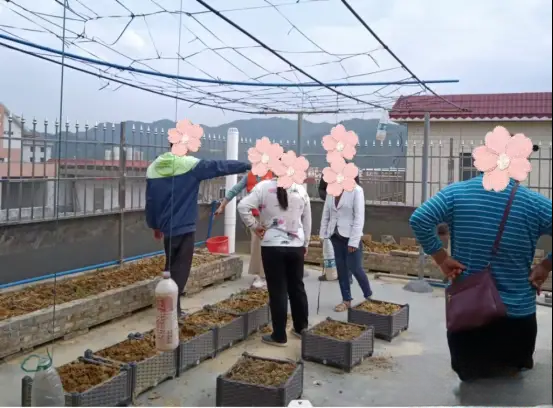
In front of the group, everyone sketched out their vision for the garden together.
III. Group Implementation and Process Performance
(I) Section 1: First Encounter
This activity mainly focuses on the preliminary stage of fostering relationships among group members, familiarizing them with the group theme, and establishing a group contract.
Social workers used the ritual of the sign-in wall and fun games to help group members relax and encourage them to express themselves, share their personal interests and preferences, and enhance their familiarity and understanding of each other.
Seven of the group members were able to express their rural backgrounds, interests, and daily preferences, and some suggested that the group members could get together when they have free time.
Then, the social worker introduced the group theme, shared their understanding of gardening, and encouraged group members to express their experiences through their own experiences of growing vegetables, fruit trees, and flowers in their daily lives. These experiences could include concerns about the weather during planting, the hardships of the care process, and the sweetness of the harvest.
The social worker and group members then analyzed the meaning behind planting, which could be patience, respect for life, diligence, perseverance, and so on, recognizing the power of horticultural therapy.
Five group members shared that they could feel the value of planting when they harvested lychees. One group member mentioned planting roses, which are multi-colored champagne and very beautiful when they bloom. Three group members mentioned that they could observe that some plants were very strong even after experiencing sun and rain, wind and rain. For example, lychees survived the storm in May and still produced fruit. For example, Zengcheng cabbage became sweeter after being hit by frost.
Finally, the social worker led the group members to jointly develop a group contract, forming group norms.
(II) Section 2: The Vision in My Heart
The social worker led the group members to observe the rooftop garden site together. Combining the climate of the Longgang area with the group members' good planting experience and ability, the social worker carefully analyzed the advantages and disadvantages of the environment. The social worker mobilized the group members to put themselves in the "human context" and discussed the soil nutrients that need to be cultivated before planting; the varieties suitable for planting in dry weather; and the allocation of planting areas in the garden. This laid a good foundation for the group members to discuss the garden vision together and actively promoted the group members' initiative and participation in the group's garden vision.
Next, by projecting and playing online garden videos and pictures, a preliminary vision for the gardening group was outlined, including garden environment design and site planning.
Based on the presentation of the initial vision, everyone expressed their intention to plant passion fruit, bougainvillea, roses, Murraya paniculata, sunflowers, and other plants. Some group members even mentioned planting their own honeysuckle, Murraya paniculata, bell peppers, and other plants in the garden.
Following the initial interaction among group members, the group members in this session have gradually gotten into the swing of things, with improved communication and interaction, a stronger sense of belonging to the group, and a willingness to actively share and provide feedback.
(III) Section 3: Flowers Bloom with You
This group activity incorporates a visit to the gardens of recovered patients' families with extensive planting experience. Through these families sharing their feelings and gains from gardening, the group members are encouraged to appreciate beauty in their lives and learn from their peers' positive attitudes and lifestyles.
During the process, team members interacted with the families of those recovering from illness, visited the garden, and exchanged planting experiences, experiencing a unique feeling. This not only allowed the families of those recovering from illness to feel external care in their ordinary lives, but also enabled the team members to receive gifts of flowers and planting experience, achieving mutual encouragement and support.
As the group matures, its cohesion increases significantly, and the relationships among its members become closer.
(iv) Section 4: Let's go to the market together
The group members were divided into groups to visit the flower planting and sales area of Longgang Market and learn about the varieties of plants and farming tools available at the stalls.
During the group activities, members communicated and exchanged ideas, selected healthy seedlings, compared prices at different stalls, learned about the seedlings' growth and care, inquired about prices, negotiated with vendors, and interacted with other community members who were buying flowers. The experience of integrating into the community was positive.
This group design activity involved buying flower seedlings at a market. This was a new experience for both the social worker and the group members. The chosen location was a market that the group members were familiar with since childhood, and they had collaborated with each other many times before. For example, they discussed which seedlings were the best, bargained with the vendors, and carried the seedlings together, which effectively promoted autonomous communication, interaction, and collaboration among the team members.
(V) Section 5: Xing Le Pastoral
This group mainly focuses on planting the flower seedlings they bought at the market.
At the rooftop garden, team members paired up to work together. Some worked together to cut open the flowerpots to better extract the seedlings; others loosened the soil to make it easier for other team members to plant; some planted camellias together, with one person wielding a hoe to cover the soil while the other held the seedling steady; some watered the plants to soften the soil and allow the seedlings to absorb water; and some team members reminded everyone not to fertilize after planting the seedlings, but to wait until they had successfully grown for about 15 days before fertilizing...
After planting, the group members named their seedlings, and their performance throughout the process clearly demonstrated that the group had a lot of good communication and experience in working together.
As the group progresses, the social worker's power and status gradually become marginalized, while the group members gradually become the center of the group.
During the sharing session, some people said, "I felt that everyone had close friendships, and that planting flowers beautifies the environment. The activity was thoughtful and well-intentioned." Others said, "I hope my life can be as resilient as a plant, able to withstand wind and rain."
(vi) Section 6: May you be blessed
In this session, the social worker shared the group's progress and growth through videos and photos, providing support for the group members to summarize and review their experiences. Each member was invited to reflect on the changes in the planting process through the photo playback, reflecting on their own expectations and identifying subtle changes in their surroundings. The group also encouraged everyone to express their blessings to one another.
Group members resonated with the photos, finding small things and changes in their own lives reflected in them, such as actively making friends with old friends, learning about the lifestyle of flower growers, and boldly negotiating prices with the shop owner. Some members expressed that they were "moved by their own experiences," "it was an unforgettable life experience," "I feel happy whenever I think about these experiences," and "it was my first time participating in planting flowers, and seeing the garden go from barren to full of flowers and grass made me so happy."
The plant's growth also gave the team members confidence and hope, empowering them to face future life challenges.
IV. Service Effectiveness
Regarding the rehabilitation participants themselves, in terms of behavioral changes, their personal hands-on abilities have improved, and they have taken the initiative to bring plants from their homes to the garden for planting. Later, seven members who had participated in the group offered to provide flowers and vegetables from their homes to decorate the rooftop garden. Some members also cut off branches of plants that interested them in the garden and took them home to plant, combining the planting knowledge they learned in the group.
Regarding emotional improvement, the unease, anxiety, depression, and loneliness caused by the pathology were alleviated, and most group members expressed that they were much happier than before.
In terms of attitude improvement, the nine group members effectively diverted their attention and pathological experiences through gardening, learned positive and proactive life attitudes from their peers, and boosted their confidence in life.
In terms of social interaction, each group member has made at least one old friend, the peer support system is well established, communication skills have improved, and group members can now contact each other without social workers, sharing interesting things about their lives or the flowers they grow on WeChat groups. Some group members have even built deep friendships and make appointments to have meals and gatherings together at market days.
At the end of the group session, many members shared their happy and touching words, expressing that they were moved by themselves in the group and that they had developed an emotional attachment to the seedlings they planted. Seeing the flowers bloom naturally enhanced their positive mood about life.
During the group activities, the value of interaction among group members, social workers, and community members was highlighted. Group members actively participated, communicated, and helped each other, successfully creating a beautiful co-construction garden. Through planting, they developed an emotional connection to gardening, realized the similarities between "humans and plants," and experienced their own value.
V. Summary of Experiences and Reflections
During the group activities, participants discussed the initial design of the garden, planned its vision, visited families of recovered patients with extensive gardening experience to exchange gardening tips, purchased flowers at market days, interacted with local community members, and even planted the plants themselves…
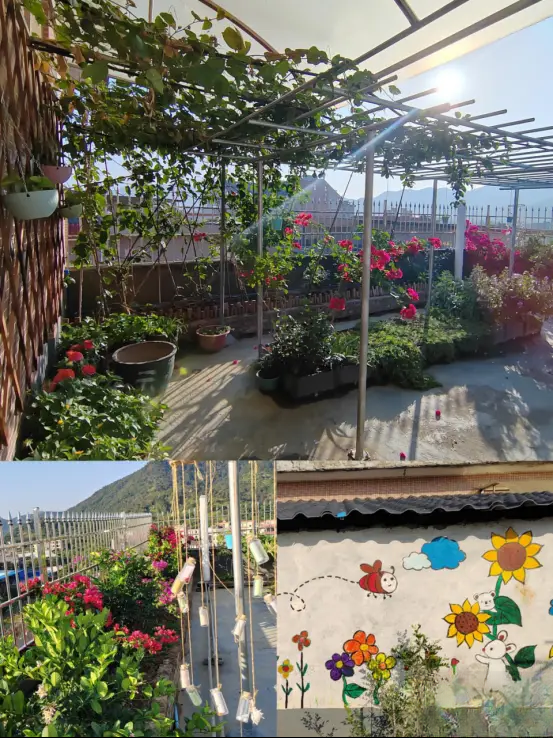
The garden was transformed from nothing to a garden full of flowers and grass. During this time, the recovered patients spent their days with the plants, experiencing the powerful vitality that emerged from the changes in size, color, and texture of the plants as they grew. It was also a microcosm of the patients' recovery process.
The group faced many difficulties and hardships, such as the lack of nutrients and depth in the soil, the high temperatures in summer, the strong sunlight that could cause the plants to dry out, and the lack of proper garden maintenance.
The feeling that the garden is difficult to build successfully is like the complex, long, unstable and many uncontrollable factors of a patient's illness, making recovery difficult. Combining this with the special characteristics of a patient's illness, it is similar in a way: growing through ups and downs.
But in the end, the team members persevered and, through their continuous efforts and contributions to the garden, successfully created a beautiful rooftop garden environment.
This also indicates that as long as recovered patients persist in stabilizing their condition, they can create a beautiful physical and mental environment for themselves and ultimately recover.
Therefore, nature is a natural sanatorium. With increasing social pressure and improved quality of life, mental health issues will receive more and more attention. Horticultural therapy, as a non-drug treatment, can play a role in cognitive, psychological, social and physical aspects, and can provide a healthier way of social activity, promote the connection between mental health recovery and real life, enhance social skills, restore damaged social functions, and build self-confidence in life.
I always thought it wouldn't grow, but as long as you persist and work hard, you will reap the rewards; it's something to look forward to—one day it will bloom. (Garden Version)
I always thought this illness was incurable, and it was painful, but if you persevere and face it positively, one day you will emerge from the darkness, and beauty will bloom because of you. (Recovered Patient Version)