[Methods] A complete guide to chrysanthemum diseases and pests, with pictures, save it now!
While chrysanthemums are relatively easy to grow, they are also prone to some annoying pests and diseases, such as powdery mildew, black spot, and aphids. Today, I'll teach you nine practical methods for preventing and controlling chrysanthemum pests and diseases!
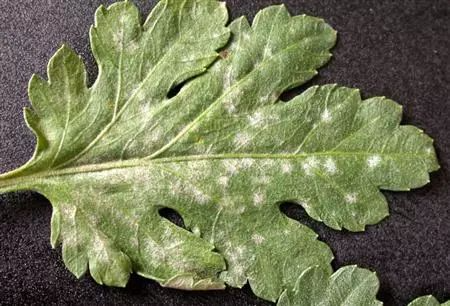
The lesions appear as white powdery substances, mostly on leaves and petioles, and sometimes young stems, flower stalks, and flower buds are also affected.
In the early stages, the white powder is mainly on the upper surface of the leaves. Under suitable conditions, the entire leaf is covered with white powder. Later, small black spots appear. In severe cases, the leaves wither and curl, the plant becomes stunted, and the petals become deformed or fail to open.
1. Promptly remove diseased leaves and plant debris, and burn them in a centralized manner.
2. During the disease outbreak period, spray with 20% carbendazim at a dilution of 600-800 times, or 50% carbendazim at a dilution of 500 times, once every 5-7 days, for 2-3 consecutive sprays.
3. Ensure good ventilation and reduce humidity when watering, and fertilize appropriately.
4. Before the onset of the disease, from mid-April to mid-August, spray alternately with 80% mancozeb at 800 times dilution and 50% thiophanate-methyl wettable powder at 800-1000 times dilution, twice a month.
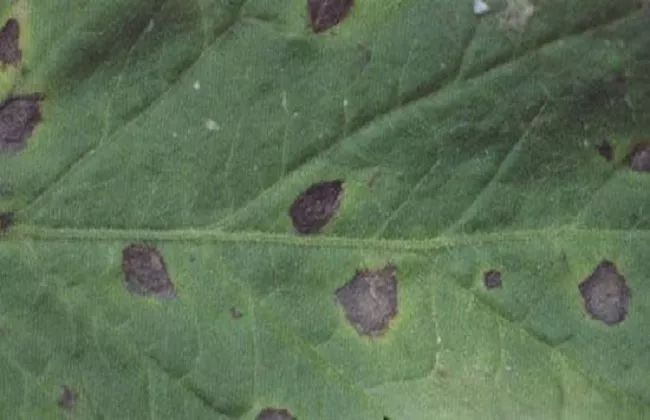
Initially, round or oval purplish-brown spots of varying sizes appear on the leaves, and then the color gradually turns black to dark brown, with the spots being 2-10 mm in diameter.
In later stages, the edges of the lesions turn dark brown, while the center turns grayish-brown to light gray, and small black dots appear. In severe cases, the lesions connect with each other, causing the entire leaf to turn black and dry out, hanging from the stem.
1. Diseased leaves should be removed immediately upon discovery.
2. During the disease outbreak period, spray with 75% chlorothalonil at a dilution of 700 times or 40% thiamethoxam at a dilution of 800-1000 times, once every 7-10 days, for a total of 3-4 times.
3. When propagating by cuttings, select healthy mother plants as propagation plants and soak them in a 1000-fold dilution of 50% methyl thiophanate or a 600-fold dilution of 80% zineb for 1-2 minutes.
4. In early April, spray with 1% Bordeaux mixture or 80% zineb at a dilution of 600-800 times to prevent disease occurrence.
5. Potted chrysanthemums need to have their soil replaced annually. In winter, cut off any remaining branches and leaves from the ground, burn them, and then bury them by deep tilling of the soil.
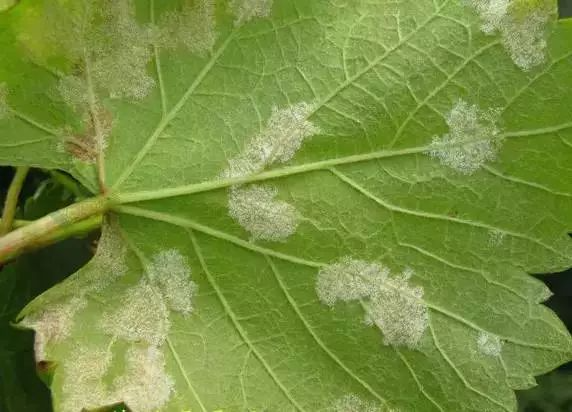
It mainly affects leaves, petioles, flower stalks, flower buds, and young stems. When leaves are infected, irregular chlorotic spots appear, the leaf margins curl slightly upwards, the underside of the leaves is covered with white fungal clusters, and the diseased leaves gradually turn brown and dry up from the bottom up.
Severely infected seedlings wither and die. The disease occurs in autumn, with white fungal colonies covering the leaves, flower stalks, and flower buds, leading to the death of the entire plant.
1. Remove the diseased leaves and burn them.
2. Spray with 75% chlorothalonil solution (powder:water = 1:800) or metalaxyl solution (powder:water = 1:300) or cymoxanil solution (powder:water = 1:500).
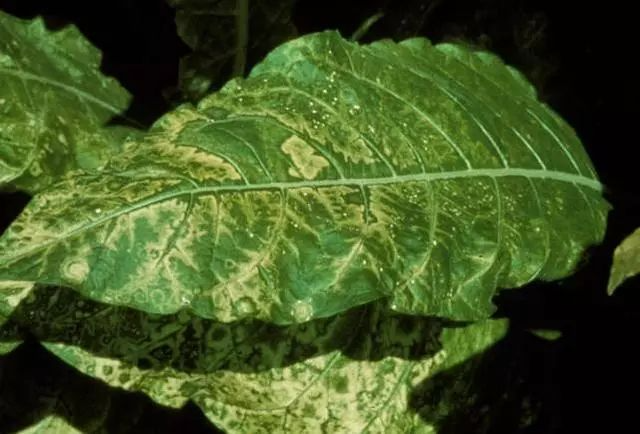
Necrotic spots of varying sizes and uneven distribution appear on diseased leaves. In severe cases, brown necrotic spots appear, causing the entire leaf to die and fall off.
1. Spray with 5% virucidal wettable powder at a dilution of 400 times, or 20% virucidal agent (morpholine guanidine hydrochloride·copper) wettable powder at a dilution of 500-600 times, 0.5% antiviral agent No. 1 aqueous solution at a dilution of 300 times, or 20% antiviral agent water-soluble powder at a dilution of 500 times. Repeat every 7-10 days for 3 consecutive applications.
2. When propagating by cuttings, disinfect the propagation material and tools to avoid damaging the plants, and remove weeds and other host plants.
3. Thoroughly control and prevent the spread of viruses by pests such as aphids, thrips, and leafhoppers.
4. Avoid planting too densely, maintain good ventilation and light penetration to improve the plant's disease resistance.
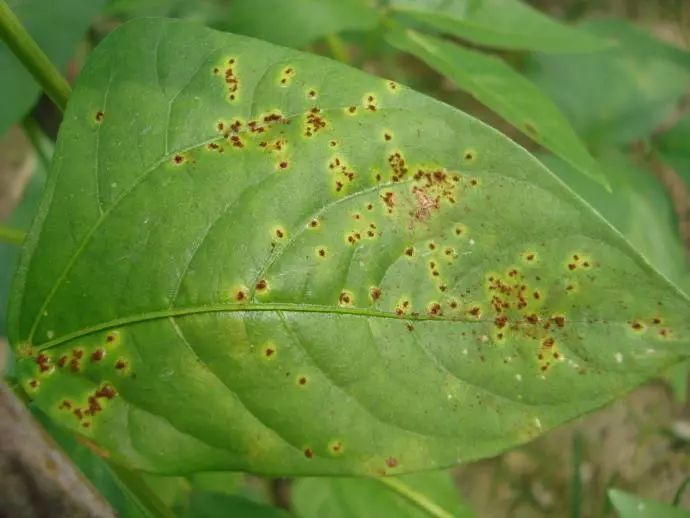
It primarily affects the leaves, but can also infect the petioles and stems. In the early stages of the disease, small, light yellow spots appear on the upper and lower surfaces of the leaves, which later form yellowish-brown to dark brown pustule-like protrusions on the underside of the leaves.
In the later stages of the disease, the lesion tissue eventually dies, and the affected leaves wither and die.
1. During the disease outbreak, spray with 15% wettable powder of carbendazim at a dilution of 1000 times, or 65% wettable powder of zineb at a dilution of 500 times, or 50% wettable powder of benomyl at a dilution of 1500 times for prevention and control.
2. In greenhouse cultivation, enhanced ventilation and reduced air humidity help inhibit pathogen growth. In open-field cultivation, the soil should not be allowed to become waterlogged.
3. Apply appropriate amounts of phosphorus and potassium fertilizer to enhance the chrysanthemum's disease resistance. Chrysanthemums planted in the ground are more susceptible to disease from September to November due to prolonged periods of overcast skies, rain, and high humidity. Improve ventilation, drainage to reduce humidity, and increase sunlight exposure.
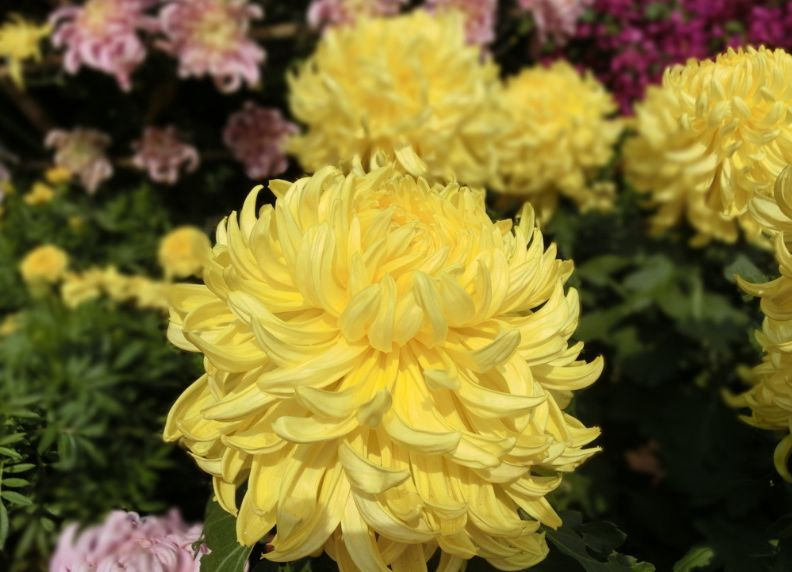
Flower rot primarily affects flower buds and petals, but can also damage leaves, petioles, and stems. Infected flower buds turn dark brown to black and then rot, with the rotten spots spreading along the flower stalk, causing the flower buds to fall off.
1. When signs of disease appear, spray with 600 times dilution of 80% chlorpyrifos or thiamethoxam wettable powder, 500 times dilution of 70% mancozeb wettable powder, or 1000 times dilution of 50% benomyl wettable powder.
2. Pay attention to controlling humidity; do not splash water on the petals when watering.
3. Diseased flowers or plants should be buried deeply or burned immediately.
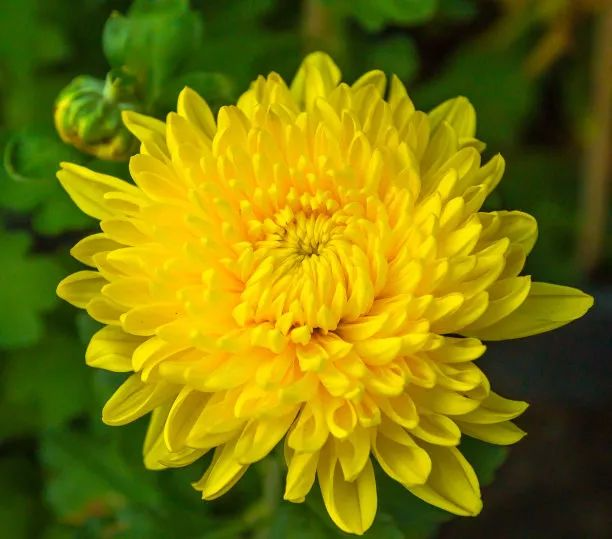
Gray mold in chrysanthemums primarily affects the leaves, stems, and flowers. It mainly occurs during cold and humid seasons. When leaves are affected, brown spots appear on the leaf margins, and the petioles and flower stalks soften first, followed by rotting of the outer skin.
High temperatures and heavy rainfall, excessive application of nitrogen fertilizer, dense planting, and heavy, sticky soil all contribute to the occurrence of gray mold.
1. In the early stage of the disease, fungicides such as lime sulfur, zineb, and carbendazim with a Baume degree of 0.3-0.5 can be sprayed.
2. Diseased leaves and severely diseased plants should be removed promptly and burned or buried deeply to prevent the spread of the disease.
3. Before transplanting newly planted chrysanthemums, soak the roots in a 300-fold dilution of 65% zineb for 10-15 minutes.
4. Pay attention to cultivation management and improve ventilation and light conditions.
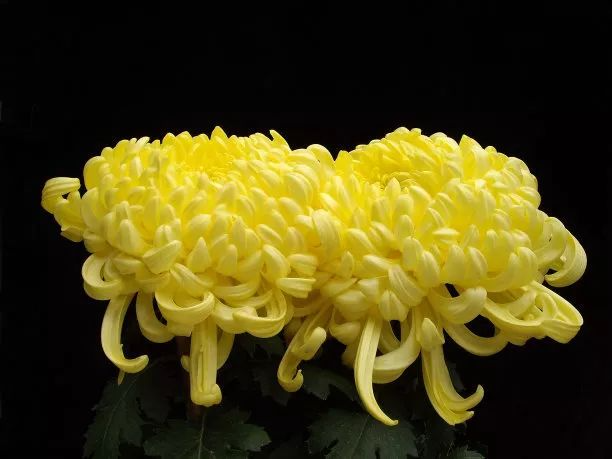
It primarily affects the leaves, but can also damage leaf buds, flower buds, flower buds, and growing points. In the early stages of the disease, symptoms appear first on the lower leaves, with the edges or tips of the leaves turning yellow along the veins. Eventually, the leaves curl and wither.
In severe cases, flower buds wither or degenerate, and some flower buds swell but fail to form buds.
1. Greenhouse soil and potting soil contaminated by nematodes can be disinfected by steam or sunlight exposure. Alternatively, a hot iron plate can be placed underneath the soil to bake it and kill the nematodes.
2. Can kill nematodes.
3. When cultivating in open fields, avoid flooding to prevent the spread of the virus through water. If necessary, use rain-sheltered cultivation methods to prevent the spread of the virus through rain splash.
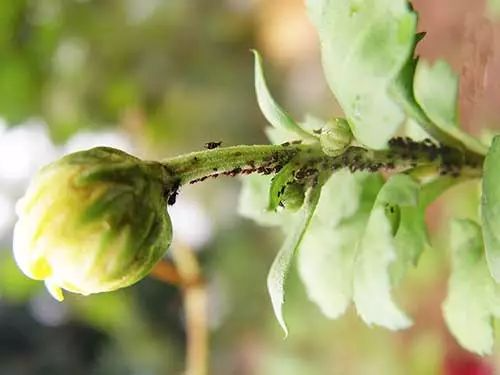
It is commonly found on young leaves and flower buds, causing them to wither, twist, and become deformed and unable to stretch. Furthermore, its excrement contains honeydew, which can induce sooty mold and hinder photosynthesis.
1. When the number of aphids is small, they can be brushed off with a brush dipped in clean water or with tobacco leaf water. Brush gently to avoid damaging tender buds and young leaves. Kill all aphids brushed off. Tobacco leaf water preparation: Add 750 grams of water to 50 grams of tobacco leaves and soak for 24 hours.
2. When aphids are prevalent, spray with 40% dimethoate EC at a dilution of 2500-3000 times, or 50% dichlorvos EC at a dilution of 1000-1500 times, or 2.5% rotenone EC at a dilution of 1000-1500 times. Chrysanthemums come in many varieties, and different varieties have varying resistance to pesticides; therefore, it is important to prevent pesticide damage.
3. First, loosen the topsoil around the roots of the chrysanthemum plant. Then, evenly bury 3% Furadan granules around the plant, 20-30cm away from the main stem. Cover with soil and water. The granules dissolve in water and are absorbed by the chrysanthemum roots, then transported to the upper part of the plant. Aphids will die after sucking them.