Magicians Revealed! How exactly are those terrifying magic tricks done?
The Amazing Johnathan (an American magician) is pretending to cut his own arm with a knife.
“What you’re about to see,” he said, “is just a trick.” He was only slicing the surface of his arm, but you could already see the blood flowing out. “It’s fake blood. The knife is just moving across the surface of my arm right now, not cutting in. It’ll be real when it cuts in. Right now, it’s just an illusion.”
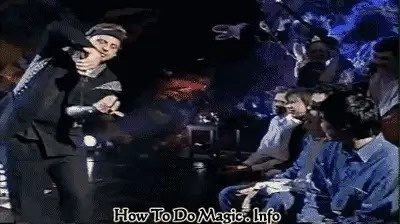
Then, suddenly, he shouted, "This is the real thing!" and simultaneously slashed the knife into his arm. You could see it clearly; it was as real as everything else in the world.
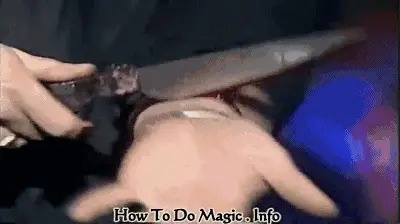
To build suspense, he frantically chopped for a while longer, then stopped and showed the audience the perfectly intact arm. "It was just a trick," he said calmly, as if the carnage you had just witnessed had never happened. But now you find it hard to believe him, because you've seen it with your own eyes.
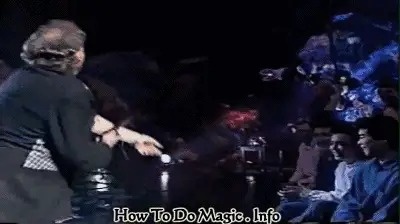
Screenshot from video. Image source: YouTube
As the magician Penn and Teller (an American duo) once said, the best understanding of magic is that "it's a kind of performance that makes the impossible seem real." Therefore, in an interview with the Smithsonian Institution, he pointed out, "When you watch magic, you simultaneously experience reality and illusion." From this perspective, the amazing Jonathan perfectly captured the essence of magic. You watch a knife cut into his arm, but you know perfectly well that it can't be real, making the whole thing seem so unreal.
Figuring out the secret behind the knife-cutting-arm trick is extremely difficult. The doors to its secret seem to be completely shut. Perhaps the blood is fake (which it is), yet you do see the knife cut into the flesh, and afterwards you do see the arm completely unharmed.
What kind of manipulation could there be? Was your attention manipulated? Maybe, but how do you explain what you just saw? Perhaps the magician made you see something that didn't happen? Yes, that's actually what happened, but how did he do it? And if that's the case, does it mean that magic does exist, like the incredible power of suggestion?
first
What are some common tricks used by magicians?
As is well known, magicians can distract audiences and make them doubt their perception of reality.
Gustav Kuhn, a magician and psychologist at Durham University, and his colleagues conducted an interesting study that confirmed this using the "disappearing cigarette" trick. In this study, the magician tried to light a cigarette but found himself lighting the cigarette holder. He turned the cigarette around to light it again, but this time the lighter seemed to have vanished. He looked in surprise at the hand that had been holding the lighter, snapped his fingers, and opened his palm to show the audience that the lighter was indeed gone. He then looked back at the hand that had been holding the cigarette, but now even the cigarette was gone.
Scientists studied people's reactions to this trick and found that almost no one noticed how the cigarette disappeared on the first viewing. However, if you showed it a second time, the truth became clear to everyone. The magician simply let go, allowing the cigarette to fall onto his lap, right before their eyes.

Image source: howcast.com
Of course, the magician's body language is meticulously planned to draw your attention from the falling cigarette to the other hand. However, the interesting thing is that when you first see the trick, you don't feel like you can't see where the cigarette fell. On the contrary, you feel like you can see everything clearly. When you watch it a second time, as you watch the cigarette fall, it seems to mock your reason, and you can't believe how you missed it the first time.
The vanishing cigarette trick is a brilliant example of a startling and counterintuitive phenomenon: "inattentional blindness." This phenomenon was proposed and studied in the 1990s by American psychologists Arien Mack and Irvin Rock. The name is apt, as we are indeed facing a situation where we fail to see what we are looking for. Its basic form is that you cannot see certain things in your field of vision because your attention is on something else. This phenomenon is a common trick used by magicians, as demonstrated by the vanishing cigarette, allowing them to perform their tricks right under our noses.
Unnoticed blindness is just one example of a large category of visual experiences known to cognitive scientists as the "grand illusion." When we observe the world with our eyes, almost everything in our field of vision appears clear, vivid, and richly detailed. However, experiments show that our ability to perceive change is actually like having a bag over our heads with only a small hole to look through. This hole can be moved around by the observer, or it can move automatically when something interesting happens in the environment. But at any given moment, the observer is only seeing the world through that small hole in the bag. The essence of the grand illusion is that you feel you can see everything clearly, but in reality, you can only see through the small hole in the bag over your head.
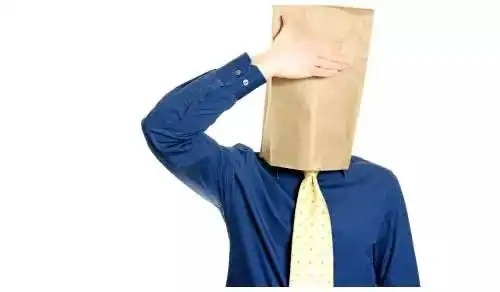
Image source: f3y.com
The grand illusion, not the distraction itself, is the key element that allows a magician to create a magical experience. Your friend might be able to trick you by saying Bob Dylan just walked into the house, distracting you, and then secretly eat your last fries while you search for his greatness. But when you turn around and look at your empty plate, you'll at most feel a little amused.
Magic is an impossible illusion, while unawareness of what you're not looking at is not impossible at all. Real magic happens when you face something you're certain you would notice if it happened, but you simply don't. Therefore, what makes magic possible isn't the act of not noticing blindly, but your own blindness to your own lack of attention. Magic requires courage. A magician needs not only confidence in their technique but also confidence in the audience's blindness to their own blindness.
but
How do you explain the hand-cutting magic trick?
It's well known that magicians can manipulate attention to make the audience oblivious to what's happening right under their noses. However, this manipulation of attention can't explain the knife-cutting-arm trick, because in this magic trick, you're not oblivious to something that actually happened, like when a cigarette falls onto the magician's thigh. Here, you're oblivious to something that didn't happen. You see the knife cutting into flesh, but in reality, nothing happened. So how does the magician create the illusion of a knife in your arm?
The answer is so simple it's embarrassing: there was actually an arc-shaped cut on the blade, which got stuck on my arm.
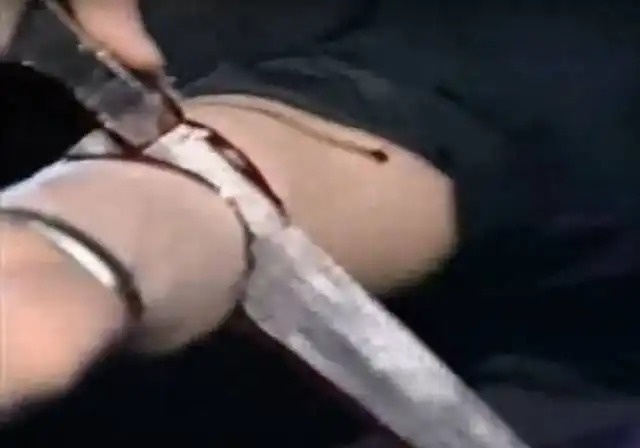
This angle should make it more obvious. Image source: YouTube
Can you imagine many people being fooled by such a simple trick? Probably not, but magicians have discovered through practice that this trick works like a magic spell. So, the question now is, why can such a silly trick create such a powerful and impactful magical experience?
My colleagues, psychologists Bilge Sayim and Johan Wagemans, and I recently proposed that this magic trick, like many others, is based on a peculiar aspect of our consciousness. It shares similarities with the Grand Illusion in that they are both incredible yet pervasive misperceptions of ourselves—but in diametrically opposed directions.
The magic trick of cutting the hand isn't about seeing, but rather about seeing without seeing. When you see the knife "cutting" into your arm, it's more accurate to say you also see "the part of the blade that cuts into the arm," not just that you feel the blade must be there. A series of compelling studies have demonstrated this. These studies were initiated in the 1940s by Belgian psychologist Albert Michotte and continued in the 1980s by Gaetano Kanizsa of the University of Trieste in Italy.
This theory is based on a wealth of scientific findings that show that, to our brains, the obscured parts of an object are actually quite similar to what we actually see. A characteristic of visual perception is that we continue to see things even when we know they are illusory. Alan Leslie, a developmental psychologist at Rutgers University in New Jersey, points out in his book *The Necessity of Illusion* (1988) that the essence of visual illusion is "a part of the world that we know cannot be, yet repeatedly appears to be."
Take advantage of this
The visual system can also produce
Even more bizarre hallucinations
"Double the ball" is a well-known magic trick in which the magician first holds a small ball between his thumb and forefinger, then flips his wrist, and another small ball appears between his forefinger and middle finger.
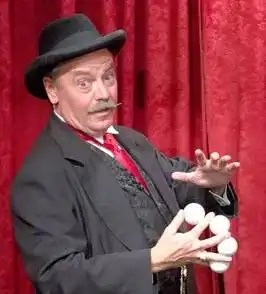
Image source: Penguin Magic
Amory Danek, a psychologist at the Ludwig Maximilian University of Munich, and his colleagues conducted experiments studying people's problem-solving abilities in magic tricks. They found that people struggled to understand the secret behind this ball trick, despite its simplicity bordering on absurdity. Here's a hint: in the knife-in-the-arm trick, you see something that doesn't exist.
So, are there really two balls in this ball trick? No, there's only one. The other ball is just a hollow, hemispherical shell. At the beginning of the trick, the real ball is hidden inside that shell. When the magician flips his wrist, he simply reveals the real ball from its hiding place, creating the illusion of two balls, even though there's actually only one and a half balls.
A core argument of our theory is that viewers don't just perceive the hollow hemisphere as a complete sphere; they see a complete sphere. And because questioning what one sees is difficult, the visual system essentially blocks the path to the correct understanding.
If you don't believe that the back of half (or a whole, it doesn't matter) of a ping-pong ball isn't just an illusion, try this: hold half a ping-pong ball on your fingertip and look at it from above. Even though you know it's only half a ping-pong ball, and you have your finger to prove it, it still looks like a complete ping-pong ball. Even more strangely, you might have the illusion that your finger has shortened, as if it had to make room for the volume of that fictitious "ball."
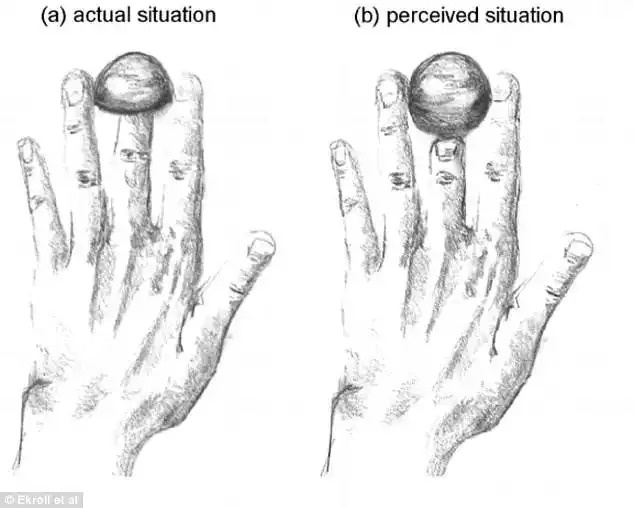
Left: Actual situation. Right: Perceived situation. Image source: Original author et al.
My colleagues and I documented this illusion by asking people to point to where they believed their fingertips were. But a simple way to notice the illusion yourself is to balance half a ping-pong ball on your middle finger, then extend all your fingers toward your eyes and ask yourself whether the tip of your middle finger is closer to or farther from your eyes than the other fingers.
The middle finger is the longest finger, so you should feel that it is closer to your eyes, but in reality you may feel that it is farther away—meaning that in your perception, the finger is shorter.
This illusion demonstrates the ability of visual experience to influence your perception of reality. Clearly, simply having the thought that "half a ping-pong ball is a whole ping-pong ball" won't make you feel like your fingers are shorter. The sensation of shorter fingers is a product of the inherent logic of the perceptual system, not a result of conscious thought: your perceptual impression of the back of the "ball" dictates that your fingers must be shorter—regardless of whether your conscious mind deems it reasonable.
also
Another type of illusion also contributes to magic.
The visual system tends to automatically fill in the gaps in objects that we can't see, and many seemingly convincing magic illusions exploit this: bending a spoon, a knife cutting a hand, and closed rings miraculously connecting and separating. The principle behind all these examples, and many other magic tricks, is that the visual system makes you believe there's something there, when in reality it's just a gap, or a part that doesn't exist.

The Kanizsa triangle is a famous example. The visual system automatically fills in a bright white triangle in the center of an image, even though its outline does not exist. Image source: Wikipedia
But our visual system doesn't just fill in gaps. It can also create a powerful impression: the space behind an object in the foreground is empty. In most cases, this impression is correct, but in some cases, it's false and misleading. For magicians, this perceived emptiness is a perfect storage room to hide things they don't want you to know. Everyone knows that hiding something behind something else makes the first thing invisible, but this illusion of emptiness leads to more than just invisibility: it makes you "see" that there's nothing there, even though sometimes there really is—especially when you're watching a magic show.
According to Jason Leddington, a philosopher at Bucknell University in Pennsylvania, what creates the magic experience is the failure of imagination. What makes it impossible for us to understand what the magician is doing is the fact that we cannot imagine it. This idea captures the essence of the illusion of a void: it makes it difficult for us to even imagine something hidden behind the foreground—which could be the magician's thumb, hand, or anything else.
The illusion of empty spaces is a new concept in cognitive science, so we don't yet know how the brain forms it. However, we speculate that it's driven by "a fundamental principle of perceptual processing," namely, that the brain avoids perceptual interpretations involving questionable coincidences. Initial observations suggest that when the way a hidden object aligns with the foreground in the field of vision is unlikely in real life, people experience the illusion that there's absolutely nothing there (not just that they can't see anything). And the kind of unlikely scenario in reality that occurs in magic shows is, of course, intentionally designed by the magician.
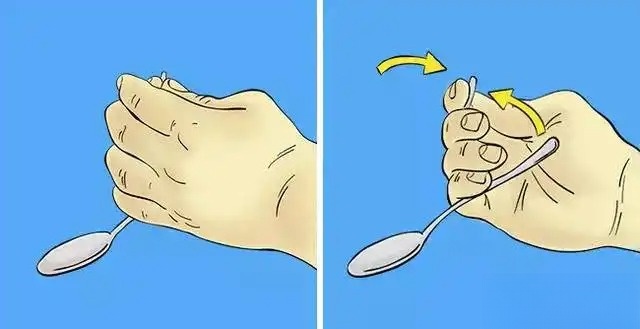
Image source: canyouactually.com
Magicians rely heavily on our inattentive blindness, especially the grand illusion associated with it—the blindness to our own blindness. But my team's research suggests that magic also relies on a similar, yet opposite, grand illusion, in which we are unaware of our powerful insight into our own vision—which allows us to see what is hidden. For a magician to utilize either of these grand illusions requires not only skill and experience, but also courage, because the magician must have unwavering confidence in the counterintuitive oddities of the audience's visual system and entrust them with the task of creating true magic.
An AI
What good will it do to know? You'll still get scammed next time you see it.