Liza Wang's outfit at the City God Temple was a fashion disaster, but Law Karying became a style icon? The golden rule for petite coat length is revealed!
Unveiling the "Golden Rule" of Coat Length and Height
In clothing ergonomics, the "golden ratio" does not simply refer to the mathematical ratio of 1:1.618, but specifically refers to the visually most effective anchor point in tailoring that enhances body balance. For women, this point typically falls 2-4 centimeters below the natural waistline.
When the hem of the coat falls precisely within this range, it naturally guides the eye to extend the shoulder line horizontally and tighten the waist and abdomen vertically, creating a visual inertia of "short on top and long on the bottom." This is especially effective for wearers who are 155cm or shorter, avoiding common problems such as making them look shorter, making their hips appear wider, and making them look sloppy and bulky.
Visual proportion principle in clothing design
There is a clear physiological relationship between the human visual center of gravity and the dividing line of clothing. When the hem of the top falls within 5cm below the waistline from the upper edge of the hip bone, the visual extension of the legs is strongest. This is the "golden point" recognized in clothing engineering.
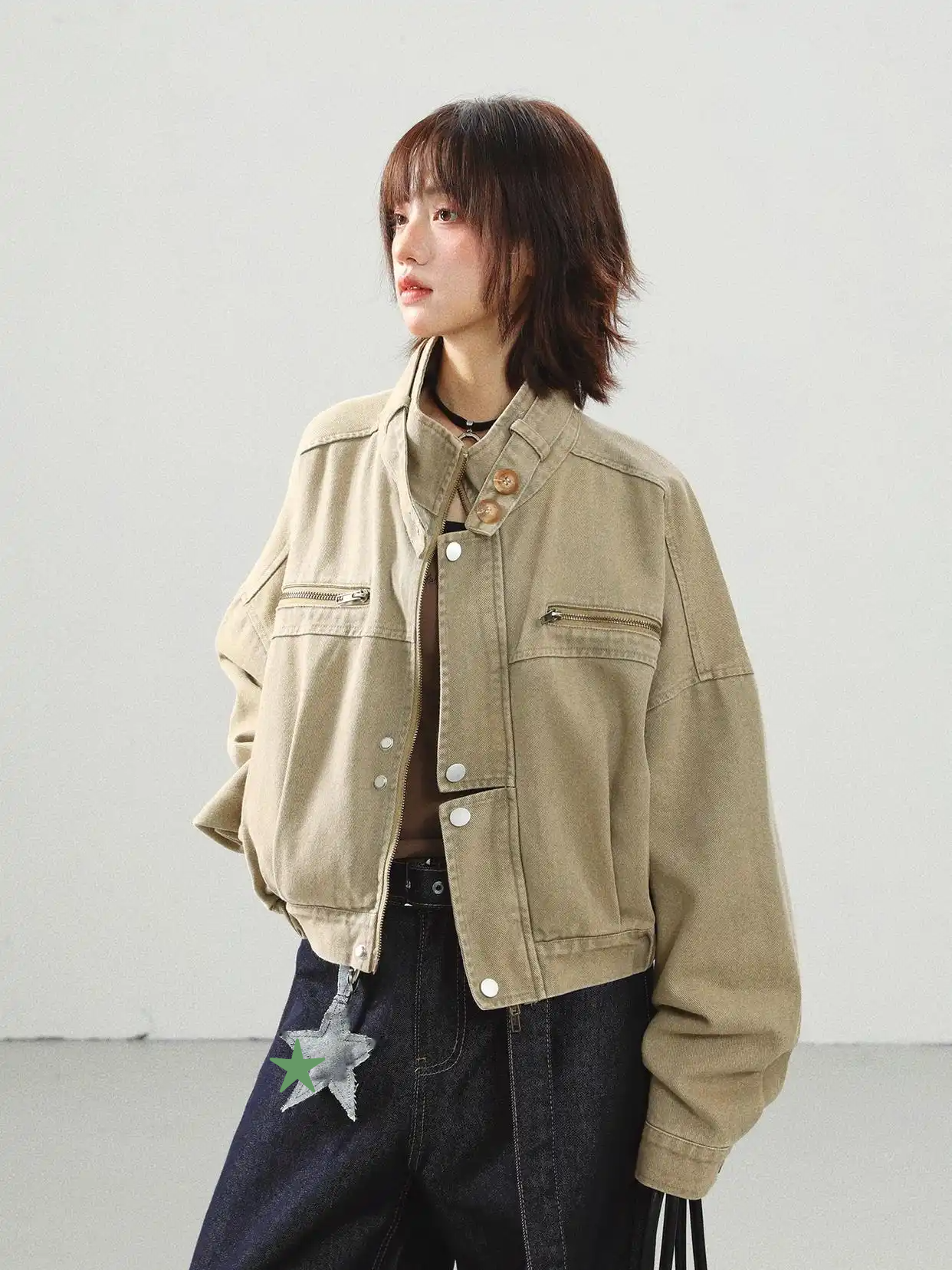
For people under 158cm tall, choosing a regular-length suit can make them appear shorter and blur the waistline, thus weakening the sharp look. On the other hand, a short style (52-56cm in length), a slightly fitted waist, and a shoulder line that falls precisely at the acromion can naturally raise the visual waistline. Combined with a slight vent on the front or slanted pockets, it creates an upward visual flow.
In clothing ergonomics, the "golden garment length ratio" refers to the range where the hem of a coat falls between the waistline and the upper edge of the hip bone (approximately 52–58cm). This length visually raises the waistline and enhances the proportions of the upper and lower body, making it especially suitable for people who are 150–160cm tall. Too long can make one appear shorter, while too short can create an imbalance and expose the waist. 55cm ± 3cm has been repeatedly verified by clothing laboratories in multiple countries as the most harmonious benchmark for petite women's autumn outerwear.
This>
A flowing coat paired with high-waisted trousers is essential for working women. You can choose a simple wool coat or a tailored wool overcoat. For a more crisp and sophisticated look, a wool coat that falls slightly below the waist is a good option.
To project an elegant, sophisticated, and high-class aura, opt for an H-line coat with a draped silhouette. This combination is both stylish and sophisticated. A skirt suit paired with heels is also a good choice; a dark-colored skirt suit offers good coverage, and layering it with a coat can help conceal a thick waist or wide hips.
For women with an apple-shaped figure (full waist and abdomen, relatively slender limbs), we recommend mid-length coats with straight H-shape or slightly A-shape, with the length covering the hips and abdomen, and using the open style to create vertical lines.
For women with an H-shaped figure (shoulders, waist, and hips of similar width), an X-shaped coat that accentuates the waistline is recommended, or you can create curves through inner layers. For women commuting to work, who spend long hours indoors, a neat and stylish coat is still essential.
Recommendations and things to avoid when choosing an essential autumn coat
Recommended styles include short knit cardigans, refined blazers, hip-length denim jackets, belted trench coats/overcoats that are above the knee, and quilted short down jackets.
Knitted cardigans are a classic "old friend" item for middle-aged women: they flatter all body types, exude a gentle and feminine charm, and are perfect for early spring when paired with a thinner inner layer—just enough to ward off the chill of mornings and evenings without feeling stuffy at midday. Cardigan-style knitted cardigans are the most versatile; buttoned up, they resemble a "little jacket," while left open for layering and a soft, feminine look.
Short Chanel-inspired knitwear with subtle metal buttons, small checks, and pearl buttons offers the elegance of Chanel style without being overly formal. Mid-length knit cardigans can conceal hips and thighs, making them suitable for pear-shaped figures; simply drape them over your shoulders for an effortlessly chic look.
Choose styles carefully, including ankle-length trench coats/overcoats, oversized drop-shoulder thick coats, and knee-length down jackets in fluffy fabrics. Short tops don't necessarily mean very short; they're more of a mid-length, not-quite-short style, especially coats, which are mostly mid-thigh length.
Many people around me choose this length because, as they reach middle and old age, they face issues like weight gain, a small belly, wide hips, and thick thighs, and mid-length coats can make them look slimmer. But to be honest, if you just want to cover up extra weight, the disadvantages of this length outweigh the advantages.
Versatile styling tips to make your outerwear look twice as good
The key to layering is to keep the top short and the bottom long, wear inner layers in the same color family, and cleverly tuck in the hem. When wearing your coat open, tuck your inner layer into your pants or skirt to define your waistline and instantly improve your proportions.
When choosing bottoms, consider high-waisted designs, straight or slightly flared styles, and the coordination between the skirt length and the outerwear. For pear-shaped figures, choose loose-fitting bottoms that can conceal flaws and create a slimming effect, such as wide-leg pants with good drape or A-line skirts, which are the top choices for pear-shaped figures.
These styles of bottoms can effectively conceal the flaws of wide hips and thick thighs, and their smooth design can visually lengthen the leg lines, making the legs appear thinner and straighter.
When it comes to footwear, low-cut shoes, narrow and long shoes, and shoes in the same color as the bottoms play an important role in elongating the legs. Pairing them with pointed-toe high heels can create a more light and graceful look. For winter skirt suits, choose slightly thicker fabrics, such as a thick woolen skirt, paired with a thick blazer, which is sufficient to cope with the low temperatures in winter.
Fashion has nothing to do with age or height; it's about knowing how to accentuate your strengths and minimize your weaknesses. Middle-aged and petite women should master three key points when choosing outerwear: keep the length within the golden ratio range, optimize the fit by choosing a slightly looser cut, and skillfully use styling techniques to create perfect proportions.
For middle-aged and elderly women, regardless of whether they have body image concerns, the first priority is that their clothes must fit well; otherwise, they will look sloppy. Secondly, it is important to focus on creating good proportions. As long as the proportions are good, gaining weight is not a problem.
Long coats are best chosen to be above the knee, as they look chic and streamlined, while also elongating the body and creating a taller, slimmer appearance. For petite individuals, choosing a length that falls around the knee avoids a sloppy look, and even with a thicker coat, this length won't make them appear bulky.
For those who are slightly taller, or whose clothes are a bit lighter, a length that falls around mid-calf will create a more streamlined and stylish look. Pairing it with a pair of high heels will be just right.
What do you care about most when buying a coat? Length, color, or style? Or what tips do you have for choosing coats for your elders?