Learn a little magic trick Magic Calculator
The magician lends a calculator to the audience while he calculates in his head, and then they compare who can calculate faster. Of course, the magician wins.
Because of a cold, Xiao Mi missed one magic club activity. When she went to school the next day, she saw Xiao Tu and Xiao Yu busy making dice out of paper. She thought they must have learned a new magic trick, so she quickly went over to watch.
Just then, Little Rabbit finished making the dice. She picked them up and showed them to Xiaomi. There were five dice in total, and each die had a three-digit number written on each face. "Hmm, these dice are so strange," Xiaomi said.
"Yes, because these are dice for practicing mental arithmetic!" Little Rabbit winked at Xiaomi, handed her a small calculator, and said, "You roll these dice and add up the numbers on the faces." Xiaomi agreed, randomly threw the dice on the table, and started pressing the calculator buttons, but before she had even finished half of it, Little Rabbit gave the answer.
Xiaomi quickly pressed the calculator buttons, and the result was indeed the same as Xiaotu's answer. "Hmph, it's definitely not mental arithmetic, it must be the new magic trick I learned yesterday!" Xiaomi pretended to be angry and said to Xiaotu, "Hurry up and confess, or I won't be friends with you anymore."
"Oh, that's exactly what I was going to tell you," the little rabbit said with a grin, and the two good friends started whispering to each other again.
Magic Unveiled
Props: 5 sheets of cardstock, glue, pencil
Prepare
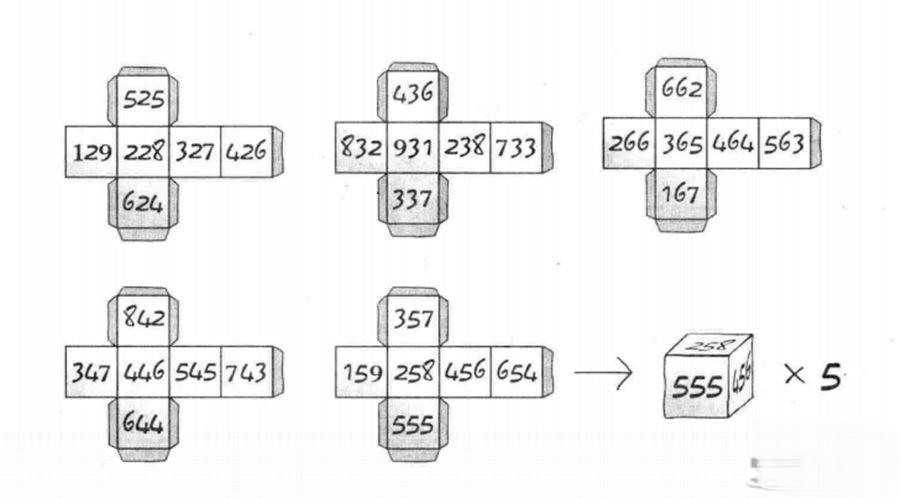
Make five dice using five sheets of cardstock, and write a three-digit number on each side of the dice.
Performance process
(1) The magician brings 5 dice onto the stage and shows them to the audience: each face of the dice has an irregular three-digit number. The magician invites two audience members to assist in the performance.
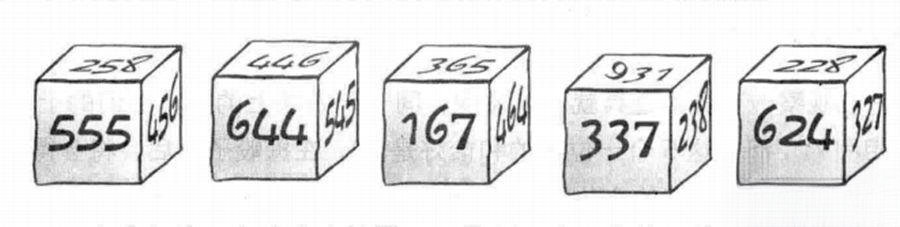
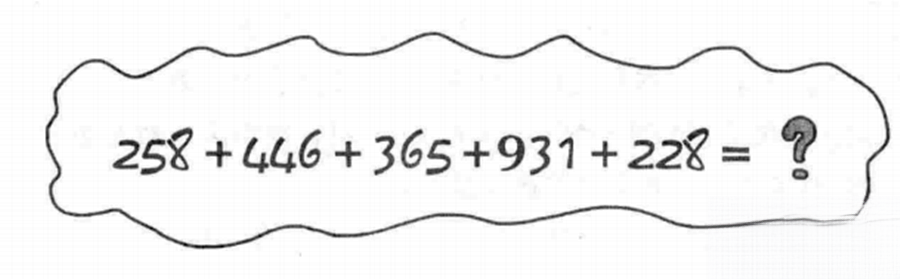
(2) The magician asks a spectator to roll a die, which produces five three-digit numbers. He then asks another spectator to add the five three-digit numbers together using a calculator. At the same time, the magician says he will challenge the calculator with mental arithmetic. Assume the numbers shown on the die are 258, 446, 365, 931, and 228.
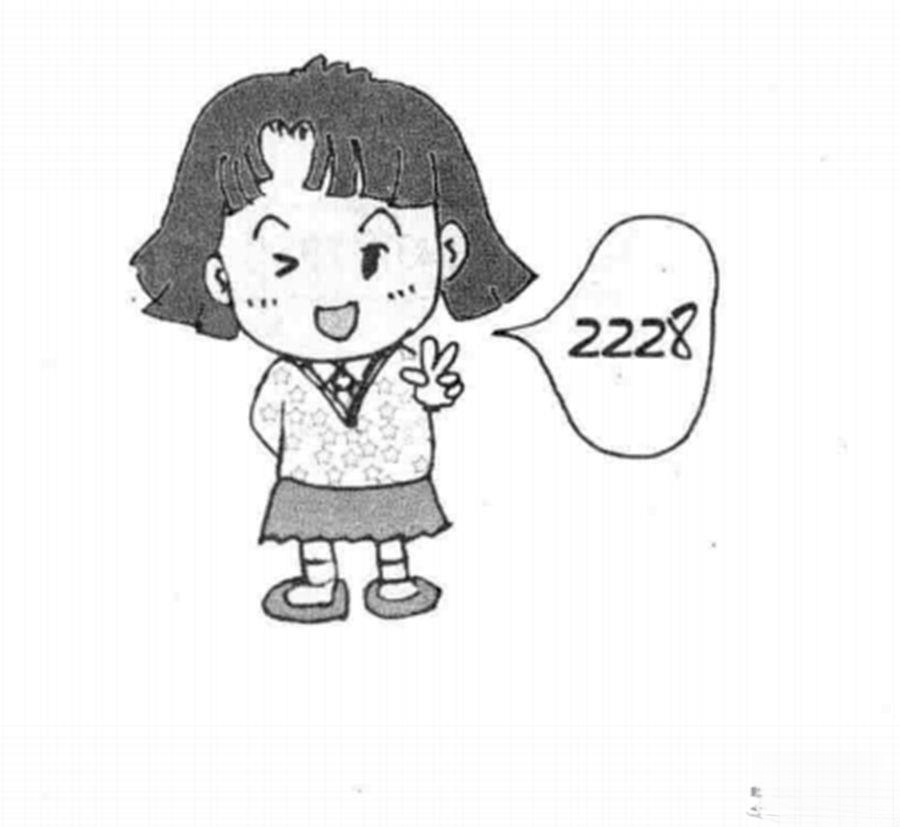
(3) Almost as soon as the dice landed, the magician announced the answer 2228, which was the same answer that the audience had hurriedly obtained from the computer.
Important Notes
This is a magic trick that can be performed multiple times. Different audience members can be invited to try it several times because the numbers rolled will result in different outcomes.
Mathematical Principles
A close look at the magic props reveals that the numbers on the same cube all have the same tens digit, and the sum of these five tens digits is exactly 20. After rolling the dice, you will get five numbers. Adding the units digits of these five numbers may result in a carry-over. However, since the sum of the tens digits is 20, the two numbers on the right side of the sum of these five numbers represent the sum of the units digits.
In the 24 (4x6) numbers across the four squares, the sum of the hundreds and units digits of each number equals 10. In the six numbers across the fifth square, the sum of the hundreds and units digits of each number equals 8. Therefore, in the resulting five numbers, the sum of the five hundreds digits plus the carry-over 2 from the sum of the tens digits equals 50 (4 x 10 + 8 + 2). To find the two numbers to the left of the total, simply subtract the sum of the units digits from 50.
In the example above, the sum of the units digits is 8+6+5+1+8=28, and 50-28=22, so the answer we get is 2228.
Readers can also design and create their own magic props based on the principles mentioned above!