Learn 8 simple yet cool science magic tricks!
Everyone loves magic shows because they're cool and mysterious. Actually, performing magic isn't as difficult as we imagine. Many magic tricks have a scientific basis. Below, the eBoard editor will teach you eight very simple science magic tricks. With just some simple props and a few experiments, you can create a very interesting magic show and impress your classmates! Come and learn these new skills!
1. The Illusion of Water
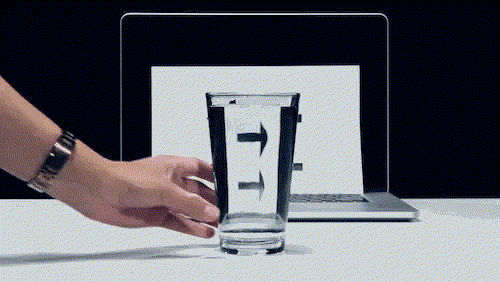
Props: glass, water, arrow.
Method: Simply place a glass filled with water in the center of the arrow and your line of sight, and the arrow will flip successfully!
Principle: The water glass acts like a convex lens, just like the theory we learned in junior high school, so naturally the arrow has to be reversed!
2. Let the pepper water separate!
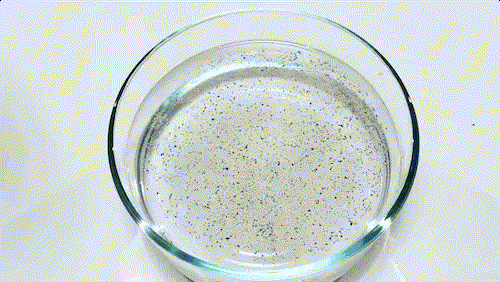
Props: bowl, water, pepper, and soap.
Method: Fill a bowl with water, then sprinkle with pepper. Apply soap to your fingers, then put your hands in the water. The pepper will immediately separate!
Principle: Soap dissolves in water, which reduces surface tension, allowing the peppercorns to be carried away by the parts with higher surface tension.
3. Water and Whiskey
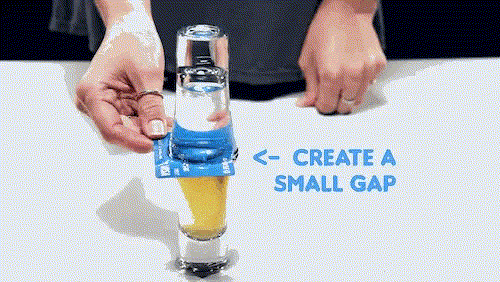
Props: A glass of water, a glass of whiskey (in a shot glass ) , and a credit card.
Method: First, fill the glass completely with water and whiskey, to the point where surface tension is achieved! Then, cover the glass with the credit card, invert it over the whiskey, and discreetly move the credit card slightly to create a small gap.
Principle: Because water is denser than whiskey, it will sink through small gaps. The whiskey will be squeezed and rise to the top of the glass. Try using this to perform a magic trick and scare the kids sometime.
4. Fireproof balloons
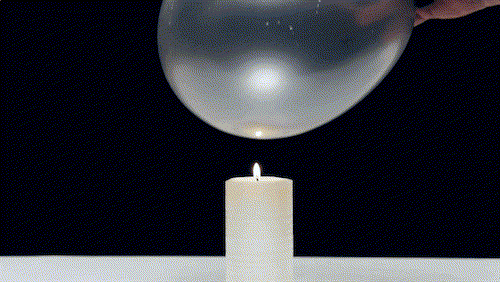
Props: water, candles, lighter, and most importantly, balloons!
Method: Generally, balloons will burst if burned, but adding a little water inside changes this. After lighting a candle, slowly place the water-filled balloon above the candle, and it won't explode!
Principle: The principle is that water can absorb the heat energy of fire, thus preventing the rubber from breaking. However, if the heat energy exceeds what the water inside the balloon can absorb, the balloon will still explode.
5. Laser tricks
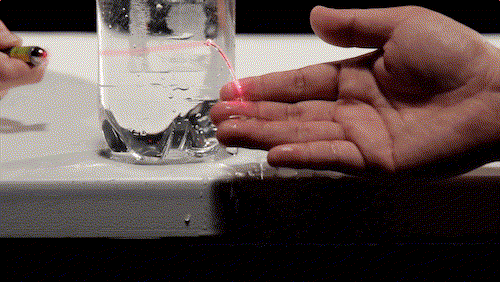
Props: Water, PET bottle, laser pointer.
Method: Cut a small hole in the body of a plastic bottle. Remember to hold it closed when filling it with water to prevent spillage! Then aim the laser pointer at the hole and let the water flow out... You'll find the laser beam right in your hand.
Principle: This principle relies on the refraction of water.
6. Glowing Tongning Water
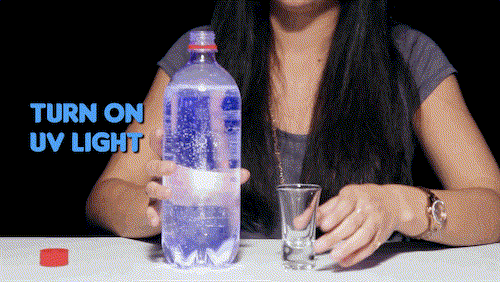
Props: Tongning water and ultraviolet light
Method: In short, as long as you shine the ultraviolet light on the Tongning water, it will glow as soon as you turn off the light!
Principle: The principle is that the components in Tongning water will emit fluorescence when exposed to ultraviolet light.
Note: Thonling water (also known as Indian Thonling water) is a soft sparkling beverage made with quinine ( also known as quinine syrup ) as the main flavoring. It has a natural plant-based bitterness and is often used to blend with distilled spirits.
7. Use amazing little tricks to create anti-gravity water!
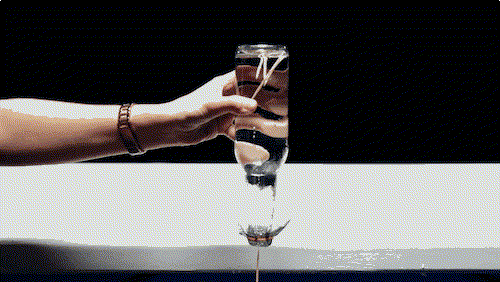
Props: water, glass bottles, plastic mesh or wire mesh, rubber bands and toothpicks.
Method: Fill a glass bottle with water, then seal the bottle opening with a rubber band using a mesh strainer. You'll then find that although the strainer has holes, the water won't leak out when you turn the bottle upside down! Even if you stick a toothpick into the strainer, the water still won't flow out.
The principle is that surface tension adheres to the mesh, creating a "film" that forms a seal. When a toothpick is inserted, water surrounds it, but because the toothpick is permeable to water and has a relatively low density, it floats to the top.
8. Instant Freezing Method!
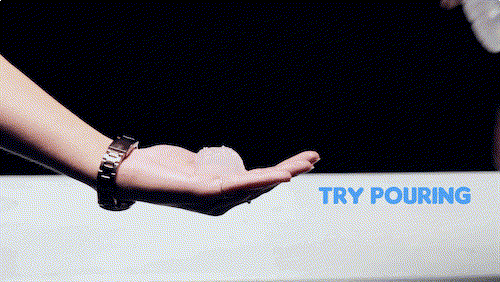
Props: Pure water and a freezer.
Method: First, put the "pure water" in the freezer for about an hour. Remember to let the temperature drop below freezing point. Then carefully take it out. At this time, it is still in the form of water, but it will freeze instantly if it is hit even slightly!
Principle: Water usually freezes at its freezing point ( 0 degrees Celsius), but pure water lacks impurities and cannot adhere to them to freeze. If vibration causes molecular collisions or water is poured directly onto ice, the pure water, which is already below its freezing point, will freeze.
Isn't science amazing? Go try it out!
Source: Internet