Key points for garden pest and disease control in October!
With temperatures dropping, large temperature differences between day and night, and the arrival of Cold Dew and Frost's Descent, autumn is coming to an end and winter is approaching. What kinds of diseases and pests are prevalent in gardens this month? Today, Xiaoba will talk to you about the characteristics and prevention of diseases and pests in garden plants.
Diseases
Powdery mildew
This disease affects a variety of plants, including roses, peaches, chrysanthemums, dahlias, crape myrtles, and boxwoods.
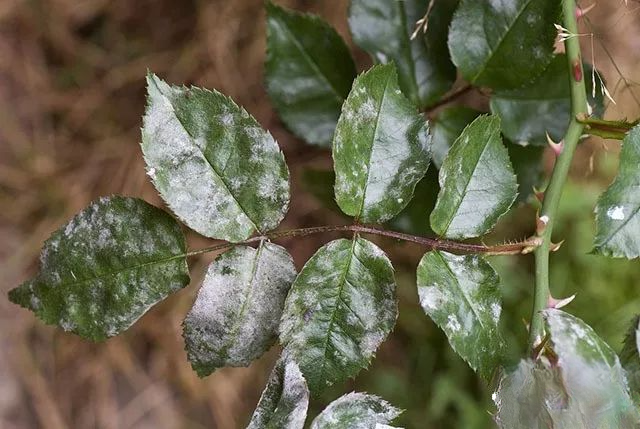
(Powdery mildew on roses)
This disease primarily affects leaves, flower buds, and young shoots. It begins with small yellow spots, which later develop into a layer of white powdery substance; in severe cases, the powdery substance coalesces. The powdery substance consists of conidia from the asexual generation. The small black dots in the autumn lesions are the cleistothecia from the sexual generation. Affected plants are stunted, with uneven leaves, twisted branches, small or no flowers, and in severe cases, leaves wither and fall off, even leading to death.
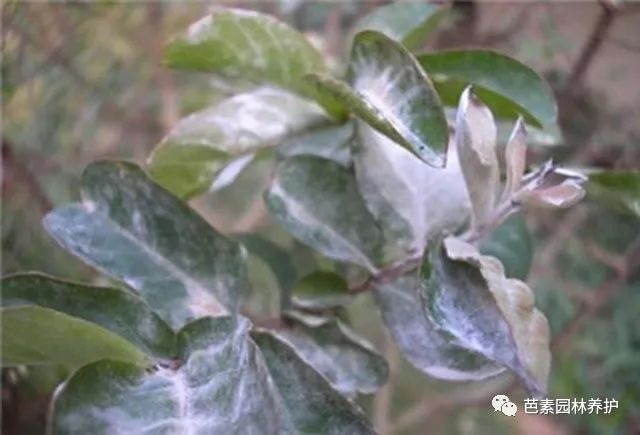
(Powdery mildew in crape myrtle)
Prevention and control measures
In the early stages of the disease, spray with a 100-fold dilution of BO10 emulsion or a 1000-fold dilution of tridemorph emulsion. It is important to alternate between different medications.
Leaf blight and leaf blight
This disease affects more than 200 kinds of plants, including aster, carnation, yellow rose, pittosporum, large-leaved holly, rose, osmanthus, crabapple, peach blossom, citrus, magnolia, and lilac.
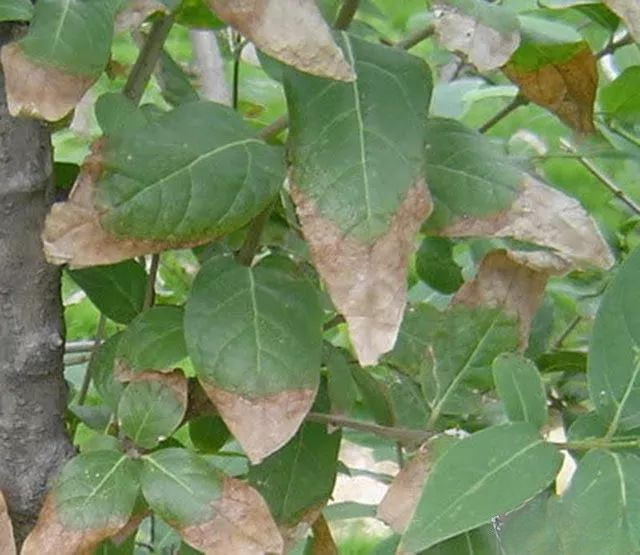
(Osmanthus leaf blight)
Both diseases primarily occur on plant leaves. The lesions are small to medium-sized (less than 5 mm). Initially, they appear as small, light brown, round spots, later expanding into irregular shapes with purplish-brown or brown edges. Large and small spots often mix. In later stages, tiny black dots, or conidiophores, appear scattered on the lesions.
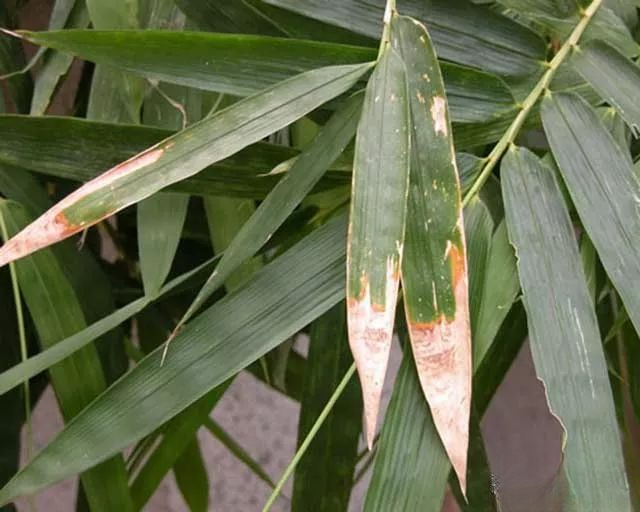
(Bamboo leaf blight)
In severe cases, small lesions merge into large ones, causing tip burn, leaf blight, or spot necrosis. Some leaf spot lesions have a grayish-white center, hence the name "white star disease." Under humid conditions, some leaf spot lesions develop a yellowish-brown mold layer on the affected area, causing premature leaf drop and reducing the plant's ornamental value, thus affecting urban greening and beautification.
Prevention and control measures
In the early stages of disease, spray with a 600-fold dilution of 50% carbendazim wettable powder, or use 70% mancozeb or 10% polyoxin wettable powder for control. Additionally, regularly disinfect the greenhouse with iprodione fumigant. Alternate the use of primary fungicides.
Anthrax
This disease affects osmanthus, oleander, magnolia, jasmine, walnut, plum blossom, apple, peony, large-leaved boxwood, melon seed boxwood, French holly, etc.
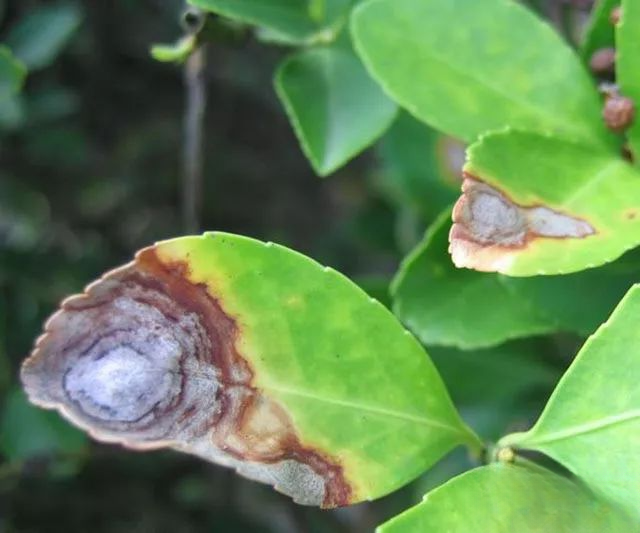
(Boxwood anthrax)
This disease mostly occurs at the leaf tips and edges. There are two common types on flowering plants:
(1) Diseases caused by Colletotrichum spp. In the early stage of the disease, small reddish-brown spots appear on the leaves, which later expand into large grayish-brown to grayish-white spots. Irregular purplish-brown or black rings are present at the boundary between diseased and healthy tissue. Some anthracnose spots have obvious pale greenish-yellow halos at the edges. In the later stage of the disease, small black dots, i.e. conidiomata, can be seen in whorls in the center of the spots. The spots are prone to rupture and perforation.
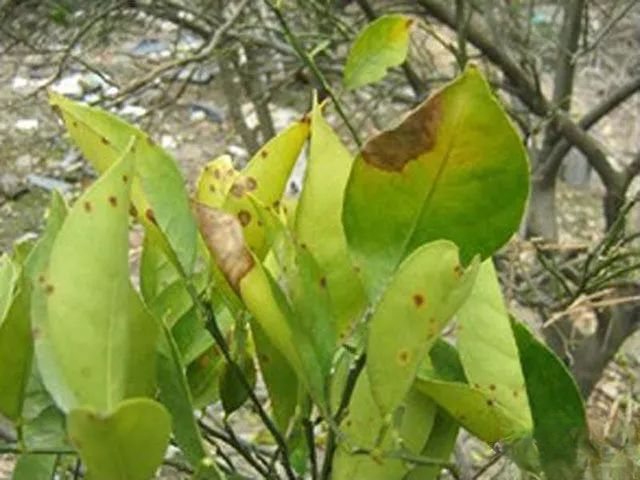
(Citrus anthracnose)
(2) Diseases caused by *Palmaria spp.* mainly affect the old leaves of flowers. In the early stage of the disease, small yellow spots appear as water stains. Later, the lesions enlarge, and the small black spots in the center are not arranged in concentric rings. The boundary between diseased and healthy tissue is obvious.
Prevention and control measures
In the early stages of the disease, spray with 50% anthrax mancozeb at a dilution of 500 times, or 3% thiamethoxam at a dilution of 2000 times.
Pests
American white moth
The fall webworm, also known as the American white moth or fall tussock moth, damages a variety of plants, including ailanthus, walnut, hawthorn, forsythia, elderberry, lilac, ash, cherry blossom, peach, crabapple, apple, and sugar maple. The larvae swarm and damage leaves, spinning webs to adorn them. As the larvae mature, their appetite increases, and their webs grow larger. In severe infestations, the leaves are often completely devoured, causing young plants to die and negatively impacting the aesthetics of urban landscapes.
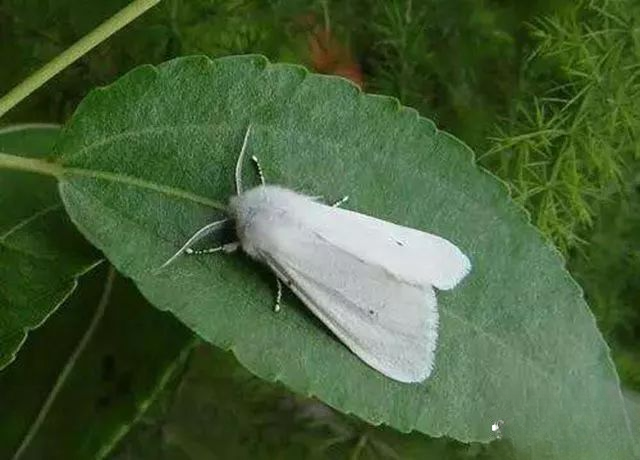
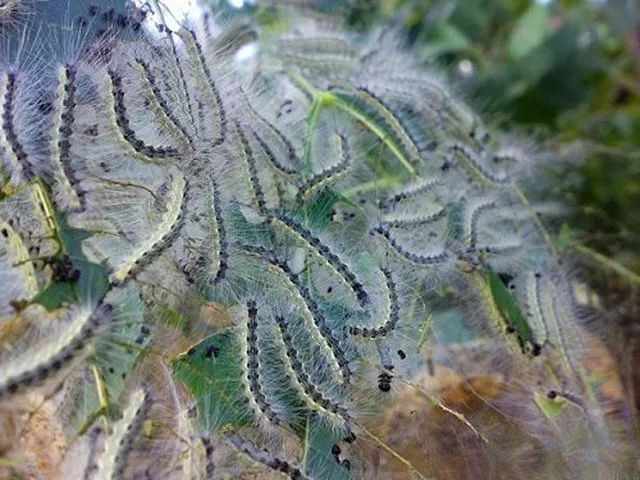
(Adult and larval American white moth)
Prevention and control measures
During the adult emergence period, use light traps to kill adults. Protect natural enemies. In case of a large outbreak, spray with a 600-fold dilution of Bt emulsifiable concentrate.
tussock moths
The yellow-spotted tussock moth, also known as the itchy caterpillar or poisonous caterpillar, includes several species such as the yellow-spotted tussock moth, the white-browed tussock moth, and the mulberry brown tussock moth. These moths damage over a hundred plant species, including Bauhinia, rose, lilac, peony, crabapple, jujube, maple, apple, and boxwood.
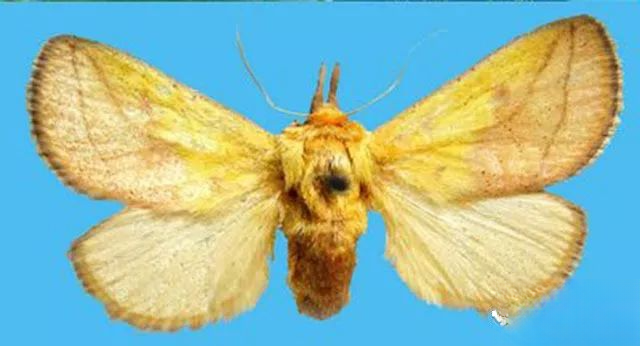
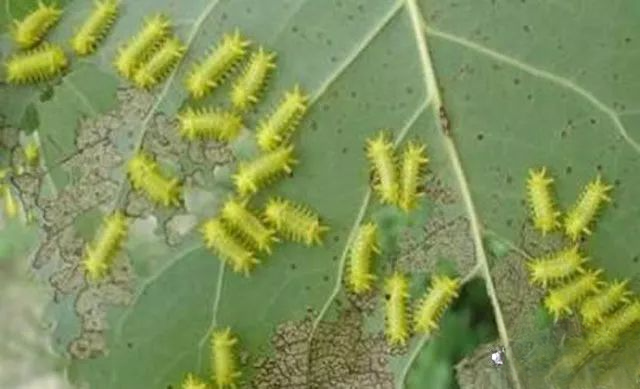
(Adult and larval yellow-spotted moth)
The larvae have poisonous hairs on their bodies, which can easily cause skin irritation and itching. Newly hatched larvae feed on fleshy leaves, causing the leaves of flowering plants to appear white and transparent with a net-like appearance. Older larvae disperse and cause damage, often eating holes and notches into the leaves, and in severe cases, causing the leaves to wither and lose their stems, affecting the normal growth and ornamental value of the flowering plants.
Prevention and control measures
During the adult emergence period, use light traps to kill adults. Protect natural enemies. During the larval emergence period, use pesticides such as 20% methomyl at 1000-1500 times dilution, 50% methamidophos at 1000-1500 times dilution, 25% diflubenzuron at 2000-2500 times dilution, and 1.8% abamectin at 2000 times dilution for control.
Aphids
The aphid species occurring at this time mainly include the white poplar aphid, cypress aphid, peach aphid, cotton aphid, rose long-tubed aphid, autumn four-veined cotton aphid, and black hairy aphid. They primarily damage garden plants such as oleander, rose, poplar, and cypress.
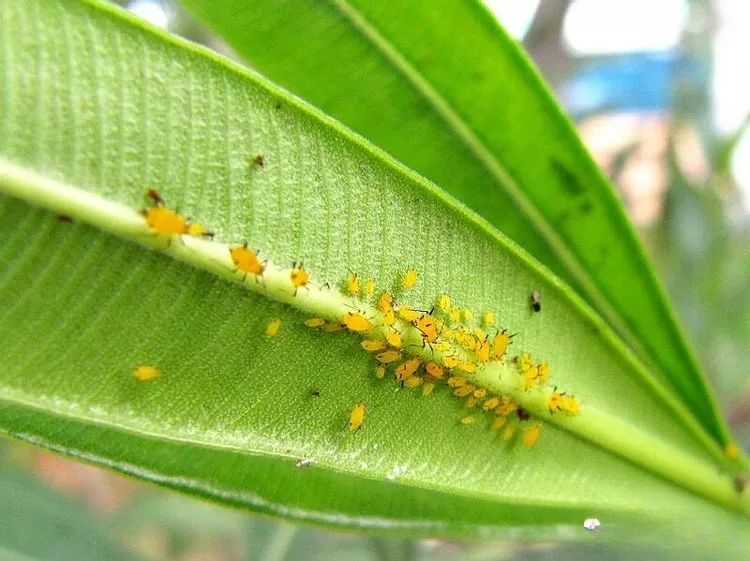
(Oleander aphid)
October is the second peak season for aphids. They often congregate on tender leaves, shoots, and flower buds, sucking sap and causing irregular wrinkling, curling, discoloration, and leaf drop on the underside of leaves. Flower buds become deformed, flowers develop abnormally, and the entire plant may even wither and die. Their numbers gradually decrease in mid-to-late November as they disperse and hide to overwinter. Furthermore, the large amounts of sap secreted by aphids, when it contaminates branches and leaves, can induce sooty mold. Some species can produce galls, and some are also vectors of plant viruses.
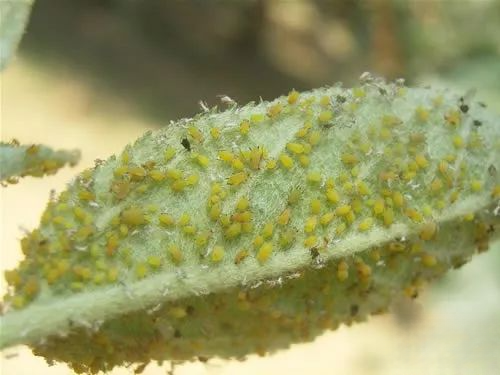
(Rose aphid)
Prevention and control measures
When a large number of aphids are found, spray the plants with 50% pirimicarb at a dilution of 2000 times, or 10% fenvalerate at a dilution of 5000 times, or imidacloprid at a dilution of 1500-2000 times, etc., 1-2 times.
Scale
Four types of scale insects, namely the crape myrtle scale (which damages crape myrtle and pomegranate trees), the ball scale (which damages ash and locust trees), the ash scale (which damages ash trees), and the arrow scale (which damages boxwood and euonymus), tend to cause severe infestations in early to mid-October. These insects pierce and suck the sap from the tender shoots, buds, and leaves of their hosts, causing the leaves to turn yellow and fall prematurely, thus affecting the aesthetics of the garden.
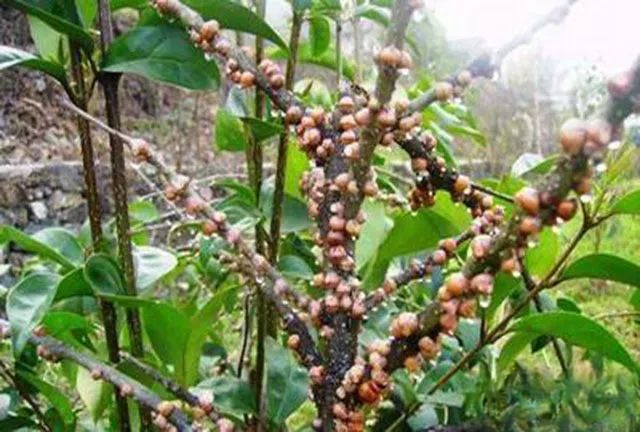
(Symptoms of damage caused by red wax scale)
Prevention and control measures
During the nymph hatching period, apply a 100-fold dilution of "Huabao" or a 3000-fold dilution of 50% Youlede. During the overwintering period, use a 150-fold dilution of miticide petroleum emulsion or a 6000-fold dilution of 25% Kangfuduo. Spraying should be even and thorough.
Little Badeba
In addition, common pests include armyworms, grass moths, fall armyworm larvae, and pale armyworm , as well as some bagworm moths, longhorn beetle larvae, lace bugs, planthoppers, mites, and other garden pests that are also quite serious. Timely and strengthened control measures are necessary.