Introduction to Major Diseases and Pests of Garden Plants in Spring and Summer and Their Control Methods
With the arrival of the Grain in Ear and Summer Solstice solar terms, temperatures rise further. High temperatures, abundant moisture, and ample sunlight promote vigorous plant growth, creating a highly favorable environment for pests and diseases. Therefore, special attention must be paid to the management of green spaces. During this period, the following pests and diseases should be carefully controlled:
I. Common Pests and Their Control
The main pests during this stage include aphids, lace bugs, spider mites, scale insects, camphor borers, beet armyworms, poplar leafminer moths, geometrid moths, bagworms, tussock moths, tussock moths, and longhorn beetles.
(1) Aphids: The peak infestation periods are April-June and September-October. Species include: peach red aphid, peach white aphid, cotton aphid, oleander aphid, rose long-tubed aphid, goldenrain aphid, and crape myrtle long-bud aphid, etc. They mainly infest plants such as purple-leaf plum, goldenrain tree, peach, rose, and oleander. Chemical control: Spray with 50% acetamiprid water-dispersible granules at a dilution of 2000-3000 times, or 10% imidacloprid wettable powder at a dilution of 2000 times.
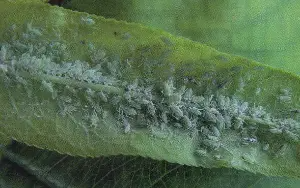
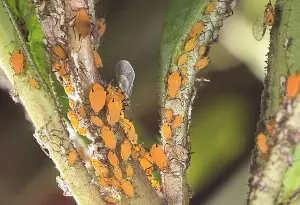
Peach aphid larvae; Oleander aphid larvae
(2) Lace bugs: July and August are the peak period for damage. Species include: pear lace bug, camphor lace bug, azalea lace bug, and privet lace bug, etc. They mainly damage pear, weeping crabapple, Malus spectabilis, Chaenomeles speciosa, peach, cherry blossom, rhododendron, and privet. Chemical control: Use 1.8% abamectin at 2500 times dilution or 2.5% cypermethrin at 3000 times dilution for control.
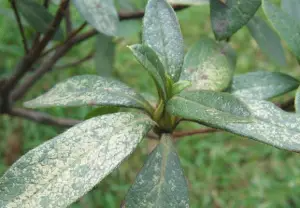
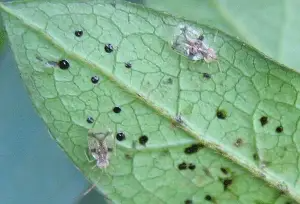
Symptoms of damage and adult cuckoo lace bugs
(3) Scale insects: The best time for control is from May to June and from August to September. Species include: cottony cushion scale, Japanese scale, crape myrtle scale, Japanese pot scale, white wax scale, horned wax scale, red wax scale, and boxwood scale, etc. They mainly infest plants such as Pittosporum tobira, Hemp stalks, rose, Chinese tallow tree, maple, red-leaf plum, Fatsia japonica, Magnolia grandiflora, Podocarpus macrophyllus, Lagerstroemia indica, and Ligustrum lucidum. Chemical control: 28% chlorpyrifos EC at 1200 times dilution or 40% chlorpyrifos EC at 800 times dilution plus 10% imidacloprid at 1000 times dilution can be used for control.
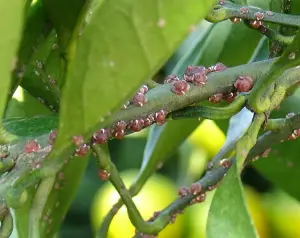
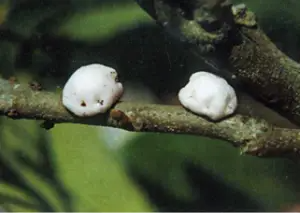
Red wax scale, horned wax scale
(4) Pyralids: The best time for control is from late May to mid-June, from mid-June to late July, and from mid-August to late September. Control should be carried out between 16:00 and 17:00 during the feeding period. Species include: camphor leaf roller, boxwood leaf roller, yellow tussock moth, flat tussock moth, large (small) bag moth, beet armyworm, poplar leafminer, silk cotton tree geometrid moth, and Chinese tallow tree leafminer, etc. They mainly harm garden plants such as crape myrtle, rose, crabapple, tallow tree, sweetgum, poplar, osmanthus, paulownia, pomegranate, redbud, and large-leaved boxwood. Adults can be killed by black light traps. Chemical control: Spray with 50% fenitrothion at 1000-1500 times dilution, or 40% acephate at 1000 times dilution, or cypermethrin at 1000 times dilution, or 0.36% matrine aqueous solution at 1000 times dilution.
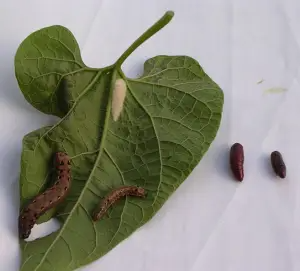
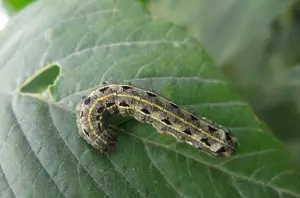
Spodoptera litura egg masses, mature larvae and pupae
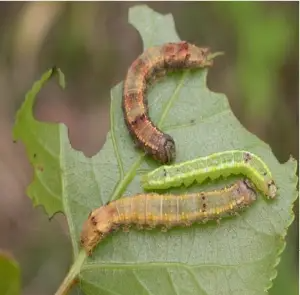
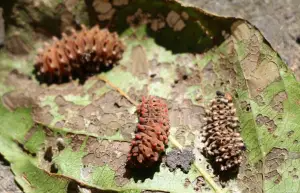
Symptoms of leaf-attaching damage caused by the larvae of the poplar leafminer moth; larvae and damage symptoms of the leafminer moth.
(5) Longhorn beetles: The best time for control is from late June to late July and from September to November. Common species include: *Spodoptera litura*, *Spodoptera litura*, *Spodoptera litura*, *Spodoptera litura*, *Spodoptera litura*, *Spodoptera litura*, *Spodoptera litura*, *Spodoptera litura*, *Spodoptera litura*, *Spodoptera litura*, *Spodoptera litura*, etc. Chemical control: Larvae can be killed by injecting 40% chlorpyrifos or 40% dimethoate emulsion into the holes. Adults can be controlled by 1000 times dilution of 2.5% deltamethrin emulsion or 2.5% cypermethrin emulsion.
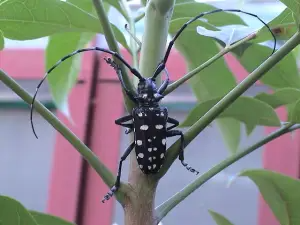
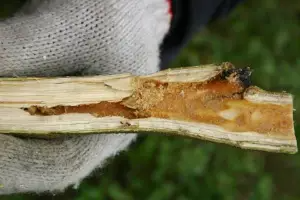
Symptoms of damage from the Asian longhorn beetle and adult beetle
II. Common Diseases and Their Prevention
Common diseases during this stage include powdery mildew, anthracnose, rust, sooty mold, leaf spot, and downy mildew.
(1) Powdery mildew: This is a fungal disease that overwinters as cleistothecia or mycelium on plant tissues. It is relatively drought-tolerant, and high temperatures and humidity are conducive to its spread. It mainly affects plants such as roses, magnolias, and crape myrtles. Control methods: It can be controlled with 15% wettable powder of carbendazim at a dilution of 1:1500 or 40% emulsifiable concentrate of thiamethoxam at a dilution of 8:000.
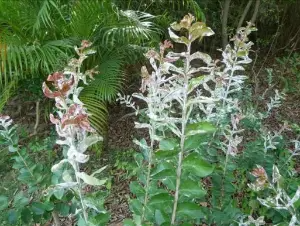
Symptoms of powdery mildew in crape myrtle
(2) Anthracnose, rust, etc.: These are fungal diseases. Overwintering conidia are spread by rainwater and invade plant lenticels, wounds, or stomata. They are more likely to spread in places with high temperature, high humidity, and poor sanitation. They mainly affect garden plants such as tulip trees, crabapples, Michelia figo, variegated coral trees, and large-leaved boxwoods. Control methods: 70% thiophanate-methyl wettable powder at 1000 times dilution, 50% thiram wettable powder at 500-800 times dilution, or 80% mancozeb wettable powder at 600-800 times dilution can be used for control.
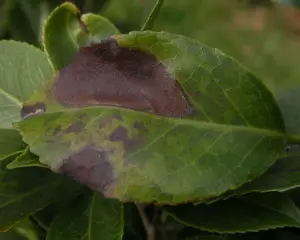
Camellia anthrax symptoms
(3) Sooty mold: caused by various epiphytic and parasitic fungi. The sexual stage is generally caused by *Solanum lyratum* and *Solanum lyratum*, while the asexual stage is commonly caused by *Fungiformis* and *Cladosporium*. It mainly infests various garden plants such as cedar, camphor, mimosa, pittosporum, camellia, and large-leaved boxwood. Control methods: Spray with 70% thiophanate-methyl at 1000 times dilution, 50% carbendazim at 1000 times dilution, or 80% mancozeb wettable powder at 500-800 times dilution.
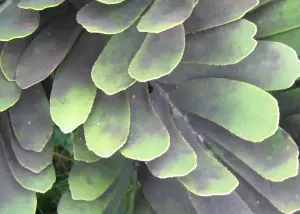
Symptoms of soot disease
(4) Leaf spot and black spot: These are fungal diseases. The peak incidence period begins at the end of May and can last until October. Large-scale leaf drop usually occurs in July-August and late September. They mainly affect garden plants such as roses, privet, cherry blossoms, and photinia. Control methods: 75% chlorothalonil wettable powder at 500-800 times dilution, 50% carbendazim wettable powder at 800 times dilution, or 70% thiophanate-methyl wettable powder at 1500 times dilution can be used for control.
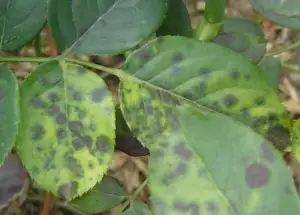
Symptoms of black spot disease in roses