Illustrated instructions on pruning kalanchoe, including the process of pruning kalanchoe.
Those who love flowers are probably familiar with Kalanchoe, as it is a common sight in many flower enthusiasts' homes. Anyone who enjoys potted plants has no reason not to love Kalanchoe, as it not only blooms profusely but also has a long flowering period and comes in a wide variety of colors.
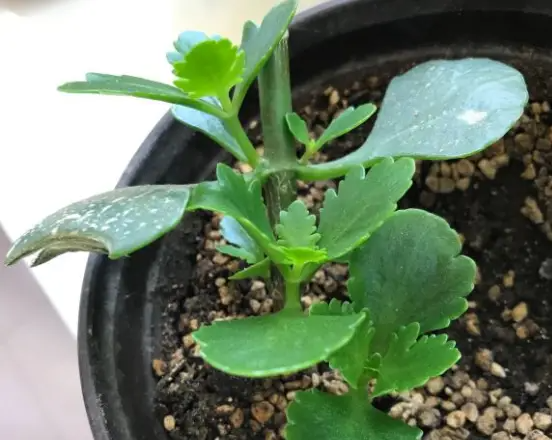
To ensure your kalanchoe blooms year-round, besides proper daily care, regular pruning is essential. I had a potted kalanchoe that I'd had for two years, and two months ago, to encourage continuous and abundant flowering, I pruned it severely. At first, I thought I'd ruin it, but surprisingly, two months later, many new shoots sprouted from the stem.
Seeing these tiny new shoots puts me in a great mood, and a slight smile appears on my face. The harsh pruning I did two months ago was definitely the right decision. So, how do you prune a kalanchoe? Below is a summary of the pruning process, which I hope will be helpful to fellow flower enthusiasts.
Understand the purpose of pruning
1. Pruning kalanchoe encourages it to sprout more new buds. As kalanchoe grows, its stems gradually age, resulting in fewer flowers. Pruning promotes the growth of new stems and leaves, leading to more flowers and more vibrant colors.
2. If the kalanchoe grows excessively or has other problems and is not growing well, you can prune the branches to encourage new shoots to sprout and grow into new plants.
3. For the cut kalanchoe stems and leaves, you can select some healthy ones, trim them, and then use them for cuttings to cultivate new plants. In this way, your own kalanchoe population will continue to grow, and a garden full of them will not be a dream.
Pruning time
The best time to prune kalanchoe is generally in spring and autumn, as the temperature is suitable during these seasons, and the plant grows more vigorously at this time. After pruning, it is easy for it to produce more lateral buds.
Generally, the kalanchoe is pruned after it blooms to encourage new shoots.
Pruning methods
Preparation
Before pruning your kalanchoe, first move the potted kalanchoe to a spacious, shady place. Also, prepare the pruning tools in advance, such as scissors, fungicide, cutting pots, and soil.
Pruning process
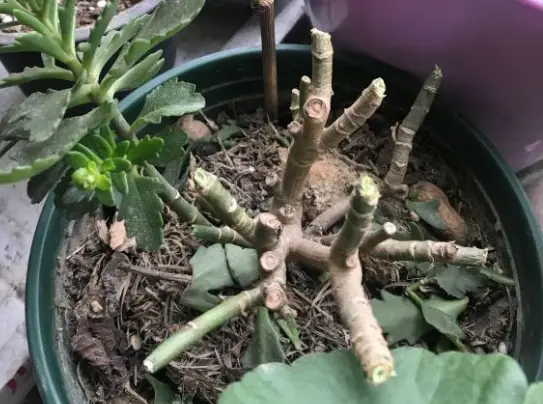
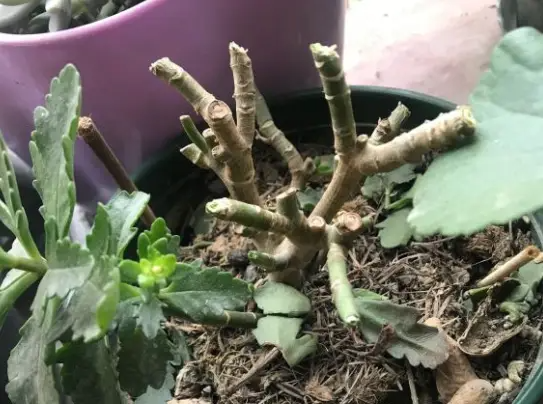
This time, I didn't follow any special rules when pruning the kalanchoe. I simply cut off the forked branches from the base of the stem upwards. I was quite ruthless this time, and after pruning, the kalanchoe was completely bare, with only a few main stems left.
I realized I'd been quite ruthless. I was worried that pruning it would kill the kalanchoe. Thankfully, it survived and thrived afterward.
Post-pruning care
After pruning the kalanchoe, place the cut potted plant in a cool, well-ventilated place. Do not expose it to direct sunlight. Then, apply some carbendazim powder to the wound to prevent fungal infection and rot.
During this period, avoid getting the wound wet or exposing it to rain, as this can easily lead to rot. Next, patiently wait for the new shoots to grow. After about two weeks, you should see buds emerging on the stem. At this time, do not touch them; just watch them quietly and patiently wait for them to grow.
Cut branches
1. Repair
The branches cut from the kalanchoe plant can be collected in a group, and they should be of uniform length, about 5 centimeters. Remove the leaves at the bottom of the branches, leaving only 2-3 leaves on each branch.
Additionally, make a slanted cut at the bottom of the branch with a utility knife to keep the cut smooth and flat, making it easier to insert into the soil and increasing the contact area between the branch and the soil.
2. Cuttings process
First, prepare the potting soil. The soil needs to be sterilized by sun exposure, and it should be slightly moist before planting. After preparing the potting soil, fill the flowerpot with it, keeping the soil surface level. Next, insert the prepared cuttings into the soil.
Keep a 2-centimeter distance between the cuttings, and compact the soil around the base of the cuttings to ensure they are stable. That completes the stem cutting propagation process—simple, right?
To help the cuttings root faster, you can apply some rooting powder to the base of the cuttings before planting.
3. Post-cutting care
After propagating the kalanchoe by cuttings, place the pots in a well-ventilated, shady place, avoiding direct sunlight; provide indirect light initially. Water sparingly at first, only watering when the soil dries out. You can also occasionally mist the cuttings to maintain humidity, which promotes root growth.
Next, wait patiently. In less than a month or two, the branches will take root and sprout. At this time, you can increase the amount of light and water.
Overall, although I was a bit harsh in pruning the kalanchoe this time, I reaped a great harvest two months later.