How to prune potted osmanthus trees to make them look better? See the illustrated osmanthus tree pruning method here.
Many flower enthusiasts grow osmanthus in pots at home. To achieve a beautiful and elegant appearance, timely pruning is crucial for potted osmanthus. How to prune osmanthus for a better look? Based on the practical experience of many flower enthusiasts, the most scientific and simple pruning method for osmanthus trees has been determined. Let's learn about it together.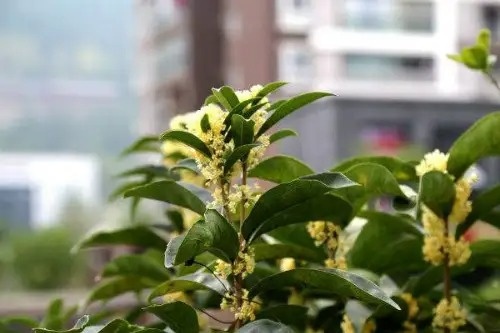
How to prune osmanthus
The growth of any plant is influenced by factors such as the environment, plant characteristics, and care methods. Each plant has a unique appearance, and during the cultivation process, they will produce various dense small branches and side branches. Through pruning and shaping, we can not only achieve a more ornamental effect, but also promote flowering.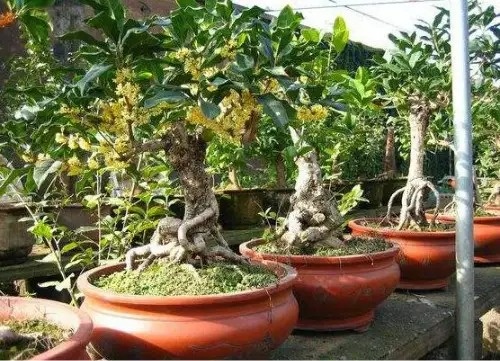
Best time for pruning
The best time to prune osmanthus trees is during the winter and spring seasons, specifically January and February. At this time, the weather is cold and the temperature is low, and the osmanthus is in a dormant state. Pruning at this time will allow the plant to grow vigorously and recover more easily when the temperature gradually rises the following year.
Seedling pruning
When the osmanthus is in its seedling stage and about 80 cm tall, in order to promote the growth of more branches and make it quickly become lush, we need to pinch off the top branches. Cut off about 10 cm of the top branches. When it grows to about 1 meter, keep about 2 main branches and cut off all the other main branches.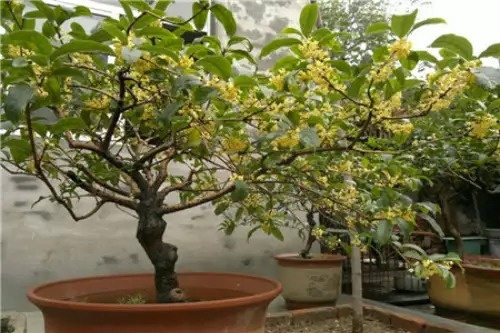
Shaping and trimming
Once osmanthus seedlings have grown to a certain height, they can be transplanted and planted in pots. After transplanting, they need to be pruned and shaped as soon as possible, retaining branches in different positions and removing excess branches. Generally, the main branches should be retained, while lateral branches, axillary branches, diseased or weak branches, and overlapping branches should be removed. At this time, determine the number, direction, and length of branches to be retained, first conceive a simple plant shape, and then begin pruning.
Subsequent pruning and maintenance
After the initial shaping and positioning are completed, the basic shape of the osmanthus bonsai will emerge. In the subsequent maintenance process, we only need to maintain and prune according to the pre-conceived shape. When shaping, avoid parallelism and symmetry, and achieve a good balance of density and sparseness, spreading around the main trunk to form a vivid and expressive plant shape.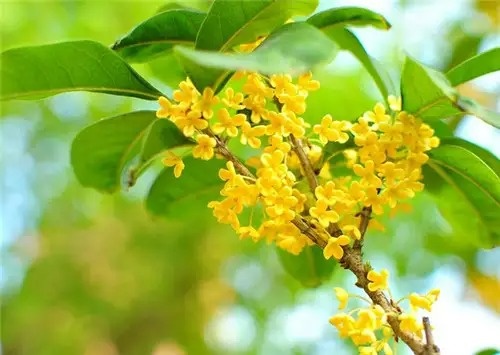
As the branches of the osmanthus tree continue to grow, in order to achieve a vigorous and ancient appearance, it is sometimes necessary to bend and prune them to make the plant shorter, sturdier, and with fuller branches. At this time, attention should be paid to the ratio of thickness transition and the length of the pruned branches.
You can prune your osmanthus tree according to your own ideas to create any shape you like. Generally speaking, there is no one-time pruning method for potted plants. You need to keep pruning and exploring during the maintenance process to shape and maintain the plant. I believe everyone can grow a beautiful osmanthus bonsai.