How should roses be pruned so that the flowers bloom larger?
If you don't prune your roses, the flowers will inevitably become smaller and smaller, and they may even stop blooming altogether. Below is a brief introduction to rose pruning methods, hoping that your roses will bloom bigger and bigger.

1. How to prune roses?
If you want your roses to bloom more, you need to encourage more branching, but this should be done without affecting the plant's ventilation and light penetration. It's not about having as many branches and leaves as possible. Let's learn together, even if you're a beginner.
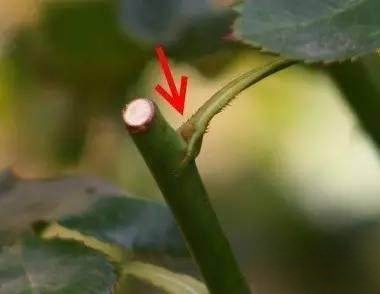
As you can see in the picture above, the top branches of the rose have been pruned, and we can also see new buds growing at the red arrow. These are the newly grown small branches. If these leaf buds are kept, they will allow the rose to grow more densely.
To encourage more blooms in roses, pruning is still necessary.

When pruning rose branches, pay attention to the number of leaves on each branch. Branches with 5 leaves are considered relatively strong and should be kept. However, if a small branch only has about 3 leaves, it is considered a weak branch and should be pruned.

(Count the number of leaves)
Although they can produce flower buds, the flowers that bloom will be very small, and many will not bloom at all, wasting nutrients in vain.
2. Pruning and prevention of pests and diseases:
Proper pruning of roses can also prevent pests and diseases. Special attention should be paid to pruning the branches and leaves at the bottom of the rose. Do not leave too many branches at the bottom of the rose stem. Leave about 3 branches on the main stem. Prune the weak branches and leaves. Prune the branches and leaves that are too dense. Also prune some intersecting or crooked branches.
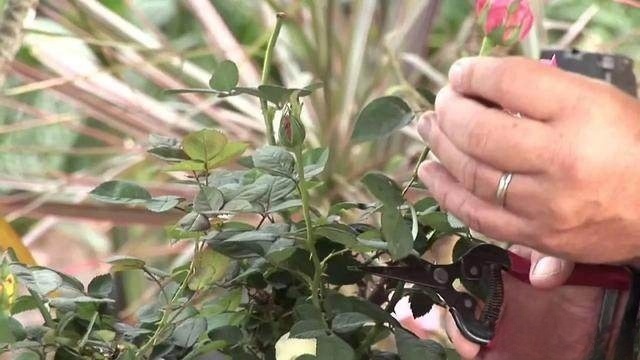
To ensure the healthy growth of roses, it is essential to maintain excellent ventilation and light penetration between the plants.
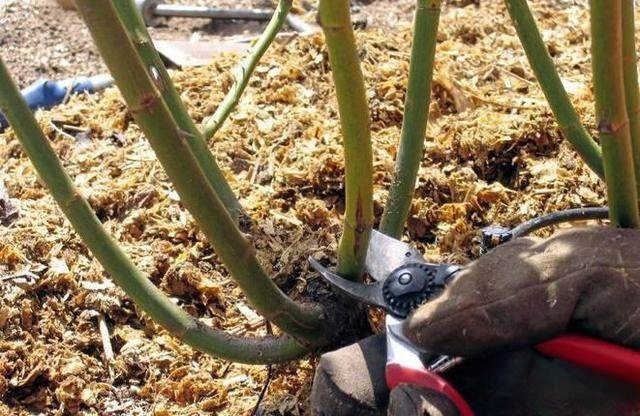
(Don't leave too many branches on the main trunk)
When pruning roses, you need to master a few tips: focus on preserving strong branches, prune weak branches and leaves, and remove dead and diseased branches. Prune boldly to ensure that the roses grow more vigorously.
3. The best time for pruning
The best time to prune is when the last frost is about to end, usually around three-quarters of the way through winter. This is a suitable time for a heavy pruning.
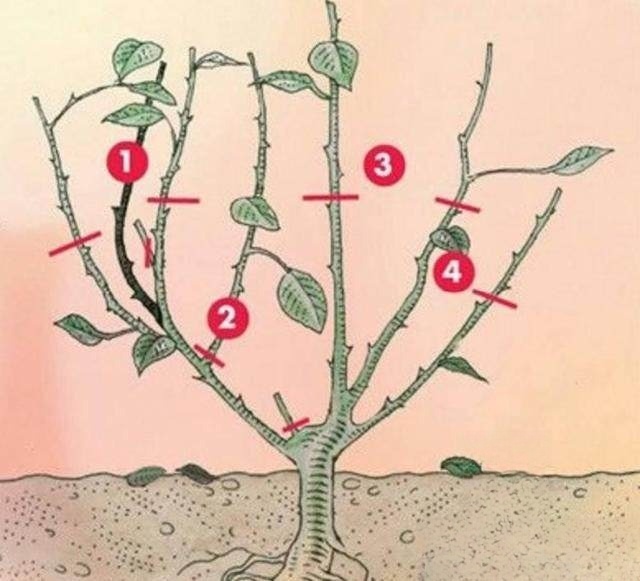
(Illustration of rose pruning)
1. Prune away dead branches
2. Prune weak branches
3. Prune away any overgrown branches.
4. Prune branches with few leaves.
5. Prune diseased branches and leaves.

Choosing this time will prevent frost from damaging the roses and will allow them to sprout new buds as quickly as possible, ensuring the roses recover and grow the fastest.
Therefore, the timing for pruning roses differs between the North and South. In the South, pruning in March or April is appropriate, while in the North, it can be delayed slightly.