How should fitness beginners do strength training? One method with four steps to comprehensively improve muscle strength.
Every fitness guru started as a beginner, with zero experience and little strength. It was through time and effort that they transformed themselves. Even now, many newcomers are still joining gyms, learning and figuring things out.
Some people will try out all the equipment they can see, regardless of whether they know how or not, just to start practicing.
Some people choose to imitate online pictures and videos, selecting the corresponding tutorials for the body parts they want to train.

These are two common training methods used by beginners. They hope to build muscle but don't want to spend money on a personal trainer, so they have to figure it out on their own.
So how should beginners do strength training?
1. Strengthen compound movements using fixed equipment

Beginners often have weak foundational strength and poor flexibility, making it difficult for them to quickly master basic movements when choosing free weight training.
Even using 2.5 kg dumbbells or a 20 kg empty barbell, it feels very strenuous, especially during dumbbell lateral raises and barbell squats.
At this point, you can choose to operate on fixed equipment first. Usually, you can use supine, prone, or sitting positions. The overall movement trajectory is relatively fixed, which can better stabilize the body and quickly increase the load, which is very helpful for improving basic strength.

Choose three compound exercises: lying leg press, lat pulldown, and machine bench press to strengthen the leg, back, and chest muscles respectively, while also working the arms, shoulders, and core.
Reference Plan:

Lying leg press: 5 sets of 10 reps with 20 kg
Lat pulldowns: 4 sets of 12 reps for 25 kg
Machine bench press: 25 kg, 5 sets * 10 reps
2. Strengthen the four major barbell exercises

Once you've mastered the movements on the fixed machines and can use twice the weight, it means your basic strength has significantly improved, and you can then start barbell training.
There are many barbell exercises, and barbells come in different lengths. Beginners need to use barbell exercises to further increase muscle strength and size for better overall results.
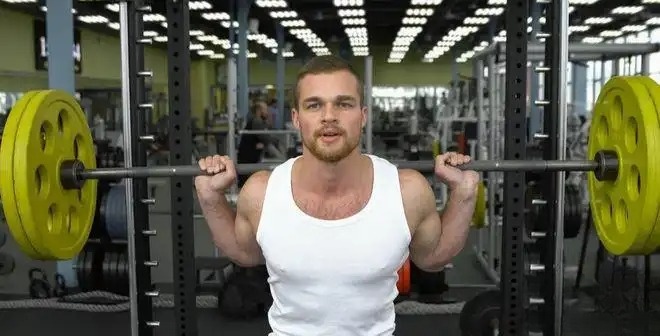
Choose four barbell exercises: barbell bench press, barbell curl, barbell row, and barbell squat . These exercises will strengthen your chest, biceps, back, and thigh muscles, respectively. The barbell bench press will also work your triceps and anterior deltoids, all of which can improve core strength.
Reference Plan:
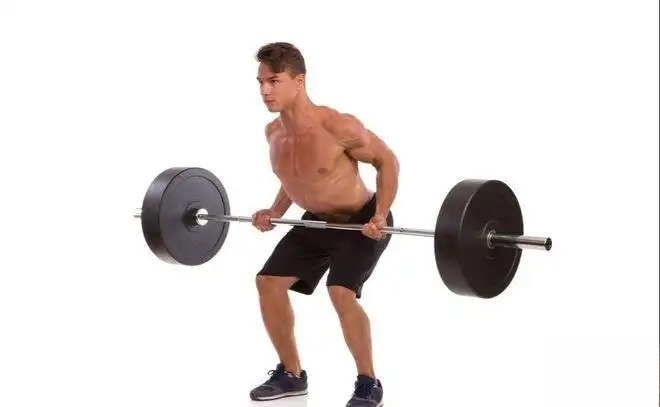
Barbell bench press: 5 sets of 8 reps (without a bar) with 20 kg.
Barbell curls: 4 sets of 12 reps with 10 kg (short barbell)
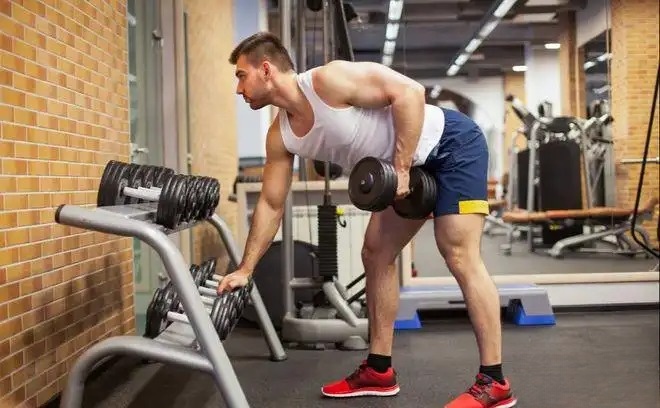
Barbell rows: 4 sets of 10 reps (without a barbell) with 20 kg.
Barbell squats: 5 sets of 10 reps (without a barbell) with 20 kg.
3. Strengthen shoulder and abdominal muscles.

The previous fixed machine and barbell exercises focus more on training large muscle groups, while also working the arm muscles. After 3-6 months of training, the overall muscle size will increase significantly.
To improve overall muscle coordination, shoulder and abdominal muscle training is also necessary.
For the shoulders, choose three dumbbell exercises: seated dumbbell press, standing dumbbell lateral raise, and seated bent-over dumbbell fly. These target the anterior, medial, and posterior deltoids, respectively.
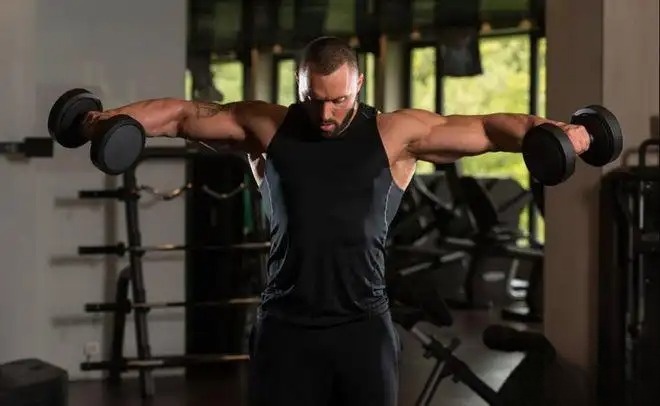
For abdominal muscles, choose 3 bodyweight exercises: leg slide crunch, reverse crunch, and seated torso twist .
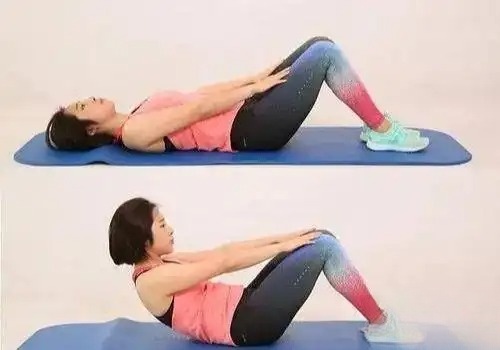
It targets the upper rectus abdominis, lower rectus abdominis, and oblique abdominal muscles respectively.
Reference Plan:
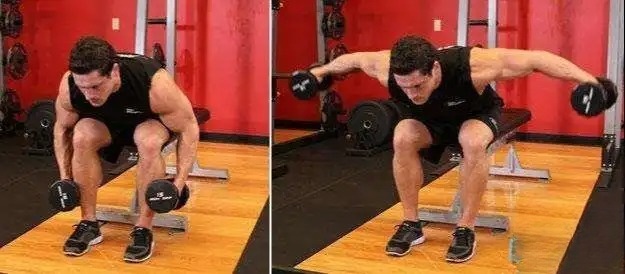
Seated dumbbell press: 5 kg, 5 sets * 12 reps
Standing dumbbell lateral raise: 5 kg, 4 sets * 15 reps
Seated bent-over dumbbell flyes: 5 kg, 4 sets * 12 reps
Slide leg crunches: 4 sets of 15 reps with bodyweight
Reverse crunches: 4 sets of 12 reps with bodyweight
Seated torso twists: 4 sets of 16 repetitions with body weight
4. Develop a complete training plan
The preceding exercises used very low weights to find the correct feeling of exertion, improve form, and reduce the risk of joint and muscle injuries. Once the movements are mastered, the body gradually adapts, and the muscles recover quickly, you can proceed with a full training program.
Focus primarily on the chest, back, and legs, followed by the shoulders, arms, and abs. You can add other exercises to reach exhaustion at the end.
Here's a recommended training plan with 4 sessions per week:

Monday: Chest + Triceps (Barbell Bench Press + Machine Bench Press + Incline Dumbbell Bench Press + Dumbbell Overhead Triceps Extension + Bent-Over Single Arm Triceps Extension)
Tuesday: Back + Biceps (Barbell Row + Lat Pulldown + Single-Arm Dumbbell Row + Barbell Curl + Alternating Dumbbell Curl)
Wednesday: Rest
Thursday: Shoulders + Abs (Seated dumbbell press + Standing dumbbell lateral raise + Seated bent-over dumbbell fly + Slide crunch + Reverse crunch + Seated torso twist)
Friday: Rest
Saturday: Leg workout (barbell squats + lying leg presses + Romanian deadlifts + dumbbell leg curls + bodyweight standing calf raises)
Sunday: Rest

It is recommended to use moderate weights for chest, back, and legs, and light weights for biceps, triceps, shoulders, and abs. Perform 4-5 sets of 8-15 repetitions for each exercise, depending on your own fitness level.
In conclusion:

When beginners go to the gym, they should not use heavy weights or equipment indiscriminately. They should start with simple and gradually increase the difficulty level.
Start with compound exercises on fixed machines, then move on to barbell exercises, and then to the shoulders and abs. Once you've mastered all of these exercises, then train according to a 4-a-week plan. This will help you get started faster.

The quality of your movements is more important than the weight you use or the number of repetitions. If your form is incorrect, much of your subsequent training will be a waste of effort; you won't build muscle and may even develop injuries. —Yumi Loves Fitness