How often should indoor plants be pruned? How should they be pruned?
Introduction: Flowering trees that bloom on current-year shoots, such as roses, hibiscus, poinsettias, muskmelons, kumquats, bitter oranges, and Buddha's hand citrons, should be pruned during their winter dormancy to encourage the growth of new shoots, more flowers, and more fruit. Climbing woody plants should generally be pruned during dormancy or in winter to maintain a neat, symmetrical, and aesthetically pleasing shape. Trees that primarily grow upright are also often pruned during dormancy.
The essence of " growing flowers " lies in "nurturing." Pruning techniques are crucial in flower care. Different types of plants require different pruning times. When pruning flowering plants, it's essential to understand their specific flowering habits. For spring-flowering plants like jasmine, peach blossoms , and winter jasmine , flower buds form on the previous year's branches. Therefore, pruning should be avoided in winter and early spring before bud break, as this will cut off the flowering branches. Pruning should be done 1-2 weeks after flowering to encourage new shoots, which will then form flowering branches for the following year. If pruning is delayed until autumn or winter, branches with flower buds formed in summer will be damaged, affecting flowering the following year.
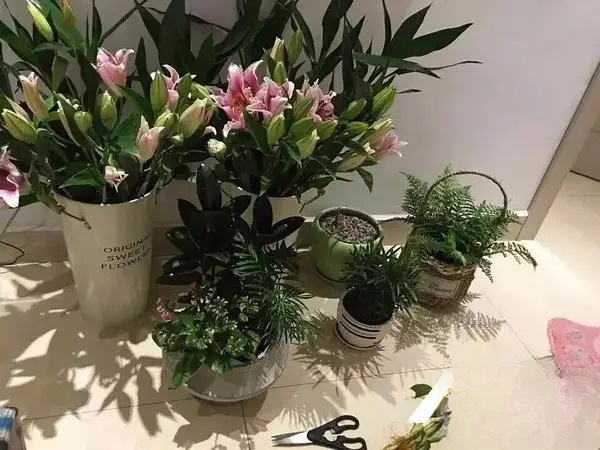 1. Why do flowers need pruning?
The proverb "seven parts management, three parts pruning" is an important experience in flower cultivation. Through pruning, not only can the branches of flowers be evenly distributed, nutrients be saved, plant vigor be adjusted, and excessive growth be controlled, so that the plant shape is neat and the posture is beautiful, but more importantly, it is conducive to more flowers. Most flowers bloom on new branches. Only by constantly pruning old branches can new branches be promoted, more flowers be bloomed, and more fruits be produced. Pruning is generally divided into the following two types:
(1) Dormant period pruning: mainly to thin out branches and shorten them. It is advisable to do it in early spring when the sap has just started to flow and the buds are about to sprout. If pruning is too early, the wound will not heal easily, and the new shoots will be easily damaged by frost; if pruning is too late, the new shoots have already sprouted, wasting nutrients;
(2) Growing season pruning: mainly to regulate vegetative growth, including pinching, bud removal, flower thinning, fruit thinning, and pruning of excessive branches. It can be done at any time during the growing season.
2. When is the best time to prune potted flowers?
The time for pruning is different for different types of flowers and trees. When pruning flowering plants, it's essential to understand their specific flowering habits. For spring-flowering plants like hibiscus, peach blossoms, and winter jasmine, flower buds form on the previous year's branches. Therefore, pruning is not recommended in winter or early spring before bud break, as this will cut off the flowering branches. Pruning should be done 1-2 weeks after flowering to encourage new shoots, which will then form flowering branches for the following year. If pruning is delayed until autumn or winter, branches with flower buds formed in summer will be damaged, affecting flowering the following year.
For flowering plants that bloom on current-year shoots, such as roses , hibiscus, poinsettias, muskmelon, kumquats, bitter oranges, and Buddha's hand citron, pruning should be done during winter dormancy to encourage new shoots, more flowers, and more fruit. Climbing woody plants should generally be pruned during dormancy or winter to maintain a neat, symmetrical, and aesthetically pleasing shape. Plants primarily grown for their upright growth are also often pruned during dormancy.
3. How to perform pinching?
Pinching involves pinching (or cutting off) the tips of the main stem or lateral branches of a flower to encourage axillary bud growth or inhibit excessive branch growth, resulting in a robust, aesthetically pleasing plant with an increased number of flowers.
For most herbaceous plants, such as salvia splendens, snapdragons, bell peppers, and periwinkles, pinching can be done when the seedlings are about 10 cm tall after transplanting to promote branching and more flowers. Similarly, for plants like begonias, fuchsias, and chrysanthemums, pinching should be done after transplanting to encourage lateral branching, a more varied plant shape, and more flowers. However, pinching is not recommended for plants that may result in smaller flowers or prevent flowering altogether, such as impatiens, cockscomb, and winter jasmine.
Some woody plants are often pinched during repotting in spring or when the main branches are growing vigorously to accelerate branching. Plants such as pomegranates, roses, poinsettias, bougainvillea, and night-blooming jasmine can be pinched multiple times depending on the cultivation purpose and the plant's growth.
4. How to Prune Shrubs?
Shrubs in gardens can generally be divided into three categories: flowering, fruiting, and branch/trunk ornamental. Different pruning methods should be used according to different ornamental purposes. For shrubs primarily valued for their flowering, common examples include Forsythia, Cinnamomum camphora , Cercis chinensis, Bauhinia purpurea , and Lilac. Their flower buds form on the branches of the previous year, so pruning is best done after flowering in May or June.
Summer pruning focuses on thinning and shaping, removing crossing branches, overly long branches, dense branches, diseased or insect-infested branches, and dead branches to improve ventilation and light penetration, concentrating nutrients. Residual branches after flowering can be shortened to promote growth and encourage more flowering the following year.
For summer-flowering shrubs, such as Rose, Hibiscus , Lycium barbarum, and Lagerstroemia indica, they flower on new shoots that emerge in the spring, so pruning is done in winter after leaf fall. Remove overly dense branches, dead branches, and diseased or insect-infested branches. When thinning, the stub should not be too long; generally, the cut should be made at a 45° angle from the branching point, with a smooth cut. Weak branches should be pruned heavily, while strong branches should be pruned lightly. Each branch should retain 4-6 buds, with the rest removed. For shrubs that are valued for both their flowers and fruits, such as holly and honeysuckle, after flowering, prune away some overly dense and diseased branches to improve ventilation and light penetration, thus promoting fruit production. For shrubs valued for their branches and trunks, such as red-twig dogwood and kerria japonica , since their main appeal is their vibrant young shoots, heavy pruning can be done in winter, leaving only 15-20 cm above ground and removing the rest to encourage the growth of more new branches the following year.
The proverb "seven parts management, three parts pruning" is an important experience in flower cultivation. Through pruning, not only can the branches of flowers be evenly distributed, nutrients be saved, plant vigor be adjusted, and excessive growth be controlled, so that the plant shape is neat and the posture is beautiful, but more importantly, it is conducive to more flowers. Most flowers bloom on new branches. Only by constantly pruning old branches can new branches be promoted, more flowers be bloomed, and more fruits be produced. Pruning is generally divided into the following two types:
(1) Dormant period pruning: mainly to thin out branches and shorten them. It is advisable to do it in early spring when the sap has just started to flow and the buds are about to sprout. If pruning is too early, the wound will not heal easily, and the new shoots will be easily damaged by frost; if pruning is too late, the new shoots have already sprouted, wasting nutrients;
(2) Growing season pruning: mainly to regulate vegetative growth, including pinching, bud removal, flower thinning, fruit thinning, and pruning of excessive branches. It can be done at any time during the growing season.
2. When is the best time to prune potted flowers?
The time for pruning is different for different types of flowers and trees. When pruning flowering plants, it's essential to understand their specific flowering habits. For spring-flowering plants like hibiscus, peach blossoms, and winter jasmine, flower buds form on the previous year's branches. Therefore, pruning is not recommended in winter or early spring before bud break, as this will cut off the flowering branches. Pruning should be done 1-2 weeks after flowering to encourage new shoots, which will then form flowering branches for the following year. If pruning is delayed until autumn or winter, branches with flower buds formed in summer will be damaged, affecting flowering the following year.
For flowering plants that bloom on current-year shoots, such as roses , hibiscus, poinsettias, muskmelon, kumquats, bitter oranges, and Buddha's hand citron, pruning should be done during winter dormancy to encourage new shoots, more flowers, and more fruit. Climbing woody plants should generally be pruned during dormancy or winter to maintain a neat, symmetrical, and aesthetically pleasing shape. Plants primarily grown for their upright growth are also often pruned during dormancy.
3. How to perform pinching?
Pinching involves pinching (or cutting off) the tips of the main stem or lateral branches of a flower to encourage axillary bud growth or inhibit excessive branch growth, resulting in a robust, aesthetically pleasing plant with an increased number of flowers.
For most herbaceous plants, such as salvia splendens, snapdragons, bell peppers, and periwinkles, pinching can be done when the seedlings are about 10 cm tall after transplanting to promote branching and more flowers. Similarly, for plants like begonias, fuchsias, and chrysanthemums, pinching should be done after transplanting to encourage lateral branching, a more varied plant shape, and more flowers. However, pinching is not recommended for plants that may result in smaller flowers or prevent flowering altogether, such as impatiens, cockscomb, and winter jasmine.
Some woody plants are often pinched during repotting in spring or when the main branches are growing vigorously to accelerate branching. Plants such as pomegranates, roses, poinsettias, bougainvillea, and night-blooming jasmine can be pinched multiple times depending on the cultivation purpose and the plant's growth.
4. How to Prune Shrubs?
Shrubs in gardens can generally be divided into three categories: flowering, fruiting, and branch/trunk ornamental. Different pruning methods should be used according to different ornamental purposes. For shrubs primarily valued for their flowering, common examples include Forsythia, Cinnamomum camphora , Cercis chinensis, Bauhinia purpurea , and Lilac. Their flower buds form on the branches of the previous year, so pruning is best done after flowering in May or June.
Summer pruning focuses on thinning and shaping, removing crossing branches, overly long branches, dense branches, diseased or insect-infested branches, and dead branches to improve ventilation and light penetration, concentrating nutrients. Residual branches after flowering can be shortened to promote growth and encourage more flowering the following year.
For summer-flowering shrubs, such as Rose, Hibiscus , Lycium barbarum, and Lagerstroemia indica, they flower on new shoots that emerge in the spring, so pruning is done in winter after leaf fall. Remove overly dense branches, dead branches, and diseased or insect-infested branches. When thinning, the stub should not be too long; generally, the cut should be made at a 45° angle from the branching point, with a smooth cut. Weak branches should be pruned heavily, while strong branches should be pruned lightly. Each branch should retain 4-6 buds, with the rest removed. For shrubs that are valued for both their flowers and fruits, such as holly and honeysuckle, after flowering, prune away some overly dense and diseased branches to improve ventilation and light penetration, thus promoting fruit production. For shrubs valued for their branches and trunks, such as red-twig dogwood and kerria japonica , since their main appeal is their vibrant young shoots, heavy pruning can be done in winter, leaving only 15-20 cm above ground and removing the rest to encourage the growth of more new branches the following year.