How many of these 10 interesting but littleknown facts do you know?
No matter how many books you've read, there will always be some ordinary, everyday facts that will surprise you and change your perspective on the world. Let's take a look at some interesting little-known facts that we may have never heard of, or even imagined, without seeing them here.
1. Why do eyeballs appear black?

Why do eyeballs appear black?
The reason black eyeballs appear black is because there's nothing inside them. The eyeball is just an empty cavity; what you see through it is the inside of the eye, and because of the light, it appears empty. Therefore, what you see is black.
2. The meaning of ÷

Division sign
We might never have wondered why ÷ is written this way. The horizontal line in the middle represents the dividing line of a fraction, while the two dots above and below represent the dividend and divisor, respectively. Isn't it intuitive?
3. Apple Inc.
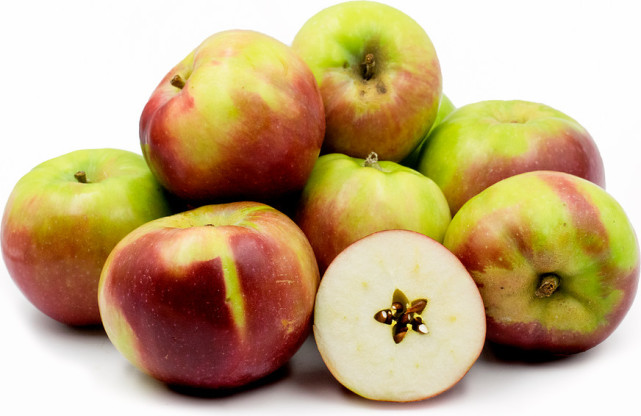
Macintosh Apple
Apple's English name is Macintosh, and you might not understand why the company is named this. It's because Macintosh is the name of an apple, like "Red Fuji" or "Yellow Delicious." This is why many Apple products are Macs; the bitten apple in the picture might just be a Macintosh apple.
4. Laying eggs

Laying eggs
We tend to think that a hen laying an egg must involve some kind of interaction with a rooster. In reality, that's not necessary. Furthermore, most eggs we eat are unfertilized. Unfertilized eggs contain fewer calories, but they cannot hatch into chicks.
5. Symbols on the switch

Switch symbol
The "I" and "O" symbols on a switch are actually binary 1 and 0, representing "on" and "off" respectively. Knowing this, the next time you press a switch, just remember 1 and 0. If it's not a toggle switch but a single button, then both 1 and 0 are written on it, resulting in the common power switch symbol of a circle with a short line inserted.
6. The small hole at the bottom of the padlock
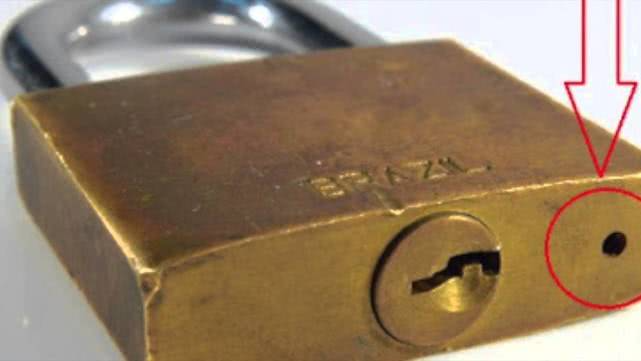
padlock
Padlocks usually have a small hole at the bottom, which is a channel for rainwater to flow out.
7. Soap for disinfection

Soap for disinfection
Many soaps and shower gels claim to kill bacteria, but in reality, soap doesn't kill bacteria very well. It simply makes bacteria "slippery," making them easier to rinse off. The polymers in soap have a very peculiar property: one end is hydrophilic, while the other is hydrophobic. Therefore, when you wash your hands, one end of the molecule binds to bacteria and dirt, while the other end binds to water, washing everything away.
8. Even cows have accents.

Even cows have accents
We can easily distinguish people's accents; the intonations of people from the south and the north are completely different. Cows and birds may also have accents. The "moo" sound of cows from different places will be slightly different, and birds are similar.
9. Winning the lottery

The probability of winning the lottery
The probability of winning the lottery is lower than the probability of an asteroid hitting Earth. The odds of one person winning the lottery are 1 in 195 million. The probability of an asteroid or comet hitting Earth is between 1 in 600,000 and 1 in 75,000.
10. The world's largest waterfall is located underwater.

The world's largest waterfall is underwater.
The world's largest waterfall is underwater. The waters of the Nordic Sea in the Denmark Strait are much colder than the Ilminge Sea, resulting in a significant difference in density. This causes the Nordic Sea water to fall approximately two miles, with a drop volume of 123 million cubic feet per second. The ocean is truly the most amazing thing on Earth.