Health knowledge
Thank you for the invitation.
There is some scientific basis to this question.
There is a common saying that people who frequently get minor illnesses are less likely to get serious illnesses, and that people who are rarely sick but suddenly fall ill are usually quite seriously ill.
What is the reason for this?
I am personally interested in medical immunology, and I think these situations can be explained using medical immunology theories.
We often say that the body's immunity is actually our body's resistance. People with good immunity have a strong resistance to bacteria and viruses.
Over thousands of years of evolution, humans have developed a very sophisticated immune system that can defend against most attacks from external microorganisms such as bacteria, viruses, mycoplasma, and chlamydia.
In fact, bacteria and viruses enter our bodies and attack us every day from the air. Of course, we are not pushovers and can't let these bacteria and viruses do whatever they want. Every time bacteria and viruses enter our bodies and attack us, our immune system will send out some cells to fight them. In professional terms, this means sending out immune cells, such as lymphocytes, monocytes, neutrophils, and macrophages. These immune cells will fight the bacteria and viruses that invade our bodies for hundreds of rounds.
Who do you think would win after three hundred rounds of battle?
In most cases, our body's immune cells should win the battle; otherwise, we would be infected every day, getting colds, bronchitis, and pneumonia daily. After a major victory, the body's immune cells will hold a meeting to summarize their experience, identify the weaknesses of the bacteria and viruses that enter our body, and the next time the same bacteria or viruses enter our body, these weaknesses will be immediately detected, and experienced immune cells will be dispatched to quickly eliminate them.
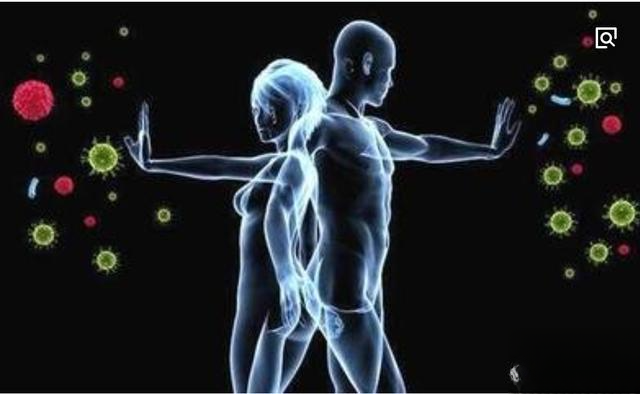
If new viruses or bacteria re-enter our bodies, our lovely immune cells will go out to fight them. Of course, our immune cells cannot win every battle against new bacteria and viruses. What would happen if they lost?
If the bacteria and viruses lose the initial attack, they invade and multiply rapidly. This manifests as colds, bronchitis, and pneumonia. These mostly occur when the immune system is weakened due to factors such as catching a cold, fatigue, or lack of sleep. If you get adequate rest and sleep, your body's immunity recovers, and the immune system produces many immune cells to eliminate the invading bacteria and viruses.
What if we can't kill it?
Then anti-inflammatory drugs will be needed.
However, each time the body eliminates bacteria and viruses, its immune system is activated. The weaknesses of these newly invading bacteria and viruses are then remembered, making them easy prey for the next invasion. As the saying goes, "Know yourself and know your enemy, and you will never be defeated."
By the way, let me briefly explain HIV. People with HIV are infected with HIV. One of the worst things about HIV is that it kills our body's protective immune cells. When our immune cells are killed, our bodies become very susceptible to infection. Therefore, people with HIV have very low immunity and are easily infected by various bacteria and viruses.
Therefore, one should maintain a clean and virtuous lifestyle.
Returning to the original question: It makes sense that catching a cold once or twice occasionally can activate our body's immune system and benefit our resistance. However, this may not be suitable for people who are naturally weak, prone to illness, and have low immunity.
The writing style is a bit too colloquial and descriptive, but that's the general idea. Feel free to follow and leave a comment if you have any questions.