[Guoguang Micro Classroom] Good pest and disease control in spring reduces yearround maintenance costs.

As spring arrives and temperatures gradually rise across the country, trees begin to bud and lawns begin to turn green again, but the peak season for pests and diseases is also approaching. Therefore, it is crucial to formulate and implement scientific and effective prevention and control measures, using the most economical and effective means to achieve the goal of prevention and control, and to implement the plant protection policy of "prevention first, comprehensive control," which is particularly important for subsequent maintenance work.
I. The significance of spring pest and disease control
1. It can effectively reduce the damage of pests and diseases to the new leaves of plants in spring, ensuring the normal growth of garden plants and the landscape effect.
2. Doing a good job in the first-generation prevention and control of pests and diseases can reduce the base number of pests and diseases in the region throughout the year, thereby reducing the annual cost of pesticides and labor.
II. Occurrence and Prevention of Major Garden Diseases in Spring
1. Rot disease
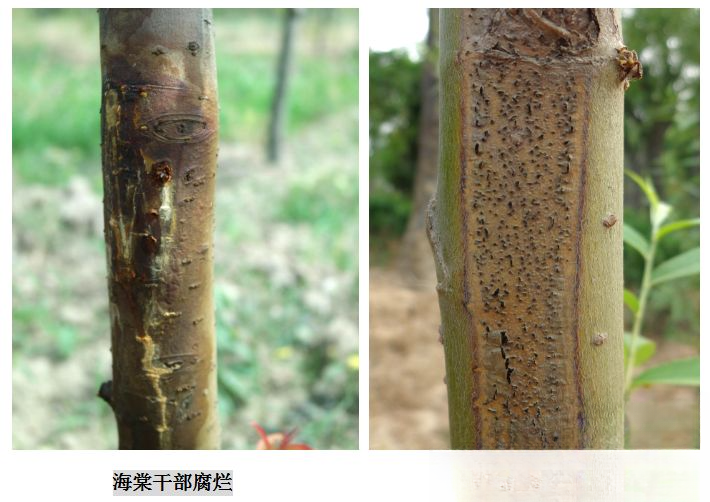
Harmful plants: Common northern plants such as crabapple, poplar, willow, Chinese scholar tree, ash, and purple-leaf plum.
Occurrence pattern: In spring, when the average temperature is 10-15℃ and the relative humidity is 60-85%, conidia are spread by wind and rain and invade host tissues through various wounds. External symptoms appear in early spring (February-March), at which time the lesions expand rapidly, and the peak period of disease ends in May.
Prevention and control methods: Apply Guoguang "Xiugong" at 100 times dilution + "Kangpu" at 200 times dilution or "Songer" at 200 times dilution to the affected areas by brushing or spraying.
2. Powdery mildew
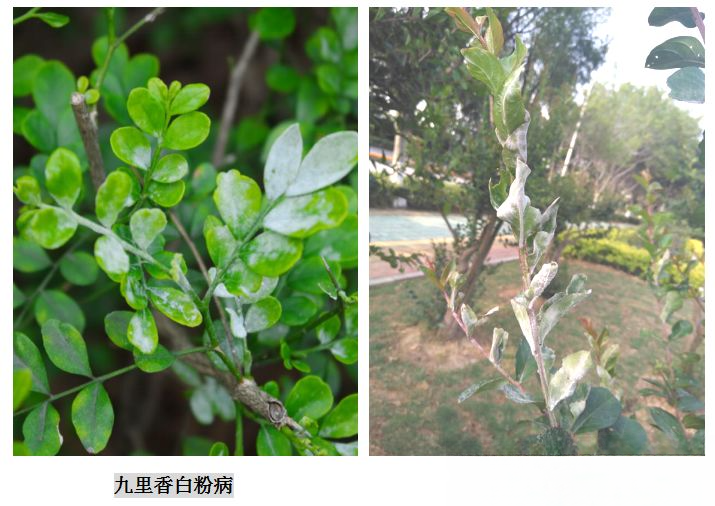
Harmful plants include: Mahonia, Boxwood, Rose, Murraya paniculata, Cotinus coggygria, Lagerstroemia indica, and ornamental flowers.
Occurrence pattern: The conidia of the pathogen can germinate at 10-30°C, and it does not require high humidity. It can complete one infection cycle in 10 days.
Control methods: In the early stages of the disease, spray the leaves with "Jingcui" at a dilution of 1500 times or "Kangpu" at a dilution of 1500 times + "Lepu" at a dilution of 200 times. For resistant powdery mildew, it is recommended to use "Baixiu" at a dilution of 1000-1500 times.
3. Rust
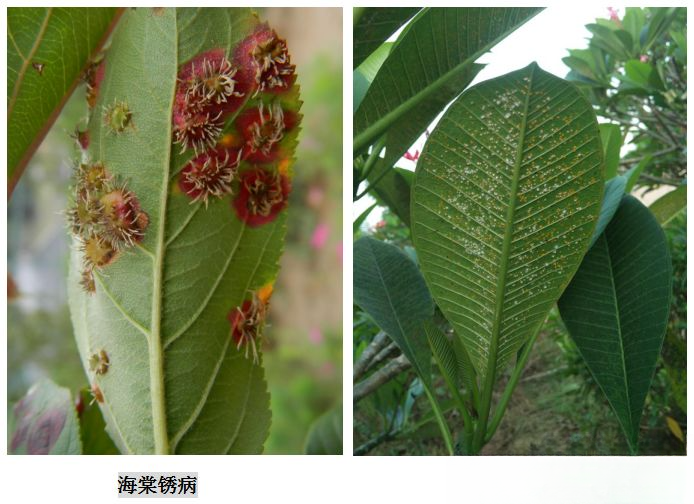
Harmful plants: crabapple, pear, papaya, juniper, ornamental lawns, etc.
Occurrence pattern: Teliospores appear on juniper plants in late March and generally infect the new shoots and tender leaves of plants such as crabapple in mid-April.
Prevention and control methods: At the initial stage of the disease, use "Jingcui" at 1500 times dilution or "Kangpu" at 1500 times dilution + "Lepu" at 200 times dilution for foliar spraying.
III. Occurrence and Control of Major Garden Pests in Spring
(a) Pests with piercing-sucking mouthparts (various aphids, various scale insects, thrips, lace bugs, mites, psyllids, etc.)
1. Aphids
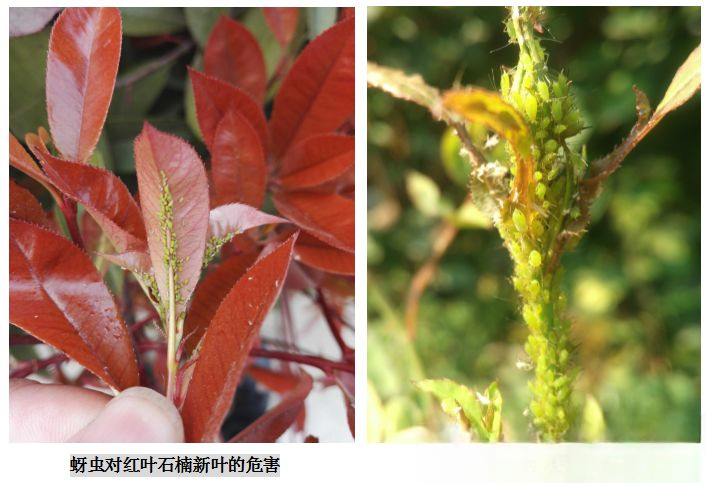
Harmful plants include: red photinia, red plum, pittosporum, goldenrain tree, crape myrtle, red peach, oleander, podocarpus, and many other plants.
Occurrence pattern: It causes damage year-round, with multiple generations, generally 10-30. There are two peak periods of damage, from March to May and from September to October. It mainly damages new shoots and tender leaves of plants.
Prevention and control methods: In the early stage of the disease, spray the leaves with "Chongke" at 2000 times dilution, "Li Ke" at 1000 times dilution, or "Bike" at 1000 times dilution + "Lepu" at 200 times dilution.
2. Scale insects (camphor white scale, mulberry white scale, grass scale, wax scale, pot chain scale, cottony scale, ball scale)
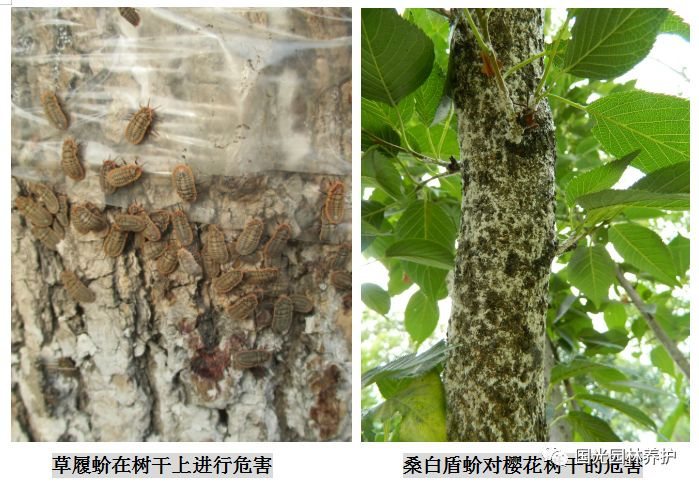
Harmful plants: camphor trees, cherry blossoms, cinnamon trees, magnolias, London plane trees, ash trees, small-leaved banyan trees, peach trees, magnolias, etc.
Occurrence pattern: Most have 1-2 generations per year, but some have 3-5 generations per year. They begin to be active in early March, with peak hatching periods for nymphs in April-May, mid-July, and late August.
Prevention and control methods: During the peak egg-laying and hatching period, spray with a mixture of 1000x "Bizhi" + 1000x "Bike" or "Like" + 200x "Lepu", focusing on the affected areas.
3. Thrips
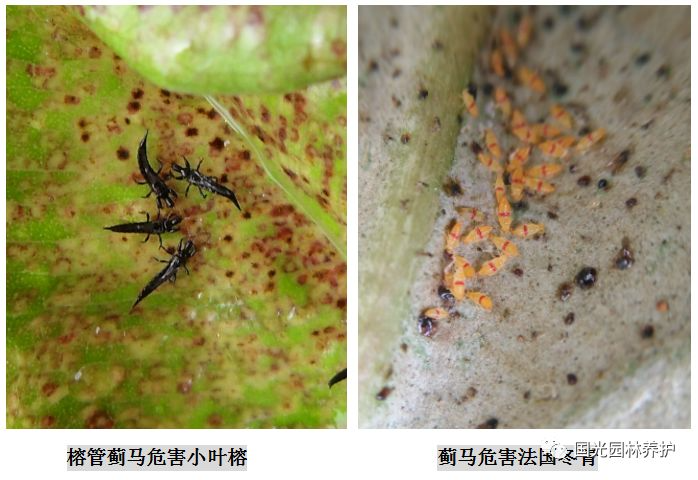
Harmful plants: Ficus microcarpa, Ficus lyrata, Ficus macrocarpa, Ficus altissima, Ilex chinensis.
Occurrence pattern: It causes damage year-round, with multiple generations, generally 10-30. There are two peak periods of damage, from March to May and from September to October. It mainly damages new shoots and tender leaves of plants.
Prevention and control methods: In the early stage of the disease, spray the leaves with "Chongke" at 2000 times dilution, "Like" or "Bike" at 1000 times dilution, plus "Lepu" at 200 times dilution.
4. Lace bugs (square-winged lace bug, pear-crowned lace bug, cuckoo-crowned lace bug, camphor-ridged lace bug)
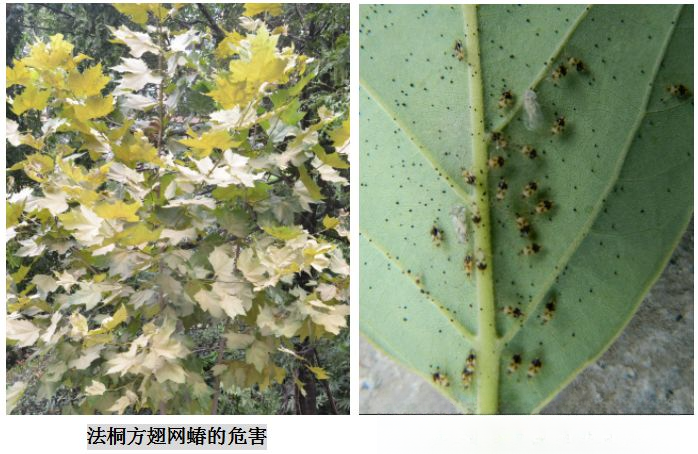
Harmful plants: London plane trees, camphor trees, azaleas, crabapple trees, pear trees, etc.
Occurrence pattern: There are many generations, with obvious overlap between generations. The first generation of nymphs are relatively uniform, and the damage is severe in mid-to-late April.
Control methods: In the early stages of the disease, apply "Jia Ke" at 1g/cm diameter at breast height (DBH) by root drenching (this method has a long-lasting effect of 3-4 months and is highly recommended). Alternatively, foliar spraying with "Gong Er" at 1500x dilution + "Chong Ke" at 2000x dilution can be used, focusing on the trunk and the underside of the leaves.
5. Mites
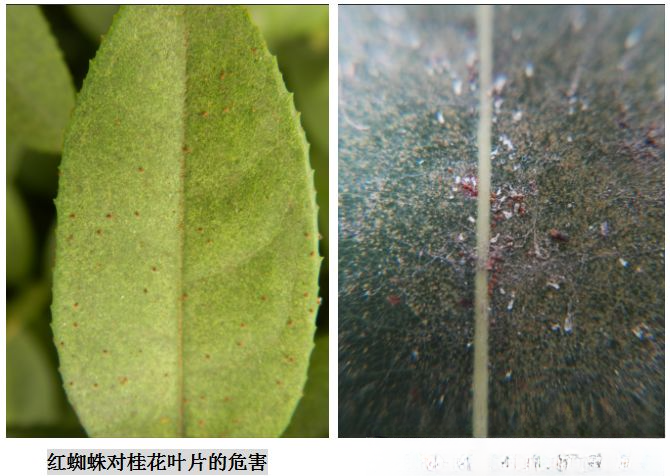
Harmful plants: Osmanthus, camphor, rose, red photinia and many other garden plants.
Occurrence pattern: As spring temperatures rise and plants begin to sprout and grow, overwintering female adults become active and cause damage. The first generation of nymphs begins to hatch in mid-to-late April, reaching peak damage in mid-May, with July and August being the peak period of occurrence throughout the year.
Prevention and control methods: In the early stage of the disease, spray the leaves with a mixture of "Pu'an" (1500 times dilution) + "Lek" (3000 times dilution) or "Hongsha" (1000 times dilution) + "Lepu" (200 times dilution).
6. Psyllids (Pittosporum tobira, Camphor psyllid, Ficus psyllid, Star chamber psyllid)
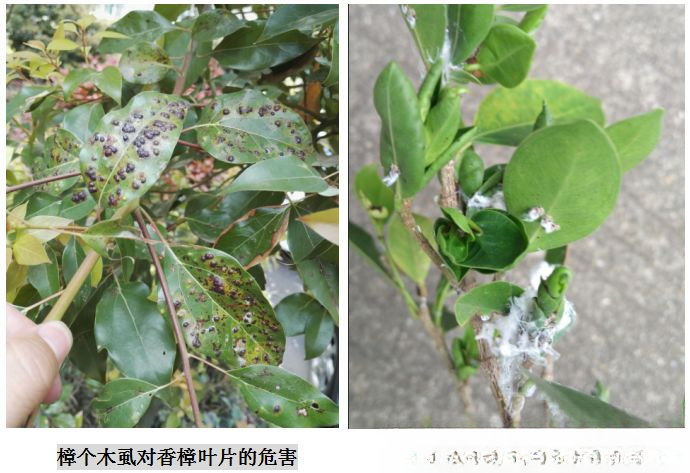
Harmful plants: Pittosporum tobira, camphor tree, Ficus microcarpa, Schefflera heptaphylla, etc.
Occurrence pattern: There are 1-4 generations per year. They overwinter as eggs, with the peak period for the first generation of adults being in April to early May.
Control methods: Generally, pesticides are used during the peak period of adult emergence. You can use "Li Ke" at 1500 times dilution or "Gong Er" at 1000 times dilution + "Yi Ta" at 1000 times dilution, and spray evenly for control.
(ii) Pests with chewing mouthparts (inchworms, camphor leaf beetles, bagworms, large-leaved boxwood leafminer, bark beetles, longhorn beetles, red palm weevils, etc.)
1. Inchworm (Spring Inchworm, Tea Inchworm)
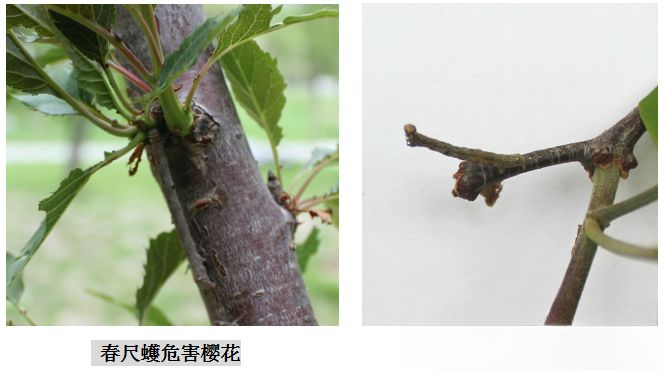
Harmful plants: poplar, willow, elm, Chinese scholar tree, crabapple, cherry blossom, etc.
Occurrence pattern: 1-3 generations per year, hatching begins in early April, and the peak period of damage is in late April or early May.
Control methods: Generally, pesticides are used during the peak period of adult emergence. You can use "Jinmeitai" at 1500 times dilution or "Lek" at 2000 times dilution + "Gonger" at 1000 times dilution, and spray evenly for control.
2. Camphor leaf bee
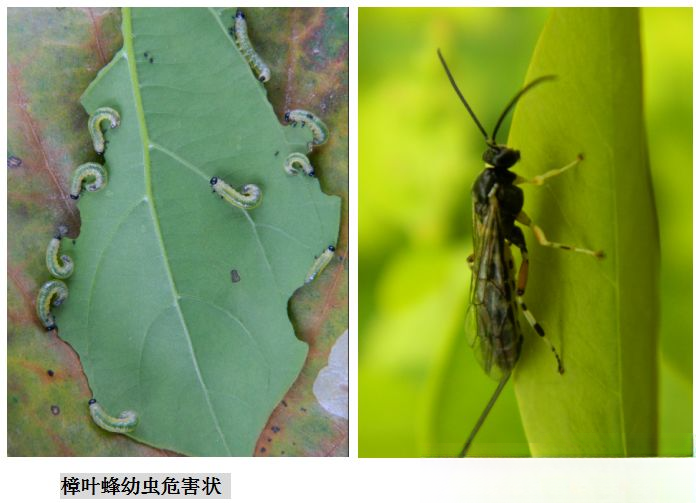
Harmful plants: Primarily affects camphor trees.
Occurrence pattern: There are 1-3 generations per year. The first generation of larvae hatches in mid-April, and the second generation of larvae hatches from the end of May to the beginning of June and causes damage.
Control methods: Generally, pesticides are used to control the pests in the early stage of larval damage. You can use "Lek" at 2000 times dilution + "Gonger" at 1500 times dilution and spray evenly.
3. Bag moth
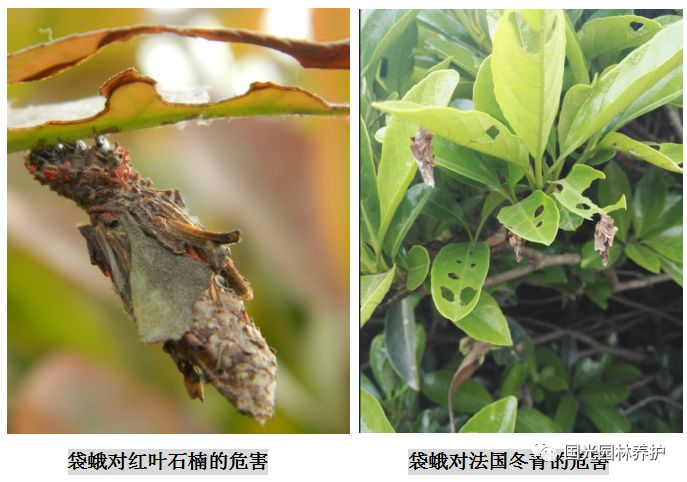
Harmful plants: Red photinia, holly, red maple, etc.
Occurrence pattern: One generation occurs per year, with the first generation of larvae causing the most damage in April and May.
Control methods: Generally, pesticides are used to control the pests in the early stage of larval damage. You can use "Yita" at 1000 times dilution or "Gonger" at 1500 times dilution + "Lek" at 2000 times dilution and spray evenly.
4. Large-leaved boxwood leafminer moth
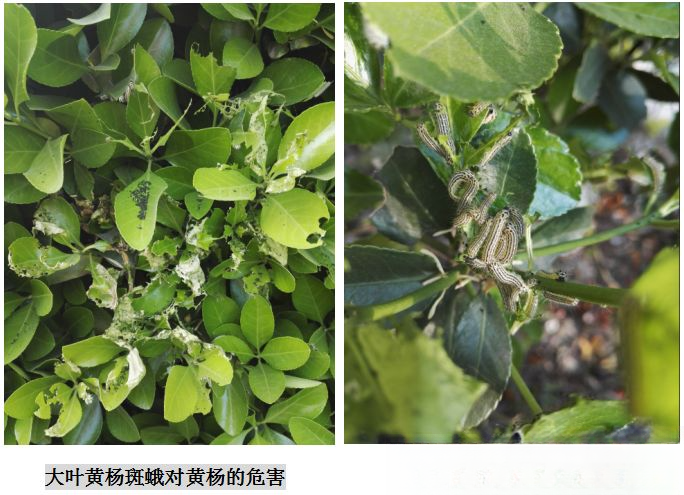
Harmful plant: Large-leaved boxwood
Occurrence pattern: One generation occurs per year, hatching from the end of March to the beginning of April. The larvae have a tendency to gregariously.
Control methods: Generally, pesticides are used to control the pests in the early stage of larval damage. You can use "Lek" at 2000 times dilution or "Gonger" at 1000 times dilution and spray evenly.
5. Bark beetles (such as the bark beetle of the juniper tree and the red turpentine beetle).
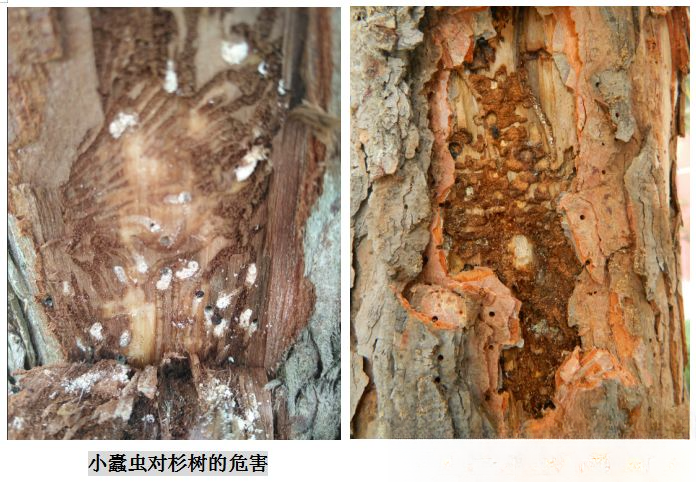
Harmful plants: pine, cypress, apricot, redbud, banyan, etc.
Occurrence pattern: Mostly one generation per year, with the majority overwintering as pupae, and some as larvae. The peak periods for adult emergence, migration, and burrowing are March-May and September-October.
Prevention and control methods: Spray the main branches and trunk of the tree with a mixture of 60 times dilution of "Xiujian Package" and 75 times dilution of "Bizhi" or "Like".
6. Longhorn beetles (including star longhorn beetle, glossy-shouldered star longhorn beetle, cloud-spotted white-striped longhorn beetle, double-striped fir longhorn beetle, etc.)
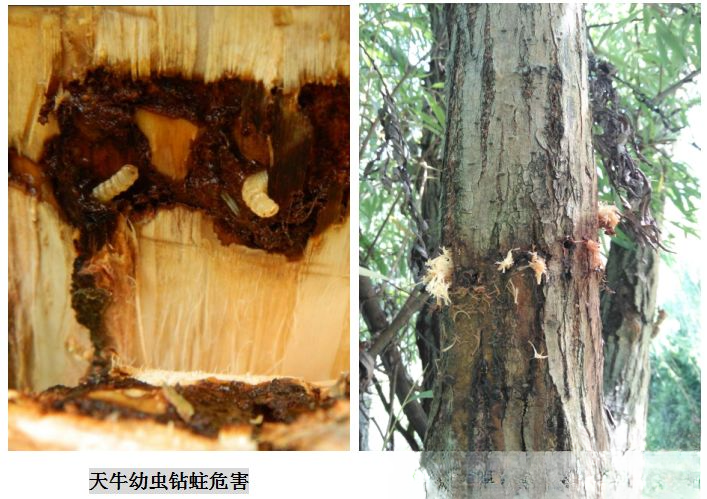
Harmful plants: Poplar, willow, London plane, red maple, ash, juniper, etc.
Occurrence pattern: One generation per year, but also one generation every two years (such as the white-striped longhorn beetle). Overwintering larvae begin to become active in March and April, with the peak period of damage in mid-to-late April and the peak period of adult emergence in May and June.
Prevention and control methods: Use a mixture of 60 times diluted "Xiujian Package" + 75 times diluted "Bizhi" or "Like" to spray evenly on the main branches and trunk of the tree.
7. Red-brown weevil
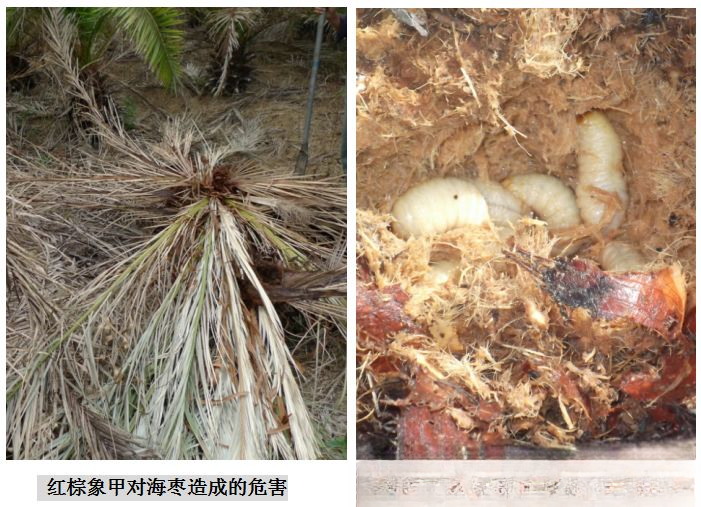
Harmful plants: Canary Island date palm, Middle Eastern date palm, etc.
Occurrence pattern: 3 generations per year. Overwintering insects begin to become active in March, and the peak period of pest damage is from April to October.
Control methods: For preventative treatment, apply "Jia Ke" to the growing point of the palm plant by hanging a bag. In the early stages of damage, spray the trunk and petioles with a mixture of 1000x "Li Ke" + 1000x "Bi Zhi" or 1000x "Yi Ta" + 1000x "Jia Ke".
The above-mentioned pests and diseases begin to harm garden plants in spring, and are characterized by their widespread occurrence, rapid spread, wide diffusion, and the strong concealment of some pests. If left unchecked in the early stages, a large-scale outbreak later on will not only increase the difficulty of control but also easily lead to repeated use of pesticides, wasting manpower and financial resources. Excessive use of pesticides can also cause environmental pollution and disrupt the ecological balance. Therefore, in the process of refined maintenance of urban gardens, it is particularly necessary to do a good job in the systematic prevention and control of pests and diseases in spring.