Good news for pepper farmers! Here's the most practical guide to pest and disease control for pepper plants!
As pepper farmers know, pests and diseases are key factors affecting the normal growth, yield, and quality of pepper trees, and can even cause tree death. Today, I'll share some comprehensive techniques for integrated pest management of pepper trees.
Sure enough, the small farmer had just returned from accompanying the experts on a rural support trip and immediately compiled the expert's insights on pest and disease control techniques for Sichuan pepper into this post.
I. Pest Control of Sichuan Pepper
In this stage, pepper farmers must remember the eight-character mantra: prevention first, pesticides second . Everyone needs to understand that the best control method is to create an environment free of pests and diseases . Therefore, the first thing to do is strengthen tree and soil management to disrupt the survival environment of pests and diseases. For example, strengthen the management of soil, fertilizer, and water in the pepper orchard to maintain healthy tree vigor; during the growing season, timely pruning and shoot trimming are necessary to ensure good ventilation and light penetration in the tree canopy and pepper orchard. How exactly should this be done? You can follow the Sichuan Rural Observation WeChat official account and check out the article "15 Tips for Spring Field Management of Green Sichuan Pepper, Have You Mastered Them All?"
At the same time, everyone should pay attention to protecting the natural enemies of pests and actively utilize biological control techniques. In the early stages of pest infestation, use manual methods to catch pests such as swallowtail butterflies, longhorn beetles, and snails. If the infestation is severe, highly effective and low-risk pesticides should be used for control. Today, we will introduce some common pest control methods. A key reminder from small farmers: Pesticides are prohibited during the flowering period of Sichuan pepper trees.
1. Sichuan pepper aphids
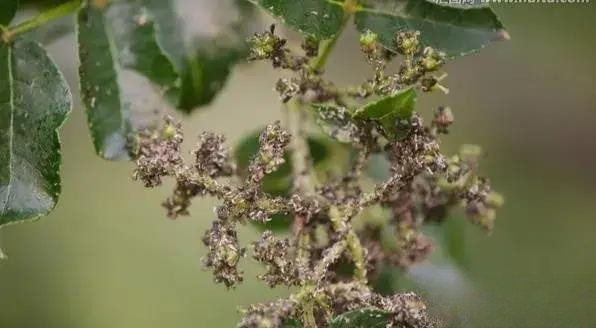
Image source: Internet
Aphid infestations have become increasingly frequent in recent years. It is important to note that in areas historically prone to aphid infestations, intensive pesticide spraying should be initiated at the initial stage of the outbreak. Smallholder farmers strongly advise against indiscriminate spraying, as this will eliminate the pest's natural enemies. Where feasible, feeding natural enemies can be used for biological control.
Harmful symptoms
Aphids feed on the sap of tender leaves, shoots, flowers, and young fruit of Sichuan pepper, causing leaves to curl backwards, grow abnormally, and drop leaves, flowers, and fruits. The honeydew excreted by aphids often induces diseases such as sooty mold.
Prevention and control methods
- Protect the natural enemies of aphids. In the early morning of early May, use insect nets to catch ladybugs and other insects, and place them on pepper branches. The ratio of ladybugs to aphids should be 1:200. Alternatively, spray artificial honeydew or sucrose solution on the pepper trees to attract ladybugs, hoverflies, and other natural enemies. You can also take advantage of aphids' habits by hanging yellow insect traps to kill them.
- Mix water, laundry detergent, and urea in a ratio of 400:1:4 and spray. Apply 60 kg of the solution per acre, repeating 2-3 times. It is best to prepare and use the solution immediately to prevent the urea from evaporating and losing its effectiveness.
- Use a knife to scrape off the black outer layer of the main stem, and then apply 50% dichlorvos around the scraped area. The aphids will disappear in four or five days.
- In the early stages of aphid outbreaks, use a mixture of 1000-2000 times diluted imidacloprid and 1000 times diluted mineral oil for control. This is effective against eggs, larvae, and adults. Repeat the treatment after 10-15 days, for a total of two applications to effectively control aphids. When controlling aphids, pay attention to rational pesticide use and rotate pesticides. During aphid outbreaks, a mixture of fast-acting agents such as acetamiprid can be used for control.
2. Sichuan pepper tiger longhorn beetle
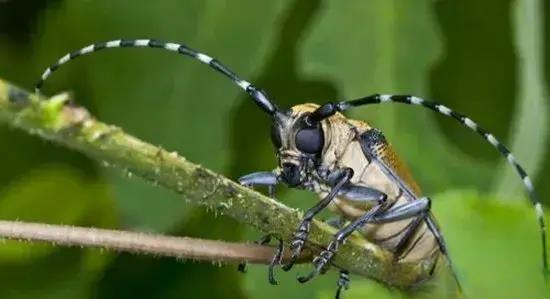
Image source: Internet
Longhorn beetles not only damage the leaves of pepper trees, but also bore into the trunk, creating many small holes and excreting yellowish-white, sawdust-like droppings, ultimately causing the pepper trees to wither and die.
Harmful symptoms
Longhorn beetles bore into the xylem of the main trunk, branches, or roots of Sichuan pepper trees, creating tunnels inside the trunk and expelling sawdust-like excrement and sawdust from these tunnels.
Prevention and control methods
- Where fresh insect frass is found on the tree, use a wire to pierce and hook the larvae to kill them. After removing the sawdust-like frass from the holes, soak cotton wool in insecticide and stuff it into the holes. Alternatively, use a syringe (without a needle) to inject insecticide solution. After application, seal the holes with diluted mud. You can also insert 0.5-1 tablet of 56% aluminum phosphide or camphor powder into the holes , then seal the openings with diluted mud to fumigate and kill the longhorn beetles.
- During the egg hatching period, spray chlorpyrifos solution once a week on the main trunk, main branches, and root collar. Spray the solution until it flows along the trunk to the roots to eliminate larvae that have not yet burrowed into the bark.
3. Red spiders
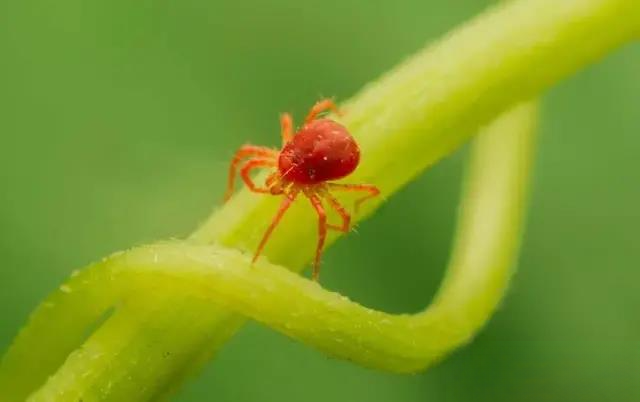
Image source: Internet
Spider mites are a type of mite, and their peak hatching season is generally from April to May , so everyone should take advantage of this favorable period.
Harmful symptoms
Red spider mites, in their adult, juvenile, and weak stages, pierce and suck sap from the undersides of leaves and tender buds. In the early stages of infestation, small yellowish-white spots appear on the leaves, causing them to lose their luster. These spots then expand into larger patches, often causing the leaves to curl backward. In severe cases, the entire leaf turns pale yellowish-white, curls up severely, and a large number of leaves fall off.
Prevention and control methods
- Use the natural enemies of mites to control pests, such as predatory mites, mites galls, and small flower bugs.
- Use 10% fenbutatin·pyridaben at 800-1000 times dilution or 16% tetramitr·pyridaben at 1500-2000 times dilution for control.
- Spray the entire tree with a 1.8% abamectin solution diluted 2000 times or an abamectin solution diluted 1500 to 2000 times.
4. Scale insects
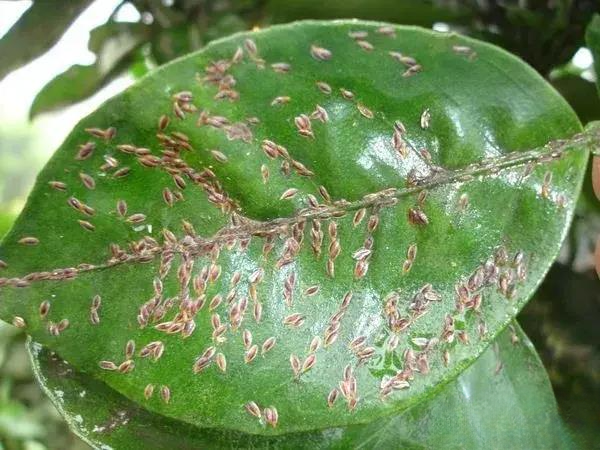
Image source: Internet
Harmful symptoms
The scale insects primarily damage the branches, trunks, and leaves of the Sichuan pepper tree. Both nymphs and adults feed on the sap of the phloem in the tree's branches and trunks. When the insect density is high, the Sichuan pepper tree will suffer from a lack of water and nutrients, resulting in nutrient loss and obstructed transport, which in turn leads to tree decline, yellowing leaves, withered branches, and eventually the Sichuan pepper tree withers and dies.
Prevention and control methods
- During the growth period, spray with lime sulfur solution at 0.2-0.3 Baume, or 1000 times dilution of chlorpyrifos or 150 times dilution of chlorpyrifos . After seeing larvae, spray 2-3 times 20-25 days later.
- Spray the pepper trees with a 5 Baume degree lime-sulfur solution 1-2 times during the leaf-shedding stage in winter or the dormant stage in early spring.
- Applying kerosene to the affected areas of the tree trunk 3 to 5 times can also have a preventative effect.
II. Disease Control of Sichuan Pepper
When Sichuan pepper trees are affected by diseases, everyone should remember that our prevention and control principles remain the same: prevention first, treatment second; protective fungicides as the main treatment, therapeutic fungicides as the secondary treatment.
1. Pepper rust
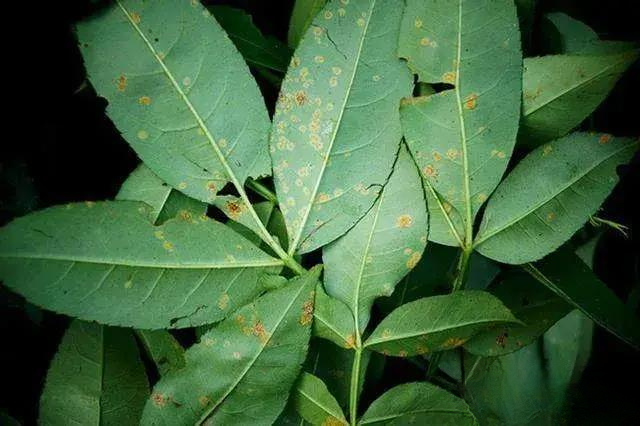
Image source: Internet
This disease typically occurs in late spring (May) and autumn (September-October). It causes severe flower, fruit, and leaf drop in Sichuan pepper trees, significantly impacting yield. Prevention is key, so please take it seriously.
Harmful symptoms
Sichuan pepper rust primarily affects the leaves, causing pale yellow or rust-red circular spore masses or ring-shaped lesions composed of these masses to appear on the underside of the leaves. Affected leaves suffer functional impairment and are prone to premature aging and leaf drop.
Prevention and control methods
- Before the disease occurs, timely spraying with Bordeaux mixture or 0.1-0.2% Baume lime-sulfur mixture should be carried out for prevention and control, or spraying the pepper trees with 200-400 times diluted carbendazim for protection from early June to late July .
- For infected plants, spray with a 1000-fold dilution of 15% wettable powder of carbendazim to control the production of uredinia.
- During the peak of the disease, spray with 65% zineb at a dilution of 500 times 2-3 times, or spray with lime sulfur solution at a Baume degree of 0.1-0.2 .
2. Root rot of Sichuan pepper
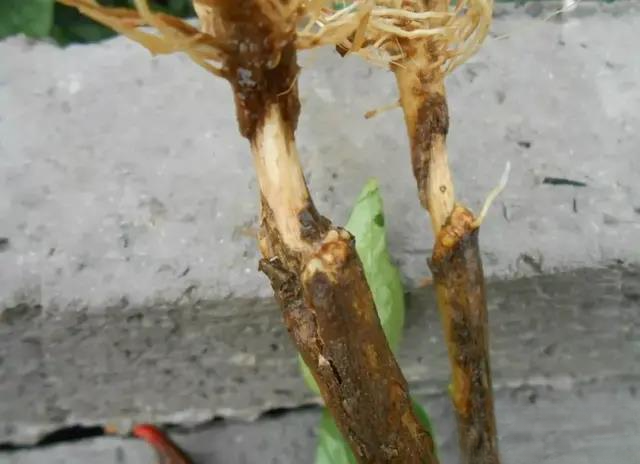
Image source: Internet
This disease is best prevented, as it is difficult to cure once it occurs. To prevent all the hard work of our pepper farmers from going to waste, we at Xiaonongren would like to remind everyone to remember this!
Harmful symptoms
Diseased plants grow weakly, with small and yellow leaves. In severe cases, the roots rot and the plants die. Most Sichuan pepper plants die from this disease.
Prevention and control methods
- Pay attention to drainage, dig drainage ditches to prevent excessive water, especially for Sichuan peppercorns.
- Deeply till the soil, increase the application of organic fertilizer, and rationally combine phosphorus and potassium fertilizers to improve soil structure and aeration.
- Disinfect the seedlings by soaking the roots in a 50% solution of methyl thiophanate ( 500 times dilution) for 24 hours, and disinfect the soil with quicklime .
- Every year, when weeding and loosening the soil, drench the roots with a 15% carbendazim solution diluted 500 to 800 times, taking care not to damage the root system.
- Every year from April to May, drench the roots with 15% carbendazim once a month. In summer and autumn, drench the roots in the same way and remove diseased seedlings in time.
3. Pepper gummosis
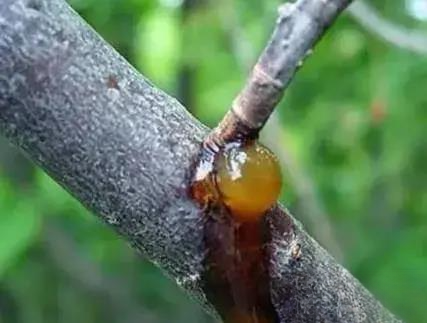
Image source: 360 Image Library
Harmful symptoms
Gummosis in Sichuan pepper is caused by fungal infection of plant wounds. In spring, summer, and autumn, a yellow sap will ooze from the wounds. Initially, it is a colorless, translucent soft glue, later turning into a brownish-red crystalline substance. This leads to rough, cracked, and blackened bark, impairing its ability to transport nutrients, reducing Sichuan pepper yield, and in severe cases, causing premature death.
Prevention and control methods
- Strengthen field management to prevent wounds from occurring, and apply a protective agent promptly when wounds are present.
- The gelatinous substance should be scraped off promptly and then lard or vitamin B ointment should be applied.
- Remove diseased, dead, and withered branches and leaves promptly. After the disease occurs, use a sharp knife to remove the diseased bark and apply ferrous sulfate or thiram wettable powder to the wound. Spray with Bordeaux mixture (1:1:100) or copper sulfate solution (1:100) for sterilization and disinfection.
Have you all mastered these methods? Fellow pepper farmers, I'm about to unleash a secret weapon—a unique skill. Mastering it will eliminate most of your troubles.
Here's the key point! During the planting of Sichuan pepper, farmers must promptly remove weeds, dead leaves, diseased and pest-infested branches, diseased plants, weak branches, and withered branches; burn these in a concentrated area away from the pepper orchard, and deeply till the orchard; remember to whitewash the tree trunks and spray with pesticides to disrupt the overwintering environment of pests and diseases, reducing their overwintering population and the number of overwintering insects. The following year, the chances of Sichuan pepper trees getting sick or infested with pests will be greatly reduced!
By now, you've quietly read 3000 words. Add this comprehensive guide to pest and disease control for Sichuan pepper to your WeChat favorites. Finally, don't forget to share this good thing with your friends!
-end-