[Flower Knowledge] Cultivation and Appreciation of Common Foliage Plants (Part 3)
[Flower Knowledge] Cultivation and Appreciation of Common Foliage Plants (Part 3)
Originally from South Africa, it is now cultivated in various regions.
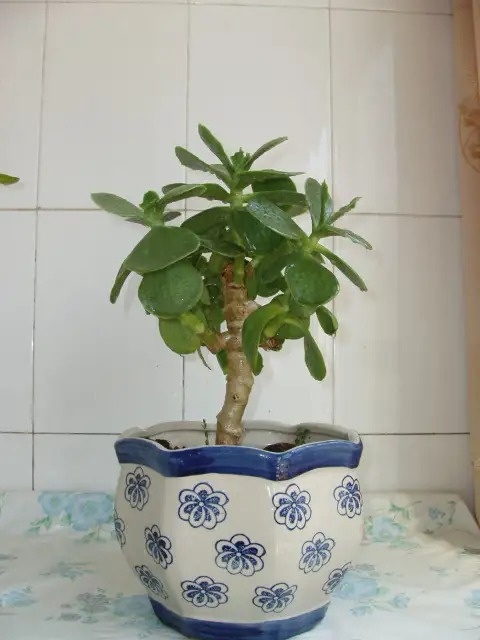
An evergreen shrub. The stem is cylindrical, grayish-green, and segmented. Leaves are opposite, flat, fleshy, elliptical, with entire margins, slightly pointed tips, and rounded, clasping bases. Flowers are red. It prefers warm, dry conditions, plenty of sunlight, and good ventilation. It thrives in loose, sandy potting soil and dislikes overly wet soil. Propagation is primarily by cuttings. Softwood or leaf cuttings can be used. Before inserting the cuttings, allow them to dry slightly in the shade. Cuttings can be taken in spring or autumn in moist yellow sand or perlite.
Jade plants are easy to cultivate and manage, but achieving a full, robust plant with abundant blooms requires some effort. Firstly, jade plants grow relatively quickly, so repotting with fertile soil is necessary every spring, and place them in a sunny location. Apply a diluted fertilizer solution every 10-15 days, and water every 2-3 days, allowing the soil to dry slightly between waterings. During the high temperatures of summer, jade plants enter a semi-dormant state and are susceptible to leaf burn from strong sunlight; therefore, shading is essential. Stop fertilizing in summer, ensure good ventilation, and prevent leaves from yellowing and falling off. Avoid heavy rain to prevent root rot and death. From August to October, as autumn cools, the jade plant resumes growth; increase light exposure again and remove shading devices. Fertilization and watering at this time are the same as in spring. Before the first frost, move it to a greenhouse and place it in a sunny spot. Stop fertilizing and water sparingly, watering about once every two weeks, with half the amount of water used in summer. Jade plants are not cold-hardy in winter; maintain a temperature above 7°C. Prune annually, either in spring when repotting or in late autumn when moving it to a greenhouse, to maintain its classic and elegant shape year-round. Jade plants are
relatively resistant to pests and diseases, but may occasionally be affected by anthracnose and leaf spot. These can be treated with a 1000-fold dilution of 70% methyl thiophanate wettable powder. Poor indoor ventilation can make the stems and leaves susceptible to scale insects. If pests are found, they should be washed off manually immediately. For severe infestations, a 1000-fold dilution of 40% dimethoate emulsion can be sprayed for control.
Jade plants contain euphorbia resin in their leaves; contact with the sap can cause skin redness, swelling, and pain, and if it gets into the eyes, it can cause blindness.
Although jade plants are not particularly striking in appearance, they are robust, drought-tolerant, easy to cultivate, and have abundant foliage. Their leaves remain green year-round, and their swollen stems resemble ancient tree stumps, making them a common sight on balconies in urban and rural areas of southern China.
Despite their ease of propagation, planting, and care, some jade plants on balconies appear vibrant and beautiful in spring, summer, and autumn, but wither and lose their color after winter, sometimes even becoming bare and lifeless. This is mainly because gardeners only see the ease of cultivation of jade plants, neglecting their fragile nature. Even after the onset of severe cold, they continue to place them on open balconies, exposing them to freezing winds and ice, causing frost damage. After frost damage, the jade plant's fleshy leaves and tender stems begin to show wounds resembling scalds, gradually softening, shriveling, and eventually falling off, leaving only the bare main stem in severe cases.
Therefore, proper overwintering care for potted jade plants on balconies is crucial, and the following steps should be taken:
1. Promptly move the pot indoors. After entering winter, move the jade plant to an indoor location where the temperature can be maintained between 7°C and 10°C. On warmer days, the jade plant can be moved to the balcony at midday to bask in the sunlight, and then moved back indoors at night. 2.
Control the moisture level of the potting soil. In winter, the potting soil should be kept slightly dry, and a fine mist should be sprayed on the leaves occasionally to replenish moisture. Generally, direct watering of the potting soil is unnecessary.
3. Move it to a greenhouse for warmth. If possible, move the potted plant into a greenhouse. If not, you can cover it with plastic film, but pay attention to the humidity inside the cover. If it becomes too wet, remove the cover and ventilate immediately to prevent leaf rot.
4. If the jade plant has suffered frost damage due to inadequate frost protection measures in the early stages, do not discard the plant easily. Simply remove the dead leaves and tender branches, preserve the plump main stem, and apply fertilizer appropriately in the spring. New branches and leaves will still sprout from the main stem. Generally, after 1 to 2 years of cultivation, it can develop into a perfect jade plant again.
Yemeni Tiela,
Dingming: Dracaena
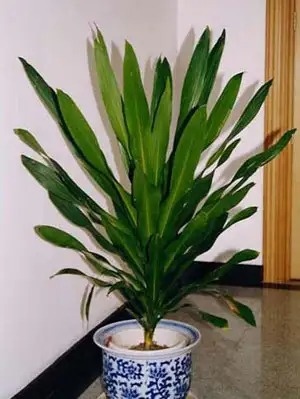
The leaves of the Yemen Ironwood are broad and linear, dark green, sessile, and slightly wavy at the edges. Leaves can reach up to 80 cm in length. It thrives in hot and humid environments. It can tolerate both full sun and shade. A dormancy temperature of 13℃ is ideal, and it should not fall below 5℃. It is evergreen, highly adaptable, easy to care for, slow-growing, and long-lived. It is an excellent foliage plant, especially for indoor cultivation.
The care methods for the Yemen Ironwood are the same as for the Dracaena sanderiana (dragon blood tree).
Money Tree
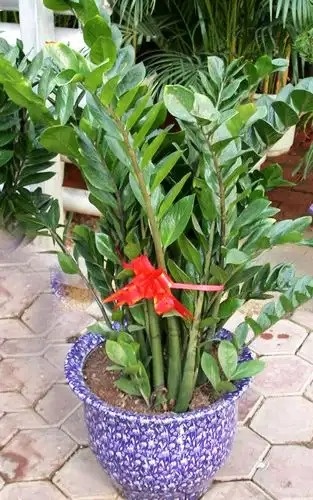
The money tree (Zamioculcas zamiifolia) is a foliage plant belonging to the genus ZZA of the Araceae family. Native to tropical Africa, it is an evergreen perennial with underground tubers. The above-ground parts lack a main stem; adventitious buds sprout from the tubers to form large compound leaves. The leaflets are fleshy with short petioles, firm, dark green, and glossy, making it highly ornamental. It thrives under varying light intensities, is highly shade-tolerant, and is known as the "King of Shade Tolerance," making it a newly introduced high-end indoor ornamental plant. The money tree has large tubers that sprout numerous buds and form many small tubers. Its compound leaves have a lifespan of 2-3 years or more and are constantly renewed by new leaves. Money tree seedlings do not grow quickly and can be cultivated in small or medium-sized pots for ornamental purposes, as well as in large mixed plantings.
Ecological Habits:
The money tree originates from the arid tropical (savanna) climate zone of East Africa. It prefers warm, slightly dry, semi-shaded environments with minimal annual temperature variations. It is relatively drought-tolerant but intolerant of cold, strong sunlight, and heavy, waterlogged soil. Poor drainage in the pot can easily lead to tuber rot. It requires loose, fertile, well-drained soil rich in organic matter and acidic to slightly acidic. It has strong sprouting ability; after pruning the large compound leaves, new leaves will quickly emerge from the top of the tuber.
Propagation Techniques:
Division: In April, when the outdoor temperature reaches above 18℃, remove large money tree plants from their pots, shake off most of the old soil, and break them apart at the weakest point where the tuber is joined. Apply sulfur powder or wood ash to the wound and repot them. Note that the tuber should not be buried too deep; the top of the tuber should be buried 1.5-2cm below the soil surface. Alternatively, based on the characteristic of money tree tubers having dormant buds, large single tubers can be cut into smaller pieces with 2-3 dormant buds. After the wounds have dried, these pieces can be first planted in slightly moist fine sand. Once the cut tubers have grown into independent plants, they can be potted.
Cuttings: Cuttings can be made from a single leaflet, a section of leaf axis with two leaves, or a single section of leaf axis. From the perspective of rooting effect, cuttings with leaf stalks and leaves root quickly, sprout more easily, and are more likely to develop into larger tubers. Inserting a single leaf cutting into a mixed substrate of river sand and vermiculite will result in a small, rooted bulb at the base of the leaf after 10-14 days. After 2-3 months of cultivation, it will grow into a small plant, but the seedling rate is generally low. If using leaf stalks or leaf stalks with leaves as cuttings, the substrate can be ordinary fine sand, or a mixture of peat moss, perlite, and river sand in a 3:1:1 ratio. The cutting should be inserted to a depth of 1/3 to 1/2 of its length, leaving only the leaves above the substrate. After thoroughly watering, place in a shaded area, maintaining an ambient temperature of 25℃-27℃. Depending on the moisture level of the substrate, mist the leaves 1-2 times daily, keeping the substrate slightly moist. Avoid overwatering, as this will cause the cuttings to rot and lead to propagation failure. When cuttings develop a certain root system, the center of the root gradually swells to form a small, bulbous tuber. As the tuber grows, some of the younger, tender leaves may wither and die after potting due to high temperatures or poor water management, but the tubers will survive. Mature leaves and cuttings with petioles will also remain green and vigorous. A small number of tubers can sprout new leaves in the same year, but their growth will be weak and slow. The following year, the tubers will produce robust new shoots and grow normally.
Cultivation Management:
Temperature: The optimal growth temperature is 20–32℃. Whether potted or planted in the ground, a small annual temperature variation is required. Commercial cultivation is best carried out in a temperature-controlled greenhouse. Every summer, when the temperature reaches above 35℃, plant growth is poor. Measures such as covering with black netting for shading and spraying water around the plant should be taken to lower the temperature and create a suitable, dry environment. In winter, it is best to maintain a greenhouse temperature above 10℃. If the room temperature is below 5℃, the plant is susceptible to cold damage, which can seriously endanger its survival. In late autumn and early winter, when the temperature drops below 8℃, it should be moved indoors to a well-lit location. Throughout the winter, the temperature should be maintained between 8℃ and 10℃ for safety.
The money tree prefers light but also tolerates some shade; therefore, it should be provided with a sunny environment with some shade. It dislikes direct sunlight, especially the intense sun after prolonged rain in late spring and early summer, and the 5-6 hours of unshaded, strong sunlight around midday in summer, as this can easily scorch newly emerging tender leaves. In commercial cultivation, from late spring to mid-autumn, it should be placed under a shade structure with 50-70% shade, but not too dark, otherwise, the newly emerging leaves will be thin and elongated, yellowish and dull, with sparse leaflets, affecting the plant's compact and beautiful appearance. Potted plants moved indoors during winter should be given supplemental light. Keeping the potting soil slightly dry will help the plant remain disease-free year-round. The newly emerging pinnate compound leaves do not exhibit obvious phototropism, resulting in a good plant shape.
For proper care of potted money trees, it's essential to create an environment that is both humid and slightly dry. In commercial cultivation, for plants kept in greenhouses, when the temperature reaches above 33℃, the plant should be sprayed with water once a day. Because this plant has strong drought tolerance, it's best to keep the potting soil slightly moist, but occasional overwatering and over-fertilizing will not cause root rot. In winter, pay attention to spraying water on the leaves and surrounding environment to maintain a relative humidity of over 50%. After Mid-Autumn Festival, reduce watering or use misting instead of watering to help the newly emerging tender leaves survive the winter. Furthermore, in winter, special attention should be paid to avoiding excessive moisture in the potting soil; it's better to keep it slightly dry. Otherwise, under low temperatures, overly wet soil is more likely to cause root rot and even the death of the entire plant.
Due to the special climatic conditions of the money tree's native habitat, it has developed strong drought resistance; therefore, the basic requirement for the cultivation substrate is good permeability. The basic requirement for the cultivation substrate is good permeability. The substrate is often a mixture of peat moss, coarse sand or washed cinders with a small amount of garden soil, and its pH value is adjusted to between 6 and 6.5, making it slightly acidic. Because of its large tubers, well-developed root system, and long pinnate compound leaves, its growth should be observed regularly during the growing season to determine whether repotting or changing the soil is necessary. Always maintain good permeability in the cultivation substrate to create a well-aerated and well-drained root environment. During the rainy season, check frequently; if waterlogging is found in the pot, repot and change the soil immediately.
The money tree is a heavy feeder. In addition to adding an appropriate amount of composted cake fertilizer or slow-release compound fertilizer to the cultivation substrate, during the growing season, you can water it 2-3 times a month with a mixture of 0.2% urea and 0.1% potassium dihydrogen phosphate. Alternatively, you can water it with a balanced fertilizer 20-10-20 (20-20-20) at a concentration of 200-250 ppm, used in conjunction with calcium nitrate. After the Mid-Autumn Festival, to ensure its safe overwintering, nitrogen fertilizer should be stopped, and a 0.3% potassium dihydrogen phosphate solution should be applied 2-3 times consecutively to promote the hardening and strengthening of its tender leaf axes and newly emerging leaves. When the temperature drops below 15℃, all forms of fertilization should be stopped to avoid fertilizer damage to the roots under low-temperature conditions.
Pest and Disease Control : Frost
Damage: When the winter temperature drops below 5℃, coupled with moist potting soil, the tender leaves of the plant are easily damaged by frost and fall over. In severe cases, it can cause tuber rot, making it difficult to recover.
Prevention Method: In commercial cultivation, the greenhouse temperature should be maintained at no less than 10℃ during the overwintering period, and the potting soil should be kept slightly dry.
Sunburn: In the hot summer, or after a long period of rain followed by sunny weather, or after potted plants that have been kept indoors for a long time and have just been moved outdoors for recovery care, direct exposure to direct sunlight can easily cause the tender leaves to be sunburned, resulting in partial loss of green color and whitening of the leaves, or the entire leaf being sunburned, with the necrotic parts later turning brown and black.
Brown spot disease primarily affects leaves, with nearly circular, grayish-brown to yellowish-brown spots that are slightly darker at the edges. This disease thrives in hot, humid, and poorly ventilated conditions. Control methods: Remove and destroy any diseased leaves promptly. In the early stages of infection, spray the leaves with a 600-fold dilution of 50% carbendazim wettable powder or a 500-fold dilution of 40% chlorothalonil suspension every 10 days for 3-4 consecutive applications.
Control methods: After summer, move the plant to a semi-shaded environment. In late spring and early summer, after prolonged rain followed by sunshine, provide shade for potted plants as early as possible. Scale insects:
In poorly ventilated and low-light environments, the leaves of the money tree are susceptible to scale insect damage from
their piercing and sucking. Control methods: In commercial cultivation, spray with a 1000-fold dilution of 20% imidacloprid wettable powder during the peak hatching period of the nymphs for effective insect control.
The "happiness tree
" generally refers to the "bean tree" belonging to the Bignoniaceae family and the genus *Pseudorasbora*.
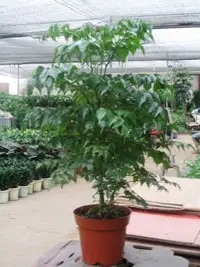
The Radermachera sinica, also known as the chili tree or the "bone-setting umbrella," is a deciduous tree belonging to the Bignoniaceae family and the Radermachera genus, native to southern China. Based on collected images, the "happiness tree" primarily refers to this species. Its young branches are sticky, and it has 1-3 pinnate compound leaves with entire, petiolate leaflets. The bark is light gray and deeply longitudinally fissured. The capsule is long, leathery, about 85 cm long and 1 cm in diameter. It is mainly distributed in Taiwan, Guangdong, Hainan, Guangxi, Guizhou, and Yunnan, and also found in Bhutan. Because of its bright green, glossy leaves with a metallic sheen, and its ability to tolerate both light and shade, young potted plants are considered high-quality foliage plants.
The Radermachera sinica prefers a warm, humid environment and can be propagated by cuttings, seeds, and layering. Sandy loam soil is best for cultivation. It can tolerate full sun or partial shade, with an optimal growth temperature of 18℃ to 28℃. Pruning and shaping should be done once before spring sprouting. During indoor display, in addition to keeping the potting soil moist, the leaves should be sprayed with water frequently, and the plant should be placed in a well-lit location.
It should be particularly noted that in winter, the greenhouse temperature should be kept above 8℃, otherwise cold damage may occur, even leading to the death of the entire plant; watering should be controlled, watering only when the surface soil is dry. If the indoor air is too dry, spray water on the plant and its surrounding environment; do not apply fertilizer.
Peacock wood
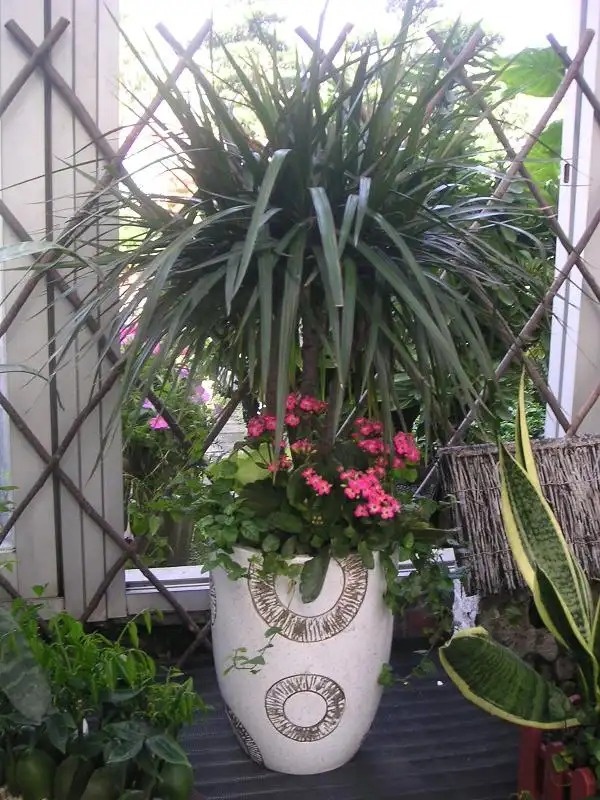
Peacock wood is an evergreen small tree or shrub belonging to the Araliaceae family and the Peacock genus. It can reach a height of 3 meters. The leaves are alternate, palmately compound with 7-11 leaflets, resembling slender fingers, with coarsely serrated edges, radiating outwards in an alternating pattern. The leaves are leathery, dark green, and have a coppery metallic sheen. When it grows to over 2 meters, the slender leaves become broad, a distinctive characteristic. It is suitable for placement in spacious, bright areas such as conference halls and restaurants, and can also be used as decoration in hotel and building lobbies, adding a touch of tropical charm. Specific cultivation and management measures are as follows:
1. It prefers humus-rich loam, ideally a mixture of leaf mold, garden soil, and river sand. Apply diluted liquid fertilizer every two weeks from April to August.
2. It prefers bright light but dislikes direct sunlight. The optimal growing temperature is approximately 20-28℃, and high humidity promotes robust growth. 1. In summer, if outdoors, provide 50% shade. Indoor temperature should generally be maintained between 20℃ and 30℃. Overwintering temperature should not fall below 15℃; below 8℃, it is susceptible to frost damage.
2. Keep the potting soil moist, avoiding both dryness and waterlogging. Excessive dryness can cause leaf tips to dry out. Regularly mist the leaves and surrounding area to maintain humidity. Reduce watering in winter, as cold and damp conditions can lead to leaf drop.
3. For weak plants, prune heavily when new leaves emerge, leaving about 10 cm at the base. If upper branches are dry, prune heavily to encourage new growth.
4. Propagation is primarily done by cuttings. From May to June each year, take one-year-old lignified branches and insert them into the soil at 20℃. Roots will develop in about 30 days. Seed propagation is also possible, but seeds are difficult to obtain and must be kept fresh.
5. Repot potted plants every 2-3 years, pruning the branches afterward. If the plant ages and its vitality declines after many years of planting, it should be heavily pruned in the spring and given plenty of fertilizer to encourage the growth of new branches and leaves, resulting in a more beautiful tree shape.
Synthetic sweet potato
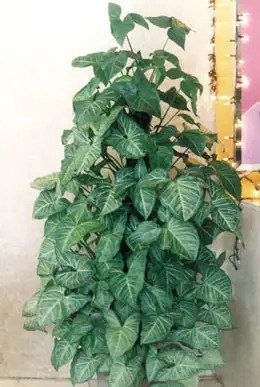
Name: Syngonium podophyllum Scientific Name: Syngonium podophyllum
Other Names: Arrow-leaf taro, White butterfly Family: Araceae Genus : Syngonium
Category: Evergreen vine
Morphological Characteristics
: An evergreen vine with strong creeping habit and often aerial roots at the base of the stem. Leaves are large with long petioles, and leaf shape varies considerably between young and mature stages: young leaves are arrow-shaped or pointed, while mature leaves are palmate with 3 or 5 lobes (palmate leaves often have 9-11 lobes); small, earlobe-like leaflets are often present on both sides of the lobes near the leaf base; veins extend neatly and parallel from the leaf base to the leaf tip, forming marginal veins.
Common varieties include: Arrow-leaf Syngonium (Albelineatum), with arrow-shaped, palmately 3-lobed young leaves that are green with silvery-white veins on both sides, and dark green mature leaves; and White-striped Syngonium (Albovirens), with narrow, arrow-shaped young leaves that are pale green, turning pale white towards the center, and with broad green margins. * **Pink Butterfly** has shield-shaped, pale green leaves with a pale pink center. * **Silver Knight** has heart-shaped leaves with a creamy white upper surface tinged with pale yellow, green margins, and long petioles. * **Variegata** has arrow-shaped, green leaves with irregular white patches and short petioles. * **White Butterfly** has shield-shaped, pale white leaves with green stripes and markings along the margins and long petioles.
Common ornamental species in the same genus include *S. auritum*, with palmate leaves that are 3-lobed when young and 5-lobed when mature, with the middle lobe being the largest. The leaves are thick, dark green, and glossy. *S. erythropHyllum* has arrow-shaped leaves that are 3-lobed when mature, with a copper-green upper surface tinged with pink or pale red. *S. macropHyllum* has large, heart-shaped, undivided, pale green leaves. Syngonium xanthophilum (Green Gold Syngonium) has narrow, arrow-shaped leaves with a pale yellowish-green surface. Syngonium wendlandii (Velvet Leaf Syngonium) has long, arrow-shaped leaves that are dark green with silvery-white markings on both sides of the midrib. Origin
and Distribution
: Native to tropical Central and South America.
Growth Habits
: The optimal growth temperature is 22-30℃. Growth slows at 15℃, and stops below 10℃. Leaves suffer frost damage below 5℃ in winter. New shoots begin to sprout in spring when temperatures exceed 10℃, and growth accelerates as temperatures rise.
Syngonium prefers moist conditions and dislikes drought. During its vigorous summer growth period, it needs ample watering to keep the soil moist, promoting rapid stem and leaf growth. Daily foliar spraying to maintain high humidity results in robust, full leaves with good ornamental value. Insufficient water or drought causes leaves to become rough and smaller.
Syngonium is relatively adaptable to light. Under bright light, the leaves are larger and lighter in color. In partial shade, the leaves become smaller and darker in color. However, prolonged exposure to low light causes the stems and petioles to elongate, resulting in a loose plant shape and smaller leaves. The optimal light intensity for Syngonium podophyllum growth is 15,000–30,000 lux, requiring 70%–80% shading in summer and 40%–50% shading in winter.
Fertile, loose, and well-drained sandy loam is ideal. For potting, a mixture of leaf mold, peat moss, and coarse sand is suitable. Syngonium podophyllum is also well-suited for hydroponics.
Propagation
can be done by cuttings or division. Cuttings can be taken during the growing season from April to September. When taking cuttings, cut stems with at least two nodes and insert them into a rooting medium of river sand or perlite, keeping the medium moist. Roots will develop in 1–2 weeks. If the stems have already rooted, they can be directly potted, with 3 or more plants per pot. This plant grows quickly, filling a pot in 2-3 years. In spring, during repotting, the plant can be removed from the pot and divided into smaller clumps for propagation.
For ornamental purposes, it
boasts a beautiful shape, unique leaf shape, elegant color, and a fresh, bright sheen, exuding vitality and appealing to many. It is also easy to cultivate and manage, highly shade-tolerant, and ideal for small to medium-sized pots, perfect for decorating conference rooms, living rooms, studies, offices, and bedrooms. Its decorative potential is high, allowing for various uses to create different aesthetic effects: it can be trained as a climbing plant and placed in indoor corners; it can be grown upright in small pots, with pinching to encourage division and create a lush form for display on tables or shelves; or it can be used as a hanging plant, suspended near windows in halls.
Tissue culture propagation: Syngonium podophyllum commonly uses stem tips and lateral buds as explants. After routine disinfection, the stem tips are inoculated onto MS medium supplemented with 5 mg/L 6-benzylaminopurine and 2 mg/L indoleacetic acid. After 45 days, adventitious buds are transferred to 1/2 MS medium supplemented with 2 mg/L indoleacetic acid to induce cross-rooting. Complete small plantlets develop in approximately 20-25 days.
Care and Pests/Diseases:
[Cultivation Management] Potted Syngonium podophyllum is commonly grown in 10-15 cm pots, while hanging baskets can use 15-18 cm pots. Fertilize every two weeks during the growing season, or use "Huiyou" 20-8-20 all-season high-potassium nitrate fertilizer to promote vigorous growth and branching. When grown outdoors, stems should not be left too long to prevent damage from strong winds. During summer, stem and leaf growth is rapid; for potted ornamental plants, pinching and shaping are necessary. For hanging basket cultivation, the stems droop; if they become too long or dense, thinning and shaping are required to maintain an attractive plant shape. Mature plants can be heavily pruned during repotting in spring to encourage new growth and renewal. During winter indoor care, avoid overwatering the potting soil. Low temperatures and high humidity can cause root rot and death, or yellowing and leaf drop, affecting its ornamental value.
[Pest and Disease Control] Common diseases include leaf spot and gray mold, which can be treated with a 700-fold dilution of 70% zineb wettable powder. Regular preventative spraying with an equal amount of Bordeaux mixture is also recommended. Pests include whiteflies and thrips, which damage stems and leaves; these can be controlled with a 1500-fold dilution of 40% dimethoate emulsifiable concentrate.
[Post-harvest Care] Syngonium podophyllum grows quickly, is easy to cultivate, and has excellent ornamental value, making it particularly suitable for home balconies and rooms. It can be hung in pots or used in columnar arrangements for decoration. It is an excellent indoor ornamental plant. It can also be used outdoors for hedges, steps, pond edges, and other shady and damp areas. Large potted plants in pillar positions are suitable for hotels, train stations, airports, and shopping mall lobbies; their lush green color and elegant appearance perfectly embody the fresh and comfortable feeling of green plants. If the ethylene content is too high during storage and transportation, the leaves of Syngonium podophyllum may turn upward or stop growing. However, if the storage and transportation time is short, it is generally not necessary to spray silver thiosulfate solution.
Red-edged Peperomia,
also known as edged peperomia or red-edged peperomia, is a variety of round-leaved peperomia. The plant grows upright with a fleshy, short stem. The leaves are leathery, broadly ovate, dark green, glossy, and have short petioles. The stems, petioles, leaf margins, and part of the midrib are a beautiful deep red. The spike-like inflorescence is pale yellow.
Scientific name: *Peperomia arifolia
* Family: Piperaceae, *Peperomia* genus .
Other names: Pepper grass, Emerald pepper
grass . Native to: Northern South America (Brazil and Argentina), the West Indies, Panama, and other regions.
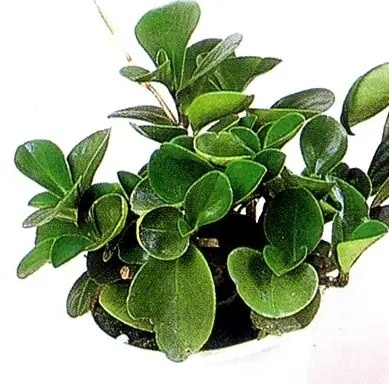
(I) Morphological Characteristics: An evergreen perennial herb, 20-40 cm tall. Stems erect, pale green, often with purplish-red markings. Leaves alternate, fleshy, ovate, 6-13 cm long, glossy green, with short petioles. Spikes inflorescence, densely covered with small greenish-white flowers.
Common cultivated varieties include: Variegata (Peperomia a. cv. Variegata): leaves with white markings. Tricolor (Peperomia a. cv. Tricolor): leaves obovate, green near the midrib, yellowish-green edges, with fine red borders. Other varieties include Felia, Golden Gate, and Green Gold.
(II) Habits: Prefers warm, humid, and semi-shaded environments; relatively drought-tolerant and shade-tolerant; intolerant of cold and high temperatures; requires high air humidity; dislikes direct sunlight. Prefers loose, fertile, well-drained, moist soil.
(III) Cultivation and Management: Peperomia thrives in potting soil rich in humus. A suitable potting mix can be prepared using 4 parts peat moss or leaf mold, 2 parts sawdust, 1 part perlite or river sand, and 3 parts garden soil. During the growing season, ensure adequate humidity. In hot weather, place the potted plant in a well-ventilated, shady location, avoiding direct sunlight. Water frequently and mist the leaves to maintain their vibrant green color. Peperomia has strong drought resistance; overwatering can easily cause leaf rot. Water sparingly, keeping the soil consistently moist. Water sparingly in winter, avoiding excessively cold water; ideally, use water close to room temperature. Fertilize every 2-3 weeks from May to September. In spring and summer, place the potted plant in partial shade; in winter, it can be placed in a sunny location, but avoid continuous direct sunlight. The overwintering temperature should not fall below 10℃. To maintain vibrant green leaves, repot or replace the plant every 2-3 years. When the plant reaches about 10 cm in height, pinch off the tips appropriately to encourage the growth of lateral branches and maintain a full plant shape.
(IV) Propagation: Cuttings are commonly used for propagation, and division can also be used for variegated varieties.
1. Stem cuttings: These can be done from April to August. Select branches with pointed tips, cut them into sections about 10 cm long with 3-4 leaves, let the cut ends dry, and then insert them directly into a sand bed. Water thoroughly and place in a slightly moist place. Roots will develop in about 15-20 days at 18℃. Usually, after another 10 days, when the roots have grown to 4 cm and the cuttings have grown into small plants, they can be potted.
2. Leaf cuttings: These are best done in May. Cut mature leaves, with a petiole of about 1 cm, and insert them upright or slightly at an angle into a shallow pot filled with sand. Alternatively, 1/4 of the leaf can be cut off, and the petiole and cut end buried in sand. Maintain a suitable temperature of 20-25℃, and adventitious roots and buds will appear in about 20 days, gradually growing tender plants from the top of the main vein.
(V) Pests and diseases: Poor management can lead to ring spot virus disease during the growing season. Affected plants will become stunted and the leaves will be twisted. Bordeaux mixture can be used for spraying to prevent and control the disease. Occasionally, edema disease will occur, producing spots on the leaves, which will then form small warts and eventually blister-like structures. These should be checked and removed promptly. Overly wet soil can easily lead to leaf spot disease and stem rot. Occasionally, scale insects may cause damage. Targeted prevention and control measures should be taken in a timely manner.
Monstera
deliciosa, also known as Swiss cheese plant or wire orchid, is an evergreen vine belonging to the Araceae family and the Monstera genus.
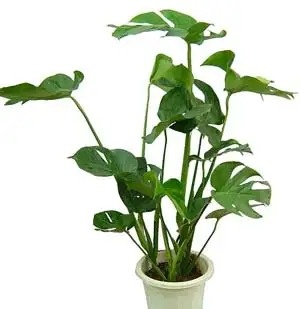
Origin and Habits: Native to Mexico and Central America. It prefers warm, shady, and humid environments, dislikes direct sunlight, and requires fertile, well-drained soil.
Morphological Characteristics: Monstera deliciosa vines can grow to over 10 meters long. The stems are stout, with aerial roots reaching 1-2 meters in length, growing horizontally, slender, columnar, and brown. Young leaves are heart-shaped and without pores; as they mature, they become pinnately deeply lobed with perforations between the veins, leathery, and drooping.
Propagation Techniques: Monstera deliciosa is propagated by layering and cuttings. Layering is done from May to August, and the cutting can be separated from the mother plant after about 3 months. Cuttings are done from April to May, taking scions from the tips of stem nodes, each with 2-3 nodes, removing aerial roots, and inserting them with or without leaves into a sand bed, maintaining a certain temperature and humidity. After rooting, transplant them into pots.
Management Techniques: For potted Monstera deliciosa, leaf mold is best. During the growing season, ensure ample water. When potting or repotting, leave a 5-6 cm rim to facilitate frequent watering. Keep the potting soil consistently moist, watering every 2-3 days. In dry weather, mist the leaves to maintain humidity, adhering to the principle of "better to keep it moist than dry" to promote healthy growth and vibrant foliage. Gradually reduce watering in autumn and winter. Overwatering can cause root rot, but maintain relatively humid air by misting the leaves every 7-10 days to keep the plant and leaves fresh and evergreen. Monstera deliciosa prefers fertilizer; apply diluted liquid fertilizer twice a month from April to September to encourage vigorous growth. Provide shade during the growing season, ideally partial shade, avoiding direct sunlight, especially in the height of summer, as this can cause leaf scorch and damage, affecting its ornamental value.
For large potted plants, insert a 1.3-1.5 meter wooden stake into the pot, plant the Monstera deliciosa on it, preventing it from falling over and promoting vigorous growth. Alternatively, excessively tall stems can be pruned for propagation, allowing the mother plant to sprout new stems and leaves. In winter, it needs to be placed indoors at a temperature above 10℃, but at least above 5℃, otherwise the leaves will freeze and scorch. The potting soil should be kept slightly dry. During the growing season, Monstera deliciosa is prone to brown spot and anthracnose. These can be controlled by spraying with a 1000-fold dilution of 50% thiophanate-methyl and 75% chlorothalonil, or an 800-1000-fold dilution of 50% carbendazim. In summer and winter, poor ventilation often leads to scale insects and noctuid moth larvae sucking sap and eating tender leaves on the back of the stems. These can be manually caught or brushed off. It is best to spray with a 1500-fold dilution of 40% dimethoate emulsion, a 2000-fold dilution of 40% methamidophos emulsion, or a 1500-fold dilution of 40% methamidophos emulsion.
Monstera deliciosa is a shade-tolerant foliage plant and can generally be kept indoors for extended periods. However, during the growing season, it is best to place it in a well-ventilated area near a window to receive outdoor air and light. During its peak growing seasons in summer and autumn, poor ventilation will hinder its growth, resulting in thinner, paler, and duller leaves, reducing its aesthetic value. However,
Monstera deliciosa can purify the air when grown indoors. It is commonly planted in small to medium-sized pots and placed in living rooms, bedrooms, and studies. Larger pots can also be used in hotels, restaurants, lobbies, and indoor spaces, or under ponds and large trees in gardens, creating a tropical ambiance. The leaves can also be used as foliage in flower arrangements. Monstera deliciosa is widely cultivated in China. Its beautiful and unique appearance makes it a popular indoor potted foliage plant. Known for its shade tolerance, it is suitable for display and decoration in living rooms and hallways. In southern regions, it is often planted in courtyards, scattered near ponds, streams, rocks, and crevices in parks. The perforations and notches on the leaves of Monstera deliciosa, sometimes solid and sometimes void, are novel and interesting. Its aerial roots hanging from the rim of the pot add a rustic and elegant touch.
Fruit vine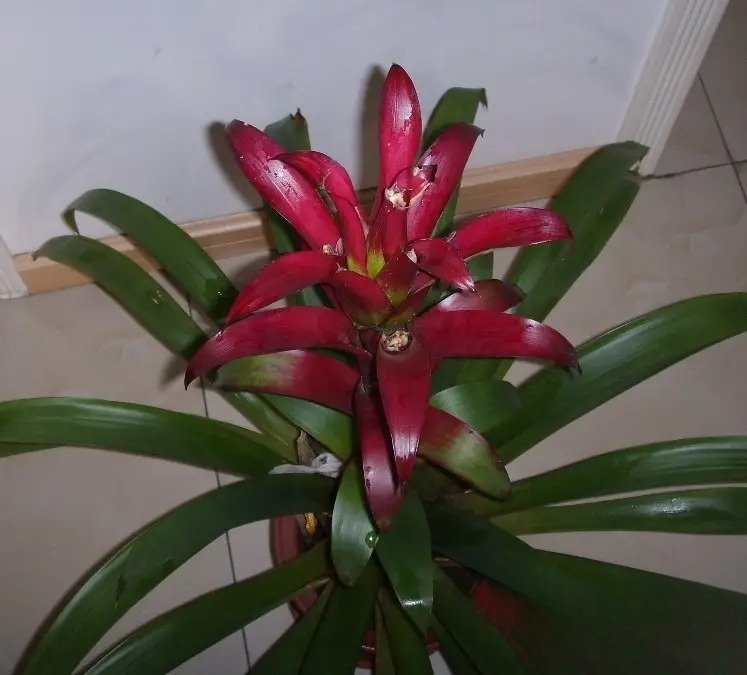
Also known as Star Pineapple. A perennial epiphytic herb. Potted plants reach about 30 cm in height and can spread up to 80 cm in width. Leaves are arranged in a slightly loose rosette. The flower stalk often rises more than 20 cm above the foliage. The flower stalk, bracts, and several leaves at the base of the stalk are all red, making it very vibrant. Small yellow flowers bloom between the bracts. Flowering occurs in spring. While the true flowers have a relatively short blooming period, the colorful flower stalks and bracts remain for a long time, providing an ornamental period of about two months. It thrives in bright, diffused light indoors and can be placed near a bright window for year-round enjoyment. Insufficient light will hinder flowering. Varieties include "Red Star," "Torch," and "Dennis."
Temperature: Normal growth temperature is above 20℃ during the day and above 15℃ at night; the temperature for forcing flowering is 25-30℃; the minimum overwintering temperature is above 10℃.
Light: Prefers bright light. Avoid direct sunlight in summer, providing about 50% shade; no shading is needed in winter.
Water: Keep the leaf axils moist, changing the water every two weeks; water when the top 1 cm of soil is dry; use soft water or rainwater for watering.
Air Humidity: Regularly mist the leaves and around the plant; foliar fertilization is also possible.
Repotting: If not propagating by division after flowering, repot when the support structure becomes very dense.
Propagation: When basal suckers reach a height of about 10 cm or more, cut them off from the base, allow the wounds to dry slightly, and pot them in peat moss without fertilizer. Keep the soil slightly moist; roots should develop in about a month.
Green stem palm
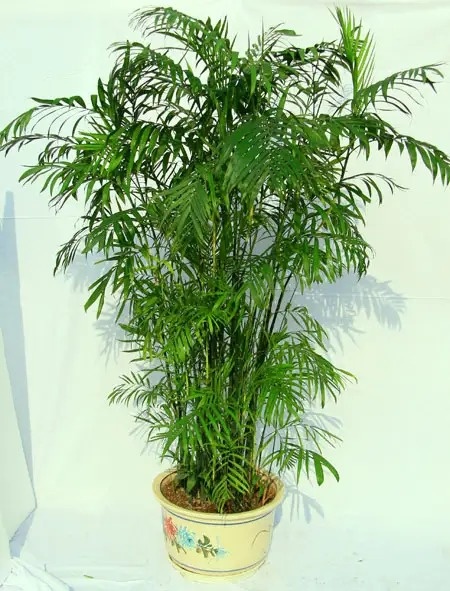
【Other Names】 Hawaiian Coconut, Chevre Coconut, Bamboo Stem, Delicate Coconut
【Family and Genus】 Subfamily Palmae, Genus Palmae
【Origin】 Tropical regions such as Mexico and Guatemala
【Growth Habits】 Prefers high temperature and humidity, tolerates shade, dislikes direct sunlight, and can tolerate short periods of low temperature of 1-2 degrees Celsius.
【Soil】 When potted, use loose, well-aerated, well-drained, humus-rich sandy loam.
【Temperature and Environment】 This species prefers a high temperature and humidity environment. The optimal growth temperature is 20-30 degrees Celsius. It can grow normally when the winter temperature is kept above 10 degrees Celsius, and can also tolerate short periods of low temperature of 0 degrees Celsius. It is highly shade-tolerant and can grow in dimly lit indoor environments for extended periods. However, bright, diffused light is beneficial for its growth. Avoid direct sunlight, otherwise the leaves will turn pale or yellow.
[Watering and Fertilizing] During the growing season, keep the potting soil moist. When the air is dry, spray the leaves frequently to increase humidity, which is beneficial for plant growth and helps maintain dark green, glossy leaves. Reduce watering in late autumn and winter, keeping the soil moist to enhance the plant's ability to withstand cold winters. During the growing season from March to October, apply liquid fertilizer or granular compound fertilizer every 1-2 weeks to promote leaf growth and dark green leaves.
[Pest and Disease Control] This species may develop brown spot and downy mildew under high temperature and humidity conditions. These can be controlled by spraying with a 1000-fold dilution of carbendazim or thiophanate-methyl.
[Economic Value] This species has stems resembling green bamboo, dense branches and leaves, dark green and glossy leaves, and elegant pinnae, giving it a dignified, elegant, light, and graceful beauty. Due to its strong shade tolerance, it is very suitable for garden landscaping and indoor potted ornamental purposes.
Green Ingot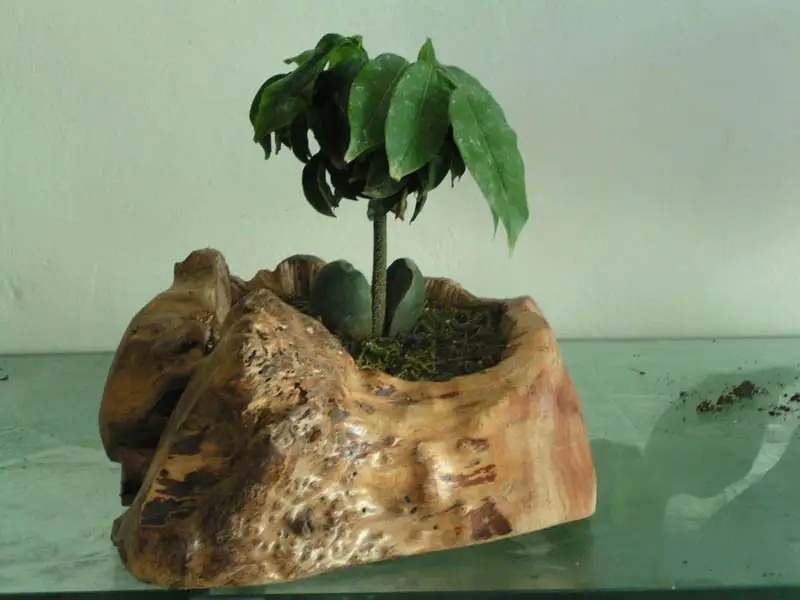
Original Name: Chestnut Tree
Other Names: Australian Chestnut, Green Ingot, Pistachio
Scientific Name: *Castanospermum australe*
Origin of Name: It's called "Green Ingot" because its seeds resemble the shape of an ingot, hence the auspicious name.
Distribution: Native to Australia
Family and Genus: One theory: Fabaceae (Fabaceae family); another: *Castanospermum* (Fabaceae
family). Morphology: A medium-sized tree with odd-pinnate compound leaves, alternate leaflets, lanceolate-oblong in shape, about 8-12 cm long, entire, leathery. The pods are up to 20 cm long, and the seeds (the "Green Ingot") are oval, about the size of an egg, and can be roasted.
Uses: Young chestnut trees can be grown in small pots as indoor plants; mature trees can grow to over 12 meters tall, suitable as ornamental garden plants or street trees.
Sunlight: Young plants tolerate shade, requiring approximately 50-70% sunlight; mature plants require ample sunlight.
Management: Prefers high temperatures, with the optimal growth temperature being 22-30 degrees Celsius.
The ornamental value of chestnut bean seedlings lies in the swollen basal bulb and the emerging buds, so these must be kept clean and glossy. When watering daily, be careful to avoid splashing muddy water and keep the surface of the pot level.
Water: Suitable for planting in loose, fertile loam or sandy loam with good drainage. Avoid prolonged dampness in winter.
Fertilization: Fertilize every 2-3 months during the growing season .
Propagation: Propagated by seed, with spring and autumn being the most suitable seasons.
Cyclamen
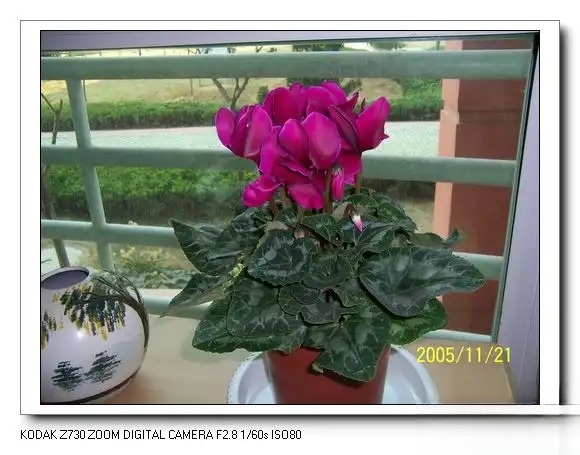
Cyclamen, also known as rabbit ear flower, radish begonia, etc., scientifically named *Cyclamen persicum*, is a perennial herbaceous plant belonging to the genus *Cyclamen* in the family Primulaceae, with uniquely shaped flowers. Leaves emerge from the top of the tuber, are heart-shaped, ovate, or kidney-shaped, with finely serrated edges, green upper surface with white or gray markings, and green or purple lower surface. The petioles are relatively long, reddish-brown, and fleshy. Flowers are solitary at the top of the flower stalk, drooping with petals that curl upwards, resembling rabbit ears; flowers come in white, pink, rose-red, bright red, purplish-red, and light blue, often with deep red spots at the base; petal edges are diverse, including entire, notched, wrinkled, and wavy.
Cyclamen originates from Southern Europe and the Mediterranean coast. It prefers a warm, humid, cool environment with gentle sunlight. The optimal growth temperature is 15℃~20℃; it is not cold-hardy and dislikes high temperatures and direct sunlight. It thrives in well-drained, humus-rich, slightly acidic sandy loam.
Cyclamen is a light-loving plant, with winter and spring being its peak flowering season. To encourage abundant buds, provide ample sunlight during the budding stage by placing it in a sunny spot indoors. Apply phosphorus fertilizer once a week, ideally using a 0.3% potassium dihydrogen phosphate compound fertilizer solution (containing trace elements such as zinc, boron, molybdenum, manganese, magnesium, copper, iron, and sulfur), about 150 ml per pot. Water every one to two days, keeping the soil moist but not waterlogged. Water only when the soil is dry to the touch. Avoid letting the soil become too dry, as this can damage root hairs and cause the upper part of the plant to wilt, making recovery difficult even with heavy watering. Use water at room temperature.
Avoid applying nitrogen fertilizer during the flowering period, as this can cause excessive vegetative growth and shorten flower life. If the foliage is too dense, thin it out to concentrate nutrients and promote abundant flowering. When removing leaves or withered flowers, spray with a 1000-fold dilution of carbendazim solution immediately to prevent soft rot infection.
When cyclamen begins to bloom and continues to form flower buds, the room temperature should be maintained between 15℃ and 18℃, and should not be lower than 10℃. Too high a temperature will shorten the flowering period, and the leaves will turn yellow if the temperature exceeds 28℃. Never place the flower pot on a radiator.
Umbrella Tree
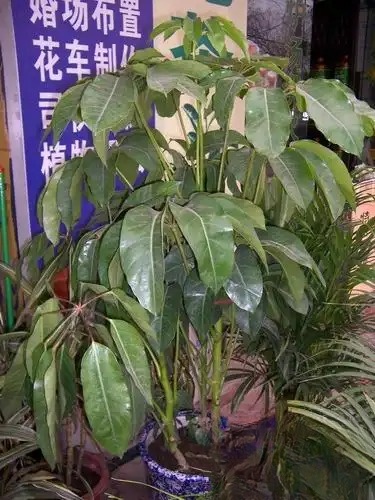
The umbrella tree, also known as the Queensland umbrella tree, Queensland shade tree, or Australian schefflera, is a woody foliage plant belonging to the genus *Schefflera* in the family Araliaceae.
It is a shrub with an upright, sparsely branched trunk. The young branches are green, gradually becoming woody; the bark is brown and smooth. The leaves are palmately compound, with the number of leaflets varying considerably with age, from 3-5 in youth to 9-12, and sometimes up to 16. The leaflets are oblong-elliptic, with a blunt apex and a short, pointed tip, and a blunt base; the leaf margins are wavy and leathery; young leaves are densely covered with short, stellate hairs, becoming glabrous as they grow. The leaves are 15-25 cm long and 5-10 cm wide, with a glossy, dark upper surface and a pale green underside; the petioles are reddish-brown. The inflorescence is an umbel, bearing small, white flowers in spring, but potted plants rarely flower.
The umbrella tree is native to Australia and some small islands in the Pacific Ocean, and is also distributed in the tropical regions of southern China. It thrives in warm, humid, and well-ventilated environments, preferring full sun but tolerating shade. It grows best in loose, fertile, and well-drained soil.
Umbrella trees can be propagated by seed and cuttings. For sowing, it's best to sow the seeds immediately after harvesting for a high germination rate. Cuttings can be taken in spring, summer, and autumn, usually combined with shaping; for irregularly shaped plants, cut branches 10-15 cm above the soil surface, allowing the mother stem to sprout several branches to cultivate a good tree shape. Cut the semi-lignified branches into 8-10 cm long stem segments with 2-3 outer nodes, and insert them into a propagation bed of river sand or perlite, maintaining a certain level of substrate and air humidity, and providing shade. Roots will generally develop in about a month. For thicker, highly lignified branches, air layering can also be used. For
potted umbrella trees, a mixture of garden soil and leaf mold can be used as the substrate. From March to October is its vigorous growth period, with significant growth. Fertilize monthly, keeping the soil moist and ensuring sufficient water. Regularly mist the leaves to prevent dryness and yellowing. In summer, avoid direct sunlight; provide 30-40% shade to prevent leaves from losing their luster, scorching, or turning yellow. Indoors, place in a location with diffused light and ensure good ventilation. Reduce watering and fertilization in late autumn and winter. Foliar application of 0.3-0.5% potassium dihydrogen phosphate in late autumn can promote leaf aging and improve winter hardiness. Anthracnose, scale insects, and spider mites may occur in greenhouses and indoor environments with high temperature, humidity, and poor ventilation; observe carefully and control in a timely manner.
The umbrella tree has large, soft, drooping leaves, resembling an umbrella. Its branches and leaves overlap in layers, creating an elegant and graceful form that is both light and substantial, possessing a rich sense of depth. Therefore, it has been widely cultivated in various provinces of my country in recent years. The umbrella tree is shade-tolerant and easy to care for, allowing for continuous indoor placement for extended periods. It is an excellent medium to large-sized ornamental foliage plant suitable for decorating hotels, meeting rooms, living rooms, corridors, and passageways. It is also an ideal accent plant for corners in living rooms, studies, and bedrooms.
Vinca
major (scientific name: Vinca major)
Other names: twining periwinkle, creeping periwinkle
Family: Apocynaceae, Vinca genus
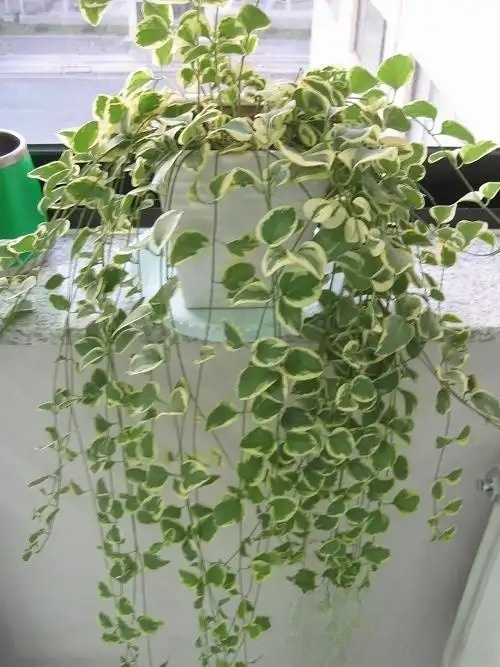
Native to the Mediterranean coast, India, and tropical America. Cultivated in Jiangsu, Zhejiang, and Taiwan, China. An evergreen, creeping subshrub, growing in clumps. Nutrient stems prostrate or lie flat on the ground. Flowering branches are erect, 30-40 cm tall. Leaves are opposite, elliptical, with an acute apex, glossy green; petioles on flowering branches are short. The entire plant is hairless except for the leaf margins, petioles, calyx, and the throat of the corolla. Flowers are solitary in the leaf axils of flowering branches, with a salverform corolla, blue, and 5-lobed. Fruits are paired and erect. Flowering occurs from April to May. A cultivated variety, Variegata, has slightly smaller leaves with yellow variegation.
Vinca minor prefers warm, humid, semi-shaded, and well-ventilated environments. It is highly adaptable and grows rapidly, with peak growth periods from June to August and October. It is not demanding in terms of light, but grows best in partial shade.
Vinca minor is commonly propagated by cuttings and division. Propagation can be carried out in spring, summer, and autumn, and the plants are easy to propagate. When taking cuttings, cut 3-4 nodes of semi-lignified stem. Since root buds grow from the nodes, 1-2 nodes must be buried in river sand, firmly packed down, and watered promptly to maintain moisture. Roots and shoots will generally develop in 1-2 weeks. Transplanting can be done when the plant reaches 20-30 cm in height. Transplanting can be done year-round except in the cold winter months. Alternatively, during the growing season, densely growing clumps can be divided along the rhizome for propagation.
Periwinkle requires loose, humus-rich sandy loam. For potted plants, a mixture of leaf mold and river sand can be used as the substrate. Multiple plants can be planted in each pot simultaneously, and timely pinching will promote rapid shaping. To encourage branching, pinching can be done multiple times during the growing season, and mounding soil around the nodes will promote adventitious root growth and vine development. Because of its rapid growth, it requires ample watering during its growing season, along with liquid fertilizer applied 1-3 times per month to ensure rapid vine growth and glossy, dark green leaves. It thrives in bright light. However, direct sunlight should be avoided in the height of summer to prevent leaf burn; appropriate shading is necessary, with partial shade being ideal. While periwinkle prefers warmth, it is also cold-hardy, tolerating temperatures as low as around 0°C in winter.
Periwinkle is an excellent ground cover plant, suitable for planting in patches along forest edges or under trees, and is particularly well-suited for planting at building foundations and on slopes, helping to conserve soil and water.