Flower Gardening | Pruning of Flowers
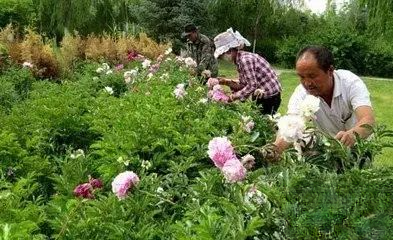
In the book * The Mirror of Flowers: Eighteen Methods of Flower Cultivation * , there is a passage that states: "If all kinds of flowers and trees are allowed to grow freely without proper stems and branches, it will inevitably hinder their vitality. They should be pruned, removing any straight sections, so that they can grow tall, lush, and elegant." This is very reasonable. Through pruning, we can achieve various purposes such as improving ventilation and light penetration, promoting growth, shaping the plant, enhancing its appearance, regulating its vigor, extending its lifespan, removing pests and diseases, and restoring its health. To make the flowers appear more elegant, it is important to choose the appropriate time for pruning and master the correct pruning methods.
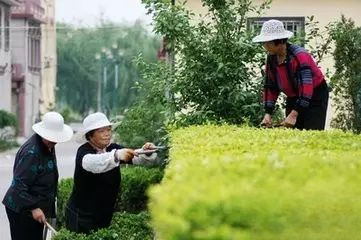
I. Timing of Flower Pruning
Pruning of flowers can be done during both dormancy and the growing season, but the specific approach should be determined based on the plant's flowering habits, cold hardiness, and the purpose of the pruning. For example, many woody flowering plants that bloom in early spring before their leaves emerge typically form flower buds in the previous summer or autumn. Pruning before bud break in early spring would cut off the flowering branches. Therefore, pruning should be done 1-2 months after flowering. However, at this time, the plant has already begun to grow, and sap flow is relatively vigorous, so the amount of pruning should not be excessive. For flowering plants that bloom in summer and autumn, their flowers or inflorescences often grow on new shoots, so pruning can be done before bud break, i.e., during the dormant period. Foliage plants can also be pruned during dormancy. When pruning during dormancy, cold-hardy plants can be pruned in late autumn and early winter, not too early, as this will induce autumn shoots. Cold-sensitive plants should be pruned in early spring when sap flow begins but before bud break. In addition, the purpose of shaping, shortening thick branches, or pruning is to rejuvenate the plant; therefore, heavy pruning is best done during dormancy. Pruning during the growing season is mainly to regulate vegetative growth, so light pruning such as bud removal, pinching, and removing overly vigorous branches is often carried out.
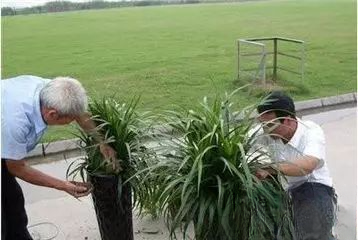
II. Flower Pruning Methods
1. Pinching: This involves removing the tip of a new shoot with your fingers or scissors. The purpose is to inhibit tall growth, promote nutrient accumulation, encourage the sprouting of lateral branches, thicken the shoot, or stimulate flower bud differentiation. Sometimes, pinching can also be used to adjust the growth of adjacent shoots, suppressing strong growth and supporting weaker ones, or to pinch lateral branches to make them auxiliary branches to the main stem, promoting a straight and vigorous main stem. Pinching can be performed on both herbaceous and woody flowering plants.
2. Bud Removal and Sprouting: Removing axillary buds or newly sprouted tender branches serves the same purpose as thinning branches, saving nutrients. Bud removal is also a type of bud removal; the method involves leaving the central apical bud and removing the rest. This is suitable for chrysanthemums, dahlias, roses, etc. The purpose of bud removal is to concentrate nutrients and encourage the remaining flowers to grow larger and more vibrant. For fruit-bearing plants, if there are too many young fruits, the excess can also be removed, allowing the remaining fruits to grow more abundantly.
3. Prune dead, diseased, insect-infested, thin, overly vigorous, dense, and useless branches to adjust the tree's shape, creating a balanced distribution of branches and improving ventilation and light penetration. This should generally be done during dormancy. When pruning, the stub should not be too long, nor should it cut into the next level of branch. Generally, the cut should be made at a 45-degree angle from the branching point , with a smooth cut. For flowering plants with weak sprouting ability, such as Southern Magnolia and White Magnolia, the amount of pruning should be less.
4. Shorten branches by removing a portion of them . The purpose is to encourage the growth of lateral branches, to direct the emerging branches towards a desired space, or to adjust growth vigor. For example, if the purpose of pruning is to achieve a uniform crown width, strong branches can be pruned; if the purpose is to restore growth vigor, weak branches can be heavily pruned to encourage the growth of strong new branches. Pruning is commonly used for flowering plants and is generally best done during dormancy. When pruning, pay attention to the direction of the bud at the cut, ensuring it faces towards sparser branches or outwards. The cut should be smooth, at a 45 -degree angle, tilted in the opposite direction to the bud, with the lower end of the cut aligned with the tip of the bud. Plants with terminal flower buds should not be pruned.
5. Root pruning: Cut off part of the root system. For example, when transplanting seedlings, shorten excessively long taproots to encourage the growth of lateral roots; when potting or repotting flowers, moderate root pruning can inhibit excessive vegetative growth and promote bud formation. Root pruning is generally done during dormancy, but it can also be done during the growing season if the plant is growing excessively.
6. Ring barking, bud wounding, and branch twisting all work by damaging a portion of the branch to regulate growth. Ring barking is often performed at the base of new shoots, promoting nutrient accumulation above the barked area and facilitating flower bud differentiation. Bud wounding is performed above buds that are about to develop, making deep incisions that reach the xylem to encourage sprouting. Branch twisting is mainly used for upright, overly vigorous shoots; by twisting them to a horizontal position, it inhibits growth and also promotes bud formation.
7. For climbing herbaceous or woody flowering plants, trellises can be prepared in advance so that they can attach to them for ornamental purposes.
When cultivating large upright chrysanthemums, they are often shaped into umbrella or round forms to create a full and visually appealing appearance. In addition, to help the flowers grow and make them neat in shape, whether they are grown outdoors or in pots, bamboo shoots or reeds can be used as supports to tie the flower branches to them.