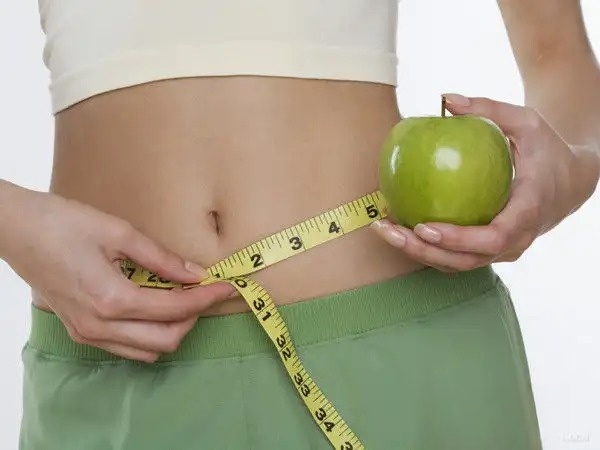
[Exercise and Wellness] Which exercise is best for weight loss? A calorie consumption chart tells you.
The season for showing some skin is here! Have you lost any weight yet? Don't worry, losing weight is actually a skill. Instead of constantly dieting and taking weight loss products, it's better to get moving with real exercise. What? Don't know which exercise is best for weight loss? You're sweating buckets at the gym, but your weight just won't go down? You need to exercise for at least 30 minutes to lose weight. For busy office workers, taking 20 minutes to exercise each day is a common choice. However, many people wonder why they don't lose weight despite exercising daily, and some even gain weight instead. Fan Fangjie, a senior personal trainer at Beijing's No.1 Fitness, told reporters that the reason why he gained weight instead of losing weight despite persisting in exercising was probably due to three mistakes. 1. Aerobic exercise lasting less than 30 minutes will not achieve the desired weight loss effect. During the first 30 minutes of exercise, the body primarily burns water and sugar; fat burning only begins after 30 minutes. Reducing water and sugar levels only provides temporary weight loss; true weight loss is achieved by burning fat. This is similar to spending cash from your wallet for the first 30 minutes, and then spending your bank account balance by swiping your card 30 minutes later. Short-term exercise lowers blood sugar levels, causing hunger; if you overeat afterward, you'll actually gain weight.
2. Many people's exercise methods are chaotic and unscientific. To lose weight through exercise, you need a complete plan to achieve twice the result with half the effort. 3. Exercise intensity is also an influencing factor. Exercise for weight loss works by increasing energy expenditure. For the same amount of time, higher-intensity exercise will burn significantly more calories than lower-intensity exercise, resulting in more noticeable weight loss. Xiao Liu's daily exercise time and intensity are both insufficient. Fan Fangjie suggests that people who rely on exercise to lose weight should exercise for 1-2 hours each time, within their physical tolerance, at least at a moderate intensity, mainly aerobic exercises such as moderate-speed running and rope skipping, combined with appropriate strength training. It's not advisable for some people to excessively increase exercise time and intensity in pursuit of weight loss results, as this will only lead to extreme fatigue and even insomnia. 2. Walking and jogging are good for weight loss.
Walking and jogging are good for weight loss. If you lack stamina and can't run for more than half an hour, do you feel ashamed, frustrated, or anxious because you can't even keep running for half an hour? Actually, this kind of walking-running exercise isn't necessarily bad. Sun Weixing, associate professor of physical education and training at Beijing Sport University, told reporters that walking-running is actually more beneficial for weight loss. Sun Weixing pointed out that there are two types of running and walking exercises. One is the alternating running training used by professional athletes. This training can enhance cardiopulmonary function. The other is for ordinary people who exercise, which increases physical endurance and achieves weight loss by alternating between jogging and brisk walking. To lose weight through exercise, two conditions must be met. First, your heart rate must be maintained within the prescribed range; second, you must ensure the duration of continuous exercise. However, people who want to lose weight often have poor physical fitness and become breathless and unable to run after only a few minutes when they first start. At this point, you can switch from running to brisk walking. Once your breathing has calmed down and you feel energetic again, you can continue running. When you can't run anymore, switch back to brisk walking.
Generally speaking, walking and jogging are more suitable forms of exercise for the elderly and those who have not exercised for a long time. The duration, distance, and frequency of exercise will vary depending on each person's physical condition and exercise frequency. Beginners typically start by walking for 1 minute, then jogging at a pace of 100 meters per minute for 1 minute, alternating between the two. Every two weeks, gradually increase the intensity by alternating between walking for 2 minutes and jogging at 100 meters per minute for 2 minutes. To lose weight through exercise, don't go hungry. Many people trying to lose weight have a question: should they eat before and after exercise? And how should they replenish their nutrients? In response, AASFP professional fitness coach Li Ning told reporters that it's essential to eat something easily digestible before exercising, such as bananas, raisins, or sports drinks high in carbohydrates. This can help with weight loss without causing discomfort due to low blood sugar. Furthermore, you should wait 30 minutes after eating before exercising. Avoid foods that are difficult to digest, such as fatty and protein-rich foods. 3. How to control appetite after exercise
How to control appetite after exercise It's a common belief that the energy consumed during exercise is the culprit behind increased appetite, but this isn't entirely true. Fang Zilong, deputy director of the Sports Nutrition Research Center of the General Administration of Sport of China, told reporters that the relationship between exercise and appetite control is very weak. Many studies have shown that even expending a lot of energy does not immediately increase appetite. Generally, post-exercise body temperature is the real culprit. If you feel hot after strenuous exercise, you'll experience a temporary decrease in appetite. However, if you feel cold, such as after swimming, you might have an unusual craving for food—a feeling most people have experienced. Therefore, for those hoping to lose weight or control their weight through exercise, the following exercise and diet strategies can be helpful. 1. Choose an appropriate exercise intensity. You should choose moderate-intensity exercises, especially endurance exercises, such as walking, jogging, and gymnastics. This will help improve fat metabolism without increasing appetite.
2. Know when to eat after exercise. Generally, it is advisable to eat within 30 minutes after exercise. Eating 15-30 minutes after exercise resulted in lower energy intake compared to eating an hour after exercise. 3. Develop the habit of drinking more water. People who drink about 7 cups of water a day consume about 200 fewer calories per day than those who drink less water. 4. There are some considerations when choosing food. After exercise, you can eat some snacks containing sugar and protein, such as non-fat yogurt, whole-wheat crackers, and lean meat products. However, be careful to reduce your intake of fat, especially saturated fatty acids; it's best to avoid desserts and hamburgers. 4. Why does weight increase after exercise?
Why does weight increase after exercise? Everyone says exercise can help you lose weight, but some people actually gain weight after exercising for a while. Why is that? Lu Yifan, a professor at the Institute of Sports Medicine at Beijing Sport University, explained that, strictly speaking, weight loss should refer to reducing the proportion of body fat, rather than overall weight. Appropriate exercise only leads to a reduction in fat, while weight loss is also influenced by other factors. Lu Yifan said that if you find your weight increases after a single workout, it may be due to drinking too much water after exercising; if your weight increases after exercising for a period of time, it may be because your muscle mass has increased and your fat mass has decreased. Because muscle is denser, the same volume of muscle weighs much more than fat, so even if your weight increases, you have actually achieved the effect of weight loss.
"Exercise for weight loss should be a long-term, persistent lifestyle, and the weight loss should be a gradual process," Professor Lu said. "As long as you persist in at least half an hour of sufficiently intense physical activity every day, keeping your heart rate between 120 and 150 beats per minute, you will eventually see results. Generally speaking, a weight loss of less than 1 kilogram per week is appropriate." Lu Yifan specifically reminds everyone that one cause of weight gain should be avoided: overeating after exercise. The principle of weight loss is a negative energy balance, meaning that energy expenditure exceeds energy intake. Eating too much after exercise not only affects weight loss results but also harms the gastrointestinal tract and liver metabolism. 5. Some exercises won't help you lose weight.
Some exercises don't help you lose weight. It's often said that exercise can help you lose weight, but that's not always the case! According to a report in the American magazine "Sculpting," three types of exercise can actually make you "fatter." 1. High-intensity exercise. If the amount of exercise is too great, the body's need for oxygen, nutrients, and metabolic waste products will increase accordingly. At this time, the heart must increase its output of blood to transport them. When the amount of exercise is too great, the heart's output of blood cannot meet the body's need for oxygen, causing the body to be in a state of anaerobic metabolism. Anaerobic exercise does not primarily utilize fat for energy release; instead, it relies mainly on the breakdown of glycogen stored in the body. In an oxygen-deficient environment, fat not only cannot be utilized but also produces incompletely oxidized acidic substances, such as ketone bodies, which can reduce exercise endurance. After a short period of high-intensity exercise, blood sugar levels drop, causing hunger. This can lead to a surge in appetite, which is extremely detrimental to weight loss.
2. Short-duration exercise. During aerobic exercise, the body initially uses stored glycogen for energy. After about 30 minutes of exercise, the body begins to switch from using glycogen to using fat for energy. It's only after about an hour of exercise that the body starts using fat as the primary energy source. In other words, if you stop exercising just as fat breakdown begins, the weight loss effect will be poor. 3. Rapid explosive power movement. Examples include sprinting and ball sports. Human muscles are composed of many muscle fibers, mainly divided into white muscle fibers and red muscle fibers. When training for explosive power, the white muscle fibers are primarily trained. White muscle fibers have a larger cross-section, thus making the muscle group more likely to develop and become bulky. Using this method will only make you "fatter". |