Eight modes to help you master hydroponics for landscape vegetables!
Landscape vegetables, with their vibrant colors, unique shapes, fragrant aromas, and distinctive charm, have been widely used in agricultural tourism, courtyard landscaping, and garden greening in recent years as ornamental plants. This has expanded the functions of vegetable production, showcasing the diversified development of modern agriculture, and demonstrating the exploration and innovation of agricultural technology and horticultural landscape design in the agricultural field. Currently, soilless cultivation technology is applied to various landscape shaping cultivation models, such as: pipe cultivation, column cultivation, wall cultivation, aeroponics, rock wool substrate cultivation, tree cultivation, suspended trough cultivation, and mobile multi-layer three-dimensional track cultivation. Are you familiar with these models?
Pipeline cultivation mode
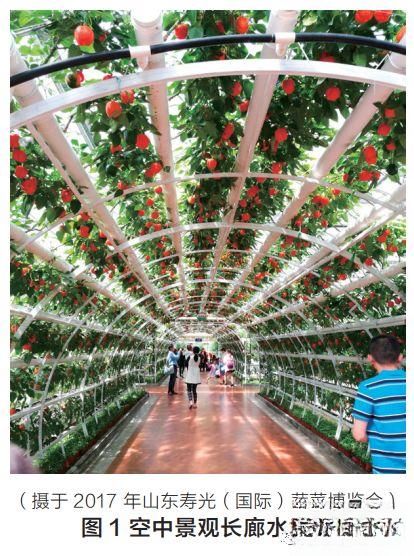
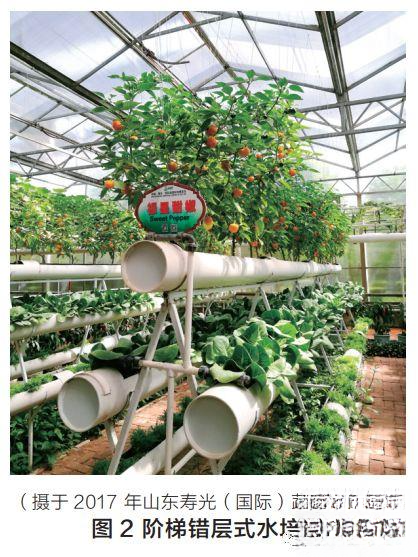
The pipe-type hydroponic system (Figures 1-2) is assembled and modified from PVC pipes, mainly consisting of four parts: cultivation pipes, planting pots, support frames, and a circulation control system. The pipe-type substrate cultivation device consists of three parts: planting troughs, support frames, and an integrated water and fertilizer drip irrigation system. Both types of cultivation pipes can be made in different forms such as flat, sloping, and vertical, and can be flexibly arranged according to different space and shape requirements. Crops are planted in the planting troughs, and the pipe spacing can be flexibly arranged according to the plant spacing and seedling age of different crops, which greatly improves the utilization rate of greenhouse space and light, significantly increases crop yield and quality, and enhances ornamental diversity.
Columnar cultivation model
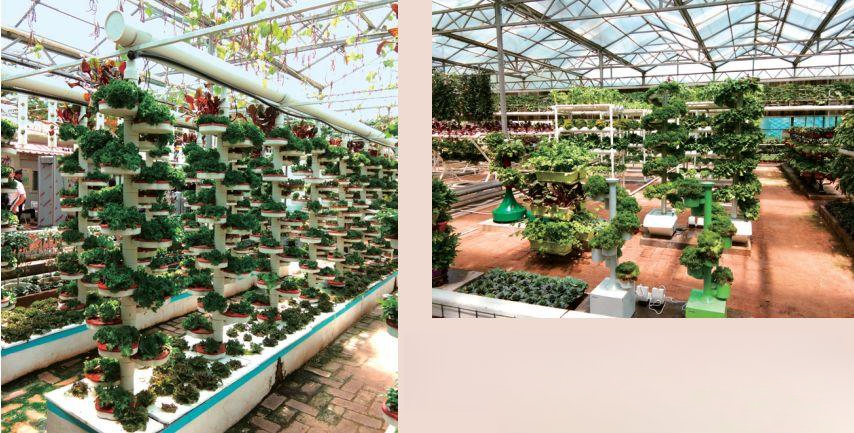
The upright (hugging) column system (Figure 3) generally includes cultivation pots, planting bowls, a supporting central column, column caps, a nutrient solution tank, and a nutrient solution supply system. The shape of the cultivation pots can be customized according to landscaping requirements, such as petal shapes or geometric shapes. The nutrient solution supply system consists of a pump, filter, pipes, and a nutrient solution circulation timer. The timer can be adjusted to regulate the nutrient solution supply time according to actual production. Because it is assembled, its height and quantity can be freely selected according to landscaping needs, resulting in a high degree of freedom in combination. The assembled column can be rotated freely by manual pushing, ensuring even light exposure for the plants on it. This type of device is suitable for the growth of various plants, especially smaller, dwarf plants. The nutrient solution in the substrate supply system is non-recyclable and mainly consists of a pump, pipes, drippers, and a supply timer. Most devices use bottom-to-top or top-to-bottom drip irrigation.
Wall-mounted cultivation mode
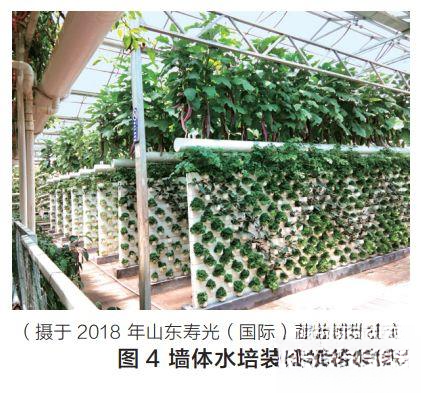
Wall cultivation (Figure 4) extends soilless cultivation technology from planar structures to three-dimensional wall structures. Its facilities mainly consist of cultivation boards, planting cups, a supporting framework, a nutrient solution circulation system, and a control system. In landscape design, several individual boards are typically pieced together to form a large cultivation wall, which can be freely combined into various shapes and heights. Wall cultivation can be used to create interesting mazes, plant houses, and other landscapes. This model is particularly suitable for cultivating annual leafy vegetables, dwarf flowering plants, and crops such as strawberries, making it an excellent choice for creating ecological restaurants, plant mazes, or partition walls. The nutrient solution supply system in substrate cultivation is non-recyclable; it mainly consists of a pump, a drip system, and a supply timer.
aeroponic mode
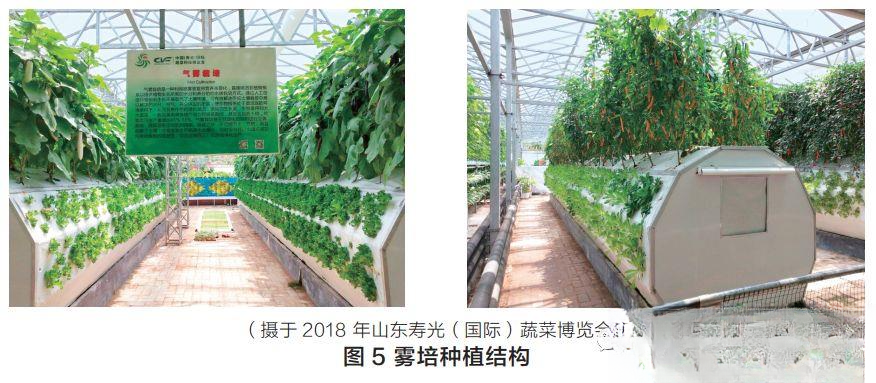
The main equipment for aeroponics (Figure 5) consists of two parts: the cultivation trough and the nutrient solution supply system. The cultivation trough can be made of rigid plastic board, foam plastic board, wood board, or cement concrete, and its shape can be diversified according to landscape requirements. The main function of the cultivation trough is to store the nutrient solution and return any excess nutrient solution after atomization to the storage tank. In addition, the internal space of the cultivation trough is also important; specifically, the atomizing nozzles should have sufficient space to evenly spray the nutrient solution onto the roots of each plant. The nutrient solution supply system consists of a storage tank, water pump, pipes, filter, nozzles, and ultrasonic atomizer. Nutrient solution atomization not only solves the problem of root oxygen supply but also improves the nutrient absorption rate.
Rock wool substrate cultivation mode
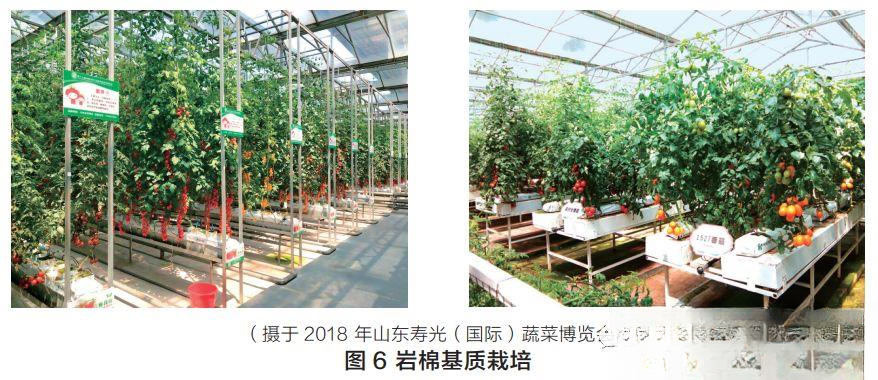
The supporting facilities for the rockwool cultivation model (Figure 6) mainly include an integrated water and fertilizer drip irrigation system and rockwool cultivation facilities. The integrated water and fertilizer drip irrigation system mainly consists of fertilizer injection pump equipment, fertilizer storage system, fertilizer mixing system, water and fertilizer control system, and drip irrigation system. The rockwool cultivation system includes a support frame, rockwool blocks, and rockwool strips. Cultivation troughs are set on the support frame to recover excess nutrient solution. Rockwool blocks are placed on rockwool strips. During planting, seeds are placed in the rockwool blocks for seedling cultivation. Once the seedlings have grown, the rockwool blocks with seedlings are placed on the rockwool strips, eliminating the need for transplanting and promoting crop establishment. Simultaneously, the loose and porous nature of rockwool allows plant roots to easily penetrate, providing good aeration and water retention, effectively enhancing root growth and ensuring sufficient nutrient absorption.
Tree cultivation mode
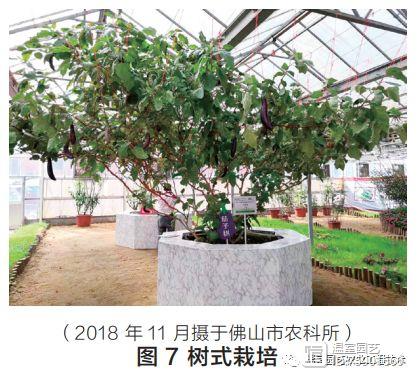
Tree cultivation (Figure 7) is also an important method for creating vegetable landscapes. It involves using techniques such as pruning, nutrient regulation, and environmental control to grow crops like tomatoes, cucumbers, melons, and watermelons into a tree-like shape, hence the names "tomato tree," "cucumber tree," "melon tree," and "watermelon tree." Tree cultivation requires cultivation troughs, nutrient solution tanks, and facilities for adding and returning nutrient solution. Compared to ordinary cultivation, tree cultivation provides more space for the crop roots to grow and a more suitable growing environment. Therefore, it demands strict cultivation management techniques.
Aerial hanging trough cultivation mode
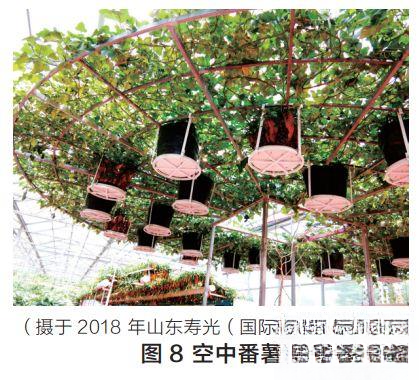
Soilless cultivation in suspended troughs (Figure 8) is a highly efficient form of three-dimensional substrate cultivation. Crops are planted on the upper layer of suspended troughs, while shade-tolerant vegetables or flowers can be grown on the ground. It makes full use of limited greenhouse space and solar energy, significantly increasing the number of plants and yield per unit area. Due to its aesthetic appeal and novelty, it can be applied to urban agritourism, facilitating field work and visitor access, and making it easy for tourists to pick and explore. The troughs can be made of PVC pipes or lightweight, rigid metal materials, suspended by wire ropes at 50cm intervals. In a solar greenhouse, an east-west extension and north-south tiered arrangement should be used; in a multi-span greenhouse, a north-south extension and east-west parallel arrangement should be used. If the budget allows, height adjustment equipment can be added. The nutrient solution circulating irrigation system consists of a water storage tank, submersible pump, main pipe, branch pipes, drip irrigation system, return pipe, and timer. The nutrient solution is prepared in the water storage tank and supplied to the roots of each crop through the drip irrigation system, allowing for recycling and achieving water and fertilizer conservation.
Mobile multi-layer three-dimensional track cultivation mode
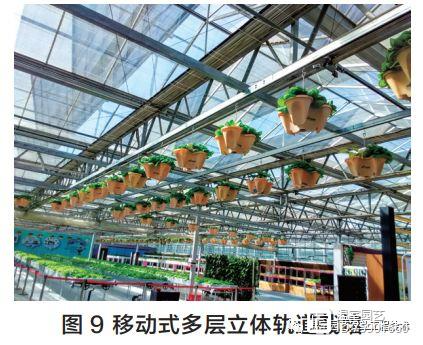
The mobile multi-layered three-dimensional track cultivation mode (Figure 9) utilizes a spatial longitudinal, multi-layered structural design. Through automatic rotation, it ensures that each plant receives uniform light, thereby more effectively promoting plant growth and greatly improving vegetable quality. Simultaneously, combined with a liquid supply and return system, each plant can be automatically irrigated and harvested at fixed times and locations based on parameters set by a computer program and touchscreen controller. This saves more than half of the labor costs and is three times more efficient than other planting methods.