Disease and pest control of roses
powdery mildew
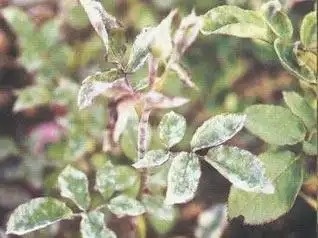
Powdery mildew primarily affects young leaves, but can also commonly infect older leaves, flower stalks, receptacles, and even branches. When infected, leaves develop raised bumps with a pale, powdery substance covering the raised areas. The leaves become uneven and gradually curl up. As the pathogen spreads, the entire underside of the leaf is covered with a layer of grayish-white mold. In severe cases, flower buds, flower stalks, the entire branch, and leaves are all covered with mold, and new buds and leaves curl up.
This disease occurs mostly from late autumn to early spring, and is prone to occur when there are large temperature differences between day and night and high humidity. The optimal conditions for spore production, germination, and infection are nighttime temperatures of 15°C and humidity as high as 90%, while daytime temperatures of 27°C and low humidity of 40%–70% are suitable for spore maturation and dispersal. In such cases, preventative spraying is necessary. Powdery mildew spreads spores through airflow.
Prevention and control methods:
Regularly spray with fungicides such as 600x dilution of cyprodinil or 800x dilution of chlorothalonil. Spray every 7-10 days, and frequently mist the leaves to effectively reduce powdery mildew. Prune diseased branches and leaves as soon as possible to reduce the chance of further spread.
Downy mildew
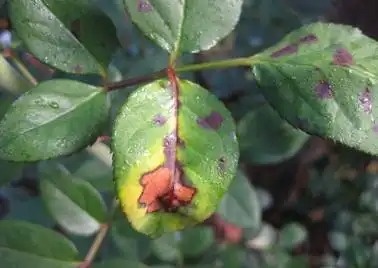
Downy mildew primarily affects leaves, new shoots, stems, flower stalks, and petals. It first infects the growing point, turning leaves purple to brownish-black. Infected leaves initially show irregular small spots, gradually withering or falling off, and diseased shoots dry out. Flowers, flower stalks, and petals develop similar spots when infected.
When humidity is high, a grayish-white mold layer easily appears on all affected parts. The pathogen is not visible when dry, but a large amount of mold, namely fungal sporangia and spore cysts, grows when wet. In greenhouses, it mainly occurs in spring and autumn. If there is a large temperature difference between day and night, the greenhouse is not ventilated, the humidity is close to saturation, water drips from the leaf margins or condensation forms on the leaf surface, the disease will last longer and be more severe.
Prevention and control methods:
Disease-resistant varieties should be selected and carefully cultivated. The relative humidity should be controlled below 85%, and ventilation should be ensured. Excessive application of nitrogen fertilizer should be avoided. For the first onset of disease, spray with 72% chlorothalonil or similar products.
aphid
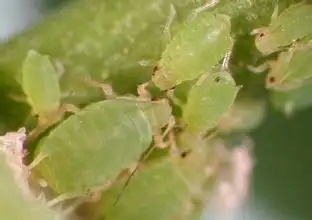
Aphids can occur year-round, but they are particularly harmful during dry periods. Early eradication is crucial, especially during the vigorous growth of new shoots. Spraying with various insecticides is effective. Focus on spraying the growing point and the underside of leaves. Commonly used pesticides include aphid-killing agents; fumigation with dichlorvos is even more effective, but should not be used after flowering.
Red Spider
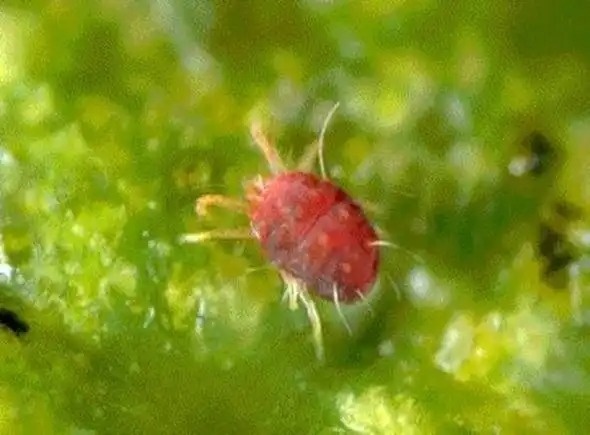
Spider mites suck chlorophyll from the leaves, reducing the efficiency of photosynthesis in roses. They spread rapidly, quickly damaging leaves and halting plant development. They are most prevalent in summer, especially during hot, dry conditions. In the early stages of an infestation, spraying with a 600-fold dilution of miticide or a 1000-1500-fold dilution of acaricide is effective.