Disease and pest control
Another tactic:
1) Mix 1:500 sulfur powder (approximately 4 grams) with water, add a drop or two of detergent, then use a spray bottle like a cocktail shaker and spray. Why? Because sulfur is insoluble in water  . Note: During the spraying process, after about three sprays, shake the small spray bottle vigorously before spraying again (depending on the degree of sulfur powder sedimentation in the bottle). Repeat this action until finished. This method is only suitable for small spray bottles like the one shown in the picture below. The nozzle doesn't need to be adjusted for atomization; a wider water jet is better. Filling the spray bottle with air before spraying actually makes it more prone to clogging. After use, rinse the nozzle slightly, fill it with some water, and spray to clean the suction tube. Not cleaning after use is fine, but it will definitely clog next time. Adjust the nozzle to the water jet position, rinse the nozzle with tap water for a few seconds, shake it, and it should work normally again.
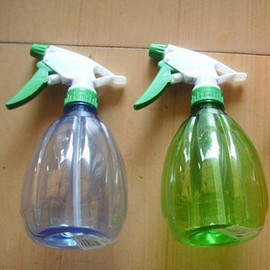
2) Fill a bottle with pepper powder (D), then reduce the spray volume (if the sulfur powder is wrapped in gauze, fold the gauze again before wrapping), spray the entire plant, place the flowerpot upside down so that the pot is on the ground, you can do this on a small stool or chair, and then start spraying ( make sure to cover both sides of the leaves )!
 (one pound of sulfur powder is 500 grams, and the market price is 1-2 yuan. When buying online, please tell the seller that you want powder to avoid getting granular or brick-shaped sulfur.
  If you want to grind soybeans or mill grains, I can't stop you, but it is a flammable solid! Take care
  ).
).
In fact, during the powdery mildew season , it can only be controlled, not completely cured.
The causes of powdery mildew include seasonality (high air humidity), poor ventilation, or watering at night, where the water on the flower stems cannot evaporate within a certain time, making it prone to powdery mildew.
Increase sunlight and ventilation regularly , avoid getting water on the leaves, and prune diseased branches and leaves. For severe cases, spray every 3 days; otherwise, spray once a week. Mix two fungicides in one container. For example: chlorothalonil plus DuPont Fuxing.
Regular spraying is necessary during the powdery mildew stage . Spray every 7-10 days with pesticides such as Halothite, Fuxing, Cyproconazole, Triadimefon, Thiophanate-methyl, Mancozeb, Carbendazim, and Chlorothalonil, which all have good control effects against powdery mildew. To prevent resistance, prepare several pesticides for alternating use. Add surfactants when spraying, ensure thorough coverage, and pay special attention to spraying the undersides of leaves.
Control agents: Tebuconazole, Formosanitary naproxen, Thiophanate-methyl, Triadimefon (tebuconazole)
Main control agents: Mancozeb (Zinc wettable powder), Carbendazim, Chlorothalonil
Practical tips for prevention and treatment:
1) Potassium permanganate, 1:1000 ratio. Too much potassium permanganate is bad for plants.
2) Baking soda powder, 1:1000 ratio, spray on affected areas.
3) Commonly used medical alcohol, just put it in the can and spray (no need to dilute or rinse). It's fine to apply to a small number of pots. Be careful, it will burn tender leaves.
4) White liquor, the closer to the alcohol content (D), the better.
5) Sulfur powder .
6) Vinegar diluted with water 1:300 or 500, once every 7-15 days. This carries some risk; low concentrations are ineffective, while high concentrations are effective, but some healthy leaves will be eaten away, and black spots will appear after healing. (Recommended for prevention)
Powdery mildew is primarily caused by a lack of preventative measures; infected potted plants should be isolated. It's best to use a two-component mixture (e.g., tebuconazole + cyproconazole, hexaconazole·iprodione + tebuconazole, tebuconazole + cyproconazole, tebuconazole + tebuconazole). On recovered leaves, the areas with powdery mildew will turn dark brown, indicating the mildew has died. (For stubborn cases, apply more potent medications such as carbendazim, chlorothalonil, or sulfur powder directly .)
Quoting the old nest's tactics:
(Reference post)
Use a plastic bag that can cover the plant and pot (some gardeners recommend using a large bucket upside down). Spray lightly around the edge of the pot or onto the outer wall of the pot for 3-5 seconds. Do not spray directly onto the leaves (although the potency of the Lanju is weaker than that of Black Whirlwind, direct spraying onto the leaves will burn them, causing them to wither and fall off. The potency of Lanju also varies depending on the rose variety; some leaves will fall off while others will not, but young leaves are easily damaged. Black Whirlwind is extremely potent!). Then tie the bag tightly for 20 minutes to 2 hours (the toxicity of different agents varies, so you may need to experiment a bit). After that, open the bag, remove the rose, and place it back in its original position. If the problem recurs, repeat the above method once more. (Suggestion: Use this method when pinching is not effective; if you are worried about insects in the garden soil, use this method. After 45-60 days, you can untie the bag and use it directly.) Some gardeners have reported little or no effect; I just smile and say nothing. (You can dilute it 1:1 with water and spray it directly onto the leaves. Use a 300ml spray bottle, spray into the bottle for about 1 second, then fill it with water and spray like you're mixing a cocktail. Again, different canned household insecticides have different potency, so it's recommended to test it on a few branches first. If it doesn't work or burns the leaves, dilute it again. If it doesn't kill completely, make it more concentrated. ^_^ Or just spray it directly! After 10 minutes, rinse it off with clean water! Life is about experimenting!)
After some experimentation, I found this method works best: Take any medium-sized plastic bag (undamaged and without tears), wrap it completely around the nozzle (up to 10cm below the spray head) with one hand, fold the other side of the bag opening a few times, and hold it tightly with one hand, also facing the outermost opening. Now you can spray into the bag. After the bag inflates, control the tightness with one hand (releasing air as needed). There should be almost no spillage, minimizing spray waste. When removing the spray, during the spraying process, a cold mist will appear on the bag surface due to the compressed gas; this can be ignored. Perform this procedure in an open area, away from open flames and food. After extracting the desired amount of spray, wait a moment, then find a spray bottle and slowly pour the spray from the bag into it, mixing it with water at a 1:1 or 1:2 ratio. Add a few drops of dish soap or laundry detergent, and shake for a while. (During this shaking process, some sprays may react before adding additives, exhibiting phenomena such as heating, foaming, or gas buildup. These can be ignored; personally, I don't think a reaction has occurred.) Be careful not to tighten the spray bottle too much at this time, otherwise it may spray out on its own. If this happens, spray immediately to release the product inside. The presence of D gas does not affect the insecticidal effect. If you have prepared the D spray and are not going to use it for a long time, or if you are using too much at once, put it in a plastic bottle before diluting it with water, tighten the cap, and store it in a cool, ventilated place. Dilute it with water and spray whenever you need it. Some flower enthusiasts might say, "Then I'll extract a whole bottle at once, which requires such a large amount of D." I suggest you just use pesticide directly. No need to extract it; just a few drops to a packet (actually, this type of insecticide is no different from pesticide) and spray it directly on the branches, leaves, and topsoil. Spraying frequency: preventative spraying is once every 7-15 days, and insecticidal spraying is once every other day (generally, after three consecutive applications, you will basically not see any pests). Like spraying foliar fertilizer (spray for a while, shake it a few times to avoid sedimentation), choose a rainless and windless day, preferably in the early morning. If you don't have time, evening or nighttime will also work.
For plants with many pots: It is recommended to use mineral oil
Aphids, spider mites, white spider mites— here's a cheap method for killing mites: abamectin + a penetrant (an adjuvant that helps the leaves get wet; if you don't have that, dish soap works well—just add a few drops when applying the pesticide, and you'll see the liquid spread on the leaves when spraying. You can find penetrants and silicones on Taobao; they're extremely cheap.) Or refer to Brother Haohan's mite-killing post and Saotian's spider mite strangulation guide . Actually, folk methods or homemade insecticides are not as good as the more primitive method of water rinsing. For small pots and persistent pests, water rinsing is recommended. There's no special skill involved; test it on one or two infested leaves. The water pressure (whether using a spray bottle or a garden water gun) should just be enough to remove the mites. Higher pressure might damage the leaves, so be careful. Spray both sides of the leaves. Usually, the effect is noticeable after two applications; for less severe cases, you rarely need to spray up to the seventh time. If you want to try something more risky, click here for the link ^_^
Precautions for mixed pesticide application:
1. Alkaline pesticides should not be mixed with ammonium nitrogen fertilizers or superphosphate fertilizers, otherwise ammonia will be lost through volatilization, reducing fertilizer efficiency.
2. Arsenic-containing pesticides should not be mixed with potassium or sodium salt fertilizers, otherwise soluble arsenic will be produced, causing phytotoxicity.
3. Alkaline fertilizers such as ammonia water, lime, and wood ash should not be mixed with insecticides or other pesticides, otherwise their efficacy will be reduced.
4. Chemical fertilizers should not be mixed with microbial pesticides, because chemical fertilizers are volatile and corrosive; mixing them with microbial pesticides such as Bacillus thuringiensis and Bacillus subtilis can easily kill the microorganisms, reducing the control effect.
------------------------------------------------------------------------------------------------------------------------------------------
Leafcutter bees: They pose the least threat to roses, as they only eat the leaves. The most dangerous pests are those that suck sap without eating the leaves. Applying dimethoate once a week for two to three weeks will eliminate the leafcutter bees.
If you're worried about poisoning or disfigurement after getting a new insecticide, you can try making your own. ^_^
Quoting the old nest's D move:
Spray with a mixture of etoxazole (4000x dilution) and abamectin/pyridaben (1000-1500x dilution). Make sure to spray the underside of each leaf. It's best to remove severely affected leaves before spraying. Also spray the surface soil of the pot. If sprayed thoroughly, it can prevent spider mites for about 50 days. I usually use this formula every 40 days, and the spider mites are basically gone. This formula works well; it doesn't seem to cause resistance or phytotoxicity, so I'm sharing it with everyone . If possible, you can also use a mixture of 1500x dilution of Jinmanzhi + abamectin/pyridaben (1000-1500x dilution) + matrine (600x dilution), alternating between the two for better results. For black spot, use DuPont Fuxing (6000-8000x dilution) + imazalil (25% chlorpyrifos, 1000x dilution). Remove diseased leaves before spraying. Spray after rain, usually once every two weeks, or once a week if the condition is severe.
Thrips are usually treated with imidacloprid, which works okay for everyday use, but when a large outbreak occurs, you need to spray it every two days, and the effect becomes less noticeable, as it's difficult to completely eradicate them. There's a product called "Thrips Killer" recommended by a shop owner, and I tried it and the results were quite good. Although the active ingredient in this product is also imidacloprid, it probably contains other adjuvants, otherwise the effect wouldn't be so good. If you're interested, you can search for it on Taobao. There's also a product called "Ailvshi, " which is also very effective, but it's quite expensive. These are all my own experiences with pesticides accumulated over the past two years. Merchants usually won't tell you this, but since I'm a B-2 seller, I'm sharing it with you today so you can save money and keep your roses healthy.