Detailed gym workout plan for women (preliminary plan subject to update based on equipment)
A complete fat loss workout consists of four parts: warm-up, anaerobic exercise, aerobic exercise, and stretching/cool-down.
Choose 3-4 exercises for large muscle groups, 3-4 sets per exercise, with a weight of 8-12 RM.
Choose 2-3 exercises for small muscle groups, 2-3 sets per exercise, with a weight of 10-15 RM.
For most women, 3-10 pounds is sufficient for small muscle group training, and 10-20 pounds for large muscle groups
. Common large muscle groups include chest, back, and legs. Common small muscle groups include shoulders, arms, and glutes.
[The Concept of RM and Sets]
RM (Repetition Maximum): The maximum number of repetitions for a given weight.
1RM: The maximum weight that can be lifted only once with proper form.
Training Weight: The weight used in a single resistance training exercise.
Repetitions: The number of repetitions of an exercise in a single set of resistance training.
Rest Between Sets: The rest time between sets.
For women, a weight of 10-20 RM is suitable, allowing for 10-20 repetitions—neither too light nor too heavy, just right.
(10-20RM refers to the weight you can lift to exhaustion after about 10-20 repetitions)
★★【Weekly Schedule】★★
DAY 1: Chest, Arms, Waist, Abs DAY
2: Back, Arms, Cardio
DAY 3: Legs, Shoulders, Waist , Abs
DAY 4: Rest
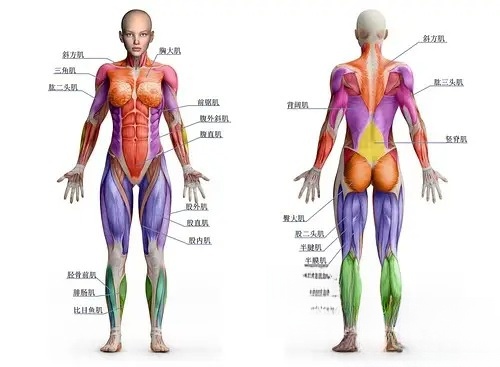
DAY 5: Chest, Arms, Waist, Abs DAY 6: Back, Arms, Cardio DAY 7: Legs, Shoulders, Waist, Abs ★★【Leg and Glute Training】★★ A complete glutes consists of an upper and lower part. Some people can do hundreds of squats, but their glutes are still not perky enough because they haven't focused on the upper part. Others already have a sexy back groove, but their glutes are still loose because they haven't paid attention to the lower part. Therefore, a complete training plan should include both the upper and lower parts. The upper part of a perky butt consists of the erector spinae and gluteus medius. The lower part consists of the gluteus maximus and biceps femoris.
1. Jog for 10 minutes to warm up.
2. Standing leg raises (back leg press machine).
Note: Keep your hips up; you don't need to fully straighten your leg to avoid working your hamstrings (the back of your legs).
Warm-up sets:
First set: 20RM or more, 20 reps. Second set
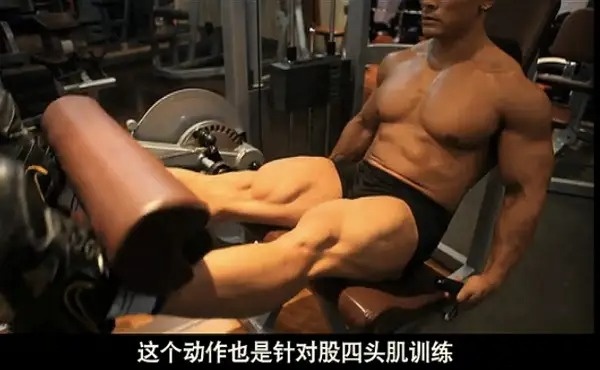
: Increase weight, still 20RM, about 15 reps. Working sets: First set : 20RM, about 8-15 reps. Second set : Increase weight, 20RM, about 8-12 reps . Third set: Maintain weight, to failure. Fourth set: Decrease weight, 20RM, to failure. 3. Leg extensions: Rest for 1-2 minutes between sets, pause briefly at the peak of the movement, and actively contract the muscles.
Warm-up sets:
Set 1: 20RM or higher, 20 reps.
Set 2: Increase weight, still 20RM, approximately 15 reps.
Working sets:
Set 1: 20RM, approximately 8-15 reps.
Set 2: Increase weight, 20RM, approximately 8-12 reps.
Set 3: Maintain weight until exhaustion.
Set 4: Decrease weight, 20RM, until exhaustion.
4. Squats (Lunges): Rest between sets should be 1-2 minutes.
How to perform a standard squat: http://www.zhihu.com/question/20768038?group_id=10378884#1574448
1. Keep your back straight when squatting! Don't lean forward excessively, as this will create extra pressure.
2. Don't worry about whether your toes go past your body; just squat down boldly.
3. Squat deeply, not half-squat. Squat until your thighs are parallel to the ground or even lower. This will better stimulate the gluteus maximus. If you're going to squat, squat deeply.
4. Whether squatting or standing up, ensure your knees and toes point in the same direction! Your toes should never point directly forward! In other words, your feet shouldn't be parallel; they should be turned outwards. Actually, you won't be parallel when you squat normally; try it if you don't believe me.
5. Always warm up before squatting to lubricate your knee joints. Some people's knees crack when they squat, no matter how much they warm up. If you've warmed up sufficiently and your joints still crack, but it doesn't hurt, don't worry about it. This is a physiological popping sound, possibly due to a lack of lubrication. It will stop as you gradually begin training.
6. Squats require a lot of flexibility in the lower back and upper body, so it's best to stretch before squatting.
7. A stance wider than shoulder-width is better, but it can also be narrower to stimulate other parts of the thighs, but the weight shouldn't be too heavy.
8. Don't stand on your toes. If you can't squat down without standing on your toes (with a proper stance), it means either you have a flexibility problem or your lower body
is too heavy .
9. It's best to use a heavier weight for squats. Because the lower body muscles are very strong, light weights are difficult to stimulate them.
10. Most importantly, squat however you feel comfortable; the squatting method that is most comfortable for you is definitely the safest.
Lunge tutorial: http://www.douban.com/group/topic/48250885/
Because I have a bad spine, I do front squats, which means placing the barbell in front of my neck, thus reducing pressure on my spine.
Lunge: Put all your body weight on the front leg; the back leg is just for balance.
Take 12 steps on one leg. Switch to the other leg.
You can also take 24 steps with alternating legs.
1) Stand with your feet shoulder-width apart, look up and forward, cross your arms behind your head, open your elbows to the sides, pull your shoulder blades back, and tighten your waist and abdomen to maintain body stability.
2) Lift one leg, tighten your buttocks and inner thighs of the standing leg to maintain balance, and slowly step forward, landing on your heel first and shifting your center of gravity forward until your entire foot is on the ground, forming a scissor squat position .
3) Continue to keep your hip joint and spine stable, shift your center of gravity slightly back and down until your thigh is parallel to the ground.
4) Actively engage your buttocks to open your hip joint before your knee joint, and return to the starting position. Throughout the process, keep your hip, knee, and toes in the same plane and direction, and do not sway from side to side.
4. Movement Improvement:
1) If you cannot balance while standing on one leg, practice exercises for the gluteus medius and vastus medialis. The exercises are standing hip abduction and 45-degree scissor squats.
2) If you are unstable when squatting, improve the eccentric contraction ability of the quadriceps or lower limb muscle tone balance.
3) If you are using too much thigh muscle force and cannot feel the gluteus maximus when practicing scissor squats, first practice lunge reach forwards or glute bridges to activate the gluteal muscles
. 4) If you cannot squat down, practice cross scissor squats or use a foam roller to relax the iliotibial band, and do step 2 correctly.
First set: 20RM, approximately 8-15 reps
. Second set: Increase weight, 20RM, approximately 8-12 reps.
Third set: Decrease weight, 20RM, approximately 8-15 reps.
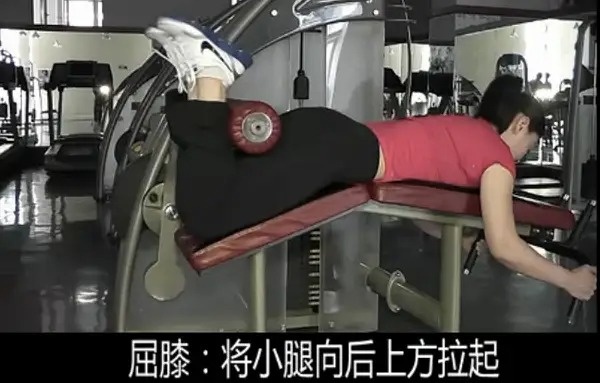
5. Lying Leg Curl: Rest between sets should be 1-2 minutes.
First set: 20RM, approximately 8-15 reps.
Second set: 20RM, approximately 8-15 reps.
Third set: 20RM, approximately 8-15 reps.
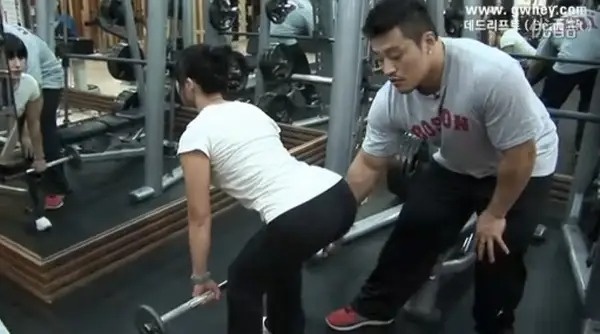
6. Romanian Deadlift
(a type of deadlift between straight-leg and bent-leg deadlifts).
Difference between straight-leg and bent-leg deadlifts: http://www.douban.com/group/topic/51829695/
How to do bent-leg deadlifts: http://www.douban.com/group/topic/46055457/
Instructions: Keep
your hands and feet shoulder-width apart,
fold at the hips, and keep your knees almost stationary to target your glutes rather than your legs. Don't lock your knees; use a slight bend to cushion the impact.
Keep your back straight! Shift your weight back, tailbone upwards.
Note:
Your thighs should be above horizontal, and your hips above the highest point of the squat, but too high a hip will prevent your legs from moving. Sit back, keeping your shoulders below your back and the barbell close to your shins. Don't stick your butt out first, then lift your upper body. Don't bend your elbows; use your back and leg muscles. First set:
20RM , approximately 8-15 reps. Second set: 20RM, approximately 8-15 reps. 7.
Seated Leg Abduction/Adduction: First set : 20RM, approximately 8-15 reps. Second set : 20RM, approximately 8-15 reps. Third set: 20RM, approximately 8-15 reps. 8. Weighted Glute Bridge : Slightly different from shoulder bridge. Your feet must be elevated so that when your hips are fully open, the upper gluteus maximus is under the most strain, not the hamstrings or erector spinae. On the other hand, the glute bridge departs from the scissor squat. Which exercise to choose depends on your specific situation. If you can't control your squat stably, start with the glute bridge to find the feeling of engaging your glutes. If you can maintain stability, I recommend practicing lunge forward reaches to get you into a more realistic training environment. First set: 20RM, approximately 8-15 reps. Second set: 20RM, approximately 8-15 reps. Third set: 20RM, approximately 8-15 reps. ★★【Back Training】★★ 1. 10-minute jogging warm-up. 2. Seated lat pulldowns: Rest time between sets should be 1-2 minutes.
Warm-up sets:
Set 1: 20 reps or more (20RM or higher)
Set 2: Increase weight, still greater than 20RM, 15 reps
Working sets
: Set 1: 8-15 reps (
20RM) Set 2: Increase weight, 8-12 reps (20RM
) Set 3: Maintain weight until exhaustion
3. Seated rows: Rest for 1-2 minutes between sets, pause briefly at the peak of the movement, and actively contract the muscles.
First set: 20RM, 8-15 reps
Second set: 20RM, approximately 8-15 reps
Third set: 20RM, to failure
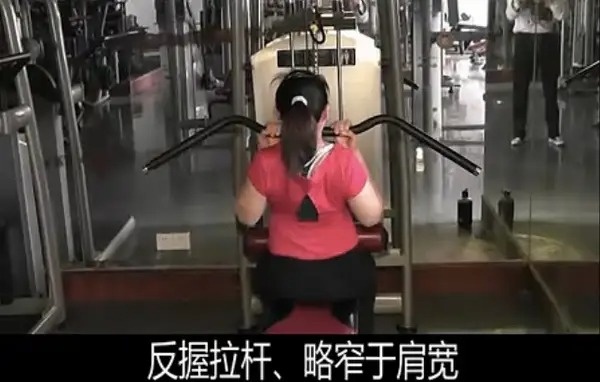
4. Narrow grip reverse lat pulldown: Rest between sets for 1-2 minutes
(actually, it's still the same machine as the seated lat pulldown, just with a reverse grip and narrower grip).
Note:
This exercise will widen your back, so control the number of reps.
Set 1: 20RM to failure
Set 2: 20RM to failure
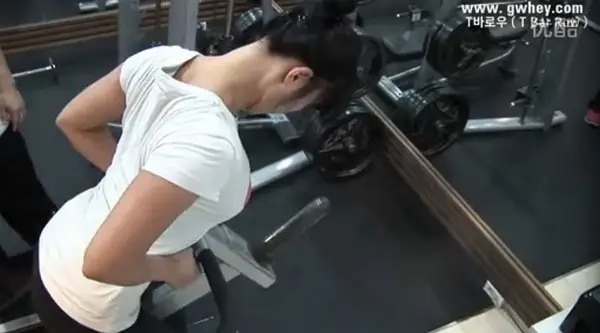
5. Barbell Row: Rest between sets should be 1-2 minutes. If you don't know how to do this exercise, you can substitute it with a T-bar row.
Barbell Row: http://v.youku.com/v_show/id_XMzM4OTM5MzI0.html
T-bar Row
Set 1: 20 reps, 8-15 reps
Set 2: 20 repetitions, 8-15 reps
Set 3: Reduce weight, 20 repetitions, to failure
[Blacklist of exercises that will thicken your waist]
1. Roman chair side bends
2. Rotation exercises
3. Hanging leg raises
4. Exercises that force the abdominal muscles to engage (e.g., squats, deadlifts)
★★【Chest Training】★★
1. 10-minute jogging warm-up
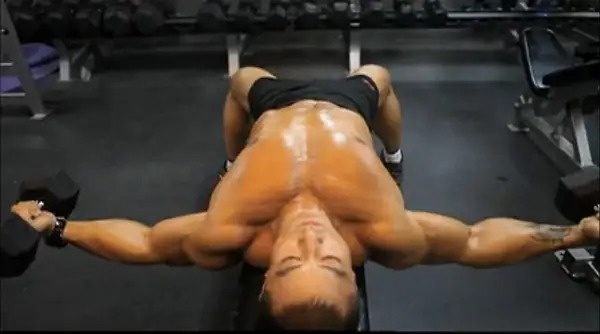
2. Dumbbell flyes: for chest development, rest 1-2 minutes between sets.
Note: Depress shoulders, squeeze the chest. Focus on squeezing, not pushing.
Warm-up sets:
Set 1: 20RM or higher, 20 reps.
Set 2: Increase weight, still above 20RM, 15 reps.
Working sets:
Set 1: 20RM, 8-15 reps.
Set 2: Increase weight, 20RM, 8-12 reps.
Set 3: Maintain weight until failure.
3. Barbell bench press:
Set 1: 20RM, 8-15 reps.
Set 2: 20RM, 8-15 reps.
Set 3: 20RM, to failure.
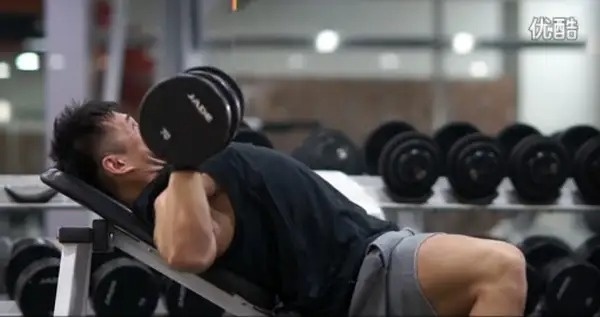
4. Incline dumbbell bench press: Rest between sets should be 1-2 minutes
(incline dumbbell bench press; note that the incline angle should be moderate, not exceeding 45 degrees).
Note: Do not lock the joints.
Training area: Lower pectoralis major, this is the location of breast tissue... so increasing the thickness of the lower chest can enhance breast size.
First set: 20RM, 8-15 reps
Second set: 20RM, 8-15 reps
Third set: 20RM, to failure
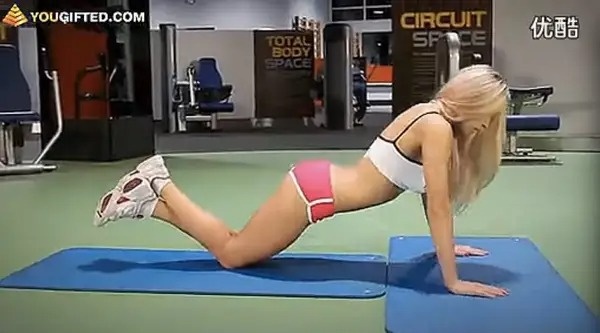
5. Push-ups: Rest between sets for 1-2 minutes
(if you can't do normal push-ups, do kneeling push-ups).
First set: to failure
Second set: to failure
Third set: to failure
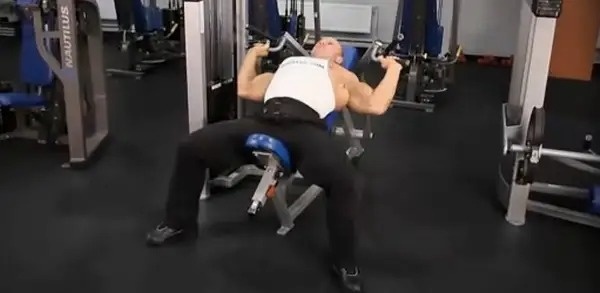
6. Cable crossover chest
press Target muscles: Pectoralis minor
First set: 20RM, 8-15 reps
Second set: 20RM, 8-15 reps
Third set: 20RM, to failure
5. 20-minute jog
★★【Shoulder Training】★★
1. 10-minute jog warm-up
2. Dumbbell press: 1-2 minutes rest between sets
Warm-up sets:
Set 1: 20RM or higher, 20 reps;
Set 2: Increase weight, still above 20RM, 15 reps;
Main sets
: Set 1: 20RM, 8-15 reps;
Set 2: Increase weight, 20RM, 8-12 reps
; Set 3: Maintain weight until exhaustion.
3. Upright rows: Rest 1-2 minutes between sets.
(This exercise can also be done with dumbbells, but the movement is more prone to instability. If you can control it well, you can do it. Note that when doing upright rows, it's best to use a wide grip to stimulate the deltoids more and not too much trapezius. The grip width should be shoulder-width apart, not too narrow.)
First set: 20RM, about 8-15 reps.
Second set: 20RM, about 8-15 reps.
Third set: 20RM, to failure.
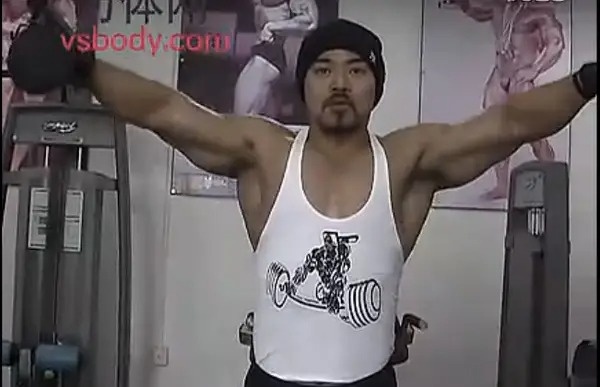
4. Hellish Lateral Raise: No rest time between sets within each cycle! Rest for one minute between cycles, and do two cycles.
Set 1: 20RM, 8-15 reps
Set 2: Reduce weight, 8-15 reps
Set 3: 20RM or more, to failure
After completing the first cycle, rest for 1 minute before starting the second cycle.
Set 1: 20RM, approximately 8-15 reps
Set 2: Reduce weight, approximately 8-15 reps
Set 3: 20RM or more, to failure
5. Lying Fly: Rest 30 seconds to 1 minute between sets.
(Keep your back straight!)
First set: 15-20 reps (greater than 20RM)
Second set: 15-20 reps (greater than 20RM)
★★【Arm Training】★★
1. 10-minute jogging warm-up
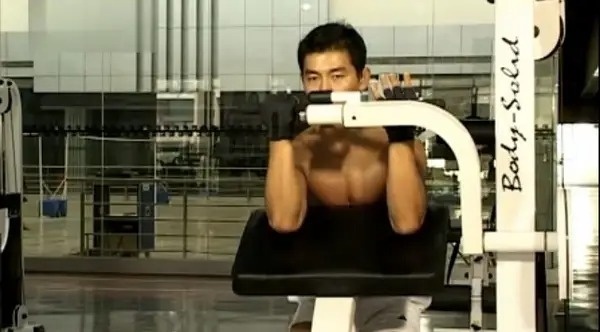
2. Dumbbell curls: 1-2 minutes rest between sets
Curl machine:
Warm-up sets:
Set 1: 20 reps (greater than 20RM)
Set 2: Increase weight, still greater than 20RM, 15 reps
Working sets
: Set 1: 8-15 reps (20RM)
Set 2: Increase weight, 8-12 reps (20RM
) Set 3: Maintain weight until exhaustion
Set 4: Reduce weight until exhaustion
3. Bench Triceps Extension: Rest 1-2 minutes between sets
(Be sure to stretch your shoulders before doing this exercise, otherwise you are prone to injury)
First set: Near exhaustion
Second set: Near exhaustion
Third set: Near exhaustion
4. Seated dumbbell overhead triceps extension
20RM, 4 sets
5. Cable pulldown
20RM, 4 sets
★★【Abdominal Training】★★
Divided into upper and lower abs
Step 1: Low-intensity abdominal training plan
Three times a week, every other day. You should feel soreness for 48 hours after finishing. It is normal not to feel pain. You can do it every day.
【1】Upper abs: Sit-ups, without pressing your feet. Remember to curl your abs, arch your back, and do not stretch your neck (you can hold something between your chin or keep it close to your collarbone and do not move it). 30 reps, 4 sets. 【2】Lower
abs: Leg raises. Lie on the bed or the ground, raise your hands overhead, fix your hands, and then do leg raises, keeping your knees together, arching your back, and raising them high. Requirements: When you come down, your feet should not touch the ground, or if they do touch the ground, you should get up immediately. 30 reps per set, 4 sets. Note: This movement is dangerous because it can injure your lower back. Do it slowly and do not use explosive force. Maintain continuous force throughout. If you keep your muscles under control throughout the movement, you will not injure your lower back. You can touch your lower back with your hand. Once there is a gap between your lower back and the ground, it means that your abdominal muscles are relaxed and you are using your bones to exert force. If you can't control it, put a pillow under your lower back.
After 4 or 5 sets, do air cycling, 300 reps per set, 4 sets, with 1.5 to 2 minutes of rest between sets.
[3] Side waist: [Note that you should only practice side waist once or twice a week. If you practice too much, your waist will become thicker.] External oblique crunches, 30 reps on each side, 4 sets.
All movements are 30 reps per set, 4 sets. The abdominal muscles recover much faster than other muscles, so you should strictly control the rest time between sets. It does not need to exceed 1 minute. That is to say, you should come back to lie down after 50 seconds to prepare for the next set.
Step Two:
5-Minute Ab Workout: http://v.youku.com/v_show/id_XMTEwMDkwOTIw.html 8-Minute Six-Pack Abs: http://v.youku.com/v_show/id_XMTYzODYxNzYw.html
Step Three:
In previous training sessions, you may have been able to complete the prescribed intensity of various abdominal exercises, but your lower abdomen still has too much subcutaneous fat. If this continues, continue with the two exercises from Step One, involving both the upper and lower abs. Side ab exercises can be done once a week. The difference is that you don't count; instead of 30 reps per set, you do an unlimited number of reps per set. If you can't do more, do ten more, rest for 30 seconds, and continue until you can't do more. Continue this process.
★★【Aerobic Training】★★
Pay attention to changing the number of sets, exercises, and weight to continuously stimulate muscle growth.
Pay attention to your diet and don't lack sugar.
Health
Fitness
Choose 3-4 exercises for large muscle groups, 3-4 sets per exercise, with a weight of 8-12 RM.
Choose 2-3 exercises for small muscle groups, 2-3 sets per exercise, with a weight of 10-15 RM.
For most women, 3-10 pounds is sufficient for small muscle group training, and 10-20 pounds for large muscle groups
. Common large muscle groups include chest, back, and legs. Common small muscle groups include shoulders, arms, and glutes.
[The Concept of RM and Sets]
RM (Repetition Maximum): The maximum number of repetitions for a given weight.
1RM: The maximum weight that can be lifted only once with proper form.
Training Weight: The weight used in a single resistance training exercise.
Repetitions: The number of repetitions of an exercise in a single set of resistance training.
Rest Between Sets: The rest time between sets.
For women, a weight of 10-20 RM is suitable, allowing for 10-20 repetitions—neither too light nor too heavy, just right.
(10-20RM refers to the weight you can lift to exhaustion after about 10-20 repetitions)
★★【Weekly Schedule】★★
DAY 1: Chest, Arms, Waist, Abs DAY
2: Back, Arms, Cardio
DAY 3: Legs, Shoulders, Waist , Abs
DAY 4: Rest
DAY 5: Chest, Arms, Waist, Abs DAY 6: Back, Arms, Cardio DAY 7: Legs, Shoulders, Waist, Abs ★★【Leg and Glute Training】★★ A complete glutes consists of an upper and lower part. Some people can do hundreds of squats, but their glutes are still not perky enough because they haven't focused on the upper part. Others already have a sexy back groove, but their glutes are still loose because they haven't paid attention to the lower part. Therefore, a complete training plan should include both the upper and lower parts. The upper part of a perky butt consists of the erector spinae and gluteus medius. The lower part consists of the gluteus maximus and biceps femoris.
 |
1. Jog for 10 minutes to warm up.
2. Standing leg raises (back leg press machine).
Note: Keep your hips up; you don't need to fully straighten your leg to avoid working your hamstrings (the back of your legs).
Warm-up sets:
First set: 20RM or more, 20 reps. Second set
: Increase weight, still 20RM, about 15 reps. Working sets: First set : 20RM, about 8-15 reps. Second set : Increase weight, 20RM, about 8-12 reps . Third set: Maintain weight, to failure. Fourth set: Decrease weight, 20RM, to failure. 3. Leg extensions: Rest for 1-2 minutes between sets, pause briefly at the peak of the movement, and actively contract the muscles.
 |
Warm-up sets:
Set 1: 20RM or higher, 20 reps.
Set 2: Increase weight, still 20RM, approximately 15 reps.
Working sets:
Set 1: 20RM, approximately 8-15 reps.
Set 2: Increase weight, 20RM, approximately 8-12 reps.
Set 3: Maintain weight until exhaustion.
Set 4: Decrease weight, 20RM, until exhaustion.
4. Squats (Lunges): Rest between sets should be 1-2 minutes.
How to perform a standard squat: http://www.zhihu.com/question/20768038?group_id=10378884#1574448
1. Keep your back straight when squatting! Don't lean forward excessively, as this will create extra pressure.
2. Don't worry about whether your toes go past your body; just squat down boldly.
3. Squat deeply, not half-squat. Squat until your thighs are parallel to the ground or even lower. This will better stimulate the gluteus maximus. If you're going to squat, squat deeply.
4. Whether squatting or standing up, ensure your knees and toes point in the same direction! Your toes should never point directly forward! In other words, your feet shouldn't be parallel; they should be turned outwards. Actually, you won't be parallel when you squat normally; try it if you don't believe me.
5. Always warm up before squatting to lubricate your knee joints. Some people's knees crack when they squat, no matter how much they warm up. If you've warmed up sufficiently and your joints still crack, but it doesn't hurt, don't worry about it. This is a physiological popping sound, possibly due to a lack of lubrication. It will stop as you gradually begin training.
6. Squats require a lot of flexibility in the lower back and upper body, so it's best to stretch before squatting.
7. A stance wider than shoulder-width is better, but it can also be narrower to stimulate other parts of the thighs, but the weight shouldn't be too heavy.
8. Don't stand on your toes. If you can't squat down without standing on your toes (with a proper stance), it means either you have a flexibility problem or your lower body
is too heavy .
9. It's best to use a heavier weight for squats. Because the lower body muscles are very strong, light weights are difficult to stimulate them.
10. Most importantly, squat however you feel comfortable; the squatting method that is most comfortable for you is definitely the safest.
Lunge tutorial: http://www.douban.com/group/topic/48250885/
Because I have a bad spine, I do front squats, which means placing the barbell in front of my neck, thus reducing pressure on my spine.
Lunge: Put all your body weight on the front leg; the back leg is just for balance.
Take 12 steps on one leg. Switch to the other leg.
You can also take 24 steps with alternating legs.
1) Stand with your feet shoulder-width apart, look up and forward, cross your arms behind your head, open your elbows to the sides, pull your shoulder blades back, and tighten your waist and abdomen to maintain body stability.
2) Lift one leg, tighten your buttocks and inner thighs of the standing leg to maintain balance, and slowly step forward, landing on your heel first and shifting your center of gravity forward until your entire foot is on the ground, forming a scissor squat position .
3) Continue to keep your hip joint and spine stable, shift your center of gravity slightly back and down until your thigh is parallel to the ground.
4) Actively engage your buttocks to open your hip joint before your knee joint, and return to the starting position. Throughout the process, keep your hip, knee, and toes in the same plane and direction, and do not sway from side to side.
4. Movement Improvement:
1) If you cannot balance while standing on one leg, practice exercises for the gluteus medius and vastus medialis. The exercises are standing hip abduction and 45-degree scissor squats.
2) If you are unstable when squatting, improve the eccentric contraction ability of the quadriceps or lower limb muscle tone balance.
3) If you are using too much thigh muscle force and cannot feel the gluteus maximus when practicing scissor squats, first practice lunge reach forwards or glute bridges to activate the gluteal muscles
. 4) If you cannot squat down, practice cross scissor squats or use a foam roller to relax the iliotibial band, and do step 2 correctly.
First set: 20RM, approximately 8-15 reps
. Second set: Increase weight, 20RM, approximately 8-12 reps.
Third set: Decrease weight, 20RM, approximately 8-15 reps.
5. Lying Leg Curl: Rest between sets should be 1-2 minutes.
 |
First set: 20RM, approximately 8-15 reps.
Second set: 20RM, approximately 8-15 reps.
Third set: 20RM, approximately 8-15 reps.
6. Romanian Deadlift
(a type of deadlift between straight-leg and bent-leg deadlifts).
Difference between straight-leg and bent-leg deadlifts: http://www.douban.com/group/topic/51829695/
How to do bent-leg deadlifts: http://www.douban.com/group/topic/46055457/
 |
Instructions: Keep
your hands and feet shoulder-width apart,
fold at the hips, and keep your knees almost stationary to target your glutes rather than your legs. Don't lock your knees; use a slight bend to cushion the impact.
Keep your back straight! Shift your weight back, tailbone upwards.
Note:
Your thighs should be above horizontal, and your hips above the highest point of the squat, but too high a hip will prevent your legs from moving. Sit back, keeping your shoulders below your back and the barbell close to your shins. Don't stick your butt out first, then lift your upper body. Don't bend your elbows; use your back and leg muscles. First set:
20RM , approximately 8-15 reps. Second set: 20RM, approximately 8-15 reps. 7.
Seated Leg Abduction/Adduction: First set : 20RM, approximately 8-15 reps. Second set : 20RM, approximately 8-15 reps. Third set: 20RM, approximately 8-15 reps. 8. Weighted Glute Bridge : Slightly different from shoulder bridge. Your feet must be elevated so that when your hips are fully open, the upper gluteus maximus is under the most strain, not the hamstrings or erector spinae. On the other hand, the glute bridge departs from the scissor squat. Which exercise to choose depends on your specific situation. If you can't control your squat stably, start with the glute bridge to find the feeling of engaging your glutes. If you can maintain stability, I recommend practicing lunge forward reaches to get you into a more realistic training environment. First set: 20RM, approximately 8-15 reps. Second set: 20RM, approximately 8-15 reps. Third set: 20RM, approximately 8-15 reps. ★★【Back Training】★★ 1. 10-minute jogging warm-up. 2. Seated lat pulldowns: Rest time between sets should be 1-2 minutes.
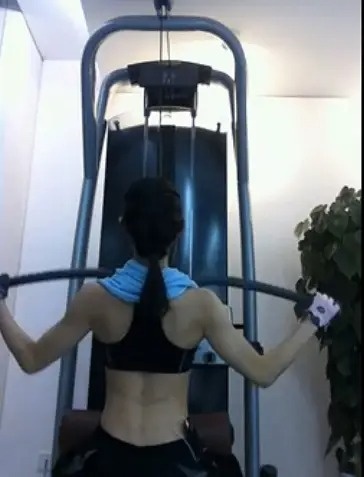 |
Warm-up sets:
Set 1: 20 reps or more (20RM or higher)
Set 2: Increase weight, still greater than 20RM, 15 reps
Working sets
: Set 1: 8-15 reps (
20RM) Set 2: Increase weight, 8-12 reps (20RM
) Set 3: Maintain weight until exhaustion
3. Seated rows: Rest for 1-2 minutes between sets, pause briefly at the peak of the movement, and actively contract the muscles.
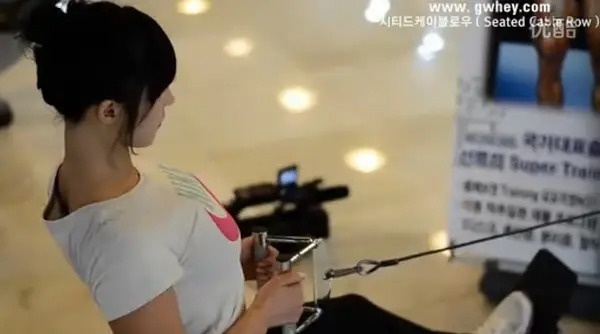 |
First set: 20RM, 8-15 reps
Second set: 20RM, approximately 8-15 reps
Third set: 20RM, to failure
4. Narrow grip reverse lat pulldown: Rest between sets for 1-2 minutes
(actually, it's still the same machine as the seated lat pulldown, just with a reverse grip and narrower grip).
Note:
This exercise will widen your back, so control the number of reps.
 |
Set 1: 20RM to failure
Set 2: 20RM to failure
5. Barbell Row: Rest between sets should be 1-2 minutes. If you don't know how to do this exercise, you can substitute it with a T-bar row.
Barbell Row: http://v.youku.com/v_show/id_XMzM4OTM5MzI0.html
T-bar Row
 |
Set 1: 20 reps, 8-15 reps
Set 2: 20 repetitions, 8-15 reps
Set 3: Reduce weight, 20 repetitions, to failure
[Blacklist of exercises that will thicken your waist]
1. Roman chair side bends
2. Rotation exercises
3. Hanging leg raises
4. Exercises that force the abdominal muscles to engage (e.g., squats, deadlifts)
★★【Chest Training】★★
1. 10-minute jogging warm-up
2. Dumbbell flyes: for chest development, rest 1-2 minutes between sets.
Note: Depress shoulders, squeeze the chest. Focus on squeezing, not pushing.
 |
Warm-up sets:
Set 1: 20RM or higher, 20 reps.
Set 2: Increase weight, still above 20RM, 15 reps.
Working sets:
Set 1: 20RM, 8-15 reps.
Set 2: Increase weight, 20RM, 8-12 reps.
Set 3: Maintain weight until failure.
3. Barbell bench press:
Set 1: 20RM, 8-15 reps.
Set 2: 20RM, 8-15 reps.
Set 3: 20RM, to failure.
4. Incline dumbbell bench press: Rest between sets should be 1-2 minutes
(incline dumbbell bench press; note that the incline angle should be moderate, not exceeding 45 degrees).
Note: Do not lock the joints.
Training area: Lower pectoralis major, this is the location of breast tissue... so increasing the thickness of the lower chest can enhance breast size.
 |
First set: 20RM, 8-15 reps
Second set: 20RM, 8-15 reps
Third set: 20RM, to failure
5. Push-ups: Rest between sets for 1-2 minutes
(if you can't do normal push-ups, do kneeling push-ups).
 |
First set: to failure
Second set: to failure
Third set: to failure
6. Cable crossover chest
press Target muscles: Pectoralis minor
First set: 20RM, 8-15 reps
Second set: 20RM, 8-15 reps
Third set: 20RM, to failure
5. 20-minute jog
★★【Shoulder Training】★★
1. 10-minute jog warm-up
2. Dumbbell press: 1-2 minutes rest between sets
 |
Warm-up sets:
Set 1: 20RM or higher, 20 reps;
Set 2: Increase weight, still above 20RM, 15 reps;
Main sets
: Set 1: 20RM, 8-15 reps;
Set 2: Increase weight, 20RM, 8-12 reps
; Set 3: Maintain weight until exhaustion.
3. Upright rows: Rest 1-2 minutes between sets.
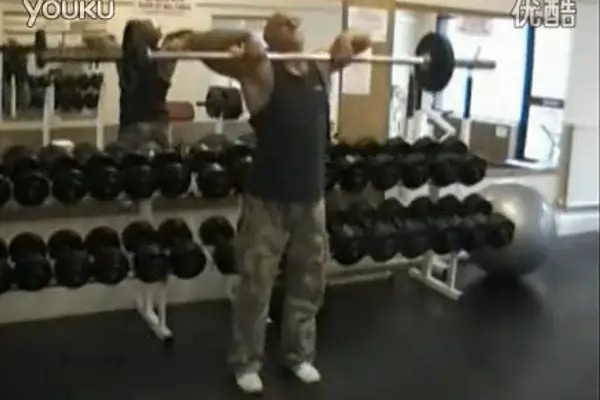 |
(This exercise can also be done with dumbbells, but the movement is more prone to instability. If you can control it well, you can do it. Note that when doing upright rows, it's best to use a wide grip to stimulate the deltoids more and not too much trapezius. The grip width should be shoulder-width apart, not too narrow.)
First set: 20RM, about 8-15 reps.
Second set: 20RM, about 8-15 reps.
Third set: 20RM, to failure.
4. Hellish Lateral Raise: No rest time between sets within each cycle! Rest for one minute between cycles, and do two cycles.
 |
Set 1: 20RM, 8-15 reps
Set 2: Reduce weight, 8-15 reps
Set 3: 20RM or more, to failure
After completing the first cycle, rest for 1 minute before starting the second cycle.
Set 1: 20RM, approximately 8-15 reps
Set 2: Reduce weight, approximately 8-15 reps
Set 3: 20RM or more, to failure
5. Lying Fly: Rest 30 seconds to 1 minute between sets.
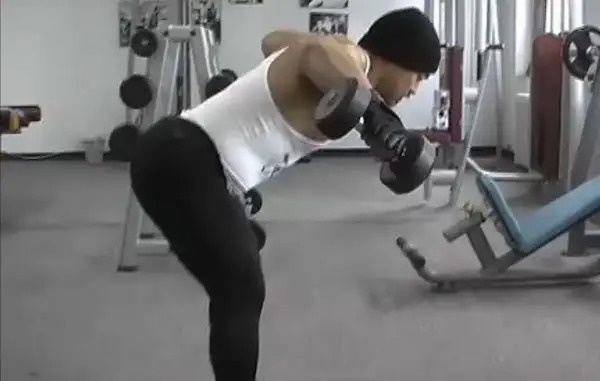 |
(Keep your back straight!)
First set: 15-20 reps (greater than 20RM)
Second set: 15-20 reps (greater than 20RM)
★★【Arm Training】★★
1. 10-minute jogging warm-up
2. Dumbbell curls: 1-2 minutes rest between sets
Curl machine:
 |
Warm-up sets:
Set 1: 20 reps (greater than 20RM)
Set 2: Increase weight, still greater than 20RM, 15 reps
Working sets
: Set 1: 8-15 reps (20RM)
Set 2: Increase weight, 8-12 reps (20RM
) Set 3: Maintain weight until exhaustion
Set 4: Reduce weight until exhaustion
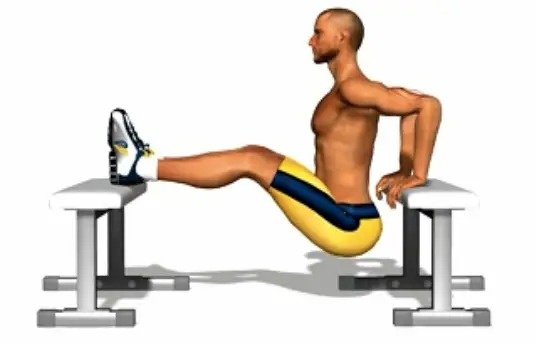
3. Bench Triceps Extension: Rest 1-2 minutes between sets
(Be sure to stretch your shoulders before doing this exercise, otherwise you are prone to injury)
 |
First set: Near exhaustion
Second set: Near exhaustion
Third set: Near exhaustion
4. Seated dumbbell overhead triceps extension
20RM, 4 sets
5. Cable pulldown
20RM, 4 sets
★★【Abdominal Training】★★
Divided into upper and lower abs
Step 1: Low-intensity abdominal training plan
Three times a week, every other day. You should feel soreness for 48 hours after finishing. It is normal not to feel pain. You can do it every day.
【1】Upper abs: Sit-ups, without pressing your feet. Remember to curl your abs, arch your back, and do not stretch your neck (you can hold something between your chin or keep it close to your collarbone and do not move it). 30 reps, 4 sets. 【2】Lower
abs: Leg raises. Lie on the bed or the ground, raise your hands overhead, fix your hands, and then do leg raises, keeping your knees together, arching your back, and raising them high. Requirements: When you come down, your feet should not touch the ground, or if they do touch the ground, you should get up immediately. 30 reps per set, 4 sets. Note: This movement is dangerous because it can injure your lower back. Do it slowly and do not use explosive force. Maintain continuous force throughout. If you keep your muscles under control throughout the movement, you will not injure your lower back. You can touch your lower back with your hand. Once there is a gap between your lower back and the ground, it means that your abdominal muscles are relaxed and you are using your bones to exert force. If you can't control it, put a pillow under your lower back.
After 4 or 5 sets, do air cycling, 300 reps per set, 4 sets, with 1.5 to 2 minutes of rest between sets.
[3] Side waist: [Note that you should only practice side waist once or twice a week. If you practice too much, your waist will become thicker.] External oblique crunches, 30 reps on each side, 4 sets.
All movements are 30 reps per set, 4 sets. The abdominal muscles recover much faster than other muscles, so you should strictly control the rest time between sets. It does not need to exceed 1 minute. That is to say, you should come back to lie down after 50 seconds to prepare for the next set.
Step Two:
5-Minute Ab Workout: http://v.youku.com/v_show/id_XMTEwMDkwOTIw.html 8-Minute Six-Pack Abs: http://v.youku.com/v_show/id_XMTYzODYxNzYw.html
Step Three:
In previous training sessions, you may have been able to complete the prescribed intensity of various abdominal exercises, but your lower abdomen still has too much subcutaneous fat. If this continues, continue with the two exercises from Step One, involving both the upper and lower abs. Side ab exercises can be done once a week. The difference is that you don't count; instead of 30 reps per set, you do an unlimited number of reps per set. If you can't do more, do ten more, rest for 30 seconds, and continue until you can't do more. Continue this process.
★★【Aerobic Training】★★
Pay attention to changing the number of sets, exercises, and weight to continuously stimulate muscle growth.
Pay attention to your diet and don't lack sugar.