Cultivation and Appreciation of Common Household Flowers (Part 5)
Honeysuckle (Lonicera japonica),
also known as winter jasmine or two-colored vine,
is an evergreen or semi-evergreen climbing vine belonging to the genus Lonicera in the family Caprifoliaceae
. It is native to China, Korea, Japan, and other regions.
Honeysuckle vines twine and grow lushly, blooming in spring and summer with a strong fragrance, making it an ideal outdoor potted flower for the spring and summer seasons.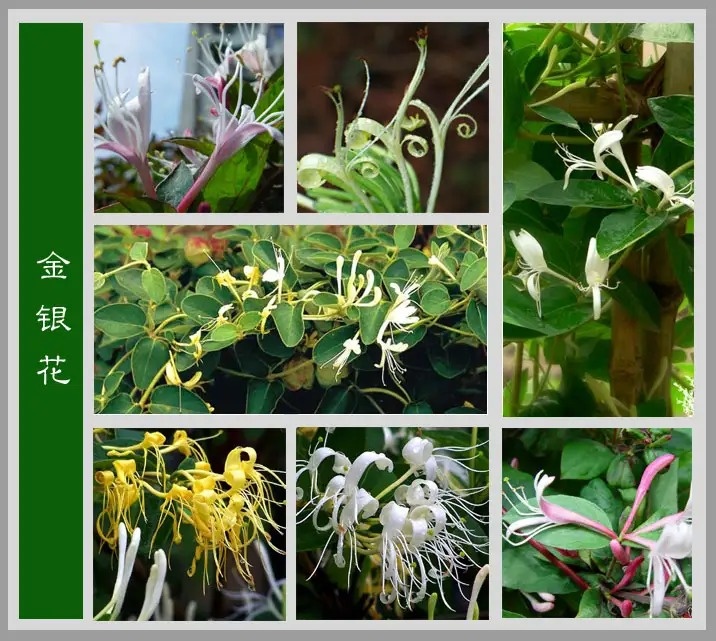
Morphological Characteristics:
Honeysuckle is an evergreen climbing vine with peeling bark and hollow branches; leaves are opposite, ovate or nearly heart-shaped; flowering period is long, lasting 2-3 months. In the Yangtze River basin, when potted, initial flowering usually occurs in mid-April. Common varieties include red honeysuckle, white honeysuckle, and ever-blooming honeysuckle. Red honeysuckle has a reddish outer petal; white honeysuckle blooms white initially, then turns yellow; ever-blooming honeysuckle blooms continuously from spring to late autumn.
Biological Habits:
Honeysuckle prefers a warm, slightly humid, and sunny environment. Although it can tolerate shade, in shady environments, it is prone to excessive vegetative growth, weak branches, small leaves, and difficulty in flowering, affecting the plant's aesthetic appearance. The optimal growth temperature is 12℃~26℃. If the temperature is too low, the leaf surface will turn red and growth will slow down. This is due to inhibited sugar metabolism, resulting in the synthesis of more anthocyanins. Honeysuckle is not particular about soil, and can adapt to both acidic and alkaline soils. It is drought-tolerant and water-tolerant, but water should not accumulate in the pot.
Gloxinia, also known as Snow Mud, is a plant belonging to the genus Gloxinia in the family Gesneriaceae.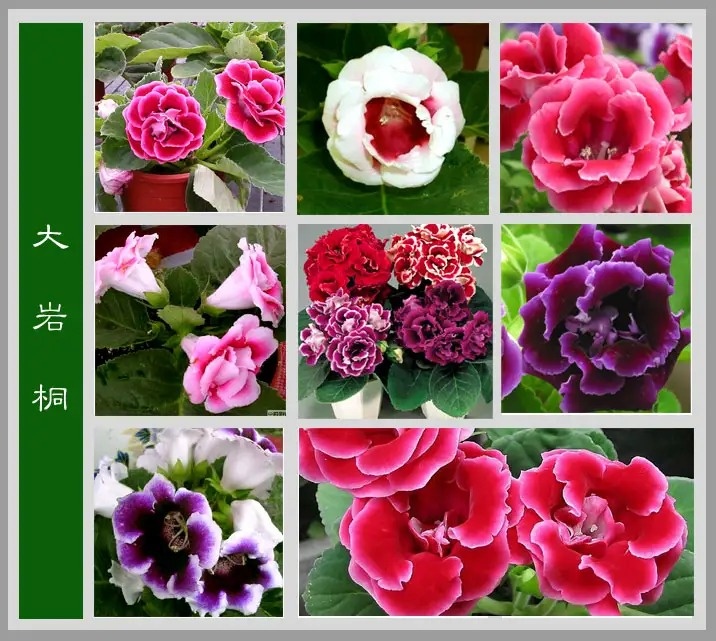
[Overview] Gloxinia, with its lush green foliage and vibrant red and white flowers, is a renowned indoor potted plant. It blooms twice a year, in spring and autumn, its elegant and beautiful bell-shaped flowers providing decorative potted plants for holidays like May Day and National Day. Gloxinia was discovered in Brazil, South America, in 1785 and introduced to Europe in the early 19th century. Through hybridization and breeding in the 1860s, ornamental varieties were selected. By the 1960s, the United States had developed four cultivars: double-flowered varieties with flowers 7-12 cm in diameter and deep blue-white edges, and double-flowered varieties with bright red-white edges. In the 1990s, dwarf and miniature gloxinias were developed, opening up new avenues for potted ornamental cultivation.
The introduction of gloxinia to China mainly occurred in the 1930s, with the College of Agriculture of Jinling University in Nanjing and the Sun Yat-sen Memorial Botanical Garden importing it from the United States. After the founding of the People's Republic of China, botanical gardens across the country officially began introducing and testing it. Small-scale production only began in the 1990s and has yet to reach large-scale production.
[Morphological Characteristics and Varieties] Gloxinia is a perennial herb. The tuber is flattened-globose. Leaves are opposite, thick and large, densely covered with fine hairs. Flowers are bell-shaped, with rich colors, large and beautiful. There are many cultivated varieties of Gloxinia, with flower colors including blue, pink, white, red, and purple, as well as bicolor varieties with white edges and blue flowers, white edges and red flowers, and double-petaled flowers.
[Biological Characteristics] Gloxinia originated in Brazil. It grows wild in tropical highland regions with cool summers and warm winters. Gloxinia prefers warm, humid, and semi-shaded environments during its growing season. The suitable temperature from January to October is 18-23℃, and from October to January of the following year, it is 10-12℃. High temperatures and humidity in summer are detrimental to plant growth, requiring appropriate shading. High air humidity is required during the growing season for lush, green leaf growth. During the winter dormancy period, keep the soil dry; if humidity is too high and the temperature is low, the tuber is prone to rotting. The winter temperature should not fall below 5℃. It requires fertile, loose, well-drained humus-rich soil.
Calendula, also known as everlasting chrysanthemum,
is a plant belonging to the genus Calendula in the family Asteraceae.
Calendula plants are short, with dense, brightly colored flowers and a long flowering period, making them one of the most common herbaceous flowers in early spring gardens and cities.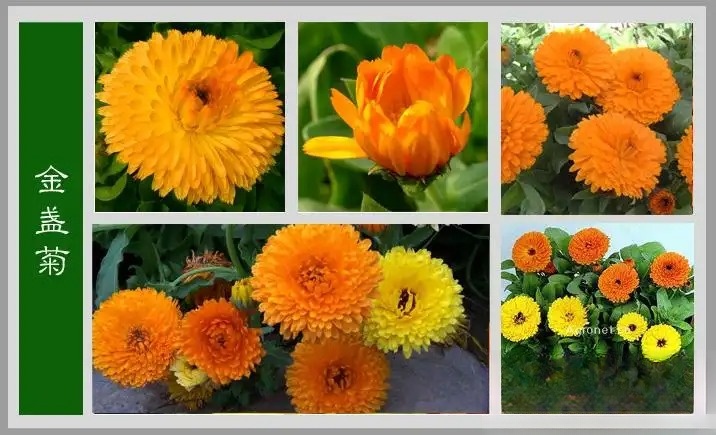
Calendula, native to Europe, has a long history of cultivation there, widely used in home gardens and as a potted ornamental plant. In city street planting troughs and scattered corner flower beds, calendula is one of the main plants in early spring. Due to the continuous emergence of new flower varieties, the status of calendula has slightly declined. However, there are still many new varieties of calendula. To this day, Thompson & Morgan Company of Britain and Danzig Flower Company of Israel are renowned in Europe for their calendula breeding and production, and their new varieties are cultivated all over the world.
The cultivation of calendula in China was introduced from abroad after the 18th century, and potted calendula appeared thereafter. During the Qianlong period of the Qing Dynasty, large-scale production of calendula was already seen in the suburbs of Shanghai. After the founding of the People's Republic of China, calendula was widely cultivated in gardens for potted ornamental purposes and flower bed arrangements. After the 1980s, double-flowered, large-flowered, and dwarf calendula were introduced to China, giving calendula a completely new look, and it has now become one of China's important herbaceous flowers.
Morphological characteristics and varieties: Calendula is a biennial herb. The entire plant is hairy. Leaves are alternate and oblong. The flower heads are solitary, about 5 cm in diameter, and come in yellow, orange, orange-red, white, etc. There are also cultivated varieties with double petals, curled petals, and green or deep purple centers. Common varieties include Bon Bon, which grows to 30 cm tall, with compact flowers 5-7 cm in diameter, and colors such as yellow, apricot, and orange. Fiesta Gitana, which grows to 25-30 cm tall, is an early-flowering variety with double flowers 5 cm in diameter, and colors such as yellow, orange, and bicolor. The Kablouna series grows to 50 cm tall, with large flowers in colors such as golden yellow, orange, lemon yellow, and apricot yellow, and has a dark center. The 1998 new variety, Kablouna Lemon Cream, has beige ray florets with a lemon-yellow center. Touch of Red: Plants grow to 40-45 cm tall, with double flowers, 6 cm in diameter, in red, yellow, and red/yellow bicolor. Each ray floret has a red tip. Gem series: Plants grow to 30 cm tall, with double flowers, 6-7 cm in diameter, in lemon yellow and golden yellow. Dwarf Gem is particularly famous. Other varieties include Saint-Gitt, an extremely dwarf variety with large, double flowers, 8-10 cm in diameter. Auspicious: An extremely dwarf variety with strong branching, large, double flowers, 7-8 cm in diameter. Other varieties include Lemon Queen and Orange King.
Biological characteristics: Calendula originates from southern Europe and the Mediterranean coast. It is cold-hardy but dislikes heat and prefers full sun.
The optimal growth temperature for calendula is 7-20℃. Seedlings can tolerate winter temperatures as low as -9℃, while mature plants thrive at 0℃. If the temperature is too low, a thin film should be used for protection; otherwise, the leaves are easily damaged by frost. When winter temperatures exceed 10℃, calendula exhibits excessive vegetative growth. In summer, rising temperatures lead to vigorous stem and leaf growth, resulting in smaller flowers and significantly fewer petals.
Calendula seedlings benefit from slightly moist conditions, promoting stem and leaf growth and enhancing cold resistance in winter. Mature plants thrive in slightly drier conditions, controlling stem and leaf growth and preventing excessive vegetative growth. In indoor or greenhouse cultivation, excessive humidity should be avoided, as it increases susceptibility to disease. Ventilation should be improved to regulate indoor humidity.
Calendula prefers ample sunlight, especially during winter when seedlings are grown outdoors or in greenhouses. Sufficient sunlight is crucial for stem and leaf growth, resulting in short, sturdy, and uniform seedlings. Excessive rain or snow, coupled with insufficient sunlight, can cause yellowing of basal leaves and even root rot and death.
Fertile, loose, and well-drained sandy loam or potting soil is ideal. A soil pH of 6-7 is optimal, promoting branching and abundant, large flowers.
Azalea (also known as rhododendron, mountain rhododendron, mountain azalea, red azalea, mountain pomegranate, etc.)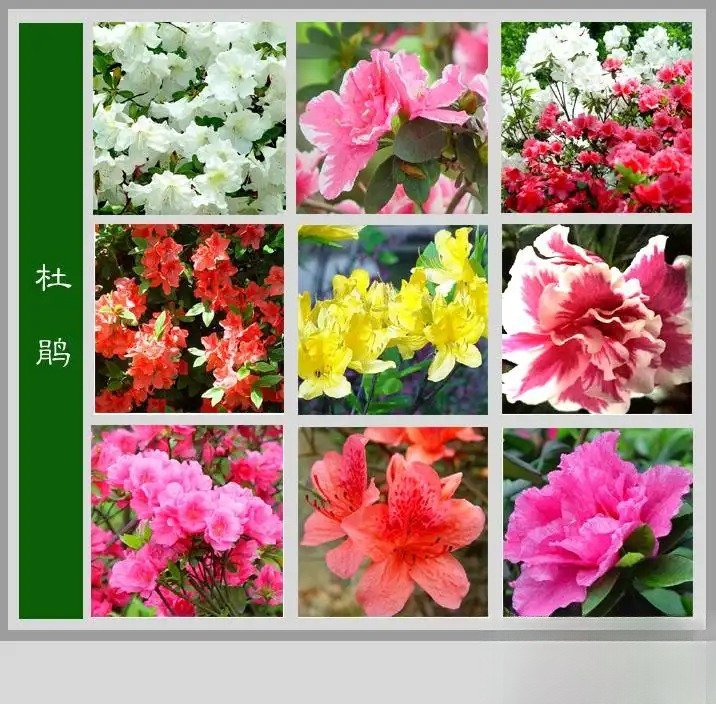
Belonging to the Ericaceae family, it is an evergreen or deciduous shrub. The plant is low-growing and naturally shaped. Glandular scales are often present on the branches and leaves. Leaves are alternate, ovate-elliptic. Flowers are solitary or in racemes, with a bell-shaped or broadly funnel-shaped corolla, usually five-lobed, and colors vary depending on the species, including red, yellow, white, purple, and pink. Spring azaleas generally bloom in April, while summer azaleas bloom in May and June. The fruit is a capsule containing numerous small seeds.
Rhododendrons are native to China, and are also distributed in the high mountains of the Malay Peninsula and southern Asia. Evergreen rhododendron species are extremely abundant in the mountainous areas of Sichuan, Yunnan, and Guizhou provinces of China, while deciduous rhododendrons are distributed from Northeast China to South China. Natural communities are found in high mountains, growing on shady slopes, and are semi-shade plants. They prefer cool climates, high humidity, and acidic soils, and can tolerate poor soil, but not waterlogging.
Rhododendrons are divided into two main categories: evergreen rhododendrons and deciduous rhododendrons. Based on flowering time, they are further divided into spring azaleas and summer azaleas. Due to natural and artificial hybridization breeding... With over 800 cultivated varieties, it is a world-renowned ornamental plant. my country's rhododendrons are famous worldwide, sharing the prestigious title of "Three Great Alpine Flowers" with primroses and gentians.
Hydrangea scientific name: *Lydlangea macrophylla*
Hydrangea English name: *Largeleaf Hydrangea
* Hydrangea other names: Hydrangea, Hydrangea macrophylla, Hydrangea florida, Hydrangea florida, Hydrangea
macrophylla Family and genus: Saxifragaceae, *Lydrangea* Deciduous shrub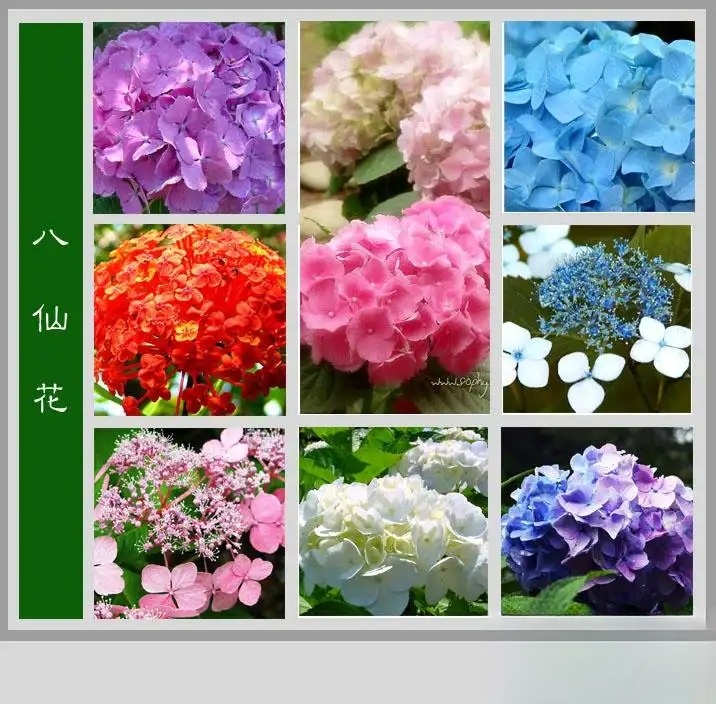
[Growth Habits] Native to areas south of the middle and lower reaches of the Yangtze River in my country, it is highly adaptable. It prefers shade, moisture, and warmth. It grows best in loose, acidic soil rich in humus and with good drainage. It is not cold-hardy and should be overwintered indoors at temperatures above 5°C in areas north of the Yangtze River.
The dahlia, also
known as Dahlia pinnata
, is
a perennial herbaceous flowering
plant belonging to the genus Dahlia in the family Asteraceae. It is characterized by its numerous varieties, diverse flower shapes, rich colors, and long blooming period, making it one of the world's most famous flowers.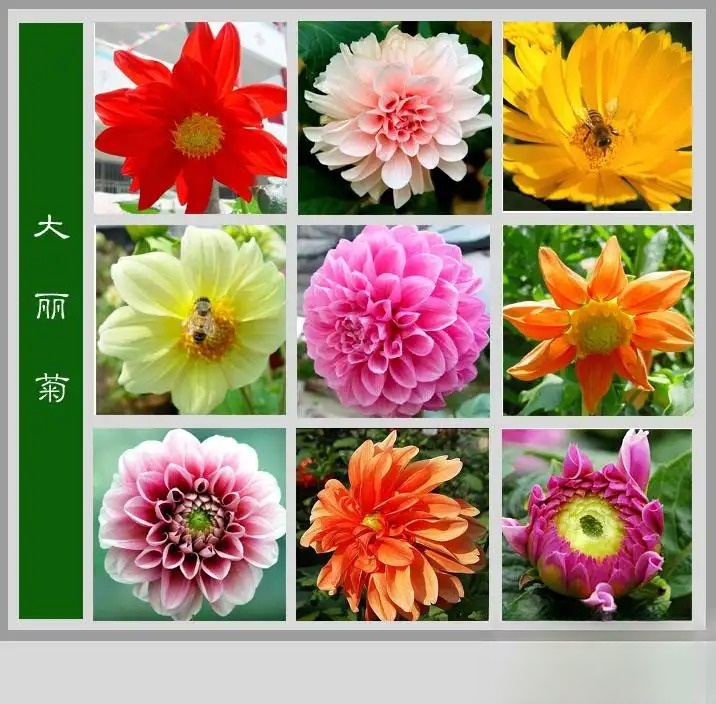
Since its domestication by Mexicans in 1519, the dahlia has developed rapidly. By the early 19th century, Germany had cultivated over 100 single-petaled dahlia varieties, followed by the development of double-petaled varieties. Cultivation of dahlias in England began in 1789, and after the 1870s, double-petaled varieties such as cactus-type, dwarf-type, and peony-type were developed, providing conditions for potted dahlias. Since the 1930s, Japan, the United States, and the United Kingdom have achieved significant results in dahlia breeding. Among them, Pan American Seed Company in the United States and Thompson & Morgan Company in the United Kingdom are particularly prominent in dahlia breeding and production. In recent years, Fides Company in the Netherlands has led the world in the breeding and production of potted dahlias.
Dahlia cultivation in China began in the late 19th century, initially in Shanghai, and later flourished in Northeast and North China. Today, single-stem dahlias cultivated in Liaoning, Jilin, Hebei, Tianjin, Beijing, Shandong, and Gansu provinces are even more magnificent and noble, possessing a strong traditional character. Meanwhile, dwarf potted dahlias have entered large-scale production in major cities.
[Morphological Characteristics and Varieties]
Dahlias are perennial herbs. They have fleshy, spindle-shaped, clustered tubers underground. The stems are erect, smooth, branched, and hollow. Leaves are opposite, pinnately deeply lobed, with ovate lobes. The flower heads are terminal; the ray florets are varied and vibrant in color, while the disc florets are often yellow.
Common varieties include the single-petaled Dandy, which grows to 60 cm tall, with single flowers 9 cm in diameter, and is famous for its bicolor varieties, especially the purple ray florets and white disc florets. Harlequin, which grows to 31 cm tall, with single flowers 6 cm in diameter, is particularly prized for its deep red ray florets and white disc florets, and its yellow ray florets and white disc florets. Mignon Silver: 30-35 cm tall, single-petaled, wide, white flowers with only 8 ray florets. Piccolor series: 20-25 cm tall, single-petaled flowers, 6-7 cm in diameter, flower colors include white, yellow, deep red, pink, orange-red, and bicolor. Bambino (semi-double and double types): 30-35 cm tall, small, sub-double flowers, belonging to the miniature type. Figaro series: 20 cm tall, semi-double and double flowers, 6-8 cm in diameter, flower colors include yellow, orange, red, orange-red, deep red, purple, white, and pink. Rigoleto series: 30 cm tall, double flowers, 6-7 cm in diameter, flower colors include yellow, red, orange, pink, and white, belonging to early-flowering varieties. SunnyHybridYellow: Plant height 30-35 cm, semi-double or double flowers, 6-7 cm in diameter, yellow flowers. A bronze-leaved variety is the Diablo series, plant height 35-40 cm, double flowers, 8 cm in diameter, flower colors include deep red, orange, and pink, bronze leaves, an early-flowering variety. Redskin: Plant height 45 cm, double or semi-double flowers, 7-8 cm in diameter, multi-colored flowers, bronze leaves.
[Biological Characteristics]
Dahlias originate from the Mexican highlands. They prefer warm, humid, and sunny environments.
The optimal growth temperature for dahlias is 10-25℃. Cool summers with a diurnal temperature range of over 10℃ are ideal for growth and flowering. Summer temperatures above 30℃ will result in abnormal growth and fewer flowers. Winter temperatures below 0℃ can cause frost damage. Tubers should be stored at 3-5℃.
Dahlias are relatively sensitive to water. Dahlias are intolerant of both drought and waterlogging, and are best suited for cultivation in areas with an annual rainfall of 500-800 mm. In the middle and lower reaches of the Yangtze River, the heavy rainfall during the plum rain season is extremely detrimental to the growth of outdoor potted dahlias, often causing them to wither and die from waterlogging. In Northwest and North China, sufficient water is extremely beneficial for the growth and development of potted dahlias.
Potted dahlias prefer full sunlight. They grow robust stems and leaves, and produce abundant, brightly colored flowers. However, they dislike prolonged direct sunlight and require appropriate shading to prolong the flowering period.
The best soil is a mixture of well-drained and water-retentive leaf mold or peat moss and potting soil. Potting soil should not be reused, otherwise the tubers are prone to degeneration and infection by pests and diseases.
Verbena hybnida (scientific name: *Verbena hybnida
*) Other names: Beauty Cherry, Grass Five-Colored Plum, Ground Spreading Brocade, Four Seasons Hydrangea, Ground Spreading
Verbena Family and Genus: Verbenaceae, *Verbena* Category: Perennial Herbaceous Flower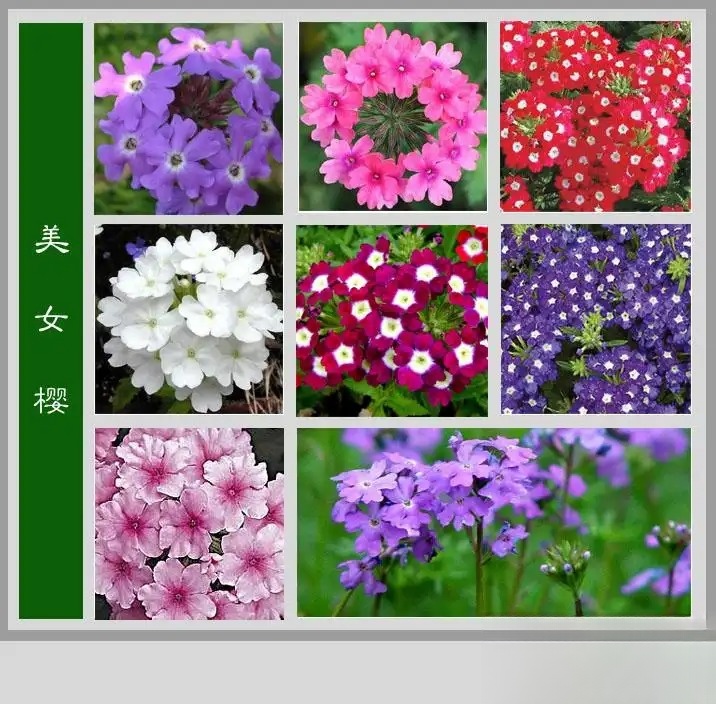
[Morphological Characteristics and Varieties] The plant has a wide, spreading growth habit, forming clumps that cover the ground, reaching a height of 40-50 cm. The entire plant is covered in grayish soft hairs. The stems are quadrangular. Leaves are opposite, with short petioles, oblong or lanceolate-triangular, with serrated margins, or slightly lobed near the base. The spike-like inflorescences are terminal, but the flowering part is corymbose, with small, densely packed flowers. The bracts are nearly lanceolate. The calyx is slender and tubular, and the corolla is tubular with 5 lobes at the apex. Flowers come in various colors including white, pink, red, purple, and blue, and are slightly fragrant. The nutlets are short and club-shaped. The flowering period is long, lasting from April to late October. Varieties include a white-centered variety with a large, prominent white throat; and a variegated variety with multicolored variegation along the corolla margin. Commonly cultivated related species include Canadian Verbena, Red-leaved Verbena, Narrow-leaved Verbena, and Verbena officinalis.
[Biological Characteristics] Verbena is a cluster of brightly colored flowers, an important flowering plant for summer and autumn flower beds, and also suitable for potted cultivation. Native to Brazil, Peru, Uruguay, and other regions, Verbena thrives in warm, humid climates, prefers full sun, and is intolerant of shade, cold, and drought. It grows best in loose, fertile, and moist neutral soil, producing abundant blooms. While a perennial herbaceous plant, it is often cultivated as an annual. It prefers sunlight, is relatively cold-hardy, has poor shade tolerance, and is intolerant of drought. In northern regions, it is often cultivated as an annual, blooming frequently during the hot summer months. It produces abundant flowers in full sun and loose, fertile soil.
Verbena is sensitive to water during its growth, disliking both drought and waterlogging. The potting soil must be kept moist during the seedling stage to promote growth. Once mature, its drought tolerance increases; however, in hot weather with high water consumption, sufficient water should be ensured. Frequent rainy days can lead to weak, elongated vines and reduced flowering, or even wilting and death of the stems and leaves.
Sunlight is crucial for the growth and development of Verbena. Verbena needs ample sunlight from seedling growth to flowering to produce robust stems and leaves, dense flower stalks, continuous blooming, and vibrant flower colors. If kept in partial shade or with insufficient light for extended periods, the stems and leaves will easily become leggy, resulting in fewer flowers, smaller blooms, and less vibrant colors.
The soil should be a fertile, loose, and well-drained mixture of potting soil, peat moss, and coarse sand, with a pH of 6.0–6.5.
Pomegranate scientific name: Punica granatum Linn.
English name: Spine Wild
Pomegranate Other names: Anshiliu, Pearl Pomegranate, Sea Pomegranate, Ruoliu, Danruo, Tianjiang
Pomegranate Family name: Punicaceae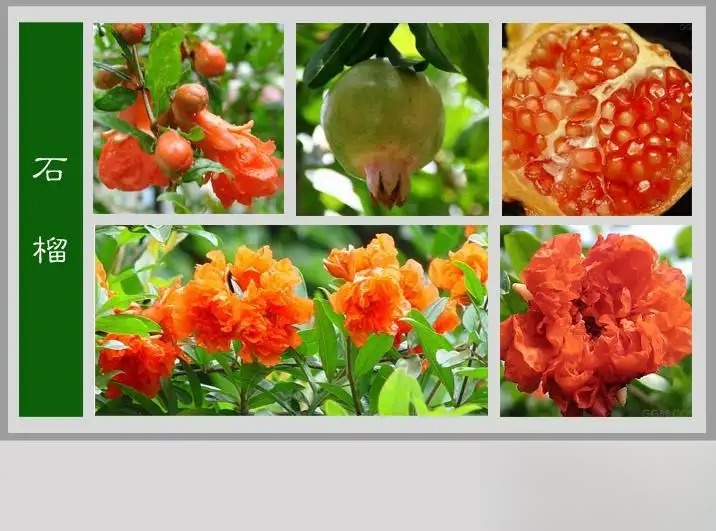
A deciduous shrub or small tree, 2–7 meters tall; branchlets round or slightly angular, apex spiny, smooth and hairless. Leaves opposite or clustered, oblong to oblong, or elliptic-lanceolate, 2–8 cm long, 1–2 cm wide, apex acute, glossy on the upper surface, midrib prominent on the lower surface; petiolate short.
Flowers 1 to several, borne at the branch tips or in the axils, with short pedicels; calyx campanulate, orange-red, thick, 2–3 cm long, apex 5–7-lobed, lobes with papillate projections on the outside; petals the same number as sepals, alternate, borne inside the calyx tube, obovate, slightly exceeding the calyx lobes, usually red, but also white, yellow, or deep red, petals wrinkled, with several varieties depending on whether they are single or double. Flowering period June–July, fruiting period September–October.
English name: (Chaenomeles lagenaria)
Also known as iron-footed crabapple or iron-horn crabapple,
belonging to the Rosaceae family and the Chaenomeles genus.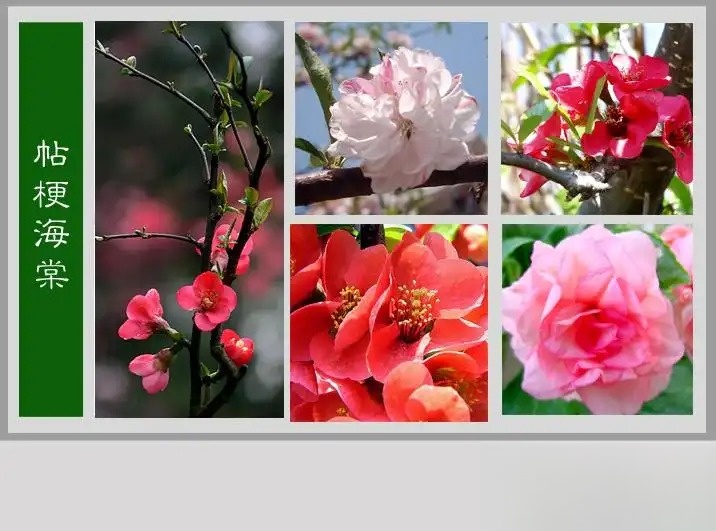
Its flowers are fresh, plump, and dazzling, making it one of the main spring flowering trees in gardens. It can be planted individually in gardens to create flower borders, planted in rows as flower hedges, or grown in pots for ornamental purposes. It is also an ideal material for bonsai of flowering and fruiting trees.
(I) Morphological characteristics and varieties:
Deciduous shrub, 1 to 2 meters tall. Branches are upright and spreading, thorny and hairless. Leaves are simple, alternate, oblong-ovate to elliptical, with sharp serrations on the leaf margins. Stipules are large, kidney-shaped or semi-circular, without petioles, and appear to clasp the stem. Flowers are solitary or clustered in several on the interior of two-year-old branches. The pedicels are very short and almost nonexistent, growing close to the branches. The flowers are scarlet, pink, and creamy white, opening before or simultaneously with the leaves. The sepals are erect. The fruit is spherical or ovoid, yellow or yellowish-green, growing close to the branches without a visible pedicel, and has a fragrance. Flowering period is from March to April, and the fruit ripens in October. Common horticultural varieties include white-flowered (var. Nivalis), rose (var. rosea), scarlet (var. Sanguinea), and dwarf (var. pygmaea).
(II) Ecological
Habits Native to southern North China, eastern Northwest China, and Central China. Now cultivated throughout the north and south. It is highly adaptable and relatively cold-hardy, able to overwinter outdoors in North China. It is very sensitive to temperature; in the same location, plants planted in sheltered, sunny locations will flower 4-6 days earlier than those in shady areas. It is not particular about soil requirements, but is intolerant of waterlogging and prefers drought. Excessive soil moisture often results in weak plants with thin branches and leaves, significantly reducing their resistance. Poor drainage and waterlogging often cause root rot, which can lead to suffocation and death in severe cases. *Chaenomeles speciosa* is a sun-loving species, requiring ample sunlight; however, it can still grow well and flower normally in slightly shaded areas.
Sensitive plant (Mimosa pudica) English name: Sensitive
plant Herb Scientific name: Mimosa pudica
Other names: Shy plant, Sensitive grass, Sensitive herb
Family: Fabaceae, Genus: Mimosa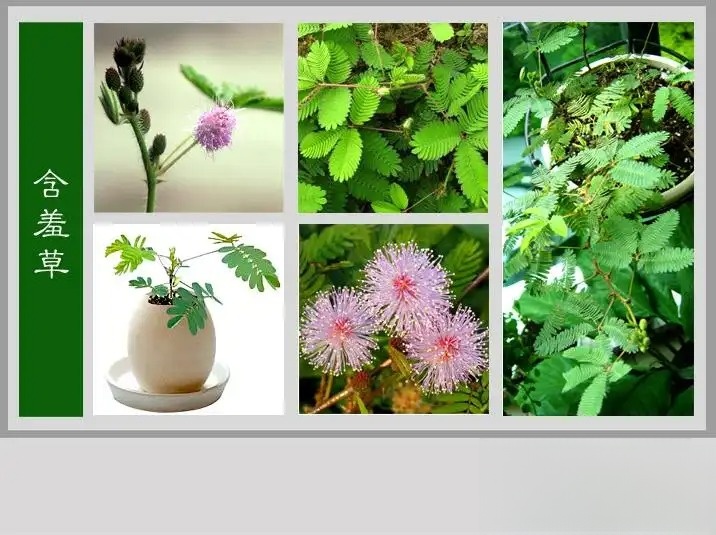
It is a perennial herb of the legume family, cultivated as an annual or biennial. It grows 20-60 cm tall, with erect stems covered in prickles and fine hairs. Leaves are alternate, 2-3 pinnately compound, borne at the tip of the petiole. Its flower heads are 2-3 axillary. Flowers are pink, hairy on the outside, with 4 petals, blooming from July to September. Leaflets are densely arranged pinnately compound, with 2-4 leaflets palmately arranged, each leaflet having 14-18 leaflets.
A prominent characteristic of the sensitive plant is its extremely sensitive leaves, capable of vibrational movements. A light touch causes the leaflets to immediately fold together; a heavier touch causes the leaflets and petioles to bend at a 60-degree angle. It also droops at night, exhibiting a similar dormant posture. Sudden cold or electrical stimulation elicits the same reaction. This morphological response is quite interesting, seemingly indicating shyness, hence the name "sensitive plant" (this reaction is most pronounced in the evening).
It is said that this is because the mimosa originates from the desert regions of South America, where strong winds and heavy rains are common. When storms come, the leaves close and droop, reducing the risk of breakage and other damage. This is an adaptive physiological response developed by the plant to harsh environments for survival.
The mimosa prefers warm, humid, and sunny environments, and thrives in well-drained, organic-rich sandy loam. It is a robust plant with rapid growth and strong adaptability. Propagation is relatively easy, generally by sowing.
Sowing can be done year-round, but early spring (February) indoors in pots is best. Mimosa seeds mature relatively late, so early spring sowing is necessary to ensure the seeds mature before the first frost. To promote early germination, soak the seeds in 30°C warm water for one day before sowing. After sowing, place the pots in an environment of 15-20°C; seedlings will emerge in about 10 days. When the seedlings reach 5-6 cm in height, transplant them (with a soil ball), and when they reach more than 10 cm, transplant them into larger pots.
The entire plant of the sensitive plant (Mimosa pudica) is used medicinally, possessing calming, hemostatic, astringent, and analgesic properties.
During the plant's growth period, a diluted, well-rotted liquid fertilizer can be applied every 10 days (3-4 times) in conjunction with watering. As a potted ornamental plant, it is easy to move it indoors to a sunny location, maintaining a room temperature of 0-12 degrees Celsius for safe overwintering.
Water: Prefers moist conditions; water once daily during the summer growing season.
Fertilizer: Apply top dressing every half month during the seedling stage. Reduce the amount of fertilizer if you do not want the plant to grow too large.
Soil: Requires deep, fertile, and moist soil.
Temperature: Not cold-hardy; prefers warm climates; the plant will die back in winter.
Light: Prefers full light but tolerates partial shade.
Propagation: Propagated by seed. Sow from late March to early April. Seedlings grow slowly; transplant when they reach 7-8 cm in height.
Why doesn't the sensitive plant flower?
Why doesn't the sensitive plant (Mimosa pudica) bloom? The main reason is unsuitable light conditions. The photoperiod required for a plant to bloom is closely related to its origin. The sensitive plant originated in tropical and subtropical regions and is a short-day plant. It needs short-day light conditions to bloom. To make the sensitive plant bloom in the same year it is introduced, it should either be introduced from a region with a similar latitude, or, for regions with a large latitude difference, artificial 8-hour short-day treatment must be applied.