Cultivation and Appreciation of Common Household Flowers
[Other names] Linlan, Mudan, Yuetao, Muhengzhi.
[Family and genus] Rubiaceae
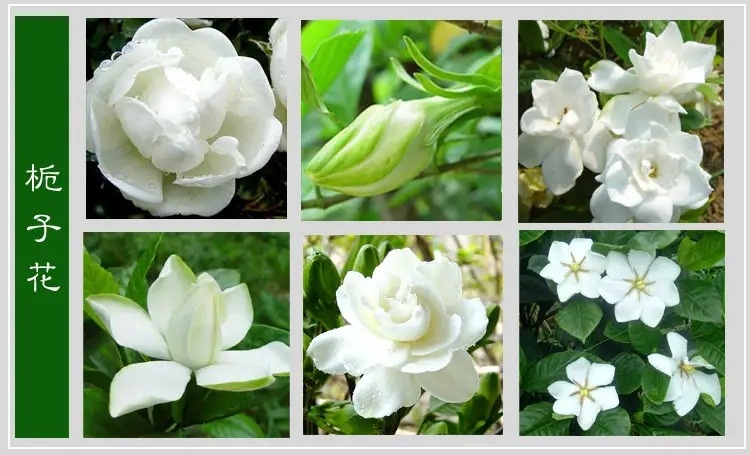
Gardenias originated in southwestern China. Currently, the main cultivated varieties and their variants include: Large-leaved Gardenia (also known as Large-flowered Gardenia), with large leaves, large, double-petaled flowers, and a strong fragrance; Water Gardenia, with a small plant, small flowers, and small leaves, and double petals; Single-petaled Gardenia, with small leaves and small flowers, single petals, mostly wild. There are also Ovate-leaved Gardenia and Small-leaved Gardenia, etc.
1. Soil: It is best to cultivate in fertile, acidic soil rich in humus, which is key to successful cultivation in northern homes. Generally, a mixture of leaf mold and well-rotted soybean cake fertilizer (1 part each), along with a certain amount of ferrous sulfate, can be used. Alternatively, after potting, the soil can be thoroughly watered 3 to 5 times with a 0.2% ferrous sulfate or alum fertilizer solution.
2. Cultivation: Plant using cuttings and layering. Ensure the root system is fully spread out, and fill the gaps between the roots with fine soil, maintaining a soil density of approximately 85%. The soil should be firm at the bottom and loose at the top, with a depth of about 1 cm above the roots. Water thoroughly after planting, allowing water to seep through the bottom of the pot.
3. Management and Maintenance: Gardenias require high humidity. Water only when the soil is completely dry, preferably with rainwater, snowmelt, or fermented rice water. During the growing season, water every 7-10 days with a 0.2% ferrous sulfate solution or apply alum fertilizer solution. In summer, place gardenias in a shady location with diffused light. In spring, early summer, and autumn, water frequently and mist the leaves to increase humidity. In winter, place in a sunny location, stop fertilizing, and water sparingly. Regularly rinse the leaves with room temperature water to keep them clean, especially in heated rooms in northern regions. 4. Pest and Disease Control: Gardenias are prone to
scale insects, spider mites, and sooty mold in hot, poorly ventilated summers. Spraying with a 1000-fold dilution of 40% dimethoate emulsifiable concentrate can control scale insects, and a 1000-1500-fold dilution of 40% triamcinolone emulsifiable concentrate can control spider mites and reduce sooty mold. For safety, household spraying with laundry detergent solution can also be effective.
5. Repotting: Repotting is generally done every 1-2 years, ideally in spring. To prevent soil alkalization, repotting can be done annually. Before repotting, the pot should be covered (or left uncovered) after the soil has dried slightly and become loose. Stop watering for about 10 days. When repotting, trim some roots, including diseased, insect-infested, and overly dense roots, before replanting.
6. Shaping and Pruning: Generally done in spring, prune excessively long, weak, and other branches that affect the plant's shape to maintain an attractive form. Gardenias flower at the top; during the growing season, pinching back the tips can promote the growth of flowering branches and increase the number of flowers.
Gardenias can be propagated in spring, summer, and autumn, but spring cuttings taken from March to April have the highest survival rate. For cuttings, take 1- to 2-year-old branches from healthy mother plants, cut them into 20 cm sections, each with at least 3 nodes. Remove the lower leaves, then quickly immerse the cut end in a 500 ppm rooting powder solution for 15 seconds. Remove and allow the solution to dry slightly before planting. Before planting, mark the planting points on the prepared seedbed with a spacing of 10 cm x 7 cm. Make holes at these points using a small stick, then insert 2/3 of the cutting into the hole. Firm the soil around the cutting and water to retain moisture. After it has established itself, weed and fertilize. When the seedlings reach about 50 cm in height, they can be transplanted
to their final location. Fertilization: Gardenias are not particularly fond of fertilizer, but due to their vigorous growth and limited soil nutrients, they require appropriate fertilization during the growing season. Apply well-rotted human manure or cake fertilizer every 10 days or so. Stop watering one day before fertilizing and water thoroughly on the day of fertilization. Stop fertilizing from mid-September. For mature plants, apply 0.5-1 ounce of sesame paste residue twice, in mid-June and mid-August, crushing it and mixing it thoroughly with the topsoil. Watering
: Gardenias love plenty of water; some call them "water gardenias." In northern regions, spring is characterized by frequent and strong winds, dry air, and little rainfall. Water every three days, and sprinkle water around the potted plants morning and evening to increase humidity. During the hot summer months, water sparingly in the morning and thoroughly after 2 PM. Use soft water in summer, as hard water contains more calcium and magnesium salts, which are detrimental to gardenia growth, causing yellowing leaves and even death. To counteract the alkalinity of the soil and water, apply a diluted alum fertilizer weekly during the growing season to maintain lush green foliage. In winter, control watering; water only when the soil is dry, as excessive moisture can lead to root rot and death.
Gardenias are prone to chlorosis, a disease caused by various factors requiring different control measures. Chlorosis caused by nutrient deficiency: This type of chlorosis starts in the lower, older leaves and gradually spreads to the newer leaves. Nitrogen deficiency: This manifests as yellowing leaves alone, with new leaves being small and brittle. Potassium deficiency: Older leaves turn from green to brown. Phosphorus deficiency: Older leaves turn purplish-red or dark red. For both of these conditions, apply well-rotted human manure or cake fertilizer.
[Other names] Dwarf Kalanchoe, Longevity Flower, False Kalanchoe.
[Scientific name] Kalanchoe blossfeldiana
[Family and genus] Crassulaceae, Kalanchoe.
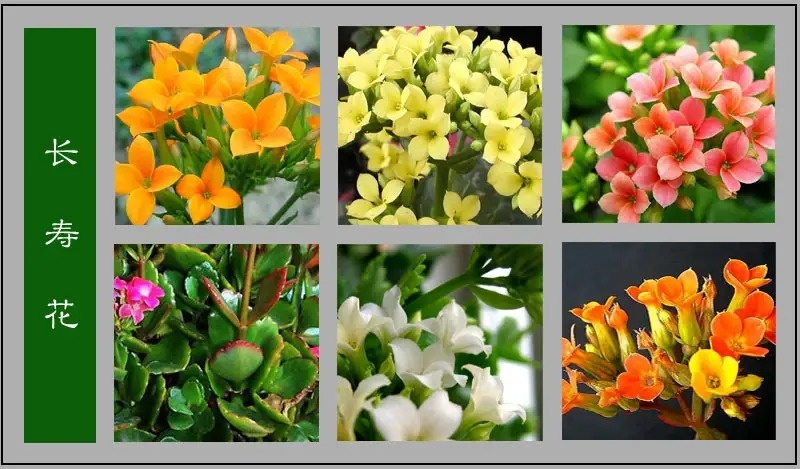
Kalanchoe plants are small, with stems 15-30 cm tall, highly branched, and naturally grow into a low, compact shape without pruning. Leaves thick, fleshy, opposite, elliptical to oblong, with serrated edges, dark green, and glossy. After mid-November, conical cymose inflorescences emerge from the tips of branches and leaf axils, with 100 to 200 flowers per plant. Although the individual flowers are small, they are densely arranged and clustered together, creating a beautiful overall effect. The flowers come in colors such as scarlet, peach, orange-red, and bright red, making them very vibrant. The natural flowering period is long, from December to late April, and even May. With short-day treatment and suitable temperatures, they can bloom year-round. For home cultivation, they offer both beautiful flowers and attractive foliage, making them an ideal indoor plant. The key points for cultivation are as follows:
1. Small, well-draining pots are best, and loose sandy loam is ideal
. Kalanchoe grows best in well-draining terracotta pots, but this can be unsightly indoors. Plastic or ceramic pots can be used as outer covers, or they can be planted directly in small purple clay or plastic pots. When planting, place a layer of broken charcoal or broken hard plastic foam at the bottom of the pot to enhance drainage. Plant 3 to 6 plants in a pot with an inner diameter of 10 to 20 cm.
While not particularly demanding in terms of soil, it is prone to root rot in heavy clay soil, and grows best in loose, fertile, slightly acidic sandy loam. For home potted plants, a mixture of equal parts leaf mold and garden topsoil, with 5% to 8% sand added, is recommended as potting soil. Add bone meal or NPK compound fertilizer as base fertilizer when planting.
Secondly, moderate watering promotes lush foliage, while ample fertilizer with phosphorus and potassium results in vibrant flowers
. Kalanchoe is a succulent plant with a high water content, making it drought-tolerant but susceptible to waterlogging. It thrives in the dry air of high-rise buildings. In spring and autumn, water thoroughly every 3 days or so when the soil is dry, keeping it slightly moist. In summer, water less frequently, ideally every 5 to 7 days. Kalanchoe placed outdoors should be protected from rain during the rainy season; excessive watering can easily lead to root rot, leaf drop, and even death. Appropriate watering, allowing the soil to dry slightly between waterings, will result in lush foliage and abundant flowers. After bringing the plant indoors in winter, water it with water at room temperature around midday, about once a week.
Kalanchoe thrives on fertilizer. Seedlings can be potted and transplanted for half a month, or older plants divided for half a month, then fertilized 2-3 times with a nitrogen-rich liquid fertilizer to promote stem and leaf growth. After flowering, fertilize once with a nitrogen-rich liquid fertilizer to promote recovery. At other times, except for summer when fertilization is stopped, only NPK compound fertilizer should be applied. Avoid getting fertilizer on the leaves, as this can easily cause rot. If fertilizer accidentally gets on the leaves, wash it off with water. Kalanchoe has a long flowering period, so the rule of not fertilizing during flowering should be broken. Apply a diluted NPK fertilizer or a 0.2% potassium dihydrogen phosphate solution once a month to prevent the flowers from becoming smaller and paler due to nutrient deficiency later on.
Kalanchoe prefers full sun and tolerates partial shade, but dislikes intense summer heat and cold winters.
Except for the midday sun in the height of summer when it needs some shade, it should be placed in a sunny location at other times, receiving at least 4 hours of direct sunlight daily for healthy growth. Every two weeks, flowerpots on apartment balconies should be rotated 180 degrees to ensure even light exposure and prevent uneven growth, which reduces their ornamental value. While they can grow in partial shade, the stems will be thin, the leaves weak, and the flowers fewer and paler, far less lush than those in sunny locations. Excessive shade not only leads to leaf drop and no flowers, but even flowering plants placed in the shade will experience dull flower color, followed by flower drop and wilting.
The optimal temperature for Kalanchoe growth is 15℃ to 25℃. Above 30℃, growth slows and the plant enters a semi-dormant state; below 10℃, growth ceases; below 8℃, the leaves turn red and flowering is delayed; below 0℃, they are easily killed by frost. Therefore, to successfully cultivate Kalanchoe, a microclimate that is warm in winter and cool in summer must be created. During the midday heat of summer, avoid direct sunlight and place the plant in a semi-shaded location with ample diffused light, such as under a large tree, under the eaves, or on a north-facing balcony. Pay special attention to ventilation and cooling; water can be sprinkled on the surrounding ground, but not directly on the plant. After the start of autumn, from late August to early September, gradually expose it to sunlight. From October onwards, it should receive more sunlight to promote the transition from vegetative growth to reproductive growth. When the minimum temperature drops to around 10°C, move it indoors to a south- or west-facing window to ensure it receives plenty of sunlight. Maintain a nighttime temperature of 10°C and a daytime temperature of 15°C to 18°C. It will then bloom in December.
IV. Propagation is easily achieved through cuttings and division; pinching promotes branching
. If the Kalanchoe does not produce seeds after flowering, propagation is primarily through cuttings. After flowering, apply a nitrogen-rich liquid fertilizer to promote recovery. In May or June, cut stem segments 4-6 cm long with 5-7 leaves. After the cut ends have dried, insert them directly into small pots filled with plain soil, three cuttings per pot in a "品" (pin) shape. Place in partial shade. Roots and new leaves will appear after half a month, indicating successful establishment. Pinch back the tips once or twice to encourage branching and more flowering. July is not a good time for cuttings due to high temperatures. Cuttings can be taken from mid-August to early September, and the plants will flower the following spring, but not as profusely as those taken in May or June. The second method is division. After the older plants have survived the summer, repot them in late August to early September; otherwise, their growth will decline. At the same time, larger clumps should be divided into several smaller sections with a sharp knife and replanted. After they have established themselves, pinch off the growing tips once or twice to encourage branching and more flowering.
Other names: Jasmine
Latin name: Jasminum sambac
Family name: Oleaceae
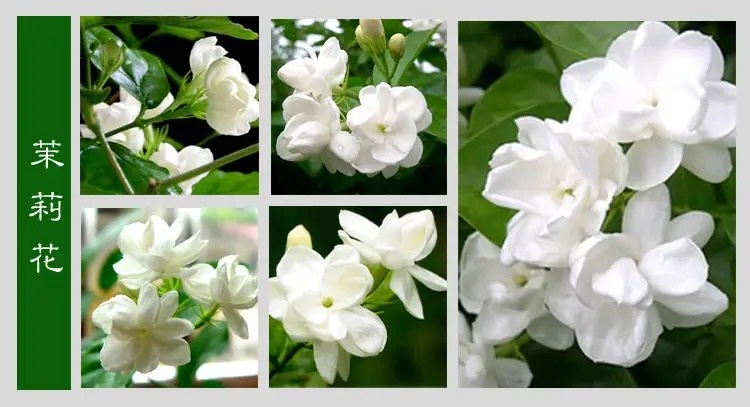
Growth habits: Prefers warm and humid conditions; frost damage will occur if the overwintering temperature drops below 3℃. It grows best in well-ventilated, semi-shaded environments. It is sensitive to cold, drought, and waterlogging; the optimal growth temperature is 25-35℃, and it can safely overwinter above 5℃. It requires loose, fertile, and well-drained sandy loam soil with a pH of 5.5-7. It is intolerant of drought, poor soil, and prolonged waterlogging.
Propagation and cultivation: It can be propagated by cuttings, layering, and division, with cuttings being the most common method. Cuttings can be taken in spring in conjunction with pruning. Select 1-2 year old branches, cut them into 10 cm lengths, and insert them into sandy soil. After planting, provide shade and keep the soil moist, spraying water 2-3 times a day to maintain a warm and humid environment with a temperature above 20℃. Roots will develop in about a month. Cuttings generally sprout leaves first, then roots. Summer cuttings are easier to root and have a higher survival rate.
Jasmine cultivation:
Jasmine begins to bloom from early summer. With proper management, it can have three periods of peak bloom.
In early June, jasmine begins to bloom early, but these flowers are generally small and few. They should be removed promptly, otherwise, excessive nutrient consumption will affect the quality and quantity of subsequent blooms, delay the flowering period, and affect the ornamental value. The method of removing flowers is to remove the tender branches with leaves along with the flowers to encourage the growth of new branches and lush foliage. At this time, apply diluted fertilizer twice a week and keep the potting soil moist.
The first peak bloom period is from late June to early July. During this time, it's crucial to strengthen fertilizer and water management, applying diluted fertilizer frequently, every two days. Use fully decomposed organic liquid fertilizer with a fertilizer-to-water ratio of 1:4. Water thoroughly, generally every two days. Watering is usually best done in the morning, while fertilizing is preferable in the evening. Continue this until late July; the ample fertilizer and water will promote large and abundant blooms.
In early August, the second bloom period begins. At this time, the fertilizer concentration should be slightly higher than before, generally a 50/50 ratio of fertilizer to water. To further encourage jasmine flowering, a foliar spray of superphosphate solution can also be applied. By late August, gradually reduce fertilization to once every 6 to 7 days, while maintaining ample watering, watering every two days.
From early September to early October, the third flowering period begins. Fertilization should be stopped at this time, and watering should be gradually reduced. As the weather cools, it will affect bud formation, resulting in fewer flowers in this batch. Flowering ends after mid-October; simply keep the potting soil slightly moist.
How to make jasmine bloom more:
1. Environment and light: Jasmine prefers a hot, humid, and well-ventilated environment with ample sunlight. Jasmine is sensitive to cold. In southern regions, potted jasmine can overwinter outdoors. In northern regions, it needs to be protected from the cold in autumn and winter, and moved indoors to a south-facing location. Strong sunlight results in strong branches, dark green leaves, and abundant, fragrant flowers; insufficient sunlight leads to sparse branches, fewer flowers, and less fragrance.
2. Water: Jasmine is not drought-tolerant but also dislikes waterlogging. During rainy seasons, promptly drain any excess water from the pot, otherwise the leaves will easily turn yellow. In hot, sunny summer days, water twice a day, once in the morning and once in the evening. If the leaves are found to be curling, spray water on the leaves to promote growth.
III. Soil: Jasmine thrives best in fertile sandy or semi-sandy soil. Planting in slightly acidic soil with a pH of 6 to 6.5 promotes dense root systems and vigorous growth. Heavy, clayey soil lacking substrate, with low fertility and poor aeration, results in fewer roots, shorter plants, thinner stems and leaves, and fewer, smaller flowers.
IV. Fertilization: The peak growing season for jasmine is during the hot summer months. Apply plenty of organic fertilizer and phosphorus and potassium fertilizers, such as peanut cake powder, bone meal, superphosphate, and multi-element flower fertilizer, twice a month. Jasmine often exhibits lush foliage but fails to flower during the summer growing season, primarily due to excessive nitrogen fertilizer, causing excessive vegetative growth. In such cases, control fertilizer and water, increase phosphorus and potassium fertilizer application to promote bud formation, and move the jasmine to a sunny, well-ventilated location.
V. Pruning: Jasmine grows rapidly in summer and requires timely pruning. For potted jasmine, prune back to 10-15 cm from the base to encourage numerous strong new shoots. If the new shoots are growing vigorously, pinch them back when they reach 10 cm to promote secondary shoot growth, resulting in more flowers and a compact plant shape. After the flowers fade, promptly remove the flower stalks to reduce nutrient consumption and promote new shoot growth, leading to denser branches, more buds, and more flowers.
VI. Pest and Disease Control: Jasmine is often infested by moth larvae, scale insects, and spider mites, with the most severe infestations occurring from July to September. These insects often bore into the flower buds. Spray with a 200-fold dilution of general-purpose pesticide or pyrethroid insecticide every two weeks, even if no pests or diseases are present, to prevent damage. Spraying is best done on sunny days at 9 am and 4 pm, avoiding midday sun to prevent pesticide damage.
VII. Flowering Period Care: Do not spray water on the flowers during the flowering period to prevent premature flower drop and loss of fragrance. Move potted jasmine to a sheltered location during rain.
Jasmine thrives on fertilizer; the potting soil should be kept sufficiently fertile. After spring budding and shoot emergence, apply diluted, well-rotted organic fertilizer every 10 days. During bud formation and flowering, apply diluted fertilizer more frequently, every 5 days. Stop fertilizing after October. Loosen the soil after each fertilization and watering.
Prune annually in spring, cutting off old branches from the base, removing overly dense branches and old leaves, generally leaving branches about 20 cm long. Severely aging plants require heavy pruning for rejuvenation. During the growing season, promptly prune any overly vigorous shoots sprouting from the base to reduce nutrient consumption.
Repot potted jasmine annually or every other year, replacing the soil with fresh potting mix and adding base fertilizer.
Jasmine that only grows leaves and branches without flowering is generally due to excessive nitrogen fertilizer or insufficient sunlight. Therefore, when jasmine enters its vigorous growth period, the amount of nitrogen fertilizer should be strictly controlled, and it should be exposed to plenty of sunlight to prevent excessive vegetative growth. After the jasmine flowers wither, diseased, damaged, weak, and overgrown branches should be pruned promptly, leaving about four layers of leaves on each branch and removing the rest to encourage the growth of more lateral branches and more flowers. In winter, jasmine should be placed in a warm, sunny location to prevent frost damage. Alternatively, the entire plant can be covered with a plastic bag, with a small hole cut at the top, which can also help retain heat, moisture, and prevent frost.
Cultivation: Watering is crucial. In the height of summer, water every morning and evening. If the air is dry, spray water to increase humidity. Avoid watering during the middle of the month. Growth slows in winter, so control watering. Jasmine tolerates fertilizer; fertilize once a week during the growing season. The growing location should have ample sunlight. After repotting in spring, pinch off the tips to shape the plant. After the peak flowering period, prune back to encourage new growth and apply a heavy dose of fertilizer.
Pests and diseases: Common diseases include leaf blight, twig blight, and white mold. These can be treated with an 800-fold dilution of 65% zineb wettable powder. Pests include leaf miners, spider mites, and scale insects, which can be controlled with a 1000-fold dilution of 50% fenitrothion emulsifiable concentrate.
Classification: Tropaeolum family
Latin name: Tropaeolum majus
Other names: Golden lotus, Dry lotus, Lotus leaf lotus, Giant red jasmine
Family and genus: Tropaeolum family
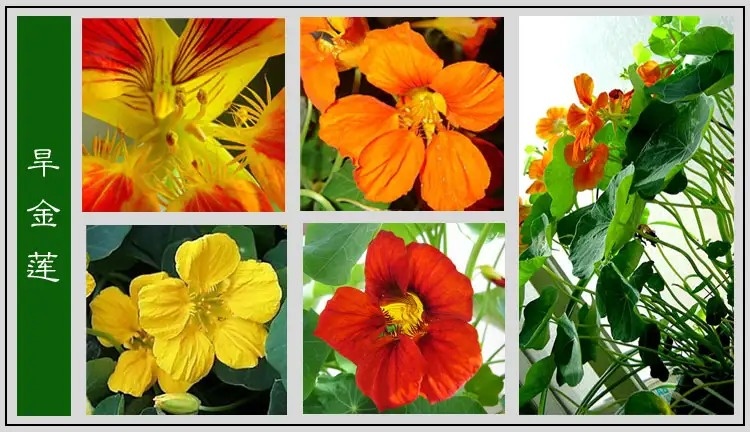
Origin and Habitat: Native to Central and South America.
. Morphological characteristics: The stem is fleshy and hollow, pale grayish-green. Leaves are simple, alternate, with long petioles, shield-shaped and round, with entire, wavy margins. The flower stalks are slender, emerging from the leaf axils; the flowers are solitary and terminal, about 5 cm in diameter. The calyx is fused at the base into a tubular shape. Flower colors include creamy white, yellow, orange, red, purplish-red, and mixed colors.
Nasturtiums prefer moist conditions but are susceptible to waterlogging; they prefer acidic soil, ideally mountain soil. It produces many flowers with a long flowering period, so it requires a lot of fertilizer. However, it has fleshy roots and is susceptible to damage from concentrated or raw fertilizer. Only light, frequent fertilization is recommended. During the growing season, apply a phosphorus-rich fertilizer every 10-15 days.
Propagation and cultivation can be done through cuttings and sowing. Cuttings are taken from April to June and will root in 15-20 days at 12-15℃. For sowing, soak the seeds in 40-45℃ warm water overnight, then sow them in shallow pots filled with pure sand. Cover with about 1 cm of fine sand and place in a sunny, moist location. Seedlings will emerge in about 10 days. When the seedlings have two true leaves, transplant them into pots. Cuttings are best taken in spring when the room temperature is 13-16℃. Cut stems with 3-4 leaves, about 10 cm long, leaving the top leaves, and insert them into sand. Keep the sand moist; roots will begin to develop in 10 days, and they can be potted after 20 days.
Nasturtiums are creeping plants and require support. When seedlings have 3-4 true leaves, pinch off the growing tip to encourage lateral branching. Before trellising, in addition to retaining the main stem and strong lateral branches, pinch off the growing tips and tie them evenly to the trellis, creating various decorative shapes. After flowering, prune away old branches to encourage new growth and flowering. For older plants, when the temperature reaches above 10℃, prune the upper branches and leaves at the base, apply base fertilizer, and place in a greenhouse at around 7℃ to promote new branching and the formation of new clumps.
Nasturtiums thrive in sandy loam soil rich in organic matter with a pH of 5-6. Generally, fertilize every 3-4 weeks during the growing season. After each fertilization, loosen the soil promptly to improve aeration and promote root development.
Nasturtiums prefer moist conditions but are susceptible to waterlogging; maintain soil moisture at around 50%. During the growing season, water frequently but in small amounts. Water every 2-3 days in spring and autumn, and daily in summer, spraying the leaves with water in the evening to maintain high humidity. Reduce watering after flowering to prevent excessive stem growth. Nasturtiums thrive in full sunlight and do not tolerate shade. In spring and autumn, place them in a sunny location. Provide appropriate shade in summer, and in the height of summer, place them in a cool, well-ventilated area. In northern regions, bring them indoors in mid-October and place them in a sunny location, maintaining a room temperature of 10-15℃, and appropriately control fertilization and watering.
(Scientific name: *Viola tricolor*)
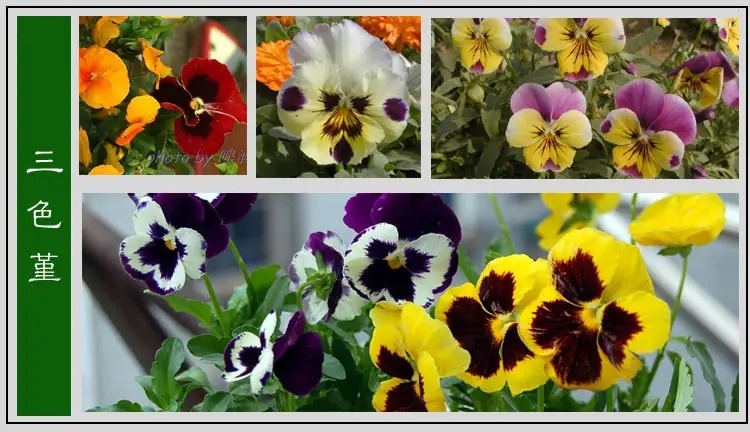
The optimal germination temperature for pansies is 18-21℃, germinating in 7-10 days under dark conditions. The optimal growth temperature is 10-13℃, and they flower 14-15 weeks after sowing. High temperatures at sowing time severely affect seed germination and seedling growth, resulting in a low seedling survival rate. Two common methods for cooling are: first, using a germination chamber or artificial cooling to create suitable germination temperature and humidity, then moving the seedlings to a well-ventilated, shaded nursery with a heated curtain to allow for normal growth; second, utilizing high-altitude environments, such as those above 700 meters in the Yangtze River basin, for high-altitude seedling cultivation.
After sowing pansies, cover the seeds with vermiculite. Maintain a soil temperature of 18-24℃ and keep the medium moist. No light is needed before the radicle emerges; seedlings typically emerge in 7-14 days. During the seedling stage, the optimal soil temperature is 15-24℃. Lower temperatures result in slower but stronger plant growth. Allow the soil to dry out completely before watering, but avoid permanent wilting, as this promotes root growth. Maintain a soil pH of 5.5-5.8, alternating between nitrogen fertilizer and potassium nitrate fertilizer.
When the plants have 3-4 true leaves, harden them off appropriately to promote robust growth. At this stage, the root system will be about 5 cm long. At this point, the temperature should be lowered to prevent excessive growth; maintain a temperature of around 18℃ and increase light exposure appropriately. Avoid using growth retardants during the seedling stage. Once the root ball has formed, seedlings from plug trays can be directly potted, usually in small pots with a diameter of 10 cm. Use well-draining potting soil, which is especially important for growth in the cool, low-light autumn and winter months; otherwise, the soil will not dry properly, severely impacting growth. The ideal soil pH is 5.8-6.2; a pH above 6.5 will cause blackening of the roots and yellowing of the basal leaves.
Pansies need ample sunlight in autumn and winter, but can tolerate some shade during spring and summer flowering. The optimal growth temperature is 7-15℃; prolonged low temperatures will cause the leaves to turn purple. In early autumn, temperatures should ideally be lowered to below 20℃ for optimal growth, while 15℃ or higher promotes flowering. Temperatures below 15℃ will result in a well-formed plant but will prolong the growing season. In summer, temperatures above 30℃ will cause smaller flowers and weaker growth. Water only when the soil is dry; be cautious when watering in low temperatures and low light. Excessive water hinders growth and promotes excessive stem elongation. Prevent the plant from drying out during high temperatures. Maintaining sufficient water during flowering is essential for larger and more abundant blooms. On the other hand, during the growing season, fertilize with diluted fertilizer every 2-3 waterings at a concentration of 100-150 ppm, mainly using calcium-containing compound fertilizer. Initially, nitrogen fertilizer should be the primary focus, while phosphorus fertilizer can be increased as flowering approaches.
Common problems and solutions in pansy seedling cultivation:
1. Uneven emergence. Solution: Keep pansy seeds moist during germination. A layer of coarse vermiculite can be placed on the seeds. The substrate should not be too wet, otherwise it will cause root hypoxia.
2. Terminal bud death. Solution: Boron deficiency causes terminal bud death, upper leaves stop growing, leaves become wrinkled and thickened, stem nodes shorten, and numerous lateral branches form. Boron deficiency is easily caused under high temperature and humidity conditions. Maintaining a pH below 6.0 will ensure sufficient boron.
3. Seedling etiolation. Solution: Ammonia ion concentration greater than 5 ppm will cause seedling etiolation. Prolonged over-wetting of the substrate will also cause etiolated seedlings. Lowering the night temperature to 18℃ can prevent etiolation.
4. Abnormal leaves. Solution: Yellowing of basal leaves and withering of branches and leaves indicate that the plant is infected with soft rot, which is most likely to occur under high temperature conditions. Poor leaf development and wrinkling indicate calcium deficiency. Calcium nitrate or calcium sulfate can be applied before transplanting. Applying 5000ppm of b-9 when the temperature exceeds 32℃ may cause leaf deformity and leatheriness. Boron deficiency can lead to leaf bud death, cessation of growth of upper leaves, wrinkling and thickening of leaves, shortening of stem nodes, and the formation of a large number of lateral branches.
Scientific name: *Petunia hybrida*, Vilm.
Other names: Petunia, Petunia Family: Solanaceae
Genus: *Petunia*
Origin: South America
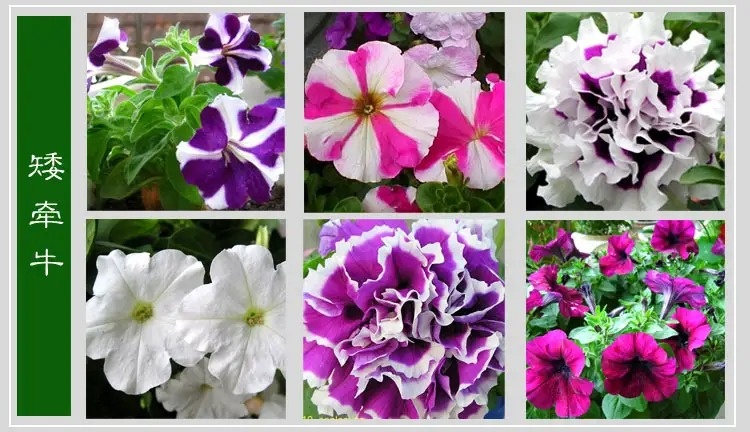
Petunias are perennial herbs, growing to a height of 15-45 cm. The entire plant is covered in sticky hairs. The stem is erect. Leaves are ovate, entire, almost sessile, alternate, with young leaves slightly opposite. Flowers are solitary in leaf axils and at the terminal. The flowers are large, with a funnel-shaped corolla. Petals vary greatly, including single, semi-double, and wavy-edged petals, in a rich array of colors such as purplish-red, bright red with white stripes, pale blue with deep red veins, peach, pure white, peach with white markings, and flesh-colored. Flowering period is from April to the end of October; if the indoor temperature reaches above 15 degrees Celsius, it can bloom year-round.
Habits:
The optimal growth temperature for petunias is 13-18℃, and they can withstand winter temperatures as low as -2℃. However, they can still grow normally in summer temperatures of 35℃, demonstrating strong adaptability to temperature.
They prefer dry conditions and dislike excessive moisture. During the growing season, they require ample water, especially during the hot summer months, watering should be done in the morning and evening to keep the soil moist. However, the heavy rainfall during the plum rain season is very detrimental to the growth of petunias. Overly wet soil leads to excessive stem and leaf growth, and excessive rain during the flowering period causes flowers to fade and rot easily. If there are sudden showers, the petals are easily torn. If water accumulates in the pot for a long time, the roots often rot, causing the entire plant to wilt and die.
Petunias are long-day plants. They require ample sunlight during their growing season. Most petunia varieties take about 100 days from sowing to flowering under normal sunlight. If there is insufficient light or too many cloudy or rainy days, flowering is often delayed by 10-15 days, and fewer flowers are produced.
Petunias thrive in loose, fertile, well-drained, slightly acidic sandy loam.
Propagation:
Propagation can be done by sowing. Seeds germinate in about 10-12 days at 20-22℃. The seeds are small, so the potting soil should be fine and level. After sowing, it is not necessary to cover the seeds with soil or only a thin layer of soil. After sowing, watering should be done by soaking to prevent water spraying from causing seed accumulation or excessive mud covering, which is detrimental to germination. To keep the seeds moist, cover the pot with glass or plastic film. Remove the covering after germination. Transplant when the seedlings have 4-5 true leaves. The ideal temperature for seedlings is 9-13℃.
In northern regions, due to the short spring, autumn sowing is recommended, resulting in continuous flowering from early spring to early summer. Propagation can also be done in winter and spring by cuttings. Take 6-8 cm long tender branches, remove the lower leaves, and insert them into loose, well-drained coarse sand or rock litter. Roots will develop in about two weeks at 20-23℃. Soaking the lower part of the cuttings in a 1/100,000 solution of indolebutyric acid for one day before planting will improve the results. Petunias have many fine branching roots, so seedlings should be planted as early as possible. When transplanting, be careful not to break up the soil ball. Avoid excessive fertilizer during cultivation, otherwise the plant will grow too vigorously and produce fewer flowers.
Proper controls the plant shape and promotes more flowering. In cooler climates, it can flower continuously year-round. In northern regions, it is mainly grown as a potted plant in spring and summer.
The key points for growing petunias in pots at home are as follows:
1. The pot should be well-draining and slightly larger, and the soil should be loose and slightly acidic. Petunias are best planted in well-draining terracotta pots with an inner diameter of 20-30 cm, with two or three plants per pot. If using poorly draining purple clay pots, plastic pots, or ceramic pots, place a layer of crushed charcoal or crushed hard plastic foam at the bottom to improve aeration and drainage and prevent root rot. Plastic hanging pots (one plant per pot) can also be used and hung on a balcony or window. Loose, fertile, slightly acidic sandy loam is best for planting. A suitable potting mix can be prepared using leaf mold, garden topsoil, sand, or perlite in a 5:4:1 ratio, with a pH of 5.8-6.2. If the pH exceeds 6.6, it will inhibit the roots' absorption of iron, leading to yellowing leaves. Avoid using heavy clay soil and saline-alkali soil.
2. Propagation is easy through sowing and cuttings; pinching and pruning will encourage branching. Petunias are generally propagated by sowing. Spring-sown petunias begin to flower in summer and autumn, while autumn-sown petunias begin to flower in winter and spring. The seeds are very small; mix them with fine soil before sowing, and sow sparsely. After sowing, cover with glass or plastic film and place in partial shade, frequently spraying water to maintain moisture. Seedlings will emerge in about a week at 18℃~24℃. After emergence, remove the glass. Transplant seedlings once when they are 2 cm tall, and then transplant them into pots when they are about 8 cm tall, pinching off the growing tip to encourage branching. Pinch off the growing tip two or three more times to keep the plant short, with many branches and flowers. The pruned branches can be used for cuttings. Make a hole in the soil with chopsticks, insert the cutting, and firm it down. Place in partial shade, frequently spraying water to maintain moisture. Roots will develop in 10-15 days in spring and autumn, and the cuttings can be potted after another 10-15 days. Summer cuttings have a low survival rate, and winter cuttings require covering with plastic film for insulation. After petunias bloom, select a few flowers from each variety for seed production. Cut off the rest of the flowers with the stems or shorten them to encourage branching and more blooms.
3. Water moderately, avoiding both drought and waterlogging. Fertilize with plenty of phosphorus and potassium, and use less nitrogen. Petunias prefer moist conditions but are susceptible to both drought and waterlogging. Water frequently during spring, summer, and autumn, watering when the soil is dry to the touch, keeping it slightly moist but never waterlogged. Overwatering easily leads to root rot, while overdrying causes yellowing leaves. In winter, the soil should be kept slightly moist. In northern regions, it is advisable to add a little ferrous sulfate (500:1) to the water when watering to prevent soil alkalization from prolonged use of alkaline water, which can cause yellowing leaves and poor growth.
Petunias like fertilizer but can also tolerate poor soil. Excessive or frequent fertilization can lead to excessive vegetative growth and fewer flowers. When planting or repotting, add bone meal or NPK compound fertilizer to the potting soil as a base fertilizer. Apply a diluted nitrogen fertilizer every 10 days or so during the seedling stage. Do not apply nitrogen fertilizer during the bud and flowering stages, otherwise it will easily cause excessive vegetative growth and lodging. With many leaves and few flowers, apply a compound NPK fertilizer every 15 days or so. Spray the leaves with a 0.2% potassium dihydrogen phosphate solution once a month to promote bud formation and more vibrant flowers. Do not fertilize when bringing the plant indoors in winter.
4. Sufficient sunlight promotes abundant flowering. Petunias prefer light and warmth and are not cold-hardy. The optimal growth temperature is 15℃~25℃. Except for the midday heat of midsummer (above 34℃), they need plenty of sunlight in other seasons. The more sunlight, the more vigorous the growth and the more flowers. They are best placed in sunny courtyards, rooftop gardens, south- or west-facing balconies, or windowsills. Around the time of the first frost, move them indoors to a south- or west-facing windowsill for ample sunlight. Maintain a room temperature above 2℃ for safe overwintering, continue growing above 10℃, and flower above 15℃. The following spring, around the Qingming Festival, move the plant outdoors, repot it, change the soil, prune it heavily, and apply a diluted nitrogen fertilizer once or twice to help it recover its growth and bloom again. Old plants that have survived two winters will gradually decline in growth and can be replaced in autumn by cultivating seedlings propagated in the spring and autumn of that year.
Scientific name: *Nelumbo mucifera*
English name: Hindu Lotus
Other names: Lotus, Water Lotus, Water Lily, Water Flour, Water Lotus, Water Lotus, Water Lotus, Water Lotus, Water Lotus, Water Lotus, Jade Ring, Grass Lotus, June Spring, Chinese Lotus, etc.
Family: Nymphaeaceae, Genus: *Nelumbo*. This genus contains two species; the other is *Nelumbo pentaphyllum*, native to the Americas.
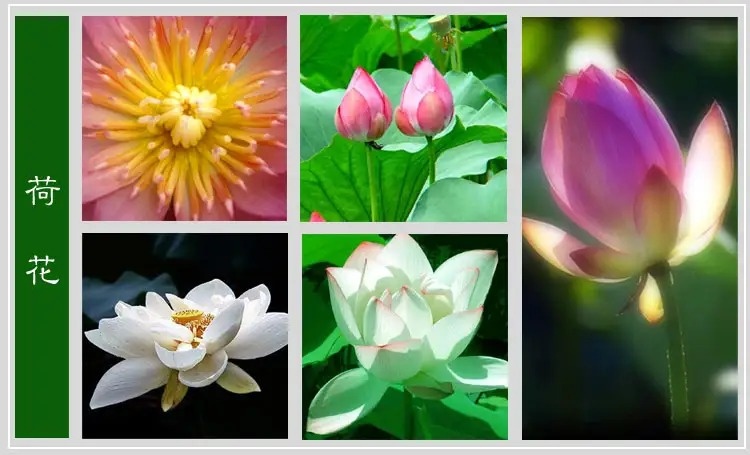
A perennial aquatic plant. The rhizome (lotus root) is thick and segmented, growing horizontally in the mud at the bottom of the water. Leaves are shield-shaped and round, dark green on the upper surface covered with a waxy white powder, grayish-green on the lower surface, with entire and wavy margins. The petiole is cylindrical and densely covered with backward-pointing prickles. Flowers are solitary at the top of the peduncle, held high above the water surface, with single, double, and multi-petaled varieties; flower colors include white, pink, deep red, light purple, or mixed colors; numerous stamens; separate pistils, embedded in an inverted conical spongy receptacle, the surface of which has numerous scattered honeycomb-like holes. After fertilization, it gradually swells to form a lotus seedpod, each hole containing a small nut (lotus seed). Flowering period is June to September, opening in the morning and closing in the evening. Fruit ripening period is September to October. There are many cultivated varieties of lotus, which can be divided into three main systems according to their uses: root lotus, seed lotus, and flowering lotus.
Environmental Requirements for Home Cultivation of Lotus:
Cultivation Containers: Because many bowl lotus varieties are still quite tall, only a few can be planted in large bowls. Glazed pots, porcelain pots, and purple clay pots are ideal for lotus, but these types of pots usually have drainage holes, which should be sealed with cement and sand. Pot Diameter: Bowl lotuses require pots with a diameter of about 26 to 30 cm, potted lotuses require pots with a diameter of 30 to 45 cm, and large potted lotuses require even larger ones. Beginners can use slightly larger pots to facilitate flowering. In short, larger pots result in more and better blooms.
Location: Lotuses should be placed in a location that receives 7-8 hours of sunlight daily to encourage numerous buds and continuous flowering. If they receive less than 6 hours of sunlight daily, they will bloom very little or not at all. Lotuses are strongly photophilic plants; when planting in groups, maintain a certain distance between pots and containers to prevent them from competing for sunlight.
Soil: The pH value of the soil for planting lotus should be controlled between 6 and 8, with the optimal pH value being 6.5-7. River or pond mud or paddy field soil is best for potting soil, and garden soil from vegetable plots can also be used. However, industrially polluted soil should be avoided.
Lotus does not tolerate excessive fertilizer, so base fertilizer should be minimal. For relatively fertile river or pond mud and garden soil, base fertilizer is unnecessary to avoid burning the seedlings; this point should be particularly noted.
Temperature: Lotus is a warm-loving plant. It generally begins to sprout at 8-10℃, and the rhizomes begin to elongate
at 14℃. The planting temperature should be above 13℃. Otherwise, seedling growth will be slow or the seedlings may rot. Lotus begins to produce upright leaves at 18-21℃, and flowering requires temperatures above 22℃. Lotus is very tolerant of high temperatures; temperatures above 40℃ have little effect on it.
Bowl lotus cultivation techniques:
Bowl lotus refers to lotus that can bloom normally in a flowerpot with a diameter of 26 cm or less, and must meet the following three indicators: average flower diameter not exceeding 12 cm, average height of upright leaves not exceeding 33 cm, and average diameter of upright leaves not exceeding 24 cm.
Bowl lotus is cultivated using rhizomes as seed tubers. A growth cycle involves budding, leaf unfolding, flowering, fruiting, rhizome growth, and dormancy. From the budding of the seed tubers until the beginning of summer (around June 1st) or the Lesser Fullness of Grain (around April 20th) is the budding and emergence stage. After the Spring Equinox, when the temperature rises above 10 degrees Celsius, the rhizomes on the seed tubers begin to sprout. After Qingming Festival, when the temperature reaches above 15 degrees Celsius, floating leaves begin to grow, and rhizomes emerge. When the temperature reaches above 20 degrees Celsius, the main rhizome produces upright leaves and has a relatively strong root system, increasing its ability to absorb nutrients. The period
from the emergence of upright leaves to their appearance is the vigorous growth stage. In late June, the plum rain season begins, bringing abundant rainfall, high humidity, and high temperatures—ideal conditions for lotus growth, marking the start of its vigorous growth period. Approximately every 5-7 days, a new upright leaf emerges, each taller than the last; the main rhizome and lateral rhizomes also grow rapidly, with new lateral rhizomes constantly appearing, along with buds and flowers. During this stage, it is crucial to protect the lotus from strong winds to prevent leaf breakage and root damage.
Currently, many bowl lotus varieties are still too tall for cultivation, so only a few can be planted in commercially available serving bowls or soup bowls. There are currently no flowerpots specifically designed for bowl lotus cultivation on the market, and common unglazed pots (clay or earthenware pots) are prone to water seepage and are therefore unsuitable. Glazed pots, porcelain pots, and purple clay pots are less prone to water seepage and can be used for bowl lotus cultivation. However, these pots usually have drainage holes at the bottom, which can be sealed with cement and sand or rubber gaskets. The shape and color of the flowerpot should harmonize with the bowl lotus, creating a unified whole. Square or round pots are suitable options. The flowerpot should be about 20 cm in diameter and 15 cm deep. Beginners can use a slightly larger pot to encourage flowering. 7-8 hours of sunlight daily will promote more buds and continuous blooming. Bowl lotuses are extremely sensitive to shade and should not be grown indoors like indoor foliage plants. Insufficient light will cause the leaves to grow excessively long and lose their green color, preventing bud formation. When cultivating bowl lotuses in a garden, the pot must be placed in a sunny spot or on the outer edge of a south-facing balcony. During the flowering season, if it needs to be brought indoors for viewing, it can be moved in early in the morning and out late in the evening, or vice versa, but it should still receive some sunlight daily. Bowl lotuses need ample sunlight, but should not be exposed to direct sunlight after rain.
As an aquatic plant, bowl lotuses require plenty of water during their growth, but are susceptible to leaf submersion in large amounts of water; therefore, the location should have convenient water access and drainage. Bowl lotuses are also sensitive to strong winds, so the location should be sheltered from the wind.
Bowl lotuses require humus-rich pond mud or paddy field mud as the growing soil; industrially polluted soil should be avoided. Yellow clay has high viscosity, so its usage should be appropriate; excessive viscosity will affect the elongation of the lotus rhizome and the expansion of the lotus root. Sandy soil is loose and lacks viscosity, making it susceptible to wind damage and hindering root growth. Generally, a mixture of yellow clay and sandy soil in a 7:3 ratio is suitable. If sandy soil is unavailable, yellow sand can be added, but in a slightly smaller proportion. In suburban areas, garden soil from vegetable plots can be used directly; in cities, the soil from spring repotting of potted plants can be mixed with half yellow clay as potting soil.
For each pot, use about 20 grams of well-rotted dry chicken manure or other fertilizer, thoroughly mixing it with the potting soil as base fertilizer. Remove impurities and pebbles, and eliminate small insects and earthworms from the soil before placing it in the pot. The soil layer should generally occupy about 3/5 of the total pot volume.
Experiments conducted by Zhao Jiarong at the Wuhan Botanical Garden, Chinese Academy of Sciences, showed that a formula using 100 parts dried pond mud, 2 parts soybean cake water, 6 parts wood ash water, 2 parts pig/cow hoof water, 2 parts rotten hair water, and 1 part bone meal to cultivate bowl lotus yielded good results.
Bowl lotus is a thermophilic plant with strict temperature requirements. It generally begins to germinate at 8-10 degrees Celsius and its rhizomes begin to elongate at 14 degrees Celsius. Early sowing also requires temperatures above 15 degrees Celsius; otherwise, seedling growth will be slow and seedlings will rot. In the middle and lower reaches of the Yangtze River, open-field sowing and seedling cultivation are generally not used before mid-April, mainly because the temperature is insufficient for seed germination and seedling growth. As temperatures rise, sustained high temperatures (above 40 degrees Celsius) are also detrimental to the growth and development of bowl lotus. Temperatures between 22 and 35 degrees Celsius are the optimal temperature for the growth and development of bowl lotus. At temperatures above 18-21 degrees Celsius, upright leaves begin to emerge. Flowering requires temperatures above 22 degrees Celsius, and new rhizomes grow at 25 degrees Celsius. At this stage, a climate with relatively uniform daytime temperatures and slightly lower nighttime temperatures is needed. Most cultivated varieties enter the rhizome growth stage around the beginning of autumn when temperatures drop, which is characterized by a significant rise in the soil temperature in the pot.
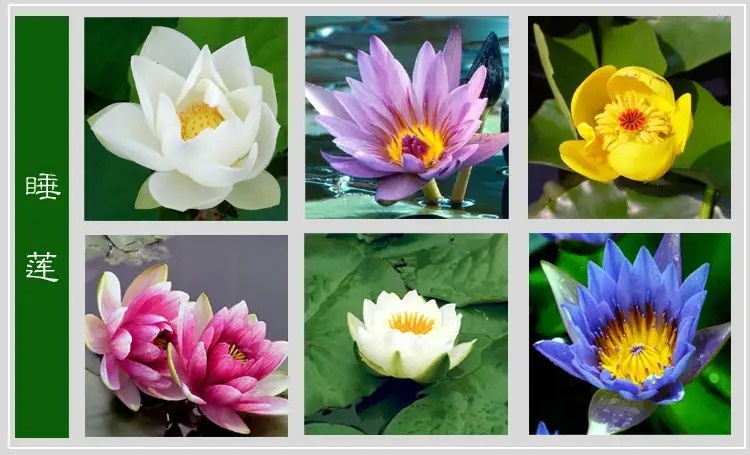
Water lilies are light-loving plants, requiring an average of more than 8 hours of sunlight during their growing season to produce abundant flowers and foliage. They thrive in clear, clean, and warm water environments, with an optimal growth temperature of 25-32 degrees Celsius and a water depth of 25-40 cm (up to 60 cm). The soil should be rich in humus, such as pond mud or loam. The flowers close at night and open during the day, with colors including red, yellow, white, purple, and pink. A single flower lasts 3-7 days, and a group bloom lasts for more than 6 months.
II. Water Lily Cultivation
In the Beijing-Tianjin area, planting is done around mid-April. Cultivation methods include potted or container planting, double-pot planting, submerged planting, and pond planting. First, use a sharp knife to cut rhizomes with strong terminal buds, about 6-8 cm long, with 2-3 lateral buds below, as propagation material. Whether new or old plants, they generally flower in the same year under sufficient nutrient conditions.
1. Potted or Container Planting
This method is suitable for small to medium-sized varieties, especially those that bloom above water. For cultivation, use pots or containers with a diameter of 50-60 cm and a height of 30-40 cm without drainage holes. Place 200 grams of hoof and horn fertilizer and 250 grams of bone meal at the bottom of the pot. The potting soil can be fertile pond mud or nutrient-rich garden soil. Fill the pot with the potting soil, leaving a 15-20 cm water level at the rim. Cultivation methods vary depending on the growth characteristics of different varieties. For varieties with creeping rhizomes (mostly cold-hardy varieties), plant them horizontally or at a 15-degree angle, ensuring the bud tip is in the center of the pot with the base close to the edge, allowing space for the top to grow and root. For short-rhizome varieties, dig a hole in the center of the pot, plant the plant upright with the bud slightly exposed, and maintain a water level of 3-5 cm. Gradually increase the water level as the plant grows.
2. Double-pot cultivation:
This method is suitable for small varieties. Choose pots with a diameter of 25-30 cm, and plant using the same method as for potted or containerized cultivation. After planting the rhizomes, submerge the small pots in an elegantly designed water tank and place them in a sheltered, sunny courtyard, controlling the water level appropriately.
3. Submerged cultivation
is suitable for medium to large varieties and is used for cultivation in cement ponds. Before planting, place the pots in the pond according to the top planting diagram, fill them with fertile soil, and proceed as with potted or tank cultivation. Then, add water in three stages, trying to avoid sudden changes in water temperature, which is beneficial for the rapid growth of water lilies.
4. Pond cultivation
is suitable for large varieties. The water depth should be 30-60 cm, and drainage facilities should be provided. The bottom of the pond should have at least 30 cm of fertile soil, and the rhizomes can be planted directly into the soil to facilitate the rapid formation of an overall ornamental effect. Before winter, fill the pond with water so that the rhizomes can overwinter under the ice.
III. Daily Management
1. Controlling the water level:
Properly controlling the water level is very important for the healthy growth of water lilies. Water lilies have different water level requirements at different growth stages, so it is important to control water level changes. When potted, initially use shallow water, and fill the pot with water during the growing season. When submerged in water, water should be added in two stages. The first time, just cover the pot, and gradually increase the water level as the leaves grow. During the growing season, submerge the entire pot in water, with the water level 30-50 cm below the surface of the pot.
When ponded, drain the water promptly when the water level exceeds 1 meter during the rainy season. Generally, water lilies require shallow water in the early stages of planting to promote early leaf growth. During their vigorous growth period, the water level should be deeper to encourage more and larger leaves, facilitating nutrient synthesis. In autumn, the water level should be shallow again, as this is the period of root and lateral bud growth. Shallow water increases water temperature and ensures most leaves receive sufficient sunlight, resulting in robust root systems and high propagation rates. As temperatures cool in late autumn, the water level should be gradually increased until winter, ideally to 80-120 cm or more, depending on the local historical maximum ice thickness, to ensure safe overwintering.
2. Timely Fertilization:
Fertilizer should be applied at appropriate times throughout the entire growth process. Topdressing during the flowering period: Wrap dihydrogen phosphate in tough paper, poke several small holes in the wrapping, apply two packets per pot, inserting them along the edge of the pot, 10-15 cm below the rootstock. Apply once every half month, for 3-4 consecutive applications. This will result in robust rootstocks, thick and glossy leaves, abundant and deep-colored flowers, and enhanced disease resistance.
IV. Pest and Disease Control:
Because water lilies are floating-leaved plants, they are easily damaged by weeds, so timely weed removal is essential. For water flossers, spray with a 0.3-0.5% copper sulfate solution. Major pests include beet armyworm, leafminer, and snails, which damage young leaves and flowers. Leafminer can be sprayed with a 1000-1200 times dilution of dichlorvos. For beet armyworm, spray with an 800-1200% trichlorfon solution. To combat snail infestations, mix furadan or trichlorfon with sawdust, place the mixture in a cloth bag, and tie it to the petiole. Let it sway on the water's surface to spread the pesticide and kill the pests.
V. Winter Management
: In North China, all leaves should be pruned in late October, and the pond water level should be increased to 30-50 cm above the previous year's ice thickness. Potted water lilies should be moved to a low-temperature greenhouse, maintaining the temperature between 0-5 degrees Celsius throughout the winter, ensuring the terminal buds remain below the water surface to prevent them from drying out and affecting the following year's growth.
Daily Management of Water Lilies:
1. Water Level Control: Regardless of whether potted, container-grown, pond-grown, or field-grown, the initial water level should not be too deep. Gradually increase the water level as the plant grows. For pond-grown water lilies, ensure proper drainage during the rainy season to prevent flooding. However, this should not cause the water lilies to die within 1-2 days.
2. Fertilization: Water lilies require ample fertilizer. During the growing season, if the leaves are yellow and thin, and the plant is weak, additional fertilizer should be applied. For potted water lilies, urea and potassium dihydrogen phosphate can be used as top dressing. For pond cultivation, cake fertilizer, farmyard manure, and urea can be used as top dressing (cake fertilizer and farmyard manure are also good as base fertilizer).
3. Pest and disease control: The main pests affecting water lilies are snails, which can be killed with snail-killing agents or manually. Disease control can refer to the control methods for lotus.
4. Overwintering management: Hardy water lilies can overwinter naturally in ponds. However, they must not be dehydrated throughout the winter and a certain water level must be maintained. If potted water lilies are placed outdoors, and the lowest winter temperature is below -8℃, they should be covered with weeds or agricultural film to prevent the tubers from freezing. They can overwinter safely indoors. Tropical water lilies should be moved to a greenhouse with a temperature not lower than 15℃ for storage. Here are some suggestions for beginners cultivating
water lilies:
1. When planting water lilies for the first time, don't choose expensive varieties or focus too much on pictures. Pictures only capture the most beautiful moment, and the reality may not be as you wish. Some varieties look stunning but often have few flowers, while others are too large, and photos often misrepresent the color; red-flowered varieties aren't actually as red as they appear in photos.
2. Don't be too obsessed with large, double-flowered varieties. In fact, once fully open, they don't have the traditional charm of single-flowered varieties, especially those without a lotus heart. You can choose double-flowered varieties.
3. Don't be greedy for large, perfect blooms. The "Big Variegated" variety is beautiful, but it doesn't bloom much when grown at home. The "Jade Bowl" variety is pretty, but in the south, the flowering season often coincides with the rainy season, making it difficult to open. I've only seen it fully open once.
4. Many varieties are indeed good, but unfortunately too expensive. It's better to hold off; prices will drop next year, and the year after, they can be half the price. So buy at the appropriate time. After all, we're growing them ourselves, not introducing new varieties for propagation.
Some recommended varieties:
Red flowers: Fireflower, Antouchun, Xiyangyang, Yanyangtian ;
White: Xiamen Bowl Lotus, Fluorescent
; Yellow: Yingying (very small), Chushui Huangli (extremely beautiful flower color).
For water lilies, choose small varieties with moderate prices.
, white broad-petaled, white
and red
luxurious, pink *Peter*,
orange *Colorado* (flowers are waxy yellow, very abundant)
, miniature *Helpella*, white midday lotus,
medium and small *Purple Jenny* and *Jiafei*,
tropical blue varieties: *Dobe
* balcony. Please choose small staghorn varieties: such as *Sparkling Flower*, *Antou Spring*, *Xiamen Bowl Lotus*, *Yingying
Water Lily*. Medium and miniature varieties are also preferred.
I. Two ways to prevent insects:
2. Use furadan
. Three methods for algae control:
algae, making them easier to remove. 2. If planting in a pond, add plenty of fish without feeding them; the fish will quickly eliminate the algae. This method is not suitable for very small bodies of water.
3. Dissolve copper sulfate in water and apply 1-2 times per month at a concentration of 2 grams per cubic meter. If this is too much trouble, using algaecide from an aquarium store (around 5 yuan a bottle) is more convenient.
Water Lily Flowering Period Control and Preservation
: I. Measures to Advance Flowering
: To make water lilies bloom before June 1st (June 1st), propagate seedlings by division from late March to early April. Plant the newly divided rhizomes in pots no later than 50 to 60 days before the desired flowering date. Maintain a water layer of 10 to 20 centimeters in the growing medium. Under these conditions, water lilies grow very rapidly. Sufficient fertilizer supply must be ensured. Besides applying a suitable amount of base fertilizer at planting, during the vigorous growth stage, it's best to insert stick-shaped organic fertilizer into the cultivation substrate every 10 days as top dressing.
Water lilies are aquatic plants, and water management after flowering is the same as before. Frequent top dressing is best; otherwise, bud abortion is likely. Avoid placing them in shady areas, as water lilies can only flower normally in full sunlight. Furthermore, the temperature of the environment should not be too low to prevent inhibiting flowering.
II. Storage and Preservation of Rhizomes:
After autumn, when the stems and leaves of the plant wither and turn yellow, the rhizomes can be dug up from the mud and then classified and grouped according to different varieties for storage. It is important to note that water lilies are aquatic plants, so the handling must be quick to prevent the rhizomes from losing water, otherwise new shoots will be damaged. The treated rhizomes can be stored in an environment with a relative humidity of 95% to 100% and a temperature of 4℃ to 6℃. Under these conditions, water lily rhizomes can usually be stored for 110 to 120 days.
III. Storage and Preservation of Cut Flowers:
Harvest the flowers when the buds are fully translucent, ideally in the morning when temperatures are lower. After harvesting, temporarily place the cut flowers in a place without direct sunlight and pre-cool them as soon as possible. Grading is also necessary after harvesting.
Pack 20 stemmed water lily flowers of the same grade and variety into a plastic bag, then stack them separately in corrugated cardboard boxes labeled with the variety name and lined with breathable film. Store in an environment with a relative humidity of 90% to 95% and a temperature of 5°C to 6°C. They can usually be stored for one to two days. During transportation, water lilies can only be stored dry for a short period; after opening the box, they must be immediately placed in water.
別稱 : 四季海棠、洋秋海棠
學名 : Begonia semperflorens-hybr.
分佈 : 原產地巴西,也有雜交種
分類 : 秋海棠科
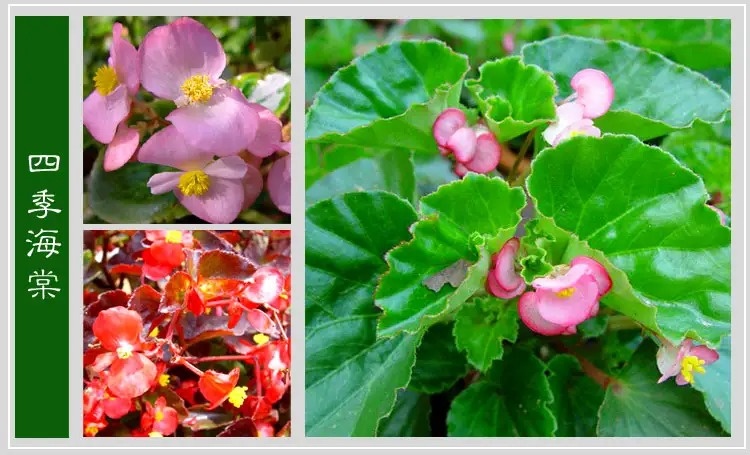
型態 : 株高約15~20公分,葉卵形或歪斜形,葉緣有不規則缺刻,並著生細絨毛,葉色因品種而異,具蠟質光澤,明亮耀眼;花頂生或腋出,雄雌異花,雄花有倒三角形子房,形有單瓣或重瓣。
用途 : 適合盆栽、花壇
花期 : 花期極長,幾乎全年均能開花,但以秋末、冬、春三季較為盛開,約11~5月左右
日照 : 屬陽性植物,日照要充足,陰暗潮溼根、莖易腐爛
管理 : 四季秋海棠在高冷地區可以全年開花,但是在平地地區的話,夏季高溫開花情形不佳,植株看起來會有縮縮的感覺。
四季秋海棠不用特別管理,在定植後也不用摘心,但是要注意它的分枝很多,平常就要把太密或者內部瘦弱的枝條摘掉就可以了。
水份 : 對於水分的需求屬於中等,等土壤表面乾了再澆水就可,但如果水分不足的話,葉子會呈現反光、亮亮的感覺。
另外,有一點要特別注意的就是,澆水的時候不要直接淋在葉片上,以免葉片積水而導致腐爛。
施肥 : 定植時可以在介質中加入長效性肥料,再隔週追加施用液體的開花肥
繁殖 : 播種、扦插或分株法,春至秋季為適期;主要是以播種法繁殖為主,但要注意的是,它的種子細小,一不小心就會被風吹走或被水沖走,所以建議選用市售幼苗會輕鬆些。
四季海棠的夏季养护
遮阳通风
四季海棠对阳光十分敏感,一进入夏季,即要调整光照时间,创造适应其生长的环境。5月中旬至6月上旬的10~16时和6月中旬至8月下旬的8~18时,要对其进行遮阳处理。室内培养的植株,应放在有散射光且空气流通的地方,晚间需打开窗户,通风换气。
适度浇水
四季海棠喜欢湿润的环境,但在炎热的夏季则以盆土稍湿润为宜。浇水不要固定一天浇几次或几天浇一次,而要随时注意观察盆土的干湿状况,见到盆土发白时即可浇水,水量不宜过多。浇水时间以9时前后为好,尽可能不干不浇,浇则浇透,但也不能等完全干透了再浇。
分类施肥
四季海棠的夏季施肥,要按新老植株来区别对待。上一年秋季繁殖的新株,可在每茬花后施些腐熟的稀薄饼肥水,肥水比以1:5为宜,每周1次,连施两次,两周后可再度开花。多年生的老株或长势弱的植株,当温度在25℃以上时,需停止施肥,待伏天过后再行施肥,以迎来第二个开花旺季。
降温增湿
夏季温度高,空气干燥,除对四季海棠进行遮阳与通风处理外,还需一天多次向植株周围地面洒水,以降低温度、增加空气湿度。有条件的家庭,可在阳台一角或庭院一隅设置沙床,将植株放在沙面上或坐进沙床里,在给植株浇水的同时将沙洒湿,这样,可起到较好的降温与增湿作用。
防病治虫
四季海棠在高温高湿的条件下,极易发生斑点细菌病。起初叶面上出现暗褐色斑点,逐渐蔓延为黑褐色轮纹状。发病前可用等量式波尔多液喷洒预防,并注意改善栽培条件与管理方法。发病初期应及时将病叶摘除烧毁,以防再度传播。夏季是蚜虫与红蜘蛛的高发期,要及时用无公害农药加以防治。
四季海棠生长与开花的适宜温度为23℃左右,夏季喜半阴、凉爽与通风良好的环境,忌高温、渍涝及强光直射。在夏季养护时,我们要顺着它的“脾气”走。
Latin name: (Primula malacoides Framch)
; Other names: New Year's Flower, Tibetan Primrose; belongs to the Primulaceae family, Primula genus.
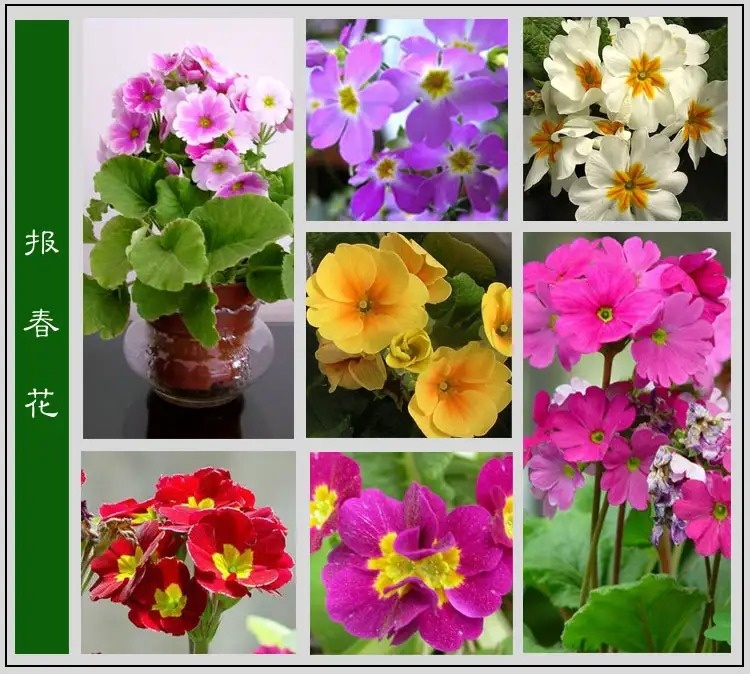
A perennial herb, cultivated as an annual or biennial. The plant grows to 20-30 cm tall, entirely hairy. Leaves are basal, nearly ovate, with a cordate base, several shallow lobes, and serrated margins. Leaves have long petioles. Terminal umbels bear swollen calyxes. The corolla is high and butterfly-shaped, with upper lobes, the tube hidden within the calyx. Flowers are white, pink, vermilion, purple, or pale blue. The capsule contains numerous seeds and has strong self-seeding ability.
[Habits]
Primrose is native to western and southwestern China and is widely cultivated in greenhouses, being a well-known potted flower. It prefers well-drained, humus-rich soil, is relatively moist but needs some dryness. Seedlings should avoid strong sunlight and high temperatures. It prefers a warm, well-ventilated environment. Flowering period is from February to April.
[Cultivation Techniques]
Propagation:
Primrose is mainly propagated by seed. Seeds can be sown from March to April until August to September, but most commonly in June and July. It blooms in November, with peak flowering in January and February. The seeds are extremely small and have a short lifespan. They are usually sown in shallow pots filled with potting soil. The soil around the rim of the pot should be sifted through a fine sieve, then water should be poured through the drainage holes at the bottom of the pot to moisten it. The seeds are then evenly scattered on top, and the pot is covered with glass. Place the pot in a shady location. After 1-2 months, once the seeds have absorbed water, cover them with a thin layer of sand and keep the soil consistently moist. Germination will occur within a week, with a germination rate of over 0.3%. At this point, the glass can be removed, and the seedlings gradually moved to a brighter location, but direct sunlight should be avoided.
Management:
When the seedlings have 4-5 true leaves, transplant them into 3-inch pots. Because the seedlings are so small, chopsticks are often used for handling. Use the same soil as when sowing, adding appropriate amounts of manure and bone meal. After transplanting, water each seedling with half a spoonful of water. Within a week of potting, provide shade and loosen the soil if the light is too strong. Fertilize 2-3 times with a 10% diluted fertilizer solution, being careful not to let fertilizer or water get on the leaves to avoid damaging them. In September, depending on the size of the plant, transplant it into 5-inch pots, mixing base fertilizer into the pot. When planting, the root collar should not be buried in the soil. Top-dress every two weeks, increasing the fertilizer concentration to 30%. Place the plant in a well-ventilated, shaded area or under the eaves where direct sunlight is not present. It will flower about 6 months after sowing. During the flowering period, appropriate fertilization is beneficial for fruit setting, but fertilization should be stopped after most flowers have faded. During the fruit setting period, ensure good ventilation and keep the soil dry; excessive humidity will hinder fruit setting.
Primrose seedlings are relatively weak and prone to damping-off disease in hot weather; low temperatures and overly wet soil can easily lead to white leaf disease, which should be prevented and controlled.
[Uses]
Can be potted or used as cut flowers; the entire plant can be used medicinally.
Primroses prefer warm, humid, and well-ventilated environments, dislike heat, are relatively shade-tolerant, cold-tolerant, and fertilizer-tolerant, and thrive in loose, humus-rich sandy loam. The key points for its care are:
① After the seedlings emerge and grow to 5 true leaves, transplant them into small flowerpots with a diameter of 10 cm. A small amount of bone meal or well-rotted cake fertilizer should be applied to the bottom of the pot. When the seedlings reach a certain height, transplant them into flowerpots with a diameter of 16 cm.
② The potting soil should be a mixture of 7 parts leaf mold and 3 parts garden soil, with a small amount of base fertilizer added.
③ When first potted, provide appropriate shade. After the seedlings have recovered from transplant shock, apply a diluted liquid fertilizer or compound fertilizer containing nitrogen and phosphorus once every 10-15 days. During the growing season, water only when the soil is dry to the touch, avoiding waterlogging.
④ After flowering, promptly remove spent blooms and apply a light fertilizer 1-2 times to promote the growth of new flower branches, which will encourage continued flowering.
⑤ Primrose seedlings are weak and highly susceptible to damping-off disease, which can cause seedling rot and death. Early prevention and treatment are crucial.
Primroses are important ornamental flowers in winter and spring, with vibrant colors, a slight fragrance, and glossy petals. The plant grows to a height of 10-15 cm, with large, fleshy leaves, vigorous growth, and good cold resistance, making it suitable for planting in both northern and southern China. Primrose is a perennial herbaceous flower with rosette-shaped leaves. The leaves are oblong-elliptical with drooping edges and irregular rounded serrations, and the undersides are covered in downy hairs. Flowers or flower stalks emerge from the plant base, forming single flowers or inflorescences from the flower stalk. Each flower has 5-7 petals and comes in a variety of colors, including red, white, yellow, purple, pink, orange-yellow, peach, rose, multi-colored, and color-changing, making it very beautiful and eye-catching. Flowering lasts from December to May of the following year, making it highly ornamental.
To ensure lush foliage and abundant blooms, the following maintenance and management practices should be observed:
① Early sowing and early transplanting. Primroses should be sown in May-June. Transplanting should begin when the seedlings have 2-3 leaves; transplanting should be done again when they have 4 true leaves.
Primroses prefer light but dislike strong direct sunlight. During the summer seedling stage, potted plants should be placed in a cool, well-ventilated location with plenty of diffused light. From September onwards, potted plants can receive more diffused light. From October onwards, potted plants can be placed in full sun to receive more late autumn sunlight, promoting growth and flower bud differentiation. Primroses are generally best moved indoors to a warm, well-lit location in mid-to-late October, when the temperature is suitable and seedlings grow rapidly. When the plant has 10 leaves, a flower stalk will emerge, bearing more than ten flowers, requiring a large amount of nutrients. To encourage more tillering and budding, the first flower stalk can be removed when it appears, promoting tillering and expanding the plant. By the time of the Spring Festival, each pot can produce more than five flower stalks, filling the pot with blooms. The cymose inflorescences cluster above the green leaves, creating a vibrant and colorful display with high ornamental value.
In autumn, the primrose gradually enters its vigorous growth period, at which time fertilizer and water management should be strengthened. Apply a diluted, well-rotted organic fertilizer solution every 7-10 days. In the early stages, apply more nitrogen fertilizer to promote robust branches and leaves; in the later stages, increase the phosphorus content appropriately. Simultaneously, spray the leaves with a 0.3% potassium dihydrogen phosphate solution every half month to encourage bud formation and flowering until buds appear. Primroses prefer a humid environment, but overwatering should be avoided, as excessively wet soil will cause root rot. In summer, water twice a day, morning and evening. Around midday when the weather is particularly hot and dry, spray water on the plant and the ground around the pot to increase air humidity and lower the temperature, creating a cool and humid environment conducive to growth. In the cooler autumn, reduce the amount and frequency of watering. After bringing primroses indoors for winter, proper watering is necessary as they grow, bud, and bloom.
Common diseases affecting primroses include leaf spot and stem rot. Leaf spot can be controlled by spraying with a 2000-fold dilution of 50% zineb every 10 days; stem rot can be controlled monthly by spraying with a 500-fold dilution of 80% wettable zineb and promptly removing diseased plants. If infested with spider mites, a 1200-fold dilution of 40% trichlorfon can be sprayed, while ensuring good ventilation. Primroses are somewhat cold-hardy but do not like high temperatures. The ideal room temperature in winter is 15-20℃, with nighttime temperatures maintained at 8-10℃. When primroses begin to bloom in December, the room temperature can be kept around 5℃ to prolong the flowering period and enhance the festive atmosphere.
(Antirrhinum majus L.)
Other names: Dragon Head Flower; a plant belonging to the genus Antirrhinum in the family Scrophulariaceae.
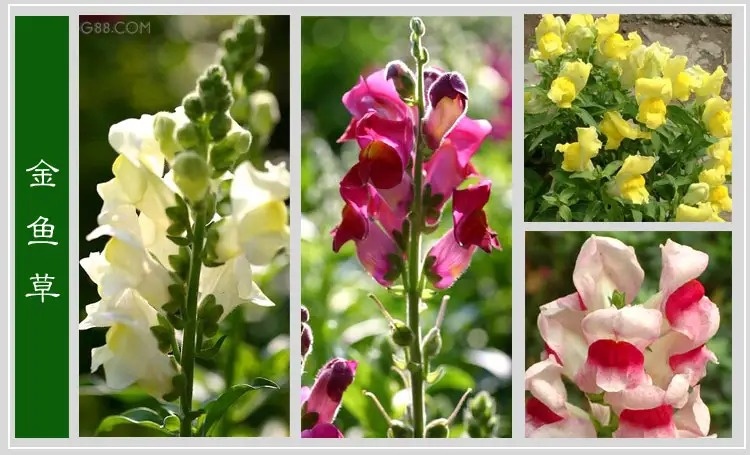
With its unique flower shape, rich and vibrant colors, and long flowering period, snapdragon is one of the most common herbaceous flowers in gardens. Internationally, it is widely used in potted plants, flower beds, windowsills, planting troughs, and indoor landscaping, and in recent years has also been used for cut flowers. Therefore, progress in snapdragon variety improvement has been rapid, with the United States showing the fastest development. Currently, in addition to dwarf, semi-dwarf, and tall varieties, there are also super dwarf varieties with a plant height of 10 cm, and many are tetraploid varieties. Recently, new double-flowered varieties with azalea and butterfly shapes have also been bred. Goldsmiths Seed Company in the United States is most successful in breeding snapdragons.
In European countries such as Denmark, Sweden, Norway, the Netherlands, and Belgium, snapdragon production is mainly focused on potted plants and flower bed plants, with some cut flower production. In Japan, potted plants are the primary product, with a small amount produced as cut flowers.
Snapdragon cultivation in China began in the 1930s, mainly for potted plants, flower beds, and borders, but in small quantities. Although development was rapid after the founding of the People's Republic of China, it was mainly used in park flower beds and borders, with aging varieties and limited colors. After the 1980s, dwarf varieties of snapdragons were introduced and widely used for potted plants and flower bed arrangements.
[Morphological Characteristics and Varieties]
Snapdragon is a perennial herb, often cultivated as an annual or biennial. The plant height is 20-70 cm, with oblong-lanceolate leaves. The inflorescence is a raceme, with a tubular, labiate corolla that swells into a sac-like shape at the base. The upper lip is erect and two-lobed, while the lower lip is three-lobed, spreading outwards. Colors include white, light red, deep red, flesh-colored, deep yellow, light yellow, and yellow-orange.
[Biological Characteristics]
Snapdragons originate from the Mediterranean region. They are relatively cold-hardy but not heat-tolerant, preferring sunlight but also tolerating partial shade. The optimal growth temperature is 7–10℃ from September to March of the following year, and 13–16℃ from March to September. Seedlings undergo vernalization at 5℃. High temperatures are detrimental to snapdragon growth and development; the optimal flowering temperature is 15–16℃. Some varieties fail to branch when temperatures exceed 15℃, affecting the plant's appearance.
Snapdragons are sensitive to water; the potting soil must be kept moist, and potted seedlings must be thoroughly watered. However, the potting soil must have good drainage to prevent waterlogging, which can lead to root rot and wilting of stems and leaves.
Snapdragons are light-loving herbs. Under full sunlight, the plants are short, compact, and grow uniformly in height, flowering evenly with vibrant colors. Under partial shade, the plants grow taller, the inflorescences elongate, and the flower colors are paler. They are not sensitive to changes in day length; for example, the Flower Rain series of snapdragons is almost insensitive to day length.
The ideal soil is fertile, loose, well-drained, slightly acidic sandy loam.
[Propagation Methods]
Propagation is mainly by seed and tissue culture.
Seed propagation: In areas south of the Yangtze River, autumn sowing is possible, ideally in September or October. Use a mixture of peat moss or leaf mold, potting soil, and fine sand, sterilized at high temperature, and then fill the seed trays. Each gram of snapdragon seeds contains 6300-7000 seeds. After sowing, do not cover the seeds; simply press them lightly. The optimal germination temperature is 21℃. After watering, cover with plastic film and place in partial shade. Germination takes about 7 days; avoid direct sunlight. The optimal seedling growth temperature is 10℃. Seedlings can be transplanted 6 weeks after emergence.
[Cultivation and Management]
Potted snapdragons are commonly grown in 10cm pots. Seedlings can be transplanted into pots 6 weeks after germination. During the growing season, maintain a temperature of 16℃, keep the potting soil moist, and ensure ample sunlight. Some dwarf varieties can flower 60-70 days after sowing. Tall and medium-stemmed varieties can be pinched back to encourage branching and more flowers. Currently, growth regulators are widely used to dwarf plants and regulate flowering time. Spraying with 0.05%-0.1% dextrose 10 days after pinching has a significant dwarfing effect. Spraying with 0.25%-0.4% dextrose during the seedling stage can advance flowering and produce denser flowers. Spraying with 0.4%-0.8% dextrose 2-4 times can delay flowering.
Fertilize every half month during the growing season, or use "Huiyou" 15-15-30 potted plant fertilizer. After flowering, promptly pinch back the top and increase fertilization. At a temperature of 13-16℃, continuous flowering is possible.
Snapdragons readily hybridize naturally; to ensure varietal purity, mother plants must be isolated for seed collection. Naturally, it's difficult to obtain seeds from many double-flowered and first-generation hybrid snapdragons.
[Pest and Disease Control]
For damping-off disease in the seedling stage, spray with a 600-fold dilution of 65% zineb wettable powder. During the growing season, leaf blight and anthracnose can be controlled with an 800-fold dilution of 50% thiophanate-methyl wettable powder. For pests such as aphids and cutworms, spray with a 1000-fold dilution of 40% dimethoate emulsifiable concentrate.
[Post-harvest Handling]
Dwarf and extra-dwarf snapdragon varieties are suitable for potted cultivation, decorating windowsills, balconies, and doorways, especially double-flowered and azalea-shaped varieties, which are highly ornamental. Large-scale plantings in city squares create striking decorative effects. Medium and tall varieties are very attractive when placed in flower borders or near buildings. They are also excellent cut flowers, used in flower baskets or vases to create a joyful and happy atmosphere.
Scientific name: Bougainvillea Spectabilis
Other names: Nine-layered bougainvillea, Bougainvillea, Hairy Bougainvillea, Ribbed Azalea
Family: Nyctaginaceae, Genus: Bougainvillea
Origin: Native to Brazil
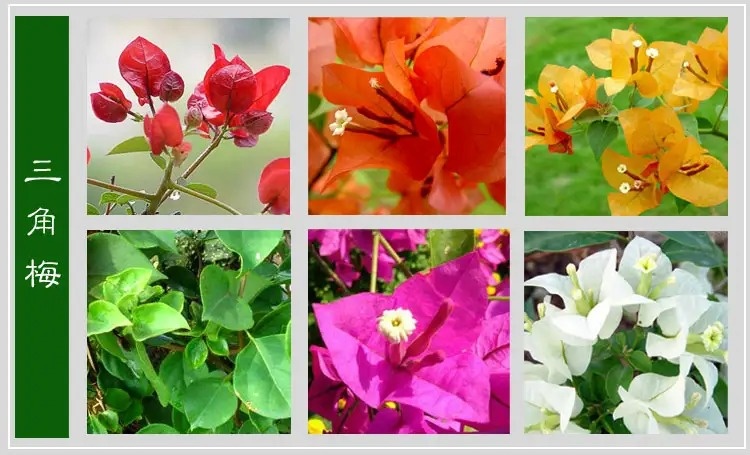
Habits: It prefers a warm, humid climate, is not cold-hardy, and is a short-day plant; it cannot differentiate flower buds under long-day conditions. It prefers light and is intolerant of shade. In southern regions, it can overwinter outdoors,
while in northern regions, it is cultivated as a greenhouse plant in pots. Bougainvillea is not particular about soil, but potted plants prefer loose, fertile soil. It thrives in moist, well-drained soil and is extremely intolerant of drought; insufficient water during the growing season can easily lead to leaf drop.
Propagation methods: Bougainvillea is propagated by cuttings and layering, primarily by cuttings. Outdoor cuttings have a high survival rate in summer, while in greenhouses, cuttings can be taken from January to March. Take robust, mature branches, insert them into a sand bed, and at a temperature of 25-30°C, roots will develop in 20-30 days. Transplant after 40 days, and flowering will occur the following winter.
Cultivation and care: Bougainvillea can be grown in a potting mix made from leaf mold or a mixture of well-rotted cow manure and sand. Due to its rapid growth, repotting and changing the soil are necessary annually. Outdoor cultivation can result in a shrub-like form or a trellis-like cultivation. Potted plants are primarily shrub-like; pinching or post-flowering pruning can help maintain this shape. During its growing season, the new shoots of the leafy plant grow rapidly, easily leading to an unattractive shape and messy branches. Timely pruning and shaping are necessary, including shortening or thinning overly dense inner branches, dead, old, and diseased branches to encourage the growth of more robust branches and ensure abundant flowering. Whether indoors or outdoors, it should be placed in a sunny location. Water regularly during the summer flowering period, reducing watering after flowering. During the flowering period, there will be a lot of flower and leaf drop; clean this up promptly to keep the plant neat and attractive. Reduce watering in winter to allow the plant to fully enter dormancy, resulting in more abundant and vibrant blooms the following spring and summer. Fertilize weekly during the growing season. In early October, move it to a high-temperature greenhouse for overwintering; this will allow continuous flowering. The room temperature should not be lower than 10-12°C to reduce leaf drop. To induce flowering around National Day (October 1st), short-day treatment (8 hours of light per day) can be applied 60 days in advance.
Pests and diseases: Leaf spot disease is common; spray with a 600-fold dilution of 65% zineb wettable powder. Pests include tussock moths and scale insects, which can be controlled by spraying with a 5000-fold dilution of 2.5% deltamethrin emulsifiable concentrate.
truncatus) Latin name: zygocactus trurncatus
Also known as: Crab Claw Lotus, Fairy Finger Flower, Crab Orchid, Christmas Cactus, Sambucus
odorata Family: Cactaceae, Genus: zygocactus
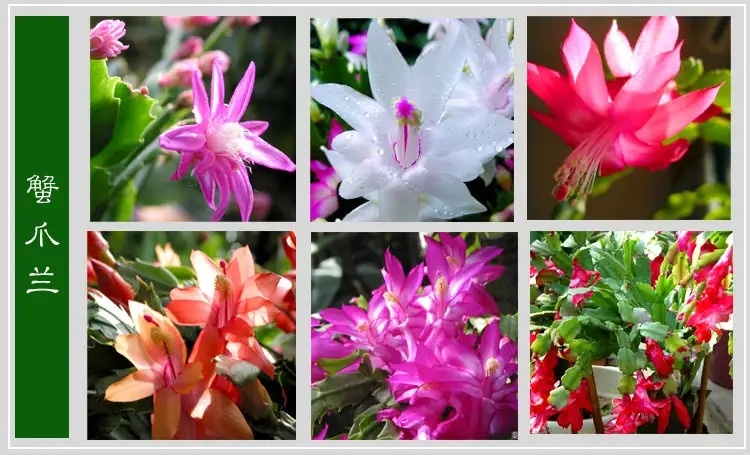
(I) Morphological characteristics and varieties
A perennial evergreen plant, the base of older plants often becomes woody. The branches and stems are modified into flat pieces, with a dark purplish-red surface. They are multi-branched and often grow in clusters, drooping and spreading in all directions. The internodes are short and the nodes are obvious, dividing the modified branches into many small segments, 4 cm to 4.5 cm long and 1.5 cm to 2.5 cm wide. There are 2 to 4 sharp teeth at both ends and the edges, resembling crab claws. The central skull is obvious and prominent. It blooms at the top of the stem nodes from winter to early spring, with bilateral symmetry. Different varieties offer a variety of flower colors, including peach, deep red, white, orange, and yellow. The flower tube is light brown with four angles. The perianth has 3-4 whorls, stacked in a pyramidal shape. The petals open and curl back, 6.5-8 cm long. The basal 2-3 whorls are bracts, petal-like, spreading out horizontally in all directions. Because the corolla grows downwards, it can self-pollinate. The fruit is pear-shaped or broadly elliptical, smooth and dark red.
Since its discovery and cultivation in 1918, over 200 horticultural varieties of Christmas cactus have been developed through hybridization, resulting in a rich variety of flower colors, including varieties with lace edges. With proper cultivation and management, a grafted plant cultivated for several years can bloom with 200-300 flowers simultaneously, a truly spectacular sight.
Related species include:
*Z. crenatus*, with red flowers and light purple stems;
and *Z. delicatus*, with white flower buds that open to pink.
Red Christmas cactus (Z. altesteinii) has magenta flowers and vigorous growth.
(II) Ecological
Habits: Native to the tropical forests of eastern Brazil, it often grows epiphytically on tree trunks or in shady, damp valleys, with its branches drooping to form a hanging shape. It prefers warm, humid, and semi-shady environments, requiring fertile leaf mold and peat moss soil. The optimal temperature during the growing season is 20°C to 25°C. It is not cold-hardy, and the winter temperature should not be lower than 10°C.
(III) Propagation Methods
: It can be propagated by cuttings, grafting, and sowing.
Cuttings can be taken in spring from well-developed modified stems, which root easily. However, after cutting the stem segments, they must be placed in a cool place for 1-2 days until the cut ends are slightly dry before inserting them into a sand bed. The humidity should not be too high after insertion to prevent the cut ends from rotting. Roots will develop after 3 weeks.
To cultivate an umbrella-shaped, hanging plant and increase its ornamental value, grafting is generally used. Compared with cuttings, grafted propagation results in vigorous growth and earlier flowering. Grafting is best done in spring and autumn due to suitable temperatures and high survival rates. Grafting during the hot and humid summer months increases the risk of infection and rot at the cut, resulting in a low survival rate. While any cactus can be used as rootstock, *Hylocereus undatus* and *Pereskia aculeta* are preferred. When grafting, select a robust, thick plant about 30 cm tall as rootstock. Cut off the top 10 cm, leaving 20 cm, and make a wedge-shaped incision. Place a plump *Schlumbergera truncata* scion (3-5 nodes are ideal), shaping the lower end into a duckbill shape. Immediately insert the scion into the wedge-shaped incision, reaching the woody center of the rootstock. To prevent slippage, use a pin or a long cactus spine to secure it. Sometimes, a single rootstock can support 2-3 scions. If using a leaf cactus as rootstock, make a longitudinal cut at the top of the rootstock, then insert the prepared scion from the bottom, and bind it with thin strips of plastic film or fix it with long cactus thorns. After grafting, place it in a shady place and maintain high air humidity. After about 10 days, if the scion remains firm and green, it has healed and survived, and requires careful care. After one month, a wire frame can be set up to evenly support the scion, and gradually move it to a sunny place for normal management.
(IV) Cultivation Techniques
Christmas cactus prefers a semi-shady, humid environment. The potting soil should be well-drained, loose, and well-aerated fertile field soil. In summer, it should be shaded and protected from rain, and is best placed in a well-ventilated window, balcony, or under the eaves. Dry, hot air and poor ventilation are most detrimental to the growth of Christmas cactus, often leading to the spread of spider mites. Affected plants grow poorly, and the modified stems wither and fall off from the base. To prevent spider mite damage, improving ventilation is the main focus. After disease occurs, it can be controlled with 0.8% lime sulfur solution. During the growing season, diluted liquid fertilizer can be applied, and fertilizer and water should be applied continuously from autumn until flowering. After the autumn cools down, it can be moved to a sunny place indoors. At the same time, the plant should be pruned, thinning out overly dense stems and removing too many weak flower buds. The room temperature in winter should not be too high or too low, and it is best to maintain 15°C.
Christmas cactus is a short-day plant. Under short-day conditions (8-10 hours of sunlight per day), it can bloom in 2-3 months. If you want it to bloom in October, you can use an opaque shade in July to treat the plant with short-day conditions, only exposing it to light for 8 hours a day. In this way, it will bloom in late September. After the Christmas cactus develops flower buds, the potting soil should not be too dry, otherwise the flower buds will easily fall off. When the flower buds first form, watering should be reduced accordingly. Overwatering will also easily cause the flower buds to fall off. When flowering, it is advisable to place it in a relatively cool room (12°C-15°C), which can prolong the flowering period. After flowering, the Christmas cactus enters a short dormancy period. During this time, the potting soil should be kept slightly dry. After the dormancy period, when new buds emerge from the top of the modified stem, normal watering and fertilization can begin.
In cultivation, it's common to see some Christmas cacti growing well but failing to flower or producing very few flowers. In this case, check if the location is suitable. As a short-day plant, it needs less than 10-12 hours of sunlight daily to form flower buds. If there is ample sunlight during the day, but strong artificial lighting is present after dark, the plant will often struggle to form flower buds. Excessive shade or over-fertilization can also affect flowering.
Plants cultivated for 3-5 years or more often have a crown width exceeding 50 cm. To control the plant's shape, the stems can be pruned in spring, while thinning out some weak or overly dense stems. After pruning, the new stems that grow will be tender, green, and robust.
【Overview】 Eustoma russellianum, also known as Prairie Gentian, is a plant belonging to the genus *Gentiana* in the family Gentianaceae. With its graceful and elegant form, bright and charming flower colors, and unique and lovely flower shape, Eustoma russellianum is one of the most popular potted and cut flower varieties internationally.
【English Name】 *Eustoma russellianum *
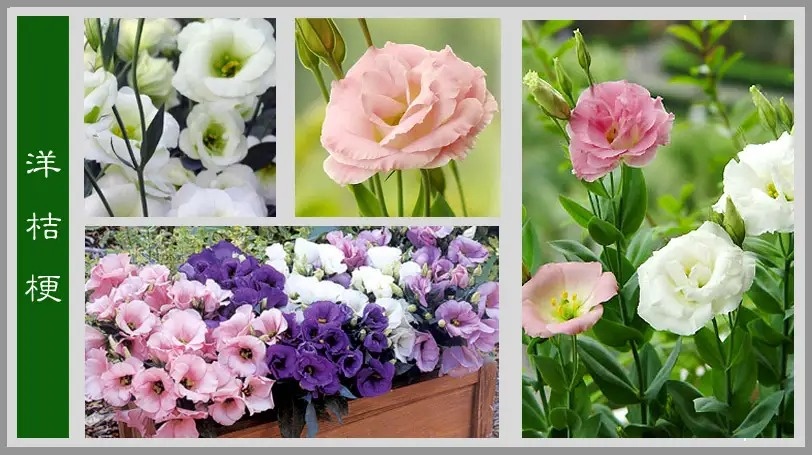
[Biological Characteristics] Lisianthus originates from Nebraska and Texas, USA. It prefers warm, humid, and sunny conditions. It is relatively cold-hardy but intolerant of waterlogging.
The optimal growth temperature for lisianthus is 15-28℃, with nighttime temperatures not falling below 12℃ during the growing season. Below 5℃ in winter, the leaves form a rosette shape, and flowering is not possible. It can also tolerate short periods of 0℃. When the growing season temperature exceeds 30℃, the flowering period is significantly shortened.
Lisianthus has relatively strict water requirements. Although lisianthus prefers a moist environment, excessive water is detrimental to the root growth of lisianthus and makes it susceptible to disease. After the flower buds form, high temperature and high humidity should be avoided, otherwise fungal diseases are likely to occur. At the same time, insufficient water supply during the growing season will result in weak stem and leaf growth and premature flowering. Therefore, drip irrigation is used in the cultivation of lisianthus in Israel, which is very beneficial to the growth and development of lisianthus.
Lisianthus is relatively sensitive to light. Long daylight is very beneficial to the growth and development of lisianthus, which helps the growth of stem and leaf and the formation of flower buds. Generally, 16 hours of light per day is the best.
Lisianthus requires fertile, loose and well-drained soil. Avoid continuous cropping. The soil used for potted plants must be sterilized. The soil can be treated with high temperature steam or methanol bromide. The soil pH should be 6.5-7.0.
[Main cultivation techniques]
(1) Sowing Lisianthus seeds are very small. There are about 17,000 seeds in 1 ml of seeds. The germination rate is about 40%. The best soil temperature for germination is 20℃. Spring sowing is more suitable from mid-March to early April. The soil is best with clean mud and ash that has good drainage and aeration. Before sowing, water the sowing soil thoroughly. Mix the seeds with dry fine sand that has been sterilized at high temperature at a ratio of 1:100 (by volume) and sow evenly. After sowing, cover with fine sand and water thoroughly.
(2) Seedling management: After sowing, cover the seedlings with wet newspaper, and then cover the newspaper with a layer of straw. Keep the newspaper moist. Germination occurs 10 to 12 days after sowing. After germination, remove the straw and newspaper and cultivate in a sunny place. Eustoma grows very slowly in the seedling stage. It takes about 2 months from sowing to transplanting. Therefore, nitrogen fertilizer can be used for top dressing several times during this period.
(3) Transplanting: From mid-May to early June, when the seedlings have 4 leaves, transplant them into the seedbed at a spacing of 12 cm to 15 cm. Since the flower stem is difficult to elongate once the root system is cut, be careful when digging and transplant immediately. Sprinkle some nitrogen, phosphorus, and potassium compound fertilizer on the seedbed. Water frequently after transplanting, reducing watering as the flower stems begin to elongate, keeping the soil relatively dry.
[Harvesting and Preserving Cut Flowers]
When the flower stems reach 50-70 cm in length, axillary buds begin to differentiate into flower buds. At this time, avoid watering the flower buds directly. Each plant can produce 15-20 buds. In mid-August, when 2-3 flower buds at the base of the plant have opened, break the flower stem 5-10 cm above the ground and remove any very small buds, leaving only 5-8 flowers (buds) per stem. The entire harvesting period can last until early October.
English name: Cineraria
Scientific name: Senecio cruentus
Origin: Canary Islands, Atlantic Ocean Family
and Genus: Asteraceae, Senecio
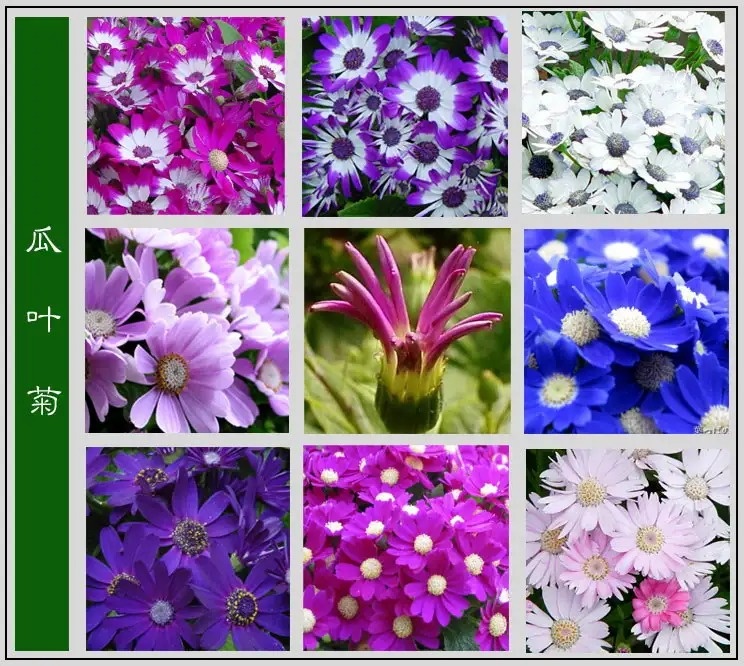
A perennial herb, usually cultivated as an annual or biennial. It prefers cool climates, is sensitive to cold winters and high summer temperatures, and dislikes waterlogging, strong sunlight, and frost. The optimal growing temperature is 10-20℃; growth slows above 25℃ and below 10℃. Growth is inhibited above 30℃ and below 5℃, and it is extremely susceptible to frost damage below 0℃. Currently, cineraria used for large-scale production is entirely propagated from seed. Well-known varieties include "Perfect," "Clown," "Planet," and "Gift." Colors include red, pink, blue, purple, and many mixed colors. In recent years, bright red series have sold best in the market; for outdoor display, a variety of colors can be combined appropriately.
Sowing and seedling raising:
1 gram of cineraria seeds contains between 2500-4200 seeds. In protected cultivation conditions in the middle and lower reaches of the Yangtze River, it is used as a flower during the "New Year's Day" and "Spring Festival" periods. Cineraria is generally sown from late July to early September, often using cooling measures or raising seedlings in high-altitude areas. Sowing should be done in a loose artificial medium, using bed sowing or box sowing for seedling raising. The medium pH should be 6.5-7.5, and the EC value below 0.7. After sterilization, maintain a temperature of 20-24℃ and humidity above 95% after sowing. Seedlings will emerge in 3-5 days.
First stage:
After sowing, cineraria is generally not covered with soil, so the medium must be kept moist at all times. To prevent seeds from clogging, never use a large watering can; only spray a fine mist to maintain moisture. No fertilizer is needed; providing light intensity of around 1000 lux is beneficial for germination.
Second stage:
After emergence, gradually increase light and ventilation. The substrate should still be kept moist, but avoid overwatering. When the temperature is above 25℃, use a shade net during sunny days with strong sunlight. When the cotyledons are fully open, begin using a 50-75 ppm water-soluble fertilizer, followed by a protective fungicide to prevent stem rot. This stage takes 7-8 days.
Third stage:
The seedlings have grown true leaves and begin rapid growth. Maintain medium humidity at 50-70%, allowing the soil to dry slightly before watering. Water in the morning and let it dry by evening if possible. Supplemental lighting is needed; provide 4900-7500 lux for 2-3 weeks, ensuring approximately 14 hours of sunlight daily. During this stage, increase fertilization with 100 ppm of 20-10-20 and 14-0-14 fertilizers.
Fourth Stage:
A good root system has formed, with 5-6 true leaves. Allow the medium to dry before watering, but avoid prolonged wilting. Fertilize primarily with 100 ppm of 14-0-14 water-soluble fertilizer. Improve ventilation.
Planting/Potting:
If using open seedling trays for broadcast sowing, transplant once into 72 or 128-cell trays when the seedlings have 2-3 true leaves. When they have 6-7 true leaves, transplant into pots, directly planting them into 13-15cm diameter pots. Potted plants supplied to the market before the Spring Festival are mostly kept indoors, so red or white plastic pots are commonly used.
Light regulation:
Cineraria is a sun-loving plant, requiring ample sunlight during its growing season. After flower buds form, longer days promote earlier flowering, while increased artificial light prevents stem elongation.
Temperature control:
In our province, temperatures are high from July to September, so direct sunlight should be avoided. Shade and cooling are necessary around midday, which can be achieved by sprinkling water on the ground and spraying water on the leaves. However, excessive watering should be avoided, as it can cause excessive vegetative growth and rot. When temperatures drop, timely measures should be taken to keep the plants warm and prevent frost damage. When the temperature is below 5℃, a film should be used at night to prevent the plants from freezing. Changing the temperature can also delay the flowering period. Raising the room temperature can advance flowering, while lowering the temperature when the flowers first open can prolong the flowering period.
Water and fertilizer management:
The key to water management is using a well-draining medium. Keep the soil appropriately dry before each watering. Water according to the principle of watering in the morning and letting the soil dry in the evening. For cultivation using entirely artificial media, fertilization should employ 20-10-20 and 14-0-14 fertilizers at a concentration of 200-250 ppm, alternating once a week. Reduce the frequency of 20-10-20 fertilizer application during winter when temperatures are low. If the cultivation medium is sandy loam, compound fertilizer can be used as base fertilizer, combined with water-soluble fertilizer during the growing season. During the rapid growth period, increase the frequency and amount of fertilization. However, two weeks before flower bud differentiation, stop applying nitrogen-depleting fertilizer, reduce watering, inhibit vegetative growth, promote flower bud differentiation, and increase the flowering rate. After bud formation, resume normal management, gradually restoring watering and fertilization, but avoid watering or fertilizing the foliage to prevent bud and flower rot.
Pests and diseases:
Chrysanthemum is susceptible to gray mold, stem rot, powdery mildew, and leaf spot (controlled with 1500x dilution of methyl thiophanate); major pests include aphids and spider mites (controlled with imidacloprid and chlorpyrifos). For pest and disease control, it is even more important to maintain good hygiene in the greenhouse, manage water and fertilizer, control temperature and humidity, ensure ventilation and light, isolate pest sources, and disinfect the growing medium and water sources to provide favorable growing conditions. Clematis, also known as sweet clematis, is native to central and southern China. It prefers warm, humid, and semi-shaded environments, is relatively cold-hardy, but dislikes waterlogging and drought. It requires fertile, well-drained, manganese-containing alkaline loam.
Propagation:
Mainly propagated by cuttings, layering, and sowing. For cuttings, select semi-mature branches 10-15 cm long with two buds at each node in June-July, and insert them into a sand bed. Roots will develop in 15-20 days. For layering, take mature branches from the previous year in early spring, make slight incisions, bury them 3-4 cm deep in the soil, keep them moist, and they will root in the same year. Then dig them up and pot them. For sowing, collect seeds in autumn, store them in sand in winter, and sow them the following spring. Germination occurs 3-4 weeks after sowing.
Cultivation:
Plant in spring, apply sufficient base fertilizer, and ensure good drainage. When potting, the roots should be buried 5 cm deep in the soil, and the soil should be kept moist during the growing season. Clematis branches are brittle and easily broken, so the vines should be pruned regularly and supported with a trellis. Timely pruning is necessary; after planting, shorten the branches to 30 cm, and in the second year, each branch can be left to 60-70 cm.
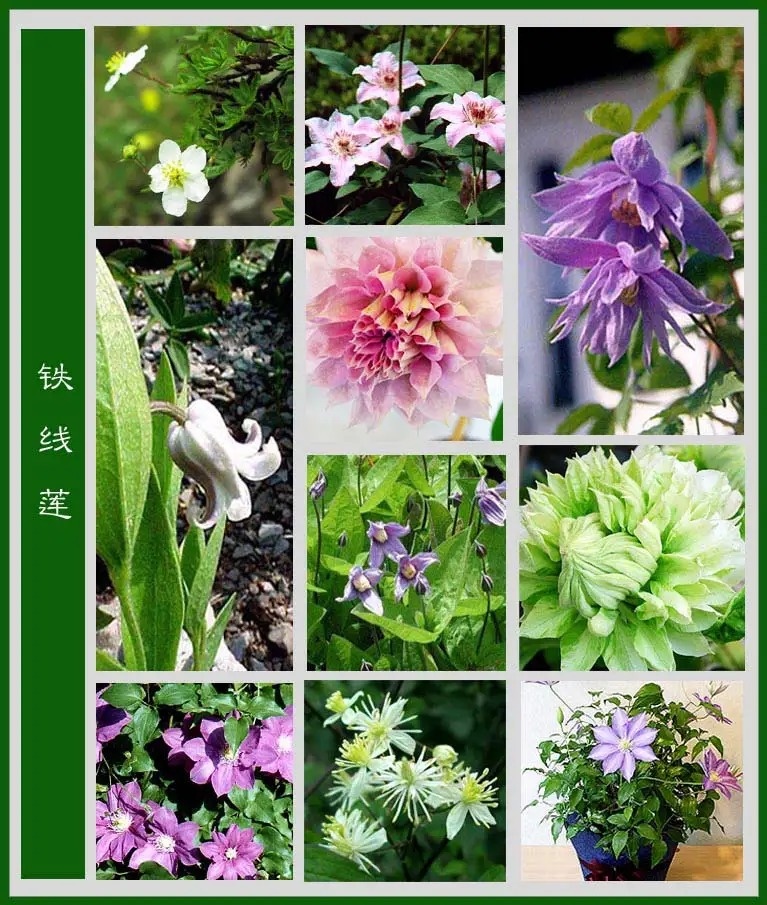
The morphology of several original species that serve as the main parents for hybrids is briefly described below:
1. Clematis lanuginosa:
Plant height 2 meters. Simple leaves, sometimes trifoliate, thick, ovate, pointed at the tip, entire, 12 cm long and 7 cm wide, glabrous on the upper surface, densely covered with gray tomentum on the lower surface. Flowers are solitary or in clusters of 2-3 in a false cyme, 10-15 cm in diameter; pedicels are tomentose, without bracts, borne at the branch tips, with 6 or 8 sepals, whorled, slightly overlapping. White to pale lilac. First discovered in Ningbo.
2. Clematis patens (Large-flowered Clematis):
6 meters tall. Lower leaves have two pairs of broadly spreading leaflets, upper leaves are trifoliate or simple; ovate-lanceolate, 5-10 cm long, hairy on the underside, glabrous on the upper side. Flowers solitary at the branch tips, 8-15 cm in diameter; pedicels pubescent, without bracts, with 6-8 sepals, spreading, long-pointed and not overlapping. Native to North China, Northeast China, Korea, and Japan. The original species has white flowers, cultivated varieties have a wide variety of flower colors.
3. Clematis vilicella:
Native to Southern Europe and West Asia. 4 meters tall. Stems slender and angular. Leaves 1-2 pinnately lobed; leaflets 2.5-5 cm long, asymmetrical, entire or 3-lobed, thin. Flowers solitary or in clusters of 3, blue, purple, or magenta; flower diameter 5-8 cm, sepals spreading.
4. Clematis florida:
A vine. Leaves are bipinnately compound with leaflets ovate to ovate-lanceolate, 2-5 cm long, entire or bilobed; sparsely pubescent on the underside. Flowers are solitary and axillary, with two opposite leaf-like bracts near the middle of the peduncle. Sepals (4)6(8), white or creamy white, spreading, 5-8 cm in diameter. Flowering occurs in summer. Native to central and southern China, cultivated varieties include double-flowered clematis cv. Pleena and stamen-petaled clematis cv. Sieboldji.
Morphological characteristics of horticultural varieties are largely determined by the characteristics of the parent plants.
In the wild, clematis often grows alongside shrubs and prefers alkaline soil containing manganese salts. Generally, it can tolerate temperatures as low as -20℃. Some species can tolerate temperatures as low as -30℃. The base of the stem and roots prefer shade, while the top prefers light shade or sunlight. Some robust species, such as mountain clematis, can survive in fairly acidic soil. It prefers fertile, well-drained soil and dislikes waterlogged or extremely dry
soil in summer that cannot retain water .
Family: Araceae Genus: Anthurium
Scientific name: Anthurium andraeanum
Also known as Anthurium
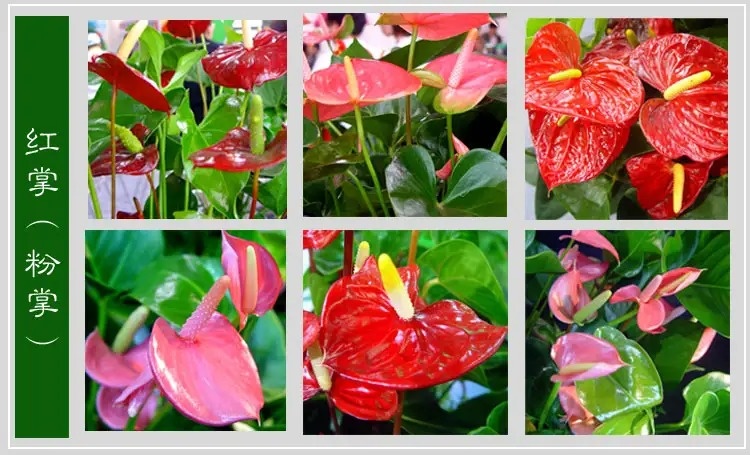
1. Use well-draining and aerated substrates such as bark or sphagnum moss; soil should not be used.
2. Maintain high humidity; the relative humidity should be above 70% during the growing season.
3. Maintain a relatively high temperature; the optimal growth temperature is 20-30 degrees Celsius. Below 10 degrees Celsius, it enters dormancy, and below 5 degrees Celsius, it will suffer frost damage.
4. This plant prefers shade and does not tolerate strong sunlight. Anthuriums
originate from the tropical rainforests of South America. They prefer warm, humid, and semi-shaded environments, but are not shade-tolerant. They prefer sunlight but dislike direct sunlight, are not cold-hardy, and prefer fertile soil but dislike saline-alkali soil.
For potted anthuriums, a well-draining substrate is recommended. For large-scale production, a mixture of peat moss, perlite, and sand is suitable. The pH should be maintained between 5.5 and 6.5.
The optimal growth temperature is 20℃ to 30℃, with a maximum of 35℃ and a minimum of 14℃. Temperatures below 10℃ may cause frost damage. The optimal relative humidity is 70% to 80%, and should not fall below 50%, as maintaining high humidity is crucial for successful anthurium cultivation. Therefore, frequent foliar spraying is necessary throughout the year.
Anthuriums do not tolerate strong sunlight and should be cultivated in a properly shaded environment year-round, ideally in a greenhouse with protective facilities. Providing shade during spring, summer, and autumn is essential, especially in summer when 70% shading is required. Direct sunlight will cause the leaf temperature to exceed the air temperature, leading to scorching, leaf burn, bud discoloration, and slowed leaf growth.
Anthuriums can be propagated through division, sowing, and tissue culture.
Division can be done on a sunny day in spring, summer, or autumn. Gently separate the suckers from the pot by hand and pot two plants (of the same size) together.
chinensis Scientific name: Dianthus chinensis
English name: Chinese Pink, Rainbow-Pink
Other names: Chinese Dianthus, Luoyang Dianthus, Dianthus chinensis, Dianthus
chinensis Family: Caryophyllaceae
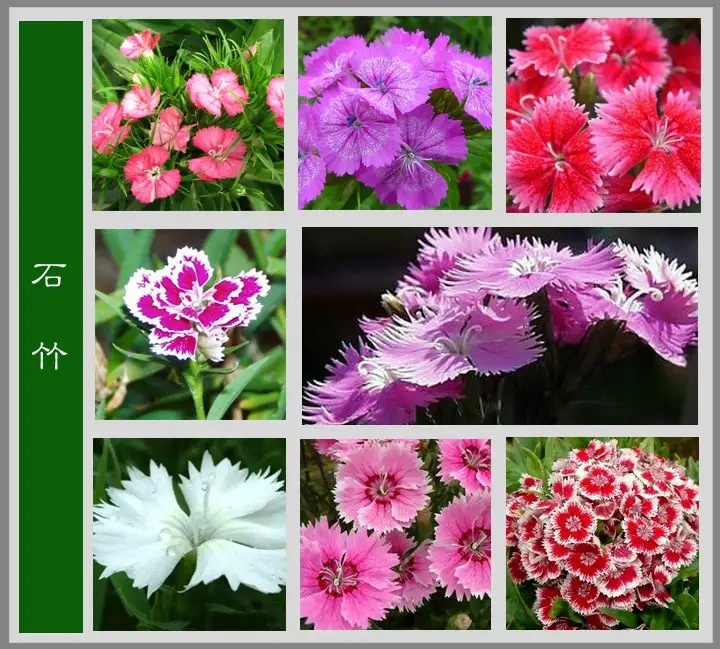
The genus *Dianthus* contains approximately 300 species. Due to the abundance of germplasm, through the efforts of breeders and interspecific hybridization, many hybrid varieties of *Dianthus* have been developed, producing large, numerous, and brightly colored flowers.
Scientific name: Iris
Also known as Butterfly Blue, Butterfly Flower, Iron Shoulder Pole
Family and Genus: Iridaceae Genus: Iris Perennial herbaceous plant
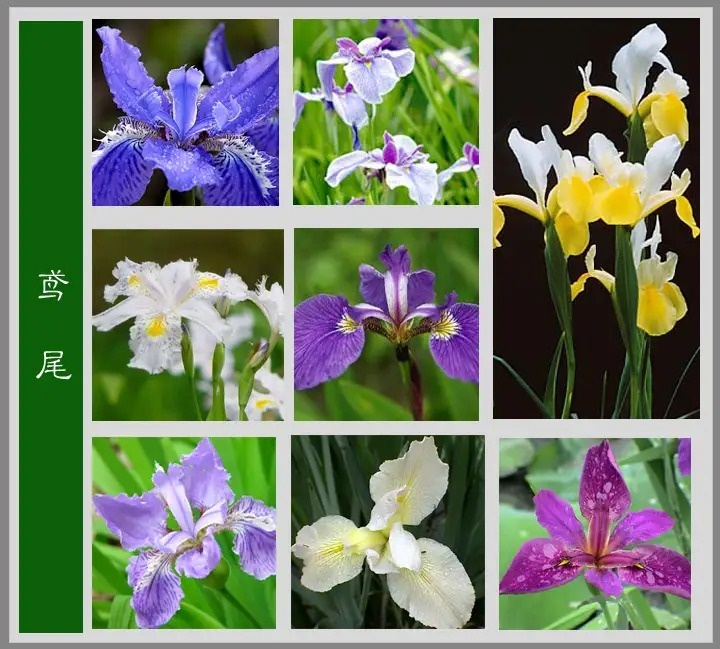
Native to central China, it is distributed in Yunnan, Sichuan, Jiangsu, and Zhejiang provinces, growing at altitudes of 800-1800 meters on the edges of shrub forests. It is highly cold-hardy and prefers well-drained, moderately moist soil, with slightly alkaline soil containing lime being most suitable. The above-ground parts do not completely die back in winter. Flower bud differentiation occurs in autumn. In spring, the terminal bud at the tip of the rhizome grows and flowers. Several lateral buds often develop on both sides of the terminal bud. After growing in spring, the lateral buds form new rhizomes and redifferentiate flower buds in autumn. After the flower buds bloom, the terminal bud dies, and the lateral buds continue to form flower buds.
Propagation is done by division. When the rhizomes are large enough, division can be carried out every 2-4 years, in spring or autumn, or after flowering. When dividing the rhizomes, each piece should have at least one bud, preferably 2-3 buds. For mass propagation, the divided rhizomes can be inserted into moist sand at 20℃ to promote the sprouting of adventitious buds. Propagation can also be done by seed. Sowing should be done immediately after the seeds mature, and flowering will occur 2-3 years after sowing. If the seeds are soaked in water for 24 hours after maturity (early September), then refrigerated for 10 days, and sown in a cold frame, germination will occur in October.
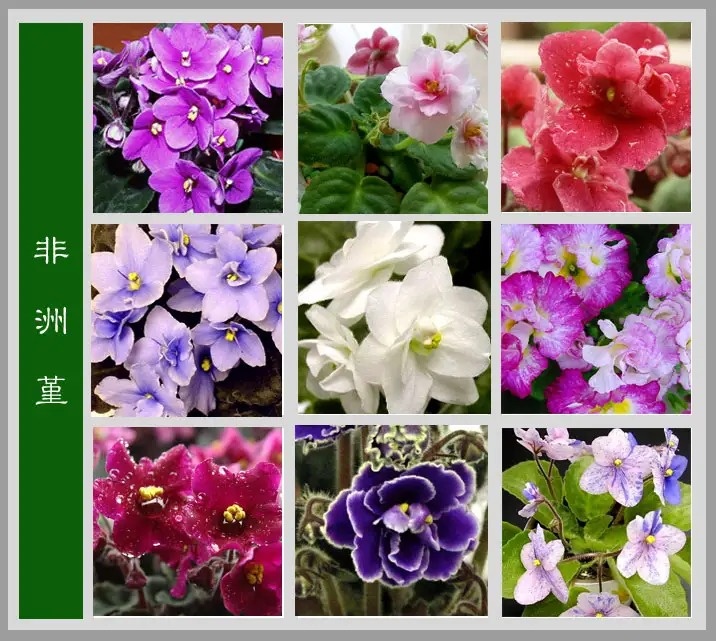
The history of African violet cultivation in China is relatively short, with test-tube seedlings only being introduced from the United States and the Netherlands starting in the 1980s. Currently, a few Sino-foreign joint venture horticultural companies only produce in small batches, and cultivation is not yet widespread, but the development prospects are very good.
[Morphological Characteristics and Varieties]
African violets are perennial herbs. They are stemless, and the entire plant is covered in hairs. The leaves are ovate, with stout, fleshy petioles. The flowers are solitary or clustered, pale purple. In recent years, numerous cultivars have been developed, including large-flowered, single-petaled, semi-double-petaled, double-petaled, and variegated varieties, with flower colors including purple-red, white, blue, pink, and bicolor. Common cultivars include single-flowered varieties such as Snow Prince (white flowers), Pink Miracle (pink flowers with rose-red edges), Ruffled Queen (purple-red flowers with ruffled edges), Pocone (large-flowered variety, 5 cm in diameter, pale purplish-red flowers), and Diana (deep blue flowers). Semi-double varieties include Fuchsia Red (purple-red flowers). Double varieties include Corinne (white flowers), Flash (red flowers), Blue Peak (blue flowers with white edges), Double Delight (blue flowers), Blue Caprice (pale blue flowers), and Blushing Bride (pink flowers). Foliage varieties include Show Queen (blue flowers with ruffled edges, leaves with yellow-white markings) and Blue Boyin the Snow (pale purple flowers, leaves with white stripes).
Ornamental species in the same genus include the white-flowered African violet and the large-flowered African violet.
[Biological Characteristics]
African violets originate from the tropical regions of East Africa. They prefer warm, humid, and semi-shaded environments. They dislike strong sunlight and high temperatures in summer. The optimal production temperature is 16-24℃, 18-24℃ from April to October, and 12-16℃ from October to April of the following year. Daytime temperatures should not exceed 30℃, as high temperatures are detrimental to African violet growth. Nighttime temperatures in winter should not fall below 10℃, otherwise, they are susceptible to frost damage. A relative humidity of 40%-70% is suitable; excessive moisture in the pot can easily lead to root rot. Dry air will cause the leaves to lack luster. African violets need shade in summer to maintain their vibrant green color; in winter, ample sunlight is necessary for continuous flowering; supplemental lighting during rainy or snowy days is very beneficial for their growth and flowering.
[Propagation Methods]
Commonly propagated by seed, cuttings, and tissue culture.
, also known as Hanging Bell Begonia, Lantern Begonia, or Bell Flower; in Guangdong, it is also called Lotus Lantern.
Family and Genus: Onagraceae, Fuchsia genus. Evergreen shrub.
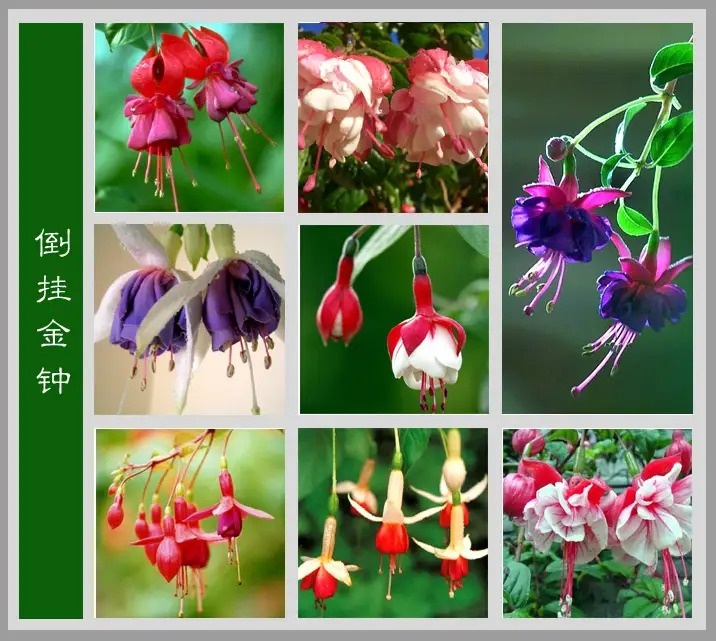
is native to Peru and southern Chile in South America. It prefers warm, humid environments with plenty of sunshine in winter and cool, semi-shaded environments in summer. It is most intolerant of heat; temperatures exceeding 30℃ are extremely detrimental to its growth, often causing it to enter a semi-dormant state or die. It can tolerate temperatures as low as 3-5℃ in winter; the optimal temperature for its growing season is 10-23℃. It requires fertile sandy loam soil. Fuchsia is a long-day plant; extending the day length can promote flower bud differentiation and flowering. In Guangdong, this method is used to control the flowering of fuchsia during the Spring Festival.
Scientific name: *Althaea rosea*
English name: Hollyhock
Other names: One-zhang-red, Ripe flower, Rongkui, Wukui, Weizukui, Hukui
Family: Malvaceae
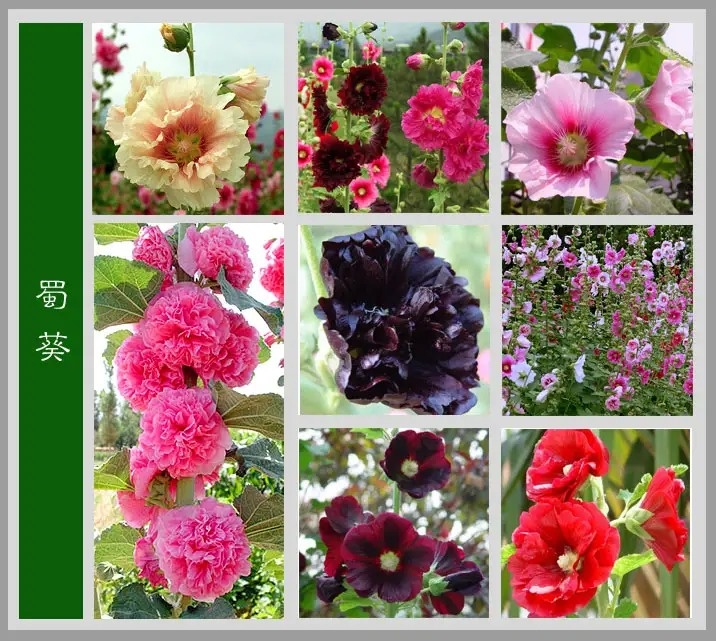
[Ecological Habits] Hollyhock is native to China and other parts of Asia. It was first discovered in Sichuan, hence its name. It prefers full sun and does not tolerate shade. The underground parts are cold-hardy, and it can overwinter outdoors in North China. It is not particular about soil type, but grows best in loose, fertile soil. It is an annual herbaceous plant.
Scientific Name: Rosa chinensis
English Name: Chinese Rose
Other Names: Monthly Red, Everlasting Flower, Four Seasons Flower, Victorious Spring, Monthly Red
Family and Genus: Rosaceae, Rosa A small, upright shrub
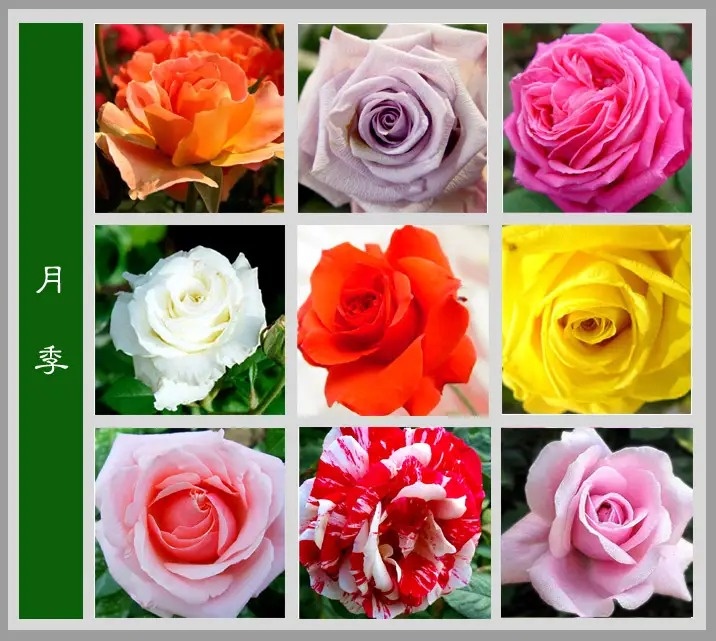
Roses prefer full sunlight, good air circulation, good drainage, and protection from cold, dry winds. They are relatively drought-tolerant but dislike waterlogging. They are adaptable to various soil types, but thrive best in loose, fertile, well-drained sandy loam.
Name: Limbing Rose (abbreviated as CL)
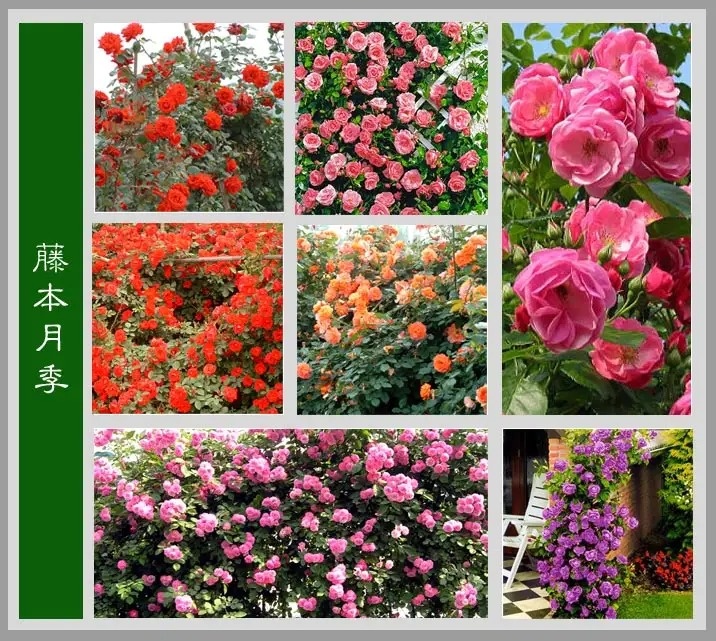
Climbing roses typically grow to 2.5-5 meters in length. This long vine allows them to play a diverse role in parks, courtyards, and urban landscaping. They can be planted into tall flower pillars, hedges, walls, continuous floral screens, arched flower gates, and winding flower corridors, providing continuous blooms for three seasons. They can also be cultivated into overwhelming floral screens, curved into arches, or used as pergolas or trellises. Talented horticulturists and park designers can also showcase the artistry of this type of rose.
Climbing roses are deciduous shrubs, growing in a vine-like or creeping form with various shapes and highly adaptable growth patterns. Short-stemmed varieties have branches only 1 meter long, while long-stemmed varieties can reach 5 meters. Their stems have thorns of varying density and shapes, including straight, oblique, curved, and hooked thorns, depending on the variety. Flowers can be solitary, clustered, or borne in groups, with flower stalks ranging from 2.5 cm to 14 cm in length. Flower colors are abundant, including red, pink, yellow, white, orange, purple, edged, original, and bicolor
varieties, among others. Flower shapes include cup-shaped, spherical, disc-shaped, and high-centered. Climbing roses can be classified in several ways. Based on their growth characteristics, they can be categorized into upright and climbing types.
Upright types have thick stems and can grow upright without support from trellises or other supports. They are relatively short, generally between 1.5 and 2.5 meters tall, and can be used for hedges, screens, and walls.
Climbing type: These have slender stems, reaching heights from 2.5 to 10 meters. They need to climb trellises or pillars, and are mainly used for flower arches, pergolas, and pillars. Based on their flowering habits, they are classified into three categories: multi-season flowering, bi-season flowering, and single-season flowering. Multi-season flowering varieties can bloom repeatedly throughout the growing season, continuously flowering until winter dormancy. Some vines not only bloom continuously but also produce a large number of flowers, making them ideal for landscaping and providing excellent aesthetic effects. An example is 'Dortmund'. Bi-season flowering varieties bloom from May to June, generally producing a small number of flowers or none in early summer and autumn, before blooming again around the Mid-Autumn Festival, but with far fewer flowers than in May and June. Single-season flowering varieties generally bloom from May to June and then stop flowering, or only produce a very small number of flowers thereafter, blooming again the following year. These varieties often have strong drought resistance, disease resistance, and cold tolerance, and are also highly climbing.
In summary, climbing roses are vigorous growers with strong climbing ability. One-year-old plants can reach heights of 2-5 meters or more, and two-year-old plants sprout new shoots at the nodes and bloom profusely with numerous, vibrant, and long-lasting flowers, making them excellent for vertical greening. Vertical greening, which perfectly combines climbing roses with other greening varieties, can improve the ecology, beautify the environment, and increase land utilization, demonstrating environmental, social, and economic benefits. Furthermore, vertical greening is simple to implement, requires little land, has high efficiency, low cost, and quick results; it also better utilizes water storage and conservation, further demonstrating economic benefits. In the future, with the widespread adoption of vertical greening in major cities, climbing roses will play an even greater role in vertical greening projects.
, also known as Water Taro or Arrowhead Flower.
Family and Genus: Araceae, Zatedeschia.
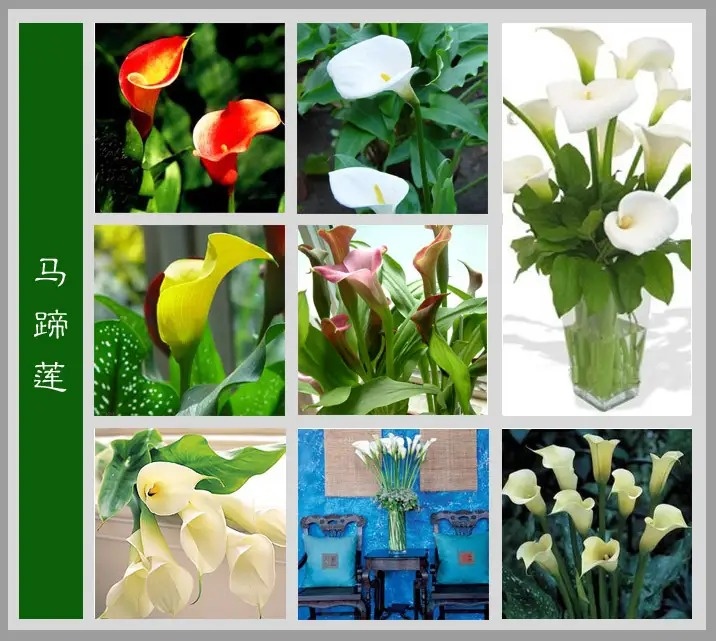
The calla lily originates from southern Africa. It prefers warm, humid environments and needs adequate light during its growth period, especially after flowering; otherwise, the spathe will turn green. The optimal growing temperature is 13-19℃ from October to March of the following year, and 19-25℃ from March to October. It is not cold-hardy and requires a minimum temperature of 10℃. In China, it is mostly grown in pots and moved indoors for frost protection during the first frost. It is not drought-tolerant and its leaves are prone to yellowing and withering in dry environments. It requires ample water during the flowering period. It thrives in loose, fertile, well-drained sandy loam.
[Morphological Characteristics] Perennial herb. It has large, fleshy tubers and grows to about 70 cm tall. The leaves are cauline, with long petioles, generally twice the length of the leaf, ribbed at the upper part and sheathed and folded around the stem at the lower part; the leaves are ovate-sagittate, entire, and bright green. The peduncles grow beside the leaves, rising above the foliage; the spadix is enclosed within a large, open, horseshoe-shaped spathe; the spadix is cylindrical, bright yellow, with stamens at the upper part and pistils at the lower part. The fruit is fleshy, enclosed within the spathe; flowering occurs in January; seeds can be harvested in suitable climates, but mature fruits are rare.
[Habits] Native to South Africa, it commonly grows along rivers or in swamps. It prefers warmth, being neither cold-hardy nor heat-tolerant. The optimal growth temperature is around 20℃; at 0℃, the rhizomes will freeze and die. Sufficient sunlight is needed in winter, and appropriate shading is necessary in summer when the sun is too intense and scorching. It prefers moisture; slight waterlogging does not significantly affect growth, but it is intolerant of drought. Cultivation requires loose, fertile, humus-rich clay loam soil.
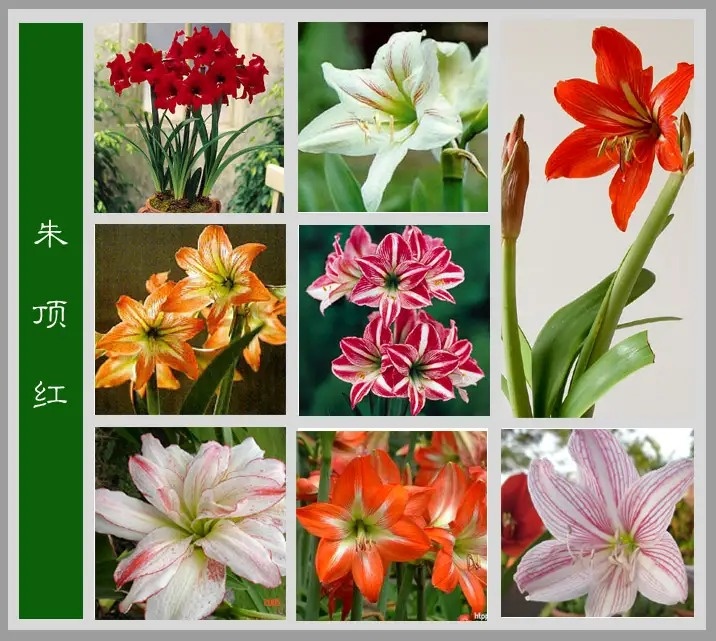
It is now widely cultivated worldwide, not only as a potted plant for ornamental purposes but also planted in open gardens to form clusters, enhancing the landscape. In recent years, European and American horticulturists have produced canned amaryllis for the convenience of flower growers.
[Morphological Characteristics and Varieties] Amaryllis is a perennial herb. It has a large, nearly spherical bulb. The leaves are strap-shaped and emerge simultaneously with or after flowering. The flower stalk is hollow, bearing funnel-shaped flowers at the top. The flowers are large, resembling lilies, and come in colors such as deep red, pink, light red, orange-red, and white, often inlaid with various stripes and patterns.
Common cultivars include Redlion (deep red flowers), Hercules (orange-red flowers), Rilona (pale orange-red flowers), Telstar (large-flowered, bright red flowers), Flower Record (orange-red flowers with broad white longitudinal stripes), Souvereign (orange flowers), Minerva (large-flowered, red flowers with a white center), and Picotee (white flowers with a pale green tinge and red edges). Recently, new varieties suitable for potted cultivation have been introduced in Europe, including Las Vegas, a bicolor variety with pink and white flowers; Calimero (small-flowered, bright red flowers); Amigo (late-flowering, deep red flowers, considered an excellent potted variety); and Nagano (orange-red flowers with a snow-white center). Common
ornamental species in the same genus include Amaryllis aulicum (deep red or orange flowers). Short-tubed amaryllis (H. reginae) has red or white flowers. Reticulate amaryllis (H. reticulatum) has pink or bright red flowers.
also known as wax orchid or cherry orchid
, is a perennial evergreen vine belonging to the Asclepiadaceae family and the Hoya genus.
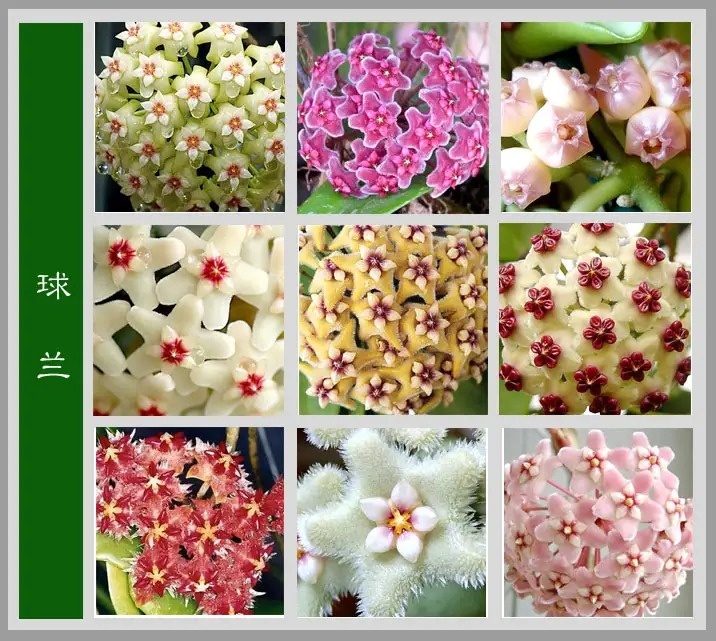
【Morphology】Evergreen succulent vine. Stems can extend over 2m, with aerial roots at the nodes, climbing on trees or rocks. Leaves entire, opposite, short-petioled, thick and fleshy, glossy, ovate-elliptic or ovate-cordate, apex acuminate; young leaves reddish, older leaves turning green. Inflorescence a cyme, with a dozen or so small flowers densely clustered on the inflorescence in a spherical shape; corolla waxy, white, with a pale red center; flowering period May to September, with a long-lasting fragrance.
【Habits】Prefers warm, humid, semi-shaded environments and slightly dry soil; avoid direct sunlight in summer and autumn. Although it can grow in places without direct sunlight, it needs 3-4 hours of full sunlight daily to flower. Prefers fertile, well-aerated, and well-drained soil; requires ample water during the growing season, but avoids overwatering. Gradually reduce watering after autumn.
【Propagation and Cultivation】Propagated by cuttings or layering; roots easily above 20℃. All cuttings can be used except for new shoots that have not yet unfolded leaves.
, also known as large-flowered clivia, large-leaved amaryllis, sword-leaved amaryllis, and
Damulinus. Family: Amaryllidaceae, Genus: Clivia. Perennial green herbaceous plant.
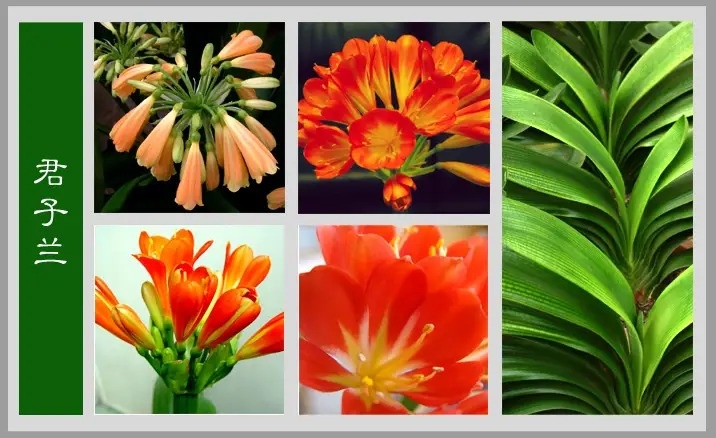
(also known as Mountain Camellia)
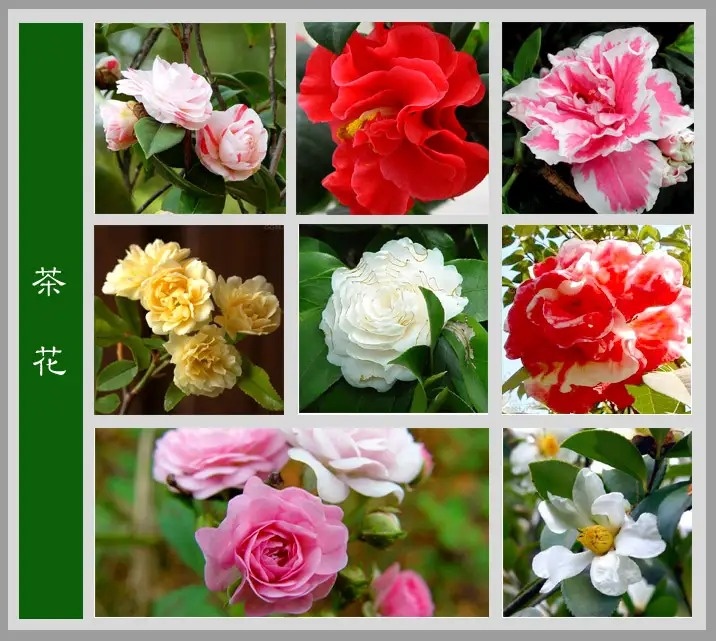
[Morphological Characteristics and Varieties] Camellia is an evergreen broad-leaved shrub. Leaves are alternate, leathery, elliptical, with serrated edges, and dark green. Flowers are solitary or 2-3 in number at the branch tips or in the leaf axils. Flowers are single or semi-double. Double-flowered varieties include single-flowered varieties such as Dawn (with ruffled edges, pure white); Golden Light (white flowers with pink lines and speckles); and Large Golden Heart (bright red flowers, 6-7 cm in diameter). Semi-double varieties include Luoyang (red flowers with white spots); Pine Nut (deep red flowers); Drunken Yang Concubine (pink flowers); and Star Peach Peony (pink flowers). Double-flowered varieties include: White Pearl (pure white flowers); Red Hibiscus (pinkish-red flowers); Hibiscus (white flowers with red lines); Pearl (pink flowers with irregular red stripes); Five Cranes Holding a Ball (bright red flowers); Buddha's Cauldron (bright red flowers with a few white spots); Red Eighteen Scholars (red flowers); Crimson Peony (bright red flowers); and Crane Feather (pale red flowers with white spots).
also known as Lonicera japonica or two-colored vine. Family: Caprifoliaceae,
Genus: Lonicera. An evergreen or semi-evergreen climbing vine
native to China, Korea, Japan, and other regions.
Honeysuckle vines are winding and lush, blooming in spring and summer with a strong fragrance, making it an ideal outdoor potted plant for spring and summer.
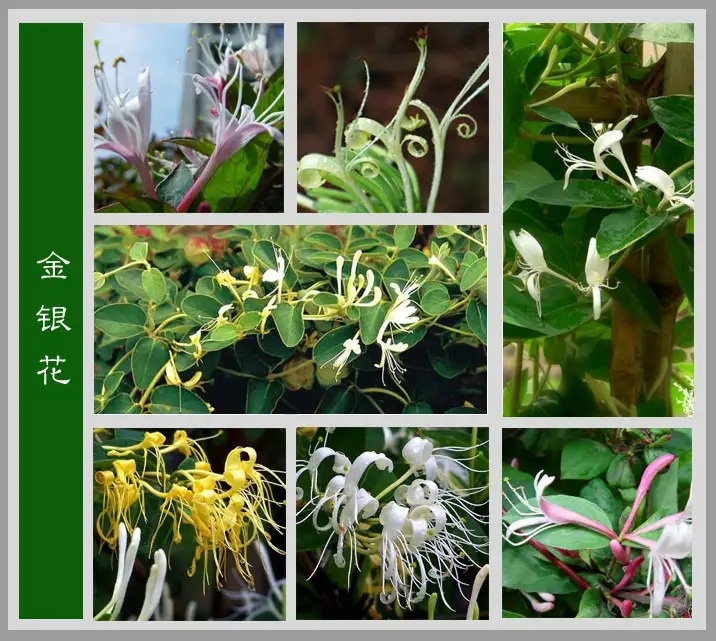
Honeysuckle is an evergreen climbing vine with peeling bark and hollow branches; leaves are opposite, ovate or nearly heart-shaped; flowering period is long, lasting 2-3 months. In the Yangtze River basin, when potted, initial flowering usually occurs in mid-April. Common varieties include red honeysuckle, white honeysuckle, and ever-blooming honeysuckle. Red honeysuckle has a reddish outer petal; white honeysuckle blooms white initially, then turns yellow; ever-blooming honeysuckle blooms continuously from spring to late autumn.
Biological Habits:
Honeysuckle prefers a warm, slightly humid, and sunny environment. Although it can tolerate shade, in shady environments, it is prone to excessive vegetative growth, weak branches, small leaves, and difficulty in flowering, affecting the plant's aesthetic appearance. The optimal growth temperature is 12℃~26℃. If the temperature is too low, the leaf surface will turn red and growth will slow down. This is due to inhibited sugar metabolism, resulting in the synthesis of more anthocyanins. Honeysuckle is not particular about soil, and can adapt to both acidic and alkaline soils. It is drought-tolerant and water-tolerant, but water should not accumulate in the pot.
, also known as Snowdrop
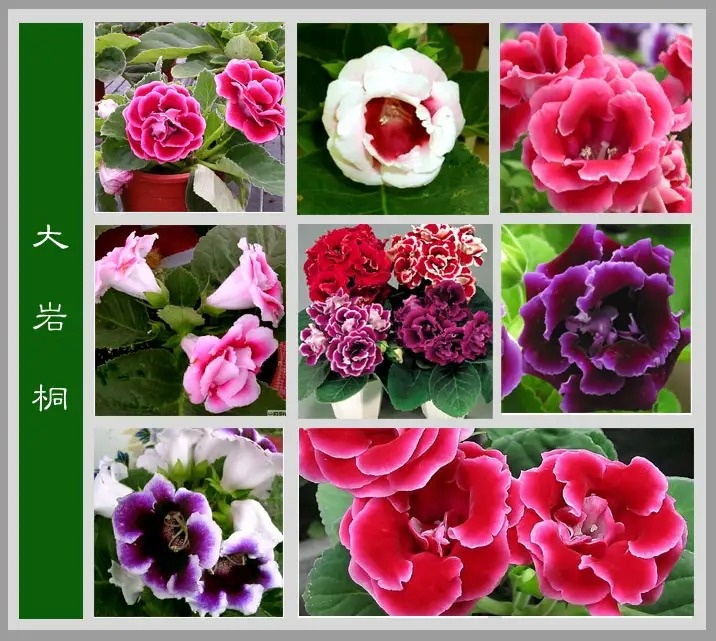
The introduction of gloxinia to China mainly occurred in the 1930s, with the College of Agriculture of Jinling University in Nanjing and the Sun Yat-sen Memorial Botanical Garden importing it from the United States. After the founding of the People's Republic of China, botanical gardens across the country officially began introducing and testing it. Small-scale production only began in the 1990s and has yet to reach large-scale production.
[Morphological Characteristics and Varieties] Gloxinia is a perennial herb. The tuber is flattened-globose. Leaves are opposite, thick and large, densely covered with fine hairs. Flowers are bell-shaped, with rich colors, large and beautiful. There are many cultivated varieties of Gloxinia, with flower colors including blue, pink, white, red, and purple, as well as bicolor varieties with white edges and blue flowers, white edges and red flowers, and double-petaled flowers.
[Biological Characteristics] Gloxinia originated in Brazil. It grows wild in tropical highland regions with cool summers and warm winters. Gloxinia prefers warm, humid, and semi-shaded environments during its growing season. The suitable temperature from January to October is 18-23℃, and from October to January of the following year, it is 10-12℃. High temperatures and humidity in summer are detrimental to plant growth, requiring appropriate shading. High air humidity is required during the growing season for lush, green leaf growth. During the winter dormancy period, keep the soil dry; if humidity is too high and the temperature is low, the tuber is prone to rotting. The winter temperature should not fall below 5℃. It requires fertile, loose, well-drained humus-rich soil.
also known as longevity chrysanthemum, golden calendula, etc.
Family and Genus: Calendula, Asteraceae. Calendula
is a dwarf plant with dense flowers, bright and eye-catching colors, and a long flowering period. It is the most common herbaceous flower in gardens and cities in early spring.
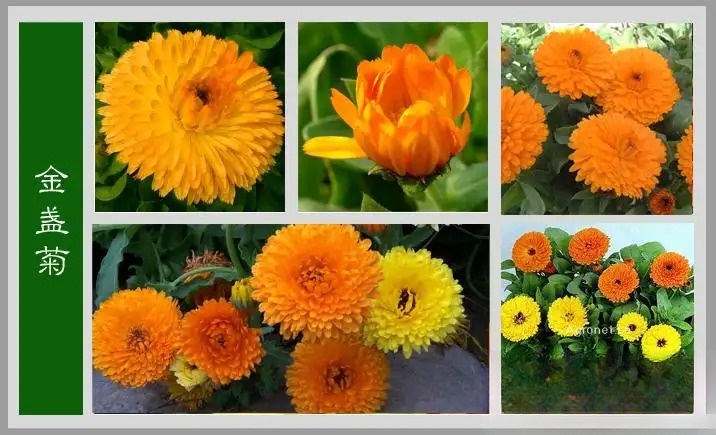
The cultivation of calendula in China was introduced from abroad after the 18th century, and potted calendula appeared thereafter. During the Qianlong period of the Qing Dynasty, large-scale production of calendula was already seen in the suburbs of Shanghai. After the founding of the People's Republic of China, calendula was widely cultivated in gardens for potted ornamental purposes and flower bed arrangements. After the 1980s, double-flowered, large-flowered, and dwarf calendula were introduced to China, giving calendula a completely new look, and it has now become one of China's important herbaceous flowers.
Morphological characteristics and varieties: Calendula is a biennial herb. The entire plant is hairy. Leaves are alternate and oblong. The flower heads are solitary, about 5 cm in diameter, and come in yellow, orange, orange-red, white, etc. There are also cultivated varieties with double petals, curled petals, and green or deep purple centers. Common varieties include Bon Bon, which grows to 30 cm tall, with compact flowers 5-7 cm in diameter, and colors such as yellow, apricot, and orange. Fiesta Gitana, which grows to 25-30 cm tall, is an early-flowering variety with double flowers 5 cm in diameter, and colors such as yellow, orange, and bicolor. The Kablouna series grows to 50 cm tall, with large flowers in colors such as golden yellow, orange, lemon yellow, and apricot yellow, and has a dark center. The 1998 new variety, Kablouna Lemon Cream, has beige ray florets with a lemon-yellow center. Touch of Red: Plants grow to 40-45 cm tall, with double flowers, 6 cm in diameter, in red, yellow, and red/yellow bicolor. Each ray floret has a red tip. Gem series: Plants grow to 30 cm tall, with double flowers, 6-7 cm in diameter, in lemon yellow and golden yellow. Dwarf Gem is particularly famous. Other varieties include Saint-Gitt, an extremely dwarf variety with large, double flowers, 8-10 cm in diameter. Auspicious: An extremely dwarf variety with strong branching, large, double flowers, 7-8 cm in diameter. Other varieties include Lemon Queen and Orange King.
Biological characteristics: Calendula originates from southern Europe and the Mediterranean coast. It is cold-hardy but dislikes heat and prefers full sun.
The optimal growth temperature for calendula is 7-20℃. Seedlings can tolerate winter temperatures as low as -9℃, while mature plants thrive at 0℃. If the temperature is too low, a thin film should be used for protection; otherwise, the leaves are easily damaged by frost. When winter temperatures exceed 10℃, calendula exhibits excessive vegetative growth. In summer, rising temperatures lead to vigorous stem and leaf growth, resulting in smaller flowers and significantly fewer petals.
Calendula seedlings benefit from slightly moist conditions, promoting stem and leaf growth and enhancing cold resistance in winter. Mature plants thrive in slightly drier conditions, controlling stem and leaf growth and preventing excessive vegetative growth. In indoor or greenhouse cultivation, excessive humidity should be avoided, as it increases susceptibility to disease. Ventilation should be improved to regulate indoor humidity.
Calendula prefers ample sunlight, especially during winter when seedlings are grown outdoors or in greenhouses. Sufficient sunlight is crucial for stem and leaf growth, resulting in short, sturdy, and uniform seedlings. Excessive rain or snow, coupled with insufficient sunlight, can cause yellowing of basal leaves and even root rot and death.
Fertile, loose, and well-drained sandy loam or potting soil is ideal. A soil pH of 6-7 is optimal, promoting branching and abundant, large flowers.
Name: Rhododendron,
also known as Azalea, Mountain Rhododendron, Mountain Azalea, Red Azalea, Mountain Pomegranate, etc.
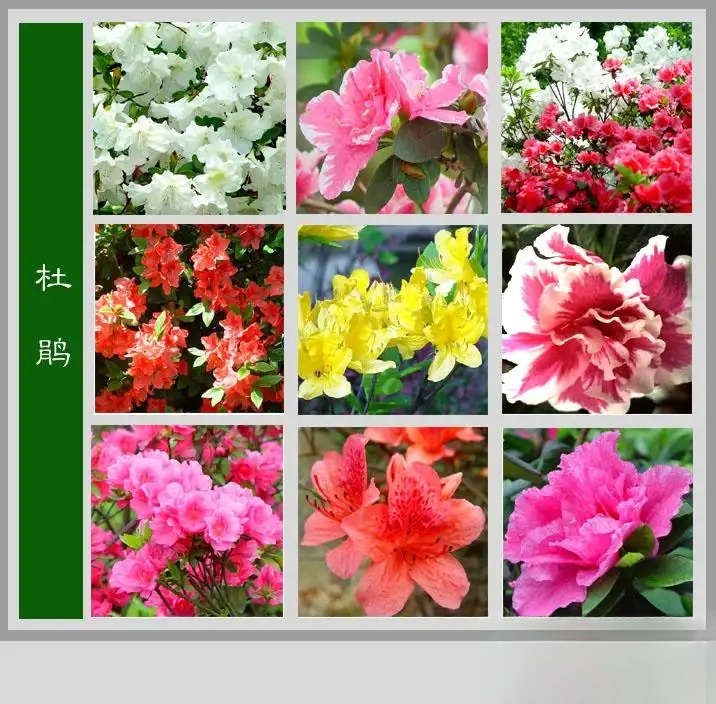
Rhododendrons are native to China, and are also distributed in the high mountains of the Malay Peninsula and southern Asia. Evergreen rhododendrons are extremely abundant in the mountainous regions of Sichuan, Yunnan, and Guizhou in China, while deciduous rhododendrons are distributed from Northeast China to South China. Natural communities are found in high mountains, growing on shady slopes, and are semi-shade plants. They prefer cool climates, high humidity, and acidic soils, and can tolerate poor soil, but not waterlogging.
Rhododendrons are divided into two main categories: evergreen and deciduous. They are further divided into spring and summer azaleas based on their flowering period. This is due to natural and artificial hybridization. With over 800 cultivated varieties, it is a world-renowned ornamental plant. my country's rhododendrons are famous worldwide, sharing the prestigious title of "Three Great Alpine Flowers" with primroses and gentians.
Scientific Name: *Lydlangea macrophylla*
English Name: Largleaf Hydrangea
Other Names: Hydrangea, Hydrangea macrophylla, Hydrangea flower, Purple Hydrangea, Hydrangea macrophylla, Hydrangea macrophylla
Family and Genus: Saxifragaceae, *Lydrangea* Deciduous shrub
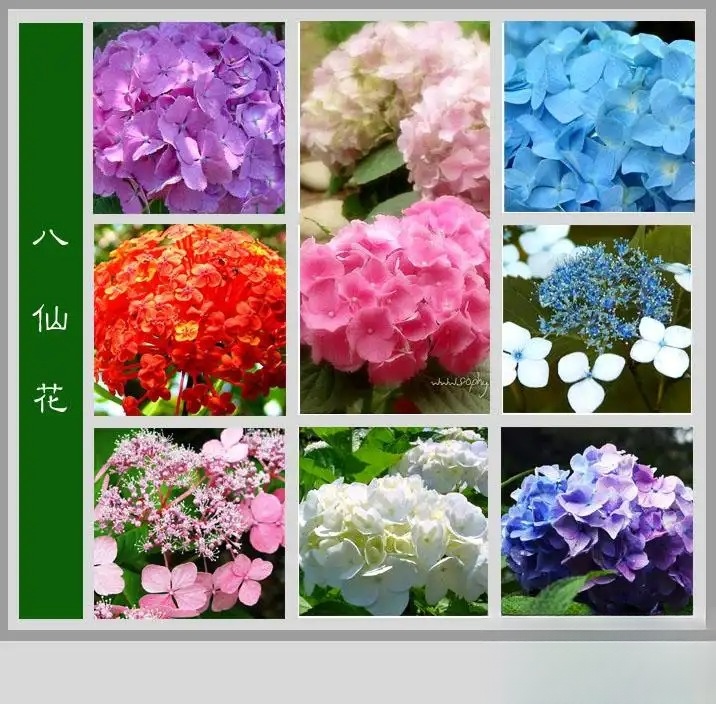
pinnata
Other names: Dahlia, Dahlia
Family: Asteraceae, Genus: Dahlia.
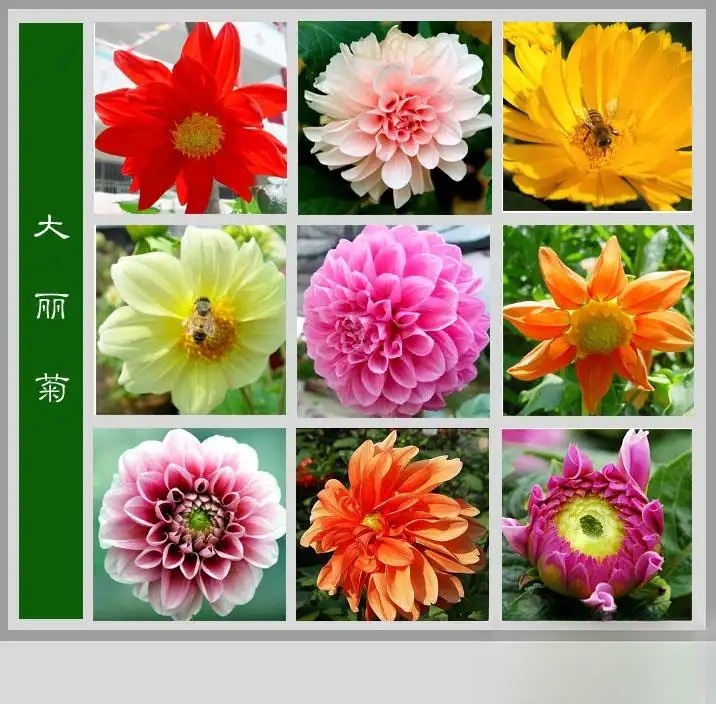
Dahlia cultivation in China began in the late 19th century, initially in Shanghai, and later flourished in Northeast and North China. Today, single-stem dahlias cultivated in Liaoning, Jilin, Hebei, Tianjin, Beijing, Shandong, and Gansu provinces are even more magnificent and noble, possessing a strong traditional character. Meanwhile, dwarf potted dahlias have entered large-scale production in major cities.
[Morphological Characteristics and Varieties]
Dahlias are perennial herbs. They have fleshy, spindle-shaped, clustered tubers underground. The stems are erect, smooth, branched, and hollow. Leaves are opposite, pinnately deeply lobed, with ovate lobes. The flower heads are terminal; the ray florets are varied and vibrant in color, while the disc florets are often yellow.
Common varieties include the single-petaled Dandy, which grows to 60 cm tall, with single flowers 9 cm in diameter, and is famous for its bicolor varieties, especially the purple ray florets and white disc florets. Harlequin, which grows to 31 cm tall, with single flowers 6 cm in diameter, is particularly prized for its deep red ray florets and white disc florets, and its yellow ray florets and white disc florets. Mignon Silver: 30-35 cm tall, single-petaled, wide, white flowers with only 8 ray florets. Piccolor series: 20-25 cm tall, single-petaled flowers, 6-7 cm in diameter, in white, yellow, deep red, pink, orange-red, and bicolor colors. Bambino (semi-double and double types): 30-35 cm tall, small, sub-double flowers, miniature variety. Figaro series: 20 cm tall, semi-double and double flowers, 6-8 cm in diameter, in yellow, orange, red, orange-red, deep red, purple, white, and pink colors. Rigoleto series: 30 cm tall, double flowers, 6-7 cm in diameter, in yellow, red, orange, pink, and white colors; an early-flowering variety. SunnyHybridYellow: Plant height 30-35 cm, semi-double or double flowers, 6-7 cm in diameter, yellow flowers. A bronze-leaved variety is the Diablo series, plant height 35-40 cm, double flowers, 8 cm in diameter, flower colors include deep red, orange, and pink, bronze leaves, an early-flowering variety. Redskin: Plant height 45 cm, double or semi-double flowers, 7-8 cm in diameter, multi-colored flowers, bronze leaves.
[Biological Characteristics]
Dahlias originate from the Mexican highlands. They prefer warm, humid, and sunny environments.
The optimal growth temperature for dahlias is 10-25℃. Cool summers with a diurnal temperature range of over 10℃ are ideal for growth and flowering. Summer temperatures above 30℃ will result in abnormal growth and fewer flowers. Winter temperatures below 0℃ can cause frost damage. Tubers should be stored at 3-5℃.
Dahlias are relatively sensitive to water. Dahlias are intolerant of both drought and waterlogging, and are best suited for cultivation in areas with an annual rainfall of 500-800 mm. In the middle and lower reaches of the Yangtze River, the heavy rainfall during the plum rain season is extremely detrimental to the growth of outdoor potted dahlias, often causing them to wither and die from waterlogging. In Northwest and North China, sufficient water is extremely beneficial for the growth and development of potted dahlias.
Potted dahlias prefer full sunlight. They grow robust stems and leaves, and produce abundant, brightly colored flowers. However, they dislike prolonged direct sunlight and require appropriate shading to prolong the flowering period.
The best soil is a mixture of well-drained and water-retentive leaf mold or peat moss and potting soil. Potting soil should not be reused, otherwise the tubers are prone to degeneration and infection by pests and diseases.
Scientific name: Verbena hybnida
Other names: Beauty Cherry, Grass Five-Colored Plum, Ground Spreading Spinach, Four Seasons Hydrangea, Ground Spreading Verbena
Family and genus: Verbenaceae, Verbena
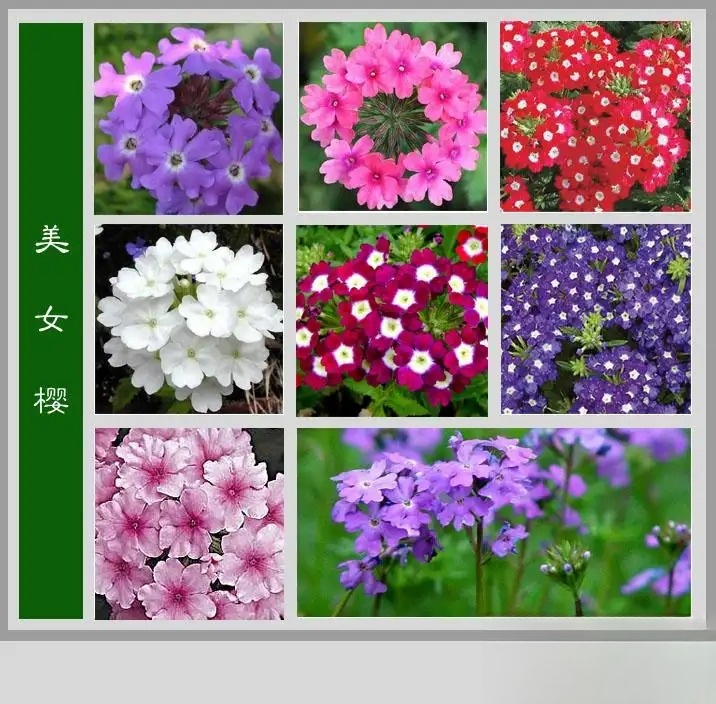
[Biological Characteristics] Verbena is a cluster of brightly colored flowers, an important flowering plant for summer and autumn flower beds, and also suitable for potted cultivation. Native to Brazil, Peru, Uruguay, and other regions, Verbena thrives in warm, humid climates, prefers full sun, and is intolerant of shade, cold, and drought. It grows best in loose, fertile, and moist neutral soil, producing abundant blooms. While a perennial herbaceous plant, it is often cultivated as an annual. It prefers sunlight, is relatively cold-hardy, has poor shade tolerance, and is intolerant of drought. In northern regions, it is often cultivated as an annual, blooming frequently during the hot summer months. It produces abundant flowers in full sun and loose, fertile soil.
Verbena is sensitive to water during its growth, disliking both drought and waterlogging. The potting soil must be kept moist during the seedling stage to promote growth. Once mature, its drought tolerance increases; however, in hot weather with high water consumption, sufficient water should be ensured. Frequent rainy days can lead to weak, elongated vines and reduced flowering, or even wilting and death of the stems and leaves.
Sunlight is crucial for the growth and development of Verbena. Verbena needs ample sunlight from seedling growth to flowering to produce robust stems and leaves, dense flower stalks, continuous blooming, and vibrant flower colors. If kept in partial shade or with insufficient light for extended periods, the stems and leaves will easily become leggy, resulting in fewer flowers, smaller blooms, and less vibrant colors.
The soil should be a fertile, loose, and well-drained mixture of potting soil, peat moss, and coarse sand, with a pH of 6.0–6.5.
Scientific name: Punica granatum Linn.
English name: Spine Wild Pomegranate
Other names: Anshiliu, Pearl Pomegranate, Sea Pomegranate, Ruoliu, Danruo, Tianjiang
Family: Punicaceae
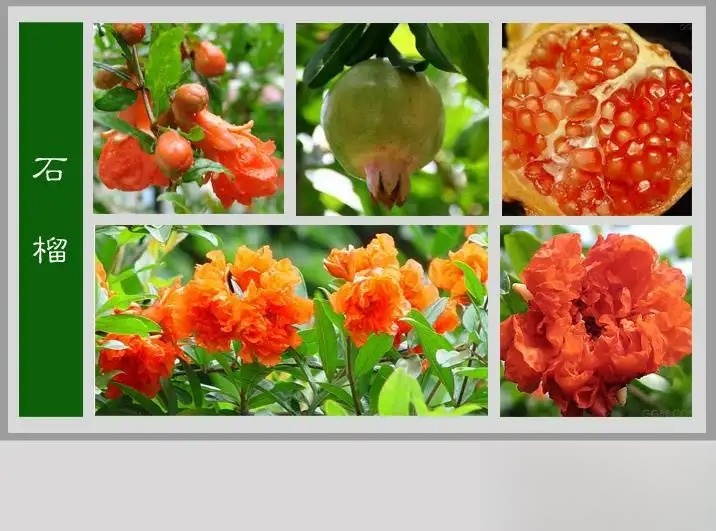
Flowers 1 to several, borne at the branch tips or in the axils, with short pedicels; calyx campanulate, orange-red, thick, 2–3 cm long, apex 5–7-lobed, lobes with papillate projections on the outside; petals the same number as sepals, alternate, borne inside the calyx tube, obovate, slightly exceeding the calyx lobes, usually red, but also white, yellow, or deep red, petals wrinkled, with several varieties depending on whether they are single or double. Flowering period June–July, fruiting period September–October.
(Chaenomeles lagenaria)
Also known as: Iron-footed Flowering Quince, Iron-horned Flowering Quince
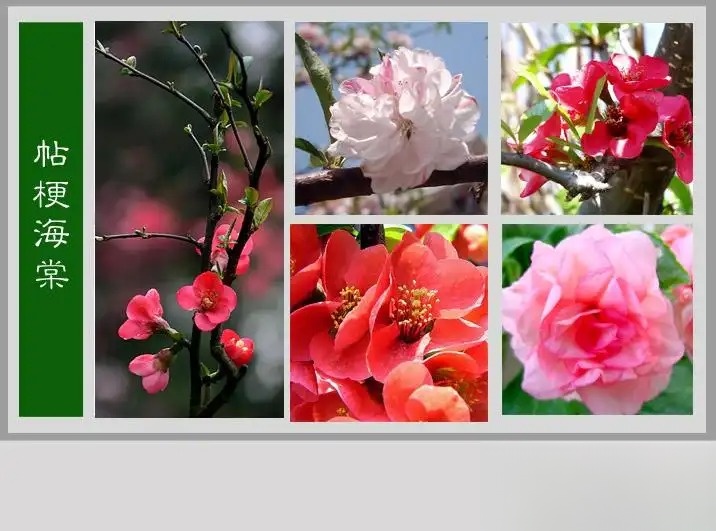
(I) Morphological characteristics and varieties:
Deciduous shrub, 1 to 2 meters tall. Branches are upright and spreading, thorny and hairless. Leaves are simple, alternate, oblong-ovate to elliptical, with sharp serrations on the leaf margins. Stipules are large, kidney-shaped or semi-circular, without petioles, and appear to clasp the stem. Flowers are solitary or clustered in several on the interior of two-year-old branches. The pedicels are very short and almost nonexistent, growing close to the branches. The flowers are scarlet, pink, and creamy white, opening before or simultaneously with the leaves. The sepals are erect. The fruit is spherical or ovoid, yellow or yellowish-green, growing close to the branches without a visible pedicel, and has a fragrance. Flowering period is from March to April, and the fruit ripens in October. Common horticultural varieties include white-flowered (var. Nivalis), rose (var. rosea), scarlet (var. Sanguinea), and dwarf (var. pygmaea).
(II) Ecological
Habits Native to southern North China, eastern Northwest China, and Central China. Now cultivated throughout the north and south. It is highly adaptable and relatively cold-hardy, able to overwinter outdoors in North China. It is very sensitive to temperature; in the same location, plants planted in sheltered, sunny locations will flower 4-6 days earlier than those in shady areas. It is not particular about soil requirements, but is intolerant of waterlogging and prefers drought. Excessive soil moisture often results in weak plants with thin branches and leaves, significantly reducing their resistance. Poor drainage and waterlogging often cause root rot, which can lead to suffocation and death in severe cases. *Chaenomeles speciosa* is a sun-loving species, requiring ample sunlight; however, it can still grow well and flower normally in slightly shaded areas.
pudica (Scientific
Name: Mimosa pudica)
Other names: Sensitive plant, Mumosa pudica (Shy Plant), Family: Fabaceae
(Fabaceae) , Genus: Mimosa
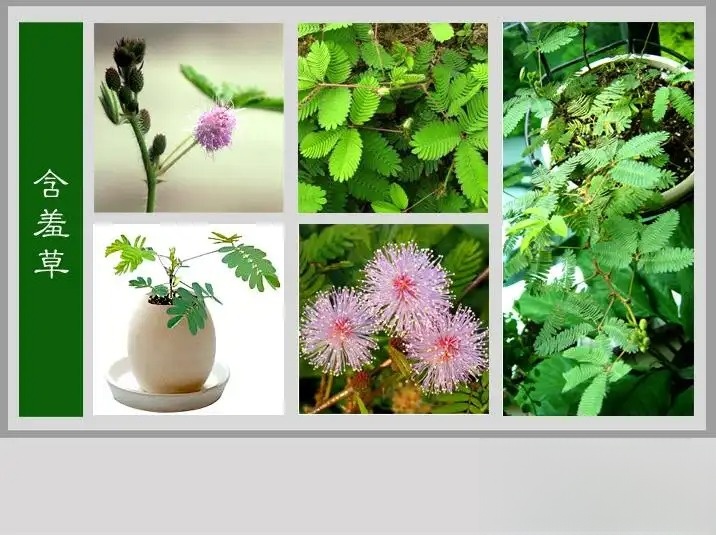
A prominent characteristic of the sensitive plant is its extremely sensitive leaves, capable of vibrational movements. A light touch causes the leaflets to immediately fold together; a heavier touch causes the leaflets and petioles to bend at a 60-degree angle. It also droops at night, exhibiting a similar dormant posture. Sudden cold or electrical stimulation elicits the same reaction. This morphological response is quite intriguing, seemingly indicating shyness, hence the name "sensitive plant" (this reaction is most pronounced in the evening).
It is said that this is because the mimosa originates from the desert regions of South America, where strong winds and heavy rains are common. When storms come, the leaves close and droop, reducing the risk of breakage and other damage. This is an adaptive physiological response developed by the plant to harsh environments for survival.
The mimosa prefers warm, humid, and sunny environments, and thrives in well-drained, organic-rich sandy loam. It is a robust plant with rapid growth and strong adaptability. Propagation is relatively easy, generally by sowing.
Sowing can be done year-round, but early spring (February) indoors in pots is best. Mimosa seeds mature relatively late, so early spring sowing is necessary to ensure the seeds mature before the first frost. To promote early germination, soak the seeds in 30°C warm water for one day before sowing. After sowing, place the pots in an environment of 15-20°C; seedlings will emerge in about 10 days. When the seedlings reach 5-6 cm in height, transplant them (with a soil ball), and when they reach more than 10 cm, transplant them into larger pots.
The entire plant of the sensitive plant (Mimosa pudica) is used medicinally, possessing calming, hemostatic, astringent, and analgesic properties.
During the plant's growth period, a diluted, well-rotted liquid fertilizer can be applied every 10 days (3-4 times) in conjunction with watering. As a potted ornamental plant, it is easy to move it indoors to a sunny location, maintaining a room temperature of 0-12 degrees Celsius for safe overwintering.
Water: Prefers moist conditions; water once daily during the summer growing season.
Fertilizer: Apply top dressing every half month during the seedling stage. Reduce the amount of fertilizer if you do not want the plant to grow too large.
Soil: Requires deep, fertile, and moist soil.
Temperature: Not cold-hardy; prefers warm climates; the plant will die back in winter.
Light: Prefers full light but tolerates partial shade.
Propagation: Propagated by seed. Sow from late March to early April. Seedlings grow slowly; transplant when they reach 7-8 cm in height.
Why doesn't the sensitive plant flower?
Why doesn't the sensitive plant (Mimosa pudica) bloom? The main reason is unsuitable light conditions. The photoperiod required for flowering is closely related to the plant's origin. The sensitive plant originated in tropical and subtropical regions and is a short-day plant. It needs short-day light conditions to bloom. To make the sensitive plant bloom in the same year it is introduced, one approach is to introduce it from a region with a similar latitude.
English name: Hyacinths orientalis
Other names: Five-colored daffodil, Oriental daffodil
Family and genus: Liliaceae, Hyacinth
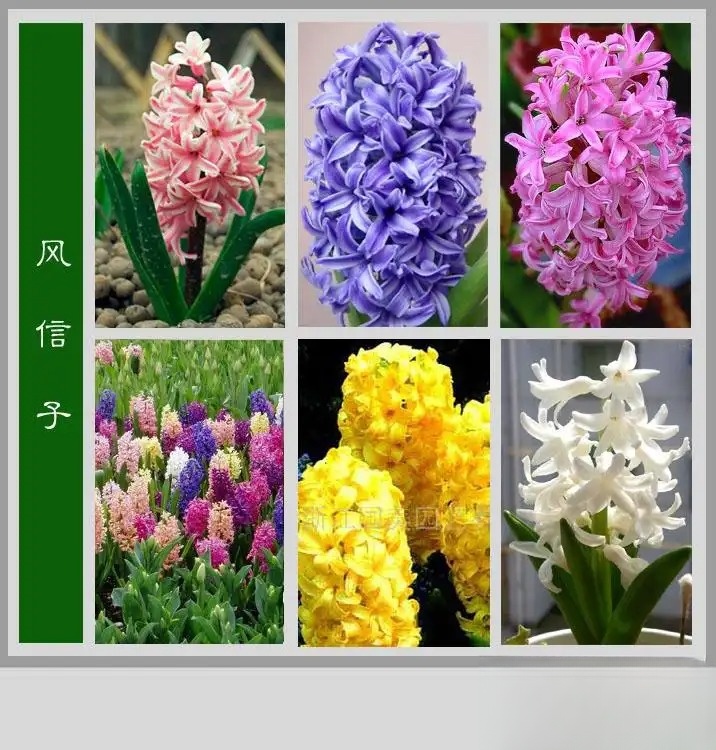
cultivated varieties of hyacinths, including various colors and double-flowered varieties, as well as large-flowered and small-flowered varieties, early-flowering and late-flowering varieties. Because
hyacinths
are derived from a single original species, their genetic variability is not as complex and varied as that of multi-origin hybrids like tulips; therefore, the differences between varieties are subtle and difficult to distinguish. There are currently over 2000 horticultural varieties, mainly divided into two groups:
1. The Dutch group, developed and improved in the Netherlands, to which many horticultural varieties belong. Its characteristics include large flower diameters and large flower spikes.
2. The Roman group, improved by the French, also known as the French Roman group. Its bulbs are slightly smaller than the Dutch group, with several flower stalks emerging from a single bulb. Both groups include varieties in white, yellow, pink, red, blue, and purple.
Hyacinth Characteristics:
Hyacinths originated in Southern Europe, the eastern Mediterranean coast, and Asia Minor. They prefer cool, humid, and sunny environments, are cold-hardy, and require well-drained sandy soil. They grow very poorly in low-lying, heavy, and damp soil. Hyacinths
are heavy feeders; whether potted or planted in the ground, it is best to apply sufficient base fertilizer. The soil should be loose, and top dressing should be applied frequently during the growing season. For ground-planted hyacinths, loosen the soil promptly after emergence, apply top dressing once in winter, and then again before and after flowering in spring. For potted hyacinths, plant bulbs in September, 3-4 bulbs per pot. Place them in sunlight, then move them into a greenhouse in November. They will bloom around Chinese New Year.
When forcing hyacinths, initially keep them at a low temperature to encourage root growth without leaf development. Then, place them in partial shade with slightly higher temperatures to allow the leaves to grow to a certain height. Finally, provide higher temperatures and ample sunlight to ensure full stems and leaves and abundant flowers.
Hyacinths are primarily propagated by bulb division. After the above-ground parts die back in summer, dig up the bulbs and separate the large bulbs from the bulblets. The bulblets need three years to flower. For cultivating new varieties, they can also be propagated by seed; seedlings take 4-5 years to flower.
Hyacinths have a small plant size, neat and unique inflorescences, and cool, elegant colors. They are best enjoyed in pots indoors. Hyacinths can also be cultivated hydroponically. Transplant flowering plants into uniquely shaped glass containers, add water, and enjoy the flowers, leaves, and roots. The result is an elegant and clean plant suitable for placement anywhere indoors.
Water: Keep the plant moist during the growing and flowering periods. Normal room humidity is sufficient.
Fertilizer: No fertilizer is needed during flowering. Apply top dressing once before and once after flowering, and apply sufficient base fertilizer during planting.
Soil: Prefers well-drained, fertile sandy loam. Avoid heavy clay soil, or use hydroponics.
Temperature: Cold-hardy.
Light: It thrives best kept indoors during the flowering period. If possible, place it near a bright south-, east-, or west-facing window for at least 4 hours daily.
Hyacinths prefer sunny locations and are cold-hardy, thriving in cool, moist environments and loose, fertile sandy soil. Avoid waterlogging.
also known as: the tranquil perfume plant
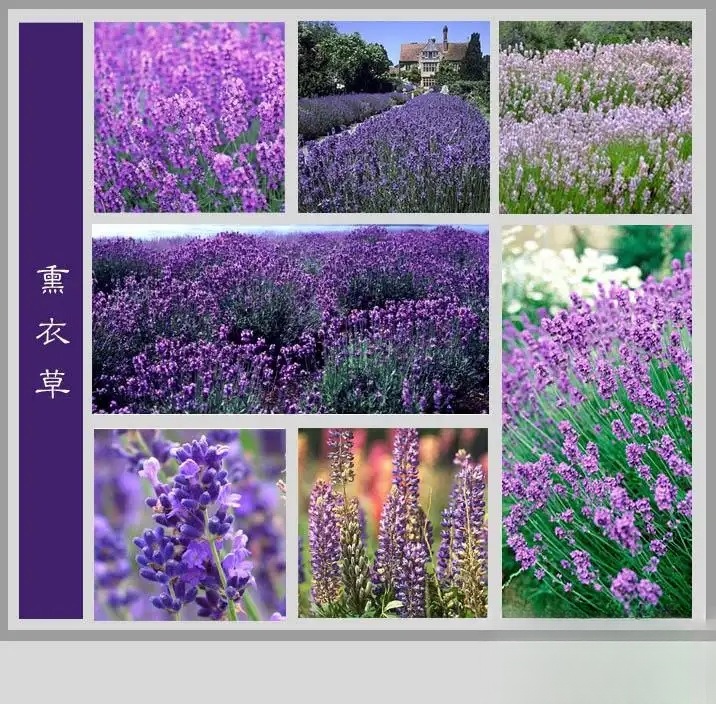
I. Overview and Cultivation History
Originally from the arid Mediterranean coast, lavender was already a common herb in Roman times. It was used to add to bathwater for relaxation or as a fragrance to repel insects and perfume clothing. In 1562, soap was a very expensive item; a four-pound bar cost the same as two pigs. Therefore, every household cultivated lavender for bathing and hygiene purposes.
Even now, lavender is widely used in Europe, America, Japan, and other countries, and its economic cultivation is mainly concentrated in these regions. Hokkaido, Japan, is world-renowned for its summer lavender season, often described on tourist posters as "the romantic purple of the North," with backgrounds featuring fields of lavender in various colors, making it irresistible to visit and inhale its unique fragrance. In 1999, lavender was selected as the Herb of the Year by the International Herb Association, demonstrating its popularity.
Currently, lavender is not widely available or utilized, likely due to two main reasons: firstly, the plant prefers cooler environments, and the high temperatures of Taiwan's plains make it difficult for it to grow and bloom well; secondly, many people find its aroma unpleasant, even suffocating. Therefore, there is a lack of local cultivation> Name: Sweet Alyssum
Scientific Name: Lobularia maririma
Lavender is a fragrant, small, purplish-blue flower. Because of its pleasant aroma, it is a favorite in herb gardens and is known as the "Queen of Aromatic Herbs." Its rich fragrance has a calming and soothing effect, cleansing the mind and body. Ancient Romans frequently used lavender for bathing and aromatherapy, while the Greeks used it to treat coughs.
I. Overview and Cultivation History
Originally from the arid Mediterranean coast, lavender was already a common herb in Roman times. It was used to add to bathwater for relaxation or as a fragrance to repel insects and perfume clothing. In 1562, soap was a very expensive item; a four-pound bar cost the same as two pigs. Therefore, every household cultivated lavender for bathing and hygiene purposes.
Even now, lavender is widely used in Europe, America, Japan, and other countries, and its economic cultivation is mainly concentrated in these regions. Hokkaido, Japan, is world-renowned for its summer lavender season, often described on tourist posters as "the romantic purple of the North," with backgrounds featuring fields of lavender in various colors, making it irresistible to visit and inhale its unique fragrance. In 1999, lavender was selected as the Herb of the Year by the International Herb Association, demonstrating its popularity.
Currently, lavender is not widely available or utilized, likely due to two main reasons: firstly, the plant prefers cooler environments, and the high temperatures of Taiwan's plains make it difficult for it to grow and bloom well; secondly, many people find its aroma unpleasant, even suffocating. Therefore, there is a lack of local cultivation> Name: Sweet Alyssum
Scientific name: Lobularia maririma
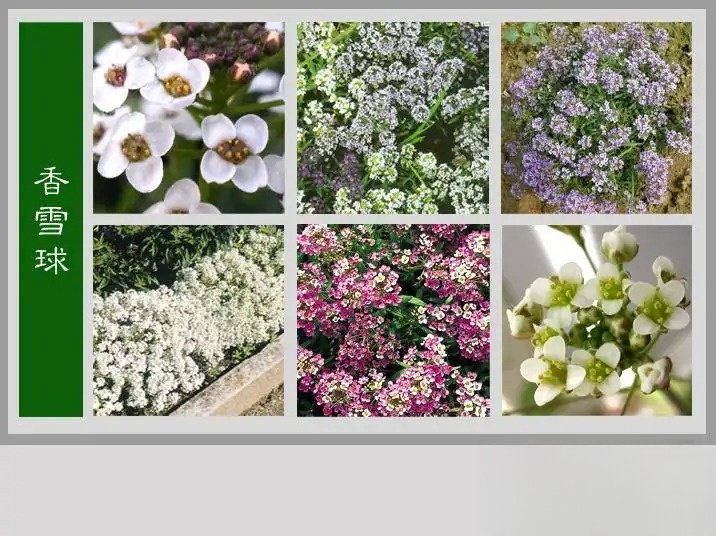
Origin and Habits
: Native to the Mediterranean coast, this is a perennial herbaceous plant. It prefers cool temperatures and dislikes heat. It requires ample sunlight but tolerates some shade. It thrives in loose soil and dislikes waterlogging, but is relatively drought-tolerant and can grow in poor soil. Flowering period is from March to June.
Morphological Characteristics:
The plant grows to a height of 15-25cm and has many branches. Leaves are lanceolate, entire, and alternate. It bears terminal racemes with densely packed, spherical flowers in white, light purple, dark purple, and purplish-red, with a light fragrance. There are also large-flowered varieties and white-edged foliage varieties.
Propagation and Seed
Propagation: The optimal germination temperature is approximately 22℃, and germination takes 5-10 days. Spring sowing results in flowering in June, while autumn sowing results in peak flowering the following May. It can also be propagated by cuttings. Heavy pruning before the hot summer and placing the plant in a cool location during the summer will result in more abundant flowering in autumn.
Applications:
Sweet alyssum grows prostrate and has a pleasant fragrance, making it an excellent material for flower beds and borders. It is suitable for planting along rock garden walls, and can also be grown in pots or used as ground cover.
Name: Peony
English name: Tree Peony
Other names: Deer Leek, Tree Peony, King of Flowers, King of Luoyang, Flower of Wealth and
Honor Family: Paeoniaceae
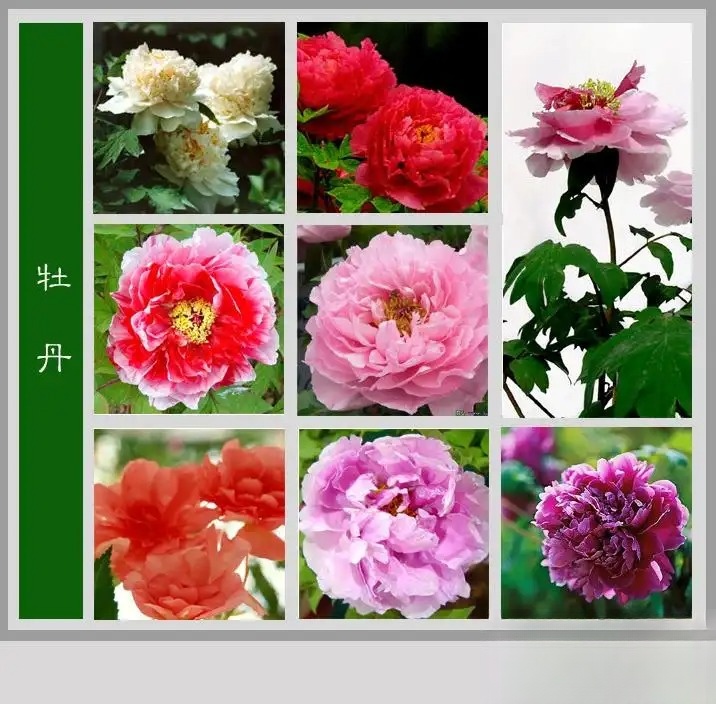
Native to China, it is a deciduous subshrub. It prefers cool temperatures and dislikes heat, thrives in dry conditions and dislikes dampness, and can tolerate temperatures as low as -30℃. It can grow normally in areas with an average annual relative humidity of around 45%. It prefers sunlight but can also tolerate some shade. It requires loose, fertile, well-drained neutral loam or sandy loam soil, and should not be planted in heavy clay soil or in low-temperature environments. Flowering period is April to May.
Peony Morphological Characteristics:
It has a fleshy and robust root system with few branches and fibrous roots. The plant grows to 1-3m tall, with grayish-brown old stems and yellowish-brown current-year branches. It has bipinnate compound leaves, arranged alternately. Flowers are solitary at the stem apex, 10-30cm in diameter, and come in white, yellow, pink, red, purple, and multi-colored varieties. There are single, double, and tiered varieties of peonies.
Peonies not only have many varieties but also a rich variety of flower shapes; some flowers resemble chrysanthemums; some resemble a cascading osmanthus flower; and some resemble a phoenix crown or a hydrangea.
Other names: Oriental lotus, grass musk, fragrant
tulip Family and genus: Liliaceae, Tulip
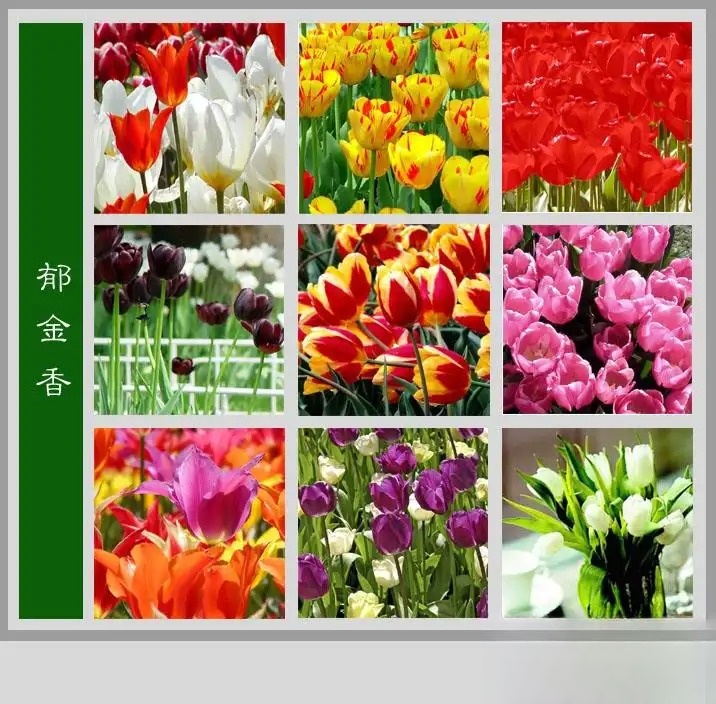
A perennial herb of the Liliaceae family, with a flattened conical bulb covered in brownish-yellow skin. Stems and leaves are smooth and covered with a white powder. Leaves are 3-5 in number, oblong-lanceolate or ovate-lanceolate, 10-21 cm long and 1-6 cm wide; 2-3 basal leaves are larger, while 1-2 cauline leaves are present. Flowers are solitary at the stem apex, large, erect, forest-like, magenta, often blackish-purple at the base.
Flowering period is from March to May. Plant height varies depending on the variety, ranging from tall to short, approximately 30-50 cm. Each plant has 3-5 basal leaves, broadly lanceolate to ovate, with wavy edges and a white powdery coating. Flowers have 6 petals, cup-shaped, erect and solitary at the stem apex. Flowers can be single or double, and come in white, yellow, red, purple, etc., and some are single-colored or multi-colored. Petal shapes vary, including entire, serrated, and ruffled. The capsule splits open dorsally, containing flattened seeds. Varieties, forms, and cultivars:
There are over 8,000 cultivated varieties. Flower shapes include cup-shaped, bowl-shaped, oval, spherical, lily-shaped, and double-petaled. Flower colors include white, pink, purple, brown, yellow, and orange, varying in shades, and can be single-colored or multi-colored. Flowering periods include early, mid, and late. Although the variety is extremely rich, like hyacinths, successful cultivation is difficult in many parts of China, and they often degenerate.
Tulip origin and distribution: Native to the Mediterranean coast, Central Asia, Turkey, and other regions. Cultivation is prominent in the Netherlands, where it has become a commercial product. Small quantities are cultivated in major cities in China.
Scientific Name: Narcissus tazeta var. chinensis
English Name: Chinese Narsissus
Other Names: Fairy of the Waves, Jade Linglong, Golden Cup and Silver Stand, Narcissus, Yao Nu Hua, Lady's Flower, Heavenly Onion, Elegant Garlic
Family: Amaryllidaceae
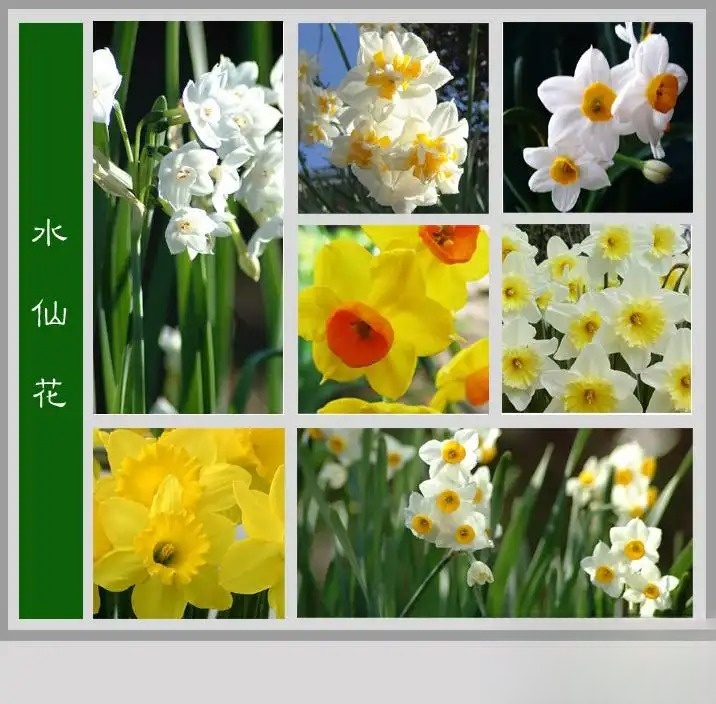
Narcissus is an autumn-planted bulbous flower, blooming in early spring to store nutrients, and going dormant in summer. It prefers a warm and humid climate.
Morphological characteristics:
Chinese narcissus is a perennial monocotyledonous herbaceous plant. It has a bulbous stem composed of a bulbous disc and thick, fleshy scales. The underground bulb is large and resembles an onion, ovoid to broadly ovoid-globose, covered with a brownish-brown membrane. Buds grow on the bulbous disc; the bud in the center of the bulb is called the terminal bud, and those on either side of the terminal bud are called lateral buds, all arranged in a straight line. The inflorescence is an umbel, with a membranous spathe tightly enclosing the flower bud. The perianth is fused at the base into a tube, with 6 lobes that spread flat like a disc when open. The corona is yellow, shallowly cup-shaped, and sits in the center of the disc. There are 6 stamens and 1 pistil. The ovary is inferior, 3-locular, containing multiple ovules. It is triploid and generally does not produce fruit.
aphrodite Rchb.f. Family:
Orchidaceae, Genus: Phalaenopsis
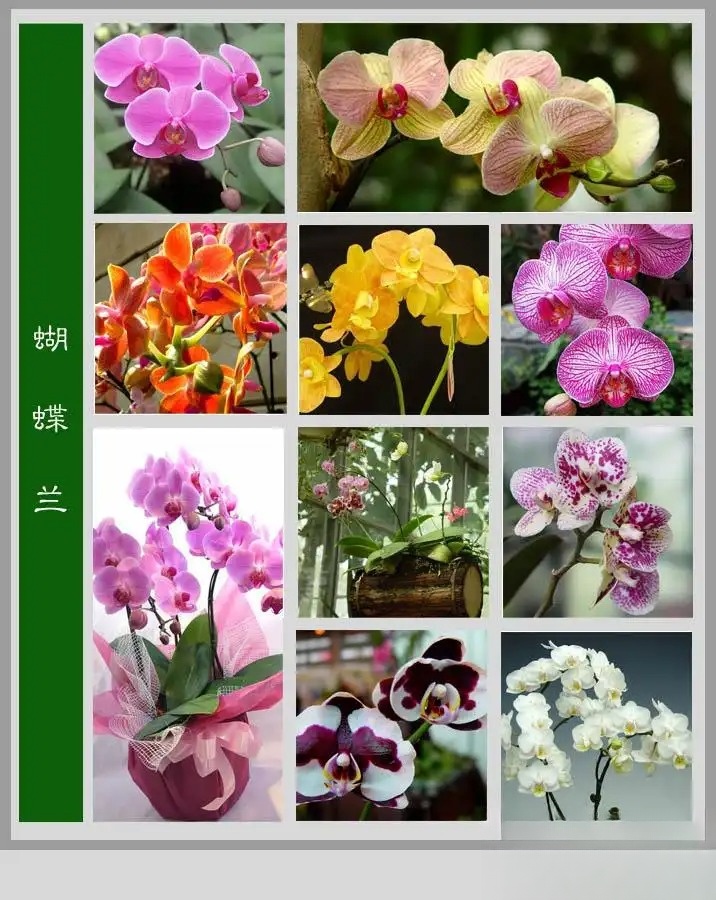
Phalaenopsis orchids are monostem plants with short stems and thick, fleshy leaves, green or with reddish-brown patches. The flower stalk emerges from the leaf axils near the upper part, bearing several to many flowers, with significant variations among different species. Flower colors include white, yellow, pink, red, purplish-red, and various mixed colors.
High temperatures and forests along riverbanks and coastlines are ideal habitats for Phalaenopsis orchids to grow epiphytically. Potted plants are typically grown in well-draining, porous pots using moss, fern roots, or bark chips. They require high humidity. The optimal growing temperature is 25℃~28℃ during the day and 18℃~20℃ at night; the roots stop absorbing water below 15℃; and growth is hindered above 32℃. It is one of the most widely cultivated orchids.
Phalaenopsis orchid
morphological characteristics: A perennial herb, 50-80 cm tall, with aerial roots. The stem is short, 2-4 cm long. Leaves are basal, strap-shaped, large, leathery, 10-25 cm long and 3-6 cm wide, with an acuminate or obtuse apex, fleshy, dark green and glossy on the ventral side, grayish-green or purplish-red on the back, entire, and green. Flowering stems emerge from the leaf axils, 1 to several, arched, 70-80 cm long; racemes, with small flower stalks 10-12 cm long, bearing several to over 30 large flowers in a variety of colors, including white, pink, purplish-red, yellow, and variegated, with a single flower lasting over 20 days. The natural flowering period is from October of the previous year to June of the following year. The capsule is oblong-ovoid, and the seeds are powdery and white.
Phalaenopsis orchid growth habits:
Phalaenopsis orchids are native to Taiwan, China, and are mainly distributed in India, Myanmar, Malaysia, the Philippines, Australia, and New Guinea. They prefer warm, humid, and semi-shaded environments, disliking direct sunlight, excessive heat, waterlogging, and cold. The optimal growth temperature is 15–30℃, with a relative humidity of 70%.
Name: Geranium
Scientific name: Pelargonium hortorum
Other names: Geraniaceae, Pelargonium
genus
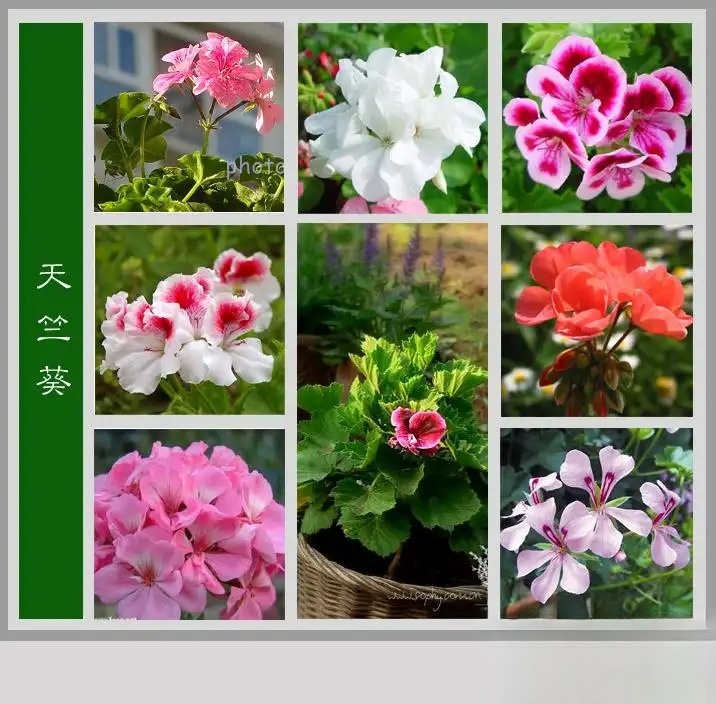
Geraniums, also known as paraffin red geraniums or pelargoniums, belong to the genus Geranium in the family Geraniaceae. Geraniums have dense, evergreen leaves and bloom profusely in summer, creating a vibrant and eye-catching display. They are a type of evergreen flower. Geraniums are widely cultivated in Europe and America and are one of the main types of potted plants and flower bed plants. To date, the United States has done a great deal of work on the application and improvement of geraniums, and they have become one of the three major potted plants in the US.
Geranium cultivation in China was mainly introduced from the United States in the 1930s, with Shanghai and Nanjing being the earliest areas to cultivate them, a history of about 70 years. However, understanding of geraniums is still insufficient, remaining focused on old varieties and traditional production methods, resulting in slow development. Only in recent years has mass production begun, and now there is a supply shortage. If new varieties and types are developed, their sales prospects are very broad.
[Morphological Characteristics and Varieties]
Geraniums are perennial herbs. The base is slightly woody, and the stems are succulent. The leaves are heart-shaped, green, and often have horseshoe-shaped rings. The umbels are terminal, with drooping buds. The corollas come in red, white, light red, orange-yellow, and other colors, and there are single, semi-double
, double, and tetraploid varieties. Common varieties include: True Love (single, red flowers); Fantasia (large, semi-double, red flowers); Bubble Gum (bicolor, deep red flowers with a pink center); Purpurball 2 Penbal (semi-double, purplish-red flowers); Tango Violet (large, pure purple flowers); Meloda (large, semi-double, bright red flowers); Jana (large, bicolor, deep pink flowers with a magenta center); Samba (large, deep red flowers); and Arava (semi-double, light orange-red flowers). Designer Grape has semi-double, purplish-red flowers with white eyes. Maverick White has pure white flowers.
Common ornamental species in the same genus include the creeping geranium (P. peltatum). Varieties include Amethyst (purplish-red flowers); Lambada 98 (pink flowers); Shany (semi-double, deep red flowers); Penve (semi-double, pink flowers); and Tomado (single, white flowers). Other tetraploid geraniums include Freckles (pink flowers) and Tetra Scarlet (large-flowered, bright red flowers).
[Biological Characteristics]
Geraniums prefer light, but often grow poorly in dry northern climates and under intense sunlight, with leaves frequently turning yellow, withering, and falling off. They grow well in partial shade. They are not cold-hardy or heat-tolerant, therefore growth is slow and flowering is reduced in summer. They thrive best in fertile, well-drained soil and do not grow well in sandy soil.
Geraniums originate from southern Africa. They prefer warm, humid, and sunny environments. They are not cold-hardy and dislike waterlogging and high temperatures. The optimal growing temperature is 13-19℃ from March to September, and the winter temperature is 10-12℃. They enter a semi-dormant state in June and July, during which watering should be strictly controlled. They thrive in fertile, loose, and well-drained sandy loam. Winter temperatures should not fall below 10℃, and they can tolerate short periods of 5℃. Single-petaled varieties require artificial pollination to improve seed setting rate. Seeds mature approximately 40-50 days after flowering.
Name: Sunflower
Other names: Sunflower, Sunflower
Scientific name: Helianthus annus
Family and genus: Asteraceae, Helianthus

[Cultivation and Management] Propagated by seed. Direct sowing in early spring outdoors; germination occurs at 4-5 degrees Celsius, and seedlings emerge after 7 days. Seedlings grow rapidly and should be thinned promptly. Plant spacing is generally 40-60cm. It is easy to cultivate and requires minimal management. Sunflower,
also known as sunflower, sunflower seed, sunflower, or sun flower, is an annual herbaceous plant belonging to the Asteraceae family.
Native to the western United States, it is one of the 67 species in the genus *Helianthus*, including wild, weed, and cultivated species.
The name sunflower is directly derived from its genus name *Helianthus*, where *helios* means sun and *anthos* means flower.
Name: Plum Blossom
Scientific Name: Prunus mume
English Name: Mumeplant Japanese Apricot
Other Names: Spring Plum, Red and Green Plum, Dry Branch Plum, Sour Plum
Family: Rosaceae
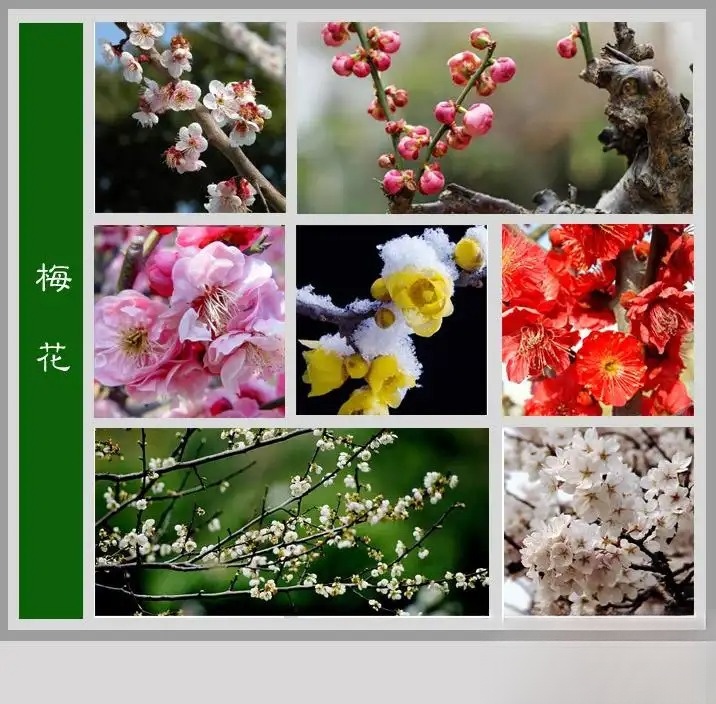
There are many cultivated varieties and cultivars, with single, semi-double, and double petals. Flower colors include white, pink, deep red, and green sepals. Tree shapes vary
, including weeping branches. It prefers a warm, humid climate and plenty of sunshine. It is not cold-hardy but can safely overwinter above -7℃. It is not particular about soil, but prefers loose topsoil and slightly acidic subsoil. It tolerates poor soil but dislikes waterlogging, which easily leads to root rot.
Scientific name: Catharanthus roseus
English name: Madagascar Periwinkle Herb
Other names: Wild Goose Red, Daily New, Daily Spring, Mountain Fan Flower, Everyday Bloom, Five-Petaled
Plum Family and Genus: Apocynaceae, Catharanthus
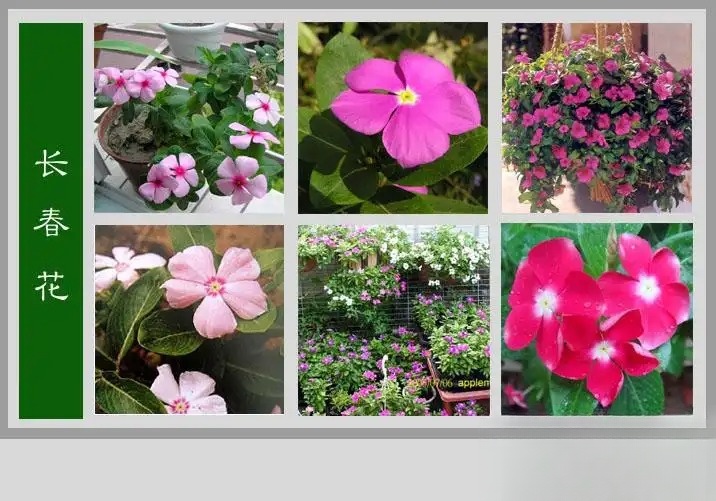
Periwinkle originates from West India and thrives in warm, humid conditions, tolerating partial shade. Its optimal growth temperature is 20℃-33℃. It prefers full sunlight and a slightly dry environment. It dislikes severe cold and waterlogging. It is not particular about soil type. Flowering period is from July to October.
Periwinkle is a light-loving plant; it requires ample sunlight during its growing season to produce glossy, lush green leaves and vibrant flowers. If grown in prolonged shade, the leaves will yellow and fall off.
In southern provinces of China, it can be cultivated outdoors. In areas north of the Yangtze River, it is often grown in pots for ornamental purposes, moved outdoors in late spring and overwintered indoors, with a minimum temperature maintained above 5℃. Periwinkle
has a neat plant shape, glossy, lush green leaves, and five flat petals, resembling plum blossoms. With its long flowering period, it is one of the most common herbaceous flowers in gardens south of the Yangtze River in China. It is mainly cultivated in areas south of the Yangtze River, with widespread cultivation in Guangdong, Guangxi, and Yunnan provinces (autonomous regions).
Periwinkle Morphological Characteristics:
Periwinkle is a perennial herb. The stem is erect and much-branched. Leaves opposite, oblong-elliptic, with short petioles, entire margins, smooth and hairless on both surfaces, and a prominent white midrib. Inflorescences are terminal cymes. Flowers are rose-red, with a salverform corolla, 5-lobed, and a dark-colored eye in the center. The plant grows to 30-50 cm tall, with oblong-elliptic, glossy, dark green leaves. Flowers are axillary, with a salverform corolla, 5-lobed, spreading out like fan leaves, 3-4 cm in diameter, white, pink, or purplish-red.
Periwinkle Biological Characteristics:
Periwinkle originates from East Africa. It prefers warm, slightly dry, and sunny environments. The optimal growth temperature is 18-24℃ from March to July, and 13-18℃ from September to March of the following year. Winter temperatures should not fall below 10℃.
Periwinkle dislikes excessive moisture and waterlogging; overwatering will hinder growth. Especially for indoor plants overwintering, watering should be strictly controlled, keeping the soil dry to prevent frost damage. For open-field cultivation, during the summer downpours, pay attention to timely drainage to prevent waterlogging that could cause the entire area to die.
Lobelia erinus Scientific Name: Lobelia erinus
Other Names: Butterfly Flower, Funnel Flower, Bellflower
Family: Lobelia Genus: Lobelia Family: Lobelia
Category: Annual Herb
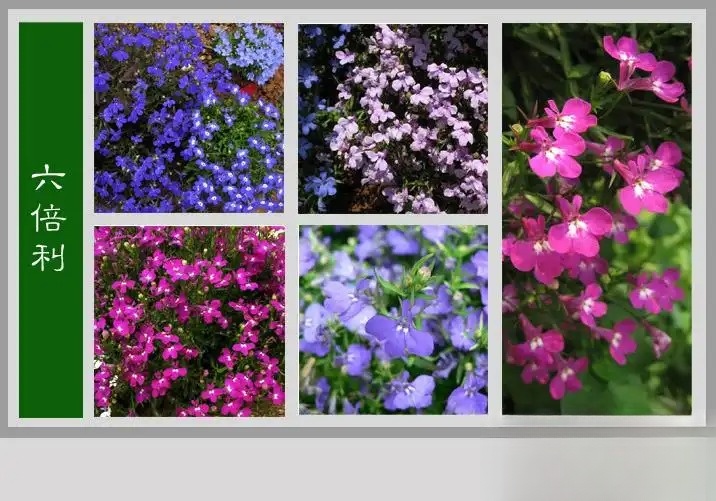
株高約12-20公分,茎枝細密。.莖上部叶較小成披針形,近基部的叶稍大,成廣匙形,葉互生。花頂生獲腋出,花冠先端五裂, 下3裂片較大,形似蝴蝶展翅,花色有紅、桃紅、紫、紫藍、白等色。
产地分布
原產於南非洲
生长习性
需要在长日照、低温下才会开花
繁殖
要注意翠蝶花的種子細小,所以播種時可混入一些細砂再行播種,或先育苗至本葉6~8枚時移入盆中或花壇栽培;並使用細孔之噴壺澆水,力道千萬不可過猛,以防種子流失。
种子在22摄氏度温度下播种后20天可以发芽。一般普遍用作盆栽与吊盆植物或与其他花卉混合种植。植株生长缓慢,种子非常细小,发芽时不需覆盖。对高温不适应,12-15摄氏度气温下生长较好。播种后14-15周可以开花。一般每穴播8-12粒种子。
观赏应用
特有的蓝色花品种是春季花坛花的一个重要品种。開花時整株呈現膨脹的圓形,植株幾乎被花朵佔滿,適合花壇、盆栽 、吊盆及庭園造景,在歐美廣受家庭喜愛。
Scientific name: Zinnia elegans
Other names: Step by step, Rising step by step, Opposite-leaved plum, Five-colored plum, Hundred-day chrysanthemum, Fireball flower, Autumn Luo.
Family and genus: Asteraceae, Zinnia genus (Zinnia L.)
Category: Annual herbaceous plant
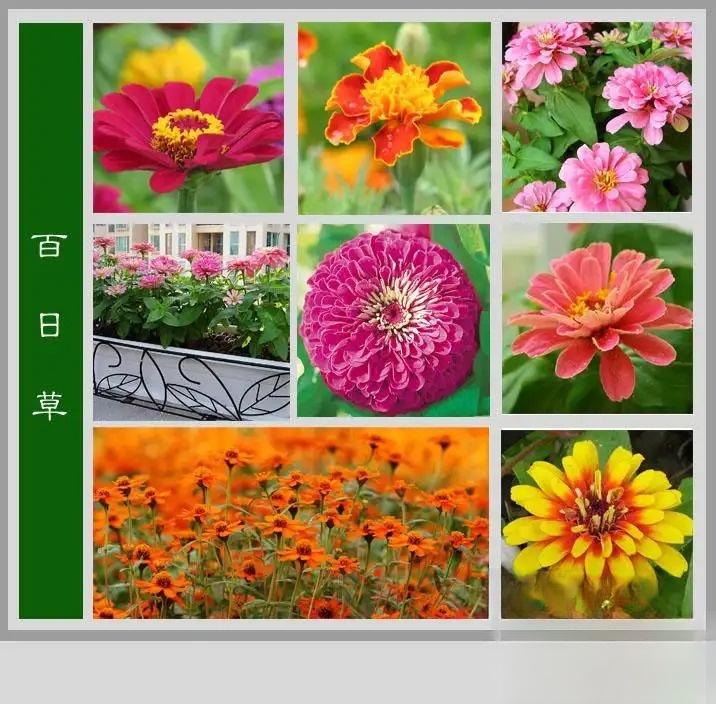
The plant grows to 30-100 cm tall and has stiff hairs. It has a strong upright growth habit, with stems covered in short hairs. Leaves are opposite, with short bristles, ovate to elliptical, with clasping bases, entire margins, 4-10 cm long and 2.5-5 cm wide. The terminal capitula are 5-15 cm in diameter and have long pedicels. Ray florets are obovate, slightly rolled back at the apex, and come in yellow, red, white, and purple. Disc florets are 5-lobed at the apex, yellow or orange-yellow, with a bilobed style or variegated patterns, or colored spots at the base of the petals. Flowering occurs from June to October. Cultivated varieties can be divided into three types: large-flowered, medium-flowered, and small-flowered. The achenes of the ray florets are broadly ovate to bottle-shaped, pointed at the apex and slightly concave in the middle; the fruits of the disc florets are elliptical, flatter, and smaller. Seeds weigh 5.9 grams per thousand and have a lifespan of 3 years.
Zinnias are propagated by seed. The optimal germination temperature is 20-25℃, and germination takes 7-10 days. Seedlings are transplanted 2-3 times before final planting.
Zinnias have a long flowering period and are commonly used in summer and autumn flower beds. Tall varieties can be used for cut flowers and are long-lasting in water. Dwarf varieties are used in flower beds and can also be grown in pots for ornamental purposes.
There are about 20 species in the same genus, and commonly cultivated species include: Zinnia haageana and Zinnia linearis.
Zinnias are vigorous growers, drought-tolerant, prefer sunlight, and fertile, deep loam; they dislike intense heat. Flowering period is from June to October. Through long-term artificial hybridization and selection, there are many cultivated types, which can be broadly divided into three types.
Large-flowered, tall-stemmed varieties: 90–120 cm tall, inflorescence diameter 12–15 cm, few flowering branches. Classified by flower shape into spreading and curled-petal types.
Medium-flowered, medium-stemmed varieties: 50–60 cm tall, many branches, inflorescence diameter approximately 6–8 cm, flower shape nearly spreading but slightly spherical.
Small-flowered, clump-forming varieties: about 40 cm tall, many branches, inflorescence diameter 3–5 cm, flattened-spherical shape, ray florets spreading.
Similar species in the same genus include *Zinnia linearis* Benth. and *Zinnia angustifolia* HBK. *Zinnia linearis* is an annual herb, 30 cm tall, with linear-lanceolate leaves. Inflorescence diameter 2–4 cm, orange-yellow with pale orange edges. Flowering period from July to frost. Native to Mexico. *Zinnia angustifolia* is an annual herb, 30–50 cm tall, with short hairs on the stem. Leaves are oblong to ovate-lanceolate. Inflorescences are 2.5–4 cm in diameter and orange-yellow. Native to Mexico.
Zinnias can be used in flower beds, borders, and flower strips, and different varieties can be mixed to create flowering groups. Dwarf varieties can be grown in pots, while medium to tall varieties can be used as cut flowers. Both leaves and flowers can be used medicinally, possessing anti-inflammatory and heat-clearing properties.
also known as Moss Rose, Pine Moss Rose, and Large-flowered Portulaca.
Family: Portulacaceae .
Category: Annual succulent herb.
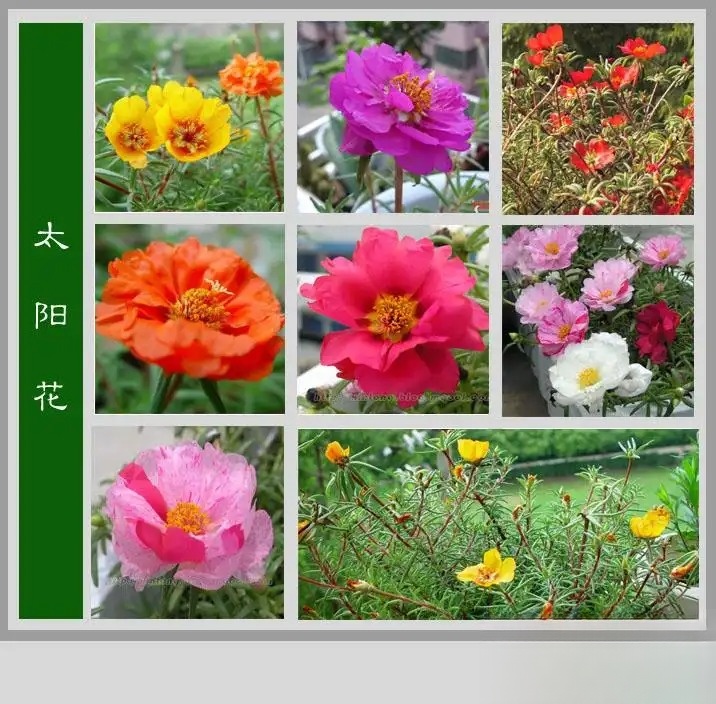
Sunflowers are propagated by seed or cuttings. Sowing can be done in spring, summer, and autumn. At 20℃, seeds germinate in about 10 days. The soil covering should be thin; it can even grow without soil. At 15℃, it will flower in about 20 days.
For cuttings, double-flowered varieties are often used. Cuttings are taken in summer and will immediately produce flower buds.
The
portulaca is a sun-loving plant, preferring light and high temperatures. It is extremely drought-tolerant, very hardy, and requires minimal care, earning it the nickname "immortal."
Portulaca not only boasts a rich variety of vibrant colors and excellent landscaping effects, but it also grows vigorously and requires very little maintenance. Although it is an annual, its strong self-seeding ability allows it to provide enjoyment for many years. It is an excellent landscape flower.
[Propagation and Cultivation]
Both sowing and cutting are extremely easy to propagate. Sowing can be done directly in mid-April or by planting in a seedbed; flowering generally occurs about 80 days after sowing. Cuttings can be taken during the growing season with a high success rate. *Scutellaria barbata
* is a strongly photophilic plant, preferring warm climates and requiring loose, well-drained, fertile soil. Low temperatures and heavy rains in summer will hinder plant growth and increase the risk of rotting; however, extreme heat and drought will also impede growth.
*Scutellaria barbata* seeds split open as soon as they mature, so seed harvesting should be done in batches.
Home Propagation of Portulaca Sinensis: Portulaca
sinensis is generally propagated by seed, and its self-seeding ability is also strong. However, with the emergence of many new horticultural varieties, its seeds are difficult to collect. Especially for double-flowered horticultural varieties, which do not produce seeds after flowering. Therefore, home propagation can be done by cuttings.
1. Overwintering Seedlings: After the first frost each year (in Shanghai area), move double-flowered portulaca sinensis indoors to a sunny location. After winter sets in, place the pot on the inside of a glass window, keeping the soil slightly dry, and it will safely overwinter. After Qingming Festival the following year, the pot can be placed outside the window; however, if a cold snap occurs, it must be brought inside.
2. Cutting time: From early May to the end of August, take cuttings of about 5 cm from the tips of tender stems.
3. Preparing potting soil: Use 3 parts garden soil, 5 parts yellow sand, 2 parts rice husk ash or fine sawdust, and add a small amount of superphosphate powder, mixing thoroughly.
4. Planting container: Clay pots, ceramic pots, plastic pots, or other containers with drainage holes. Place a piece of tile at the drainage hole to facilitate drainage before filling with potting soil.
5. Cutting method: Smooth the surface of the potting soil in the container, insert the cut sunflower stem tip into a hole made with chopsticks, inserting it no more than 2 cm deep into the potting soil. To encourage rapid growth and fullness in potted plants, multiple cuttings can be propagated in one pot, depending on the pot size, as long as a 2 cm spacing is maintained (when the seedlings become crowded, they can be transplanted into other pots). Water thoroughly afterward. Newly propagated cuttings can be shaded or not; as long as a certain level of humidity is maintained, they will generally take root in 10 to 15 days and then enter normal care.
6. Routine Care: Sunflowers are rarely affected by pests or diseases. Maintaining a certain level of humidity and applying a 1/1000 solution of potassium dihydrogen phosphate every two weeks will result in large, vibrant flowers and continuous blooming. If multiple varieties are propagated in one pot, the simultaneous blooming of various colors enhances the aesthetic value.
Other names: Poppy, Butterfly Garden of Spring
Family and Genus: Papaveraceae, Papaver
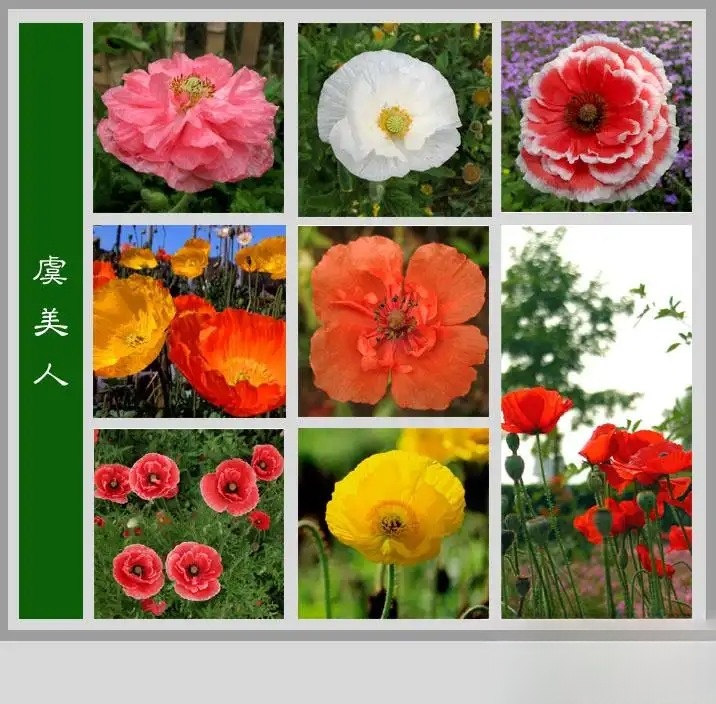
An annual or biennial erect herb with slender branches, reaching 30-90 cm in height. The entire plant is covered with rough hairs and contains latex. Leaves are alternate, pinnately deeply lobed with lanceolate lobes and coarsely serrated margins. Flowers are solitary on long peduncles. Unopened flower buds droop; sepals are green and fall off after flowering. Petals are 4 or double, over 5 cm in diameter, nearly round, entire, sometimes with rounded teeth or sharp serrations, papery in texture, and flower-shaped, in colors such as red, purple, pink, and white, very vibrant. Flowering period is May-June. The fruit is a capsule, and the seeds are kidney-shaped.
[Habits]
Native to temperate Eurasia, widely cultivated in China. Prefers sunlight, is relatively cold-hardy, but dislikes hot and humid environments; has a taproot system and does not tolerate transplanting. Can self-seed; not particular about soil type, but should be planted in well-ventilated and well-drained locations. It prefers sunny and well-ventilated places; it is cold-resistant but not tolerant of dampness and heat, and should not be planted in overly fertile soil or in the same field repeatedly.
Scientific name: *Plumbago auriculata*
Other names: Blue Jasmine, Blue Plumbago, Hexaploid
Family and genus: Plumbagaceae, *Plumbago*
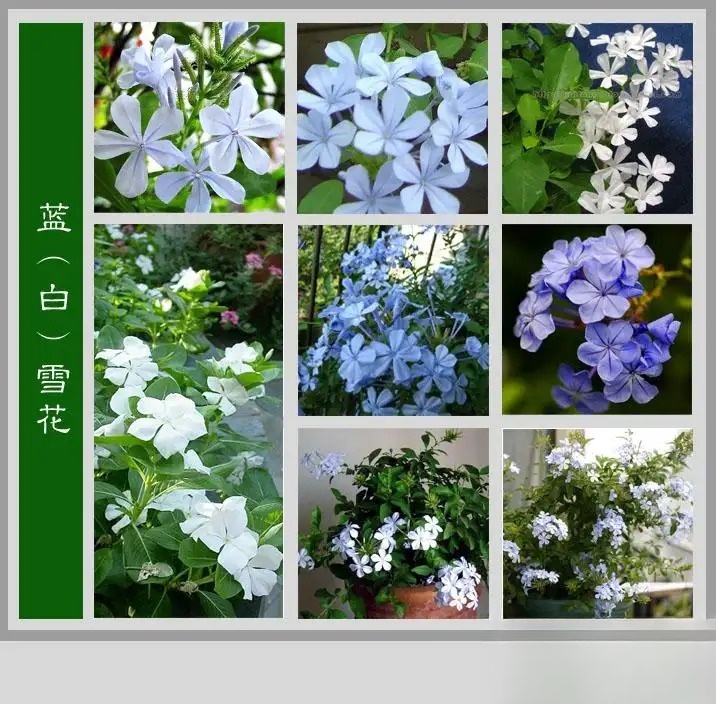
Morphological characteristics:
An evergreen shrub, approximately 100 cm tall, with ribbed branches. Young shoots are upright, becoming vining as they mature. Leaves are thin, simple, alternate, entire, short-rounded or oblong-spatulate, with a blunt apex and a small dot, and a cuneate base. Spikes are terminal and axillary. Bracts are shorter than sepals. The calyx has sticky glandular hairs and fine pubescence. The corolla is pale blue, salverform, with a narrow, long tube and five lobes at the apex. Flowering occurs from June to September. The capsule is membranous.
Growth habits
: Prefers warmth and is not cold-hardy. In North China and other temperate regions, it is cultivated as a warm-climate plant. The optimal growth temperature is 25℃. It prefers sunlight but tolerates some shade, avoiding direct sunlight. It requires a humid environment; dryness is detrimental to its growth. It is not drought-tolerant and thrives in humus-rich, well-drained sandy loam.
For potted plants, repot annually in spring and prune appropriately. Three-year-old plants can be heavily pruned to encourage new growth. Fertilize every two weeks during the growing season. Provide appropriate shade and mist the plant in summer to increase humidity. In winter, move the plant indoors in the Nanjing area, reduce watering, and ensure it receives ample sunlight.
Scientific Name: *Nicotiana sanderae*;
Other Names: Beautiful Flowering Tobacco, Tobacco Flower;
Family and Genus: Solanaceae, *Nicotiana*
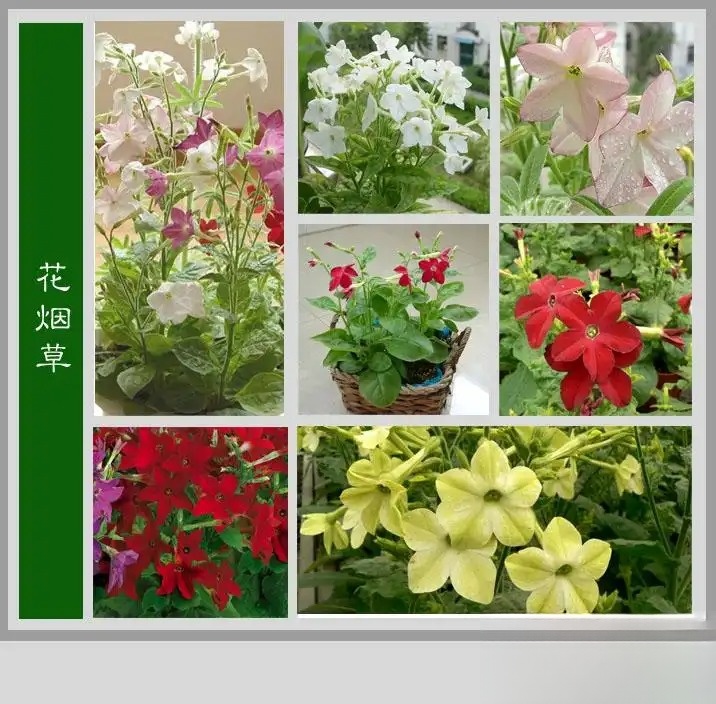
A perennial herb, much-branched, 60-80 cm tall, entirely covered with sticky soft hairs. Leaves are opposite; basal leaves are spatulate, while cauline leaves are oblong or lanceolate. The inflorescence is a terminal panicle with sparse flowers; the corolla is long tubular-funnel-shaped, the corolla tube about 7 cm long, three times longer than the calyx, swollen at the upper part, and red; flowering period is August to October, with a habit of closing during the day and opening at night. The capsule is ovoid, as long as the persistent calyx, and splits into two valves when mature.
It prefers warmth and sunshine, and is quite sensitive to the length of daylight, being a long-day plant; it prefers fertile, loose, and moist soil. It can self-seed.
Propagation is
by sowing in spring in indoor pots or in a warm bed; the optimal germination temperature is 21℃, and sufficient light is beneficial for seed germination. After one transplanting, it can be planted outdoors or in pots in early June; management is simple. The capsules split open spontaneously when mature, releasing the seeds. Therefore, seeds should be harvested as soon as the fruit turns brown.
Flowering tobacco can be used as a border plant, or grown in pots for ornamental purposes, or planted loosely along forest edges and roadsides. Its leaves can be used medicinally.
Indoor care:
Flowering tobacco grows slowly in its seedling stage, making it easy to sow in January or February and transplant into pots or gardens in early spring. Care is relatively simple and extensive. Applying effective fertilizer several times after spring will not only promote healthy growth but also encourage flowering. Due to its long flowering period and vibrant flower colors, it is suitable for both ground planting and potted cultivation.
Sufficient water is needed, but care should be taken not to overwater, as waterlogging can easily lead to root rot.
Full sun is required; insufficient sunlight will result in insufficient flowering
. Flowering tobacco has large flowers and leaves, giving it a visually fluffy appearance. When planting, the row and plant spacing should be approximately 25-30 cm. Because flowering tobacco contains nicotine, it is less susceptible to pests and diseases. In terms of management and care, insufficient sunlight can easily lead to excessive vegetative growth and fewer flowers, so ample sunlight is extremely important for the plant.
The flowers of flowering tobacco grow in clusters; it is recommended to prune the branch in half after all the flowers have finished blooming to encourage further flowering.
Successful planting tips:
Generally, flowering tobacco is available around May, with its main flowering period in summer. Therefore, it is recommended to plant in summer and prepare to replace it in late autumn.
Seed sowing techniques:
Germination conditions (temperature, soil covering, and light requirements, etc.): 21-25℃, without soil covering. Germination
time: 10-15 days.
Optimal growth temperature (day/night temperature): 15-17℃.
Light requirements and other growth conditions: Partial shade or partial sunlight.
Time from sowing to flowering (or harvesting): 9-10 weeks.
Ground planting height (cm): 40-45cm.
Uses: Flower beds and large container cultivation.
Scientific Name: Impatiens Walleriana
Family: Balsaminaceae
Category: Perennial herbaceous plant
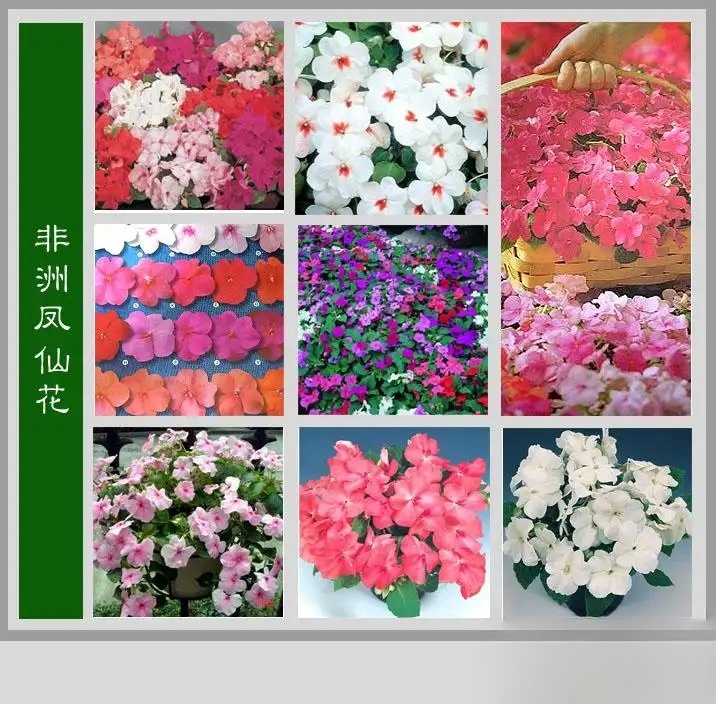
Leaves are alternate, grayish-green, sometimes spotted, with a broad, rounded pith and a sharp tip, and serrated margins; the leaves are dark green.
African impatiens are very popular internationally and are famous decorative potted plants, widely used in flower beds, planting boxes, decorative containers, hanging baskets, and for creating flower balls, flower columns, and flower walls. They are particularly effective in creating eye-catching displays in exhibitions. Therefore, flower companies in various countries attach great importance to the cultivation and breeding of African impatiens. Companies such as Pan American Seeds and Power Seeds in the United States, Danzig Flower Company in Israel, Daehnfeldt in Denmark, SelectaKlermm in Germany, and Goldsmith Seed Company in the United States produce high-quality potted plants and seeds annually for supply to the world.
In terms of production scale, the United States holds an absolute advantage in African impatiens, accounting for 47% of the total US flower production. Among the $1.57 billion worth of flowerbed and garden plants, African impatiens rank first, demonstrating its immense scale. In European countries such as Germany, France, the Netherlands, Denmark, and Belgium, African impatiens production basically meets their domestic needs. In Japan, while African impatiens rank lower in terms of production value and quantity, they are still commonly seen in flowerbeds, planting troughs, and windowsills in homes.
The cultivation history of impatiens in China is very long. Poems praising impatiens existed as early as the Tang Dynasty, indicating that cultivation was already underway at that time. Cultivation flourished even more during the Song and Ming Dynasties. Zhao Xuemin's "Impatiens Manual" from the early Qing Dynasty records 233 varieties of impatiens, many of which are rare and possess world-class variations and superior quality; unfortunately, most of these varieties have been lost. Impatiens were introduced to Europe in 1596 and to Japan before 1694. However, African impatiens have only been in China for a short time, and due to the limited variety and poor heat resistance, their development has been slow. However, it remains very popular as a potted ornamental plant in northern households. In recent years, while introducing new varieties of African impatiens, the introduction of New Guinea impatiens (I. hawkeri) has also been added, making the varieties of impatiens more abundant and gradually making it one of the main varieties of potted flowers in my country.
Name: Cyclamen persicum Mill.
(also known as Radish Seaweed, Rabbit Ear Flower, and First-Class Crown)
Category: Perennial Herbaceous Plant
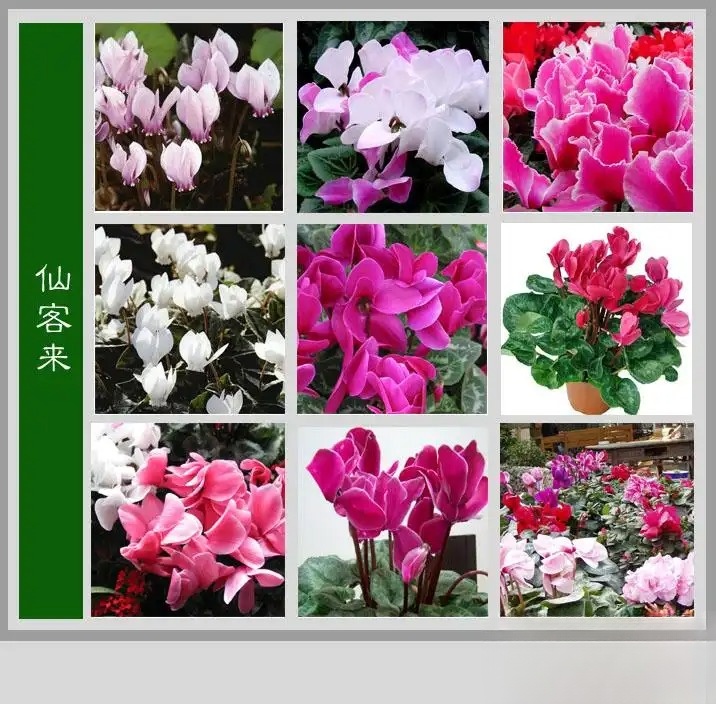
It has a flattened, round, succulent bulb. Leaves are clustered at the top of the bulb, with long petioles, nearly heart-shaped; the surface is green with silvery-white markings. Flowers are solitary and axillary; the pedicels are slender, 15-20 cm tall; the flowers are slightly drooping, the petals curl outwards like a monk's cap; colors include white, pink, magenta, and purplish-red, and there are also serrated and fragrant types and varieties. The capsule is spherical, containing numerous seeds. Flowering period is from autumn to spring. Native to Southern Europe, Tunisia, and the Near East.
It prefers a warm, humid climate and fertile, loose, well-drained sandy loam. It dislikes high temperatures and humidity in summer, and prefers cool, dry conditions during dormancy; it is a semi-hardy bulbous flower.
Cyclamen is a winter-blooming flower, and the minimum temperature should be kept above 12℃ for cultivation. It is one of the important greenhouse flowers and is widely loved. In South China, where winters are short, it can be used for outdoor cultivation in rock gardens.
Other
names: Crocus sativus, Saffron
Category: Iridaceae family, stigma of Crocus sativus L.
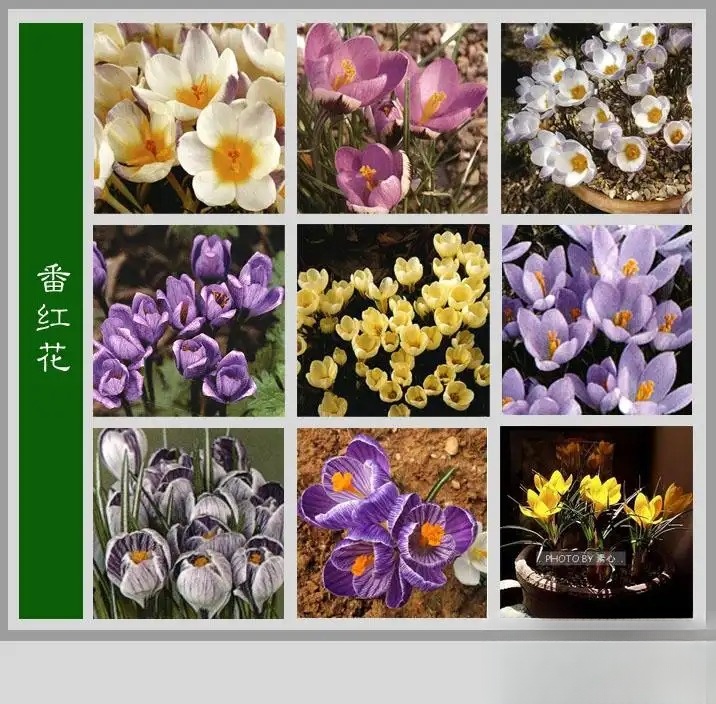
. The bulb is flattened-globose, varying in size, 0.5-10 cm in diameter, covered with brown membranous scales. 2-14 clumps emerge from the bulb, each clump with 2-13 leaves, the base consisting of 3-5 broad, dark scales. The leaves are linear, 15-35 cm long and 2-4 mm wide, with revolute margins and fine hairs. Flowers are terminal; perianth segments 6, obovate, pale purple, with a slender tubular tube; stamens 3, anthers sagittate at the base; ovary inferior, 3-locular, style slender, yellow; stigmas 3, enlarged and funnel-shaped, protruding from the perianth tube and drooping, deep red. Capsule oblong, with three blunt ridges. Seeds numerous, spherical. Flowering period: October-November.
Introduced and cultivated in Beijing, Shanghai, Zhejiang, Jiangsu, and other regions.
Harvesting and processing: Flowers
are harvested on sunny mornings in late October-late November; stigmas are picked indoors and sun-dried or dried at low temperature.
Properties
Chemical composition...
Properties and flavors .
Functions and indications .
Origin and distribution.
Main species and varieties.
Family: Begoniaceae; Genus: Begonia;
Category: Perennial bulbous flower; a hybrid of tuberous begonia.
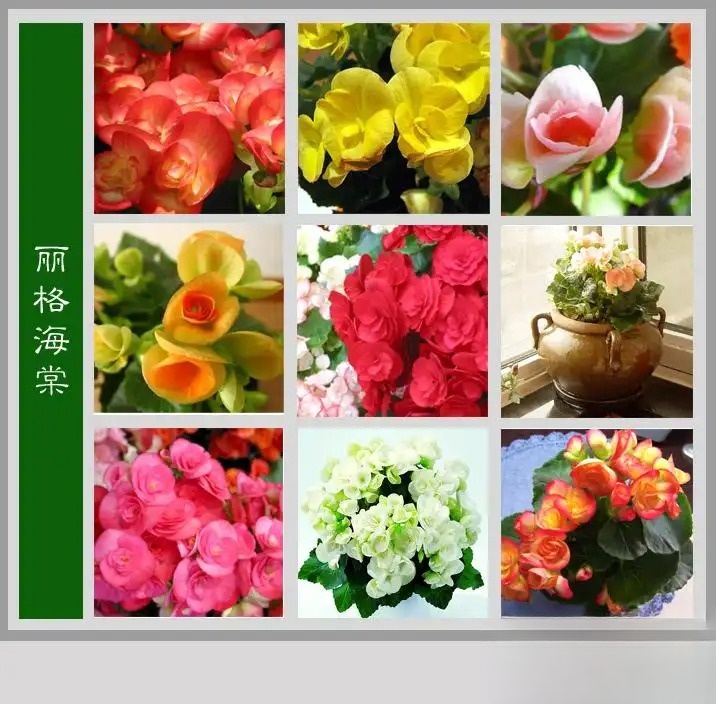
Rieger begonias have fibrous root systems, a full, bushy shape, emerald green branches and leaves, and fleshy, succulent stems. The leaves are simple, alternate, asymmetrically heart-shaped, and mostly emerald green, with fewer reddish-brown varieties. The flowers are diverse in shape, mostly double-petaled, and come in a variety of colors including red, orange, yellow, and white. The flowers are large, brightly colored, and possess a unique appearance, color, and fragrance; moreover, the flowering period is long, lasting from December to April of the following year. Begonia riegeri has high ornamental value in its branches, leaves, buds, inflorescences, and flowers, making it a high-end indoor potted flower variety for winter and a new favorite in the flower market in recent years. It is widely used for placement on desks, table decorations, window decorations, hotel lobbies, living rooms, dining rooms, and conference halls. Flower branches can also be cut for artistic floral arrangements. It is an important flower for beautifying indoor environments in winter and spring and is one of the top ten potted flowers internationally.
Peak flowering periods are from April to June and September to December. It prefers warm, humid, and semi-shaded environments, with an optimal temperature of 15℃~22℃ and humidity of 65~70%. It thrives in deep humus-rich soil. Propagation can be done by sowing, cuttings, or tissue culture.
This flower is usually propagated by sowing seeds, which are small and can be sown indoors in pots in early spring (January to February). At a temperature of 18℃~21℃, seedlings will emerge in 2~4 weeks, and can be transplanted after two true leaves have emerged.
In production, cuttings or tissue culture are more commonly used for propagation. During the growing season, watering should be controlled. In spring and summer, water twice a day, morning and evening, on sunny days. In autumn and winter, water only when the soil is dry, avoiding watering to prevent root rot. In the hot summer months, it is best to move the potted plants to a shaded area and spray water around them to increase humidity.
Name: Daphne odora
Other names: Penglai flower, Fengliu tree
Family and genus: Thymelaeaceae Genus: Daphne Origin
: Native to China, distributed in the southern provinces of China.
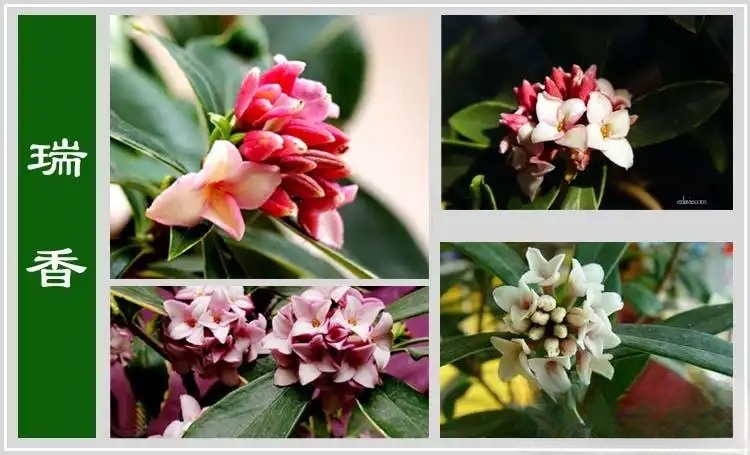
Variegated daphne is renowned for its excellent appearance, color, fragrance, and charm, possessing extremely high ornamental and medicinal value. Its roots, stems, leaves, and flowers can all be used medicinally. Its flowering period coincides with the beginning of the Lunar New Year. During the festive season, its branches are covered in clusters of blossoms, creating a vibrant and fragrant display that enhances the festive atmosphere and embodies people's wishes for "auspiciousness filling the home" and "wealth and prosperity." Daphne odora
is also known as Qianlixiang, Penglaihua, and Lujia, and is an evergreen shrub. The plant grows to 1-2 meters tall, with smooth, hairless branches. Leaves are simple, alternate, oblong to oblanceolate, 5-8 cm long, entire, hairless, relatively thick, dark green and glossy, with short, thick petioles. The perianth is tubular, four-lobed at the apex, about 1.5 cm in diameter, with white or mixed reddish-purple flowers and a strong fragrance. Flowering occurs from March to April. The drupe is fleshy, spherical, and red when ripe, maturing in July. There are approximately 95 species of *Daphne* worldwide, with 35 in my country. Currently, nine species are widely cultivated in gardens. *Daphne odora* 'Aureomarginata' has golden-yellow leaf margins, five white petals at the apex, and a purplish-red base; its fragrance is similar to cloves, blooming from late January to early February, making it a popular choice for Spring Festival decorations. *Daphne odora* 'Aureomarginata' is a deciduous shrub, 0.5-1 meter tall, flowering before leaf unfolding. *Daphne odora* 'White Daphne' is an evergreen shrub with pure white, fragrant flowers. Yellow Daphne odora grows to less than 1 meter tall, is deciduous in winter, and has yellow, hairy flowers in clusters of 3 to 8 at the branch tips in a capitulum inflorescence, with a slight fragrance. Concave-leaved Daphne odora is an evergreen shrub with yellowish-green leaves, blunt and slightly concave tips, and outwardly rolled edges. Its flowers are pale purplish-red on the outside and white on the inside, and are very fragrant. The flower tube diameter is 2 cm. Hairy Daphne odora, also known as Eight-Clawed Golden Dragon, has white, fragrant white flowers with yellow silky hairs on the outside of the perianth, and orange fruit when ripe. Rose Daphne odora, also known as Water Fragrance Daphne odora, has white tepals on the inside and pinkish-white on the surface. Pale Red Daphne odora has dark green leaves and pale reddish-purple flowers. Gansu Daphne odora is an evergreen shrub with pale purplish-red or purplish-red corollas on the outside and white on the inside, fragrant, and red fruit.
Soil:
1. It's okay; adding yellow soil will cause some compaction, mine was the same, so I often loosen the soil with a knife. Daphne odora prefers slightly acidic soil. After it has settled in, during its normal growth period, if the soil becomes too compacted, you can water it with a 2% diluted ferrous sulfate solution. This can also prevent yellowing leaves.
2. Daphne odora thrives in fertile, moist, well-drained acidic soil. It dislikes rain, waterlogging, and saline-alkali soil.
3. Repot every 2-3 years. Repotting can be done indoors in March. Use slightly acidic soil and place hoof meal at the bottom of the pot as base fertilizer.
4. Repot every three years after flowering. Prune away rotten and old roots, leaving the original soil. Avoid disturbing the root system. Use a slightly acidic soil mixture of mountain yellow clay and humus.
5. The potting soil should primarily be neutral to slightly acidic sandy soil. If near a major river like the Yangtze, collect river sand during the dry season in winter. Where there are no rivers, use red sand or red molding sand from a factory foundry. In addition, 40% of leaf mold, pine needle soil, peat moss, and rice husk ash should be added. Base fertilizer should not be used in the potting soil; liquid fertilizer should be applied as needed. The best liquid fertilizer is a mixture of soybean water (made by grinding or boiling soybeans and fermenting them for at least a year; soybeans are mild, while animal fertilizers are more irritating) and potassium dihydrogen phosphate water (a highly efficient and fast-acting phosphorus and potassium fertilizer; dilute the crystalline granules with 1000 times the amount of water).
6. Soil is fundamental to the growth of Daphne odora 'Aureomarginata', as it requires various nutrients, excellent aeration, and must be free of bacteria. As an aromatic plant with fleshy roots, it is highly susceptible to bacterial damage; a slight oversight can lead to root rot or stem rot. Therefore, the soil requirements are very strict. The soil for cultivating Daphne odora 'Aureomarginata' is roughly divided into three layers: upper, middle, and lower. The upper layer should be made of pond mud blocks, dried in the sun, then thoroughly burned with firewood without breaking them up. This prevents rainwater from washing the mud onto the leaves, thus preventing stem rot. The middle layer uses straw and leaf mold, steamed in a steamer, then the pH is tested with broad-spectrum pH paper. The pH should be between 6 and 7. If the pH is greater than 7, adjust it with acetic acid or ferrous sulfate to make it slightly acidic. Then dry it in the sun and add 5% bone meal. This prevents bacterial introduction, improves aeration, and provides the necessary phosphorus, potassium, and trace elements for growth. The bottom layer uses clean coal ash, which easily absorbs water and allows the soil to dry out quickly, which is beneficial for the growth of Daphne odora. This method generally succeeds.
Water:
1. Daphne odora 'Aureomarginata' prefers to grow in moist, non-waterlogged soil. The suitable soil moisture content is around 75%. Soil moisture <20% can easily cause root death; long-term dampness or waterlogging, poor soil aeration, and soil moisture >90% can cause root rot and disease.
2. During the transition from spring to summer, there are often rainy days and high humidity, so pay attention to drainage and prevent prolonged exposure to rain. In summer, the temperature is high and evaporation is high, so the potting soil dries out easily. Water in the morning and evening. In spring and autumn, water in the morning or afternoon, and in winter, water at noon. Maintaining appropriate soil moisture is key to the normal growth and development of Daphne odora 'Aureomarginata'.
3. In summer, place it in a semi-shaded, rain-protected location and avoid heavy rain, otherwise, it is prone to root rot.
4. Waterlogging occurs when water cannot drain for a long time, and the roots are constantly submerged, unable to breathe, which can easily cause the roots to die. Therefore, each flowerpot has drainage holes to drain excess water and prevent the potting soil from becoming waterlogged.
5. However, the potting soil should be moist after watering. In winter, it may remain moist for several days due to the low temperature. In summer, most of the water will evaporate, except for some absorbed by the roots, so the potting soil will dry out faster.
6. Daphne odora is in a semi-dormant state in summer, so water sparingly and place it in a cool, well-ventilated area. I place it on a north-facing balcony with a roof, which provides good ventilation. Water it using the bottom-watering method when the topsoil is completely dry and the leaves droop slightly (watering is done in the evening). Spray the leaves with water in the evening when it's very hot. Don't worry about it on rainy or cloudy days. It seems to be growing well now, just for your reference.
7. It's drought-tolerant, so water sparingly. The soil should be loose. If it wilts, it's in trouble; if the leaves wither, it's beyond saving. Don't overwater and place it in a well-ventilated, shady place to wait for a miracle.
8. Summer management is crucial for potted Daphne odora. The pot should be placed in a well-ventilated, shady place, protected from rain, direct sunlight, and hot drafts. Water only when the soil is dry to the touch, and spray the leaves with water in summer to cool it down. Daphne odora is not cold-hardy and must be moved indoors before winter, placed in a sunny location, and the room temperature should be kept above 8 degrees Celsius.
9. Water according to the principle of watering only when the soil is dry to the touch. Especially during the summer when temperatures are high and the air is dry, the potting soil of Daphne odora 'Aureomarginata' is in a semi-dormant state, so it should be kept slightly dry. However, the relative humidity of the air needs to be slightly higher, so the leaves should be sprayed with water once or twice a day, and the surrounding area should be sprinkled with water to increase humidity. Water less during the Mid-Autumn Festival to stop the growth of summer shoots and promote flower bud differentiation.
At the same time, attention should be paid to providing reasonable light and ventilation conditions, and good overwintering management and pest and disease control should be done. Do not move the flower pot during the flowering period.
Fertilizer:
1. After flowering, prune and fertilize every half month to promote more branches.
2. In the care of Daphne odora 'Aureomarginata', phosphorus and potassium fertilizers should be applied more often, and nitrogen-based fertilizers such as urea should be avoided to prevent the golden edges from deteriorating.
3. Fertilization of potted Daphne odora 'Aureomarginata' should be "light and frequent, small meals," and liquid fertilizer should be the main choice. Among them:
Seedling stage: fertilizer should be applied lightly and frequently.
Seedling stage: Apply nitrogen and potassium fertilizer frequently in early spring, once every 10-15 days; from late May to the end of June, focus on phosphorus and potassium fertilizer; during the high-temperature season of July and August, apply fertilizer sparingly or not at all; from late August to the end of October, apply compound nitrogen, phosphorus, and potassium fertilizer; when flower buds swell in December, applying phosphorus and potassium fertilizer 1-2 times will result in larger, better-colored, more fragrant flowers and a longer flowering period; stop fertilizing during the flowering period. Generally speaking, the fertilizer concentration during the seedling stage should be 10%-15%.
Large seedling stage: Because the seedlings are grown in pots with a large amount of soil, their nutrient supply is high, so applying fertilizer several times in early spring, early summer, and late autumn is sufficient.
4. *Daphne odora* 'Aureomarginata' does not tolerate concentrated fertilizer. When planting, use well-rotted cake fertilizer plus superphosphate as base fertilizer, which can basically meet the requirements of the growth stages. Fertilizer applied during dormancy is not easily absorbed by the plant and can easily cause the plant to not flower or sprout new buds that year. After budding, apply 1/2MS nutrient solution or other diluted liquid fertilizer 2-3 times per month, adhering to the principle of frequent application of light fertilizer. Avoid using uncomposted human excrement and urine, and use urea sparingly. From 60 days before flowering until blooming, the fertilizer concentration can be appropriately increased. Applying 3ml of edible rapeseed oil or sesame oil at three points 5cm away from the main root is also effective. Spraying with 100mg/L potassium dihydrogen phosphate during the flowering period can prolong the flowering period. All fertilization should be done in the early morning, late evening, or on cool, shady days.
5. In southern regions, Daphne odora can be planted in spring and autumn. It is generally mixed with deciduous shrubs to prevent it from being exposed to direct sunlight in summer, while ensuring it receives ample sunlight in winter. When planting, apply compost or manure as base fertilizer in the planting hole, but do not apply too much. Apply top dressing 1-2 times during the growing season. In winter, fertilize by digging trenches around the plant, avoiding the use of human excrement and urine.
6. For potted Daphne odora, keep the potting soil semi-dry and apply fertilizer once each in spring and autumn. In spring, during the budding and shoot emergence period, use a 30% mixture of well-rotted soybean cake and chicken manure as a liquid fertilizer; in autumn, in late September, the fertilizer concentration should be diluted.
7. Strengthen fertilizer and water management: Stop root fertilization in July and August, but you can combine watering or foliar spraying with 0.3% potassium dihydrogen phosphate solution 2-3 times to promote strong branches and thick leaves; in early September, apply potassium dihydrogen phosphate solution every 10 days to promote flower bud differentiation and bud formation; in winter, spray the leaves with 0.3% potassium dihydrogen phosphate solution once a month to improve the plant's cold resistance, promote early flowering, and promote larger, more vibrant, and longer flowering periods. Stop fertilizing after flowering.
Light
1. Daphne odora 'Aureomarginata' needs to be kept in partial shade and partial sun, and direct sunlight should be avoided. When planting, be careful not to cover the nodes above the roots with soil. Daphne odora should not be too wet, but it requires high air humidity. The roots of Daphne odora are sweet, so be careful to prevent pest infestations.
2. It prefers partial shade, meaning it needs partial sunlight without strong direct sunlight. Place it in a bright spot indoors with 3-6 hours of sunlight daily. In this season, the temperature is suitable, so more sunlight will help its growth.
3. The best location is one that doesn't receive strong sunlight; it can be on a balcony or indoors, wherever the environment is suitable.
4. Daphne odora is a flower that prefers warmth and dislikes high temperatures. It is relatively drought-tolerant. In winter and spring, it needs plenty of sunlight, and it will bloom when the temperature is around 10 degrees Celsius.
5. Daphne odora with variegated edges begins to sprout and grow when the average daily temperature rises to 10 degrees Celsius in spring. Its optimal growth temperature is 15-25 degrees Celsius. Within this range, the plant grows rapidly, with seedlings growing one leaf in 7-10 days. Daphne odora with variegated edges can withstand a minimum temperature of -3 degrees Celsius. When the average daily temperature is <5 degrees Celsius or >35 degrees Celsius, its growth stops or slows down.
6. Daphne odora with variegated edges is a shade-loving plant. Strong sunlight, especially when temperatures exceed 35°C and there is direct sunlight, can easily scorch the leaves. In summer, due to high temperatures and intense sunlight, a shade structure should be erected in a well-ventilated location, and the potted Daphne odora 'Aureomarginata' should be placed inside (pots approximately 50 cm above the ground).
7. Shading for one month in mid-July, achieving a 75% shading rate, can control the flowering period to occur around the Spring Festival. To advance flowering to New Year's Day, extend the light exposure time to 10 hours per day for 3 months. To advance flowering to National Day, maintain 15 hours of light per day for 2 months. If shading is delayed until September, with 5 consecutive months of shading (85% shading rate), the flowering period can be postponed to April or May of the following year.
8. Increasing the temperature can advance the flowering of Daphne odora 'Aureomarginata', while lowering the temperature can delay it. At 20°C, flower buds form in 60 days. After bud formation, as the temperature rises, the number of days from bud formation to flowering tends to shorten. When the temperature is between 21 and 25°C, the time from bud formation to flowering is about 90 days; when the temperature is between 26 and 30°C, it only takes about 70 days. In temperatures below 10°C, the flowering of Daphne odora with flower buds can be delayed by 100 days. If the temperature is controlled below 4°C, the flowering period will be delayed by about 120 days.
9. For Daphne odora with large flowers that have sprouted in spring and summer, flowering control should generally begin in late May, gradually reducing the amount of light and controlling fertilization. This involves transitioning from short-term shading to long-term shading, while keeping the soil moist. During the flowering control period, it is strictly forbidden for the potting soil to become too dry, otherwise the flower petals will be short, the flower color will be dry and lifeless, the bracts will curl up and not easily unfold, and they will easily wilt and fall off prematurely. Even if light and water are increased later, the plant's assimilation process will be difficult to recover. Under normal circumstances, for controlled spring and summer shoots with large flowers, the potting soil should be appropriately moistened starting in January, and the plant should be exposed to more light and allowed to receive dew at night. After a period of assimilation, the leaves will become glossy and upright, and the petals will turn red. The flower clusters will open during the Spring Festival, making the variegated daphne beautiful and fragrant.
10. Promoting flowering is mainly for a few autumn shoot variegated daphne varieties that have delayed flowering due to factors such as late pruning, improper fertilization and watering, or insufficient light. The main methods are: keeping the potting soil moist, increasing the application of phosphorus fertilizer, spraying potassium dihydrogen phosphate, and growth hormones such as plant growth regulators, green growth regulators, and growth hormones like phytoprotectants, green growth regulators, and growth hormones.
11. Variegated daphne is not tolerant of concentrated fertilizer. When planting, using well-rotted cake fertilizer plus superphosphate as base fertilizer is generally sufficient to meet the requirements of the growth stage. Fertilizer applied during dormancy is not easily absorbed by the plant and can easily cause the plant to not flower or produce new shoots that year. After budding, apply 1/2MS nutrient solution or other diluted liquid fertilizer 2-3 times per month, adhering to the principle of frequent application of light fertilizer. Avoid using uncomposted human excrement and urine, and use urea sparingly. From 60 days before flowering until blooming, the fertilizer concentration can be appropriately increased. Applying 3ml of edible rapeseed oil or sesame oil at three points 5cm away from the main root is also effective. Spraying with 100mg/L potassium dihydrogen phosphate during the flowering period can prolong the flowering period. All fertilization should be done in the early morning, late evening, or on cool, shady days.
Pruning:
1. Shaping Daphne odora 'Aureomarginata' involves growing it from seedling to mature plant through pinching, bud removal, thinning, tying, and branch training to encourage early budding, abundant branch growth, and the early formation of a large crown, well-proportioned branches, lush foliage, and numerous large flowers, resulting in a tree with high ornamental value.
2. Seedling shaping: mainly pinching and bud removal to cultivate 2-3 branches and 6-9 secondary branches.
3. Pruning of medium-sized seedlings: By pinching and removing buds, more robust branches are cultivated, expanding the crown and enabling more flowers to bloom during the Spring Festival.
4. Daphne odora has strong sprouting ability and tolerates pruning; in summer, pay attention to pruning away overly long branches and leaves.
5. With summer pruning, Daphne odora 'Aureomarginata' can have its first batch of flowers bloom in late January and fade by the end of February; the second batch of flowers begins to bloom in late February and fades in early April, extending the flowering period to more than two months, about twice the duration of conventional cultivation.
6. Summer pruning: Taking advantage of Daphne odora 'Aureomarginata's' tolerance to pruning and strong apical dominance, a topping-promoting pruning method is used. In June and July, some of the current year's new shoots or half of the new shoots are pruned in stages (the pruned branches can be used for water or soil propagation), encouraging the lateral buds below the pruning cut to sprout new branches.
7. Daphne odora 'Aureomarginata' undergoes flower bud differentiation and bud formation in autumn. Unpruned spring shoots, having already stopped growing, begin flower bud differentiation and bud formation in autumn. Summer shoots that sprout after pruning, however, continue growing until early autumn, resulting in slightly later flower bud differentiation and thus extending the flowering period.
8. Daphne odora's branches are flexible and easy to shape. After flowering, wrap the branches with thin wire, supporting one branch as the main trunk and bending the rest horizontally, evenly distributing them, leaving about 8 cm of the tip. Soon, each branch will produce two to three lateral branches. The following year, after flowering, leave about 6 cm of the tip on each branch. After two rounds of pruning and training, a hemispherical plant can be formed.
Cuttings:
1. Because the stamens and pistils of Daphne odora 'Aureomarginata' easily degenerate, seed propagation is difficult; asexual reproduction is generally used. This utilizes the regenerative capacity of its vegetative organs to form new individuals. Currently, propagation is mainly done through cuttings of softwood (semi-lignified branches of the current year).
2. Cutting Time: Cuttings can be taken from March to November, with May to June being the optimal time.
Seedbed Preparation: The substrate should be loose, warm, moist, and well-aerated. Cutting Selection: 1) Seedlings from 1-3 years old mother trees are best; 2)
Cuttings should be selected
from current-year shoots that are semi-lignified; 3) Select robust cuttings with plump axillary buds and free from pests and diseases; 4) For Daphne odora 'Aureomarginata', cut branches to about 6 cm in length, leaving 4-8 leaves. Cuttings should be processed immediately and not left for too long to avoid dehydration and reduced survival rate.
Cutting Treatment: Apply vitamin B12 solution directly to the base of the cut cuttings. After the solution dries, insert them into the substrate immediately.
1. Cuttings: Before cutting, level and slightly compact the substrate in the seedbed, then thoroughly disinfect it with a 1‰ potassium permanganate solution. Generally, a cutting density of 6 cm × 6 cm is optimal.
2. Potting: When the seedlings in the seedbed have roots that are 3-5 cm long, they should be transplanted into pots.
3. Repotting: As the plants grow, root expansion becomes more difficult, and the original potting soil is insufficient, limiting nutrient supply and failing to meet the plant's regeneration needs. Larger pots with more soil should be used. Repotting can be done year-round, but the optimal time is from November to February of the following year.
4. Water propagation: Water propagation is generally done in summer when new shoots are maturing, making it a good season. Water propagation results in rapid rooting and a high survival rate (almost 100%), reducing the frequency of watering. The specific method is to take current-year shoots, 8-12 cm long. The day before pruning, it's best to make a ring cut 1-2 mm from the branching point with a sharp knife (do not use scissors). This will accelerate healing and rooting. After making the ring cut, smooth the wound, remove the leaves from the lower half of the branch, leaving 3-4 leaves at the top, and cut off the rest. Then insert it into a pre-prepared wide-mouthed bottle. Fill the bottle with about 3/4 water and add 2-3 drops of vinegar. Submerge the cutting about 1/3 in the water, and hold it upright and secure it. Cover the bottle opening tightly with gauze. After inserting, place it on an indoor windowsill. When the water level decreases, add water back to the original level. After about 5 days, spray the leaves with water 1-2 times, change the water once a week, and roots will develop within a month. Transplant it into a pot promptly.
6. Bud cuttings. Bud cuttings are done in spring before budding. Select robust, full-grown branches from the middle and upper parts of the tree crown, leaving one leaf at the top. There should be a clear bud point in the bud axil. Cuttings with one leaf and one bud are best. When taking cuttings, use a sharp knife to cut diagonally from above the axillary bud, shaping it into a horse-ear shape. Be careful not to damage the axillary bud to promote rooting and sprouting. Use pine needle soil mixed with 30% fine sand as the cutting substrate to facilitate insertion and fixation of the short cuttings. Note that the pine needle soil and fine sand substrate must be sterilized by sun exposure before planting. Insert the cuttings halfway into the soil, press firmly after planting, water lightly, and keep moist. Roots will develop in about 40 days. After new branches appear, transplant them into pots the following spring.
Diseases:
1. Diseases affecting Daphne odora 'Aureomarginata' include stem rot, mosaic virus, and anthracnose. Pests include aphids, scale insects, and earthworms. Control of diseases and pests in Daphne odora 'Aureomarginata' should be comprehensive, focusing on the following:
2. Strengthen nursery management, strictly control the spread of pathogens in the nursery, maintain good nursery hygiene, and eliminate sources of pathogens.
3. Scientific application of pesticides: 1) Apply pesticides to the seedbed. Thoroughly drench the seedlings with a 1‰ potassium permanganate solution before cuttings; 2) Disinfect the Daphne odora seedlings and soil during transplanting by thoroughly drenching the potting soil with a 500-fold dilution; 3) Spray pesticides at appropriate times during each shoot growth stage.
4. Daphne odora is best repotted in spring. Earthworms in the pot can be treated with Furadan, trichlorfon powder, or a special soil insecticide. Furadan is very cheap and extremely effective. Sprinkle a little, cover with a thin layer of soil, spray or water, and the insects in the soil will surely die. However, Furadan is a highly toxic pesticide, so it is best not to use it indoors. It should be fine on the balcony or in the corridor, or you can leave it there overnight before bringing it home.
5. Daphne odora is susceptible to spider mites, aphids, and scale insects in hot, dry summer weather. It can be sprayed with a 1000-1200-fold dilution of dimethoate emulsifiable concentrate. In addition, the roots of Daphne odora have a sweet taste and easily harbor earthworms. Too many earthworms, entangled in the roots, will affect the plant's absorption of water and nutrients. The plant can be dug up, the earthworms removed, and then replanted. The main disease is mosaic virus, caused by a virus. Infected plants will develop discolored spots and deformities on their leaves, leading to poor flowering and stunted growth. If this virus infection is found, the plant should be dug up and destroyed.
Daphne odora has four "likes and dislikes":
Wild Daphne odora, through generations of careful cultivation by flower growers, has horticultural varieties including: white-flowered (white Daphne odora), red-flowered (red Daphne odora), purple-flowered (purple Daphne odora), yellow-flowered (yellow Daphne odora), a mixture of red, white, purple, and yellow (five-colored Daphne odora), and golden-edged Daphne odora (golden-edged Daphne odora). Among these, the golden-edged Daphne odora is the most precious, with the saying, "Peony is the most beautiful flower, but Daphne odora with golden edges is the best." The key points of Daphne odora cultivation and management are four "likes, likes, dislikes." It thrives in temperatures between 15 and 25°C. Below 15°C, it needs to be covered with plastic film to retain warmth and moisture; above 25°C, it needs shade to grow quickly and healthily. The four "likes, preferences, requirements, and dislikes" mean: 1. It prefers warmth and good ventilation, needs to be semi-dry and semi-moist, and dislikes excessive watering; 2. It prefers slightly acidic soil and loose loam, and should be planted shallowly, avoiding deep planting; 3. It prefers diffused light and long hours of sunlight, and should be planted in partial shade, avoiding strong sunlight; 4. It prefers nitrogen, phosphorus, and potassium, and likes base fertilizer, requiring frequent applications of diluted fertilizer, and avoiding fertilizer getting on the flowers.
Name: Hibiscus rosa-sinensis (
also known as: Buddha's Hibiscus, Red Hibiscus )
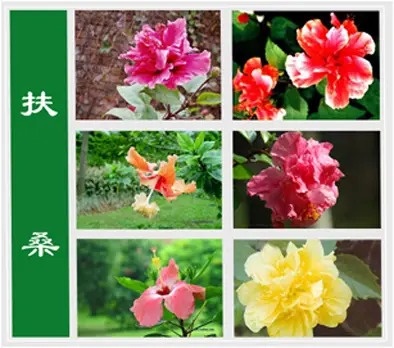
There are numerous varieties of hibiscus, with over 3,000 species worldwide, the most abundant in Hawaii. China has relatively few varieties to date, and they are conventionally classified according to petal size as the first level, flower color as the second level, and flower diameter as the third level. Varieties suitable for garden planting include Small Pink, Mini White, Flower on Flower, Pink Peony, and Pink Xishi, while varieties suitable for potted cultivation include Bright Red.