Copper work, these two littleknown "secrets" are still topics worth studying in the industry!
Without copper, there is no luxury.
If the mortise and tenon joints are the "soul" of a fine, heirloom-quality antique rosewood furniture, and the carving gives it "lifelikeness," then the copperwork is the "finishing touch" that brings its charm to the extreme—using dazzling light to infuse the rustic furniture with a vibrant and noble aesthetic.
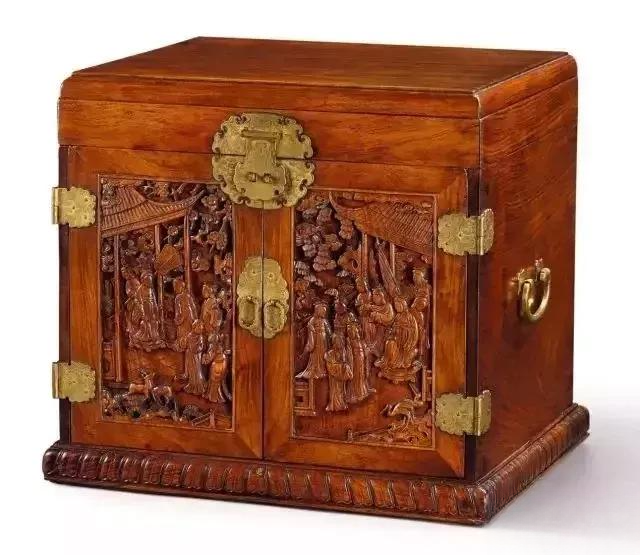
Gustave Eck, the author of "Illustrated Study of Chinese Rosewood Furniture," once praised: "Hardware fittings in Chinese furniture are like gilding decorations in Rococo works. The distribution of these fittings plays a significant role in the beauty of the furniture, and the arrangement of these fittings sometimes seems to utilize the knowledge of the golden ratio."
In traditional Chinese home decoration, copper fittings are widely used. Each gleaming piece of copper fitting is like a star in the night sky, forming a magnificent Chinese painting that slowly unfolds.
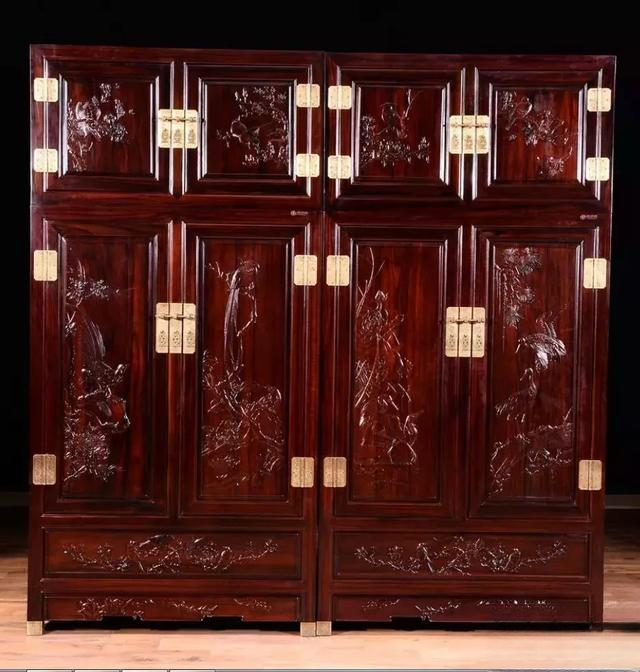
Copper is used in classical furniture.
Just like the ladies adorned with jewelry,
It adds a touch of vibrancy to the rustic, dark wood surface.
It showcases the elegant and noble beauty of the furniture with its antique charm!
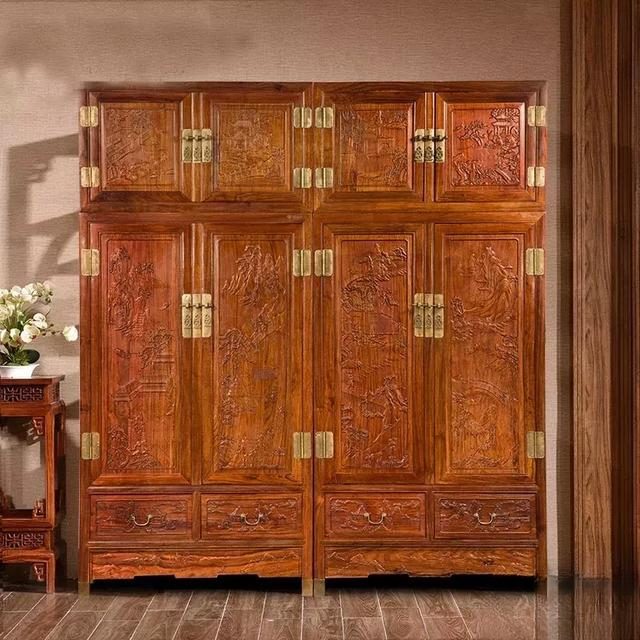
Small brass pieces, profound knowledge
The copper ornaments inlaid on rosewood furniture, besides serving the functions of decoration, sturdiness, and practicality, also have little-known secrets behind them, adding an interesting charm to the inheritance and development of traditional Chinese furniture culture, and are worth appreciating and learning.
Part 1: Reference for Dating Furniture Using Brass Fittings
Those familiar with dating classical furniture probably know that the age of rosewood furniture can be determined by observing its patterns, carvings, patina, components, and traces . However, due to incomplete>
However, compared to large pieces of furniture that have undergone significant changes and are complex to date, dating small pieces of furniture is relatively simple. We can roughly determine the age of the furniture by observing its bronze fittings.
The copper fittings inlaid on small objects, besides serving for reinforcement and decoration, also have significant reference value for dating:
Taking two or three small objects from different eras, made of different materials, and with different shapes as examples, by observing their materials, touching their bronze fittings, feeling their thickness , and making an overall comparative analysis, we can draw the following conclusions:
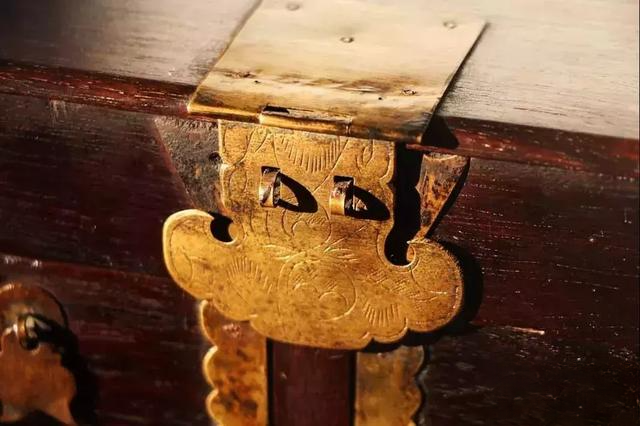
Generally speaking, if the copper fittings are of moderate or relatively thick thickness, the artifact is relatively early in age; conversely, if the copper fittings are thinner, the artifact is relatively later in age . In addition, small cast bronze artifacts are often earlier than those made of wrought bronze, and cupronickel artifacts are often earlier than brass artifacts.
Having seen so many dazzling furniture pieces, have you noticed that most brass fittings seem to be only used as decorations in chests, cabinets, or drawers, while large pieces of furniture such as tables, chairs, and desks rarely feature brass fittings? Why is that?
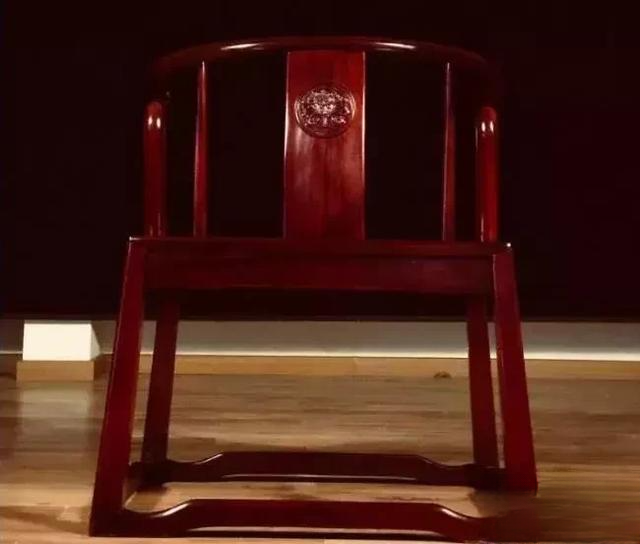
Before exploring this question,
Let's first look at the debate about whether copper fittings were installed at the beginning of the making of the folding chair.
Whether brass fittings were installed when the folding chair was first made is a question that has never been settled in the industry, but it is a topic that is very worthy of research.
II. Were brass fittings installed during the initial production of the folding chair?
This lacquered armchair from the Albert Museum’s collection has no metal fittings other than the eyeliner made of gilded copper plates. Some scholars have suggested that this design was intended to avoid any unnecessary metal ornaments that might detract from the integrity of the decoration and make it less aesthetically pleasing.
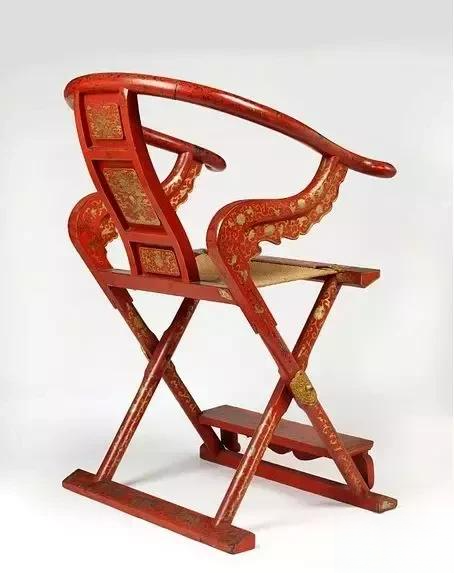
Lacquered Folding Chair in the Albert Museum Collection
This also illustrates that folding chairs can be preserved intact for centuries without relying on metal fittings, simply by their wooden mortise and tenon structure. Their furniture, mostly made of softwood with ramie cloth wrapped and bound beneath the lacquered surface, is remarkably durable. Furthermore, the mortise and tenon joints of hardwood are significantly stronger, offering greater peace of mind. At least at the junction of the round back and the armchair, there's no need for reinforcing metal parts; otherwise, all armchairs would suffer from the same aesthetic problem.
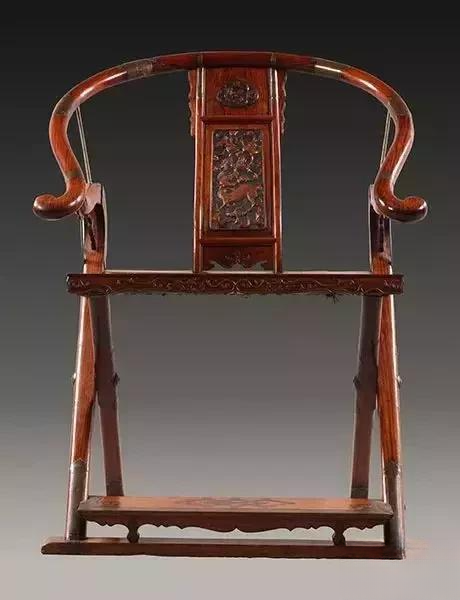
However, all the surviving hardwood folding chairs we see today have metal reinforcements in this area, which obviously makes the initial necessity insufficient. After all, history is full of possibilities, and the metal fittings we see today may have been added by later generations. Like folding chairs, the most vulnerable part of the round-back chair is this joint. Once the round-back chair falls over, the mortise and tenon joints are easy to break, so later generations had to use metal parts for repairs.
In other words,
There are certain intricacies and knowledge involved in the inlay of brass in furniture.
How should it be inlaid?
Which types of furniture are suitable for inlay work?
Under what circumstances should copper fittings be inlaid?
These all fully demonstrate the aesthetic sense and wisdom of the artisans.
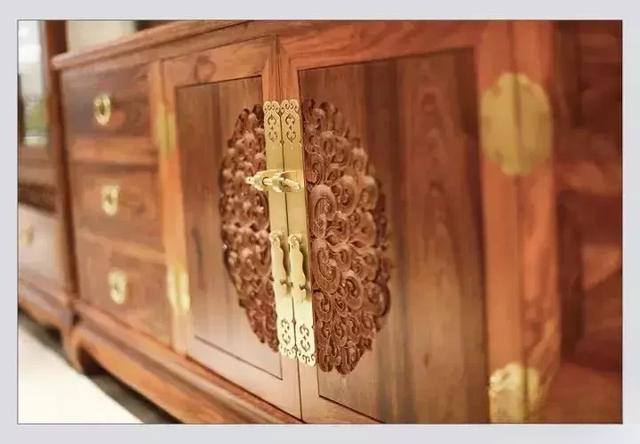
As for why most large pieces of furniture rarely feature bronze fittings, I think everyone has the answer. For the sake of the overall aesthetic effect of classical furniture, if there are too many bronze fittings on some pieces of furniture, it would overshadow the main subject and lose the original charm of the furniture itself.