Comprehensive Guide to Peony Disease Prevention and Control (Worth Saving Forever)
Peonies are generally transplanted in autumn. The first summer after transplanting is often quite difficult, especially for potted peonies. Only after safely surviving the summer can they be considered truly successful. Peonies are prone to various diseases after transplanting, particularly after the flowering period. As temperatures rise, pathogens become more active, and sunlight becomes stronger, often making it difficult for peonies to survive the summer; they may even perish if not careful. While there is considerable information on various peony diseases, there are few pictures, making it less intuitive. Therefore, we have compiled some information for your reference.
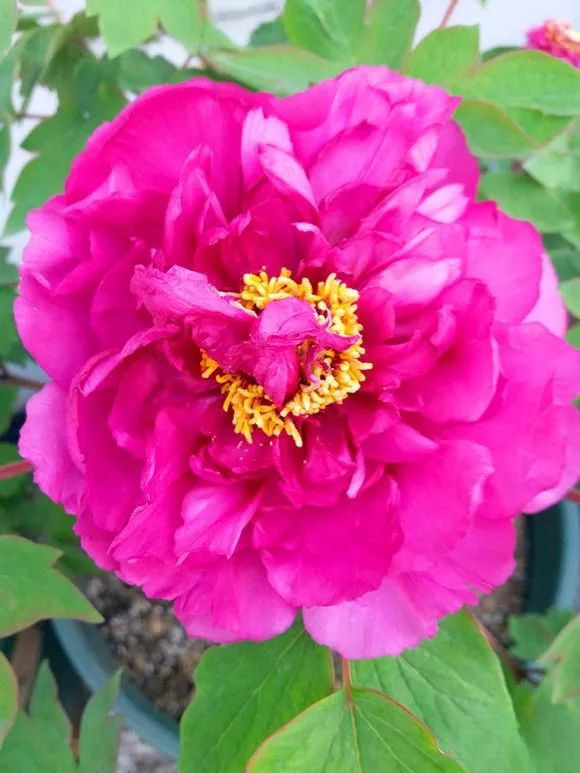
Peonies often fail to survive the summer due to severe root diseases that cause the plants to die.
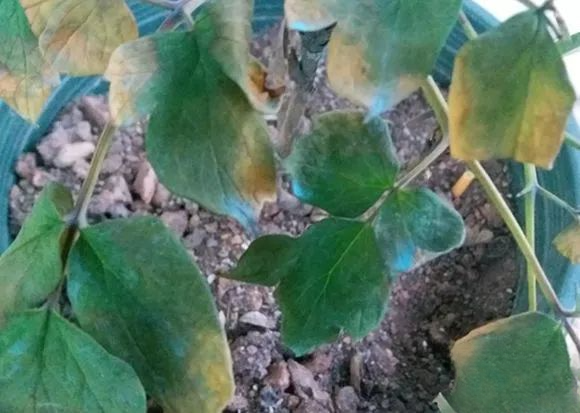
When peony roots are severely diseased, the plant often grows poorly, and the leaf edges and tips turn yellow and become brittle first.
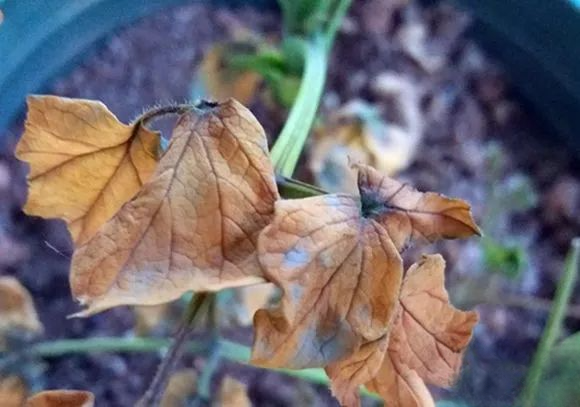
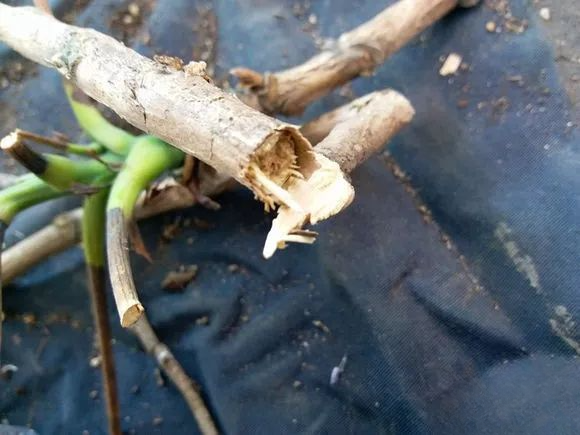
Then the damage spreads to the center of the leaves, eventually causing the entire leaf to wither and fall off. In severe cases, the branches and trunk lose their green color and dry up, leading to the death of the entire plant.
I. Diseases of peony roots and surrounding area
1. Peony root rot
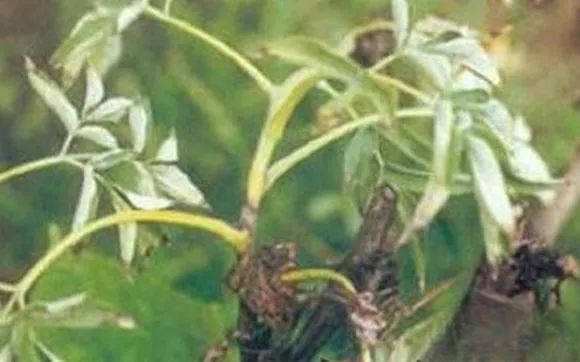 The pathogen of peony root rot is primarily * Fusarium solani *, with other *Fusarium* fungi and * Armillaria mellea* also contributing to the infection. Wounds caused by underground pests facilitate infection . Symptoms
of peony root rot include weakened above-ground growth, loss of chlorophyll, yellowing, and reddish discoloration of leaves, and in severe cases, withering of leaves and branches, even leading to the death of the entire plant.
The disease initially affects the roots, initially appearing yellowish-brown, later turning black. Lesions are sunken, varying in size, and can extend to the pith. The roots turn black, fleshy roots fall off, leaving only tubular root bark. The root system partially or completely rots, turning blackish-brown. In severely affected plants, old roots rot and new roots fail to grow.
The occurrence of peony root rot is closely related to the severity of underground pest infestations. Areas with severe infestations of underground pests such as grubs generally experience more severe root rot. Continuous cropping and the rainy season in southern regions are the most severe conditions.
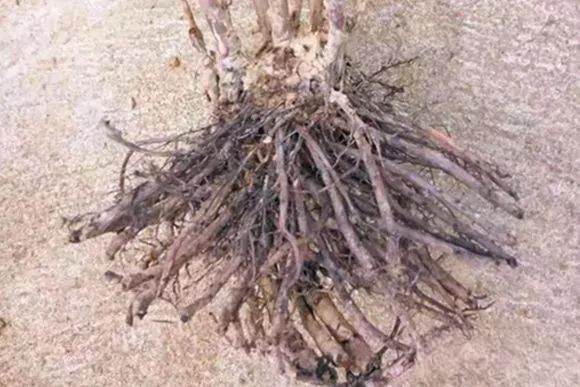
Methods for preventing and controlling peony root rot:
A. Implement crop rotation to avoid continuous cropping and strengthen the control of underground pests.
B. Treat seedlings by pruning diseased and damaged roots, soaking them in a 3000-fold dilution of Greenhen No. 1 ( hymexazol ) for 10-30 minutes, and then drying them before planting.
C. During the growing season, if diseased plants are found, use 2 grams of 5% iprodione or terbufos per plant, 3-5 grams of thiram per plant, or 500-1000 ml of a 3000-fold dilution of Greenhen No. 1 per plant; all have good control effects.
2. White rot disease in peonies
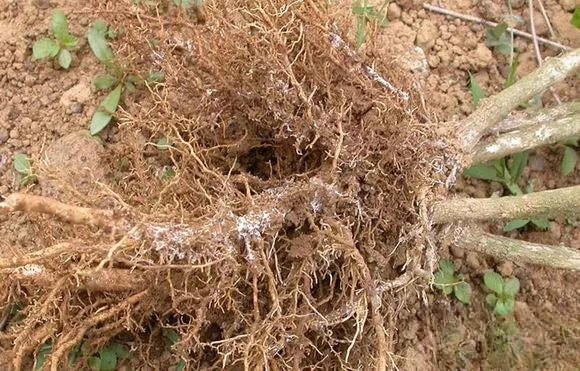
White mold disease of peony is relatively common, mainly affecting the root collar.
Pathogen : *Sclerotium sclerotiorum*.
Symptoms : The disease mainly occurs at the base of the stem near the ground. Initially, the bark of the affected area turns brown, gradually spreading outwards, and producing white, silky mycelium that fans out and spreads to the nearby soil surface. Under moist conditions, round, rapeseed- like sclerotia are produced on the mycelium, initially white, later turning orange-yellow to brown.
After infection, the bark of the stem base and roots rots, blocking the transport of water and nutrients, causing leaves to yellow and wither, eventually leading to the death of the entire plant. The diseased roots are very easy to pull out of the soil.
Disease cycle: In the Yangtze River basin, the disease generally begins in early June, peaks in July and August, and basically ceases after September. The pathogen thrives in high temperature and humidity, with an optimal growth temperature of 30-35℃; growth stops above 40℃. Soil pH of 5-7 is suitable for disease occurrence, while disease incidence is low in alkaline soils. Gardens with rich humus, high nitrogen content, heavy clay soils, and relatively acidic soils have a higher incidence of disease.
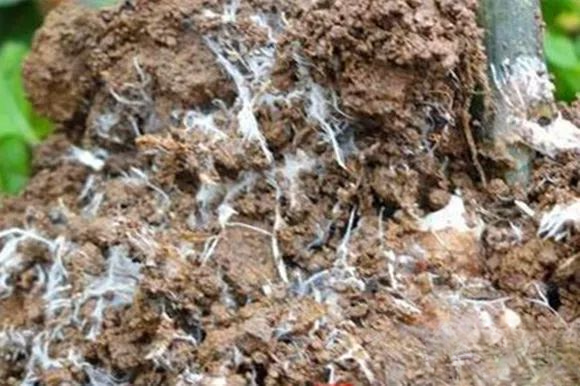
Control methods for peony white mold disease : A. Before planting, soak the plant in a 500-800 times dilution of 70% methyl thiophanate or an 800-1000 times dilution of 50% carbendazim for 10-30 minutes. B. Upon discovering diseased plants, thoroughly scrape off the affected area with a knife, disinfect the wound with 1% copper sulfate solution, then apply a wound-healing and antiseptic film to prevent infection by rotten fungi and protect the wound tissue for healing. Cover with fresh soil. Dig an isolation trench around the diseased plant to seal off the affected area. Simultaneously, irrigate the roots and surrounding soil with a 400 times dilution of 50% mancozeb .
3. Peony with purple-veined feather disease
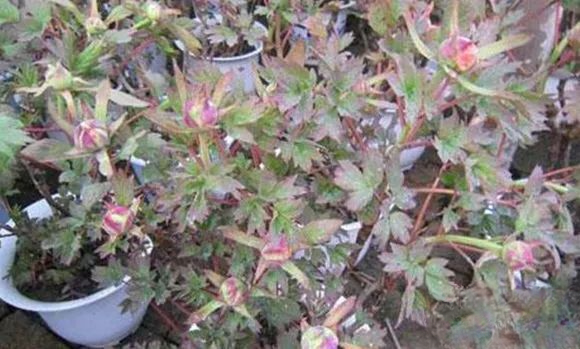
Purple root rot in peonies primarily affects the roots, making it a major root disease.
The pathogen is *Bambusa mulberryensis*. Symptoms include slow leaf development, with delayed leaves appearing dark red and lacking luster. Root examination reveals that the pathogen initially infects young roots, causing rot in the fine roots before spreading to lateral and main roots. The surface of diseased roots displays purplish - red reticulate mycelial bundles , and a purplish-red, downy mycelial layer near the soil surface. The plant exhibits weakened growth, yellowing, or reddish discoloration. The disease has a long infestation period; infected peonies do not die immediately, but may take three to five years or even longer. Affected plants show weakened growth, yellowing, smaller leaves, and alternate flowering (biennial flowering). In severe cases, some branches or the entire plant may die. The cause is the rotting of old roots, preventing new root growth and hindering growth. Once cottony mycelium emerges from the root collar , it indicates that most of the underground root system has rotted, and the plant will quickly die. Surface manifestations of peony purple-striped feather disease
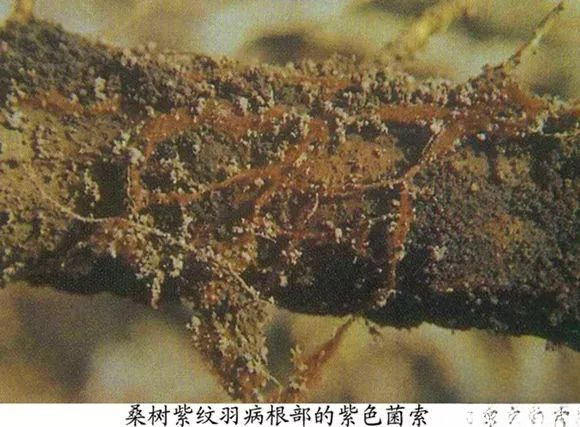 Root manifestations of peony purple-veined feather disease . (Note: Since there are no pictures of peony root diseases, pictures of mulberry root diseases are used for reference. The pathogens are both *Bambusa mulilliformis*.)
Control methods for peony purple root rot : A. Rotate crops every 3-4 years , and avoid direct contact between the roots and fertilizer when fertilizing. B. Remove diseased plants immediately upon discovery. Alternatively, scrape off the rotten parts with a knife, disinfect with 4-5 Baume lime-sulfur solution or 1% copper sulfate solution, and then replant. Disinfect the soil around the diseased plants with lime or sulfur . C. When dividing and replanting in autumn , soak the roots in 20% lime water for half an hour, or 100 times Bordeaux mixture for 1 hour, or 1% copper sulfate solution for 3 hours, then rinse with clean water before planting. D. At the initial stage of the disease, drench the roots with 5% ammonium thiocyanate solution diluted 1000 times, 500-1000 ml per plant.
4. White-striped feather disease in peony
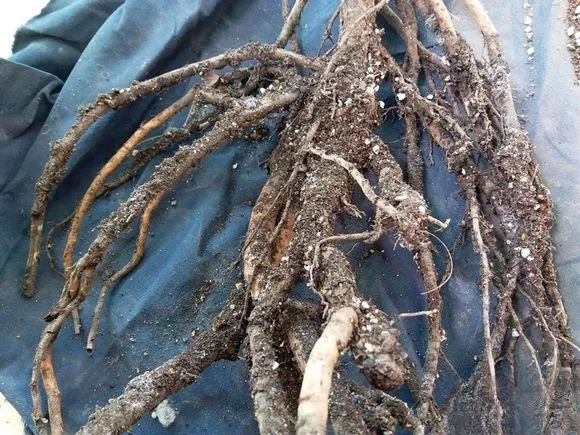
Pathogen of white root rot in peony : *Tetranychus erythropoietinus* Symptoms
of white root rot in peony : The disease first occurs on the fibrous roots , causing them to turn black and rot, and then spreads to the main root and even the root neck. The diseased part rots, and the cortex is easily separated from the xylem . The diseased area is covered by a layer of white feathery mycelium, which turns grayish-brown after contact with air. The mycelium spreads to the ground surface in a spider web pattern. Sometimes small black sclerotia can be seen in the cortex of the diseased root. In the later stage, the epidermis of the rotten root often forms a sheath-like structure, covering the xylem.
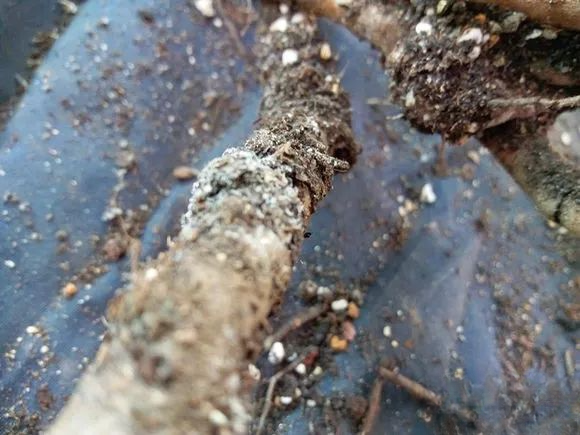 Methods for preventing and controlling white-striped feather disease in peonies : You can refer to the methods for preventing and controlling purple-striped feather disease and white silk disease mentioned above .
5. Peony root rot disease
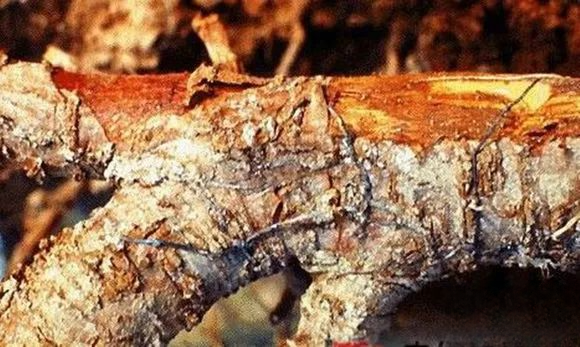
Peony root rot, commonly known as black lumps, mainly affects old and weak plants, causing the roots to rot and turn black.
Pathogen: Armillaria mellea
. Symptoms: Primarily affects the root collar of old and weak plants, spreading up and down the main stem and root . The affected area is water-soaked, purplish-brown, and filled with a white or light yellow fan-shaped layer of mycelium between the cortex and xylem . The diseased tissue has a mushroom odor and may glow green in the dark. The cortex separates or rots in multiple thin flakes, and the xylem decays.
Methods for preventing and controlling peony root rot: The main methods are to promptly remove diseased plants, disinfect the soil , and keep the soil clean. For specific guidance, please refer to the treatment of white rot and purple root rot .
6. Peony root-knot nematode disease
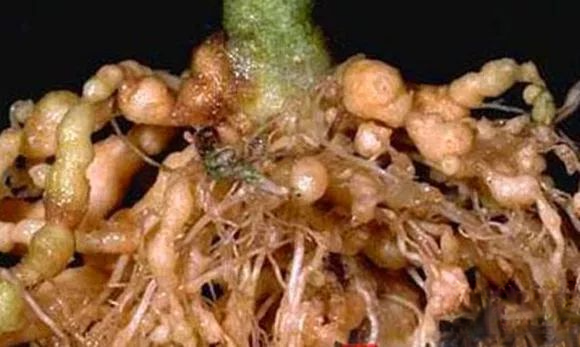
Pathogens of peony root-knot nematode disease : Northern root-knot nematode , peanut root-knot nematode, etc. Symptoms of
peony root-knot nematode disease : Numerous root galls (actually nematode galls ) with a diameter of 1-3 mm grow on the vegetative roots . When cut open, numerous nematode bodies can be seen. The ends of the infected fibrous roots often die. Above-ground symptoms include chlorosis of the leaf margins and premature leaf drop. If the disease occurs year after year, the plant will be stunted, its growth vigor will decline, and the flowers will become smaller or fail to bloom.
Methods for controlling root-knot nematode disease in peony :
(1) Strengthen quarantine. Diseased plants should be dug up and treated with pesticides in a timely manner. They can be soaked in 800 times dilution of 40% methyl isofenphos for 20-30 minutes. The soil around the diseased plants should be deeply turned over and exposed to the sun, or the soil should be disinfected . (2) Use nematicides such as Nemacur , Rugby, Mocap , Basamid, Vydate, and Miral for control.
II. Diseases of Peony Leaves, Stems, and Flowers
7. Gray mold of peony
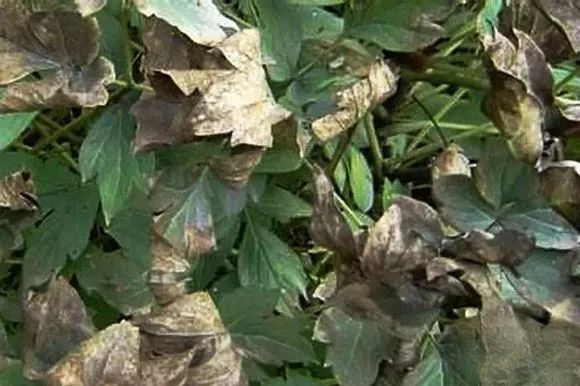
The pathogens of gray mold in peonies are Botrytis cinerea and Botrytis griseus . They primarily affect leaves, petioles, stems, and flowers.
Symptoms of gray mold in peony : There are two types of symptoms.
One type presents as nearly circular or irregular leaf spots, mostly occurring at the leaf tips and margins , appearing brown or purplish-brown with irregular concentric rings. In humid weather, gray mold, which are the conidia of the pathogen, grows . Stem spots are brown and soft-rotten; when the base of the stem is affected, the plant may collapse. When flowers are affected, the petals turn brown and rot. Sometimes, black granular sclerotia are produced at the lesions.
The second symptom is the appearance of brown spots on the leaf edges, causing brown concentric rings and wrinkles along the leaf margins. The petioles and flower stalks soften and rot, and the outer skin decays. Infection of the flower stalks affects seed maturation . Control methods for peony gray mold :
A. Diseased leaves and withered buds should be removed immediately. In autumn, dead branches and fallen leaves should be collected and buried deeply or burned; they should not be used for compost or root protection. Ensure good ventilation and light penetration; avoid planting too densely.
B. Before planting, the plants can be soaked in a 300-fold dilution of 70% wettable mancozeb powder for 10-15 minutes.
C. For soil treatment, mix equal amounts of 70% pentachloronitrobenzene wettable powder and 70% mancozeb , and apply 8-10 grams per square meter.
D. In the early stage of the disease, spray with 80% zineb at 800-1000 times dilution, or 50% iprodione or acetamiprid wettable powder at 1500 times dilution, once every 10-15 days, for 2-3 consecutive times.
8. Powdery mildew in peonies
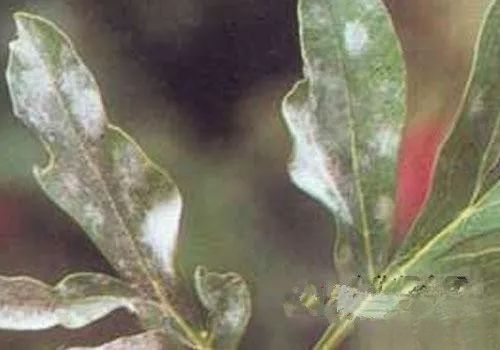
There are two pathogens causing peony powdery mildew: *Paeonia lactiflora* and *Polygonum hydropiper*.
Symptoms of peony powdery mildew : Initially, white mold spots appear on the leaf surface or stems between leaves, later spreading to both sides of the leaves and petioles to form a dirty white powdery layer. In later stages, many small black dots, the cleistothecia of the pathogen, appear scattered on the powdery layer. When *Polygonum powdery mildew* infests peonies, the leaves and petioles are covered with a thin layer of white powder, often circular in shape. Later, small black granules, the cleistothecia of the pathogen, appear within the powdery layer. In severe cases, the lesions turn yellow and the leaves easily fall off. Control methods for
peony powdery mildew :
A. During the winter dormancy period, spray with lime sulfur solution with a Baume degree of 2-3 to kill the mycelium in the buds.
B. In the early stage of the disease, spray with 20% triadimefon at a dilution of 600 times, once every half month, for a total of 2 sprays.
C. In severe cases, spray with Amistar ( a suspension composed of 20% azoxystrobin and 12.5% difenoconazole ).
9. Peony black spot disease
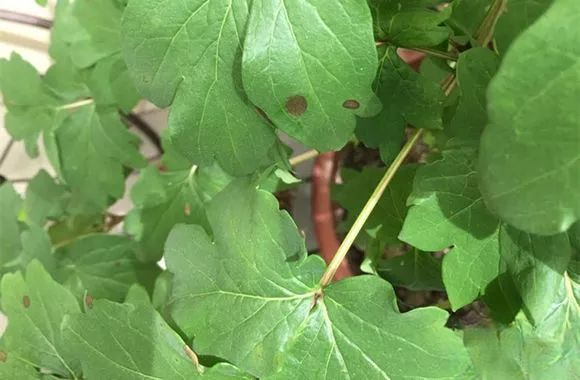
Peony black spot disease primarily affects the leaves. The pathogen causing
peony black spot disease is a fungus called Alternaria .
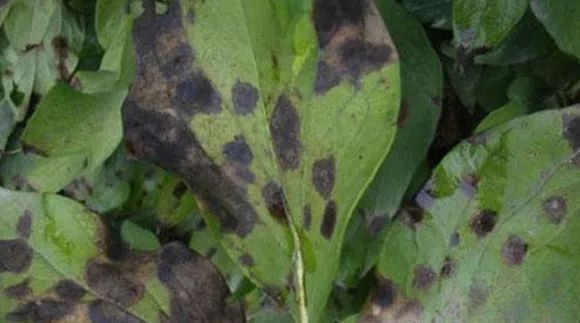 Symptoms of peony black spot disease : In the early stage of the disease, nearly circular lesions of 5-10 mm appear on the leaf surface or petiole. The lesions are grayish-black with concentric rings and a slightly grayish-white center. The lesions on the leaves expand slowly. The disease occurs in August and September. When the humidity is high, a black mold layer appears on the diseased parts. Weak plants and lower leaves are more susceptible to the disease. Moisture retention or the rainy season promotes its spread.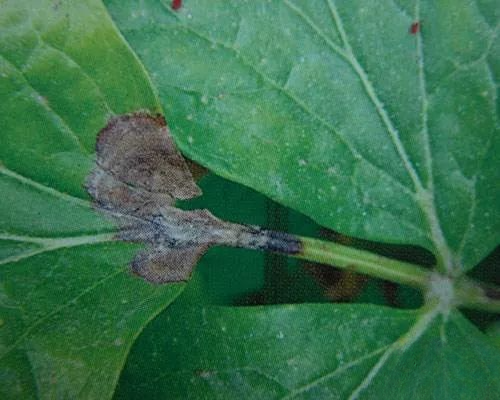
Methods for preventing and controlling black spot disease in peonies :
A. Remove diseased and damaged plant parts, either by burying them deeply or burning them, to reduce the initial source of infection.
B. Drain water promptly after rain to prevent moisture retention, and simultaneously spray with a 500-800 times dilution of 70% mancozeb wettable powder for prevention.
C. After the onset of the disease, you can spray difenoconazole or flusilazole .
10. Peony red spot disease
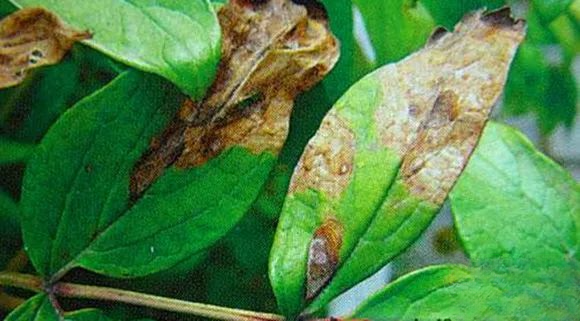
Pathogen: Cladosporium paeonii
Symptoms of peony red spot disease : This disease primarily affects the leaves, but can also infect petioles, young leaves, and branches. In the field, the disease typically begins to appear in May, with peak incidence occurring in July and August when rainfall and humidity are high. The lower leaves are usually infected first, initially developing light brown, pinpoint spots on both the upper and lower surfaces. These spots gradually enlarge into circular, nearly circular, or irregular lesions of varying sizes. The upper surface is purplish-brown, while the lower surface is chestnut-brown, with alternating light and dark brown concentric rings. Under humid conditions, a dark green to dark brown mold layer ( conidiophores and conidia of the pathogen) can develop on both sides of the lesions. The expansion of lesions is not limited by leaf veins , and several lesions often merge to form large, irregular patches, causing leaf death. When petioles and young branches are affected, small, brown, circular spots initially appear, expanding into elliptical shapes with a lighter center. In severe cases, many spots merge into one large patch. Under humid conditions, a mold layer also develops on the affected area, often leading to the death of the young branches.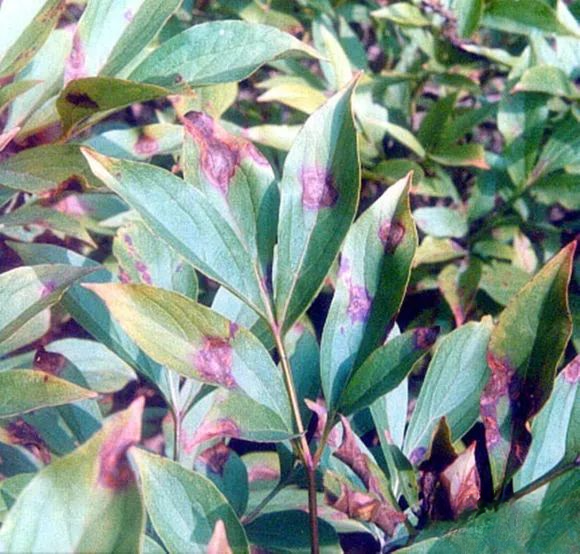
Control methods for peony red spot disease:
A. In autumn and winter, thoroughly remove fallen leaves and diseased branches from the field, and spray the ground with 3°Be lime sulfur mixture or 40% carbendazim suspension at a dilution of 500 times.
B. In early spring, before the plants sprout, spray once with lime sulfur mixture at 3-5 Baume degrees to kill overwintering fungi on the stumps; after the leaves unfold, spray 1000 times dilution of 50% carbendazim solution 3-4 times, once every 10-15 days; in the early stage of disease, alternate between carbendazim and zineb.
C. In severe cases, spray with amyxin or difenoconazole.
11. Anthracnose in peony
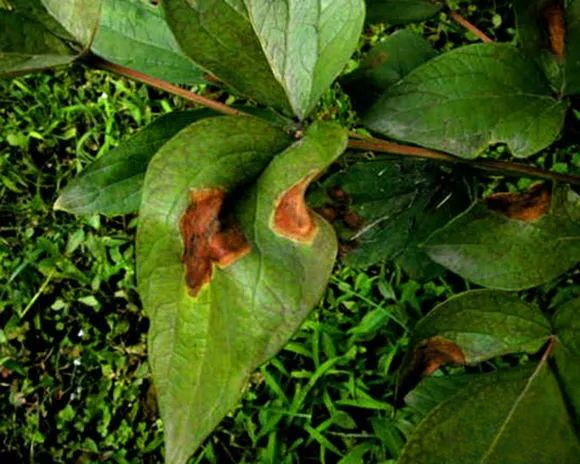
Anthracnose is a common disease of peonies, and it is easily triggered in hot, humid, and poorly ventilated environments. The pathogen causing peony anthracnose is anthracnose fungus. Symptoms of peony anthracnose mainly affect leaves, flower stalks, petioles, and young branches. When leaves are infected, small brown spots initially appear, gradually expanding into nearly circular to irregular large spots, generally 4-25 mm in size. Spots occurring at the leaf margins are semi-circular. The expansion of the spots is limited by the midrib and large lateral veins. The spots are mostly brown, with some varieties showing grayish-white centers and yellowish-brown edges. Later, the center of the spot cracks, sometimes forming perforations. In July and August, small black dots arranged in concentric rings appear on the spots; these are the conidiophores of the pathogen. Under humid conditions, reddish-brown spore masses appear on these black dots. The spots eventually crack and perforate.
When it infects the stem, it appears as oval lesions. Diseased stems often twist or break. Young stems will die quickly if infected. Damage to buds and petals often causes young buds to wither and flowers to become deformed.
Prevention and control methods for peony anthracnose:
A. In early spring, spray with lime sulfur solution at 3 Baume degrees or a 600-
fold dilution of 50% carbendazim to kill pathogens on the plants and ground. Ensure good ventilation and timely drainage during the rainy season. B. At the initial stage of disease, spray with a 500-fold dilution of 70% mancozeb or a 500-fold dilution of 65% zineb. Repeat every 10-15 days, for a total of 2-3 applications.
C. When the condition is more severe, difenoconazole can be sprayed.
12. Peony ring spot disease
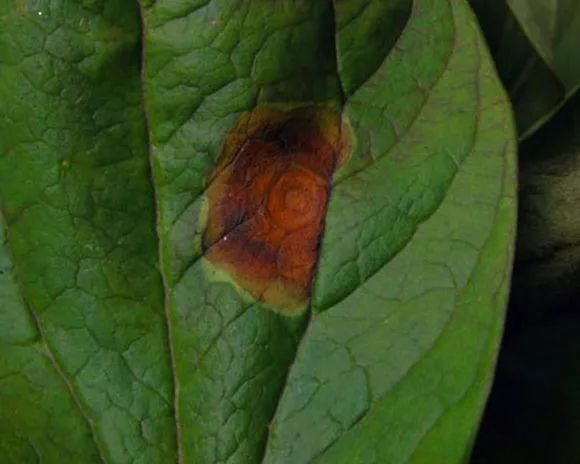
Peony leaf spot disease primarily affects the leaves and is spread by wind and rain, with severe outbreaks occurring during the rainy season.
The pathogen of peony leaf spot disease is *Pseudomonas mellea*.
Symptoms of peony leaf spot disease: Initially, small pale yellow spots appear on the leaves, gradually enlarging into round or nearly round spots, 4-10 mm in diameter. These spots are numerous, light brown to grayish-white with brown edges. Older lesions show distinct concentric rings, and grayish-black mold, the fruiting bodies of the pathogen, grows in the center of the lesions. In severe cases, the disease spreads to all leaves of the plant, causing extensive leaf scorch.
Prevention and control methods for peony ring spot disease:
A. Around the beginning of November (before the start of winter), sweep up fallen leaves from the ground and burn them to kill pathogens;
B. Before the onset of disease (in May), spray with Bordeaux mixture at a dilution of 1:160, once every 10-15 days until the end of July;
C. In the early stage of disease, spray with methyl thiophanate or carbendazim at a dilution of 500-800, once every 7-10 days, for 3-4 consecutive times.
13. Peony rust
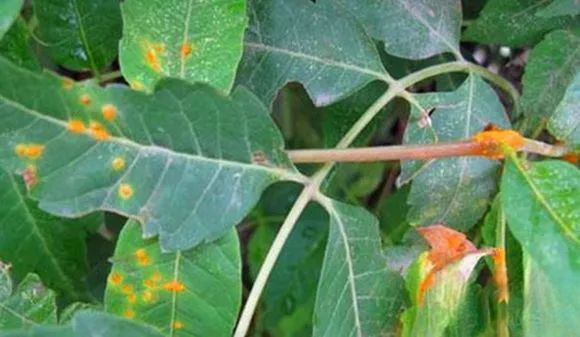
Peony rust pathogen: *Pseudomonas pineae* rust fungus.
Peony rust symptoms: Peony rust begins to appear during the flowering period, with no obvious symptoms in the early stages of leaf infection. Symptoms mainly appear in June, at which time nearly circular or irregular brownish-green lesions appear on the leaves, with orange-yellow granular uredinia on the underside. Yellow powdery spores are released after the epidermis ruptures. In the later stages of infection, dark brown, bristly teliospores cluster on the grayish-brown lesions on the underside of the leaves. In severe cases, the leaves gradually wither and die prematurely.
Peony rust control methods:
A. Promptly remove and destroy diseased plants. When planting, choose a high-lying, well-drained location, away from pine forests (at least 5 kilometers away).
B. Spray with a 65% zineb solution at a dilution of 500-600 times before disease onset.
C. After disease onset, spray with a 97% sodium chlorate solution at a dilution of 250-300 times or a 25% wettable powder of triadimefon at a dilution of 2000-2500 times.
14. Peony Virus Disease
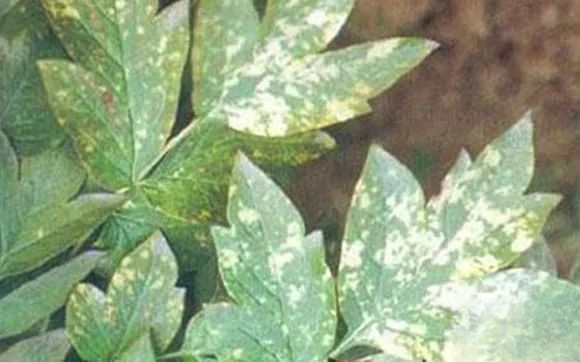
Peony virus diseases have different pathogens, resulting in different symptoms. There are three types:
(1) Peony
ring spot disease, also known as mosaic disease, is widely distributed. This disease is transmitted by aphids. It does not have a significant impact on plant growth.
Pathogen: Peony ring spot virus
Symptoms: After being affected, the leaves develop concentric circular spots with alternating dark green and light green markings, and small necrotic spots.
(2) Danlunwen poisoning
Pathogen: Tobacco brittleness virus
Symptoms: Can be transmitted by nematodes, seeds, etc. In the early stage, pale yellow chlorotic ring spots appear on the leaves. As the lesions become more obvious, they generally produce ring spots or concentric circles of varying sizes on the leaves. Sometimes they are irregular lesions. Affected plants are stunted.
(3) Peony leaf curl disease
Pathogen: Leaf curl virus
. Symptoms: Can be transmitted through grafting; infected plants are significantly stunted, with a height only half that of normal plants; flowering branches are bent; leaves are curled; branches are thin and weak. The plant will not flower in the second year after infection.
Methods for preventing and controlling peony virus diseases:
A. If aphids are found, take immediate action to control them.
B. Remove diseased plants, either by burying them deeply or burning them.
C. Spraying with 7.5% carbendazim aqueous solution, or 20% virus A wettable powder at a dilution of 500 times, or 5% bactericide aqueous solution at a dilution of 200 times, yields good results.
When peony roots are severely diseased, the plant often grows poorly. The leaf edges and tips turn yellow and become brittle first, then the yellowing spreads to the center of the leaf, and finally the entire leaf withers and falls off. In severe cases, the branches and trunk lose their green color and dry up, and the entire plant dies.
15. Peony yellow spot disease
Peony yellow spot disease primarily affects the leaves of peonies. Its conidia are spread by wind and rain, causing serious damage to peony growth.
Pathogen: *
Aureobasidium speciosum*. Symptoms: Lesions are round or nearly round, light yellowish-brown to yellowish-brown, with purplish-red edges, 3-5 mm in diameter. Later, small black dots, the conidiophores of the pathogen, appear scattered on the lesions. It occurs most frequently from early May to early July, spreading rapidly during the summer due to rainwater.
Methods for preventing and controlling peony yellow spot disease: Refer to the methods for preventing and controlling peony red spot disease on post #31.
16. Peony coelomic leaf spot disease
Peony leaf spot disease, caused by
*Coelophysis peonyis*, can affect both leaves and branches. Pathogen: *Coelophysis peonyis
*. Symptoms: On leaves, lesions are round, oblong, or irregular in shape, with relatively clear edges, 10-35 mm in diameter, yellowish-brown to dark brown, often with concentric rings of yellowish-brown to dark brown. In humid weather, small orange-red or reddish-brown granules, which are conidial masses of the pathogen, can be seen on the affected areas. Older lesions may rupture, but the affected leaves generally do not fall off. When branches are affected, irregular lesions form with a grayish-white center and dark brown edges.
Methods for controlling peony leaf spot disease: Refer to the methods for controlling peony red spot disease on post #31.
17. Peony leaf spot disease
Cladosporium leaf spot disease of peony is a newly discovered disease in peonies.
Pathogen: Cladosporium paeonii.
Symptoms: In the early stages, the lesions are dark brown, single, round, with distinct water-soaked edges. Later, the lesions merge and gradually expand into irregular shapes. The upper surface of the leaf is dark brown, and the lower surface is light brown. Under high humidity, white mycelium appears on the lower surface of the leaf.
Methods for controlling leaf spot disease of peony plants: Refer to the methods for controlling red spot disease of peony plants in post #31.
18. Sclerotinia sclerotium (stem rot) of peony
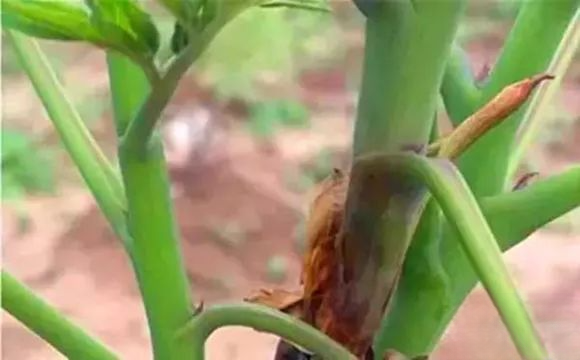
Sclerotinia sclerotiorum, also known as stem rot, primarily infects the stems and leaves, causing serious damage.
The pathogen of sclerotinia sclerotiorum is *Sclerotinia sclerotiorum*
. Symptoms of sclerotinia sclerotiorum include water-soaked spots on the stems near the ground, which gradually expand and rot, producing a white cottony substance. Black, rat-dung-like sclerotia are present both inside and outside the diseased stems. It can also infect leaves and flower buds. Rainy and humid climates, excessive soil moisture, and poor ventilation all increase the risk of this disease.
Methods for preventing and controlling sclerotinia stem rot in peony:
A. Remove diseased plants and disinfect the soil around them.
B. Spray with 50% benomyl or 70% thiophanate-methyl at the initial stage of the disease, once every 7-10 days, for continuous application.
19. Peony stem blight
The pathogen of peony stem blight is *Micrococcus scutellatus*.
Symptoms of peony stem blight: Rotting occurs at the base of the stem; newly emerging buds first appear water-soaked, then turn brown, and remain on the branch for a considerable time. Petals dry out and become brittle. Once infected, the plant quickly dries up and dies because the rotting stem base cuts off the plant's water supply.
Methods for preventing and controlling peony stem blight: Once diseased plants are discovered, they should be promptly removed and destroyed, and the soil around the diseased plants should be disinfected.
III. Physiological Diseases of Peony
20. Iron deficiency yellowing disease in peonies
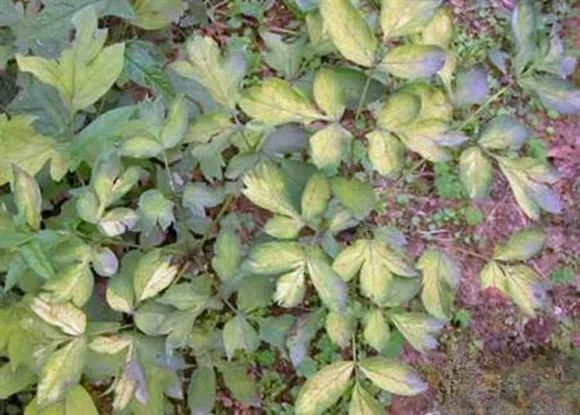 Iron deficiency chlorosis in peonies is a relatively common physiological disorder.
Symptoms of iron deficiency chlorosis in peonies include: initially, the leaf tissue turns yellow while the veins remain green; in severe cases, the yellowed parts of the leaves die, the branches become weak, and flowering is difficult or the flowers are small.
Iron deficiency chlorosis in peonies is caused by iron deficiency. Iron is an essential element for chlorophyll formation. When the soil lacks absorbable iron, chlorophyll formation is inhibited, leading to yellowing leaves. This is especially true in alkaline or saline soils, and in dry soils. This is because iron is not easily absorbed in alkaline soils. Newly unfolded leaves are still green, but as new shoots enter their rapid growth phase, their iron requirements are high. Insufficient iron supply in the soil at this time easily leads to iron deficiency chlorosis, particularly noticeable on the leaves at the tips of new shoots. In severe cases, all the upper young leaves turn yellow.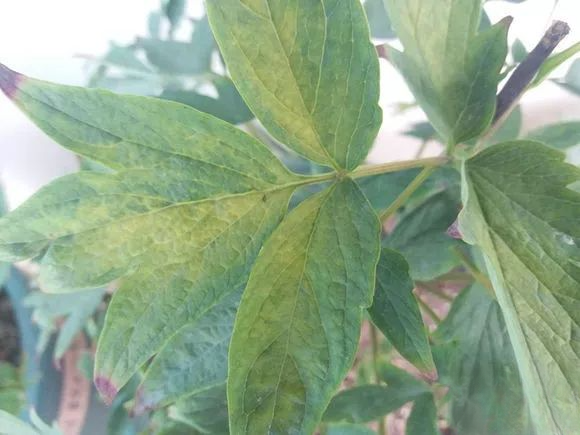
Methods for preventing and controlling iron deficiency chlorosis in peonies:
A. The soil pH should not exceed 7.3, and the site should not be low-lying or damp.
B. Adding a suitable amount of ferrous sulfate to organic fertilizer can increase iron activity.
C. Spray mildly diseased plants with a 0.1-0.2% ferrous sulfate solution 3 to 5 times.
D. Peony plants should be provided with partial shade and should not be exposed to direct sunlight.
21. Peony sunscald
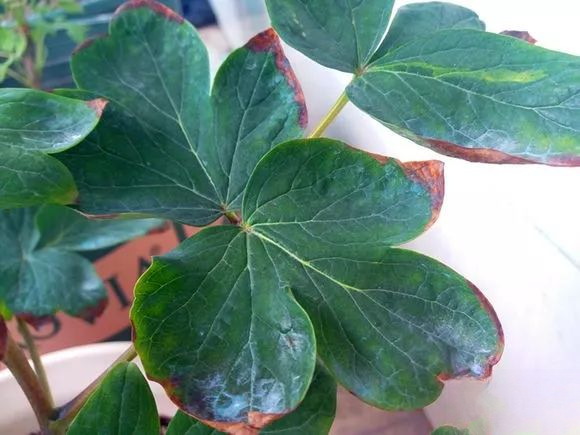
Peony sunscald is a physiological disease that primarily affects the leaves. Severe cases can lead to the entire plant losing its leaves, hindering peony growth and development.
Symptoms of peony sunscald include: leaf tips initially losing their green color, turning gray, with edges curling upwards, and gradually becoming scorched. In severe cases, all leaves on the entire plant become scorched and fall off, causing "autumn scalding," which significantly impacts the peony's later growth. The difference between sunscald and other leaf diseases is that sunscald initially shows no mold or lesions on the leaves, but mold may appear after drying in high humidity, indicating secondary infection by other pathogens.
Control methods for peony sunscald:
A. Peonies are best planted in locations with lateral shade. If possible, erect a shade net 1.2-1.5 meters above the plant, unfolding it after 10:00 AM and dismantling it after 5:00 PM.
B. Water promptly before soil dryness and the onset of high temperatures to replenish the water needed for leaf transpiration. Watering only after sunscald occurs can mitigate the damage, but it cannot restore already affected leaves to normal.
C. Actively prevent and control root diseases to ensure the roots can properly transport water to the leaves.
Generally, once a peony has been transplanted, it is easier to manage after the first summer.
There are many reasons why seedlings may not survive the summer, but the key lies in the roots. For example, some seedlings may not show any problems on the surface when they arrive, but they may actually carry root pathogens.
For example, some varieties from the north hardly grow any new roots in the first year after being introduced to the south, causing difficulties in the supply of water and nutrients.
For example, the abundant rainfall in the south can cause root rot, etc.
END