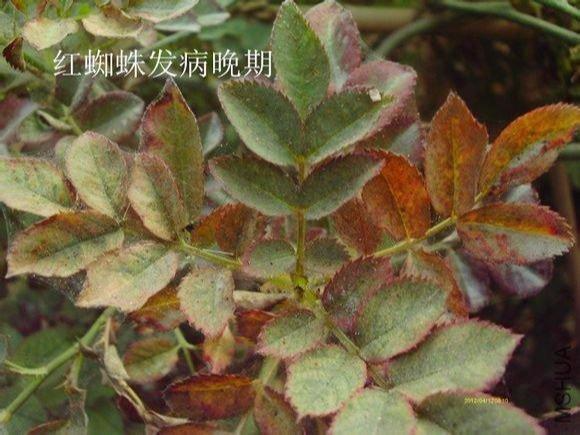
Common rose diseases and pests, illustrated with their control methods (with pictures), you can learn more about them.
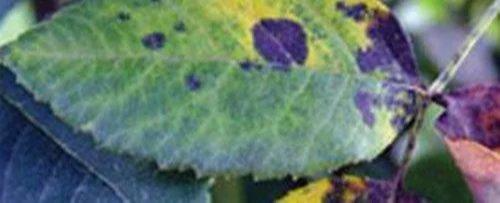
Rose black spot disease mainly affects the leaves of roses, and in severe cases it can cause all the leaves of the entire plant to fall off. It is one of the most serious diseases that damage roses.
Pathogen and symptoms of rose black spot disease:
This pathogen belongs to the Deuteromycetes, Order Melanopsiales, and genus Actinobacillus. The conidia are oblong-ovoid or elliptical, two-celled, colorless, slightly constricted at the septum, and can break into two cells. This disease is a global and very common one, causing extremely severe damage during the main growing season. It can occur on leaves, flowers, and new shoots. Initially, black spots of varying sizes appear on the leaves, with radiating brown mycelial lines and small black dots (conidiophores) beneath the cuticle. These spots later enlarge and turn yellowish-brown or dark purple, eventually becoming grayish-brown. In severe cases, new shoots die back, and all the lower leaves of the plant fall off, leaving the plant bare.
Methods for preventing and controlling rose black spot disease:
1. Special attention should be paid to removing fallen leaves and dead branches in winter, and spraying with lime sulfur mixture. Diseased leaves and branches should be thoroughly pruned and burned to reduce sources of infection.
2. Strengthen cultivation management in normal times, apply more phosphorus and potassium fertilizer to improve the plant's disease resistance. During the disease period, spray water as little as possible. If necessary, spray only in the morning when the weather is sunny and the temperature is rising, and avoid watering the leaves for a long time.
3. In the early stage of the disease, spraying with 50% carbendazim wettable powder at a dilution of 1000 times; or spraying with 50% mancozeb at a dilution of 1000 times; or spraying with 70% thiophanate-methyl wettable powder at a dilution of 1000 times are all effective.
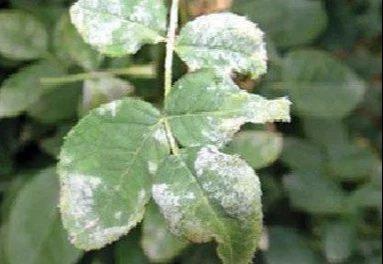
Powdery mildew of roses occurs from May to September each year, and the symptoms are quite obvious, making it relatively easy to identify and control.
Powdery mildew pathogen and symptoms in roses:
Powdery mildew fungus belongs to the subphylum Ascomycota, order Erysiphales, and genus *Dictyophora*. The cleistothecia contain one colorless, oval-shaped ascospore, each containing eight unicellular, colorless ascospores. These are asexual conidia. The disease primarily affects young shoots, leaves, and flowers. A white powdery substance appears on infected areas, which is the most obvious symptom. Initially, chlorotic yellow spots appear on leaves, later developing into white spots on the underside of the leaves, gradually expanding into irregular shapes. In severe cases, the white spots merge. Young shoots curl and wrinkle. Flower buds are covered with a white powdery substance, resulting in deformed flowers. The powdery layer on petioles and prickles is thick and difficult to remove, causing leaf drop and preventing flower buds from opening.
Methods for controlling powdery mildew in roses:
1. Remove diseased leaves and buds in autumn and winter, and prune diseased buds, branches, and leaves in early spring, and bury or burn them. Improve cultivation conditions, increase ventilation and light penetration, and apply less nitrogen fertilizer and more phosphorus and potassium fertilizer.
2. Spray with 5% sulfur mixture before sprouting; at the initial stage of disease, spray with 1500 times dilution of 25% wettable powder of triadimefon; or spray with 1000 times dilution of 70% wettable powder of methyl thiophanate; or spray with 1000 times dilution of 15% wettable powder of triadimefon; or spray with 0.02-0.03% potassium permanganate solution.
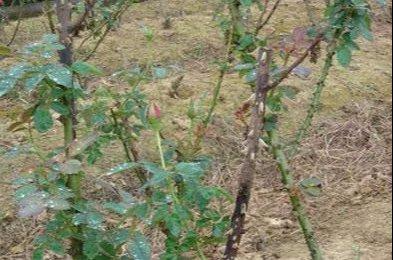
Rose blight mainly affects the branches and trunks of roses, and in severe cases, it can cause the branches to wither and die, so it needs to be carefully prevented.
Pathogen and symptoms of rose twig blight:
This pathogen belongs to the Deuteromycetes, Order Spheroplastes, and genus *Cladosporium*. The conidiophores are borne within the stroma, initially embedded under the host's septum epidermis, later breaking through the epidermal opening. The conidiophores are flattened triangular flask-shaped, unicellular, and colorless, producing septa upon maturity. This disease primarily affects rose branches and trunks, causing cankerous lesions. Initially, these are small red spots that enlarge and darken, turning brown at the center. In later stages, the lesions become sunken and crack longitudinally, with black spots appearing at the center. Black spore masses emerge in moist conditions. In severe cases, the lesions girdle the stem, causing the branches below the affected area to wither and die.
Methods for controlling rose twig blight:
1. Thoroughly prune and burn diseased and dead branches in autumn and winter. Strengthen cultivation management and apply sufficient base fertilizer. During the growing season, spray with a 0.13% urea solution to enhance plant growth.
2. Spray with lime sulfur mixture during dormancy; spray with 25% carbendazim wettable powder at 600 times dilution in May-June; or spray with 50% thiophanate-methyl wettable powder at 1000 times dilution; or spray with 50% chlorothalonil wettable powder at 500 times dilution.
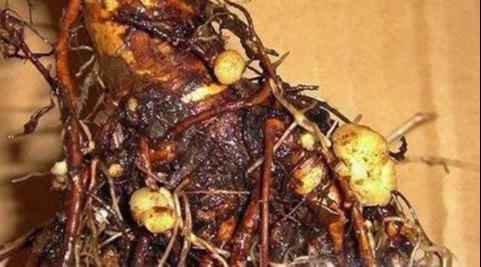
Rose root gall disease is caused by nematodes and manifests as white, gall-like growths on the roots. It has a long residual period and causes significant damage.
Pathogen and symptoms of rose root gall disease:
The pathogen of this disease is *Nematodea fasciculata*, whose eggs are oblong, slightly curved laterally, and clustered within the female adult nematode, forming a fascicle. The larvae and males are thread-shaped; the females are pear-shaped, swelling and breaking through the root cortex to become the white, wart-like growths seen on the roots. Young warts are white and elastic, later hardening. The surface of the tumor is rough, brown or dark brown, and in severe cases, the warts can extend above the ground. Roses with warts exhibit poor growth, yellowing leaves, reduced root numbers, and a significant increase in the number of warts.
Methods for controlling rose root gall disease:
1. Before planting, soak the roots of the plant in a 500-1000 times dilution of concentrated streptomycin for 10 minutes.
2. When grafting, sterilize the grafting knife with high temperature or disinfect it with alcohol to prevent nematodes from entering through the wound.
3. Apply a mixture of methanol, glacial acetic acid, and iodine tablets (50:25:10) to the affected area; or apply a mixture of sodium dinitrophosphate powder and wood alcohol (20:80) to the affected area to make the tumor disappear.
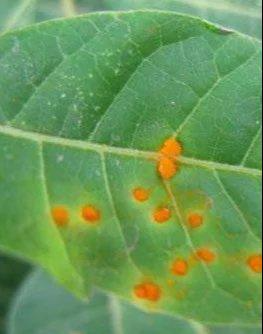
Rose rust mainly affects buds and leaves, and the disease is more severe in years with abundant and even rainfall.
Rose rust pathogen and symptoms:
This pathogen belongs to the Basidiomycota, Rustales order, and *Polycystis* genus. It is a syn-host rust fungus that produces five types of spores. Rust conidiophores accumulate as orange-red powder on the underside of leaves, surrounded by paraphyses, and are naked. Rust spores are borne in chains; urediniospores are clustered, surrounded by club-shaped paraphyses; teliospores are black and scattered, naked. Rust disease affects the buds, leaves, young branches, petioles, receptacles, and pedicels of roses. It mainly occurs on buds and leaves. In spring, during budding, the base of diseased buds swells, and numerous orange-red powdery substances grow within 1-3 layers of scales, resembling small yellow flowers; some buds become bent and deformed, and die after 15-20 days. When young leaves are infected, clusters of small yellow dots of conidiophores first appear on the upper surface, later forming orange-red conidiophores on the underside. Axillary buds infected in autumn often die after overwintering.
Methods for controlling rose rust:
1. Remove diseased buds promptly. Check from late March to early April and remove any diseased buds immediately. Generally, the disease rate is less than 0.5%, and removing them will prevent the spread of spores.
2. Spraying once or twice before the two peak disease periods in early April or late August can control disease development. Suitable pesticides include 50% chlorothalonil at a dilution of 600 times; or 50% thiophanate-methyl at a dilution of 500 times; or 50% thiram at a dilution of 500 times; or 25% triadimefon wettable powder at a dilution of 1500 times. Alternatively, spray with lime sulfur mixture before spring budding; or spray with lime sulfur mixture mixture at a dilution of 0.2% at the initial stage of disease.
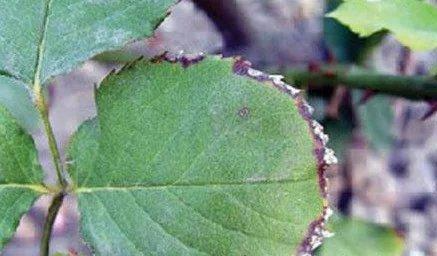
Gray mold is one of the most damaging diseases to roses, and it is more likely to occur in humid environments.
Symptoms of gray mold in roses:
When this disease occurs on leaf margins and tips, it initially appears as water-soaked, light brown spots, smooth and slightly sunken, which later expand and rot. When flower buds are infected, the lesions turn grayish-black, preventing the flower from opening; infected buds turn brown and wither. When flowers are affected, some petals turn brown, wrinkle, and rot. Gray mold also infects the tips of branches after flowering; the black lesions can extend several centimeters below the infection point. In warm, humid environments, the gray mold layer can completely cover the infected area.
Methods for controlling gray mold in roses:
1. Remove diseased parts promptly to reduce the source of infection. Withered rose petals should also be pruned in a timely manner.
2. The greenhouse should be properly ventilated to prevent excessive temperature differences between day and night and excessive humidity. There should be adequate space between each rose pot. When watering, pour water into the pot from the rim, avoiding water retention on the leaves and flowers. Cutting flowers on a sunny day allows the wounds to heal more easily.
3. Chemical control: Spray protective agents at the onset of disease. When using Bordeaux mixture at a 1:1:100 dilution, spray once every two weeks.
4. Spraying method: Use 50% iprodione wettable powder at a dilution of 2000 times, or 50% procymidone (iprodione) wettable powder at a dilution of 1000-1500 times, or 50% thiophanate-methyl (methyl thiophanate) wettable powder at a dilution of 500 times, or 50% carbendazim at a dilution of 500 times, or 70% mancozeb at a dilution of 500 times, spraying once every 7-10 days, for 2-3 consecutive times. Each spray should be no less than 50-60 kg of solution per 67 m². The preventative effect of the above-mentioned agents is better than the curative effect, and attention should be paid to alternating the use of agents to prevent the development of drug resistance.
When cultivating roses in greenhouses, the following application methods can also be tried:
1. Smoke method: Use 200-250 grams of 10% carbendazim smoke agent per 667m2, or 250 grams of 45% chlorothalonil smoke agent per 667m2, and fumigate for 3-4 hours.
2. Dust method: In the evening, spray 10% carbendazim dust, 5% chlorothalonil dust, or 10% cymoxanil dust, 1 kg per 667 m2, once every 9 to 11 days, and use continuously or alternate with other control methods for 2 to 3 times.
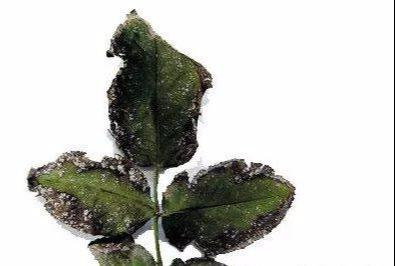
Rose anthracnose is caused by a fungus and thrives in hot, humid conditions, causing serious damage.
Symptoms of rose anthrax:
When leaves are affected, symptoms typically appear on the leaf margins as semi-circular lesions with dark brown edges and a brown to light brown center. In later stages, the center of the lesion turns gray and often falls off. The lesions are uniformly black with irregularly radiating edges. In humid environments, small black dots, the conidiophores of the pathogen, appear on the lesions.
Control measures for anthracnose in roses:
1. In winter, prune and remove diseased branches and leaves, clear away fallen leaves, and destroy them properly. Prevent frost damage, sunscald, and other injuries. Strengthen water and fertilizer management to improve plant resistance, drain water promptly after rain, maintain appropriate temperature and humidity, and reduce pathogens.
2. In the early stage of the disease: 30ml of "Sujing" is diluted with 30 jin of water and used once every 7 days, for 2-3 consecutive times.
3. In the middle and late stages of the disease: 50ml of "Sujing" + 10-15ml of "Garlic Oil" are mixed with 30 jin of water. Use twice every 3 days for 2-3 consecutive times.
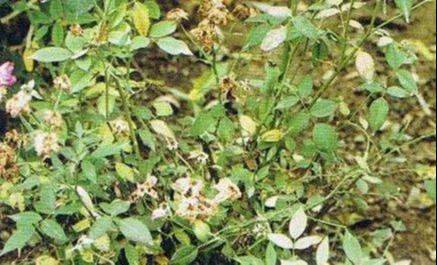
Rose wilt is a common and serious disease, and greenhouse roses are particularly susceptible to it.
Symptoms of rose verticillium wilt:
Symptoms in infected plants manifest on the stem, with chlorosis appearing between the veins of the top leaves, which gradually turns brown and withers. Lower leaves turn yellow. Sometimes, brown to black spots appear in the xylem at the base of the stem. Severe cases can lead to the death of the entire plant.
Methods for controlling rose verticillium wilt:
(1) Strengthen cultivation management, apply fertilizer and water reasonably, and improve the plant's resistance. Plant at a reasonable density, regulate ventilation and light, drain water in time after rain, maintain appropriate temperature and humidity, and remove diseased and damaged materials to reduce the source of disease.
(2) Select disease-resistant rootstocks for planting.
(3) Do not plant in the same crop as tomatoes, potatoes, chrysanthemums, sunflowers, etc. to avoid the spread of pathogens.
(4) In severe cases, drench with 50% mixed sulfur suspension or 50% carbendazim wettable powder at 500 times dilution, or 50% benomyl wettable powder at 1000 times dilution. After preparing the medicine, drench each plant with 0.5g of the solution.
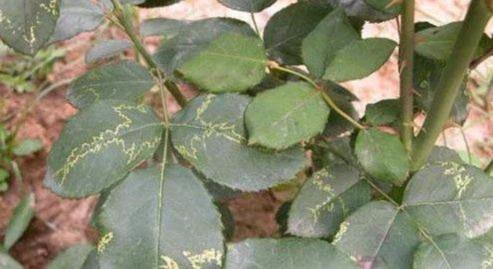
Rose virus disease mainly affects the leaves and is one of the most serious diseases affecting roses. It should be carefully prevented.
Symptoms of rose virus disease:
The main symptoms are chlorosis along the leaf veins, with irregular light yellow to orange-yellow patches appearing on the leaves. Some patches form ring-shaped or oak-leaf-like patterns, while others show small angular spots, linear leaves, local deformities, yellow veins, or yellow mosaic patterns. Small leaf veins near the patches are transparent.
Methods for preventing and controlling rose virus disease:
(1) Select and plant disease-resistant varieties according to local conditions.
(2) Stem treatment.
It is recommended to use virus-free tissue culture seedlings, and attention should be paid to using disease-free scions and rootstocks as propagation materials. Before propagation, the stems and plants should be treated at 38℃ for 4 weeks.
(3) Chemical control.
In the early stages of the disease, spray with 5% virucidal wettable powder at a dilution of 400-500 times, or 0.5% antiviral agent No. 1 aqueous solution at a dilution of 300 times, 20% virucidal wettable powder at a dilution of 500 times, 20% virucidal water-soluble powder at a dilution of 500 times, or 3.85% virucidal becure wettable powder at a dilution of 700 times.
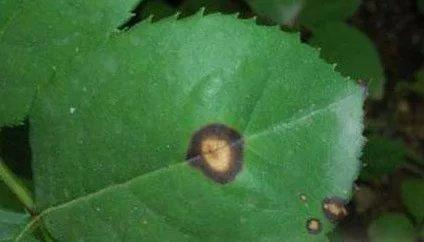
Rose brown spot disease is one of the common diseases that affect roses, and rose leaves, young branches and flower stalks can all be affected.
Symptoms of rose spot disease:
The lesions on the leaves initially appear as small purplish-brown to brown dots, which later expand into round spots with a diameter of 1.5-13 mm. These spots are black or dark brown with cilia-like edges, although some varieties may have smooth and even edges.
The lesions are often surrounded by a yellow halo. Under a magnifying glass, small black pustules can be seen on the affected area. Several lesions often merge together, and the leaves around the affected area turn yellow over a large area, making the lesions appear as "islands" with green edges. Diseased leaves easily fall off, but some rose varieties do not.
Purple to black streaks appear on young branches and flower stalks, slightly sunken. When the disease is severe, the lower and middle leaves of the entire plant fall off, leaving only a few new leaves at the top.
Methods for preventing and controlling rose brown spot disease:
① Thoroughly remove dead branches and fallen leaves to reduce pathogens. Spray with 3-5 degree lime sulfur solution before bud break;
② Spraying control: In areas with severe disease, combine with other disease control measures. In June, spray once with an equal amount of 200 times Bordeaux mixture. From July to September, spray with 500 times 50% carbendazim, 600-800 times Guoguang Yintai (80% zineb), 600-800 times chlorothalonil, or 800-1000 times 70% thiophanate-methyl, alternating between the two, spraying once every 10-15 days. 65% mancozeb can cause phytotoxicity on some rose varieties; the concentration should be 1000-1200 times. For areas with severe disease, it is recommended to use a mixture of 600 times Guoguang Yingna and 2500 times Guoguang Heisha.
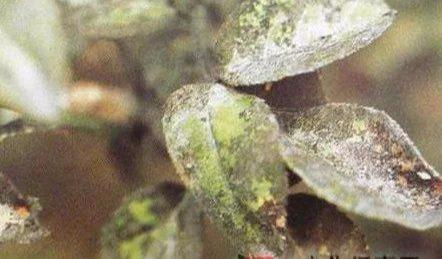
Sooty mold on roses affects the plant's photosynthesis, resulting in weak plant growth and impacting the quality and ornamental value of the roses.
Symptoms of rose sooty mold:
In the early stages of the disease, small brown sooty mold spots appear on the leaves. These spots gradually enlarge and merge into large patches, covering the leaf surface and young shoots. Some of these mold layers are thick, appearing as black flakes that are easily peeled off. Sooty mold severely affects the plant's photosynthesis, leading to poor plant growth, fewer flowers, and significantly impacting the rose's ornamental value.
Methods for controlling rose sooty mold:
1. During the growing season of flowers and trees, especially in spring, insecticides can be sprayed to control aphids, scale insects, etc. Commonly used pesticides include 40% dimethoate EC at 1000 times dilution, or 50% trithion EC at 1500 times dilution, etc.
2. Plant at an appropriate density to facilitate ventilation and light penetration; prune the plants appropriately in a timely manner.
3. During the disease outbreak period, spray with 500-800 times diluted 45% mancozeb aqueous solution, or 400 times diluted thiophanate-methyl, etc.
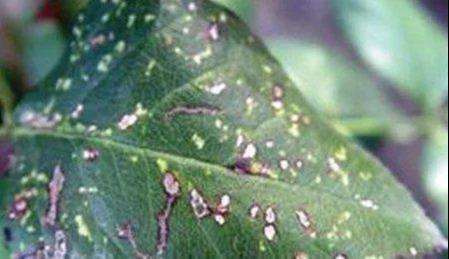
Rose downy mildew is one of the main diseases that harm the growth of roses. It can affect the leaves, new shoots and flowers of roses.
Symptoms of rose downy mildew:
Initially, irregular pale green patches appear on the leaves, which later expand and turn yellowish-brown and dark purple, eventually becoming grayish-brown. The edges are darker, gradually expanding and spreading into healthy tissue without clear boundaries.
In humid weather, a sparse, grayish-white downy mildew layer can be seen on the underside of diseased leaves. Some lesions are purplish-red with a grayish-white center, resembling burns from fertilizers or pesticides. When new shoots and flowers are infected, the lesions are similar to those on diseased leaves, but the lesions on shoots are slightly sunken. In severe cases, leaves wither and fall off, and new shoots rot and die.
Methods for controlling downy mildew in roses:
(1) Remove infected leaves, stems and flowers to reduce the source of infection;
(2) Reducing planting density and improving ventilation and light penetration can reduce disease incidence;
(3) At the initial stage of the disease, spray with 25% metalaxyl (metalaxyl), or 65% zineb at 500 times dilution, or 40% fosetyl-aluminum (pyridaben) at 200 to 250 times dilution, or 75% chlorothalonil wettable powder at 600 times dilution, once every 5 to 7 days, for 3 to 4 consecutive times. Note that various agents should be used alternately, and the spraying should be even and thorough.
(4) In order to prevent downy mildew, you can spray 2000 times the amount of mancozeb or 500 times the amount of mancozeb or mancozeb in advance for prevention.