Common garden diseases and their control (fungi)
Urban pest and disease control should adhere to the principle of "prevention first, comprehensive management" and establish a green plant protection concept. By understanding the occurrence patterns of major pests and diseases affecting garden plants and identifying their weaknesses, effective pest and disease control can be achieved.
1. Powdery mildew
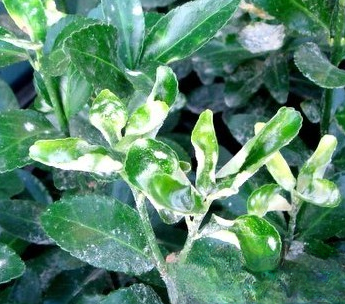
Characteristics and symptoms: It mostly occurs on leaves, young fruits, and tender branches. The lesions are often nearly circular, with a very thin white layer on them. In the later stages, many pinhead-sized yellowish-brown granules are scattered on the white layer. After removing the white layer, yellow spots of the affected plant tissue can be seen.
Harmful to trees: Buxus macrocarpa, Lagerstroemia indica, Rosa chinensis, Mahonia japonica, etc.
Prevention and control methods:
(1) Remove diseased branches, buds, and leaves.
(2) Spray during dormancy with lime sulfur solution at Baume degree. During the disease season, spray with 1000-1500 times dilution of "Lefantian" wettable powder and 1500-2000 times dilution of 25% carbendazim wettable powder. Pay attention to the exchange of drugs to avoid drug resistance.
2. Rust
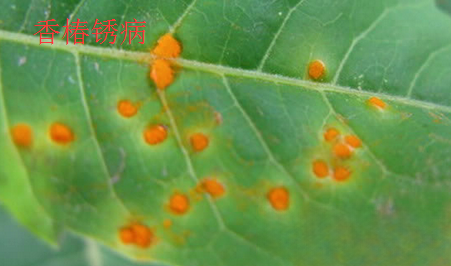
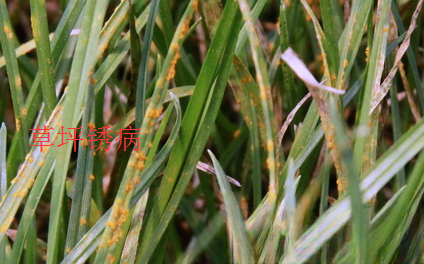
Characteristics and symptoms: Commonly occurs on the branches, leaves, and fruits of host plants. The affected parts develop rust-yellow powdery symptoms, and the affected plants often develop patches, fibrous growths, or tumors.
Harmful plants: lawns, pear trees, junipers, roses, etc.
Prevention and control methods:
(1) Remove and burn dead branches and leaves in a timely manner to reduce sources of infection.
(2) Generally, before the peak disease period from late to mid-month each year, spray with 1000-1500 times diluted "Lefantian", 500 times diluted 50% thiophanate-methyl, or 800 times diluted 25% triadimefon. Spray once every 7-10 days, for a total of one spray.
3. Spotted diseases
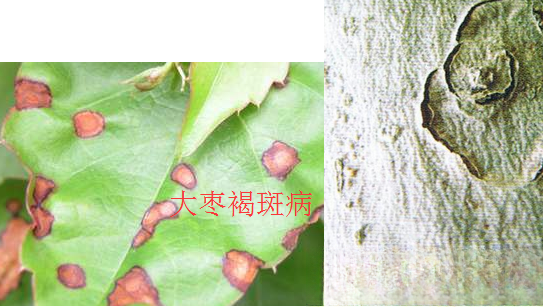
Characteristics and symptoms: This disease primarily affects leaves and fruits and is one of the most common plant diseases. Spots vary in size, shape, and color; common types include brown spot, angular spot, ring spot, and lacquer spot. In the early stages, the leaves typically turn yellow, and later the affected areas necrotize. The outer edges of the spots have a distinct outline, and mold or small black dots often appear on the spots.
Harmful plants: Bauhinia, Nandina domestica, rose, etc.
Control methods: (1) Promptly remove withered leaves and branches, and burn them to reduce the source of infection. (2) Strengthen cultivation management, apply more phosphorus and potassium fertilizers to improve the plant's disease resistance. (3) Depending on the specific disease, spray with a mixture of 1000-1500 times diluted "Jihe" (30% allicin) EC and 500-800 times diluted "Chunyu No. 1" or "Xinzi Huamu" fungicide, or 1000 times diluted 70% methyl thiophanate, etc., at the initial stage of the disease for prevention or treatment.
4.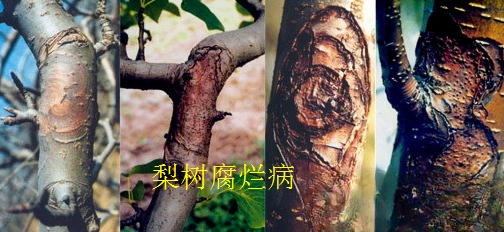
Characteristics and features of rot diseases: They mostly occur on the main trunk and lateral branches, and manifest in two types: trunk rot and branch dieback.
Dry rot primarily occurs on the trunk, large branches, and forks. Initially, the lesions appear as dark brown, water-soaked spots, slightly raised. The bark rots and softens; pressing the affected area causes water to seep out. Subsequently, the area dehydrates and sinks, turning a light brick red with a distinct dark brown border, and the boundaries of the lesions are clearly defined. Later, numerous pinhead-sized protrusions appear on the affected area. After rain or in humid weather, orange-yellow, curled filaments (conidial horns) are squeezed from these protrusions. The rotten bark and fibrous tissue separate like hemp fibers, easily peeling from the xylem. Under suitable conditions, the lesions encircle the trunk, leading to tree death. Twig dieback primarily occurs on twigs. Infected twigs die rapidly without obvious canker symptoms. Small granular spots and conidial horns also appear on the diseased branches.
Harmful plants: crabapple trees, apple trees, poplar trees, willow trees, etc.
Prevention and control methods: (1) Strengthen daily management to improve plant growth. (2) Before the pathogen enters in early spring, apply "Kuaihuolin Whitewash" to the trunk for prevention. For diseased trees, scrape off the lesions before applying the whitewash. Before the peak of the disease outbreak, apply a 300-fold dilution of "Jihe" (30% allicin) to the trunk. (3) Avoid excessive pruning and minimize wounds. Apply "Kuaihuolin" wound sealant to the pruning cuts for disinfection. (4) Severely infected plants should be dug up and burned promptly.
5. Characteristics and symptoms of wilt disease : The disease mainly affects the vascular tissues, causing a decrease in cell turgor pressure and impaired transport, resulting in wilting of leaves and the entire plant. The disease typically affects the entire plant. However, it is often classified into different types depending on the affected area and symptoms, such as wilt, damping-off, and sudden collapse.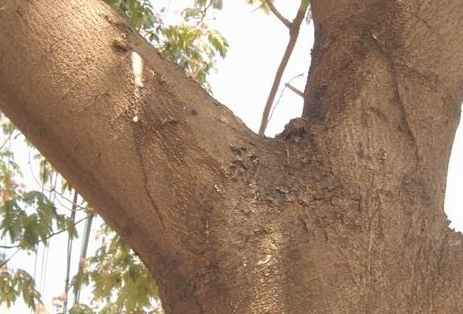
Harmful plants: Albizia julibrissin, Buxus macrocarpa, Buxus microcarpa, Pittosporum tobira, etc.
Prevention and control methods: (1) Soil disinfection: Use Kuaihuolin soil disinfectant at a rate of 1 kg per acre, mixed with 10 kg of fine sand, and apply for disinfection; the base fertilizer used should be fully decomposed to avoid carrying bacteria; take care not to damage the roots during transplanting. (2) Control soil moisture content; the planting site should have good drainage. (3) Remove severely diseased plants immediately. (4) If diseased plants appear, temporarily control nitrogen fertilizer. (5) In the early stage of the disease, spray the diseased plants or drench the roots with a 1000-1500 times dilution of "Jihe" (30% allicin) mixed with "Chunyu No. 1", once every 10 days, for 2-3 consecutive times. Drenching should mainly target the canopy projection area.
6. Brown spot disease
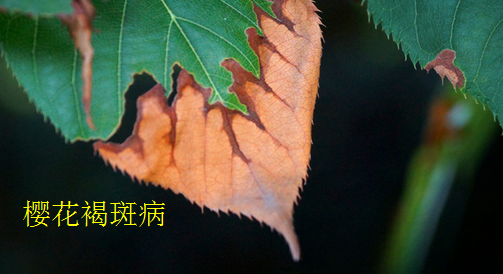
Characteristics and symptoms: It is severely damaged in the hot and humid summer. The leaves and leaf sheaths develop bluish-gray spots with reddish-brown edges, eventually rotting and dying from blackish-brown rot.
Harmful plants: Osmanthus, Photinia, Cherry blossom, Magnolia, etc.
Prevention and control methods: A mixture of 30% allicin ("Jihe") diluted 1000 to 1500 times and "Chunyu No. 1" can be sprayed evenly. Spraying once every 7 to 10 days can achieve a good prevention and control effect.
7. Characteristics and symptoms of sooty mold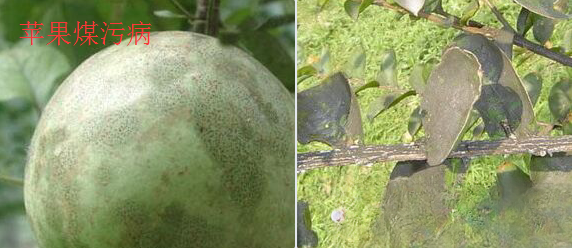
: Sooty mold, also known as sooty blight, is mainly spread by aphids, planthoppers, and scale insects. Symptoms include the formation of small black mold spots on leaves and shoots, which later expand and merge, covering the entire leaf surface and young shoots with a layer of black mold.
Harmful plants include: crape myrtle, peony, citrus, camellia, milan, osmanthus, photinia, chrysanthemum, and many other plants.
Prevention and control methods:
(1) Avoid overcrowding and prune appropriately. Greenhouses should have good ventilation and light to reduce humidity; avoid a stuffy, humid environment. (2) Spray lime sulfur during the plant's dormancy period to eliminate overwintering pathogens. (3) Spraying pesticides to control aphids, planthoppers, and scale insects is the main measure to reduce disease incidence. Spray with "Huale" 20% cypermethrin at 1000x dilution or high-content imidacloprid at 1500x dilution at appropriate times. For scale insect control, chlorpyrifos and thiamethoxam can also be used. (4) For sooty mold caused by parasitic fungi, spray with "Xinzi Huamu" at 500-800x dilution plus "Chunyu No. 1" at 4000x dilution. This has a unique control effect.
8.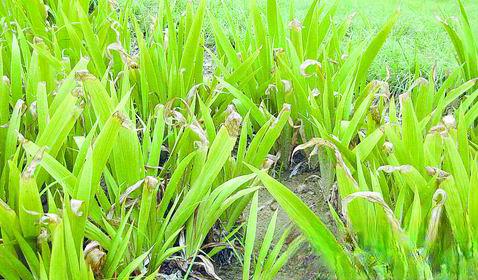
Characteristics and symptoms of leaf blight: Lesions occur on the leaf margins or tips, initially appearing as small, light brown spots, round or irregular in shape, which continuously expand inwards, turning reddish-brown to grayish-brown with dark brown edges. The lesions can sometimes cover half the leaf surface, are curled and easily broken, and develop small black dots. The underside of the lesions is lighter in color. The disease is severe during the hot and humid season from June to August and can occur until October. Weak trees are more severely affected.
Harmful plants: Osmanthus, wintersweet, chrysanthemum, etc., with greater damage in areas south of the Yangtze River.
Prevention and control methods:
(1) Strengthen fertilizer and water management to promote robust seedling growth and improve disease resistance.
(2) In the early stage of the disease, spray with a 300-500 times diluted solution of "Xinzi Huamu" every 5-7 days; when the disease is severe, spray with a 3000 times diluted solution of "Jihe" (30% ethoxysulfate) and "Chunyu No. 1" every 3 days. The number of times to spray depends on the severity of the disease.
9. Twig blight
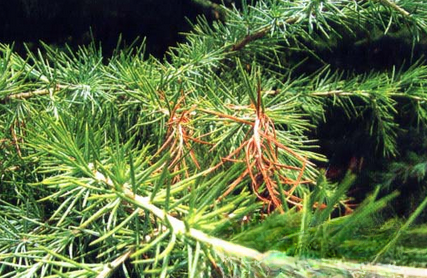
Characteristics and symptoms: The pathogen directly invades the tissues of young trees or tender shoots, causing twig dieback and cankers, while nearby needles die and bend, forming dead shoots. If not controlled in time, it can lead to the death of the entire tree.
Harmful plants: Cedar, Radiata Pine, Spruce, Fir, Mediterranean Cypress, etc.
Prevention and control methods:
(1) Prune and destroy diseased branches and leaves to reduce sources of infection. (2) Select disease-resistant tree species, increase the application of organic fertilizer, and enhance the disease resistance of conifers. (3) Regularly loosen the topsoil around the roots to improve aeration, strictly monitor soil moisture, and irrigate during dry periods and drain in waterlogged conditions. (4) Apply "Jihe" (30% allicin) 3-5 times annually for foliar spraying and root irrigation from March to October for preventative purposes.
Prevention and treatment agents:
45% chlorothalonil can easily lead to the development of resistance in pathogens.
Spraying "Jihe" 30% allicin + agricultural streptomycin + "Chunyu No. 1" evenly 2-3 times can effectively prevent and control pine and cypress shoot blight.